


1. WWF Pak Aims to Make Pakistan Greener by Introducing Rung Do Pakistan CampaignÂ
Mass deforestation is an anathema for our country. Only 2% of Pakistan’s area remains forested. Pakistan has the highest deforestation rate in Asia. As per WWF estimates, every year between 2000 and 2010, Pakistan lost forests at an alarming rate of approx. 43,000 hectares, which is equivalent to half the size of Islamabad, mostly because of commercial use of wood and illegal logging. WWF-Pakistan has made its mission to encourage the growth of sustainable forestry to benefit multifariousness and communities that depend on these forests. RUNG DO PAKISTAN by WWF aims to plant 1.4 million trees across Pakistan starting from 14th August 2018 till 14th August 2019. Get involved in taking charge of the country’s future!


2. Open House Sale at ChenOne
ChenOne announces Open House Sale with up to 50% on the entire range. Get 10% cash discount on the entire furniture range. Rush to your nearest ChenOne outlet or shop online at https://www.chenone.com fo for great deals.


3. Just the right look!
Sadya’s Bridal Salon provides excellence in enhancing your natural beauty. Check out

Instagram @Sadyasbridalsalon
Facebook/sadyasbridalsalon
Contact: 03018444151

Both a necessity of life and our guilty pleasure, shoes can make or break an outfit. Here is a list of the biggest shoe trends this year as exhibited on the latest runway shows.
By Eman Bandey
Marco De Vincenzo
Mules — These pointy-toe high heeled slides are on all the most stylish feet these days, including those of the high priestess of fashion, Victoria Beckham.


Phillip Lim
Slingbacks — Super comfy, yet dressed up looking at the same time, slingbacks should be a perennial in your closet. Reminiscent of the 80s, modern iteration includes block as well as kitten heels. The colours run from good ol’ black to pretty pastels.

Balenciaga
Ugly sneakers — Aka Dad sneakers are everywhere this season. They’re big and bulky but give you height and are comfortable to boot. The trend started by Balenciaga can now be found at Zara.

Malone Souliers
Kitten heels — Aah the comfort of having a low heel that gives you an elegant high heel gait without the teetering! Going with formal attire to a daytime look, these versatile ladylike shoes are sheer bliss.

Chanel
Clear Shoes — PVC, acrylic, clear vinyl who knew high fashion was headed towards plastic. After Kim K-West started sported her Yeezy sandals a few seasons back bringing them into fashion, last year Chanel took the trend to another level with its lucite boot, worth a pretty penny. Now clear shoes come in a whole lot of variations and price points.

Céline
Curvy Shoes — Starting with the YSL shaped heel, this trend is now moving towards curvy heels. It’s more interesting than your basic, straight heel.

Ganni
Cowboy Boots — Kick up some dust in a pair. They’ve recently been spotted on several street style stars at various Western Fashion Weeks. You too can follow the trend in the F/W season by mixing cowboy boots with feminine dresses and skirts.
Michael Kors
All white — The industry’s penchant for white shoes continues. With this year’s deadly summer heat, there are plenty of chic, Tipp-Ex white sandals on offer. One particularly desirable pair was introduced by Michael Kors, while another great super comfy shoe is a super white wedge by Gucci.
Asos
Embellishments — Maximalistic is the name of the game right now, especially with Dolce & Gabbana’s embellished shoes. This trend can be easily DIY-ed. Glitzy shoes can add pizzaz to a masculine-looking suit and even spruce up your everyday jeans and t-shirt.


Mahlia S. Lon
Bridal designers catering to various price points abound in Lahore and Karachi, but shopping choices in Islamabad have always been more limited. Meet Shazia Kiyani who set up one of the city’s first bridal studios. In this issue, she tells us why it’s important for her to give her clients unbiased advice on what suits their specific body types; she also gives us a heads up on the colour palette and silhouettes of her upcoming F/W Bridal Collection. We also have a feature on all the shoe styles on trend at the moment. Accessories are expensive, like everything else, and it’s useful to read this before investing in your next pair of shoes. In addition, singer/songwriter Rafay Israr tells us how he got from being a backup musician to signing with a big Indian music label. Actors, Inayat Khan and Sana Fakhar, from the big budget comedy Jackpot, generously give us insight into their personal lives. With this and much more, GT wishes you Happy Independence Day!

Mahlia S. Lon
Pakistan is on everyone’s mind these days. Just in time for the country’s 71st Independence Day celebrations, we asked celebs if they could change one thing about the country, what would it be? What would you change? Let’s become that change with each of us responsible for whatever influence we ourselves have. Talk is cheap, so let’s put our time, money and effort where our mouth is!
With Fall around the corner, we’ve done some international trend spotting for you. The House of Dior has been bombarding Instagram with images of world famous millennials like Gigi Hadid carrying the Dior Saddle Bag bringing it back in popularity. For those of you who can remember, in the 90s the Dior Saddle Bag and the Fendi Baguettes were The fashionable bags to carry. So if you’ve got one hiding at the back of your closet, now will be the time to pull it out and dust it off, ready for active duty on your arm. Great quality and design never goes out of style.
With fashion plus interviews with actor Yasir Hussain, anchorman Kashif Abbasi, as well as musicians Ali Hamza and Zohaib Kami in addition to the Sindhi folktale of Momal Rano, we present you the latest issue of GT. Pakistan Zindabad!
























Who? Ahmed Ali Butt
Why? The comedian sports a slimming and laid back look. His streetwear sneakers are right on trend

Who? Mubashra Ali
Why? The elegant fashionista is stylish in an asymmetric Pucci dress paired with stand-out high end accessories

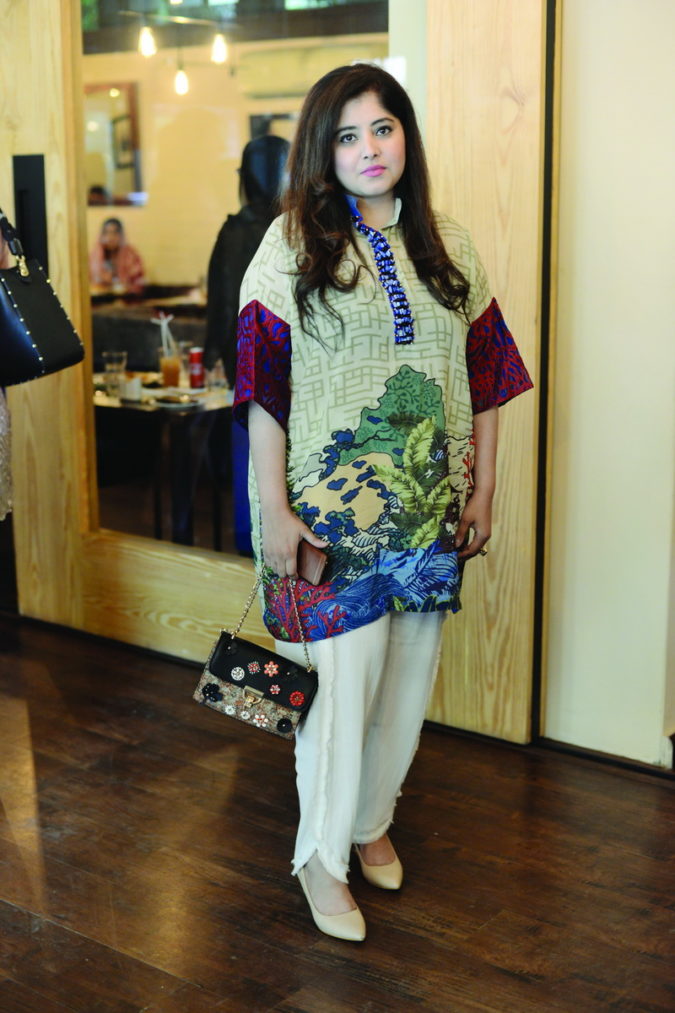
Who? Tehmina Muggo
Why? What a fun print to wear!
 Who? Amina
Why? She’s quite the swan, her long neck and red pout mirroring that of the Judith Leiber bird she’s carrying

Who? Zainab Abbas
Why? A pink suit! Ooh la la
 Who? Shandana
Why? She’s patriotic in Pakistan’s colours


After ten successful years as Pakistan’s most popular and enduring music program, Coke Studio will be returning to the air waves in August. Musicians Zohaib Kazi and Ali Hamza take on the mantle of production in the eleventh season of the series. Passionate, determined and talented, the duo is working hard to produce a season that highlights the people, history and culture of Pakistan, in addition to its music and musicians. In an exclusive interview for GT, the two young men talk to Ally Adnan about the upcoming season of Coke Studio, the challenges and pleasures of producing the program, and the dimensions that they plan to add to the music franchise

Coke Studio is one of the most popular – if not the most popular – Pakistani music programs of all time. How did you feel after landing the opportunity of producing Season 11 of the series?
We were thrilled, absolutely thrilled! The initial excitement, albeit great, was short lived because the work came with a tremendous amount of responsibility. Coke Studio is enormously popular all over the world and the program’s fans have high hopes of the show. The responsibility of living up to the expectations is huge. It feels good but is sobering at the same time.
Umber and Rohail Hyatt produced the first six seasons of Coke Studio whereas the last four were made by the Strings duo of Bilal Maqsood and Faisal Kapadia. What do you think of the different production styles of the two producer teams?

The two teams were masters in the field. Each had its own unique style and did excellent work for Coke Studio. The Hyatt duo had a great vision for the program and, along with its team, turned it into a marvelous reality. Maqsood and Kapadia inherited a wildly popular program and carried it forward with great style and success.
“Coke Studio has a way of connecting with people using a language that is understandable, honest and refreshingâ€
Coke Studio Explorer takes Coke Studio to different parts of Pakistan
What has been your favorite season of Coke Studio thus far?
We do not have any one favorite season but have favorite songs instead. Each season has produced songs that are wonderful and have hijacked our playlists for years.
What is the reason for the immense popularity of Coke Studio?
Coke Studio has a way of connecting with people using a language that is understandable, honest and refreshing. People relate to it. The elements of hope, optimism, empathy, thoughtfulness, unity, and pluralism are hallmarks of the program. They speak to the viewers on an aesthetic level, individually and collectively. The music, of course, is very good. And it is presented in an effective and interesting manner. The program allows the Pakistani nation to express itself in a uniquely powerful manner. That, perhaps, is the single biggest reason for the phenomenal popularity of the series.
How has Coke Studio contributed to the music of Pakistan?
Coke Studio has successfully brought the diverse, vibrant and inimitable music idiom of the nation to a single platform and helped develop a concordance between traditions that have varied sensibilities, ideas and subjectivities. It has helped blend folk, classical and contemporary music into songs that resonate with the public at large. Most importantly, it has allowed us to discover, examine, study, and reconstruct our cultural and musical heritage.
The series has been accused of cultural appropriation for the personal gain of money, prestige and fame. Is the accusation fair?
No, it is not. Coke Studio is truly a platform for musicians of different ethnicities, backgrounds and styles to come together and collaborate in an atmosphere that is simultaneously creative, invigorating and harmonious. This, in no way, can be deemed to be cultural appropriation. In fact, it is the exact opposite of cultural appropriation.


How are musicians selected for participation in Coke Studio?
It is a three-step process.
We start by defining an overarching theme for the season. Once that has been done, we explore ways of introducing, exploring and presenting the theme. Finally, we look for musicians who embody the notions of the theme and meet the requirements of the musical pieces that we have in mind.
Do you know, or feel, that nepotism has ever played a part in the selection process?
No. We have been associated with Coke Studio, in one way or another, for a very long time. The people associated with the program treat the program with great reverence and respect. It is far too important to them to allow the ills of nepotism and favouritism affect its merit. The exceptional quality of the program is sufficient testimony to the fact that it has always been produced with integrity, honesty and professionalism.
How can a talented musician – one who does not have money, influence, clout, or social connections – apply to audition for Coke Studio?
Coke Studio has an active email address – demos@frontfoot.media – that is meant to receive demo videos and audio files. We listen to all submissions very carefully and conscientiously, in order to be fair and because we genuinely like discovering new talent.
We have expanded the selection process in Season 11, where we have ventured out of the studios to go to the field and actively find musicians to feature in a new module that we have named Coke Studio Explorer.

What is the new module, Coke Studio Explorer, that is being introduced with Season 11 of the show about?
Coke Studio Explorer takes Coke Studio to different parts of Pakistan. It uses music to explore the diverse cultures, locales, traditions, and values of the country and celebrates the spirit, strength and resilience of its people. The program is centered around a few amazingly talented and driven musicians whose songs will do Pakistan proud and help put the unique music of the country out on the international landscape. The musicians represent all provinces of Pakistan. We hope that the module will spark a vibrant conversation about diversity, pluralism and understanding amongst viewers.
How is Season 11 of Coke Studio going to be different from the programs produced by Strings and the Hyatt husband and wife team?
It will be different from the seasons produced by Strings and the Hyatt husband and wife team in the same manner that we are different from Bilal, Faisal, Umber, and Rohail. Each person is unique and brings his own personality, intellect and vision to the table. Viewers of the program will notice the difference in the way we approach the program.
The tagline of Coke Studio has been changed from “Sound of the Nation†to “Spirit of the Nation†in Season 11. What does the change signify?
The change is not final and still being discussed. If it happens, it will be a consequence of the evolution of Coke Studio. The program no longer represents just the music of Pakistan and is a veritable celebration of its culture, ethos and character, today. The new tagline – Spirit of the Nation – will, therefore, be more apropos given the expanded influence, popularity and scope of the program.
Coke Studio has an active email address — demos@frontfoot.media — that is meant to receive demo videos and audio files. We listen to all submissions very carefully and conscientiously
What challenges did you face while producing Season 11?
The two of us had worked with Coke Studio in the past and had an idea of the work that producers needed to do to produce the series. Nevertheless, the scope of the work was immense and far greater than what we had imagined. The program asks for a lot, but we found its demanding nature to be a source of strength, energy and motivation. We were happy to give Coke Studio all that it wanted plus some more.
What pleasures did producing the season afford you?
The greatest pleasure, without a doubt, was the act of putting all the diverse, disparate and different elements of the program together and seeing them come together as a single, unique and meaningful entity.
A lot of time, energy and effort has been put into producing Season 11 of Coke Studio. What would constitute success for the program?
The appreciation of its viewers. We are looking for nothing else.
Photographs by Insiya Syed

Ally Adnan lives in Dallas and writes about culture, history and the arts. He tweets @allyadnan and can be reached at allyadnan@outlook.com.
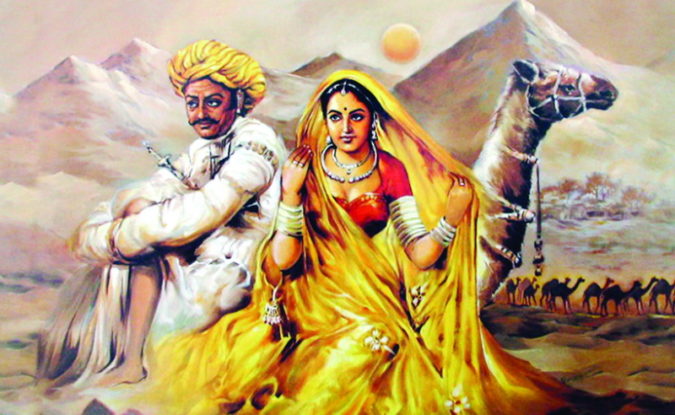
A Rajasthani/Sindhi folktale replete with beautiful princesses, enchanted castle, a brave and ingenious hero, passionate romance, ordeals of separation and edifying tragedy

By Mahlia Lone
Background
The famed Rajasthani folktale is set in Lodhrawa in Jaisalmer district Rajasthan, India, around the mid-14th century. Lodhrawa stood on an ancient trade route through the Thar Desert, which was vulnerable to frequent attacks.
In the Sindhi story, Momal Ji Maari (Momal’s mansion), the heroine’s house was located in Ghotki district, near Sukkur. The story occurred in the times of Hamir Soomro, the King of Amarkot (now Umerkot district in south-east Sindh). The city was named after its Hindu founder Maharaja Amar Singh, belonging to the Sodha clan of Hindu Rajputs, who built the Amarkot Fort to wade off Muslim invadors. During the Mughal Empire, Emperor Akbar was born in Amarkot 1542, his father Humayun having fled from his capital in Delhi after his military defeat at the hands of Sher Shah Suri and the Rajput ruler Rana Prasad giving him refuge.

The story in classical Sindhi literature
The first time the story was written down was by 17th-century classical Sindhi Sufi poet from Nasarpur, Shah Inat Rizvi (circa 1613– 1701). Combining the folklore lyrical poetry of travelling minstrels (singers) with the cultivated spiritual thinking of the Sufi saints, Inat brought in a new style of Sindhi poetry. He combined popular songs commemorating the valour of heroes in wars and wise rule of kings during peace that included elements of fantasy, magic, legend and quasi historical romance with the Sufis’ spiritual ideas. Fond of music since childhood, Inat would raptly listen to professional musicians and itinerant minstrels in village gatherings. Belonging by birth to an orthodox Syed family, he was educated in Muslim spiritual poetry.
The story in 20th century Sindhi literature
Shaikh Ayaz (1923 — 1997) translated Abdul Latif’s magnum opus Shah Jo Risalo to Urdu, establishing him as an authority on the subject. He received the Sitara-i-Imtiaz for his efforts and was regarded as a “revolutionary and romantic poet†in his own right.
 Tajal Bewas (1938 — 2008) born near Khairpur, was a classical Sindhi poet who authored 44 books, including the story of Momal Rano.

Inat, hence, forged a new genre of Sindhi literature with his groundbreaking work as a “saint-poet of the people singing about their heroes in war and peace and their traditional tales and romances as well as about the traders, weavers, and monsoon rains on which the prosperity of the people depended. He also dealt with the spiritual themes of love and hope, and composed verses in praise of the saints and selfless devotees in the search of God,†commented an expert of classical Sindhi literature. In addition, Inat experimented with idioms and imagery to make his poems more descriptive, further enrichening Sindhi literature.

Inat’s contribution to classical Sindhi poetry was built on by Shah Abdul Latif (c. 1689 – 1752), a young man in his twenties when the older poet died. According to oral tradition, Abdul Latif met the elderly Inat and they would recite their parallel verses on common themes. Regardless of the veracity of this occurrence, Inat’s form, technique and subject matter greatly influenced Abdul. The latter used some of the same idioms and expressions more skillfully and with greater insight, to produce his Shah Jo Risalo, the poetry book on the Seven Heroines of Sindh, one of which was the story of Momal Rano.
The Sindhi version of the folktale
Beautiful Princess Momal of Ghotki lived in a luxurious and magical palace named Kak Mahal or Mirpur Mathelo, near Lodhrawa, north-east of Amarkot (now known as Umerkot). Momal oiled, perfumed and draped in exquisite silken ensembles was a beauty beyond compare. She lived with her seven equally indulged sisters and attendants in the seclusion of her grand mahal. Two of her most famous sisters were named Somal, known for her intelligence, and Natir, infamous as a schemer.


Over the vast grounds of the palace, a magnetic field was spread that gave the appearance of a gushing river. Just as in the fairytale of Sleeping Beauty, a thickly wooded forest had sprung up around the castle protecting it. The jungle housed many wild animals, including ferocious man-eating lions and tigers.
Similarities with tales in World mythology
Apart from the more obvious comparisons with the classical fairytale Sleeping Beauty, the story of Momal Rano shares similarities with the Greek mythological enchantresses the Sirens who lived on the island of Anthemoessa and lured sailors with their enchanting songs and made them crash their ships on their island’s rocky shore. Very few heroes were sharp enought to outwit these deadly mermaids. The mythological hero Ulysses stuffed wax in his sailors’ ears so they couldn’t hear the sirens’ singing and had himself tied to the ship’s mast. This story has parallels with Homer’s epic poem The Odyssey when Odysseus does the same. Similarly, in the mythological story of Jason and the Argonauts Orpheus, the legendary musician, plays his lyre, his lilting music drowning out the siren call.
The condition on becoming Princess Momal’s consort was set on a man being brave enough to enter the magical magnetic field and cross the jungle to enter the mahal and being clever enough to solve the puzzles devised by her wily sisters. Many princes hearing about the unmatchable princess tried but failed; they were robbed by the sisters and attendants and lost their way forever in an unsolvable maze of laybrinths and mirages much like in a House of Mirrors attraction at an amusement park. The princes were never heard from or found again. The more unattainable the princess and the more impregnable the castle, the more legendary and enticing became the prize.


Now men by nature love a challenge, want what they cannot have and are egotistical by nature, and kings are great men
The ruler of Amarkot, Hamir Soomro and his three ministers Seenharro Dhamachanni, Daunro Bhatyanni and the youngest Rano Mahendro, all Rajput Sodhas by caste, used to go horseback hunting in far flung areas of the kingdom. Adventurous and intrepid by nature, they would even cross the boundaries of the small state to neighbouring areas. One day, on a hunting trip, the four men encountered a bedraggled looking man to whom they did not disclose their identity. Grateful for their help and for sharing their food and water, the young man told them what had befallen him. He was a Kashmiri prince who, having heard the legend of Momal’s beauty and charm, got so inspired that he travelled all that distance to try his luck. Having finally fought through to the enchanted castle, the prince was so overcome by Momal’s beauty that her seven sisters and attendants successfully played all types of tricks on him, confused him with multiple puzzles and stripped him of his wealth. Finally, he ran for his life.
Now men by nature love a challenge, want what they cannot have and are egotistical by nature, and kings are great men. Hamir badly wanted to succeed where so many men before him had failed. Having extracted the whereabouts of Kak Mahal, he decided to conquer the castle and win the princess’s hand but failed to do so. Then, in turn, his ministers tried as well, and also failed.
The youngest, Rano was an extremely intelligent, courageous and persistent young man; when it was his turn at last to try his luck, he succeeded in cracking the code of the illusion and reaching the palace. Impressed with hi, Momal accepted him as her consort and that night they consummated their marriage. The next morning, Rano left Kak Mahal and returned to Amarkot to continue his day job of working for Hamir Soomro.
Rano kept visiting Momal every night and their feelings for each other kept growing. Though it was quite a distance between the two palaces, his journey was shortened as if by magic. King Hamir felt envious that his young minister had succeeded where he couldn’t—it was a matter of pride for him. So he forbade Rano from meeting Momal and had his guards keep a check on his nocturnal movements.
Being Hamir’s subject, Rano had no choice but to obey his ruler. But try as he would, his passion would not let him rest. Stealthily, he would slip out at dusk on his camel and return before dawn. He hardly got any sleep, feverishly burning the candle at both ends, gripped by his passion.
Finally, one day the guards caught Rano sneaking off and Hamir had him thrown in the dungeon. After some time, thinking he had learnt his lesson and feeling guilty imprisoning such a loyal and trusty minister, Hamir released him on the condition that he would not meet Momal again. Not being able to resist her pull, Rano snuck off to meet Momal again.
Momal too had started pining for Rano. One night when he was late, thinking he had stood her up, the princess asked her sister Somal to disguise herself in men’s clothing and lie beside her in bed. She wanted to test Rano’s love for her by making him jealous. As was expected, when Rano saw the two sleeping together, he mistook Somal for Momal’s lover. Furious, he left Kak Mahal for Amarkot, leaving behind his cane. Momal woke up, saw the cane and realized what happened. Fearing that he had left her for good under the misapprehension that she had cheated on him, she lit a candle in her window to message to him to return. At last, when there was no sign of Rano, Momal was left with no choice but to set off to Amarkot in search of him. Disguised as a man, she set up residence in Amarkot and Rano recognized his princess.
When the two parted lovers met, Momal pleaded Rano for forgiveness for playing a thoughtless trick on him. But he remained obstinate in his resolve to punish and not forgive her. Out of desperation, Momal jumped in a raging fire to prove her love to him. Rano jumped in after her and both got consumed by the fire, the flames of their mutual passion purifying their bodies and souls.
Moral of the story
The love of Momal and Rano is an allegorical metaphor for the love of the soul and divine. The separation and longing between two lovers parallels the separation of the Divine and the human soul, the longing for the two to merge and dissolve into each other much like Momal and Rano were unified in the burning fire. The human soul longs for Allah, and the beloved renders himself up, caring nothing for the material world in his/her quest to seek union with divinity in the crazed love experienced by Sufis.

By Eman bandey
Colour blocking, florals, patterns, why not patch them all up? This look will be best for chunky Fall knits, accessories and outerwear. Why go for one simple look, when you can try them all?!

Layers upon layers for Fall? Maybe not. This long and lean silhouette can refresh your standard autumnal choices. Go high neck to midi length to elongate your body.
As Mahira Khan would say “EXTRA!” Many designers have been showcasing their oversized designs on the runway. If you’re not that bold, try the trend on a smaller scale like accessories i.e. bags, sunglass
es, etc.


 Flared pants are a throwback but flattering silhouette, going back to the Seventies and the Noughties. Pair up with a matching top, simple blouse or white tee. This will either be a hate it or love it trend as it emphasises your curves while lengthening your legs. High heels are a must!

Again a throwback to those Eighties shoulder pads. Literally, carry the weight on your shoulders. This adds a masculine feel but broad shoulders on suits not only accentuate a slim waist but also signify female strength. Do I hear Girl-boss? No one will dare mess with you.

Shine can be found on just about anything but it looks best coated on leather or patent leather pieces to give the most high-quality feel. Keep your hair and makeup minimal and let your clothes shine.


Everyone knows that hot and humid weather plays havoc with one’s hair. Not only does it look frizzy and unkempt, but hair loss becomes a major issue. Dr. Tauqeer Ahmed tells Mahlia Lone about the latest technology to combat thinning hair

Explain the biology behind hair.
On average, a human head has 100,000 strands of hair made of keratin, a protein. Each hair grows out of a follicle anchoring it to the scalp. A tiny hair bulb with living hair cells lies at the root; building up the hair shaft and making it grow. Once the hair strand grows out and becomes visible to us, it’s made up of dead cells. Blood vessels in the scalp deliver nutrients to the cells in the hair bulb. Nutrients, hormones, and genes determine your hair’s appearance and growth. That’s why it’s very important to have nutritional and hormonal balance for healthy hair. Viviscal Supplements for Men and for Women are great to ensure your body doesn’t lack in the essential vitamins and minerals. But at the end of its cycle, every strand of hair will shed regardless.
Tell us more about the hair’s lifecycle?
The lifecycle of a strand of hair is approximately six years. The less healthy your hair is, the shorter its lifecycle. Each strand passes through three stages:
Anagen is the active growth phase. The strand sprouts out of the hair follicle and grows for about 2-6 years depending on hair health and genes. About 90 percent of your hair is at this stage at any given time.
Catagen is like hitting a pause button for about a month. This is a transitional phase during which hair growth slows down.
Telogen occurs when the strand stops growing completely, gets detached from the follicle and is shed.
So when is hair loss considered excessive?
In men, it’s when a receding hairline and hair loss at the crown becomes marked due to male pattern baldness. In women, menopause and perimenopause may play a role in marked overall thinning of hair. The hair growth cycle shortens and miniaturization of the hair occurs till it completely stops growing back.
In men, the hormone DHT is mainly to blame and there are several products on the market that block DHT but they carry side effects. In women, it occurs when estrogen levels decrease and androgen levels increase. Again, chemical hormones are proven carcinogens.
“In three to four month InshAllah, you will experience new hair growth and be very pleased with the resultsâ€
—Dr. Tauqeer Ahmed


As you know, a natural way to reduce hair loss is to improve the blood circulation of your scalp and deliver much needed nutrients to hair bulbs and follicles. Traditionally, we get oil massage for this reason. A more advanced solution is using Platelet Rich Plasma Therapy (PRP), Carboxy therapy and laser treatments for thinning hair, especially if used in conjunction.
That sounds great. What does that entail?
First, a numbing agent is applied to your scalp. While you wait for it to take effect, a laser helmet is slipped on, the light of which stimulates hair growth. A vial of your blood is taken, spun in a centrifuge machine and the enriched cells or the platelet-rich plasma is extracted from it. PRP contains essential proteins needed to stimulate natural hair growth. This plasma is combined with another nutrient rich formula and injected into targeted areas of your scalp using a special PRP gun. It’s a painless procedure. PRP Therapy for hair is done once a month.
As a weekly procedure, I recommend Carboxy Therapy. Again after numbing your scalp, tiny doses of Carbon Dioxide are delivered to your scalp using a needle. Oxygen rich blood rushes to the spot increasing blood circulation.
Combining the two treatments proves most effective.
This sounds very Star Wars Storm Trooper-esque, but how well does it work?
PRP contains a powerful concentration of seven growth factors activated from your own blood that stimulates the stem cells around hair follicles, encouraging hair to grow back that had stopped, as well as makes existing hair grow thicker, stronger, faster and healthier. I also add extra hair growth nutrients to PRP Plus. Depending on your hair loss, a treatment protocol is developed specifically to suit your needs.
In three to four month InshAllah, you will experience new hair growth and be very pleased with the results.
The only time when these treatments may not be effective is when you have a completely smooth scalp and truthfully in that case only a hair transplant will work.

