




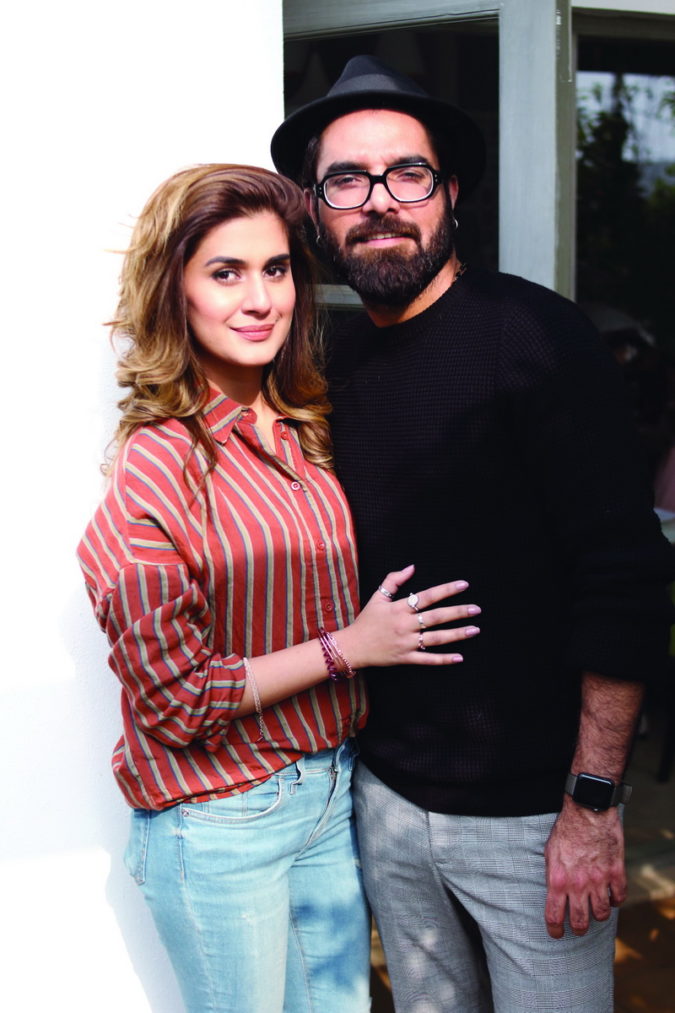
An actor, advertising professional, lyricist, musician, vocalist, and writer, Shahvaar Ali Khan is a man of many parts. He entered the world of music with a splash with No Sazish No Jang in 2008 and went on to quickly establish himself as a musician of merit by producing a number of hit songs including Azad Ki Dua, Jab Koi Pyar Se Bulayega and Filmain Shilmain, which was featured in Rohit Dhawan’s feature film Desi Boyz. A few years later, the handsome young artist took up acting and starred in the popular television serials Noor E Zindagi, Tishnagi Dil Ki, and Mera Dard Na Janay Koi. Khan is one of television’s most bankable actors today. In an exclusive interview for Good Times, he talks to Ally Adnan about his personal and professional life, music, acting, politics and a lot else.

You study Hindustani Sangeet, the music of Northern India and Pakistan, with Basharat Hussain Khan, who belongs to the Gwalior gharana of music. Why does a pop musician like yourself need training in classical music?
All musicians need training in classical music; there really is no other form of training. One can practice lighter form of music but a sound foundation in music is necessary and this can only be built with proper, rigorous training in Hindustani Sangeet. The most popular singers of Pakistan and India, Noor Jehan and Lata Mangeshkar, were both trained in classical music although they almost always sang ghazal, geet, and other lighter forms of music.
What are the unique characteristic of the Gwalior gharana of music?
The Gwalior gharana was founded by Raja Man Singh Tomar in the sixteenth century. It is the oldest gharana of khayal, which is the most popular genre of classical music both in India and in Pakistan, today. The history of most of the extant schools of music is inextricably tied to the Gwalior gharana. It is an ancient school of music with a truly venerable history.
The Gwalior gharana is known for the purity, authenticity and simplicity of its music. Gwalior musicians make music accessible, lucid and comprehensible. They try to both entertain and educate in their concerts. Their goal is to endear and not to impress listeners. They focus on pure singing, free of artifice, complication and gimmickry. Musicians of the gharana are known for their tayyari (virtuosity) and ilm (knowledge). They prefer to sing at medium and fast tempos and like to perform well-known, popular raags, and using musical ornamentation with restraint. The most commonly used tan is the sapat tan, which employs music notes in sequence. A lot of emphasis is placed on the text of compositions, the bandish, which is rendered with great fidelity and accuracy. The asthayi (first part of composition) and antara (second part of composition) are sung in their entirety before improvisation and the introduction of variations. The music of the Gwalior gharana is serious, somber and genuine.
What does your teacher, Basharat Hussain Khan, teach you?
A whole lot.
Basharat Sahib works with me on the clarity, tone and timbre of my voice. Voice culture is of paramount importance in music. A singer must have a rich, resonant and distinct voice to achieve success in music, and he must protect his voice from damage and deterioration. It is easy to ruin one’s voice by singing without proper training and instruction.
Basharat Sahib trains me in the basic elements of music, sur (melodic notes) and lay (tempo), by introducing raags (musical modes) and taals (rhythmic time cycles) of Hindustani Sangeet to me. He teaches me the various alankaars (musical ornamentations) of music and guides me in their proper and judicious use during singing. He makes sure that I explore my full vocal range, from teep (high registers) to kharaj (low register). Most importantly, he makes sure that I focus on riyaaz (practice) and give it due time and attention.

Basharat Sahib is a truly special teacher. He is a full trained classical musician but has equal facility in the lighter forms of music. He used to sing for films in his youth and has, in fact, recorded duets with Noor Jehan. Since, my goal has never been to become a classical musician, he has trained me in a unique manner: he has established a base in classical music but trained me in the singing of lighter genres of music like geet, ghazal and film songs. I am truly blessed to have him as my Ustad (teacher).
A lot of your songs deal with themes of peace, syncretism and tolerance.
Yes, they do. Nationalism, peace and tolerance are very important to me. They are a part of my person and my music and I am proud of the fact that my songs represent my beliefs, values and politics. They would be meaningless if they did not. All good art represents the truth that is held dear by the artist. Art that does not do so makes no impact, affects no one, and fails the test of time.
Your parents are graduates of the venerable National College of Arts, Lahore, and are known to have a great love for art, culture and history. How did their love for the finer things in life affect you?
It helped me develop whatever I have by way of taste, appreciation and fondness for the finer things in life. I owe a lot to my parents. They gave me a lot of time and attention, in addition, of course, to love. They made sure that I was introduced to the best of art, poetry, literature, and music, as a child. They made me proud of my heritage by introducing the culture, history and arts of Pakistan to me, at a very young age, in a very effective and interesting manner.
My mother is a graduate of the National College of Arts, Lahore, and received her doctoral degree from Harvard. She has an unwavering belief in the necessity and importance of education. It inspired me to secure the best education that was available to me. She is also a very hardworking woman who did more in a month than people do in a year. She was the perfect mother and wife while being a dedicated academician and educationist. She helped me understand the value of time and the importance time-management. I am embarrassed when people say that I do a lot – acting, singing, managing a business – because what she used to do in a day is so much more than I manage to accomplish in twenty-four hours. She set high standards for me.
My father is an artist. He has a very deep understanding of art, design and aesthetics. He is also a lover of music and the person who first introduced me to South Asian music. As a child, I use to watch him listen to music with both awe and amazement. He did not take it lightly and gave it time, attention, thought, and love – A lot of love. He made me realize that listening to music is an art in itself and as important as performing music. Good listeners bring out the best in good musicians.

You have a degree in Economics & International Studies from Trinity College, Hartford, Connecticut, and have held jobs in advertising and investment banking. What prompted the move to show business?
I am an artist and was born and raised as one. I can only work as an artist; other careers are not for me. I enjoyed studying at the Trinity College but was never comfortable in the corporate world. A corporate junkie by day and a performing artist by night – the dichotomy seemed duplicitous and was hugely disconcerting. It became necessary – very quickly – for me to make a move to the arts in order to be true to myself. And, although it was daring and risky, the move was refreshingly easy. I felt great relief after making it.
You work as an actor, writer, musician, vocalist, and lyricist while managing an advertising company. That is a lot to do.
It does seem that way but, although I get overwhelmed with work, every now and then, I am very happy to have a lot on my plate. It is good to be busy. It keeps one out of trouble.
You are known to be a workaholic. Do you find time to pay attention to your family?
I try to do my best but sometimes fail to give my family the time it deserves. There are times when I wish I had more than one of me to do all that is on my to-do list but, for the most part, I enjoy being overloaded with work. Time is precious and every single moment should be productive. Workaholism is good. I do not really believe in work-life balance. I think it is a regressive ‘corporate’ concept. We have twenty-four hours in a day and need to make them count so that we make a mark in life and leave behind a meaningful legacy. Small talk, gossip, meaningless conversation, shallow socializing, and the like are a horrible waste of time. I believe in spending quality time with friends and family members, that helps all of us become learn and become better, more intelligent people. Idling is not for me.
Which do you like the most, singing writing, or acting?
I like all three. I am a singer at heart. Writing helps me explore myself and my psyche. And, acting affords me an escape from the din and vagaries of daily life.
Did you have formal training in acting?
I do not. I learn from the directors, actors and producers that I work with. I also learn by watching great actors perform in films and on television.
Do you enjoy acting?
Yes, I do. I like being able to take over the identities of other people and experience lives that are vastly different than my own.

What do you find most difficult about being an actor?
I have trouble dealing with lack of discipline, professionalism and responsibility and get annoyed when have to deal with it as an actor. Fortunately, it does not happen very often.
What constitutes a lack of discipline, professionalism and responsibility?
Changing schedules at the last minute and without justification tops the list. Giving actors scripts a few minutes before the start of shooting is unprofessional. It prevents them from preparing properly and limits their performances. Tardiness is bad, as is poor scheduling. I have a lot going on in my life and do not like having my time wasted. Nothing makes me angrier than having someone disrespect my time.
Your advertising agency, Farigh Four, produced a remarkable promotional campaign for the Shaukat Khanum Memorial Cancer Hospitals, a few years ago. Who conceived the campaign?
My partner, Beenish Mir, and I conceived the campaign. Farigh Four has developed a number of very successful campaigns during its relatively short history. I am proud of all that I have accomplished with the company but, like everything else that is good in my life, I give full credit for the success to my wife. She manages the business and the home while I reap the benefits of being married to a particularly special lady.
Do you believe that the Shaukat Khanum Memorial Cancer Hospitals have made a genuine contribution to Pakistani society?
Shaukat Khanum Memorial Cancer Hospitals are truly great philanthropic institutions. One can have millions of differences with Imran Khan but no one can deny the fact that the Shaukat Khanum Memorial Cancer Hospitals are a huge gift to Pakistan, much bigger than the 1992 Cricket World Cup. I consider being associated with Imran Khan’s noble cause both an honor and a privilege.
Farigh Four was also behind PTI’s 2013 Naya Pakistan campaign. Why did your advertising agency take the risk of aligning itself with one particular political party in the highly polarized political landscape of Pakistan?
Farigh Four is not politically aligned with any one party. Different people at the company have different political ideologies and preferences. These do not affect their work. We treat PTI like any other client and work hard to do deliver the best possible work to the party.
 On a personal level, do you agree with the politics of Imran Khan?
I am a student of political science and human behavior. I do not believe in messiahs and in having blind faith in political leaders. On the political front, I like what Imran Khan stands for but dislike some of his actions and decisions. It is not black or white for me. If we take politics out of the picture, I am a tremendous fan of Imran Khan. He was a great cricketer. His philanthropic and charitable work is truly awesome. And he is a dreamer with boundless energy, unbridled optimism and infinite grit. I am a fan of Imran Khan, the person if not the politician.
You lost your son, Sher Ali Khan Azad, to a lung disease a few years ago. How did you deal with the tragedy?
Yes, that was the biggest tragedy of my life. I tried to find solace in faith, friends and family. It was not easy. It still is not. I think that I have gotten used to living without Sheroo but am as sad about his passing today as I was when he left us. He has left a gaping hole in my heart that can never be filled. Not a day goes by without me thinking of him. The loss of a child is an enormous tragedy. I hope that no parents ever have to deal with it.
I want to add that, in leaving us, Sheroo gave me and Rohma the gift of marital bliss. He brought us together in a truly remarkable manner, giving us an understanding of matrimony that we did not have earlier. He united us, made us grow closer, and strengthened the bond between the two of us. He was with us for a very short time but gave us enough happiness to last a lifetime. He was a very special baby.
Acting was helpful at the time. It was therapeutic for me. The opportunity to act came along shortly after Sheroo left us. I am glad that I seized the opportunity because it offered me the escape that I needed at the time. It helped me leave my own and lead someone else’s life for a few months. It was an incredibly healing experience.
Did you name your son after the renowned Indian writer and poet Jagan Nath Azad?
No, I did not. People just assumed that I did because I had put Azad Ki Dua, the national anthem written by Jagan Nath Azad, to music.
What is keeping you busy these days?
Three things – television, music and Farigh Four.
I am working in a television serial for Geo Entertainment. It is the story of a simple, young man who is torn between the conflicting demands of love and tradition, as he tries to navigate Pakistan’s disparate urban and rural cultures. I am in talks with another channel about doing a serial. It has a great script and looks very promising.
I am growing Farigh Four and recruiting some very talented people into the agency. We have a lot of interesting work ahead of us and I am assembling the right team to execute it.

I am also working on music. It has been a while since I released a song and have a strong urge to create good music. I plan to release several singles during the year.
And on the personal front?
I am having a great time with the love of life as we celebrate the arrival of our new baby daughter. She is the best thing that has ever happened to me.
Photographs by Daud Malik
Ally Adnan lives in Dallas and writes about culture, history and the arts. He tweets @allyadnan and can be reached at allyadnan@outlook.com.


By Afshan Shafi
Zaheer abbas
Ivory and Crimson


Elan
New Traditionalism


Zonia Anwaar
Minimilist Verve


Mahgul
Oceanic Inserts


Faiza Samee
Voluminous Structure


Rizwan Beyg
Modern Opulence


Adnan Pardesi
Holographic Pattern


HSY
Fluidity and Restraint


Hussain rehar
Floral Punk


Who? Rehan Bashir
Why? We’ve never seen a man carry clothes as gracefully as Rehan Bashir and we cant imagine anyone pulling off a kurta and tung pajama quite like he does

Who? Sahar Peracha
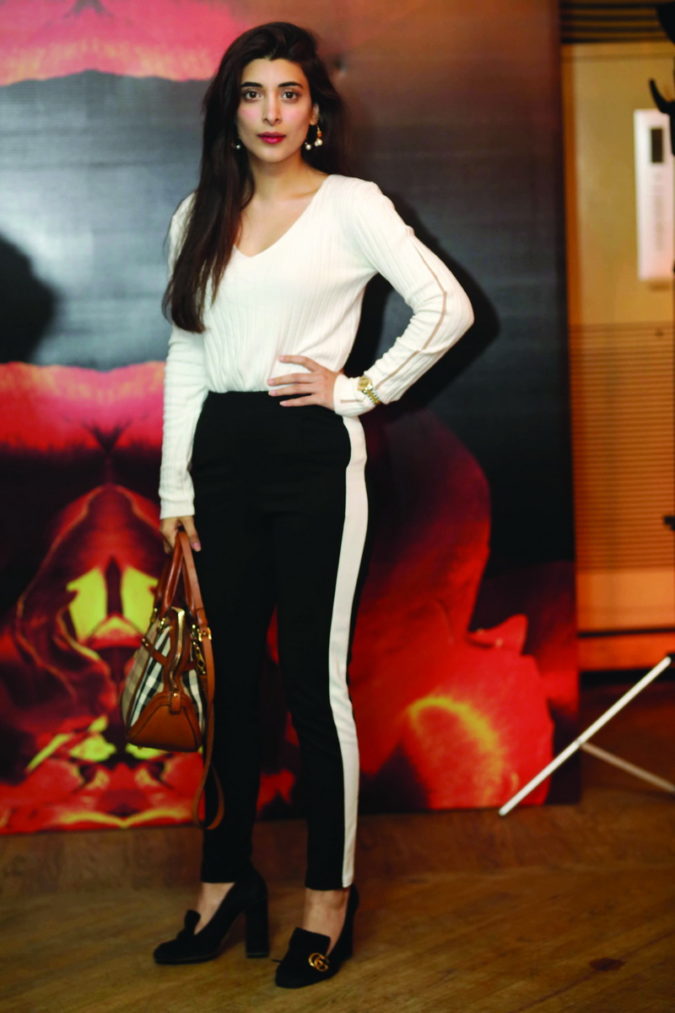
Why? This look just screams chic! We love everything from the pink peekaboo lace and the mary jane collar to the chunky silver and black accessories
 Who? Shehzad Noor
Why? This is the perfect look for a guy out on the town The denim blazer is so on trend and the Gucci sneakers add just the right amount of oomph

Who? Anushe Shahid
Why? This girl never gets it wrong and these printed matching separates with that wet swept back hair is the ultimate party look for the balmy nights ahead

Who? Anushay Ashraf
Why? This white on white look is the perfect sleek and cool statement for summer
 Who? Ayesha Omar
Why? We sure do appreciate Ayesha Omar for choosing this floor sweeping gota worked number from Rano’s Heirlooms and pairing it with just the right accessories


Mahlia S. Lon
We have a fun editorial shoot of Sohai Abro for you in this issue. GT’s hardworking team got up before the crack of dawn to capture the early morning shots of the ingenue, starring in the upcoming feminist movie Motorcycle Girl, posing at a roadside dhaba beside the Multan highway. Keep your eye on this fearless and independent actress who grew up having lost her father at a young age, and learned to fend for herself early on.
Meanwhile in the fashion world, not surprisingly, the standout collections at the recent Hum Showcase in Karachi were by Elan, Zaheer Abbas and stalwart Rizwan Beyg. See what these and other designers have in store for you this season. Next, feast your eyes on Fawad Khan’s other half, Sadaf’s latest fashion collection has a desirable vintage feel.
On the social front, the scene is quite happening and pulsating with the excitement reflected in our event pages with well turned out women and dashing men. La Dolce Vita!


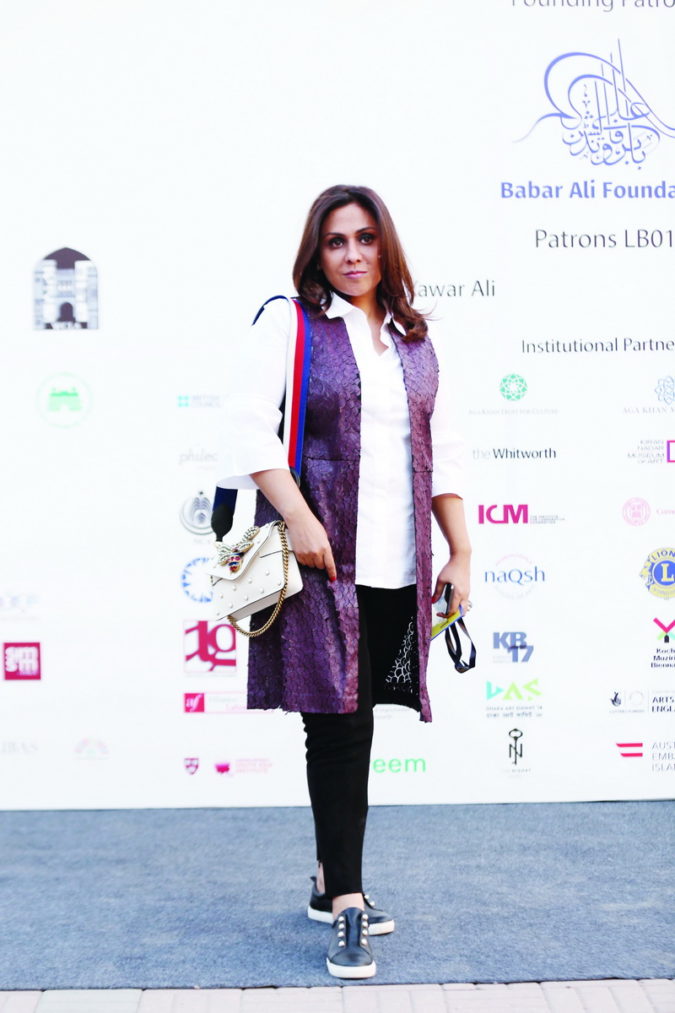




















Faryal Aftab of Muse possesses not only an ethereal, pre-Raphaelite beauty, but also an intriguing perspective on the business of fashion. Through her creations, she offers the discerning Pakistani woman a chance to discover a more sensual, and captivating side to herself. Afshan Shafi catches up with Faryal to discuss, lawn, personal style and much more!

What do you think of designers lending out samples?
I don’t because how can I sell it if somebody has already worn it?
What trends would you like to see die?
Those fancy Patiala shalwars, they should definitely die. Bell sleeves and those other sleeve things that touch the floor, they should die. All those odd knots and twists should die. If you have print, knots and forty other things happening on one outfit, that very aesthetic should die.
Would you say that you have a more pared down perspective on summer fashion?
I think that I do, I don’t understand why women here shy away from wearing block colours in the summer. Why is it so hard to wear, say a pale pink kurta in soft cotton? Why does everything have to be so complicated?


What would you say about lawn fever?
It’s saturated with buttons, lace, print, embellishment, you name it , it’s on there. You have to see that the garment doesn’t do anything for the “woman†herself. Is it making a woman look more desirable or prettier? I don’t think so.
If Muse were to come out with a lawn collection, what would it be like?
I would make sure that the prints were more girly, more delicate. I wouldn’t put two or more prints together. The shirt and dupatta would have more simple floral motifs , not enormous flowers but smaller in size.
What are your plans for expanding Muse in the future?
We’re expanding in all the big cities soon and are currently also in talks with big design houses in Paris for a special project. Fingers crossed!
What do you think makes a woman stylish?
I think that if a woman takes care of her hands and feet, has her hair done, then she feels good. Being well groomed is stylish. If you are groomed, then even non-designer wear can look beautiful.
Muse is in talks with big design houses in Paris for a special project
Photography by Naveed Bhatti

Rapid Fire
Who are your favourite International designers ?
Christian Dior, Lanvin, Chloe, Saint Laurent, Valentino, Rodarte
Who are your favourite local designers?
I would say that I don’t have a particular favorite locally but I do admire Kamiar Rokni’s work. I love the traditional techniques that he uses. Across the border I do follow what Sabyasaachi is doing.
Favorite Jewellery?
I love wearing teekas, maatha pattees and other hair ornaments. I hardly wear other types of jewellery.
What is your favourite high street store?
I love Zara, especially the menswear section more then womenswear
Favourite shoes in your closet?
These Chanel ones where you switch on a button and the shoes light up.
Favourite Movies?
‘I am Love’, ‘Priceless’ which is a French film and ‘ Notes on a Scandal’. I love documentaries as well for example ‘ The Last Emperor’ by Valentino
Your closet is a shrine to?
Muse
Favourite Books?
I like reading, but I like easy reads. My favourite is How To Be A Parisian Wherever You Are
Celebrity you would love to dress?
There are so many—most of the models who walk for Christian Dior, or Chanel. French actress Marion Cotillard is a perennial favourite as well as Audrey Tautou.