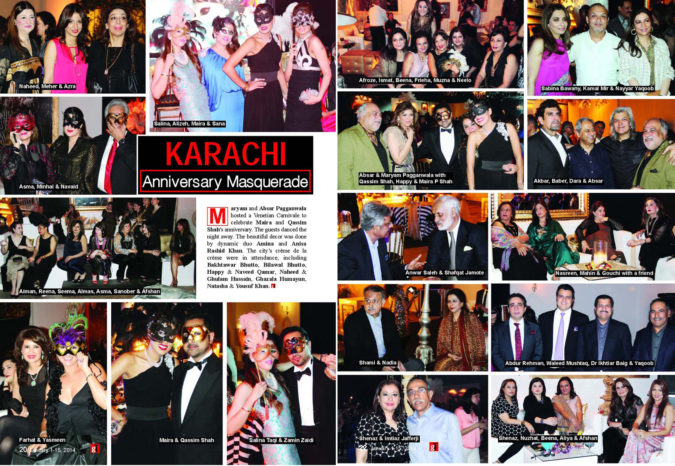


With his dazzling energy, actor Mohib Mirza is a superb host for Pakistan Idol

Hosting had never been Mohib Mirza’s cup of tea. He found it dull and repetitive—until the American Idol franchise came to Pakistan. This was an opportunity to host something that really sparked Mohib’s interest; he appreciated the level at which the project was being undertaken and decided it was worth auditioning for. One day, Mohib received a phone call from a producer at Pakistan Idol, asking him to be the host. An actor known for his dazzling energy, the slot was a perfect fit for Mohib.
Mohib jumped headlong into a gruelling 45-day tour across seven cities all over Pakistan. And I say gruelling because the host is present on set from dawn to dusk. It gave him the opportunity to interact with audiences one-on-one, which as a performer Mohib relishes. “It’s different being situated in a crowd of 8000 people, amongst all kinds of Pakistanis, as opposed to in a studio or on set surrounded by just cast and crew.â€
‘It is rewarding for me as a person, and a performer, to be given insight into the tastes of the younger generation today: what are they watching, wearing, hearing, and what they are exposed to’
Mohib clearly thrives in this environment, feeding off the energy of the pumped-up crowd. “It is rewarding for me as a person, and a performer, to be given insight into the tastes of the younger generation today: what are they watching, wearing, hearing, and what they are exposed to.†Naturally, there are times when even the most confident of hosts will feel anxious being watched by thousands of eyes. Not Mohib Mirza.

The first episode opened with a view into the city of Multan. The judges hopped onto a tonga and rode off on a tour. Mohib’s voice brought us to our destination, where auditions were being held and a heaving crowd had gathered, cheering on the contestants. We saw Mohib standing at the gate introducing us to the multitudes. He opened the floodgates and they were off in a blaze—the seats filled up even before the judges had taken their chairs. A showcasing of the contestants followed: a hopelessly poor boy named Gopal Guddo Ram stood on stage telling the story of his ill father who desperately needed treatment. He said it was a dream to be auditioning for Pakistan Idol. Hadiqa Kiani asked the boy if he could read or write; he said no. She articulated her reservation that he would be unable to sing a variety of songs in the later stages and Bushra Ansari agreed. Ali Azmat found the singing too loud for his taste. Bushra ji graciously added that Gopal was never out of tune and Hadiqa agreed. Together, the judges decided to give Gopal a unanimous yes and he happily proceeded to the next round. Through the next couple of auditions, it became clear that Ali Azmat is the “mean†judge (he will put the contestants on the spot), Bushra is the nice judge, and Hadiqa is the honest adjudicator with a tender yet firm style of criticism. We saw back-to-back auditions with Mohib announcing commercial breaks. With his mega-watt smile, Mohib cheered on the crowds to boost morale; he narrated what was trending with the contestants. We saw a contestant running up and kissing him on the cheek after getting through the first round! Finally, the episode came to a close.


With his mega-watt smile, Mohib cheers on the crowd to boost morale; he narrates what’s trending with the contestants. We see a contestant running up and kissing him on the cheek after getting through the first round!
After the show had aired two full episodes, the organizers were greeted with two types of feedback. First, how much people were enjoying Pakistan Idol. Second: how much the show resembled Indian Idol. All over Pakistan—especially at weddings—Pakistanis dance to Indian music. Bollywood tunes waft through our malls, restaurants, shaadi halls and on the radio. When it comes to praiseworthy ghazals, people still reminisce about Jagjit and Chitra; in the realm of acting, we adore the likes of Naseeruddin Shah. Mohib gets this, and tells me: “We are a country that feeds on imports.†There have been comments from the public regarding the use of Indian music in Pakistan Idol, but the reality is that Bollywood tunes are buried deep in the cultural vein of Pakistan. And there is nothing wrong with that.
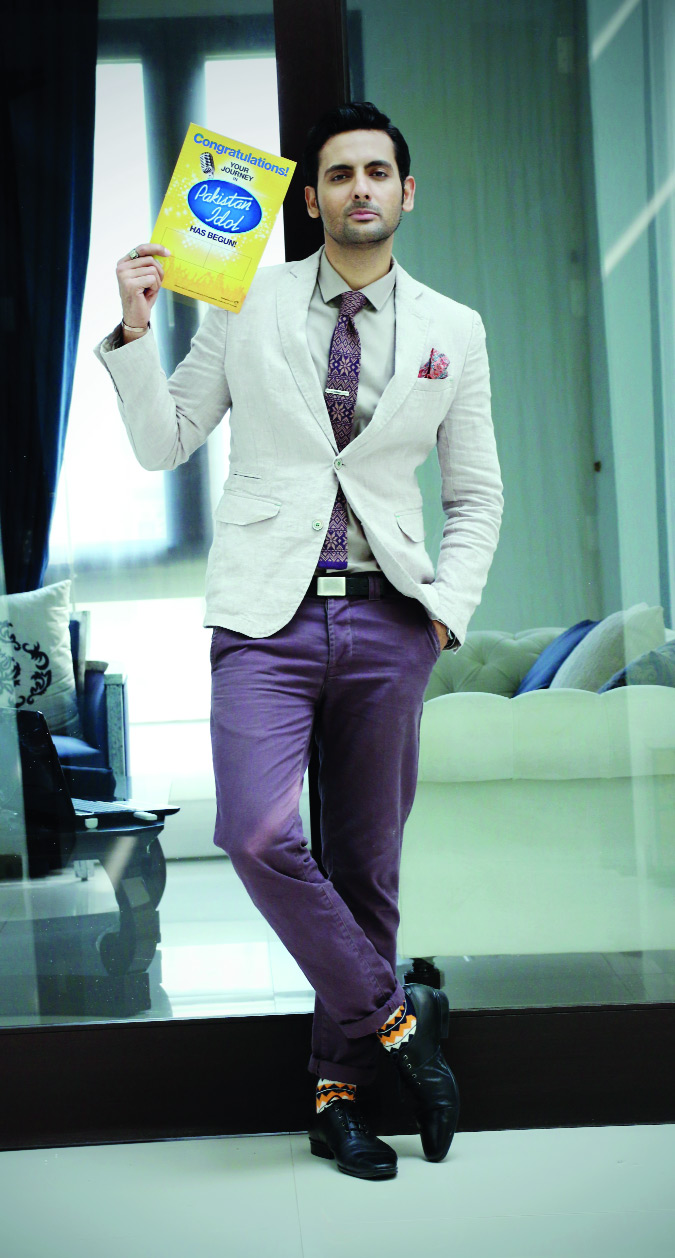
‘If I had not met Aamina, if I had not shared my life with her, I would not have grown as much’
Mohib’s upcoming projects include the film Dukhtar, written and directed by Afia Nathaniel and starring Samiya Mumtaz, Saleha Arif, and Mohib, due to hit theatres in 2014. He says he feels slightly let down by Pakistani drama serials. “They are losing touch with their male audiencesâ€, Mohib says, and I agree. Pakistani dramas revolve almost entirely around a female lead and the men are often props. As our conversation comes to a close, I am struck by Mohib’s thoughtfulness. It feels natural to ask him what it feels like being a “powercoupleâ€â€”married to one of Pakistan’s most respected actresses, Aamina Sheikh. His response is unselfconscious and touching: “If I had not met Amina, if I had not shared my life with her, I would not have grown as much.†Kudos to Mohib Mirza, a man as thoughtful as he is charismatic. Tune in to the next episode of Pakistan Idol to get a whiff of his infectious energy.
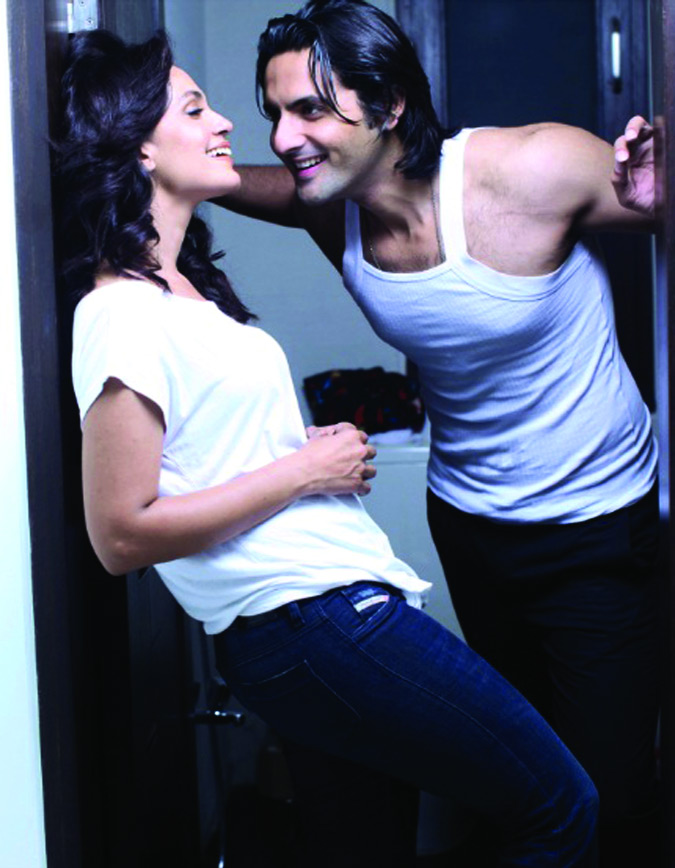






Saba Ahmed meets London-based filmmaker Numra Siddiqui
Numra Siddiqui has an infectiously giggly laugh. The 26-year-old London-based filmmaker was in Lahore for three days, and I grabbed the first opportunity to meet her. Numra has worked on films for the BBC, as well as on documentaries around Europe and Asia. Perhaps most impressively, she has filmed in the streets of Lahore and Karachi, unafraid of the muck and grit of urban Pakistan. She recounts lying face-up on the sidewalk trying desperately to get the perfect shot when she felt something brushing her leg. It was a donkey on the side of the road sniffing her.
As a teenager, Numra knew she wanted to make films. “I knew that I wanted to work in documentary. When I come to Pakistan, the country continues to reveal itself in new and unusual ways.” She recounts the experience of making her first film, The Talking Walls of Lahore, an up-close exploration of graffiti and street art in Lahore and Punjab: “I wanted to make a film about moving through the city, like a journey. Everyone from a street artist to a trader has marked his territory. In a country where freedom of expression is shrinking, the walls of cities become alternative sites of expression.” The Talking Walls of Lahore has been screened at the East End Film Festival 2011, London Indian Film Festival 2011, London International Documentary Film Festival 2012 and Whirlgig Cinema’s Spotlight. The documentary came second place at the prestigious Satyajit Ray Film Competition in 2011.


On Numra’s first job working at a visual effects company, she told me of the hardwork and constant multi-tasking involved when she was starting out: “One minute I was the producer, the next minute they sent me out to Morocco for a project. I was 23 years old and they just sent me out there with a cameraman, director, and sound. I was thrown in the deep end but it was one of the best learning experiences.” The experience helped Numra later when she worked at Serendip Productions in Islamabad where she made short films for UN agencies and other developmental organizations. “We travelled to places like Waziristan, FATA, getting shots from helicopters,” she says. “It was surreal.” Numra worked on a film about the Khyber Pakhtunkhwa Police, and specifically, one of its stations. The station, she says, has since been blown up.
After Islamabad, Numra was back in London working at BBC Factual. She worked with top BBC chef Nigel Slater, and the English farmer and television presenter Adam Henson. Suddenly she found herself in the world of British food and picked up bizarre factoids, such as: smoked salmon does not, in fact, come from Scotland. “Who knew I felt so passionately about how smoked salmon came to the UK?” she laughs. “Apparently I do! It doesn’t come from Scotland as many believe but came with the Jewish settlers in East London.” But Numra was already restless and itching to be more independent. “I realized I want to make my own films. I wanted to make films that veered from the popular imagination.”
The international media’s perception of Pakistan as “The Most Dangerous Place on Earth” is the kind of subject that Numra wants to move away from. Instead she wants to more intimate stories that shed light on local cultures and habits. “It’s important to bring to light what is overshadowed by the subjects that take the front seat when it comes to any talk about Pakistan — terrorism, war, bombs.” she told me.


It was no surprise, then, that Numra ended up documenting the tremendously inspiring work of Abdul Sattar Edhi. Numra was in Pakistan investigating the jhoolas outside the Edhi centers, where unwanted babies get dropped off. Edhi sahab’s wife, Bilquis, took over his husband’s charity project of “jhoolas” in 1952. These are swing bassinets placed outside each Edhi center with a message in both English and Urdu saying, “Do not kill, leave the baby in the cradle.” It is an attempt to discourage people from leaving behind disabled or unwanted children in rubbish heaps and other dark places. “Nine out of ten of the babies in the baskets are girls”, says Numra. “What happens to those little girls that get left there?” The issue touches on the grinding cycles of poverty as well as the stigma attached to having a female child. When she started her project, Numra says she had a very specific image in mind, of making “a film called jhoola.” As Numra delved more into the subject, the idea of the jhoola receded; the bright and encouraging futures of the children themselves took center stage. She visited training centers and schools and decided to focus not just on the girls left behind in the jhoolas but others too — women lost or abandoned throughout the city of Karachi.


Numra becomes emotional when relating her experience with the Edhi foundation. She had the wonderful privilege of meeting Edhi sahab himself. “I was so humbled to meet him,” she says. “I grew up thinking that Edhi is one of the best people in the world. He’s the most respected person in Pakistan. And now I’ve seen and met him for myself.”
Numra will continue to work on her film about the lost women of Karachi from London, where she lives and works. But it is clear to me that this young filmmaker feels more inspired in Pakistan than in the UK. “I like the realist format. I like grit.”
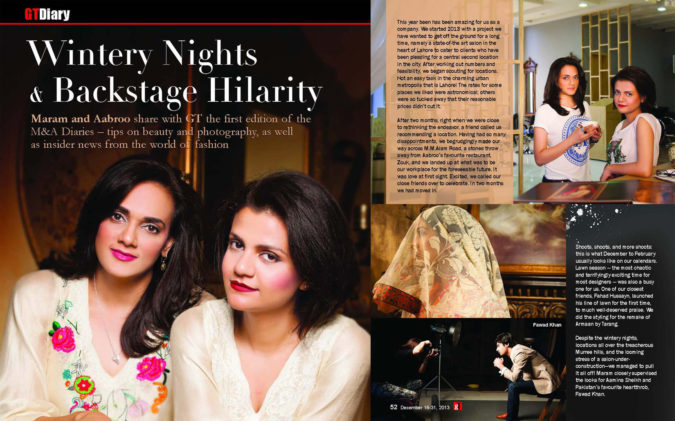

Maram and Aabroo share with GT the first edition of the M&A Diaries – tips on beauty and photography, as well as insider news from the world of fashion
This year been has been amazing for us as a company. We started 2013 with a project we have wanted to get off the ground for a long time, namely a state-of-the art salon in the heart of Lahore to cater to clients who have been pleading for a central second location in the city. After working out numbers and feasibility, we began scouting for locations. Not an easy task in the charming urban metropolis that is Lahore! The rates for some places we liked were astronomical; others were so tucked away that their reasonable prices didn’t cut it.
After two months, right when we were close to rethinking the endeavor, a friend called us recommending a location. Having had so many disappointments, we begrudgingly made our way across M.M.Alam Road, a stones throw away from Aabroo’s favourite restaurant, Zouk, and we landed up at what was to be our workplace for the foreseeable future. It was love at first sight. Excited, we called our close friends over to celebrate. In two months we had moved in.

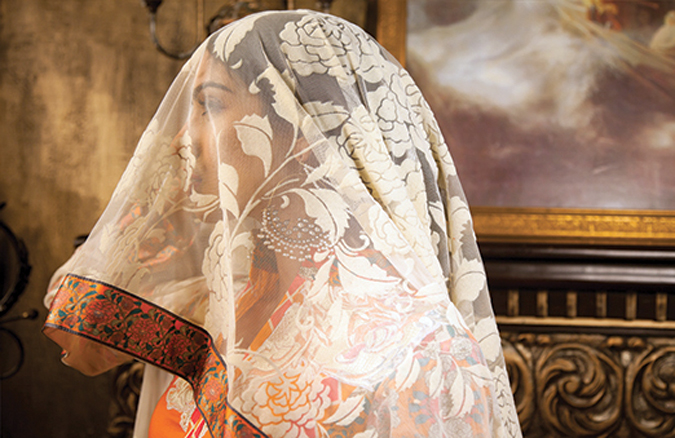

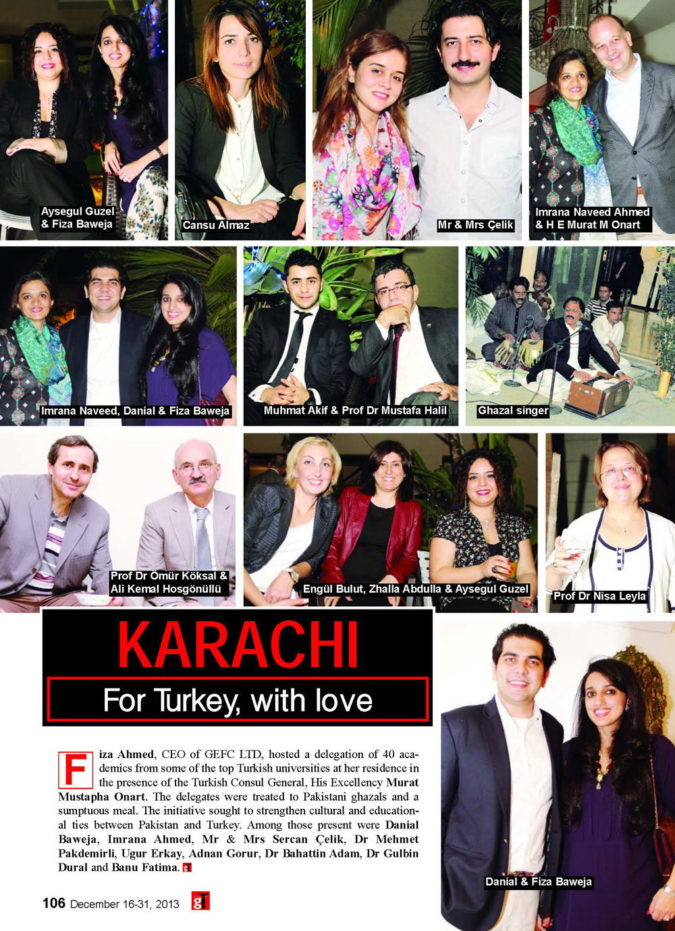
Shoots, shoots, and more shoots: this is what December to February usually looks like on our calendars. Lawn season — the most chaotic and terrifyingly exciting time for most designers — was also a busy one for us. One of our closest friends, Fahad Hussayn, launched his line of lawn for the first time, to much well-deserved praise. We did the styling for the remake of Armaan by Tarang.
Despite the wintery nights, locations all over the treacherous Murree hills, and the looming stress of a salon-under-construction—we managed to pull it all off! Maram closely supervised the looks for Aamina Sheikh and Pakistan’s favourite heartthrob, Fawad Khan.
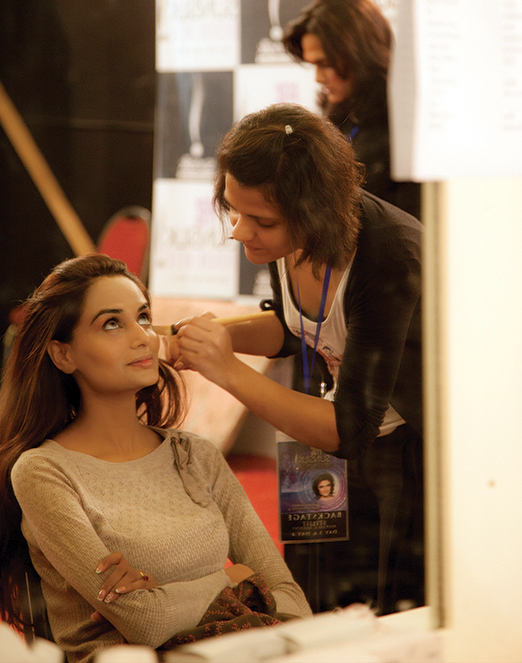 In between moving into the new salon, we geared up for PFDC Sunsilk Fashion Week where we had two days of hair and makeup for the four-day event.
About three weeks before the event, a flurry of meetings began with the production team (headed by the ever-inspiring HSY Aka Sheru) as well as the designers individually. Typically, the production team briefs us on what each fashion week entails: the number of designers per day, the ones showing their collections specifically on the day we are handling makeup, the backstage setup, the sponsor requirements, etc. After that, we sit down with the production folks and come up with the season’s makeup looks paying special attention to international trends, palettes, but also local skin tones and sensitivities. We meet each designer to see how these looks can be tweaked to match their needs, all the while keeping in mind the back-to-back nature of the shows, and the tight time-frame allotted to the models to change outfits.
The audience sees a seamless showcase of pomp and pageantry; backstage, meanwhile, is a nightmare (a polite phrase would be ‘controlled chaos’) with outfit changes at lightning speed, makeup (was it the winged-eyeliner look or smoky eyes? Ack!) hair suddenly tumbling out of buns, and accessories being changed in record time—sometimes in less than four minutes. Fashion Week starts with 9 am makeup-calls (which means setting your alarm to 7 AM, naturally), and an all-day sprint from station to station till about midnight. We honestly don’t know any other way to survive but in our most comfortable clothes and sneakers, which perhaps might explain why we have become somewhat infamous for our sneakers collection…
After fashion week, Aabroo winged her way to New York to be with her husband; her trip back would entail them packing up and moving to Pakistan for good. She had been travelling back and forth for years, and this year Aabroo and her husband decided to move permanently to Lahore. Maram: “I cannot imagine my life existing without Aabroo being constantly around as we have been through so much together, professionally and personally, for nearly two decades!â€
‘The audience sees a seamless showcase of pomp and pageantry; backstage, meanwhile, is a nightmare (a polite phrase would be ‘controlled chaos’) with outfit changes at lightning speed, hair suddenly tumbling out of buns, and accessories being changed in record time—sometimes in less than four minutes’
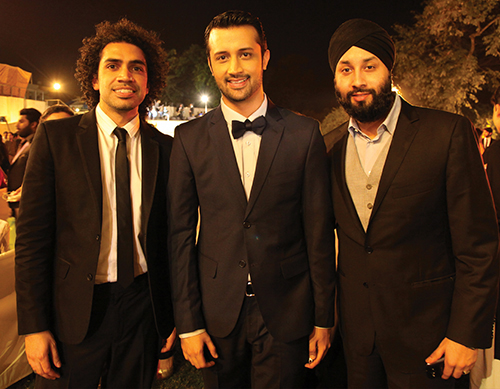
This year we were lucky enough to be part of the weddings of two of our very close friends: Atif Aslam and Juggun Kazim. While we did their makeup for all the functions, we also did the still and video photography for Atif’s event, which was hugely fun. A team of young photographers equipped with the latest DSLRs swarmed the space capturing a star-studded guest list including Alamgir, Ali Azmat, Manzar Sehbai, Meesha Shafi, Farhad Humayun, Shahid Afridi and many more.


After the summer came PFDC L’Oreal Paris Bridal Week. We were asked to be the official makeup experts and artists on all three days. We lined up our forte of makeup for practically all the best bridal couture designers of the country. For their daily newsletter, they chose a designer each day with whom we would brainstorm individual looks according to their collections and our individual aesthetic. As luck would have it, it was our three favourite boys: HSY, The House of Kamiar Rokni and Fahad Hussayn. Along with the L’Oreal Paris team headed by Nubain Ali, we created “looks†that were also used for beautifully-designed makeup kits.
A team of young photographers equipped with the latest DSLRs swarmed the space capturing a star-studded
guest list
Porsche Pakistan recently started a celebrity shoot campaign where they pair known celebrities with their super hot cars. We decided to take a slightly different route than previously used in the campaign. We opted to shoot at the Porsche Pakistan’s garage to bring out the true beauty of the gleaming black Turbo S. The images turned out so well that we were asked to be the official photographers for the rest of the campaign.
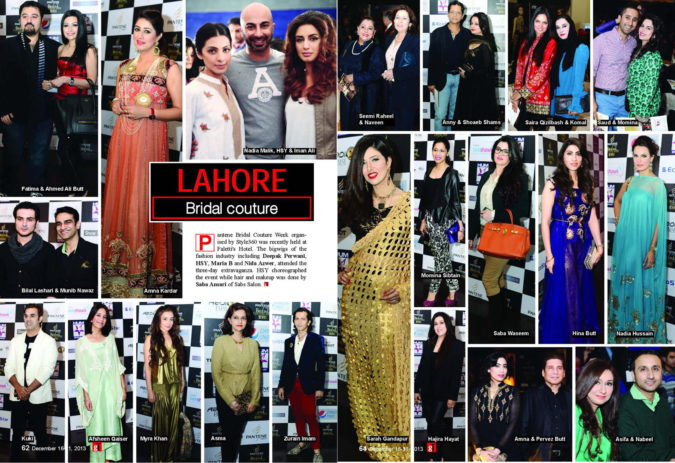
At the end of November, for the Style 360 Pantene Bridal Couture Week, we were asked to present a makeup and hair presentation. Now this is what we love: a show where we get to do what we like. We chose outfits by Fahad Hussayn, jewelry by Shafaq Habib and asked HSY to direct as only he can do. Let’s see what you guys think of it when it hits the airwaves in a few weeks. The night was special for another reason too: we had our first billboard go up in Cantt. It feels incredible every time we drive by it.



Whilst on stage, sit with a straight face, back tall and chin up; that is the most flattering angle for any bride and completes the look. If you do not follow this rule your eye bags will show. Remember these pictures will only be taken once and last a lifetime!