
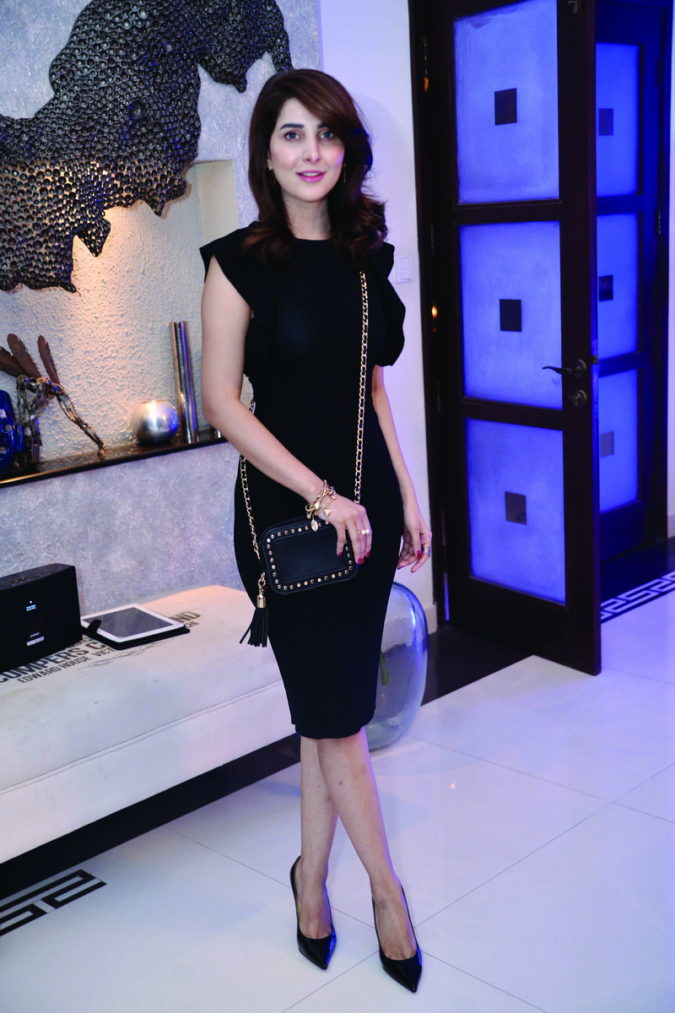









A young mother struggling with work-life balance, impresses Risham Khan with her dedication and effortless charm
As a young girl growing up in Karachi, Sophia Kasim Kasuri lived in a joint family and was almost always surrounded by lots of children. She organized fun play dates with her cousins and enjoyed her early years to the fullest.

Little did she know that her innocent passion for children would turn into something so extraordinary. Now a 38-year-old, Sophia is the leading early childhood education expert in Pakistan known for bringing the global phenomenon of ECD (Early Childhood Development) to the country.
I met Sophia on a humid August afternoon at her office in Gulberg, Lahore. As I made my way through the guarded gates and metal detectors, I found myself at the core of the Beaconhouse Head Office. Sophia’s right hand woman, Quratulain, walked me through the massive maze-like building. “I haven’t seen the entire place in my six years here!” she said as she led me up the stairs to the Gymboree lounge.
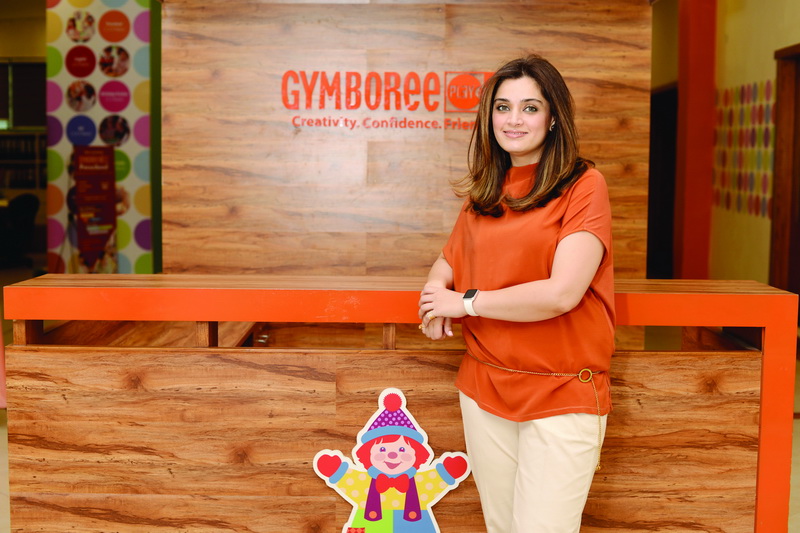
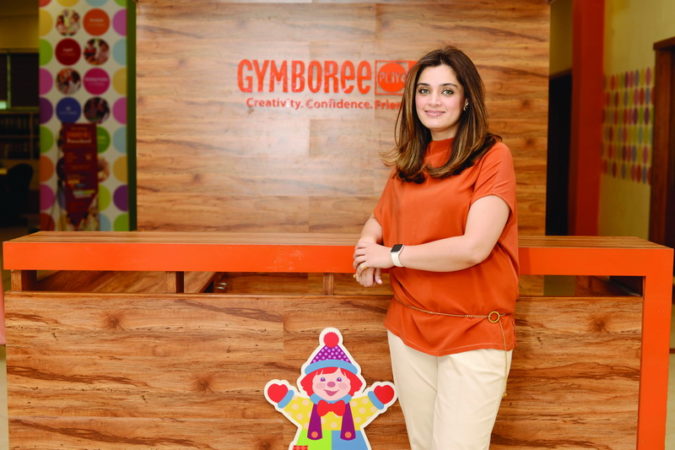
We enter Sophia’s office: a comfortable, contemporary space decorated with flamboyant pop art on the walls. When asked about the artwork, Sophia jokingly tells me she stole it from her husband, who loves collecting art and found these pieces in Koh Samui, Thailand. Sophia is decidedly casual – her hair down framing her face, just the perfect amount of make up and wearing cotton pants with an orange blouse that match the Gymboree logo. “I never thought I’d have this much orange in my wardrobe,” she says playfully.
“My mother-in-law is a doer. I remember this (a music class for kids) as a casual discussion between the two of us. She took it up immediately and then there was no shortage of guidance and direction from her. It just felt so easy to do”
Sophia’s beauty does not go unnoticed; her perfect features and enchanting green eyes make it hard to look away. What’s more captivating than her beauty, however, is her effortless ability to make everyone around her feel comfortable and included.


Sophia moved to Lahore from Karachi at 21, after she married Kasim. At the time, she barely knew anyone in the city. She didn’t have much on her plate, and decided to get a few friends together for a casual music class with their children.
Sophia brought up the idea with her mother-in-law, entrepreneur and educationist Mona Kasuri, who urged her to take this up as a project. “My mother-in-law is a doer. I remember this as a casual discussion between the two of us. She took it up immediately and then there was no shortage of guidance and direction from her. It just felt so easy to do”. And there began the story of Sophia Kasim Kasuri, who would later go on to win the award for Woman of Inspiration as a Trendsetter Educationist in Pakistan.
But how did it all begin? How did Sophia decide to introduce the ECD program in Pakistan, a concept alien to the country? It started with a trip to the US where Sophia stumbled upon a Gymboree center, a platform that encourages the emotional, social and physical development of young children aged 0-5.
She loved the idea and started something similar with The Early Years program. But there were challenges aplenty. A few years later, she got in touch with Gymboree about franchising in Pakistan. A couple of trips to the US and some hectic training sessions later, she successfully opened the first Gymboree center in Pakistan.

She talks about Gymboree with a passion. Her eyes light up as she excitedly describes all the different programs. Frustrated with the flaws that lie within our education system, Sophia says, “Asians are very academically oriented. We are obsessed with grades, we are obsessed with teaching our children ABCs and 123s. But the question is, is this all that is important? Or is the rest just as important too? We emphasize play – but play should be done in an academic way as well. That is what we do at Gymboree. We don’t try to structure play, instead we try to create an environment where children are able to bring in their own creativity.”
I steer the conversation towards her family life. Now a mother of three, Sophia spent 21 years of her life in Karachi, a city quite different from Lahore. Reminders of the Karachiite within reveal themselves involuntarily – like hiccups.
“I’m still adjusting to Lahore. I feel like a misfit. People I once knew in Karachi and met regularly, I now see once or twice a year. I feel like I am somewhere in between. I used to travel back and forth a lot initially, but with my kids at school, it’s hard to just pick up your bags and leave.”
She loosens up as she goes on to talk about her home, fashion, children, and favorite vacation spots. Sophia spent the summer vacationing in London with her in-laws, and then visiting her sister in California. “When I travel with just my husband, we like to go to new destinations. However, when we’re travelling with our children, we don’t want to experiment so it’s easier to go to predictable places.”
As a family, whether abroad or in Pakistan, the Kasuris love swimming, binge eating (ice cream and Italian food). Sophia has some elaborate interests too. “I’m a very girly girl. I like clothes, I like jewelry, I like shoes … I love shoes. Everything, actually … it’s a bit of a problem!”

Sophia’s inviting personality makes it is easy to forget that she comes from one of the most prominent families of the country. I am taken by surprise when the seemingly guarded entrepreneur opens up about her work life balance and says, “I feel like a mess (funny of her to say because her neat office, organized schedule and manicured nails give me the opposite impression) I am constantly confused. When I’m at home with my kids, I keep thinking of whether I have forgotten something about work. When I’m at work, I keep thinking of my kids. I kind of feel like I am all over the place. It’s easier to get myself together when the children are at school. I organize myself during that time.”
Sophia’s life gets hectic, managing her children with her busy work schedule isn’t an easy job. But it’s one that she does with finesse. She confesses, “I don’t know how people maintain a work life balance. I’m still figuring it out. I’m still struggling.”

By Mahlia Lone
Manish Malhotra
Sensual Affair


Anita Dogre
Tree of Love


Â
Anju Modi
Sunehri Kothi
 

Rahul Mishra
Parizaad
 

Manav Gangwani
Majestic Motif
 

Gaurav Gupta
MOONDUST
 

Monisha Jaising
Night at The Opera


Â

Who? Sonya Hussyn
Why? The monochrome outfit, nude ankle strap pumps and minimal jewellery deosn’t look boring but rather refined

Who? Fahad Mirza
Why? The actor appears fresh and relaxed in a laid back, yet polished look

Who? Areeba Habib
Why? Minimal makeup and accessories, make this model a class act to follow

Who? Rabia Aziz
Why? This more covered up version of the international see through trend is more wearable here

Who? Sadaf Kanwal
Why? Who but a top model can pull off boyfriend jeans so well?

Who? Zhalay
WhY? Her fringe and floral red dress ensure she stands out

By Mahlia Lone
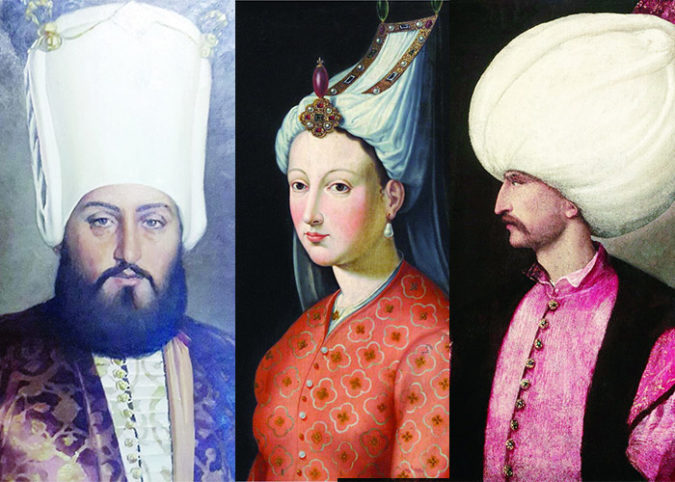
Suleyman was the only son of Sultan Selim I the Resolute responsible for increasing the Ottoman Empire in size by 70 per cent during his reign (1512-1520) by conquering the Mamluk Sultanate of Egypt and the Middle Eastern heartlands. Selim I became the guardian of the pilgrimage routes to Mecca and Medina and is generally remembered as the first legitimate Ottoman Caliph. Sixteenth-century Italian historian Paolo Giovio who compiled a book on Turkish history wrote it was inconceivable to expect that “the dauntless lion would leave his throne to mansuetto angelo (a timid lamb).â€


Another European historian of the Ottoman rulers called Selim and Suleiman: “Patris fortis filius fortior,†(a courageous father of an even more courageous son).
In September 1520, twenty-six years old Suleyman’s carefree life as governor in the Manisa province came suddenly to an end when he was called back to Constantinople after the accidental death of the Sultan; he succeeded his father and subsequently established the classical Ottoman state and society; he made important new conquests in the East and West, including Belgrade, Rhodes and much of Hungary all the way up to Vienna; he overhauled the legal system; he also patronised artists and writers at his court so the arts and culture scene flourished. Thus, with his reign began the golden age of Ottoman history.

Sixteenth century Venetian chronicler, Marino Sanuto in Tome XXXV of his historical chronicles quoted a report of the Venetian ambassador: “His not being prone, in contrast to his father and many other Sultans, to pederasty (homosexuality) made his majestic dignity and nobility of character shine even brighter.†Rather in his case, it turned out to be the love of a fair Ukrainian slave girl that was to enslave this Sultan for life.


Intelligent, benevolent and erudite but also a sound military tactician, Suleyman, in contrast to his father who expanded his Empire to include other Muslim realms, began his rule with campaigns against the Christian kingdoms in Central Europe and the Mediterranean, starting with Belgrade in 1521 that led to a large-scale advance north of the Danube. The Island of Rhodes ruled by the Knights of St. John was conquered in 1522. In 1526, Suleyman defeated the combined Hungarian-Croatian-Czech forces and took over Hungary. Hungarian King Louis II drowned ignominiously in a bog during the battle. A Turkish historian wrote at the time that “there has never been a battle like this since ancient times.†Turkish soldiers piled 2,000 heads of their enemies (eight heads belonging to bishops) in a heap close to the Sultan’s tent as a tribute to the victor. Suleyman drove the Habsburgs from all of Hungary and besieged Vienna in 1529, but could not sustain the siege. Facing problems with supply, transport, and military organization, the Sultan wisely realized he had reached the limit of possible Ottoman expansion in the West.
Though Ukraine was never conquered by the Ottomans, it became a steady source of white slaves for the Ottoman Empire. Back then just as now, Ukrainian women were highly prized for their fair skin and delicate bone structure. Muslims, it was argued, were barred by the Quran for capturing fellow Muslims as slaves, but non Muslims were fair game. The Crimean Tartars flourished in this lucrative trade of supplying white Christian slaves. Mykhailo Lytvyn, a Ukrainian diplomat in the service of the Lithuanian government, wrote in his memoirs (1548–1551) that the krymchaky (Crimean Tartars) engaged only in two trades: cattle-breeding and capturing Ukrainians to be sold to the Ottomans as slaves. “The ships that often come to their ports from across the sea, bring weapons, clothes and horses, which are exchanged for slaves who are loaded onto these ships. And all the Ottoman bazaars are full of these slaves who are sold and bought to be used in the households, to be resold, to be given as presents….There was one Jew, amazed at the great numbers of these slaves to be seen at the slave markets who asked whether there were any people left in the land where these slaves are brought from.â€

From among the countless virgins captured during military raids and auctioned at the slave markets, the rare gem of a girl was handpicked for the Sultan’s harem. One such was the adolescent daughter of a Ruthnian (Russian) Orthodox priest. According to the Polish poet Samuel Twardowski who visited Turkey in the sixteenth century, Roxolana, the girl from Roxolania or Ruthenia, was born in the town of Rohatyn, 68 km southeast of Lviv, a major city of the Ruthenian Voivodeship in the Crown of the Kingdom of Poland (today in western Ukraine). Reportedly named either Aleksandra or Anastasia Lisowska, she was captured by Crimean Tatars during a regular raid who transported her to the Crimean city of Kaffa, a major centre of the slave trade. Then the little slave girl was shipped to Constantinople, where she was selected by Valide Sultan Hasfa Sultan as a gift for her son Süleyman and taken to his harem in the old palace in Beyazit, 2 kilometers away from Topkapi.


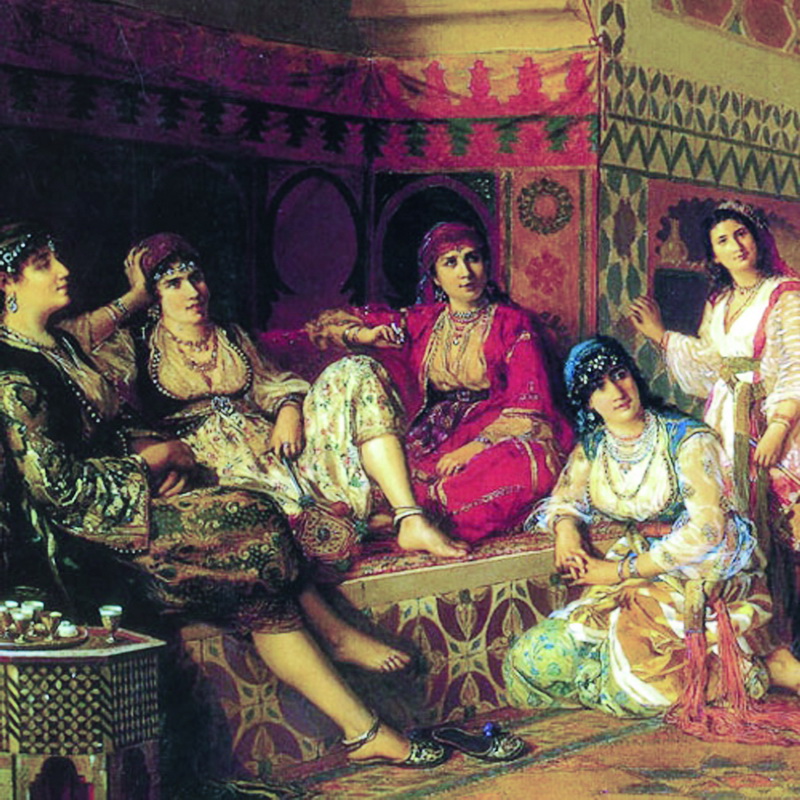
The Sultan’s harem was strictly cloistered, guarded by eunuchs and ruled by harem hierarchy and full to the brim with nubile beauties that had “dark burning eyes like black olives, big sensuous lips, and ample, zaftig, curvaceous and voluptuous figures.†The newly acquired slave girls were first taken to the hamam where they were inspected for diseases and flaws, and then deloused, scrubbed, polished, massaged, oiled and clothed. Then, their extensive grooming and training process started. Looks were not enough to ensure success at the harem as there were countless virginal beauties on display. Under the supervision of the kagia-kadin, the top female attendant in charge of the harem, the virgins were trained in housekeeping, gardening, sewing, embroidering, dancing, singing, playing musical instruments, manipulating puppets, reciting fairy tales; they were also taught the basics of Islam, literature and philosophy; last but not least, they were given pointers on the essential the art of erotic love. The trainees had to pass through several stages in mastering these skills before they could take part in the final selection: the adjemi (novice), jariye, shagird, gedikli and usta. At this final stage, the Sultan’s mother, the Valide Sultan would carefully pick only the best to offer up to her son at the Topkapi Palace.
Unlike the West where royals married into other royal houses to make strategic alliances, Ottoman Sultans used slaves for procreation so that there would not be any other family to gain prominence or aspire for power in the empire. Moreover, the established imperial harem principle of “one concubine mother — one son†was designed to prevent both the mother’s undue influence over the Sultan and the feuds of the blood brothers for the throne. Once the Sultan’s son reached maturity at 16-17, he was sent to a far off province as governor with his mother and could only return on his ascension to the throne after the death of his father. There was no formally designated heir. Once the new Sultan’s ceremony of girding the sword had taken place, his half brothers were killed. This seemingly cold system ensured the longevity and stability of the Ottoman realm.
Concubines from the imperial harem not chosen for the Sultan were given as gifts to his favourites or high ranking government officials. Some got married to these men and became the head of their own household. Those that had been “promoted†to the imperial harem were given separate rooms and servants. The haseki lucky enough to bear the Sultan sons were clothed expensively in silks, brocades and furs, allowed to publicly kiss the Sultan’s as a mark of high status and received the title bash-kadin. The girls in the harem were ranked as Gözde (the Favourite), Ikbal (the Fortunate), Kad?n (the Woman/Wife) and Valide Sultan (Queen mother). As can be expected, there was intense rivalry between the women of the harem. Additionally, there were strict rules to be followed. For example, if a harem wife was walking from one part of the seraglio to another, heard the click of the Sultan’s silver-studded shoes, she would have to quickly get out of the way and hide as unsanctioned meetings with the Sultan were considered a gross violation of the harem rules and offense to the Sultan. Offenses or violations of the harem hierarchy were punished severely, even by death.


After being educated and trained according to palace etiquette, Roxolana was renamed Hürrem, meaning the cheerful or joyful one in Middle Persian, due to her smiling face and good-humored personality. Süleyman met fifteen year old Hürrem the same year that he succeeded to the throne and hit it off with her nearly immediately. She was pretty, but not beautiful and on the short side. “Giovane ma non bella†(young but not beautiful) , “graceful and short of stature,†a Venetian ambassador was told in 1526.
Since her arrival, she had voraciously gathered as much knowledge as she could in Ottoman language, mathematics, astronomy, geography, diplomacy, literature, and history. She was even interested in alchemy. During recent excavations in the Edirne Palace, some of her tools for the preparation of perfumes were discovered. Additionally, the Ottoman Empire’s economy was largely based on textile production and trade of carpets, silks and cottons mainly with Europe to which women confined to their homes contributed by spinning cloth and embroidering. The finest, most intricate embroidery in the empire came from the imperial harem and other harems of high officials. Hurrem’s embroideries, or partly done under her supervision, that was gifted in 1547 to Tahmasp I, the Shah of Iran, and in 1549 to King Sigismund II Augustus have survived to this day and can be viewed at the Topkapi Palace.


him upon his acsension to the Polish throne (1549)
The clever girl with the strong survival instinct transformed herself into a fit companion for the Sultan. It only took a few months from the day that she first met Sultan Suleyman to the moment when she became the most important consort in the harem. This strengthened her position in the Palace so much that she initiated a new order in the harem.
The next year she gave birth to their first son, Sehzade Mehmed. As per tradition, the harem girls who became mothers to Shehzade (a sultan’s son) were given the title haseki (mother of a prince), meaning has gelin (the royal bride). Hürrem too was now called Hürrem Haseki. Loath to part from her, Hürrem was exempted from the rule of one haseki one son and was allowed to give birth to more than one son. Soon after their only daughter Mihrimah Sultan, Sehzade Abdullah, Sultan Selim II and Sehzade Bayezid followed in quick succession. Their last child Sehzade Cihangir was born later and had a hunchback. Mehmed became Süleyman’s favourite child but he died at a young age after contracting an infectious disease. In his memory, Süleyman built the Sehzade Mosque in Istanbul.

One day Suleiman’s jealous former favourite, Mahidevran, also called Gülbahar (Rose of Spring) got into a fight with her chief rival Hürrem and beat her badly. To punish her, Suleiman banished Mahidevran to the provincial capital of Manisa with their son and the heir apparent, Mustafa. Officially, it was not called and exile but was portrayed as the traditional training of heir apparent, Sancak Beyli?i. After this, Hürrem became Suleiman’s unrivalled favourite haseki.
Hurrem was hardly the odd Slav out at court. Due to the expansion, an ever increasing number of Slavs had become integrated into Ottoman life not just as part of the Janissaries (armed forces) and harems but even the ruling elite. Serbian language could be heard spoken from bazaars to the Sultan’s court and was used in official documents in addition to Turkish. The Polish traveler Strijkowskij wrote that when he was in Istanbul he heard with his own ears kobzari (bards) singing songs in Serbian in the streets and in the taverns about victories of valiant Muslims over the Christians.


Giovio wrote: “At the court (of Suleyman The Magnificent) several languages are spoken. Turkish is the language of the ruler; Arabic is the language of the Muslim Law, Koran; Slavic (Sclavonica) is mostly used by the Janissaries, and Greek is the language of the populace of the capital and other cities of Greece.â€
Bassano, an Italian visitor to Suleyman’s court, claimed that “he (the Sultan) respected and highly valued his wife (Roxolana) and understood her native language to some extent.†One of the Sultan’s viziers was Rustem Pasha, a Croat.
Oleksiy Pyvovarenko, head of the Lviv Club of Socionics in his article about the psychological portrait of the couple Suleyman-Roxolana, wrote that they were “duals,†two persons who ideally matched each other in character. The Sultan became faithful to Hurrem whose main asset was her mind. She was able both to entertain the Sultan with clever and witty talk and give good and sound advice. Due to her excellent education, she also became Suleiman’s chief adviser on matters of state and had a considerable influence upon foreign affairs and international politics. For example, she took care of maintaining the peaceful relations between the Ottoman Empire and Polish state with a Polish-Ottoman alliance. Two of her letters to King Sigismund II Augustus of Poland have been preserved and survive to this day. According to Crimean historians, she also intervened to control Crimean Tatar slave-raiding.

daughter Mihrimah Sultan

During their 200 year long dynasty, on the rare occasion the Sultan married, his legal wife would belong to a foreign royal house or a distinguished Ottoman family. Suleiman was about to break with that tradition, carefully manipulated by Hurrem who did not outright ask him to marry her. In 1533, she confessed to him her growing love for Islam and how badly she wanted to convert to the true faith. He was thrilled and readily consented. After converting to Islam, Hurrem did not allow the Sultan to come to her bed, citing that now it was against the teachings of the Quran. After three days of being kept at a distance, the Sultan capitulated and married his concubine in a magnificent formal ceremony. She received the title Haseki Sultan (Empress) becoming the first consort to hold this title. An Ottoman Sultan had married a haseki for the first time in history. The title of Haseki Sultan was used for the next century and reflected the great power of imperial consorts (most of them former slaves) in the Ottoman court, elevating their status higher than Ottoman princesses. In this case, Süleyman not only broke the old custom, but created a new tradition. With Hurrem’s new title came a stipend of 2,000 aspers a day, making her one of the highest paid hasekis. Sultan started to be viewed by his people as being dominated and controlled by his foreign wife.

A fawning love letter penned
by Hurrem for her Sultan:
After I put my head on the ground and kiss the soil that your blessed feet step upon, my nation’s sun and wealth my sultan, if you ask about me, your servant who has caught fire from the zeal of missing you, I am like the one whose liver (in this case, meaning heart) has been broiled; whose chest has been ruined; whose eyes are filled with tears, who cannot distinguish anymore between night and day; who has fallen into the sea of yearning; desperate, mad with your love; in a worse situation than Ferhat and Majnun, this passionate love of yours, your slave, is burning because I have been separated from you. Like a nightingale, whose sighs and cries for help do not cease, I am in such a state due to being away from you. I would pray to Allah to not afflict this pain even upon your enemies. My dearest sultan! As it has been one-and-a-half months since I last heard from you, Allah knows that I have been crying night and day waiting for you to come back home. While I was crying without knowing what to do, the one and only Allah allowed me to receive good news from you. Once I heard the news, Allah knows, I came to life once more since I had died while waiting for you. My dearest sultan! If you ask about Istanbul, the city still suffers from the plague; however, it is not like the previous one. God willing, it will go away as soon as you return to the city. Our ancestors said that the plague goes away once the trees shed their leaves in autumn. My dearest Sultan! I am begging Allah for you to send me your blessed letters. Believe me when I say this: if I cannot hear a word from you for more than two weeks, the world collapses. There will be rumors about your well-being around the city. Please do not think that I want to hear from you just for my own sake.â€
After becoming the legal wife of the Sultan, Hurrem Sultan was exempted from harem rules. She became the first woman to remain in the Sultan’s court for the duration of her life. In the Ottoman imperial family tradition, a sultan’s consort only remained in the harem until her son the Sehzade came of age and following the practice of Sanjak Beyligi, both mother and son would leave for a faraway province. The Sultan kept Hürrem close to him at Topkapi Palace, even after three of their sons were sent off.
“The current wife of the Turkish Sultan who loves her dearly is a woman who was captured somewhere in our lands,†wrote Mykhailo Lytvyn, ambassador of the Grand Duchy of Lithuania to the Crimean Khanate.


a woman, designed by Mimar Sinan Aga (1539), also included darussifah (hospital),
imaret (soup kitchen), mosque and hamam

The Venetian ambassador, Navagero, also reported in 1533, “There has never been a woman in the Ottoman palace that had more power than she.â€
When Hafsa Valide, Süleyman’s mother and the daughter of the Khan of Crimea died, Hürrem became the sole female power in the Topkapi Palace.
Traditionally, to avoid rebellions and civil unrest, it was the prevailing Ottoman custom called kardes katliami that when a new Sultan gained the throne, all of his brothers were killed in order to ensure the stability of the empire. This is why one haseki was only allowed to bear one son. Mahidevran’s son Mustafa was the eldest of the Sultan’s sons and preceded Hürrem’s children in the order of succession. To avoid the eventual execution of her sons, Hürrem used her considerable influence on the Sultan to eliminate those in power, like Süleyman’s Grand Vizier Pargali Ibrahim Pasha who supported Sehrezade Mustafa’s accession to the throne; she flexed her muscle to push for his 1936 execution after he had made some tactical blunders. Later, 1544 onwards, the post of Grand Vizier was held by Suleyman and Hurrem’s wily Croatian born son in law Rustem Pasha who was in cahoots with his mother in law.


When the Sultan left for military campaigns through which he annexed Persia, Mesopotamia, Central Asia, Yemen and Abyssinia (in total he spent 10 years out of 46 year reign away from court on military campaigns) Hurrem Sultan was left in charge by him to oversee palace order, head state affairs, deal with foreign emissaries and even be his eyes and ears gathering intelligence for him. She apprised the Sultan of the latest news through her constant stream of neat, grammatical letters, interspersed with sentimental poems. One such read: “My lord, Your absence has kindled a fire in me that cannot be put out. Take pity of my suffering soul and write a letter to me as soon as You can so that I could find at least some consolation in it. My lord, I hope that when You read these words, Your wish to write to us will be fortified and You will express all Your longing to see us again. When I read Your letter, Your son Mehmed and Your daughter Mihrimah were close by my side and tears were rolling down their to the Sultan.â€
The Sultan replied:“At last we shall unite in souls, in thoughts, in imagination, in will, in heart, in everything that I have left of mine in you, and have taken of you with me, o my only love!â€
In the public realm, Suleyman won the title of Muhtesem (The Magnificent) for his military exploits and political success. He was also referred to as Suleyman Kanuni (the Lawgiver) as he had all the archaic laws of the empire updated and reorganized and was compared to the Biblical King Solomon because of “his wisdom and the splendour of his court.†In addition, Suleyman became known as “the creative conquerer†who wielded a pen as well as a sword. His reign became known as the Ottoman Golden Age. Culture and the arts flourished. The architect Sinan, the poet, thinker and writer, Fuzuli, the mathematician, painter and cartographer, Matrakci Nasuh, and the innovative illuminator Karamemi all lived and worked under his patronage.


by the calligrapher Mehmed el-Serif and illuminated by Karamemi

When Hurrem was fifty and well past her prime, the Venetian ambassador Navagero wrote: “His Majesty the Sultan loves Roxolana so much that never has in the Ottoman dynasty been a woman who would enjoy a greater respect. They say that she has a very nice and modest appearance, and that she knows the nature of the great ruler very well.†Though the Europeans were very impressed by the slave girl turned Empress because she favoured them; however, the Turks felt otherwise about Hurrem.
Handsome and brave Sehzade Mustafa had grown extremely popular amongst the common people due to the generosity he lavished upon them and amongst the soldiers that he led valiantly in many successful campaigns. He reminded the people of his grandfather Selim I and was generally expected to succeed Süleyman even though there was no formal succession system in the Ottoman Empire. As Süleyman ruled for 46 years, the younger generation wanted Sehzade Mustafa to take the throne instead of his elderly father, but Hurrem knew this meant the death of her sons.
In 1533, during Suleiman’s Persian campaign, the Sultan halted his army in Eregli on the Black Sea where his Grand Vizier and son in law/husband to his daughter Mihrimah, Rüstem Pasha invited Mustafa to join his father’s army. Duplicitously, Rustem convinced Suleyman that Mustafa was coming to kill him. Not realizing he was being double crossed, Mustafa assembled his army to join his father’s. Suleyman thought he was revolting and ordered the execution of his son. When Mustafa entered his father’s tent to meet with him, Suleyman’s guards attacked the Sehrzade and after a long struggle strangled him using a bow-string.
Angered at their warrior leader’s senseless murder, Mustafa’s Janissaries and Anatolian soldiers railed against Suleiman’s peremptory decision. Suleiman dismissed Rüstem from his position as Grand Vizier and sent him back to the capital, but even there the people blamed Hürrem, Rüstem and Mihrimah for their cunning plot and the Sultan for being duped by them. That year—1553, Constantinople was filled with tension and fear. Topkapi Palace was attacked by thousands of angry protestors crying out against the foreign “witch.†To appease them, Suleiman ordered that Mustafa be given a state funeral with a full week of lying in state at Hagia Sophia for the people to pay their respects. Mustafa was laid to rest in a large mausoleum in Bursa. After the death of her son, Gulbahar lost her high status and moved to Bursa. It is said that Cihangir, Hürrem’s youngest hunchback son died of grief a few months after the news of his half-brother’s horrific murder that lay at his mother’s door.
My resident of solitude, my everything, my beloved,
my shining moon
My friend, my privacy, my everything, my shah of beautiful, my sultan
My life, my existence, my lifetime, my wine of youngness, my heaven
My spring, my joy, my day, my beloved, my laughing rose.
My plant, my sugar, my treasure, my delicate in world
My saint, my Joseph, my everything, my Khan of my
heart´s Egypt.
My Istanbul, My Karaman,
my land of Rum
My Bedehsan, my Kipchak,
my Bagdad, my Horosan
My long-haired, my bow like eyebrow, my eye full of discord,
my patient
My blood is on your hands if I die, mercy o my non-Muslim
I am a flatterer near your door,
I always praise you
Heart is full of sorrow, eye is full of tears, I am Muhibbi and I am happy.

Mustafa’s execution had caused great unrest in Anatolia, especially in Amasya, Manisa and Konya where he been a just governor. The people remembered him as Sultan Mustafa, even though his life had been cut short before his ascension to the throne, and his legend grew to become a part of Anatolian Turkish literature. The poet Taslicali Yahya composed a haunting elegy for Mustafa that read:
“The slander and the secret grudge of the liars shed tears from our eyes; ignited the fire of separation
He never murdered anybody, but his life was drowned in the flood of calamity, his comrades were disbanded
I wish I had never seen this event. What a shame: my eyes didn’t approve this treatment to himâ€
Rustem Pasha strove to get Yahya executed as punishment. The Sultan prohibited his execution but instead deprived him of his offices and banished the poet to the Balkans. In 1574-75, while in Bosnia, Yahya met Mustafa Âlî, a well known Ottoman historian and bureaucrat who referred to him as “a poet too talented to be supported by jealous politicians and subsequently condemned to exile in the border provinces.â€
Both Hurrem and her son in law the Grand Vizier Rustem Pasha made a deadly team successful in cut throat court politics and intrigues. They were the outsiders not only surviving, but flourishing at the Ottoman court. Suleyman himself lived to regret both the executions that of his Grand Vizier and of his son and heir. European historians argue that Mustafa did not deserve the throne. Although he was courageous, he lacked two important qualities for a ruler, patience and cautiousness. After Mustafa’s death Selim, his son from Hurrem, became the heir apparent. Though obedient to his father, he was unpopular for being cruel and an alcoholic. Süleyman and Hürrem did not hesitate to execute their own son Sehzade Beyazid and grandsons in 1561 when they revolted over the issue of succession, such was their tenacious grip on power and control.
Given the grisly backdrop of the bloodshed, in 1554, Dominico Trevisano wrote about the Sultan and Hurrem’s continued love affair: “His Majesty the Sultan loves her (Roxolana) so much that, as they say, he has refused to be with any other woman but her; none of his predecessors had ever done that and such a thing is unheard of among the Turks who have a custom of sleeping with many wives.â€
Because of her inordinate amount of power and influence from which even Suleiman’s own children from other women were not safe, her meteoric and unprecedented rise and her unassailable position for forty years, Hurrem Sultan was widely believed to be a witch who had put a hypnotic spell on the Sultan using voodoo incantations and potions. At the time, this was not a farfetched theory. Only a century later, Louis IV’s mistress Madame de Montespan would be disgraced and banished for visiting the witch La Voisin to perform rituals by killing babies to make love potions used on the French King. Similarly, the Austrian ambassador Busbek wrote in 1554 that he was told of women in the capital who supplied Hurrem Sultan with bones from the skulls of hyenas which were believed to be a very strong aphrodisiac. After investigating the claims, he wrote, “But none of them agreed to sell these bones to me saying they were meant exclusively for Hurrem Sultan who, they said, made the Sultan continuously attached to her by making love potions and other magic means.†It was a wide-spread popular belief that Suleyman was so obedient to his wife and putty in her hands because of the magic spell that she put on him. She, people said, was behind the Sultan’s decisions to execute Ibrahim, his closest friend and vizier, and Mustafa, his first-born son and heir to the throne. Her children had directly benefitted from these heinous crimes.
One day, Hürrem became suddenly very ill and perhaps deciding to atone for her sins, curry favour with Allah and win people’s approbation, she dedicated herself to charitable works. Inspired by the Caliph Harun al-Rashid’s consort Zubaida, she commissioned many public works including two domed mosques built in Istanbul’s Haseki neighborhood along with fountains and madrasahs, a poorhouse and the Haseki Hospital for women near the women’s slave market of Avret Pazary that is remarkably still functional. She also commissioned a bath, the Haseki Hürrem Sultan Hamam, to serve the community of worshipers in the nearby Hagia Sophia and Suleyman’s mosque. This Hamam also continues to function today. In 1552, she went on to establish the Hasseki Sultan Imaret in Jerusalem a public soup kitchen to feed 500 needy twice a day. Ironically, the money to build the mosques had come from the customary tithes that the Christian pilgrims had to pay for visiting the holy sites in Jerusalem. Suleyman imposed fees on the use of mosques as well, when the need for extra money arose usually to fund a military campaign.
Hürrem died in 1558 and was buried in a purpose built domed mausoleum türbe built by Mimar Sinan Aga the Grand Architect and decorated with exquisite Iznik tiles depicting the Garden of Paradise in memory of her joyful nature in the courtyard of the Süleymaniye Mosque. It is said that Suleyman was so sad that he did not regain happiness for the rest of his life and pined away for his wife. Eight years later in 1566 the aged Sultan too died while besieging the fortress of Szigetvar in Hungary and was laid to rest in a somber mausoleum adjacent to that of his beloved.
Their remaining son ascended the throne as Selim II and ruled the Ottoman Empire until his death on December 15, 1574. One of his first acts was to save Mahidevran from penury and put her on a lavish salary. Despite all of Hurrem’s machinations, her son did not make a good ruler, in fact he became the first sultan who took no interest in military matters. Instead he lived a debauched life steeped in alcohol and orgies, earning him the sobriquet Selim The Sot (the drunkard). He left all state matters in the hands of his Grand Vizier Mehmed Sokollu, a Bosnian native.
Hurrem Sultan, the slave girl who became “The Wife of the Sultan of the World†caught European imagination and inspired many paintings, musical works (including Joseph Haydn’s Symphony No. 63), an opera by Denys Sichynsky, a ballet, plays, and several novels mainly in Ukrainian, but also in English, French, and German. In 2007, the Muslims in Mariupol, a port city in Ukraine, opened a mosque to honor Roxelana. In the vastly successful Turkish TV series Muhtesem Yüzyil (Mera Sultan), Hürrem Sultan is played by Turkish actress Meryem Uzerli.
Suleyman’s faithful love and ardor for Hürrem is best illustrated by the love poems he sent to her when he was away on campaigns. The book of Suleyman’s poems Muhibbi Divani written in Talik inscription by the calligrapher Mehmed el-Serif and illuminated with beautiful and evocative illustrations by Karamemi is a testament to his love for her. Suleyman’s love poems to his wife were signed Muhibbi (lover or sweetheart) and include the following:
Throne of my lonely niche, my wealth, my love, my moonlight.
My most sincere friend, my confidant, my very existence, my Sultan, my one and only love.
The most beautiful among the beautiful…
My springtime, my merry faced love, my daytime, my sweetheart, laughing leaf…
My plants, my sweet, my rose, the one only who does not distress me in this world…
My Istanbul, my Caraman, the earth of my Anatolia
My Badakhshan, my Baghdad and Khorasan
My woman of the beautiful hair, my love of the slanted brow, my love of eyes full of mischief…
I’ll sing your praises always
I, lover of the tormented heart, Muhibbi of the eyes full of tears, I am happy.
And so the powerful Sultan Suleyman The Magnificent broke with the old Ottoman tradition and created a new one of being monogamous till the end of his days to a slave girl that he willingly made his legal wife and consort.


Mahlia S. Lone
Happy 70th Birthday Pakistan!
We have a fun issue for you. People that we know of mostly in their professional capacity allow GT an intimate glimpse into their personal lives as well. To start off this fortnight we spent a day with the stars of Punjab Nahi Jaungi for the cover story. With four big movie stars on hand, the entourage that each of them brought with them, combined with the hair and makeup team, the entire production unit was quite overwhelming in size. A big shout out to designer Ammara Khan and Shammal Qureshi of Toni & Guy for being such consummate professionals and pleasant individuals to deal with! Neither of them had any ego at all. Perhaps due to the excessive heat, the stars ended up telling us about their secret fantasies. It’s interesting to say the least.
Just like our nation, Maria Wasti too was born on 14th August, but of course she’s considerably younger. The actress/producer who believes in liberation for all and works for women’s rights, gender equality and combating social prejudice reveals how she behaves when in love in her interview.
Another sweet and professional woman is Sophia Kasim Kasuri. Sophia lets GT into her personal space and talks about not just how she balances heading Gymboree Pakistan with being a wife and mother, but also her experience of moving to Lahore from Karachi and the kind of holidays she likes to take with her family.
Canadian artist Tyler Tilney has lived a nomadic existence. A Toronto native, he moved around the world before settling, for the moment, in Bangkok. Fearlessly, he channels all his crazy experiences and raw emotional states into abstract, figurative and visceral paintings. Imagine his state of mind when clients come to him and ask to take his paintings home to see if they match their sofas and cushions. It takes all types to make the world.
The recent Fashion Design Council of India Couture Week had unbelievably glamorous fashion. Feast your eyes on the jaw dropping gowns and desi wear all the way from New Delhi in this installment of the Ruway Report. Last but not least, for all the countless Mera Sultan fans, we have the true story of Suleyman The Magnificent and Hurrem Sultan. Not only is it a great love story between a slave girl and a powerful Sultan, a lesson in how to handle a man and how to sweetly get your way, but it’s also teaches us about Ottoman history and the strong link of the Empire with Bosnia. I, for one, never knew why there are still so many Muslims native to the country in the middle of Europe.
Enjoy!


