
Kiran Chaudhry Amlani on the Indian appetite for Pakistani fashion

In many ways, I was trained to be a nomad from an early age. My father, as an upright government officer, got posted and re-posted to different locations across the country more frequently than most of his colleagues. We seldom stayed in the same city for more than two years at a time—to the extent that before the age of sixteen, I had changed at least twelve schools across four countries. While many would have seen this as disruptive to a child’s school routine, I believe it made me resilient and comfortable in a constantly changing environment.
I have started life ‘all over again’ so many times, that it’s almost second nature now. Far from being scary, I perhaps unconsciously seek it out as a precursor to personal and professional growth. When you are defined by no particular identity or worldview, life is full of possibilities, you see opportunities everywhere and the learning process is intense. It was in this way that, when I started my new life in India post-marriage, I saw the potential of Pakistani fashion in India.
I have always had a very close association with the fashion community in Pakistan, having been to high school with the likes of Kamiar Rokni and Hassan Shehryar Yasin; being their ‘date’ to many a fashion after-party and witnessing many fashion weeks in support whenever my friends would show. My interest in the business of fashion, however, began last year while travelling to India and mostly while I was shopping for my wedding trousseau!
I could not believe the sheer variety I experienced in India — the emphasis on local textiles and regional craft. I also realized that the sheer size of the upper middle-class in India makes fashion a very different creature in India than it is in Pakistan, where it still remains elite-driven. There is something for every budget and even top designers cater to a middle class sensibility.


Matters came to a head when two friends of mine from Lahore, Faraz Manan and Shoaib Shafi, got in touch with me as they were planning to come to India for an exhibition and were looking for a venue. I naturally spoke to my husband, who is in the hospitality business and we decided to have the exhibition at one of his venues in Delhi. Normally operating as a restaurant and nightclub called “Shroom,” this venue was perfect as it was already located in a popular mall for designer clothes. Without knowing what we were getting ourselves into, we decided to help Faraz and Shoaib put the whole event together – from getting a good guest-list, renting racks, lights and mirrors, to printing invites and posters.

We were completely overwhelmed by the response that followed. I had not realized the very real curiosity about Pakistan and Pakistani fashion that exists in the Indian mind. So many people already knew about popular brands like Crescent and Sana Safinaz. Interestingly, most people had seen only our cotton ‘lawn’ suits and nothing like the more upper-end, well-styled and very modern pret that Faraz was showcasing. To them, it was interestingly styled, stood out, and nobody else would have it – enough reasons for them to purchase it.

Amusingly, Faraz had asked me to wear one of his outfits each day of the two-day exhibition, and as it happened, I had to change several times a day, as everyone literally wanted to buy the “shirt off my back”! One girl, very sweetly and rather earnestly asked me if I could just “take it off please so I can wear it to my kitty party tomorrow morning”! I thought she was kidding, and tried to laugh it off. But when she didn’t budge and just stood there expectantly, waiting for me to take off my clothes so she could have them, I realized the opportunity that exists. It was then that I decided that I wanted to explore this further and test the market properly.

Harmeet Bajaj, Riyaaz’s close friend and business partner in the Delhi restaurants, agreed to be my partner in this exploratory venture and we hatched a plan to have a multi-designer exhibition in August of this year, on a much larger scale, with some of Pakistan’s top names. Harmeet is a fashion veteran, having taught at NIFT, choreographed numerous shows and run a successful garments export business. Having a ‘fashion insider’ mind-set was a big advantage.
The sheer size of the upper middle-class in India makes fashion a very different creature in India than it is in Pakistan, where it still remains elite-driven



While we viewed this project as more of a learning experience than anything else — to identify the ‘type of product’ that would work well in India, as well as the people we could do business with in Pakistan — we were amazed by the response. We had some big names like Sana Safinaz, Sania Maskatiya, Elan, Crescent by Faraz Manan, Nida Azwer Umar Sayeed, and Fahad Hussayn on board. For a first venture, we had been ambitious, showcasing nine designers and almost seven hundred pieces! But as they say, “build it and they will come.” The buzz about the exhibition was all over the city, as an exclusively Pakistani fashion event is quite rare in India, especially given the recent political tensions over the line of control. The Delhi fashion circuit was generally very impressed with the offering — clamoring to leave their details on our visitor’s book to ensure they were invited to the next exhibition.
Lahore designers fared better in Delhi and Karachi designers better in Bombay
After Delhi, we took selected stock to Bombay and had three trunk shows there in association with a couple of established multi-brand stores with a good clientele. Bombay is a market not many Pakistani designers have tapped into, but it is not one to ignore, especially given that it is the hub of the media and entertainment industries and the impact of Bollywood on fashion cannot be underestimated.
Interestingly, Lahore designers fared better in Delhi and Karachi designers better in Bombay. I realized yet again how much we are a ‘geographically’ rather than a ‘nationally’ defined region. Indeed Bombay and Karachi have far more in common than just an aesthetic. Both cities are commerce-driven and full of practical-minded people; it is easy to see that they were sister-cities until not long ago. Similarly, Delhi and Lahore share a common soul in their bent towards the arts and culture. It makes sense that what works in one city, will work in the other.
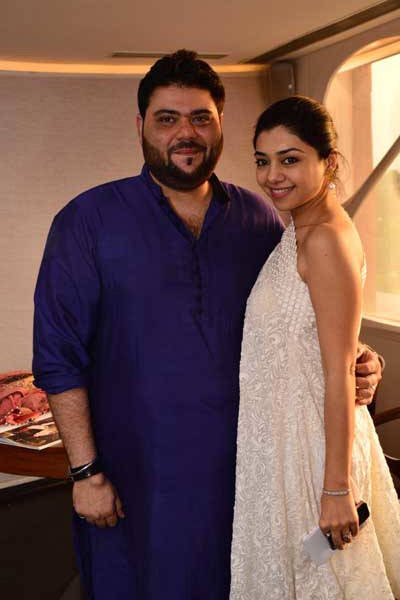
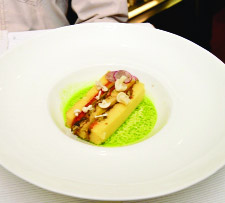
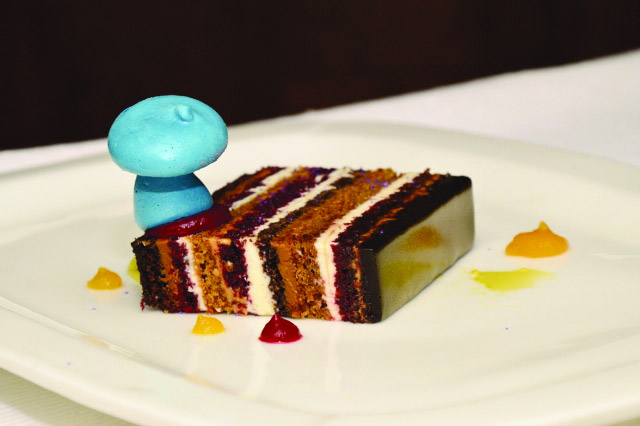
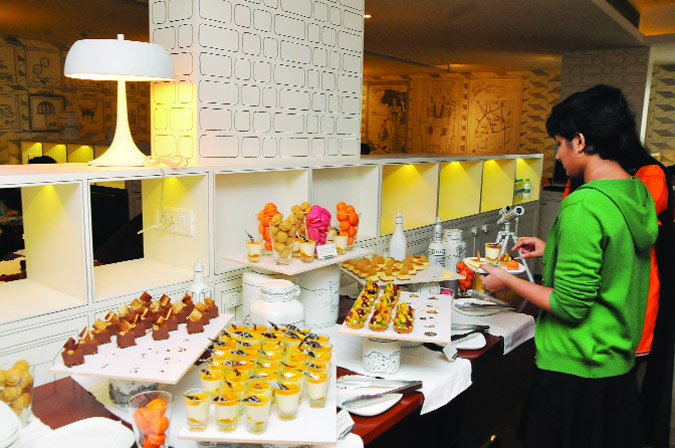
Perhaps it was all this talk of fashion, or perhaps it happened more organically, but my husband Riyaaz was simultaneously inspired to incorporate the lure of fashion into his restaurants. His creative team has recently come up with a concept to fuse the world of fashion and food and they regularly have “Deconstruct” events at the Delhi restaurants, where each dish on a special fine dining menu is inspired by a particular fashion designer’s style and design philosophy. Prominent designers like Rohit Bal, Pankaj & Nidhi etc. opened the first deconstruct evening and fashion bigwigs like Pernia Qureshi came out to endorse it. He has been on an expansion drive recently, opening his most popular brand, “Smoke House Deli” in Delhi and Bangalore in the last couple of months and I have also had the opportunity to understand these other cities of India from a cultural and commercial perspective.
I had to change several times a day, as everyone literally wanted to buy the “shirt off my back”! One girl rather earnestly asked me if I could just “take it off please so I can wear it to my kitty party tomorrow morning”!
I think it’s wonderful how the Indians laud and pay homage to the achievements of each other, even if they come from completely different fields. They understand that together they are more than the sum of their parts. I am always amazed at how my husband goes out of his way to support other restaurateurs launch their latest ventures, and vice versa. They help each other get ahead.

But I cannot help but feel that this is just a product of having a market size that is big enough for everyone. The fact remains that the Indian market boasts several major cities that any business can grow into — be it fashion or food. They don’t just have Lahore and Karachi, but Delhi, Bombay, Pune, Chandigarh, Bangalore, Hyderabad, Chennai, Calcutta. The list is endless. Also, their focus remains the middle and upper-middle class. This means the market is big enough for everyone to flourish.
I am left with a sense that the Pakistani textile and fashion industry could double almost overnight if the Indian market became available to it — not to mention the glorious dividend in the form of lasting peace in the region.


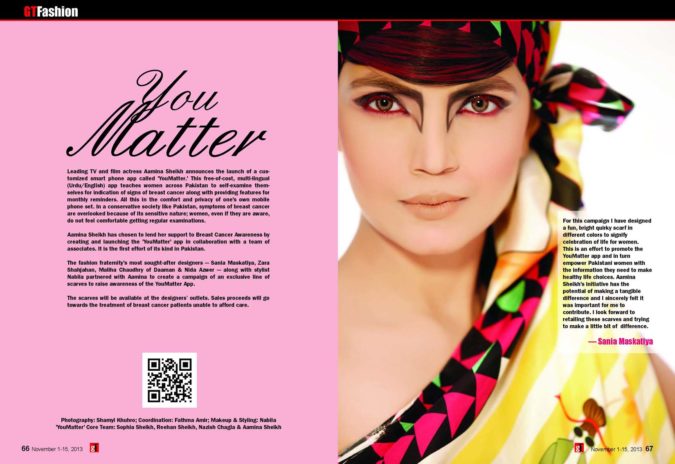


As a child, Nina Kashif moved from one military base to another. “My parents wanted me to become a doctor or an engineer,†she says, smiling. “This was never part of the plan.†What Nina enigmatically refers to as “this†is a media career in one of the biggest production houses in the country. As the general manager of all things creative at M.D Productions (formerly Moomal Productions), Nina has her work cut out for her — from reading scripts to soothing temperamental actors to attending to the director’s last-minute wish list. But she thrives in this environment, seeking solutions to challenges and savouring the praise and recognition that comes from a hit drama serial. “Once the project is out, and especially if it’s a hit†she says, “everything, including the fights, are forgotten, and everyone is one big happy family.â€


‘After the scene ended, everyone was crying. I have never seen anything like it in my eight years in the industry’
Marriage, says Nina, gave her wings. She attributes much of her success and wellbeing to her husband Kashif and their two kids, Affaf and Salaar. “My family is happy if I’m happy,†she says. Nina’s first stint in the media was at MTV where she worked, among other things, with a little-known VJ by the name of Mahira Khan on MTVs “Most Wanted.â€Â Many years later, Nina and Mahira’s paths were to cross again, when Mahira starred in Humfasar, of which Nina was the senior producer. Humsafar exploded on the screen, becoming one of Pakistan’s most popular drama serials ever to be aired. Fawad and Mahira Khan shot to fame overnight, but it was also Nina’s first breakthrough. “My husband’s friends would see me in the credits and tell him, ‘wow, bhabhi is doing a great job!’†she laughs. “Before Humsafar, it was very much ghar ki murghi, daal baraabar.â€

Many years later, Nina and Mahira’s paths were to cross again on the set of Humsafar
“Mahira is like a younger sister to me,†Nina tells me. “When she and I go to a restaurant, we have to find the smallest corner in the room where no one will see us!†Ditto with Fawad: when Nina joined Fawad and his wife for dinner at a Thai restaurant in Karachi soon after the release of Humsafar, almost everyone, at one point, came to their table for an autograph or a picture. When Nina talks about the project, there is wistfulness in her voice: “Everyone on set had great relationships.†This is unusual for drama serials where misunderstandings, fights, and egos compete. “God rewarded everyone working on Humsafar for having good intentions. These were all good, sincere, talented, self-made people.â€


On the set of Dastaan, when the shoot was running late and half the costumes had not arrived, Saba Qamar arrived with things like parandas and chooris from her own house
After Humsafar, Nina worked on Mata-e-Jaan, one of my personal favourites, starring Sarwat Gilani, Adeel Hussain and Javed Sheikh. An incredibly well-done project about the lives of two Columbia students, it was shot in part at the university in Manhattan. The list of serials Nina has worked on as a producer are impressive for their range and the quality of their commercial success. Among them are Vasl (directed by Mehreen Jabbar), Daastaan (directed by Haissam Hussain), Paani Jaisa Pyaar (directed by Sarmad Khoosat of Humsafar fame), Mata-e-Jaan (directed by Mehreen Jabbar), Bilqees Kaur (directed by Adnan Ahmed) and Hamnasheen (directed by Siraj ul Haq). The forthcoming “Muhabbat Subha ka Sitara hai†(directed by Sakina Samoo) stars Mikal Khan, Adeel Hussain, Sanam Jung, Mira Sethi, Hira Tareen and others.


Nina attributes much of her success, and confidence, to Mr Ghazanfar Ali (who helped her get started at MTV) and Momina Duraid, the CEO of MD Productions. “They have been a source of inspiration and guidance for me through out. The credit for everything I have learnt goes to these two individuals.†I asked how she balances her hyper-demanding career with the demands of her children and family. “I’d be lying if I said it’s a piece of cake,†she says. “But I work hard.†She adds, playfully, “I have always believed in having my cake and eating it too, so this lifestyle is fine insofar as I maintain a balance!â€

One of Nina’s most satisfying and moving experiences came on the set of Dastaan, a Razia Butt novel, Bano, adapted to the screen. “We had to work hard to make the serial as beautiful as the book,†she says. In a country where historical archives are dumped in horse stables (as was recently discovered), Nina tells me there was little visual or historical information with which to create a genuine feel for Dastaan, which is a period drama. It tells the story of Bano, a girl from a closeknit Muslim family living in Ludhiana (in Punjab) in the pre-1947 era. The plot centers around Bano and her fiancée, as they battle the upheavals caused by Partition. Dastaan was the first project of its kind made in Pakistan, and by Nina’s telling, also a one-of-a-kind experience in her career as a producer. “The research involved was extensive; we had to go through movies, clips and endless other sources to get the look and feel of Dastaan just right.†Notable locations of shooting included the Islamic College, the Badshahi Masjid as well as the Pakistan Railways Station. Nina recalls a moment on the set when her eyes welled-up-because the scene they had just shot was so moving. In the July heat of Lahore, in the walled city, some 50 or so actors including Saba Qamar, Sanam Baloch and Ahsan Khan were shooting. After the scene ended, Nina says, “Everyone on the set was crying, I have never seen anything like it in my eight years in the industry.â€


Nina goes onto praise Saba Qamar for being a versatile actress with incredible range. “She’s a professional, and completely self-made.â€Â She recounts how once on the set of Dastaan, when the shoot was running late and half the costumes had not arrived, Saba arrived on set with things like parandas and chooris from her own house — a reflection of her dedication. I asked Nina how she feels working closely with the biggest stars in the country, and in many instances, toiling behind the scenes to make them into the stars they are. “I always believed in giving more than receiving,†she says. “It’s great to see artists prosper in life in a way that your own contribution is evident too.†Nina Kashif is the classic urban working mom: practical, motivated, generous with her praise. From a shy teenager to a newly-wed housewife to managing director of all things creative in the most influential production house in the country, Nina Kashif has had a whirlwind journey. We wish her continued success.

Nina’s Wardrobe: Sania Maskatiya
Makeup and Styling: Beenish Pervez

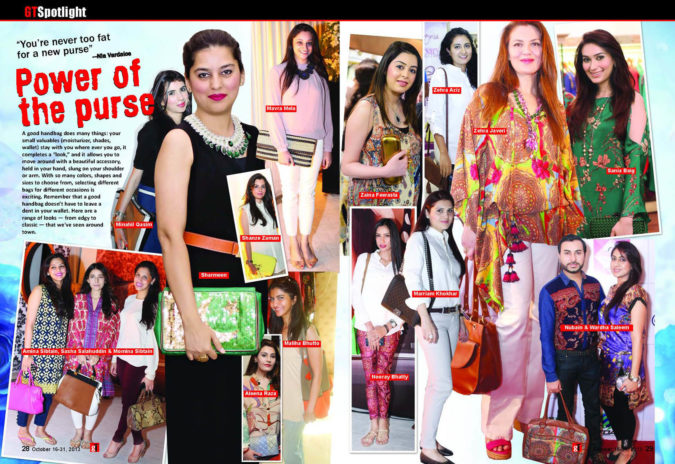

A good handbag does many things: your small valuables (moisturizer, shades, wallet) stay with you where ever you go, it completes a “look,†and it allows you to move around with a beautiful accessory, held in your hand, slung on your shoulder or arm. With so many colors, shapes and sizes to choose from, selecting different bags for different occasions is exciting. Remember that a good handbag doesn’t have to leave a dent in your wallet. Here are a range of looks — from edgy to classic — that we’ve seen around town.
—Nia VardalosÂ


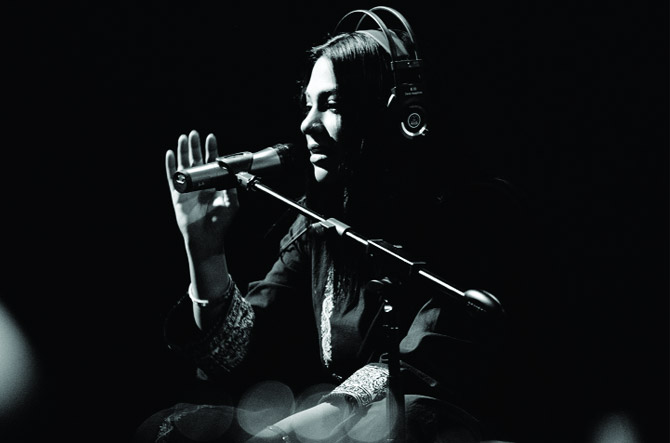
[fdropcap]A[/fdropcap]fter much insistence to please not bother with tea, I was served cold and refreshing aab-e-zamzam and dates from the umrah from which Sanam Marvi has recently returned. I began by asking Sanam ji about her childhood and the path that led to her becoming a Sufi musician. Sanam’s father was a Sufi singer and is a devout fakeer of Hazrat Shah Abdul Bhitai. Growing up in Hyderabad, Sanam Ji accompanied her father to the darbars of Sufi saints and attended the performances of very talented and spiritually powerful Sufi musicians. She got classical training from Ustad Fateh Ali Khan of the Gwalior gharaana and began singing at the age of seven. She serenely told me, “I pray for Pakistan, and I pray for our people. I urge more are more people to read Sufi kaalam and to read books by Sufi mystics and there will be more peace and calm in their lives.”
When Sehwan Sharif calls, Sanam goes. She works hard to give a performance that resonates with love and respect
At a UNESCO summit that took place recently in Tashkent, out of 80 singers from 80 different countries, Sanam ji won the first prize. It was a great moment of pride for her as the flag of Pakistan was hoisted high. Sanam is fluent in Siraiki, Sindhi and Punjabi. When you meet her, she appears to be a genuinely humble woman, true to the values of the long-standing Sufi tradition of peer and fakeer. She told me, for example, that she is not worthy of the knowledge she has gained, and has much more to learn. Spoken like a true Sufi gulukaara.
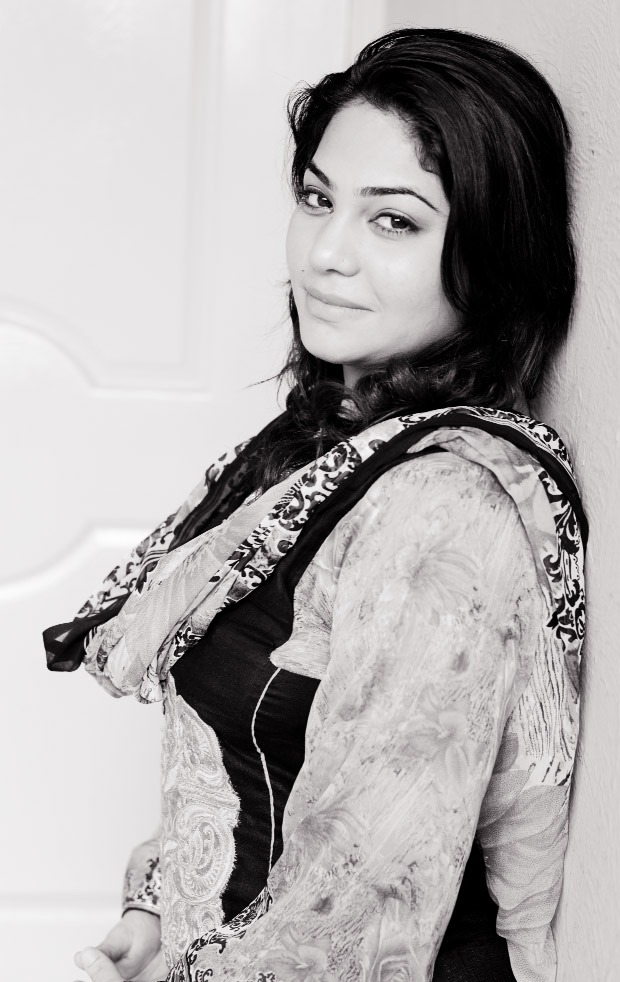
Sanam attributes her appearances in the PTV’s Virsa Heritage program as the moment when her career started. Virsa Heritage has been instrumental in the promotion of Pakistan’s Sufi poetry and has been able to portray the verse in such a way that young and old listeners alike enjoy it. It is because of shows like this, and Coke Studio, that we are beginning to see aspiring musicians come to the fore.
‘I do not know understand why ustaads nowadays do not pass on their education? When they have the honour of being the caretakers of this treasure, why would they take it with them to the grave?’
“Mian Yusuf Salahuddin is like a father, like a murshid,” Sanam ji told me. It was with the support and encouragement of Mian Salli, coupled with the exposure Sanam received from the Heritage program that she branched out to bigger ventures. Her performances at Coke Studio are beloved of Pakistan’s youth. Her Sufi-qawwal music has earned her vocal appearances in Bollywood films such as London Paris New York and The Dirty Picture. She is routinely invited to Sufi festivals and has toured France and Morocco as well.
Sanam joined Coke Studio in 2009 when they were producing their third season, and her powerful, rich voice was an immediate hit. She will appear in the much-anticipated sixth season that features musicians trained in both contemporary and traditional instrumentation. When asked about Coke Studio and the dynamic between everyone, she says that it is much like a family; everyone is caring, there is education and input and a back-and-forth that is quite magical. The improvisational nature of the performances has led the musicians to evolve and work together. Sanam ji told me she admires and respects the founder of Coke Studio, Rohail Hyatt. “He is always keen to listen and suggest ways of improving,” she says. “He treats me like a younger sister.”
Riaz, or practice, is something that Sanam is diligent about. Being a mother of two, as well as staying true to her musical talent, is not easy. She says she has immense support from her husband and her children. “If they weren’t with me, I would not have reached where I am today.”

She cooks, maintains her household (very nicely I might add), and is a loving wife and a national musical sensation. “To keep a good home and to give my children a good life is my duty.”
And then she must perform at the darbars. Sachal Sarmast’s shrine holds ‘Sufi Mela,’ where Sanam has an obligatory performance every year at the urs. For her it is part of her religion and of her worship. Shah Abdul Bhitai’s shrine holds a similar mela every year where Sanam sings the sacred verses of the Sufi saints. She also goes to the urs of Bedil and Bekas, a father and son from the pious family of Rohri who have upheld the Sufi traditions of the generations before them. And when Sehwan Sharif calls, she goes. Her attendance at the Lal Shahbaz Qalander urs is mandatory, she says. She works hard and meditates in order to give a performance that resonates with love and respect.
‘In 2009, when I had only just gotten started, Yusuf Sahib gave me the most shocking of surprises: I found out I was to be singing alongside Rahat Fateh Ali Khan’
When asked about artists she has most enjoyed working with, Sajjad Ali’s name crops up. “It was such a dream to have worked with him. He is a kind-hearted person who gave me respect and knowledge as one would to a shaagird.” The same way, she mentions working with Rahat Fateh Ali Khan as a wonderful experience. “In 2009, when I had only just gotten started Yusuf Sahib gave me the most shocking of surprises: I found out I was to be singing alongside Rahat bhai.” Of course, she has sung alongside Shafqat Amanat Ali, Arif Lohar and many others.
When asked if she would venture into pop music or perhaps the likes of Noor Jehan covers, she responded no. “I have the voice for Sufi poetry and it is my wish to continue to sing our Sufi kalaam.” Currently, Sanam is working on an album in India featuring Reshma ji’s songs. “Roots2Roots is a company in India that I have signed with and it is through them that I am recording the album featuring all of Reshma Ji’s classic songs with some improvisation of my own.”
With regards to the state of education of classical music in our region, she says musicians from the most knowledgeable gharaanas say that this art must die with them. “Knowledge only grows by passing it on” she says. “I do not know understand why ustaads nowadays do not pass on their education? If you are teaching Raag Aimen, you have to teach everything about it — what are the waadhi and samwaadhi surs, when is it sung? When they have the honour of being the caretakers of this treasure that has been passed down, why would they take it with them to the grave?” More power to Sanam ji for asking these questions.