Category

GT Cover Story

Category

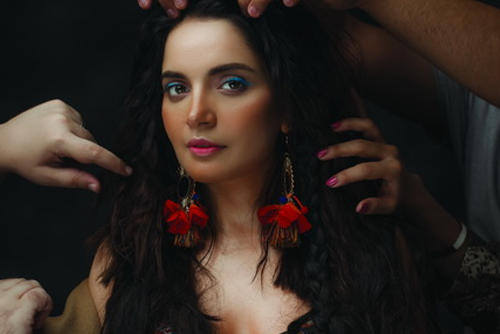
Sarwat Gilani is no stranger to complex roles; with the critically-acclaimed web series “Churails”, she’s tapped into yet another dimension of her craft. Following the resounding success of the series, she chats with Mehek Raza Rizvi about the conception of “Churails”, portraying roles responsibly and how she prepared to essay Sara

“Churails” is the first Pakistan-made original series for Indian streaming platform Zee5 Global. We’re curious to know the background behind this affiliation. Who reached out first? 

Shailja Saraswati Varghese, who heads content at Zee5 had noticed Asim Abbasi’s movie “Cake” and found it to be an interesting piece of art. She approached Asim and suggested they collaborate. At that point, Asim was in the process of writing the first draft of “Churails” and so he put together the pilot and sent it across. She liked it and asked him to write her a couple of more episodes, which he did and the rest is history. She loved the concept and commissioned Asim to create Pakistan’s first original product for Zee5. She gave him a lot of creative liberty to do things his way, because she could understand that he’s like a stallion—you can’t control Asim.

Did the team consider that the association of “Churails” with an Indian streaming platform could possibly hurt the sentiments of some of your local fans? 

A product like this is not for television or film. It had to be a web series; it was written for web and sadly, we don’t have an online portal of our own yet. If Netflix or Amazon had asked us for our content, that wouldn’t have been a problem, so why should this be? Art has no boundaries and artists want to exchange work. We don’t want to put ourselves in these little matchboxes saying “this is my world” and “this is where my art stays.” Art and music are forms you can’t control; they’re like water. If we had a Pakistani platform and we didn’t use it, then we would’ve at least given a thought to what people would say, but in the absence of such an option, if someone showed interest in Pakistan and its talent, I don’t think there was any room for resistance or second thoughts.

Asim has attempted to show the real, grey people. They could come from any part of society, but they have fallen, they have risen, they have imperfections, but also some great qualities. Your positives and negatives make you human

“Churails” is a brave script, unlike any other to have been produced in the country. However, something as courageous is always susceptible to backlash. Is/was that a fear? 

When I read the script, I knew this was a page-turner. The exceptional story is the hero of the project, it is both the antagonist and the protagonist and that’s a very unique concept to come across. With something so different, there are always fears about how it’ll be received. Whilst we were making it, we did have our doubts about people taking this well, or us hurting the feelings of part of our audience. However, we were blown away with the overwhelming love and encouragement we received when the trailer released and even more so after the first episode premiered. It was unreal; we had attempted to do something so unusual, it could make people feel uncomfortable, but it didn’t. And even if it did make a certain segment uncomfortable, they were happy with it, knowing that for the first time, someone had made the effort to talk about real issues women face that are normally not touched upon in our entertainment industry.

Tell us of the first thoughts you had when “Churails” was offered to you. 

My first thought was “Wow!” I was just thanking my stars to be offered an unbelievable script that would make history in Pakistan. For an actor to be offered such a role and be part of such a project is like a dream. This was the unicorn I had been looking for throughout my career. I had never read, or even watched, anything like this before. I was over the moon. This is right up my alley and I’d been waiting for it for so long. I’m an artist, a rebel—I’ll always stand up for myself and say what’s right when people try to put me down or troll me. This was a story that I could relate to. The issues addressed in this script are pertinent and important to talk about. What more could I have asked for, than someone like Asim Abbasi highlighting these topics so beautifully and sensitively? He really took ownership of the real reflections of our society.

Run us through the creative process of preparing for a role like Sara. Can you relate to the character you’re playing? 

Absolutely! I can relate to Sara completely. I think the casting was done very intelligently. Half the job was done with selecting just the right talent. I think one of the most important tasks on set is hiring the correct people and if you succeed at that, you’ve won part of the battle already.

Preparing for my role involved a lot of readings, rehearsals and personal sessions to discuss our characters, even our personal experiences—our inhibitions, sorrows and complexes—we opened up to Asim wholeheartedly, so he could understand us and see if there were any vulnerabilities he could tap into as an example when we weren’t getting something on set.

There were a lot of things that we talked about, references that we drew. A lot inspiration for Sara’s body language was drawn from Gayatri Devi, the third Maharani consort of Jaipur. I also took inspiration from Meryl Streep’s character in “The Devil Wears Prada” and for a couple of scenes with Omair Rana, I saw and studied Angelina Jolie in “Mr. & Mrs. Smith.” So there was a lot that I picked from reading what I had read before or going back to characters I had seen before.

There were a lot of things that we talked about, references that we drew. A lot inspiration for Sara’s body language was drawn from Gayatri Devi, the third Maharani consort of Jaipur. I also took inspiration from Meryl Streep’s character in “The Devil Wears Prada” and for a couple of scenes with Omair Rana, I saw and studied Angelina Jolie in “Mr. & Mrs. Smith”

How was your experience working with an all-female cast? 

It was almost an all-female cast—we did have a few male co-stars on set as well, but it was an undeniably amazing experience! I think what made it even better was the fact that these were all actors with a background in theatre and were just fantastic at their craft. I always felt inspired by each one of them, as they brought so much to the table. The real magic was in the fact that they were always so normal, grounded and chilled out behind the camera, but as soon as they were shooting, they embodied the strong characters they were portraying so smoothly and effortlessly.

I think because we all came from the theatre community, we understood the essence of teamwork. There was no “star” on our set. We all stuck through the strenuous hours, challenging locations and hot weather, because we were working towards one goal, which was Asim’s vision—that was the beauty of “Churails.”  Our friendships have translated from reel to real life, so you can imagine what the vibe must have been like.

Why do you think it’s important to show flawed female characters on screen? 

The whole idea of “Churails” is to get acceptance for a normal, regular human being. In our drama serials, it’s either a negative or positive role, particularly for women. There are fixed stereotypes: the working woman wearing western attire will be painted as cunning, while the one clad in shalwar kameez will be painted as innocent and upright—there is no middle ground, all characters are black and white. Asim has attempted to show the real, grey people. They could come from any part of society, but they have fallen, they have risen, they have imperfections, but also some great qualities. Your positives and negatives make you human.

Mostly, we see stories of characters who aren’t relatable, but “Churails” is the story of real women, with real issues and real traits.

Do you feel gender portrayal in Pakistani drama serials will see a shift in the near future?

I really hope so. I wish “Churails” proves to be a benchmark for our entertainment industry and we move towards more message-oriented content, without creating dilemmas in the minds of our audience and taking down their intellectual ability to understand something. I feel there is no gender equality in our drama serials. In my eighteen years of working as an actress, I’ve always had to be rescued by a man: a husband, lover, father or friend. Never before have I played a character where I fell and rose myself. Every drama is built around the premise of “will they get married?” It’s quite regressive, it’s like you don’t want people to grow. I really pray that we start taking responsibility to tell the truth and stop misguiding the public.

What role can actors play in bringing about this change? 

When offered characters and stories that don’t encourage the idea of uplifting my audience or stimulating intellectual growth, I don’t accept them. If I can’t agree with a concept, I can’t preach it. This is why I’ve always done selective work. Your character has to be believable. I think actors should say no to poor content, regardless of the money involved. This is our responsibility as entertainers. We should not support putting women down in particular.

Women will definitely take away the fact that they aren’t the only ones with flaws. By showing the reality of our world, we’re aiming to make our resilient women realise that they’re born to fly, not crawl

What do you hope, both women and men take away from the web series?  

Women will definitely take away the fact that they aren’t the only ones with flaws. By showing the reality of our world, we’re aiming to make our resilient women realise that they’re born to fly, not crawl. Men on the other hand, will be reminded of all the cracks they’ve made in society and also of the unfair expectations they have of women. We want men to be a little uncomfortable, so they understand this is the new age; every woman has a voice and they are going to fail in shunning us.

More importantly, what has been your biggest takeaway from your experience working on “Churails?”

I think my most favourite experience has been unlearning my preconceived notions about acting.

Photography: Rizwan ul Haq  | Styling: Ella Hussain at Emergency Room 19

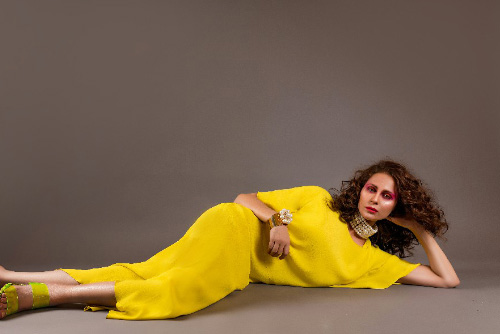
Wardrobe: Yellow dress dress courtesy Asim Jofa  | Hair & Makeup: Arshad Khan

Jewellery: Rouge by Rooj Amir and Jewels by Irma Hasan
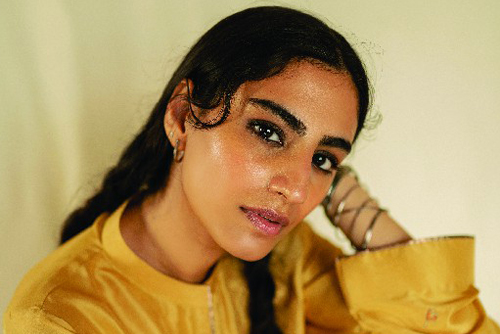
Rehmat Ajmal first captivated us through the way she brought a unique artist’s sensibility to fashion modelling; she’s now bowled us over with her brand Rehstore. Mehek Raza Rizvi speaks to Rehmat about fashion, art, business and more

With a thriving modelling career, what propelled you to start your own clothing line?

In 2018 I graduated from the National College of Arts in Textile Design. Given my busy schedule of shoots and other freelance projects, I couldn’t have worked alongside any existing designer from 9-5, so I decided to start something of my own in order to make the most of my free time. Initially, it started as a side business, but with constant support of all my customers and friends, it’s safe to say Rehstore has taken over to become the main business for me. I do feel both Rehmat Ajmal and Rehstore help each other in many ways. What I do as a model is very closely related to fashion, so I think they pair together very well as different branches of the same tree.

Most people might not be aware of your educational background as an artist. Please tell our readers about it.

I did my O & A Level from Lahore Grammar School (LGS). My main subjects were Art & Business Studies. After graduating from LGS, I did my Bachelors in Textile Design from National College of Arts and graduated with a distinction in 2018. I started Rehstore in 2019.

How would you describe the vision behind Rehstore?

Rehstore began in the midst of an existential crisis. The word Rehstore is a play on “Restore” and “Rehmat’s store”. I had graduated recently and I was feeling uncertain about many things in life personally and professionally. Opening Rehstore gave me a sense of direction and empowered me in many ways. Although it combines both art and business, it will always be more than a business for me; it represents restoration of self and my own identity. The vision Rehstore carries is more than what it sells on its virtual shelves—it shines more on the ability to take a risk as an entrepreneur and to put yourself out there powering through self-doubt and fear.

A recent post on Rehstore’s Instagram, introduced “Rehstories,” an initiative to celebrate fellow artists. Despite the competitiveness in your industry, how important is this support?

Give two different artists the same brush and the same canvas and ask them to paint an apple, you’d be surprised to see how different both apples would be. Rehstories is an initiative to showcase works of young artists via Rehstore’s platform so they are able to reach out to more customers. It is honestly a small effort from our side in the middle of a global pandemic to help small businesses. I believe that a true artist is never afraid to share his or her paints. I am happy to make a difference in someone’s life even if it’s in a very small capacity.

On the topic of competition, the craft you focus on (surface design) is gaining popularity with other clothing brands as well. Does that put pressure on you?

To be very honest I feel more happiness than pressure! To have more makers to meet the growing demand of a very prestigious craft we need more suppliers in the business who all have different styles to offer. I strongly believe in healthy competition. It pushes you to create better and that in result adds value to your business and its growth. I’ve had constructive conversations with people in different countries who practice the same craft and learnt so many things from them. I wish for the same sense of community to formulate in Pakistan by sharing and being more secure in our own skill.

Tell us about your recent collaboration with Samsara Couture House.

It got planned pretty quickly and was concluded online. It was a great experience to join hands with a team that took my designs and processed them into beautiful stitched products.

How do you think such collaborations help individual brands grow?

It’s quite enterprising you know? At first, I was struggling with the business side of things, but now I’m finding more ways to create like an artist, yet sell like a businesswoman. With collaborations like these one learns so much about the whole business cycle. All that can come in handy for when you want to expand.

We’ve witnessed an influx of homerun businesses blossom in quarantine. Has the slowing down of everyday life impacted your creative process?

It’s actually given me more time to spend with my business. I’ve really organised the structure of things in this time as a coping mechanism, so in my case it’s safe to say that it’s impacted me rather positively.

What about you as a person? Is there a silver lining during these strange times?

You know I may seem like a social butterfly on social media, but in real life I’m very introverted. I enjoy my company at home and even before this pandemic hit us, I preferred staying at home as much as I could. Personally, I’ve really found it calming, but professionally it’s impacted me like everyone else around the globe. I think now people, including myself, are finding newer and more creative ways to cope with work.

We’re aware of your love for dance, but haven’t seen any performance recently. Can we expect something in the future?

I used to dance a lot as a teenager and in my early 20s. I was an active member and later the president of my school and college’s dance societies. I recently played a role in a musical that was showcased in Alhamra as well. But now I’m really out of practice and wouldn’t call myself a professional performer. I’m not partaking in any projects as of now, but let’s see when I’ll find it in me to dance again. For now my feet are resting!

What are your hopes and aspirations for your business a decade from now?

I believe Rehstore will always be a small business in size, but big in what it has to offer. In the future I see collaborating with like-minded creative individuals and bring newer things to the table. I do know that throughout the journey my biggest competition will always be me and I hope that with the support of platforms such as GT and so many others who have helped me in this journey, I’ll be able to conclude a better and a more evolved store in its nature and the products it has to offer.

SHORT & SWEET

Modelling or running your own business?

Running my own business

Describe your personal style in three words.

Minimalist, effortless and comfortable

What keeps you motivated?

I imagine what I want my future to look like and then I set out to create it

Tell us of an instant mood-lifter.

To be honest, I Facetime my little niece to feel better instantly, so I guess to speak to your loved ones and keep them close to you can be a quick fix

A song that describes your personality the best?

“Reflecting light” by Sam Phillips

Do you have a nickname?

Rehmu & my mother calls me Lemon (not sure why)

What irks you most about social media?

Misuse of it! Making an active choice to use it to spread hate and negativity

Alternate career choice?

I think a motivational speaker

A weakness you’re working on?

I’m working on problem management, like being able to manage a problem or a given situation more calmly and productively and holding back from reacting emotionally, especially while making business decisions

A strength that gets you through hard times?

Processing and reflecting

Acclaimed couturier Ali Xeeshan tied the knot in a resplendent ceremony that lived up to his artistic reputation. He speaks to Mehek Raza Rizvi about married life and what he’s learnt so far. The gorgeous Myrah chimes in as well

Tell us about how you two met and the journey from love to marriage.

I first saw her at a fashion show in Islamabad and something just told me she’s the one; I just followed my instinct.

Have your expectations about marriage changed from what they were when your were single?

Yes, of course! I could’ve never imagined what a huge impact your partner can have on every aspect of your life.

How do you make sure your bond is continually nurtured and grows with time?

We both try to give each other love, respect, time, and most importantly,  space.

Do you believe it’s important for partners in a marriage to maintain their own separate lives and identity?

Well, I believe that’s a personal choice. However, one should always remain supportive of their partner.

What’re the things you two have in common? And the things that set you apart from each other?

We have a lot of things in common. We always have the same opinion about people when we’re judging them for example! What sets us apart are our sleep patterns for sure.

What has been your fondest memory together so far?

Travelling together to Rashakai to procure fabric.

Tell us about your beautiful wedding — who was more involved in the preparations?

We planned everything in three days only. My amazing team and I were in charge of most things, but I have to say, more than any other detail, getting the shade of a giraffe sculpture right was the prime concern; this was Myrah’s responsibility. She had to pull a few strings, get a few factories to open and have it painted on time.

What aspect of marriage were you most pleasantly surprised by?

The fact that it’s made me calm and wiser.

How do you envision your lives together ten years from now?

We want to grow old with each other and just live happily ever after, together forever.

If you could give one piece of advice to couples about to tie the knot, what would it be?

Please respect each other’s personal space.

SHORT & SWEET

Who’s the better cook?

Myrah

Who apologises first after an argument?

We haven’t really had any massive arguments yet. Let’s wait and find out.

What’s an activity you two enjoy doing together?

Hisab Kitab.

Ali, do you have a say in putting together your wife’s wardrobe?

I like her personal style and don’t want her to be an extension of me. However, there are a few minor tweaks that I make here and there.

Myrah, do you ever give input to Ali on his designs?

Yes, he always asks my opinion.

If you could, which one trait would you change about each other?

We’ve embraced each other the way we are. Even if we have shortcomings, we accept them as part of the package.

What are the traits you value most in each other?

Ali: I admire her spirituality

Myrah: Honesty and creativity

What do you think is your greatest strength as a couple?

Our love and admiration for each other

What’s the most challenging part of being married?

Knowing there will be no days off—you’re married for the rest of your life.

Saba Qamar has become a force to be reckoned with in the entertainment industry. Through her poignant performances, she’s captured the hearts of millions and continues to be a voice for downtrodden women everywhere. Mehek Raza Rizvi speaks to the reigning queen about her upcoming projects and how she’s spending time in lockdown

“Fortunately, criticism has never been a source of fear for me. I enjoy criticism as much as I enjoy appreciation”

Through the characters you portray on screen and the content of your recent YouTube channel, you echo the sentiments of many women. How important a part can female role models like yourself play in making the world a kinder place?

I believe that I’ve been blessed with the utmost responsibility of influencing. As an actor I hold the power of breathing life into stories; the characters I play not only leave a mark on screen, but they also leave a mark on the audience. Thus, it’s extremely important for me to carefully choose the message I’d want to convey to my audience and how I’d want to impact their lives. Playing my role in making this world a kinder, safer and better place is a priority for me.

Do you feel gender portrayal in Pakistani media has seen a shift in recent years?

I do believe that as an industry we’re breaking free from the world of gender stereotyping. The ethical value of the work I’m creating is far more important than any monetary value and I believe that’s what makes me stand where I do today. Ending gender stereotyping on screen is a cause close to my heart and I pray to continue working towards this cause.

Unlike most actors, even the biggest critics would find it challenging to typecast you due to your versatile body of work. Has this been a conscious effort from your end?

Definitely! There’s nothing that excites me more than a challenging and out-of-the-box script. That’s what keeps me going as an actor: the hope that I’ll get to live a new character every morning. I’ve grown both individually and professionally through the characters I’ve chosen to play over the years.

What led you to explore YouTube as a platform? Is digital media the way forward for mainstream actors too?

My underlying passion for writing and direction led me to explore YouTube as a channel. I’ve found it to be a medium which enables me to communicate with my audience through my creativity, and most importantly, my originality. People are finally getting to know Saba Qamar up close. I do believe that exploring digital media is integral in the world we live in today.

Your video titled “Isolation”, the first episode on your YouTube channel, resonated with many on  a personal level. How’re you dealing with these strange times?

This has been a period of reflection for me—these challenging circumstances have drawn me closer to myself and God. I took this time as an opportunity to reflect on all that I’ve neglected and to pay attention to the smaller things in life. I find myself to be healing as a creative and exploring new strengths every day.

“There’s nothing that excites me more than a challenging and out-of-the-box script. That’s what keeps me going as an actor: the hope that I’ll get to live a new character every morning”

Most people are keeping busy by exploring new talents—from cooking to painting and writing. What does a typical day in quarantine look like for you?

The talent I not only explored but revealed, was the talent of writing along with the talent of direction. A typical day in quarantine is filled with the warmth and presence of my family, far away from the noise of the world, where my soul and body heals from all the exhaustion, where I find time for my creativity, where I work and hold Zoom meetings with my team, where we keep each other motivated with new ideas.

While most fans find your sincere, unfiltered and genuine spirit refreshing, there are certain disapproving parties that can subject you to criticism. Is that ever a fear?

Fortunately, criticism has never been a source of fear for me. I enjoy criticism as much as I enjoy appreciation.

You’ve been part of the industry since 2004, experiencing countless highs along the way. What’re the biggest lessons you’ve learnt?

To stay consistent and persistent despite all odds and setbacks. It’s also extremely important to stay positive and take everything in a positive manner.

Tell us about your upcoming films “Kamli” and “Ghabrana nai hai”.

The characters I’ve played in both the films are poles apart from each other. In one my role is quiet and calm, whereas in the other I’m overly enthusiastic and vibrant. I can’t wait for the audience to watch both the films.

How would you like Saba Qamar to be remembered?

I’d want to be remembered as someone who was more than just a good actress. I’d want people to remember me for my soul, heart and faith—for the positive change I’ve tried to bring in this world through my work.

SHORT & SWEET

What’s the first thing you’ll do once this global pandemic is over?

Get on the next flight and explore a country I’ve never been to before.

What’s something you’re surprised you don’t miss in quarantine?

Going to the gym and working out.

What’re some things you’ve come to realise aren’t as necessary as you thought earlier?

My YouTube video ‘Isolation’ is an in-depth response to this question.

If you could only eat one thing in quarantine, what would it be?

Fruit

If you could only use one app during this time, which one would it be?

Instagram

Are you guilty of panic buying?

No

Are you an early riser or night owl?

Night owl

Texts or phone calls?

Phone calls

Do you have a nickname?

My sister calls me ‘Sabi’, my elder brother calls me ‘Bubniya’ and my best friend calls me ‘SQ’

Out of all the characters you’ve played, which one do you relate to most?

Mashal in ‘Besharam’

A dialogue from one of your projects that describes you best?

‘Kabhi Kabhi Kadion Ko Apnay Kaid Khanay say Mohabbat ho jati hai. Mujhay Bhi Ho Gayi Hai’ (Sometimes prisoners fall in love with their prison; I too have fallen in love with mine)

Your favourite performance of yourself so far?

‘Baaghi’


Photography: Rizwan Baig; MUA: Shoaib Khan; Stylist: Zahra Sarfraz; PR & Coordination: Meshal Cheema

She’s captured our hearts with her poignant portrayals of some very unique characters in her drama serials, but remains a humble individual at heart. This fortnight, Kinza Hashmi chats with Mehek Raza Rizvi about her roles, her life at home and what the future may hold

Do you ever worry about getting labelled or typecast when playing an intense negative character?

Being typecast or labelled never worries me, because I try making each role I play appear different from the last; this applies to playing a protagonist as well. I read the character in depth and design it with my team by working on my looks and delivering dialogues in a way that doesn’t feel similar to previous projects.

“The modern woman of today is independent and empowered, which is why we’re able to tackle any bigotry we may be subjected to”

As a woman, have you experienced any inherent prejudices in your line of work?

The modern woman of today is independent and empowered, which is why we’re able to tackle any bigotry we may be subjected to. This is true not just for the entertainment industry, but for women in every sphere of life. Chauvinism and prejudice of any kind is not a roadblock for us, nor can it make us doubt our competence.


You surprised fans by posting a cover of “Sajna” on your Instagram. Is there a chance you may take up singing professionally as well?

Singing is something I really enjoy. Whenever I’m with my friends or just generally in a good place, I sing—it makes my soul happy. I can’t say I’ve thought about taking it up professionally yet, but if an opportunity arises, I’d be open to it.

“I’ve never had to worry about being overshadowed. I think if you’re putting in your hundred percent, such issues are never a concern”

Despite being poles apart, most of your characters have one thing in common: they’re all multi-layered, complex women. Is this a conscious decision?

I don’t think all characters I’ve played are complex, but yes, I like portraying different shades of women through the roles I essay. This is why they’re always relatable, regardless of whether I’m an antagonist or protagonist. When choosing scripts, I’m mindful of selecting only the ones that offer relatable roles that are unique in some way.

With the conversation on gender equality and feminism on the rise, how important is it for female actors to choose their roles carefully and avoid playing the damsel in distress?

I believe we have two kinds of women in our society: type one is the brave, educated and independent woman, while type two is dependent on others for her livelihood, is underconfident and submissive. I’ve done many projects where I got to play type one, for example, “Rani Nokrani,” “Tera Yahan Koi Nahi,” and “Seerat.” I feel such characters are aspirational and give women a role model to look up to. I will always look forward to portraying characters that can inspire my female audience.

Having said that, I’ve depicted type two in multiple projects as well. The intention behind that is not to set misleading standards, but to drive attention towards a need for women to be autonomous. I hope to encourage them to liberate themselves, while also making their voices heard. It’s important to make drama serials realistic in order to educate our masses.

“I struggled a lot for my big break, but the long wait was definitely worth it”

You’ve starred in many projects with ensemble casts. Is being overshadowed ever a concern?

Allah has been very kind; I’ve never had to worry about being overshadowed. I think if you’re putting in your hundred percent, such issues are never a concern. I have faith in my skills and work really hard, so know it’ll bear fruit.

Tell us about your experience working alongside Saboor Aly in “Gul-o-Gulzar.”

It’s always great doing a project with a good team and cast—even better when you get to work with a friend. It was a comfortable experience over all.

How did you get your big break in the industry? Is a career in TV something you always wanted to pursue?

I always wanted to be part of the entertainment industry and to appear on TV; it was my childhood dream. I struggled a lot for my big break, but the long wait was definitely worth it.

Can we expect to see you in films in the near future?

You never know. I guess you’ll have to wait and find out.

What is Kinza Hashmi like at home? Tell us about your childhood and family.

Kinza Hashmi is as ordinary as anyone else. I live a normal life and am a simple person. My childhood was uncomplicated and is a chapter filled with cherished memories.

When at home, I like to spend time with my family and close friends. I enjoy peaceful gatherings; I’m the happiest when my father reads books to me and my mother cooks scrumptious meals for us.

SHORT & SWEET

What was the last photo you took?

Food prepared by me

What was the last lie you told?

A friend very kindly delivered a home cooked meal to my place, but I hadn’t tasted it when she called to ask how I liked it. I had to lie and tell her it was delicious. I hope she isn’t reading this.

Last impulsive buy?

I’m always impulsive when it comes to shopping, especially with clothes and shoes.

Your personal style in three words?

Stylish, graceful, elegant.

A habit you have that annoys your family?

I don’t receive calls on time.

Favourite costar?

Azekah Daniel

Best friend within the industry?

Vasia Fatima

Theater, film or TV?

TV

Alternate career choice?

Singing

Favourite dialogue from a project of yours? 

“Aik tum hi tou ho jisay meri parwah thi. Bohat dil dukhaya mene tumhara, dekho khush mein bhi nai hoon, muhabbat k liye tarap rahi hoon. Mujhy saza do Arham, dil tornay ki saza.”

Rushna, last episode of “Ishq Tamasha”

(You’re the only one who ever cared for me. I hurt you; look, I’m not happy either and am longing for love. Punish me Arham, punish me for breaking your heart)

Photography: Jaffer Hasan

Styling: The Emergency Room

Hair & Makeup: Adnan Ansari

Wardrobe: Siddhartha Bansal, Farah Sanjana & Ridhi Sanjana at Vesimi


We’ve all been entranced by her melodic voice and have fallen in love with her bubbly personality. However, this fortnight Mehek Raza Rizvi speaks to the dynamic Aima Baig to know more about her passions, her plans for the future and life outside the limelight

How do you feel about the constant comparison made between you and Ariana Grande, particularly after your look at the opening ceremony of PSL 2020?

It doesn’t faze me at all. I love Ariana Grande; she’s immensely talented and has great style, so why would I mind the comparison? I don’t take the memes too seriously (although, I have to admit, some of them are quite funny), if they make people laugh, so be it. The only part that’s sad is people refusing to see me as human. There’s nothing out of the ordinary in being inspired by others, it’s natural.

A little birdie tells us you may have an interest in acting. Can we expect to see you in a movie or drama serial soon?

Tell me more about this birdie first! I’ve been offered some great opportunities from eminent production houses, but want to focus on growing more as a musician for now—this is more “me.” However, acting is something I definitely enjoy. I’ve done a lot of theatre during my undergrad in Film and Television. You never know what the future holds.

You’ve been very involved with Shaukat Khanum Memorial Cancer Hospital and Research Centre (SKMCH&RC). Tell us about your work and why you feel so close to the cause.

Shaukat Khanum’s mission is very close to my heart; I don’t consider it to be work, I do it out of choice and take it very seriously. My own mother was a cancer patient and I’ve seen her endure chemo therapies, hair loss and surgeries for six long years. I’m happy that she’s in a better place now; knowing her suffering has come to an end gives me peace, but at the same time, I’m well aware of what it feels like to lose someone special to cancer.

I can relate to families who go through this process and the feeling cannot be put in words. Shaukat Khanum helped me heal by introducing me to so many survivors, including infants. I feel privileged to be a part of this organistaion and am thankful to all its contributions.

“The only part that’s sad is people refusing to see me as human. There’s nothing out of the ordinary in being inspired by others, it’s natural”

Your Father had a love for music, but was unable to pursue it professionally. Do you think that made your piqued your interest in the field?

My father had his own band in Dubai back in the day. He was definitely passionate about music, but my grandfather, a mechanical engineer himself, wanted his son to prioritise his education. He didn’t encourage his child’s musical aspirations and so, my father submitted.

I’ve witnessed my father’s talent throughout my childhood. He played different instruments and sang beautifully to me. I found him to be very inspirational and think I inherited my love for music from him. At just seven years of age, I knew I had it in me to pursue this professionally.

“I’ve been offered some great opportunities from eminent production houses, but want to focus on growing more as a musician for now—this is more ‘me’ ”

Tell us about your relationship with Shahbaz Shigri. Is marriage on the cards?

Shahbaz and I are best friends. We have shared interests; we love watching movies, hanging out with our friends and jamming together—he’s incredibly talented which makes it more fun. We’re both Pisces and vibe really well. He makes me feel very comfortable and at ease.

As for marriage, it’s something I want to think about in the future, but as of now, it’s not on the cards.

What’s Aima Baig like at home?

You need to spend a few days with me to know that. I’d like to warn you though, I have a tendency to influence people with my idleness—I do absolutely nothing when at home and you may end up doing the same!

My favourite thing to do at home is availing every opportunity I get to catch up on lost sleep. I’m constantly on the go otherwise, so feel this is the only thing lacking in my life. When I’m up though, I love spending quality time with family, jamming with my brother, watching movies, writing and playing games. I’m a gamer, that’s for sure.

“Knowing her suffering has come to an end gives me peace, but at the same time, I’m well aware of what it feels like to lose someone special to cancer” — Aima on her mother’s struggle with cancer

What are the pros and cons of having your family so involved in your work?

That’s a great question. The pros outweigh the cons. Everything’s based on trust. I can rely on family; if I’m ever feeling lazy, they remind me of the importance of hard work and how blessed. They push me to do better and keep me going. The only con is having no barriers; these are people you’ve grown up with, live with and so, they know you inside out.

Tell us about your future projects.

There are so many exciting things in the pipeline. I’m working on new songs—my own and some collaborations with other artists. This whole year is jam-packed, which overwhelms me at times, but I feel grateful.

SHORT & SWEET

What irks you most about social media?

Inconsiderate comments

Biggest pet peeve?

People munching loudly on their food or talking in a high-pitched voice.

Your biggest strengths?

My family and the people I love.

 Favourite ‘90s jam?

I was born in 1995. Music from the ‘90s reminds me of my childhood, but there’s no one particular song I can pick as a favourite.

Your personal style in three words?

Comfortable, tomboyish and casual

Last impulsive buy?

A pair of diamond rings.

Most prized possession?

My cats, especially Max.

What was the last lie you told?

I can’t really say, but there must be one.

One habit you have that annoys your family?

The fact that they barely get to see me.

Do you have a nick name?

So many: Amy, Emma, Amo and sometimes Baig. Not really a fan of these names though.

 A decision you regret?

Some songs I’ve agreed to sing. I never really wanted to, but went ahead with them anyway.

Your favourite quote from a movie?

“I’ll be back” from “The Terminator”

Words: Mehek Raza Rizvi

Photography: Adil Ishaq at Guddu Shani

Hair & makeup: Mansoor Khan at Guddu Shani

Videography: Furqan Bhatti at Guddu Shani

Art Direction & production: Guddu Shani

Coordination: Murrad Rahim at Guddu Shani

Styling: Mehek Raza Rizvi & Areesha Chaudhry

The very filmy and endearing heroine, Hira Mani, has stolen everyone’s hearts with her effortless charm and ingenuousness, all while breaking stereotypes, being an exceptional mother of two and a homemaker. Mehek Raza Rizvi chats with her to find out how she makes it look so easy

Hira, I’d like to start off by congratulating you for the success of “Meray Paas Tum Ho.” Despite being introduced much later in the drama serial, you won hearts with your convincing performance. How does receiving so much love feel like? 

I’ve received a lot of love and it feels great. Over the past four years, I’ve worked incredibly hard to prove my mettle and when your audience appreciates that, there’s no better feeling. However, success comes with responsibility and I take that very seriously. I want to use my fame well and break the stereotype of a “heroine,” according to which actresses have a limited shelf life. I also hope to demonstrate that good conduct and humility are the keys to real triumph.

“I want to prove it’s possible to enjoy the best of both worlds, so other women can find the inspiration and strength to not give up on their dreams”

You started your career after getting married and saw the most success after the births of your children. Not only does this break stereotypes within the industry, but also provides inspiration for working mothers. How do you manage work-life balance? 

There’s a common misconception in our culture that women can’t have successful careers after they get married, particularly in the media. I’ve seen so many girls delaying their weddings, claiming it would affect their work, but personally, I never understood this theory.

I’m perhaps one of the few actresses to have started my career after becoming a mother and I don’t think that’s ever come in the way of my work or the upbringing of my children. I want to prove it’s possible to enjoy the best of both worlds, so other women can find the inspiration and strength to not give up on their dreams. If you’re passionate, there’s nothing you can’t do.

Of course, it helps to have a supportive family, especially the men. My husband, Mani, my sons, Muzammil and Ibrahim and my father have always encouraged me and I couldn’t have accomplished anything without them. I would urge all men to let the women in their lives aim for the stars and fulfill their dreams.

As far as work-life balance is concerned, I don’t take credit for anything, Allah helps me. I’m blessed with His support and a great family.

What do you look for in an ideal script? 

No script can come to life if the team working on it isn’t dedicated. No matter how good the writer is, the end product depends profoundly on those involved; from the director, to the cast, the DOP and even the help ironing clothes on set. It’s very important for me to work with people who I’m comfortable with and know are passionate about the project.

For example, when I signed “Yaqeen Ka Safar,” I knew Farhat Ishtiaq had done a great job with the script, but also realised it would be executed well because Shahzad Kashmiri was directing it—just like Danish Nawaz made “Sun Yara” a huge success.

Honestly, when Humayun Saeed called me to discuss “Meray Paas Tum Ho” I didn’t even hear the script. I was out of money, with just twenty thousand rupees in my bank account, so immediately said yes. I just heard “Nadeem Baig” and was game. In our field, payments are delayed all the time, so this project saved me at a crucial point.

Have you ever found it hard to detach yourself from an intense/ complex role you’ve played?

Not at all. I’m not a method actor and don’t let the roles I portray take over me as an individual. When I go on set, I read my lines, discuss them with my director to understand their point of view and get into character. Once the scene is over, I’m immediately back to my normal self.

“I found him to be very real; he was himself, even on screen. He seemed like a very genuine person and that appealed to me because I felt I could relate to him. I saw a lot of similarities between the two of us” — on her husband Mani

We hear you’ve dabbled a bit in fashion design. Can we expect a business venture in the future? 

Most of my friends have degrees in fashion, which is why I also developed a curiosity towards the field. When I was getting married, my interest grew as I started working on my own clothes.

You never know what the future holds. My son, Muzammil, sketches really well and keeps designing interesting stuff for me. Ibrahim also takes interest in what I should wear at events, so who knows, maybe my little army will push me to start a business with them.

“When Humayun Saeed called me to discuss “Meray Paas Tum Ho” I didn’t even hear the script. I was out of money, with just twenty thousand rupees in my bank account, so immediately said yes”

Tell us about your upcoming projects. 

Right now I’m looking forward to a beautiful drama serial called “Kashf,” directed by Danish Nawaz. It’s very close to my heart and I hope will people love it. I’ll give you an exclusive interview to talk more about it soon!

You’ve mentioned you were a fan before meeting your husband Mani. How were you two introduced for the first time? Could you have imagined you’d end up marrying him? 

Mani was a friend of a friend. The day I saw him for the first time on TV, he became the reason why I switched from Indian drama serials to Pakistani ones.  This was some fourteen/fifteen years ago.

I found him to be very real; he was himself, even on screen. He seemed like a very genuine person and that appealed to me because I felt I could relate to him. I saw a lot of similarities between the two of us.

When you start admiring someone at a young age, it’s very natural to start looking up to them and try to emulate the way they do things. This is why every time someone tells me my performances are natural and real, I credit it to Mani. I was that crazy fan who followed his work and life very closely.

I’m a huge believer in the law of attraction; every time I’ve envisioned or wanted something badly and worked hard for it, I’ve gotten it. I was a complete tomboy and never one of those girls who would follow actors and become die-hard fans; but because of Mani things changed completely. Since then, I always knew he would be an important part of my life. So yes, I did believe we would end up together.

What was your childhood like?

I grew up around elder cousins, so felt grown up as I constantly tried copying them. I would do my hair like them; tie it up in a bun or a long braid. I never dressed like a child and since I was tall as well, I didn’t quite look my age.

When I was in school, I was known as the life of the party. Even at home, family would always surround me and I was always the one solving other people’s issues.

I was very filmy and absolutely obsessed with music. I’d say not much has changed in that department. Anytime I hear a sad song that touches my heart, I automatically get stuck in a zone where I’m blue and upset with Mani for no reason, so I can really enjoy the essence of the song. Music has definitely been a huge part of my life.

“I’m Muzammil and Ibrahim’s ami, Mani’s wife and my father’s daughter”

What is Hira Mani like at home? 

To everyone reading this, I want to tell you, at home, Hira Mani is exactly like your mother. I’m very domesticated, extremely particular about cleanliness and discipline. I don’t like house chores like cooking lunch/dinner, washing dishes and laundry being delayed. Everything should be done by mid-afternoon.

I keep a close eye on my kids’ schedule, even if I’m at a shoot. From their tuitions and football sessions to the clothes they’ll wear, I have everything lined up. I’m always on high alert, taking care of what needs to be served for dinner, who we need to go see, who we need to invite over etc. Once, I have some time to myself (which is rare), I like to sit in my room and listen to music.

In my personal life, I’m as normal as any other woman. My life revolves around my family – I’m Muzammil and Ibrahim’s ami, Mani’s wife and my father’s daughter.

SHORT & SWEET

Who do you consider to be your closest friends within the industry? 

I think they’re still the same as Mani’s

Pick your favourite project between “Meray Paas Tum Ho,” “Ghalati” and “Aangan.” 

Ghalati

“To everyone reading this, I want to tell you, at home, Hira Mani is exactly like your mother”

What do you feel are the key elements behind a good drama serial? 

A strong team and a respectful environment

An actor or actress you would want to share screen space with next? 

No one specifically. Anyone who is passionate about their work.

What’s the last photo you took? 

A picture of Muzammil and Mani at a dinner, while they were joking around

Do you have a nickname?

My parents called me “Hero” at home. Little did they know I’d become a heroine instead!

What was the last lie you told?

Despite having no interest in films, since I’m asked constantly asked when I’ll be doing one, I said in 2020

Your biggest achievement in the last decade?

“Do Bol”


Words: Mehek Raza Rizvi

Photography: Jaffer Hasan

Hair & Makeup: Adnan Ansari

Wardrobe: Mariyam D Rizwan, House of Masaba — Vesimi

Styling: Emergency Room

She’s dazzled us with her charm, wowed us with her style and captivated us with her performances—Nausheen Shah is truly a force to be reckoned with. Here, the face of 9Lines’s new Resort Collection 2020, speaks to Mehek Raza Rizvi talks to her about her goals, her views on the industry and more

Nausheen, I’m a huge admirer of your style, as are many others. Do you ever feel that that takes away from your work as an actress though? 

I don’t think fashion and acting are at odds with each other. It’s actually beneficial for an actor to dress well. In fact, that’s true for every profession; if someone knows how to carry themselves and look presentable, they’ll leave a good impression.

As far as my sense of style taking away from my craft is concerned, I would completely disagree. I’ve never felt any such thing. I’ve received appreciation for both, my acting skills and my flair for fashion.

“I’m perhaps one of the very few actresses who’ve happily played characters way older than my actual age, because that’s what our job is”

You’re one of the few Pakistani public figures who’ve been brave enough to speak about mental health. Do you think about using your influence to help those in need? 

I’ve been talking about mental health because it’s an issue close to my heart. In our country, depression and anxiety aren’t discussed as openly and as frequently as they should be, but I wish to create more awareness. I’ve experienced the helplessness myself; I’ve suffered a lot and would never want anyone else to go through the same.

I have a lot of plans that I’ll be executing with some of my fellow actors. You’ll hear more about this in the future. I’m definitely not going to give up on this cause easily, because I understand what a grave subject it is and how depression affects one’s life.

“I’ve definitely found it hard to detach myself a couple of times. The trick is to take some time off, unwind and spend alone time until you’re ready to bounce back with renewed energy”

You’ve mentioned choosing quality over quantity at this point in your career. What kind of scripts appeal to you? 

Quality is far better than quantity. Less is always more. I’m not inspired by one-dimensional characters. I need acting margin, even if that means opting for a second lead. I don’t want to be remembered as just a pretty face; I look for challenging roles that allow me to get out of my comfort zone. I’m perhaps one of the very few actresses who’ve happily played characters way older than my actual age, because that’s what our job is — to mould ourselves according to the script.

In the future, I’d like to push my limits even more. I want to pick up interesting, complex roles that leave an impact and allow me to grow further as an actor. When I look back at my professional journey so far, I feel I’ve tried doing just that and given my 100% each time.

“I’ve experienced the helplessness myself; I’ve suffered a lot and would never want anyone else to go through the same”

With the conversation on gender equality and feminism on the rise, how important is it for actresses to choose their roles carefully and avoid playing the damsel in distress?

Our audience is very intelligent. If people follow us and look up to us as role models, it’s for a reason and comes with a responsibility. It’s certainly important for actors to be mindful of the roles they pick, but this isn’t gender specific. I think both, female and male actors should choose scripts carefully and try being part of more substantial projects — something real, different and evocative.

It’s important to portray strong female characters and not always show women crying, getting beaten up and feeling helpless, but it’s equally important to not always show men as evil. We have so any real life stories of resilience, so many unsung national heroes in this country — we need to make serials and movies based on them to inspire people.

“My childhood was beautiful; I’ve been blessed. I was a naughty child and have many fond memories that I cherish”

As a woman, have you experienced any inherent prejudices in your line of work?

Well, as women I feel we’re faced with multiple issues on a daily basis that we unconsciously overlook and just move on. It’s like we’ve become immune to them. Of course, I’ve experienced those too, but honestly overall I can’t complain of any major prejudice based on my gender.

Very recently though, I was taken aback by an occurrence, unlike any other in my entire career of sixteen years. I signed a legal contract with a well reputed production house and much to my surprise, they detached me from the project without notice, casting someone else instead. I could’ve taken them to court for this, but decided against it and just took it as a lesson. I’m pretty disappointed by the unprofessionalism and still can’t wrap my head around how such a big company can do this.

Apart from this one incident, I’m pretty grateful for the way I’ve been treated. I’ve received a lot of love and support and have no complaints.

Have you ever found it hard to detach yourself from an intense or complex role you’ve played? Does some part of the characters you essay stay with you?

Yes, sometimes it’s hard to get out of certain characters. Many a time, I’ve found it hard to fall asleep after an intense scene. It’s not uncommon for me to get deeply absorbed into a character and become that person. I don’t think it happens to every actor, but I’ve definitely found it hard to detach myself a couple of times.  The trick is to take some time off, unwind and spend alone time until you’re ready to bounce back with renewed energy.

Out of all the characters you’ve portrayed, which one do you relate to most and why?

It’s so hard to pick a favourite. I’ve done so much work, sometimes it’s honestly hard to keep track and think of the multiple characters I’ve essayed.

I have, however, learnt from each one of them and carry a part of them with me. One role in particular that’s close to my heart was that of Dua, from a drama serial called “Pani Jaisa Pyar” by Sarmad Khoosat.

What is Nausheen Shah like at home? Tell us about your childhood and family?

I’m like any other girl, very regular. I’m super chill and lazy. I don’t really do much at home and like enjoying time unwinding. My childhood was beautiful; I’ve been blessed. I was a naughty child and have many fond memories that I cherish.

I don’t like talking much about my family because they aren’t part of showbiz, I am. I keep them out of the public eye because they wouldn’t appreciate being spoken about.


 SHORT & SWEET

Wardrobe staples you can’t live without?

A good pair of jeans, a white shirt and red lipstick

Your favourite current fashion trends? 

Jeans, white button-down shirt and nude coloured heels

Describe your personal style in three words? 

Personal, personal and personal

Which Pakistani celebrities do you think have good style? 

Meesha Shafi and Nabila

And the ones in dire need of a stylist? 

Everyone has their own style, so I can’t recommend things for others.

What irks you most about social media?

Too many people with a lot of time on their hands.

Favorite ‘90s jam?

There are quite a few by Whitney Houston, Toni Braxton and Lauryn Hill. I can’t pick one.

What’s the last photo you took? 

I don’t usually take selfies, but took one on set.

Do you have a nickname?

Naush — but only close friends and family call me that.

“I don’t regret anything. I follow my heart and if things don’t work out as planned, I consider it a lesson”

What was the last lie you told?

Currently in the mix, so can’t say now.

What’s one choice you really regret?

I don’t regret anything. I follow my heart and if things don’t work out as planned, I consider it a lesson.

Your biggest aspirations for this decade?

To keep moving forward, to learn something new every day and share that knowledge with people willing to listen.

Words: Mehek Raza Rizvi

Wardrobe: 9Lines

Photography: Haseeb at 9Solutions

Art direction & styling: 9Solutions

Hair & makeup: Ayan Amir

Commencing the new decade by bringing together two of our favourite faces in fashion: one is a legendary icon from the early days of modern Pakistani fashion and the other is our current reigning queen, gracing every big fashion campaign. After receiving laurels in the fashion world, both have drifted towards the entertainment industry as well. Never shying away from speaking their mind, both ladies have become mainstays in their own right

IFFAT OMAR

You’ve been an active part of Pakistani fashion since the 90’s. How have you seen the industry evolve?

I feel things have changed for the better. The industry and everyone involved in it are a lot more professional today. It wasn’t like this back when I started working. Things are more streamlined now and that’s great to see.

Do you think it was harder for models to be taken seriously back in the day?

Yes, for sure. The biggest issue for us was to get permission from our families. We were constantly struggling to prove that being a model doesn’t make one immoral. There’s definitely more acceptance for the profession now.

Have you experienced any inherent prejudices as a working woman? If yes, how did you deal with them?

Of course, life’s not easy for any working woman in Pakistan, but even harder for a model. I had to give up my profession because my in-laws didn’t approve of it and nor did my husband. I had to make a choice between my personal and professional life – something a man wouldn’t need to.

Let’s take a walk down memory lane. What are your fondest memories from your early modelling years?

I’ve made the most unforgettable memories travelling with my friends for work. I enjoyed my trips to America the most, along with one particular trip with Vinnie to Zürich and Dubai.

Did you have a support system within the fraternity? Who were your friends and are you still close?

Yes I did. Ather, Shahzad and Umar Sayeed were my closest friends within the industry and nothing’s changed.

You were one of the few who were able to prove that models can act. What interested you towards TV?

It was a very natural transition. I was offered projects by several people and I accepted the ones that appealed to me. I took a long hiatus after getting married, but managed to convince my husband eventually.

If you could give one piece of advice to your old self at the start of your career, what would it be?

That’s hard to answer because I’m pretty grateful for the way things worked out for me. I wouldn’t change a single thing.

Despite so many new faces emerging every year, you’ve still managed to say relevant. What’s the key to your success?

Am I still relevant? I don’t know, maybe because I’m an actor too and there’s no shelf life as one. Also, I make an active effort to move with the times, stay in touch with current trends and adapt to them.

What’s your opinion of the new lot of models? Do you have any favourites?

Honestly, I think most of them look exactly the same. There’s nothing unique or different to see and very few stand out. The two who do, in my opinion, are Eman Suleman and Amna Babar, so I’d say they’re my favourites.

Your adoration for Eman Suleman is evident. Which qualities of her do you think make her stand out?

She’s a beautiful girl and a great model, there’s no doubt about that. But I think what makes me love her truly is her indomitable spirit. She’s a real feminist and is always one of the first to stand up for issues that need attention. She’s brave and unafraid to speak her mind. I think that’s commendable.

EMAN SULEMAN

In your last interview with GT you spoke about thinking ten times before posting anything that may generate online abuse. That hasn’t stopped you from standing up against social inequities though. Where do you think you inherit the resolve from?

I don’t know. I guess it’s difficult to remain quiet, especially when we’re so aware about what’s happening locally and globally. Empathy is very important, you can’t lose it. You can’t be complicit. Not anymore.

Is it hard remaining authentic, with your life in the spotlight?

In offline spaces, it’s really not hard. However, I do feel I have to filter and manoeuvre my way in online spaces. My online persona isn’t my 100% authentic self, as much as I would like it to be. This is due to obvious reasons; nobody enjoys being bullied or policed and be subjected to censorship and threats. As a result, I have to dial it down. People would get scandalised if I put myself out there completely anyway. It’s better for everybody that I don’t.

What’s your earliest fashion memory?

My earliest fashion memory has to be my first photo shoot back when I lived in Islamabad. It was for a cousin and my sister did my makeup, while my brother did the photography. Iit’s quite a vivid memory; I had long red hair (my family was so disapproving of it) and we shot in front of a wall in our lounge right next to a window. The results came out great, surprisingly, since all of us were amateurs and had no idea what we were doing.

Growing up, did you follow the fashion industry and did you start your career with any preconceived notions?

I didn’t follow the fashion industry religiously, but I was well aware of the models: Iraj Manzoor, Aaminah Haq, Vaneeza Ahmed and Jia Ali. I used to find all of them so beautiful. I was in love with Iraj in particular.

I’ve heard so many stories, some good and some bad, not about the models, but the industry itself being exploitative — which it still is. So that’s probably the only preconceived notion I came with.

Does your interest in acting have anything to do with the shelf life of a career in modelling?

No, not really. I don’t think I’ll be acting full time. I want to find a balance between my work as a model and actor. Honestly though, I can’t predict anything for sure, because I used to tell myself I’ll never act and here I am. I’ve done three projects thus far and might sign up for another.

Your upcoming movie “Zindagi Tamasha,” directed by Sarmad Khoosat, won the Kim Ji-seok Award at the Busan International Film Festival (BIFF) 2019 in South Korea. Tell us about your role and experience working on the film.

I had a fantastic time working on this film; the whole team was absolutely wonderful and so wholesome. Sarmad himself is so nurturing and caring. He knows exactly what he wants and is a brilliant director. I don’t know how much I can tell you about my role, but all I can say is that I play the antagonist, or maybe not. It’s for the audience to decide.

In an industry that constantly promotes perfection, you’re perhaps the first model to talk about normalising things such as acne and body hair. How long is the road to inclusivity and deviating from conventional beauty standards?

We’ve only just started being inclusive. I think we still have a long way to go. It’s pretty evident that our fashion industry thrives on lawn. It’s what we, the audience and buyers, are most attracted to, so the deviation and inclusivity needs to start from those campaigns. The progress is going to be slow, but it’s going to happen.

Why don’t we see you on the ramp too often?

I don’t enjoy ramp shows. That’s all there is to it. I prefer being in the audience.

Everyone’s talking about your wedding. How are you feeling as the big day approaches near?

People ask me if I’m excited or nervous, but I don’t feel either emotion. It’s not going to be anything grand. We really tried convincing our parents to let us have a small nikkah. You can fight one parent, you may be able to fight two but you certainly can’t fight four. So we’re going ahead with all three functions. I just want to get done with it.

The respect you have for Iffat Omar is evident. Which qualities of her do you wish to emulate in your own career?

She’s unbelievably genuine. During my first interaction with her I thought, “Damn! I want to be as sincere as her.” She always seems to be on the right side of every fight, which is very admirable. Also, I feel she’s doing great professionally as well. She’s been smart and I hope I am too.


Words & coordination: Mehek Raza Rizvi

Photography: Ather Shahzad

Hair, Makeup & Styling: Shahzad Raza

Wardrobe: Wasim Khan

Jewellery: Hanif Jewellers

From actor to producer and game show host – Fahad is a household name. Mehek raza rizvi speaks to him about stardom, wearing multiple hats and winning hearts

Despite popular opinion regarding prevalent competition amongst actors, you’re one celebrity who has always extended public support and encouraged contemporaries. How do you manage to remain so secure in such a cut-throat industry?

Our entertainment industry is flourishing, but still very small right now. In order for it to evolve further, we need to be supportive of each other. I’ve been very blessed to have never felt any insecurity and focused solely on my work.

Also, because I’m a producer too, my frequency with actors is different. There’s no need for any competition; I have my own thing going. In fact, everyone does. Everyone is important and has something different to offer.

Unlike many other seniors, I believe we should support newcomers. They’re immensely talented and just require the right platform. As a producer, I think I have the ability to provide them with one.

How do you respond to the criticism on you and Nabeel Qureshi creating a camp? 

What exactly is a camp? A group of people who work well together teaming up to create something? If that’s what it is, then I don’t mind people saying we’ve created a camp; maybe we have. Nabeel and I started working with each other about six or seven years ago and built an understanding that enabled us to continue doing so.

Having said that, I’ve pretty much worked with every director out there, especially given I do multiple commercials each year. The only difference is that no one makes films as frequently as Nabeel. The exception to this fact may be Nadeem Baig and I’ve done one movie with him too (doing another interesting one soon). I love working with all creative geniuses of our industry, including Nabeel Qureshi, Nadeem Baig, Asim Raza and Ahsan Rahim.

So I guess it’s really just about the quantity of work you produce back to back with any one person. The minute I do that with another director, people will say I’ve created a camp with them too. In that sense then, I’m going to say I’m part of every camp.

Nabeel Qureshi and Fizza Ali Meerza have announced you as the lead in their Eid-ul-Azha 2020 release “Quaid-e-Azam Zindabad.” So far, we’ve heard it’s going to be an action-comedy and you’ll be playing a cop. Tell us more about the movie.

“Quaid-e-Azam Zindabad” is going to be the biggest movie we’ve created together so far. Yes, it’s an action-comedy, but we’ve added our own flavour to it. The concept is set on a very large scale and as always the story will be relevant to our Pakistani audience. The humour is crisp and it’s a fast-paced script. Also, this is the first time Mahira Khan and I are working together.

Earlier this year, you expressed your wish to work with Mahira Khan when she appeared as a guest on your game show. Did this play a role in her being cast opposite you in “Quaid-e-Azam Zindabad?”

There have been many opportunities for the two of us to work together in the past — from “Actor in Law” and “Superstar” to “7 Din Mohabbat In” — but for some reason or the other, nothing ever materialised. This time we found a project that we were both mutually drawn to and made the conscious decision of teaming up. We’re lucky to have Nabeel directing us — what more could we ask for? I think this movie will bring the best out of both of us.

How important do you think it is for actors to choose their roles responsibly and break the mould of an unrealistic hero? Do you consciously choose relatable characters?

My success lies in the fact that I always portray the common man. People can relate to my characters and their circumstances. My body of work includes films and drama serials that are very realistic.

I believe actors should be mindful of their capacity and evaluate what kind of work they feel strongly towards. I’ve refused many scripts for the same reason, so yes, I do purposely pick such roles. However, I owe some part of this to luck as well. I’ve been fortunate to be offered projects that my audience and I can be proud of.

How do you prepare for a role? 

I’m a complete director’s actor. I always have an angle in mind for the roles I play, but also understand that the director’s vision needs to be trusted. I want to be told what to do most of the times; I’m a team player. I enjoy when everyone comes together to bring a script to life. I don’t like imposing my ideas and believe in collective preparation. We sit together and decide what the body language and appearance of the character should be like.

Also, since we’re on the topic of looks, I must point out that a lot of effort goes into emulating the physical appearance of a character. This is a very crucial part of the groundwork. If you notice, my physique was completely different in “Mah e Mir,” even more so in “Na Maloom Afraad.”In fact, this applies to all my other films as well. Since I do very limited acting, I have the gift of time and can  make it happen. For “Quaid-e-Azam Zindabad” I had to buff up, so I went all in.

You’re currently one of the biggest stars of the country. Does being an influential public figure (who many look up to) come with any pressure? 

I don’t take it too seriously to be honest. I’m an actor, I’m here to act and I enjoy that a lot. I’m not here to give a lecture on or tweet about every social issue out there. Yes, it’s definitely a good thing to voice your opinion, but there’s also nothing wrong with choosing not to. I don’t think every battle is worth fighting and not everyone can be politically correct, so it’s wiser to stay quiet.

My priority and passion as an entertainer is to engage my audience through my performances. I’d rather let the stories my projects tell start the conversation

Do you ever fear being a television host may take away from your stature as an actor? 

Not at all. In fact, in all honesty, being a television host is what allowed me to become a bigger actor. Finances play a very important role in everyone’s life. If I was constantly in the struggle of making ends meet, it would be very hard to focus on and get into character; one’s mind is always wandering from one concern to another.

Hosting hasn’t taken away anything from my career, it’s added more value to it by giving me perks that I enjoy thoroughly – the biggest one being the gift of time. I now have the privilege of signing limited acting projects that are truly close to my heart. I don’t want to wake up every day and act; I don’t want it to be a strenuous job.

Hosting is just twice a week— I go be myself, have fun and come back home to prepare for my roles. There are no strings attached. There could be nothing better and I’d want to continue with it for at least another four to five years.

What is Fahad Mustafa like at home?

Nothing like you’d expect him to be. Nobody really discusses showbiz in my house. I don’t like to nag or talk about what characters I’m playing, what projects I’m producing or anything else that’s work related. I don’t want to get everybody involved in the process.

When I’m at home, I try to disconnect and just be with my loved ones, enjoy quality time with the kids. We’re not a very filmy family, nor are our conversations centered around the entertainment industry. It’s a very “normal” home I’d say. I prefer it to be that way.

Words: Mehek Raza Rizvi

Photography & Styling: Faraz Ahmed Sheikh

Makeup: Ayaz Syed

Hair: Qamar Bashir

Coordination: Faizan Islam

Publicist: Nimra Malik


Heartthrob Bilal Ashraf made jaw drops with his fitness transformation that premiered with his film Superstar.

Here he speaks with Mehek Raza Rizvi about the gruelling process and what being fit means to him

The last time we spoke, you mentioned how hard you were training to get fitter for your role in Superstar. The effort has evidently paid off and you’ve received a lot of praise for it. How does it feel to have achieved your goal?

Well, I don’t know about praise, but it does feel great to have accomplished something I put hard work in. The fitness of my character, Sameer Khan, or the song “Dharak Bharak” may seem like a very small aspect of the movie in its entirety, but it took a year to achieve.

It’s always good to be healthy and in shape, so it’s something that benefited me on a personal level too. At the end of the day, nothing tastes as good as a six-pack feels.

Run us through your training routine. What specific role did diet play in the process?

My training routine looked different every day, based on my work schedule. There were days I trained three times a day, but then there were also days I skipped. In fact, the last 20-21 days I couldn’t train at all, because I was constantly shooting “Superstar” and had no energy by the time I would get done.

To be completely honest, I’d say training is definitely important, but only 20%-30% of the process. The real key is nutrition. I was on a very strict diet with limited water, controlled food and no sugar. It’s pretty scientific and calculated. All credit goes to my trainer, Faisal Shafi, for pushing and pulling me in the right direction.

Was working on your fitness a requirement communicated to you by the makers of the film or was this a personal impulse?

It was a bit of both. My director, Ehtesham bhai and producer, Momina Duraid, both thought it would add an interesting facet to Sameer’s character. I was on the same page.

How did you stay motivated? What advice would you give others to stay on track?

The easiest way to stay motivated is to set a goal and then determine a timeline for it. It could be for anything—getting fit, achieving something in your professional or personal life—whatever it is that you want to work on. Start working backwards once you have your eyes set on the end result and it’ll help you stay focused. That’s what worked for me. Although, I wish I had more time to rest while I was on my fitness journey. Off days are extremely important when trying to build a physique, but I think that’s where Faisal really held me together.

How do you feel life has changed after adopting a healthier lifestyle?

I’ve packed on a few kilos now that the film is out and I’m not being as careful with my diet. However, once you know what it feels like to be fit and wake up with a six-pack every day, you can never completely go back to old, unhealthy patterns. Your mind is constantly pushing you to beat your last accomplishment and set new goals.

Adopting a healthier lifestyle has been life changing for sure. I have more energy, I feel less lethargic and get more done in a day. Honestly, I don’t crave junk food or anything unhealthy anymore. It’s not just about looking a certain way, being cognisant of what you’re consuming is valuable for your heart, your mind and every other bodily function. Feeling stronger is a great feeling.

When celebrities give in to the pressure of looking a certain way, it curbs the conversation on body positivity. How do you respond to that criticism?

If an actor loses or gains weight for a role, they’re just doing their job. It’s our responsibility to do justice to the project we’ve signed and get into character to the best of our abilities. In no way does it signify we endorse body exclusivity. Our transformations may also be temporary, just to fit the characters we portray. The intention is never to set an ideal or make the audience feel pressured. At the end of the day we’re playing someone else on camera, not ourselves.

“It’s our responsibility to do justice to the project we’ve signed and get into character to the best of our abilities. In no way does it signify we endorse body exclusivity”

What’s next after Superstar?

Lots of travelling and rest. I also want to give time to my family.

Is not appearing on TV a conscious decision? Can your fans expect to see you in a drama serial any time soon?

It’s not a conscious decision. If I’m offered a drama serial that touches my heart, of course I’ll do it. As of now, however, I haven’t come across anything that I felt as strongly about, as I do about cinema.

So many celebrities went public with their relationships this year. Is marriage on the cards for you anytime soon?

I guess you’ll have to wait and find out!

SHORT & SWEET

Janaan, Yalghaar, Rangreza or Superstar?

Superstar

Mahira Khan, Armeena Khan or Urwa Hocane – your favourite costar?

Mahira Khan

Biggest lesson you learnt this year?

No matter how much you promote a film, or how big a cast you have, at the end of the day, good content is all that counts

A secret trick you use to ward off the nerves before a shoot?

Listening to good music and surrounding myself with the right kind of people

Favourite song from Superstar?

“Bekaraan.” It was the first song we shot and also the first time I shared screen space with Mahira

“At the end of the day, nothing tastes as good as a six-pack feels”

And dialogue?

“Kisi cheez ko pakray rakhna – umeed; kisi cheez ko chorh dena – yaqeen” (To keep holding on to something is hope; letting go of it is faith)

Who would you say are your closest friends in the industry?

I’ve become very close to my “Superstar” family – Ehtesham bhai, Mahira, Azaan Sami Khan and everyone else. Apart from them, Gohar Rasheed is very dear to me, as are Armeena Khan and Kubra Khan

The last time you lost your cool?

During a promotional shoot for “Superstar.” It was a really stressful day and we were functioning on very little sleep

The most outrageous rumor you’ve heard about yourself?

That I’m married and have children

Interview by Mehek Raza Rizvi
Photography by Shahbaz Shazi

Opens up: The multitalented star and inspiring role model is known to be vocal about the struggles in her personal life. Catch her at her candid best as she speaks about her recent miscarriage, body positivity and work-life balance in this exclusive tell-all with Haider Rifaat

Everyone is familiar with Juggun Kazim as a celebrity, but what are you like in your personal life?

I’d like to believe I’m a down-to-earth and uncomplicated person. I believe in keeping my life simple, which helps me avoid leaping into depression and anxiety during a rough patch. There are no grey areas for me.

You were brave enough to speak publicly about your recent miscarriage. How are you holding up?

I’m taking it one day at a time. It’s been a rough journey because I’ve had a miscarriage before. My initial experience was traumatizing and I still have nightmares about it. This time, I felt  my world came crashing down yet again, but having a supportive family was helpful. I’m doing better now.

“I’ve learned not to take my life and the people I love for granted”

Another struggle you’ve been vocal about is post-pregnancy weight, something most women are body shamed for. Do you feel added pressure as a public figure to stand up against the unkindness?

It’s definitely been a struggle losing baby weight. I had my firstborn, Hamza, early on in my career and gained around 20 pounds while breastfeeding. People constantly made fun of me. They would call me fat and chubby. It made me feel uncomfortable. The funny thing is, after I finally lost all those extra pounds, I was body shamed for being too thin. People said I had started looking old. Later, when I was expecting my second son, I put on 70 pounds and the cycle repeated.

I’ve been body shamed my whole life. Before having kids, people would compare me to a lizard. Nobody ever lets you be comfortable in your own skin. You’re either too thin or too fat. I don’t understand why someone else’s weight matters so much.

I’ve spent a large portion of my life abroad and weight was never a point of discussion there. This negativity is a product of a regressive mindset and yes, as a public figure I do think it’s important for me to use my platform to talk about an issue like this that affects most women around me.

“This time, I felt my world came crashing down yet again, but having a supportive family was helpful. I’m doing better now”

As a hands-on parent yourself, what advice would you give to first-time mothers?

Your body undergoes major changes during pregnancy, but it’s important to understand that everyone’s experience is different. My suggestion would be to not get overwhelmed by the onslaught of unsolicited advice and just focus on enjoying the beautiful process. Seek guidance from those you look up to, but don’t let unnecessary criticism bring you down.

What about women who choose to have children later in life to prioritise their careers?

More power to them! I had Hamza at a young age and it was challenging for me to strike a balance between motherhood and work. Everyone should have the freedom to do whatever works for them. I think if you have children early, you get to enjoy your forties and fifties more. However, if your career is what you want to focus on before having children, that’s alright too. You should have a baby when you’re ready. It’s very subjective.

What were you like as a child?

I was unruly, someone who got herself into a lot of trouble. I enjoyed driving my teachers and parents mad. I was obsessed with firecrackers and pretty much anything that caused chaos. I would set them on fire and throw them inside strangers’ homes. I remember getting into a fight with one of my neighbors when I was eight years old. I wanted revenge and tried to set his house on fire with kerosene oil. Thank God it didn’t work! I was trying to replicate an Indian movie scene.

Your parents separated when you were pretty young. Do you think that impacted your relationships as an adult, particularly with your children?

Yes. I’m motivated to invest in my marriage and the precious relationship I have with my children. I’ve never really seen my parents together, but their separation has been a life lesson for me regardless.

Having said that, your parents are human beings before anything else. Sometimes two people just don’t get along and that’s fine. I love them dearly. Whether together or apart, they’ve always been great humans and role models. Both of them taught me to be a good person and I’ll continue trying to be just that.

You radiate positivity and always seem to emerge stronger after a hardship. Is there any particular incident in your life that you would credit this attribute to?

My father passed away when I was 21. Losing him was an experience that made me look at life differently. I realised that life is unpredictable and you never know when it’s time for you to depart. I want to make each day count, keep working hard and focus on investing in my relationships before it’s too late. I’ve learned not to take my life and the people I love for granted.

What’s the secret to your successful marriage?

There are three key elements to keep in mind if you want to make a relationship work; honesty, conviction and dedication. Relationships get boring with time. It takes relentless effort each day to hold on to it. No matter how attractive you find someone, they’ll lose their charm if both partners aren’t willing to constantly work on nurturing their bond. It’s also important to be transparent and trustworthy. Everything else follows.

“I’ve been body shamed my whole life”

What does a normal day in your life look like?

My day starts with Fajr prayers after which I spend some time playing with Hassan. Then I get Hamza and Hassan ready for school and go to the studio for my morning show. I work out at the gym right after. I usually attend a couple of meetings before checking my YouTube channel. I make sure I’m home to have dinner with my children. My routine gets a lot crazier when I’ve signed on to an acting project.

From hosting and producing, to acting and modeling, you seem to have done it all. Are there any avenues you still wish to explore?

I’m currently involved with three business ventures; a restaurant (Bamboo Garden), a salon (Magnifique) and a fitness studio (Fit Culture). I’m managing them with my business partners and have invested in the projects myself. I’ve swiftly transitioned into entrepreneurship and hope to achieve some level of success with it.

What inspired you to launch your YouTube channel despite a hectic schedule?

I first thought of starting a YouTube channel while I was pregnant. People had been asking me many questions related to pregnancy on my show, so I had to start somewhere. I took my first plunge into the world of internet with “Mom Matters,” a portal for mothers.

Did you find it hard to create space for yourself in the entertainment industry?

Not at all. I’ve been fortunate. My seniors in the industry created space for me with their support and comfort. Sultana Siddiqui encouraged me to persevere, while PTV proved to be a great support system. They ensured I was at peace.

I’ve focused my energies on working with dedication and avoiding controversies.

Why have you discontinued acting? Do you plan to make a comeback?

Since the past eight years, I’ve been focused on hosting my morning show on PTV. While it’s been a great learning experience, I’ve recently resigned from the channel and joined Channel 24 for my new show, “Juggun at 9.” I’m very excited about it. Being with a private channel allows me to embark on a new journey with the understanding that I’ll take on acting projects as well. So to answer your question, yes, I am returning to acting this year.

“I’ve focused my energies on working with dedication and avoiding controversies”

Can we expect to see you in films?

I acted in a Pakistani film ten years ago, but it failed to do well at the box office. I was a little put off by my experience because I wasn’t used to working with kind of standards being upheld on set. I stayed away from films for a long time after that. However, I’m currently working on two new projects. Let’s hope for a positive feedback.

What would you say was the defining moment of your career?

There are many. When I started, Asim Ali directed a drama serial called “Saiqa” in which I played the titular character. It did extremely well. I’ll always be grateful to Sultana Siddiqui, Momina Duraid and the team at HUM TV for having faith in me. They trusted me to do justice to a lead role as a very young artist; that was a big achievement for me.

Being signed on by Garnier was also a professional milestone. I’ve been the brand’s official representative in Pakistan since over nine years now.

What are the cons of early stardom?

You don’t have time for your personal life. Everything you say or do becomes public knowledge and will likely go viral. The media tends to highlight your weakest, most vulnerable moments. The lack of personal space and privacy can be stressful, but besides that, there aren’t many cons to this profession.

SHORT & SWEET

A skill you wish to master?

Singing, cooking or horse riding

Describe your personal style.

Minimalistic. I go with what suits me, rather than what’s “trendy”

Your summer go-to look?

Jeans and a t-shirt

Three essentials every woman should own?

A good pair of jeans

A white button-down

A pair of fabulous stilettos

Vintage or modern fashion? 

Vintage

Your view on Pakistan’s thriving fashion industry?

It’s doing extremely well and I’m proud of all the designers

A fashion faux pas to avoid?

A fitted shalwar kameez; it really puts me off

The best style advice you’ve received?

Wear what suits you. Develop your own personal style and rock it.

Wardrobe: Juggun’s own
Makeup Artist: Razeen Arshad
Stylist: Areesha Chaudhry
Photographer: Abdullah Haris

Digital media sensation, Shahveer Jafry, speaks to Mehek Raza Rizvi about life off and on camera

When you first started vlogging, did you think of taking it up as a full-time career?

I started making comedy videos as a hobby and I would still call it one. I’m lucky to be doing what I love. I believe digital media is going to get even bigger in the future, so it’s definitely a sustainable career choice.

What was your breakout moment?

I have a few good videos, however, I’m still waiting for a “breakout moment.”

Tell us about the “Wolf Crew.” How did the idea of building a team occur to you?

It’s true when they say you’re only as good as your team. I learnt at a young age that it’s important to surround yourself with individuals who can help you grow and achieve the goals you’ve set out for yourself. I wouldn’t be where I am without the energy my team adds to my videos.

“I learnt at a young age that it’s important to surround yourself with individuals who can help you grow and achieve the goals you’ve set out for yourself”

Why do some of the recurring faces suddenly go missing from your vlogs?

I’ve generally been very lucky with the people who I’ve worked with, including the ones that aren’t part of the team anymore. Sometimes, however, you find your goals and paths differ. That being said, behind the scenes, we all remain good friends.

You conceptualise, record and edit your videos yourself. How much time goes into the production of each video? Run us through the creative process.

Each video takes a few days to shoot and a full day to edit. I wake up everyday not knowing what I’ll be vlogging that day. I tend to go with the flow.

You’re based in Canada but your main audience is Pakistani. Do you think of that as a limitation?

I don’t think of it as a limitation at all, because my audience enjoys watching a Pakistani staying true to his desi roots while living in Canada. However, personally I do find making videos in Pakistan a lot more fulfilling.

Most of your audience consists of teenagers and you’ve spoken of them as your biggest asset. What’s the key to remaining relatable?

Having a younger audience is a blessing since they grow up with you. You end up becoming a part of their daily lives. I try my best to make family-friendly content, with a lot of energy to keep my self relatable to the younger audience.

“My audience enjoys watching a Pakistani staying true to his desi roots while living in Canada”

Despite the recent drama surrounding Pakistani YouTubers, you’ve managed to stay fairly calm. What are your thoughts on that?

I’ve realised over time that reacting to drama only drags you down. I try to stay away from it.

“Mama Jafry” seems to have become a brand in itself through your vlogs. Tell us about your relationship with your mother.

I featured Mama Jafry in one of my vlogs and people absolutely loved her. Like every mother and son, we share a special bond. She keeps me humble and grounded, yet motivates me to dream big.

What is Shahveer Jafry like behind the camera?

Exactly as he is infront of the camera, except much slimmer. Everytime someone meets me in person, they tell me I’m much slimmer than they had expected.

“ If my dreams come true, people will see me in cinemas for sure”

Is it true that you’ll be moving to Pakistan soon?

Yes, it’s true and I’m looking forward to it.

Where do you hope to take your career in the coming years? Is acting on the cards?

Contributing towards the growth and betterment of the Pakistani film industry is the goal. If my dreams come true, people will see me in cinemas for sure.

Short & Sweet

Funniest crew member?

Ali bhai

Which crew member offers the best advice?

Fatima

The one crew member who always messes up a script

Ali bhai

Which crew member are you closest to?

All of them

A habit of yours that annoys your team?

I’m a perfectionist

Describe the following crew members in one word:

Sunny: Hilarious

Rooh: Model material

Fatima: Boss

Ali bhai: Gumshuda

PK: Adventurous

What’s your relationship status?

Forever single. I think I’ll die single too

Your biggest strength?

My resilience

Photography: Aadil at Guddu Shani
Project management: Batool at Guddu Shani
Hair & Makeup for western look: Toni & Guy
Hair & Makeup for eastern look: Tooba at Guddu Shani
Styling for Shahveer, Rooh & Sunny: Shamail Butt
Styling for Fatima & Aniqa: Mehek Raza Rizvi
Wardrobe: MANGO, Zuria Dor & Bareeze Man
Location: Al-Fatah

The beautiful Armeena Khan proves time and again that she’s a lot more than just a pretty face. In her exclusive chat with Mehek Raza Rizvi, she talks about her work as an actress and humanitarian, life at home and keeping it real

Which projects have you been working on recently?

I’m currently in negotiations for a secret project, but will announce it publicly in due course. Once I have everything planned out I’ll be able to talk more about it with exact details.

As a woman, have you experienced any inherent prejudices in your line of work?

I don’t think I’ve faced any prejudices in the media (perhaps a project or two, but nothing major). However, it’s true that a male voice is taken more seriously than a woman’s voice when it comes to negotiations. I feel women’s rights in South Asian culture need to be rectified in general. We need to come in line with the rest of the world.

I remember when I was working in the corporate world in the UK there was a discrepancy in salaries. My male colleagues were paid a lot more than me and my female colleagues. Things have changed for the better since then because women are a lot more aware of their rights now and have raised their voice against the disparity. There’s still a long way to go though; this is a global movement and it’s going to take time.

You joined hands with the Human Relief Foundation to collect donations for Syrian refugees. Tell us about your humanitarian work.

My experience with the Human Relief Foundation has proven to be quite rewarding. I will continue my work with them because the Syrian cause is very close to my heart.

In terms of other humanitarian work, I’ve officially been signed on as the brand ambassador for the Graham Layton Trust (GLT), which is committed to providing free treatment for curable blindness and visual impairment in Pakistan. So far the trust has been able to treat 41 million patients and are continuing to grow.

“It’s not appropriate to support armed conflict under the guise of self-interest. I think one should be very responsible, especially someone in her position” Armeena on calling out Priyanka Chopra

You claimed Priyanka Chopra’s team harassed you after you called her out on Twitter for supporting war, despite being a UN Goodwill Ambassador. How did you handle the situation?

I’ve visited the same refugee camps as Priyanka Chopra; it’s heart-wrenching, especially when war-ridden families share their stories with you. The reason why I called her out was because I don’t understand how she can support war in any capacity after seeing its repercussions.

It’s not appropriate to support armed conflict under the guise of self-interest. One should be very responsible, particularly someone in her position. I’m sure she’s a great actress, but her stance on war is ill-advised.

As for her team attacking me, they did so by using twitter bots which I brought to public attention earlier as well. I recognised this because of the timing and style of posting. It was discouraging for me to see, but I’ll respond to it in due time, in an appropriate fashion.

The fame and influence celebrities enjoy puts responsibility on them to use it wisely. Do you ever feel burdened by the constant spotlight?

I don’t really subscribe to the word “celebrity.” I’m just a person who happens to have a job in the movie and television business. It’s no different to any other job, except for the fact that we’re in the limelight and more people recognise us. As for the pressure, I used to feel it in the past, but I’ve grown up with every character I’ve played. As time has gone on, I’ve understood what it means to be a public figure and the responsibilities that come with it.

I feel it’s provided me with platforms to raise my voice and lend it to those who don’t have it. I try to use my fame in a positive way and, hopefully, this process will continue as I grow.

I’m very interactive with my fans; I like to be in the know with what they’re thinking, what their needs are and in the future, I’d also like to know what they want to watch. It’s also because I listen to them that I’m restraining myself from appearing in stereotypical roles that portray women as weak. I feel the responsibility is on me and I have to make smart choices. I try not to engage too much in the shiny, glittery culture that we see in mainstream media. I don’t want to use social media to flash designer bags and bling; I’m trying to offer people an alternative. Something different to aspire to.

“Just keep checking my social media and one day you’ll see that I’m married!”

What’s the best and worst thing about your job?

The best thing about my job is that I can be whomever I want to be through my roles. It gives me a sense of freedom that I otherwise wouldn’t have in real life.

The worst thing about my job is the politics. I feel there’s enough work for everyone in the industry to co-exist. I don’t appreciate petty jockeying. It really bothers me. People should be supportive of each other and not just selectively. One rule should apply to everyone.

“I’m restraining myself from appearing in stereotypical roles that portray women as weak”

You announced your engagement in 2017. When will we be hearing of a wedding date?

Very soon. Sooner than you think. Just keep checking my social media and one day you’ll see that I’m married!

Tell us about your childhood.

I had an amazing childhood, one that people today can only dream of. I was allowed to be a child and I was innocent. I had a lot of friends, toys and my own little garden. I also read a lot. I remember always being in my own fantasy world.

I wish kids today would experience the same magic my generation did. Despite the opportunities social media has brought in our lives, it’s a double-edged sword that pressures children into growing up very early. Their innocence is being taken away — children need to make mistakes, they need to run around freely.

We have our entire lives to be adults, so I consider myself very lucky to have had the childhood I had.

Everyone knows you well as an actress, but what is Armeena Khan like at home?

Armeena Khan is just a normal girl at home. I do what everyone else does. I read, I write, I do my own laundry and I clean my own house. I believe in being independent.  My day job is at an investment company, so I work 9-5 when I’m not acting.

I’m a regular human being, with regular responsibilities and I don’t wish for that to ever change.

“My day job is at an investment company, so I work 9-5 when I’m not acting”

SHORT & SWEET

Film or TV?

Film

Favourite co-star?

I enjoyed my time with Sabeeka Imam a lot. Also, Ibrahim Alavi

A role of yours you think you could have performed better?

Saman of “Bin Roye”

Biggest pet peeve?

Someone being disingenuous

Favorite ‘90s jam?

“Everything” by Aqua and “Savage Garden,” the entire album

Describe your personal style in three words.

Non-fussy, simple, tailored

What’s the last photo you took?

Outside the house that inspired Miss Havisham’s character in “Great Expectations” by Charles Dickens

How do you respond to trolls?

Really depends on my mood, but mostly I just ignore them

What’s the last lie you told?

I told my other half, Fesyl Khan, that he looked thin in a suit

Most prized possession?

My memories

Do you have any nicknames?

My family calls me Meena. My fans have all kinds of nicknames like Eena and Mimi

One habit of yours that annoys your family?

My forgetfulness

Photography: Abdullah Haris
Styling: Areesha Chaudhry
Wardrobe: MANGO
Hair & Makeup: Shoaib Khan
Coordination: Osman Rehman

Asim Raza returns to his directorial roots with the highly anticipated romantic movie, “Parey Hut Love.” Haider Rifaat sat down with the A-list leads Maya Ali and Sheheryar Munawar to talk about their roles and more

MAYA ALI

How would you describe yourself?

I trust people easily. I’m a caring and loving person.

You have a Masters degree in Mass Communication. Has that helped you in your field?

Not really. I began my career as a host and eventually got into acting. However, my education did make me more confident. I always say it’s crucial to get a degree before pursuing a career.

Did you always want to be an actress?

Not at all. I could have never imagined I would end up where I am today. When I started out, I had no family support, especially from my father’s side. My journey started as an intern for a newspaper, after which offers snowballed for hosting. Up until that point, the idea of becoming an actor was unthinkable. Haissam Hussain took a chance on me with “Durr-e-Shahwar,” my first drama serial. After shooting the first scene, I realised I was born to act.

Despite all your professional accomplishments, do you feel you’re still struggling as an actor?

Obviously — the process of learning never ends. When people call me a star, I always correct them saying I’m only an actor.

In a recent interview of yours, you spoke at length about your relationship with your father. How has his absence impacted you?

I’m no longer the same Maya who was carefree and uninhibited. I’ve definitely become a more mature person after his passing. I’m more aware of my responsibilities now.

Tell us about the plot and your character in “Parey Hut Love.”

“Parey Hut Love” is a classic romantic movie. I play Saniya, a strong-willed, confident, young woman who knows exactly what she wants from life. The best part about this project is that the characters are realistic and relatable. You’ll get to see many weddings in the film, from Parsi, Kashmiri, desi to destination.

What was the most enjoyable part about shooting the film?

The whole journey was a blast. From the first day till the last, we enjoyed the shoot as a family, especially in Bahawalpur. There were no tantrums or disagreements. The vibe on set was always very positive because of Asim Raza, the father of our little family.

What was it like working with Sheheryar Munawar?

I haven’t met anyone like him. He performed brilliantly, both as an actor and a producer. No matter how bad his day might have been, Sheheryar would always come on set with a smile. Being humble and patient are a few things I’ve learnt from him.

How did you prepare for your character in the movie?

After Asim explained my character to me, I worked hard to embody her. During rehearsals, I’d sit and talk like her. I became so  absorbed by her that once the camera started rolling, it all came naturally.

What’s next for you?

I haven’t signed on to anything yet but there are a couple of scripts I’m considering.

Actors usually progress from television to film, however, there’s a new trend of  moving in the opposite direction. Why do you think that is?

In our industry, television is a bigger medium than film. I ventured into films because of my performances in drama serials. We produce four to five movies a year. If I’m not in any one of them, what else would I be doing? I, for one, can never leave television behind.

Do you still get nervous before going on camera?

In my first scene for “Parey Hut Love,” I told Asim Raza that my heart was racing. He reminded me that it’s a good thing, as it’ll help me perform better. For me, every scene is like my first time.

Have you ever felt pressured to live up to people’s expectations?

Yes. I’m constantly worrying about what people will think if I let them down. But, sometimes we need to do things for ourselves.

Growing up, who did you idolise?

My mother, as she’s a very strong individual. Whenever I feel weak, I envision my mother and how she’d deal with the situation. What advice would you give to your younger self?

I had many dreams growing up, but had to give them up due to lack of support. My passion for  sports was one of them. If I could, I’d tell my younger self to have more faith in her dreams.

How do you want people to remember you?

In good words. I try my best to make others feel happy.

“I had many dreams growing up, but had to give them up due to lack of support. My passion for sports was one of them”

Sheheryar Munawar

What’s something that most people don’t know about you?

I learnt swimming late. I remember I was six or seven years old when I was about to drown, but my elder brother saved me. Within a month, I taught myself how to swim. That’s a random story, I know. I don’t know why I thought of it but it was the first thing that came to my mind when you asked me that question. That must be very undisclosed!

“No matter how bad his day might have been, Sheheryar would always come on set with a smile” – Maya Ali

From production to acting, you seem to juggle both duties really well. Does it ever become hectic for you?

I’m a stubborn person. If I want something, I’ll do everything in my capacity to achieve it. I enjoy high stress situations and for some reason, I perform better under pressure.

Give people a reason why they should watch your film “Parey Hut Love.”

There are many reasons. It’s a wholesome family film with multiple layers. You’d want to watch it more than once because it has so many intricacies, visually and story wise. More so, it’s a star cast of fourteen members and consists of director Asim Raza, Hina Dilpazeer and Ahmad Ali Butt. These are huge names. Musically, Rahat Fateh Ali Khan and Jimmy Khan are associated with this project. Each department had a big name working on this film. It’s a rare phenomenon when prestigious names come under one roof and produce something stellar.

How has Asim Raza’s creative vision impacted this project?

Asim’s creative process includes involving all the performers. Even a supporting character has a backstory under Asim’s supervision.

Describe Maya Ali in one word.

Resilient

The chemistry between you and Maya central to the film. How did you both kindle that spark on screen?

We’re both very competitive individuals. We became good friends during rehearsals and built a comfort level with each other. I’m surprised we never got the chance to work before.

Do you think the industry is emphasising more on comedies and compromising on effective storytelling?

Let’s first separate commercial and alternative cinemas. For commercial cinema, one has to factor in the interests of the audience; what their pulse is and what they respond best to. People frequently ask us why we only produce rom-com films. Sadly, that’s what you want to watch. Do you think that we as artists are hesitant to make films on important subjects? Of course not, but an investor is not going to greenlight any such projects.

“People frequently ask us why we only produce rom-com films. Sadly, that’s what you want to watch”

You put television on hold and worked behind the camera for a while. Were there any personal reasons behind your decision?

When my elder brother passed away, my family and I went through a terrible experience. I decided to put television on hold and started to work behind the camera with Asim. It was a tricky year. There was a lot happening emotionally and professionally. My nerves were tested during that time in my life.

What rules do you live your life by?

I live my life based on that philosophy that life is short and every moment counts. My parents often get upset with me when I push myself too much, but I tell them that you only live once and what you do in this lifetime, echoes through eternity.

How do you unwind?

I don’t really get time to do so these days. The past year has been tough, but my family is amazing. When I’m not working, I like to travel. I enjoy outdoorsy activities such as trekking and cycling. I also love reading.

What does a day in your life look like?

I’m a very restless person. I can’t stay in one place, so I’m always on the go. You won’t find me at home doing nothing.

What attracts you in other people?

Confidence grabs my attention.

The celebrity couple of the hour, Zara Noor Abbas and Asad Siddiqui, have arrived with their new movie Chhalawa. Sana Zehra catches up with them to talk about their success, while Arsalan Bilgrami captures them styling uber cool outfits from Zasimo, a multi-brand store that stocks authentic international brands such as New Look, Quiz, Vera Moda, Burton and Dorothy Perkins


Zara Noor

What was it like growing up surrounded by art and visual storytelling?

The environment I grew up in is what developed my interest in the arts and also became the reason why I chose to study filmmaking. I’ve always felt that it all came quite naturally to me.

While you’ve always had central roles in drama serials, you will be playing second lead in your debut movie, Chhalawa. What made you sign the project?

The character I play is perhaps the most impactful one in the film and that’s what made me sign on the role.  Even though this is my first movie to be released, it’s the second I signed. I was quite delighted to be working with Asad. He is truly my reel and real life hero and to work with him has been a dream come true.

“The character I play is perhaps the most impactful one in the film”
— Zara

What does stardom mean to you? 

It’s all about talent. If you have it and hone it, you’ll definitely achieve your goals.

What kind of roles excite you as an actor?

Roles that challenge me and push me away from my comfort zone have always excited me.

What is the best advice on life, work or relationships that you’ve recieved from your mother?

My mother always taught me to never compromise on self-respect and always prioritise relationships over work.

Do you get time to nurture your relationship with yourself?

“My mother always taught me to never compromise on self-respect and always prioritise relationships over work”
— Zara

Well, not that often. I do however, make sure I visit my family in Lahore to unwind and reconnect with my roots before starting a new project.

One memorable moment from set ?

I don’t think I can pinpoint any particular moment. We’ve had a great time shooting the film and every moment has been memorable.

Would you ever consider getting directed by Asad?

Of course! I’d love to.

Critics have nothing but rave reviews for your acting. How hard did you have to work to achieve the appreciation?

Well, I’ve worked and danced even when I couldn’t get out of bed. I suffered chronic back pain in my teens and underwent regular physiotherapy for it. My doctors told me I’d be paralysed if I didn’t stop dancing. It’s been a long and trying road, but my dedication has paid off.

You’re a close-knit family despite being in the middle of a competitive industry. What’s the secret?

You just have to get your priorities straight and then all’s well.

Why should anyone watch Chhalawa?

Because it’s a great film. Period.

Future projects?

Can’t disclose right now.

SHORT & SWEET

One word for Paparazzi

Flashy

Ever endorse a fairness cream?

Never

Greatest joy

Family time

Favourite thing to indulge in?

Makeup

Your favourite fragrance

Elie Saab

Best ending (movie or book)

Titanic and Devdas. Timeless.

What’s the one thing you look forward to in your personal life?

Having a family

Least favourite household chore

Cleaning my cupboards

Asad Siddiqui

Do you feel connected to the characters you portray?

Yes, of course. I never accept a role that I can’t connect with.

s

Does moving on from one character to another require a lot of unlearning?

Yes, it does. But it’s easy for me to detach myself from a character once I’m done portraying it, so it’s not very complicated.

How do you define success for yourself?

Being respected by my fans, while remaining humble and grounded.

Is there a difference between being a “star” and an “actor?”

Not really — I feel like these are just titles. It’s all about where your work takes you.

Would you ever consider writing? If yes, what genre?

No, I don’t think I’ll ever write. However, I’d love to produce.

What’s the worst question you’ve been asked about Chhalawa?

Luckily, nothing so far that I’d deem to be negative.

What’s your dream role?

I’d love to embody the role of someone fromthe medieval era, but in the armed forces. Perhaps a Viking, or someone from the Roman Empire.

“Nothing should get stuck to your head — things come and go. I’m glad that this understanding has made me a calm and easy-going person”
— Asad

What’s the most important lesson you’ve learnt so far?

Nothing should get stuck to your head — things come and go. I’m glad that this understanding has made me a calm and easy-going person.

Is there an offer you wish you would have taken but didn’t?

Nope, no regrets.

What’s the best thing Zara has told you after watching your work?

Zara once told me that she thinks I’m going to be the biggest actor in the world. She’s my wife so she says such things. I don’t really believe her.

How do you deal with criticism?

I don’t take it to heart. I come home, watch a TV show or spend time with my parents and that’s it. I brush off negative energy.

What was working with Zara like?

Zara is a phenomenal actress. She’s an amazing co-star and a real prankster.

What did you learn from the team on set?

“Zara is a phenomenal actress. She’s an amazing co-star and a real prankster”
— Asad

Team Chhalawa consisted of a very spirited and talented group of people. It’s been a great experience learning the beauty of operating as one unit.

Millennials and masses relate well with you and Zara. Does that put pressure on you to be mindful of your public persona?

No pressure, we just like to portray who we really are.

What’s your motto?

Take it easy, every step of the way.

What’s the biggest different between Zara and your personalities?

I’ve accepted her as a very emotional girl and she’s accepted the fact that I’m not — that balance is working out great.

Tell us why we should watch Chhalawa?

Because its my film with Zara!

SHORT & SWEET

Last three things your credit card statement?

Netflix subscription, a pair of shoes and I don’t remember the third. Maybe fuel

Go-to shower song?

Thanday thanday paani say nahaana chahye! Gaana aye ya na aye gaana chahye!

Which one of the seven deadly sins are you guilty of?

Vanity

Any charities you’re associated with?

No fixed association yet, but I do what I can

Any superstition you believe in?

I believe in the evil eye

Your idea of a perfect date with Zara?

As long as Zara is there, it’s all I need

Favourite household chore?

Getting lights fixed

One thing every man should stay away from?

Bringing other people down

Coordination: Sana Zehra
Outfits: Zasimo
Zara’s hair & make-up: Hadi @ Nabila
Asad’s grooming: Nadeem William @ A-List
Stylist: Ehtesham Ansari
Jewellery: Allure by MHT
Photography: Arsalan Bilgrami @ a.bilgrami studio

Pin It