

The idea of an old-school starlet is becoming dated. In our part of the world on-screen sirens are running thin these days while the West is seeing a revival of glam goddesses like Scarlett Johansson and Penelope Cruz., Saba Qamar is Pakistan’s resident stunner with a heart of gold. It is famously said that when a director asks Saba to cry, the tears come full and steady—without the aid of glycerine.
“I am the way I am, that’s all I can say, I can’t pretend!” is the first thing Saba says to me. Her first time visiting PTV was in 2004 to see a TV serial shoot. Shahid Ahmed Chughtai had a script for a project in which one of the female leads didn’t show up, and Saba happened to be there. Coming from a strict Syed background, a career in show business was not acceptable to her family. “But I had the keera, since childhood, that I’m going to do something important.” The show was to air at 6 pm in the evening. She never thought anyone from her household would watch it, but to her shock, everyone had watched it and she had hell to pay. “That was when I took a stand,” she told me, “And decided for myself that if I do not see any harm in doing something, why shouldn’t I do it? I’m not doing anything filthy. The filth is within our hearts and minds.” Saba Qamar, armed with attitude, began a career in showbiz.
The keera, it turns out, was buried deep within her. “If God has given me good looks, why should I not make a living off them?” says Saba. Her combination of beautiful, playful, and confident landed her the central slot in the comedy show Hum Sub Umeed Say Hain. The show began for Saba about five years ago, after she had worked on many comedies and sitcoms on PTV and ATV. She was to replace Veena Malik as the host. “At first, I turned it down thinking it would be too much effort, but then, once I saw the show on air, I realized that this is one platform from which I can go anywhere,” she told me.


‘If someone is playing a character from a poor household, how can she have elaborate curls that look
fresh from the salon?’
She had already had the opportunity to work with Sarmad Khoosat in Paani Jaisa Pyaar and before that in Daastan; after that she appeared in a chain of dramas including the super hit Maat, alongside Aamina Sheikh and Adnan Siddiqui. Saba’s performance in Maat wowed audiences across the country. “Maat was very special,” she says. “The energy on set, as well as my character—the character graph was incredible.” This year, With Bunty I Love You, Saba has charted new heights. She will likely be nominated, as well as win, the award for Best Actress in at least one of Pakistan’s major award shows (HUM, LUX, ARY). Upon reading the script, she decided the wardrobe for her character (only saris), as well as other seemingly small things like hair and makeup. “People who offer me a role these days are surprised when I ask to read the script—it’s going out of fashion. I have met directors who proudly admit they don’t read the scripts for their dramas,” says Saba. “If one hasn’t read the script, how can they understand it, make an A-Z graph of it? Girls nowadays are fighting over hair and makeup, one wants curls while the other wants flat-ironed hair. If someone is playing a character from a poor household, how can she have elaborate curls that look fresh from the salon?” She smiles, revealing the most-talked about smile in Pakistani showbiz. “Maybe I’m just an old fashioned artist, but I’m going to read the whole script, do my preparation.”
Ullu Baraaye Farokht Nahi with Nauman Ejaz was my personal favourite. The character development was amazing—Saba’s character being trapped into a feudal family full of conniving schemers. Her imprisonment was that of a typical prisoner: at first you use all your might to escape but after some time, you begin to love your prison and even become dependent on it. I loved the show for its portrayal of feudal life. Saba Qamar’s character Gul-e-Rana is strong in the face of her husband and his family despite their treatment of her. Saba beautifully portrayed a woman who has been defeated but does not appear to have lost; she is strong yet respected. In one particularly moving moment, Gul-e-Rana has been confronted with the death of her brother at the hands of her husband. Her portrayal of the humiliation is subtle but steadfast. She questions and incriminates with her eyes. She is firm but a fragility lurks. It is in a portrayal such as this that Saba has proven herself to be the most experienced actress in Pakistan.




Saba’s combination of beautiful, playful, and confident landed her the central slot in the comedy show Hum Sub Umeed Say Hain
Having been the victim of a scandal or two, Saba wishes people would realize the effect gossip has on others. “It’s not only disrespectful to others but to God also, to deride his creations. They don’t understand how gossip and rumours can actually hurt someone.” I am struck when I hear these words from her; they are strangely forthright for a woman at the pinnacle of her career. But that is Saba Qamar: the actor whose tears gush out when the director snaps his fingers, whose reserves of patience and stamina are matched by a sensitivity deeper still.
“My three favourite dramas so far have been Maat, Shehreyar Shehzadi and Bunty I Love You. My favourite place to relax and unwind is Koh Sumai, it’s just so gorgeous! I love to sit around and listen to music. I have a great collection of Kishore and Lata. I’ll call my cousins over, we’ll get together and watch movies in the home theatre, maybe order in and have a good old time.”


Sana Shah on New York City
Since leaving home for university in 2004, I have been leading a somewhat nomadic life. First I left Lahore for Toronto, then four years later I moved back to Lahore, only to move back to Toronto a year later. After living and working in Toronto for another two years I once again moved to Lahore with the intention of living there permanently — only to find myself on a plane once again, a year later, married and moving to New York City “for good.” Today, while writing this, I am in the middle of another big move, this time to London, and I am told it is “permanent.” I have learned to take that word with a pinch of salt.
When I was leaving Lahore two years ago, I was quite sad: sad to be leaving my family and my friends, the comforts and familiarity of home. At the same time, I was comforted by the fact that I would always have a connection with Lahore, the place where I grew up and where my entire family still lives. When I was leaving Toronto, it was with an entirely different set of feelings. As much as I loved Toronto and the glittering memories it gave me, I was ready for the next chapter in my life. Today, as I sit in my Manhattan living room, surrounded with boxes, listening to the sounds of the city, I am not quite sure if I am ready to bid New York City farewell. As excited as I am for London — another beautiful city with its own charm — New York has forever carved a special place in my heart.
I have long conversations with my Bengali grocer on the merits of a Pakistani mango versus the Indian Alfonso,
all in Urdu
I viscerally understand the fascination with New York: from Hollywood portrayals of MacCaulay Culkin running around in the Plaza, to Sarah Jessica Parker prancing about in 6-inch Manolo Blahniks, to our favorite group of “Friends” sitting around in a café all day (That never happens, by the way. Nobody in this city has that much time for their friends). There is the glitz, glamour, and intrigue surrounding the rich and famous inhabitants of the Upper East Side as portrayed in Gossip Girl. The beauty of New York is that while some accounts may be a tad exaggerated, they all hold true in some respects. The city is that diverse. Walk down Park Avenue and you will most likely run into the Vanderbilts and Waldorfs shown on Gossip Girl. Roam around Midtown or Wall Street and you will probably find many men who resemble Patrick Bateman (the fictional anti-hero of American Psycho). There are plenty of waspy Charlotte types floating along Madison Avenue on the Upper East Side.


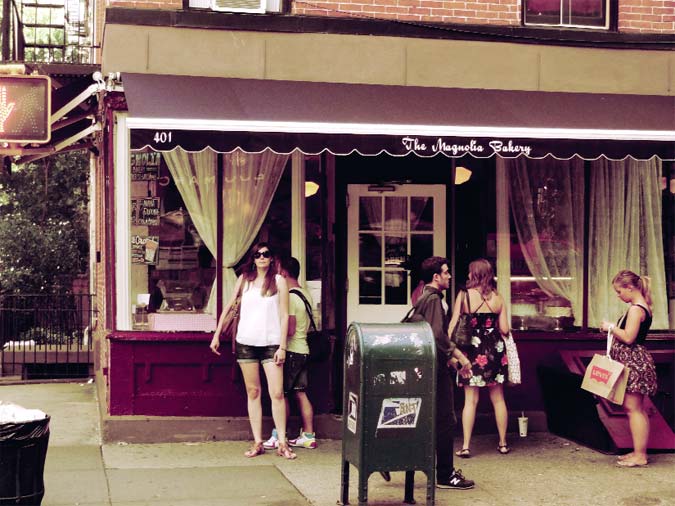



And this is what I love about New York: there is no quintessential “New Yorker” — a variety of people coexist and thrive in this unique American metropolis.
One thing must be said though. With the exception of Central Park, which is truly spectacular, some of the city sights as glorified by Hollywood are exactly the kind of places most people living here would avoid. Times Square, for example, is a nightmare, teeming with tourists and peddlers of all shapes and sizes, mediocre chain restaurants and tacky souvenir shops. There is the highly romanticized Empire State Building. I have to admit I pestered my husband to accompany me to the rooftop of this stately building. In hindsight, the crowds and the chaos are not worth the view or the experience. I would much rather experience the same views on a nice rooftop patio or bar in the summer, sipping on a cool drink, far from the madding crowd.
But one of the ways in which New York stole its way into my heart was via my stomach (naturally). New York City is heaven for those who are constantly searching for their next gastronomical adventure. I can’t think of a single cuisine that does not exist here and isn’t done to perfection (even the garam-masala-rich food of Lexington Avenue is sinfully delicious). Thai, Ethiopian, Chinese, Indian, Malay, Indonesian, Turkish, Persian — these can all be expected to be authentic, because immigrants from these countries actually live here, have their own grocery stores, butchers and restaurants. It never ceases to amaze me how I have long conversations with my Bengali grocer on the merits of a Pakistani mango versus the Indian Alfonso, all in Urdu, of course. Or the sheer number of Indian grannies clad in saris and chappals to be found at Saravanaa Bhavan (a South Indian restaurant in Murray Hill). After living in New York City, every other city seems too homogenous, too uniform, and too vanilla.


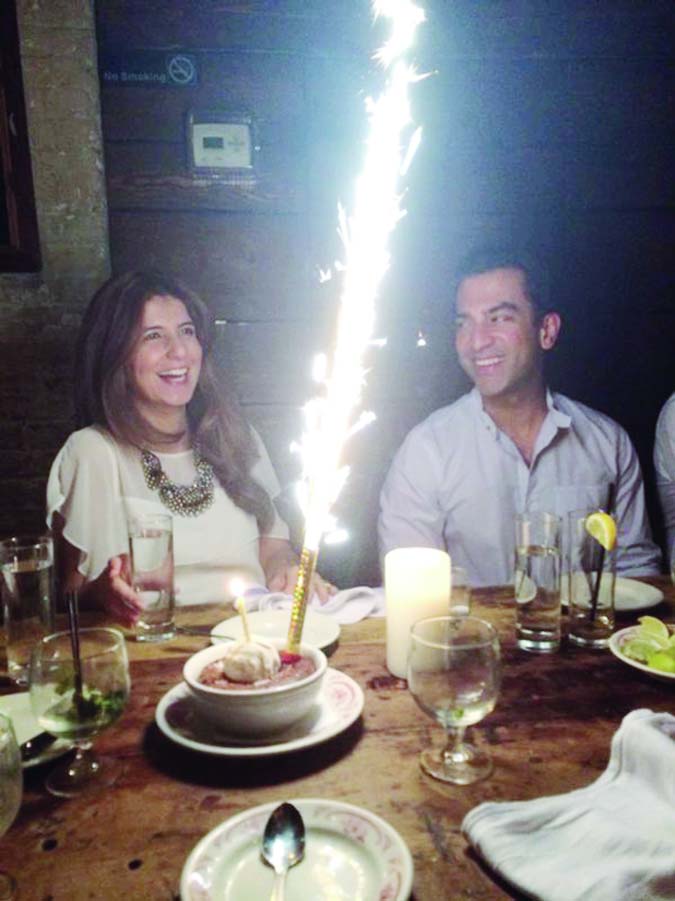


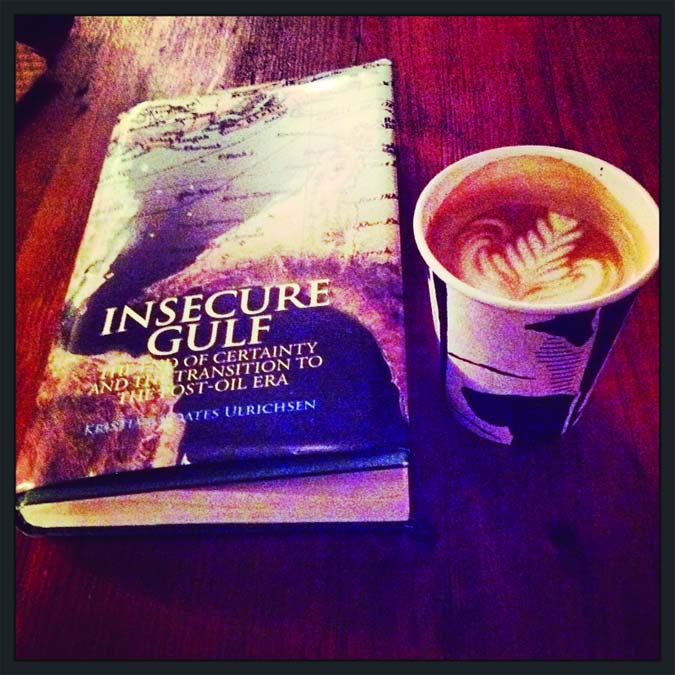
It is with a heavy heart and grumbling tummy that I bid farewell to this crazy, beautiful, chaotic city. A city that gave me the most memorable first two years of my marriage and set the bar high in terms of the adventures I seek and expect from this world. I will miss dragging my husband for brunch every Sunday (brunch is considered serious business in New York and I wouldn’t be surprised if even the food trucks offer brunch specials). I will miss Sam my Asian hairdresser, whose sister apparently has the same hair as me and so nobody in this world knows or understands my hair the way he does. I will miss taking courses at Columbia and meeting up with my younger brother for lunch on campus. I will miss agonizing over my Gulf politics paper, with my husband having a meltdown, on the side, on my misuse of commas. I will forever remember my nephews’ first visit to New York and their disappointment to find the dinosaurs at the Natural History Museum were “just bones.” And I will miss the constant chatter on the streets, overhearing languages from all over the world.
I feel privileged to have been a part of this city’s chaos, even if for a short while. But the chaos will continue: afternoon teas will replace brunches, stranger accents will echo in my ears, the calm of West London will overtake the mad rush of Bowery and Houston. And just like that the New York minute will be a happy memory.