





Saba Ahmed talks to model-turned-entrepreneur Nadia Hussain about her other job — cosmetic surgery and the murky field of aesthetics
What is the most common Botox request you get from clients?
To make them fair. This has become the most common demand. Now clients want whitening injectables. This also includes already very fair clients. It’s unbelievable to me. There are Pathans, Baloch, Sindhis, all types of people who are already fair demanding fairness injectables. I tell them to their face that it will change nothing about their appearance. How much more fair do they want to become?
Can you describe your philosophy on beauty regarding plastic surgery and identity?
Since it is an elective procedure, it’s definitely up to the client and if it boosts their confidence and if they feel good about it, then there’s no harm in going ahead with these procedures.


What are the most common concerns clients have regarding injectable procedures?
There are a lot of people who are generally afraid of needles and don’t want to get anything injected on their faces. The other factor that holds people back are budget limitations. These injectable procedures are aesthetic procedures and the concerns that most people have less to do with the possible side effects and more to do with the fact that the procedure may have to be repeated. Sadly, everyone wants a quick fix and that is just not possible. I tell them that there is no such thing. This is a solution to your problem, I tell them, but you will have to come back for repeat treatments. Even if you feel that a lot of money is being spent on these treatments, don’t believe that when you reach the age of 50 that you might not need a face lift. These treatments cannot stop aging, they can only camouflage your lines and are not a permanent solution to ageing.
Do you feel that Pakistan is moving in a more positive direction regarding perceptions of beauty, especially regarding skin colour?
There are young girls in the media and on television nowadays — I don’t want to take names — but they are all somehow very fair. I have recently shot a pilot project in which I was to play a role where I am to transform from ugly to beautiful and the only real difference between me being ugly and beautiful was that for ugly, I was dark, and for beautiful I was fair. I argued saying this was not right to portray, I am coming from a salon where I am telling women that it’s ok to be dark and here I am myself doing this project. So to make me go from badsoorat to khoobsoorat, the only thing they did was to make me go from dark to fair.
As far as whitening is concerned, our perceptions as a country have not changed much at all. As far as skincare goes, yes, people have become very positive, they do want to take care of their skin, they use good products, everybody is very conscious now. They want to know good treatments — for example, people are getting regular facials, regular cleansing, investing in good-quality creams; they are very conscious of all of that. But this whitening thing has become too much, it’s not just dark girls now, it’s the fair girls too who want to become fairer.


Have you had any clients who were going too far? Can you tell us about the experience?
The clients who go a bit crazy are the ones who get lip fillers done. Sometimes I have to tell them, enough, this is not suiting you, this is more than you need, but they don’t want to hear anything, and they insist, just a bit more, just a bit more. I had an experience where a young girl had just had a full filler done about a month ago and she came back, when the filler was very much still there and said that her most recent injection had made no effect and that she wants more. So I put another filler and advised her to stop at half, at which she told me no, that it’s still looking insubstantial and that she wants more. To which again I advised her to let the swelling come down a bit and get the rest done after a week. She told me no and to do it all now, so I did the full filler. So the next day, her lips were really really big and she really got worried. I told her I told you so. That is the most common issue that happens with lip filler clients, they want these unnaturally huge pouty lips.


What’s the most ridiculous request you’ve ever received from a client?
A lot of older clients with very deep lines and very deep wrinkles want a quick fix. They want the wrinkles to disappear and not come back. For such clients, nothing of this sort will work and they need a face lift or some other surgical procedure. When you have deep lines, you’re going to have to use a whole lot of filler. You do end up looking rather artificial.
Have you had any work done yourself?
I’ve done fillers and Botox, both, but it’s been a while since I last did anything. After my second baby I did thermage on my tummy for the loose skin. Other than that there’s not much.
Photography | AB Lakhani

Marium Hamid talks to Mahjabeen Obaid a pioneer of luxury invitations in PakistanÂ
What is your idea of style for the modern woman?
Minimal make up, pulled back hair, straight pants and a simple shirt with fun accessories. Also lots of arm candy, a statement handbag and comfortable shoes.
Which living person do you most admire for his or her signature style?
Tom Ford hands down.
What is the trait you most admire in people?
Being real! There is nothing more admirable than a person who knows who they are and are comfortable in their skin.


What is your greatest extravagance?
Jewellery! Isn’t it always!
What is your favorite journey?
Family vacations with my father were always the most fun and extravagant. We would pick a destination and then drive around from city to city, exploring! All those holidays were just fantastic: lots of laughter, singing to tunes, stopping and exploring the food. I cherish each of those memorable journeys and that time spent together.
What do you consider the most overrated virtue?
Honesty. No one is completely honest as everyone watches out for their best interest.
How are you using your medium to promote and maintain Pakistan’s culture?
At Mahj Design Studios all our fabric invitations, boxes and announcements are handmade using raw materials that are sourced from Pakistan. We use fabrics and colors that are symbolic to our culture in bright Jamawars, silks and hand woven cottons. We design a lot of wedding monograms in Urdu and our customers abroad love the ethnic feel it adds to the overall look of the invitation.
We have also used truck art. It is one of the most widely recognized art and culture forms associated with Pakistani culture. The most appreciated were Christmas tree ornaments for customers abroad as corporate gifts.


Which words or phrases do you most overuse?
Colour colour colour! make the design pop! Make it look fresh and happy.
While I enjoy designing the elegant black and white invitations for non-Pakistani weddings abroad, I feel that our weddings are the one time in our lives where family and friends join together in music and dance, mehndis and chooris! The invitation is a prelude to the wedding so it should reflect that vibe! It should set the tone for what’s to come.
To successfully transmit that energy into an invitation requires a lot of knowledge of fonts and design symbols. Anyone can print fuchsia pink or orange on a card but to be able to make the font, colour and designs all work well together requires knowledge and exposure.
What is your greatest achievement?
Professionally I think it has yet to come as I set the bar really high for myself and keep pushing the possibilities. However, recently Mahj Design Studios has had the honour of being included among the most reputable couture wedding invitation companies around the world.
The feature and link to this website is below
http://www.luxuriouswedding.com/invitation-designer-pakistan.html
What or who is the greatest love of your life?
My family and designing. A designer’s mind is always in motion, observing and absorbing. I am constantly storing knowledge somewhere at the back of my mind to revisit that memory at a later stage.
What in the future would you consider your greatest achievement?
I would like to open a couture stationery outlet for our walk-in clients in Karachi as we currently only meet by pre-scheduled appointments. I would also stock at retail stores across the globe, PAPYRUS stores being a good benchmark for achievement.
If you were to die and come back as a person or thing, what do you think it would be?
I would have to say me! I am very intrigued by myself and my mind. Sometimes I sit in solitude and listen to the whispers of my mind’s eye and then an idea just pops and I go with it.


What is your most marked characteristic in the world of art?
Being the pioneer of making luxury invitations and stationery in Pakistan where each one of our pieces is a work of art. Our handmade invitations are bespoke pieces that stand apart in their creativity and artistic expression. One of our most extravagant pieces would have to be the ones we made for a royal wedding where we hand-carved a design inspired by Islamic architecture. It took a long time but the results were breathtaking.
What is the quality you most like in a woman?
A woman who can balance work, family, friends and run a home.
What advice would you like to give teenage girls?
To complete their education and to work; to make their own money, and to travel and see the world. Never rely on another person for your happiness: it comes from within. Be strong enough to voice your opinions and never internalize. Scream if you feel like it, get stark raving mad, speak your mind and make your stance very clear. We live in a society where girls are meant to brush things under the carpet and are told not to confront. The most important advice would be to be assertive so that no one takes advantage of you.
How do you strike a balance between work, home and children?
With lots of coffee and help from my husband and my mother. Everything is on a schedule. I honestly think that working mothers spend the most amount of quality time with their children as they are so focused in being present both physically and mentally to make up for the lost time when they are away.
Considering that women in Pakistan are receiving increased recognition for their contribution to the economy, how does your venture support women?
Most of our invitations and favor boxes are all hand-made by women which is the main source of income for their families. We carry out training classes for them as this type of artwork requires a lot of practice and precision and while teaching them the art of making our exquisite boxes with fabrics and crystal, their eyes light up with the vibrancy of color and feel of the soft silks. Teaching them an art that they too can become masters of their own destiny.
As a woman, what difficulties have you faced in starting your venture? Please mention anyone who stands out in their support in helping your work.
No difficulties at all, I started Mahj Design Studios in 2008 and it has grown internationally since then. We actually prefer working with clients abroad as it is much easier to communicate via email and skype. Also less interference by the clients let’s us have more control over the design process which is what we are hired to do.
Name an essential quality an artist-turned-entrepreneur needs in an emerging market.
One needs to be able to market their work properly. They must first know who their customer is and try and find avenues to approach them.
Where do you see yourself as an entrepreneur 5 years from now?
With retail outlets of our own, and being sold at PAPYRUS
Name a local home-grown brand whose success you admire.
Maheen Karim
Text & coordination | Marium Ali Khan
Photography | Gibran Jamshed
Hair & makeup | Saman Zubair
at Saman Salon & Spa
Necklace | Outhouse
(Sana Hafeez Shaikh the Official Representative of Outhouse Indian Jewelry in Pakistan)


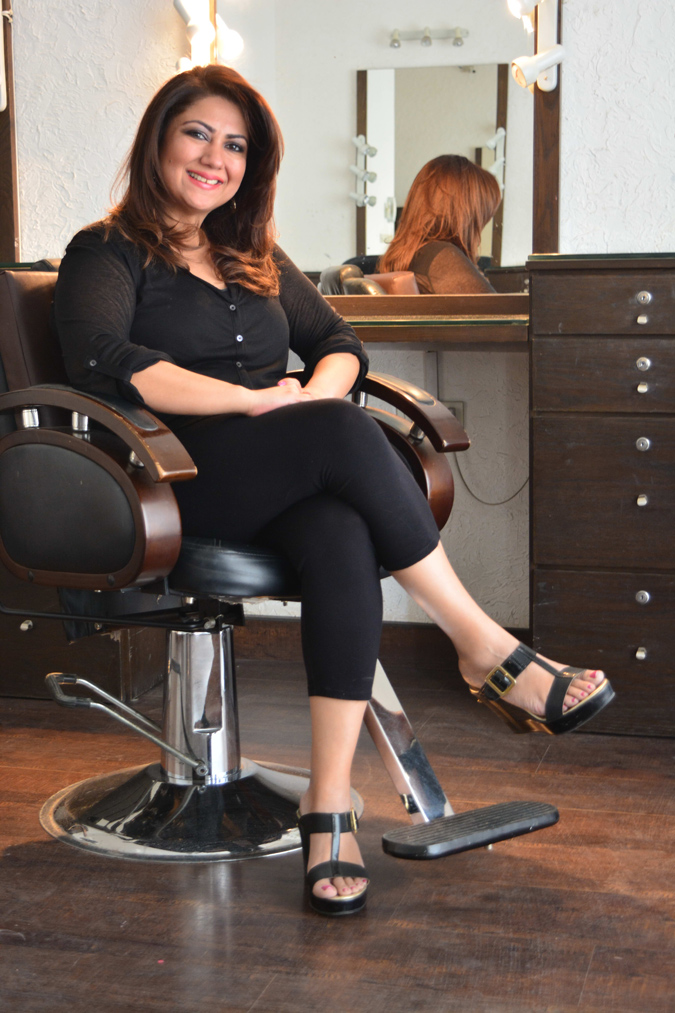
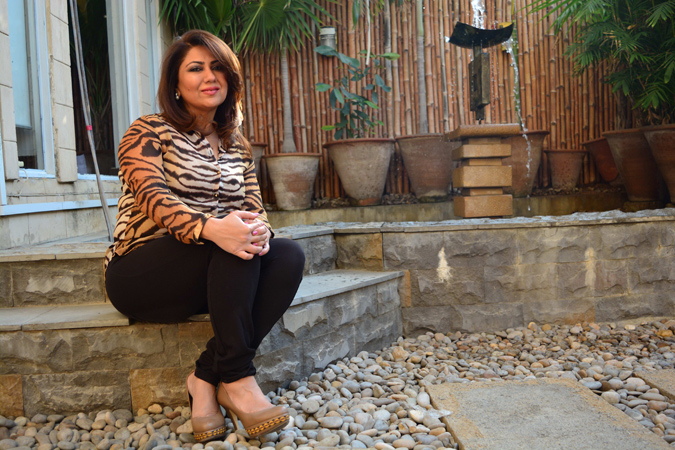
GT talks to makeup artist extraordinaireÂ
What is your idea of a modern women?
My idea of a modern women is someone who oozes confidence and is comfortable in her skin; someone who does what she thinks is right without needing external validation.
Which living person do you admire for his or her signature style?
I admire Madonna as she constantly and convincingly reinvents herself.
What trait do you admire most in people?
Honesty, integrity, and the ability to be aware of where one is in every moment.

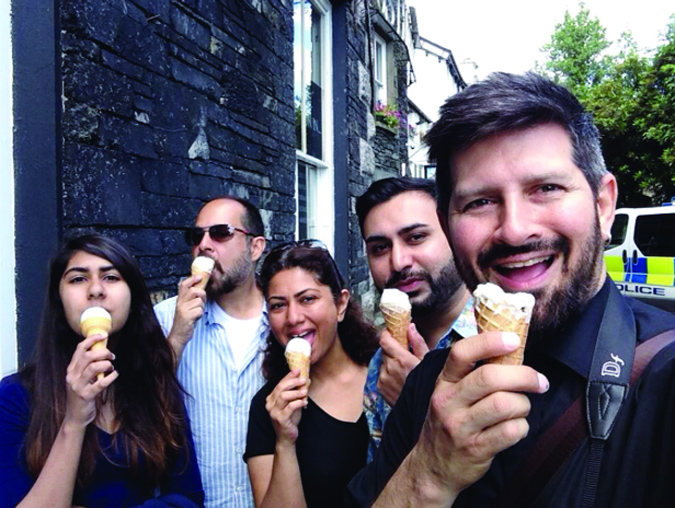
Riyah, Saqib, Rukaiya, Nubain & Tapu
What is your greatest extravagance?
My greatest extravagance is dining out.
What is your favorite journey?
One that involves nature and is enriching and nurturing for the soul.
What do you consider the most over-rated virtue?
Patience. You don’t know if you have tomorrow.
What do you dislike most in your wardrobe?
I don’t dislike anything in my wardrobe, if I didn’t like it it wouldn’t be there!
Which living person in Pakistan inspires you?
My inspiration comes from everywhere, not from any specific person.
Which words or phrases do you most over use?
“Chalo ho jaaye ga.”
What is your greatest achievement?
My children: seeing them grow into beautiful, wholesome human beings.
Who or what is the greatest love of your life?
My children, my ability to make the most of the moment, and to make people laugh.
What in the future do you consider your greatest achievement?
Seeing my family and loved ones happy, healthy, successful, content, in a state of inner peace.

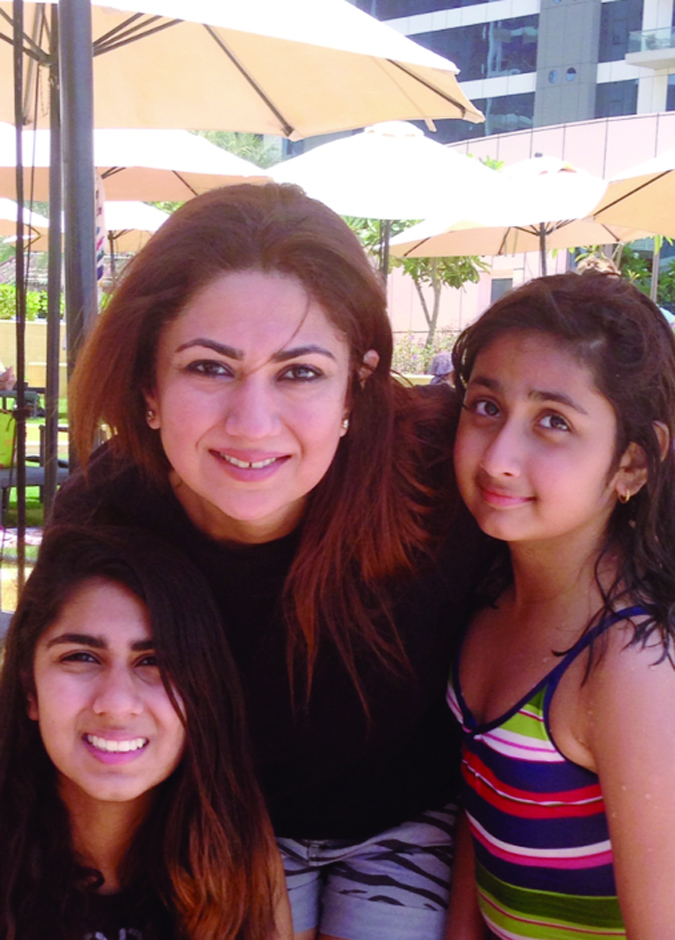
Rukaiya with her daughters, Rania & Riyah

Rukaiya Adamjee & Deepak Perwani with a friend               Rukaiya Adamjee with friends

Rukaiya Adamjee & Frieha Altaf with a friend
If you were to die and come back as a person or thing, what do you think it would be?
Oprah Winfrey. I admire her ability to survive, having risen from nothing to unimaginable heights.
What is your signature look?
Bohemian, but it can change according to the occasion.
What is the quality you admire most in a woman?
Inner strength, gentleness and the ability to reach out.
What is your favorite daily wear attire?
Tracks and a T-shirt.
Name an essential item every home needs?
Don’t know about items, but a home always needs a burst of good energy and love.
What are your favorite trends this season?
Natural and flowing, anything that feels good will look good.
Who would you like to style?
Very happy to style myself, thank you!
Name a local celebrity whose style you admire?
I like Mahira Khan’s style, it’s very natural.
How did you make the leap to celebrity stylist?
Hard work, perseverance, being passionate about what I do, and always being honest.
Describe your “I made it” moment?
Yet to arrive.
What song sums up your life at this moment?
The song that sums up my life at this moment is “The Rose” by Bette Midler.
Text | Marium Ali Khan
Photography | Gibran Jamshed