Category

GT Interview

Category

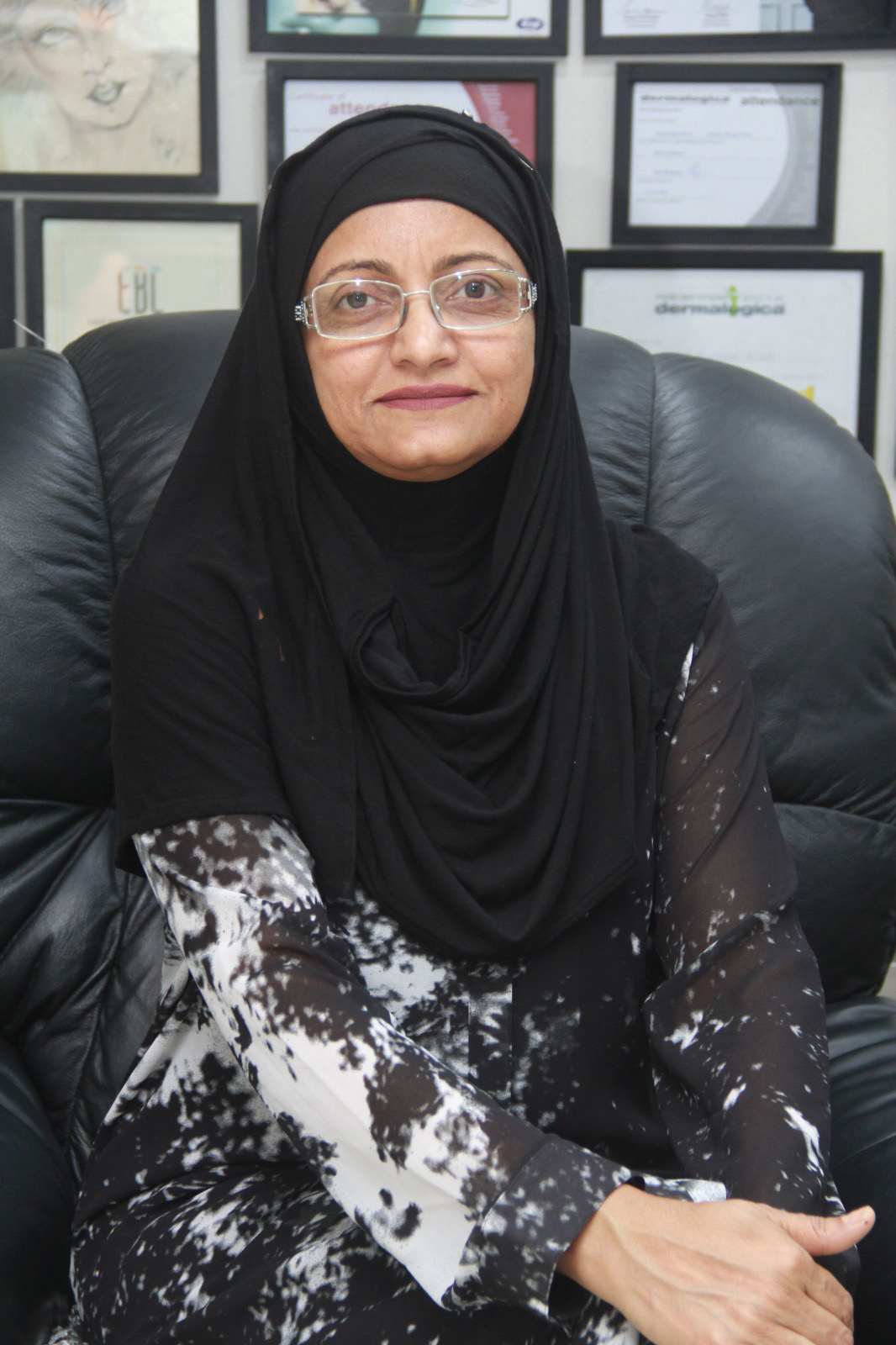
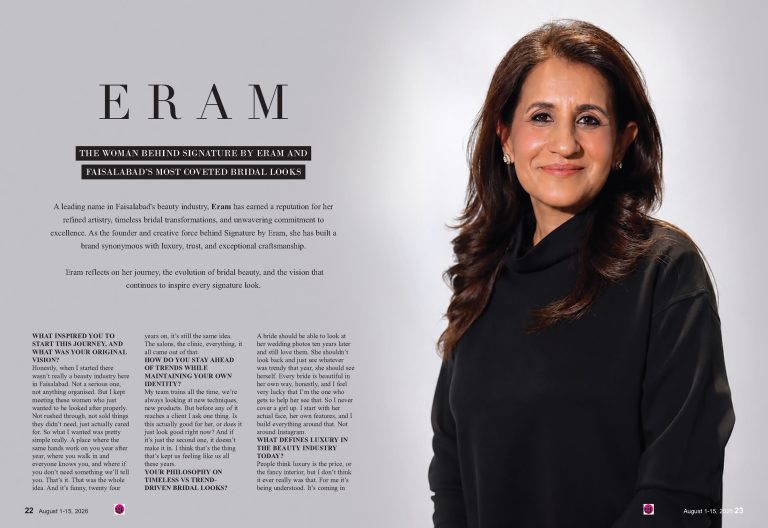
A leading name in Faisalabad’s beauty industry, Eram has earned a reputation for her refined artistry, timeless bridal transformations, and unwavering commitment to excellence. As the founder and creative force behind Signature by Eram, she has built a brand synonymous with luxury, trust, and exceptional craftsmanship.

Eram reflects on her journey, the evolution of bridal beauty, and the vision that continues to inspire every signature look.

What inspired you to start this journey, and what was your original vision?

Honestly, when I started there wasn’t really a beauty industry here in Faisalabad. Not a serious one, not anything organised. But I kept meeting these women who just wanted to be looked after properly. Not rushed through, not sold things they didn’t need, just actually cared for. So what I wanted was pretty simple really. A place where the same hands work on you year after year, where you walk in and everyone knows you, and where if you don’t need something we’ll tell you. That’s it. That was the whole idea. And it’s funny, twenty four years on, it’s still the same idea. The salons, the clinic, everything, it all came out of that.

How do you stay ahead of trends while maintaining your own identity?

My team trains all the time, we’re always looking at new techniques, new products. But before any of it reaches a client I ask one thing. Is this actually good for her, or does it just look good right now? And if it’s just the second one, it doesn’t make it in. I think that’s the thing that’s kept us feeling like us all these years.

Your philosophy on timeless vs trend-driven bridal looks?

A bride should be able to look at her wedding photos ten years later and still love them. She shouldn’t look back and just see whatever was trendy that year, she should see herself. Every bride is beautiful in her own way, honestly, and I feel very lucky that I’m the one who gets to help her see that. So I never cover a girl up. I start with her actual face, her own features, and I build everything around that. Not around Instagram.
What defines luxury in the beauty industry today?

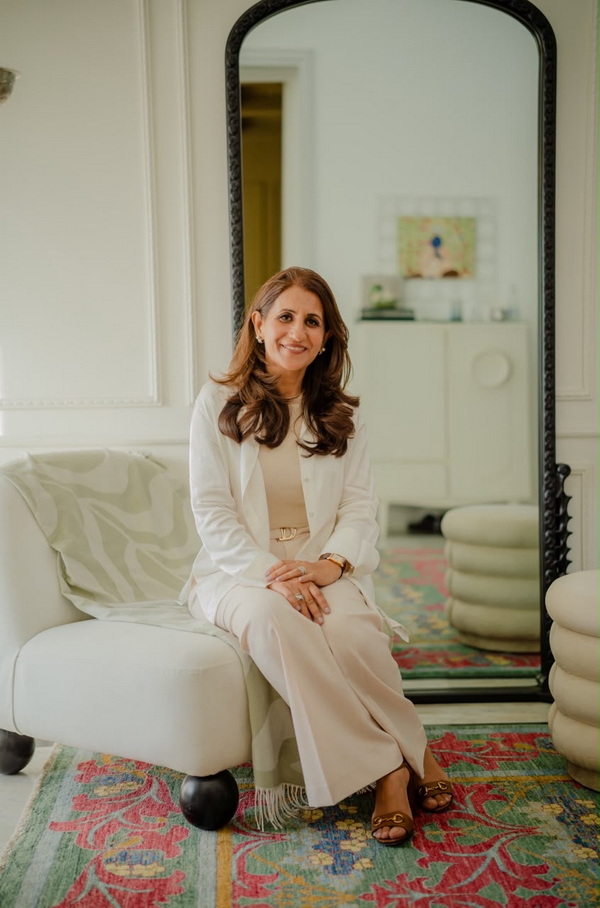
People think luxury is the price, or the fancy interior, but I don’t think it ever really was that. For me it’s being understood. It’s coming in and someone already knowing how you like your hair, the kind of looks you go for, what makes you feel comfortable sitting in that chair. I want a client to feel like the whole thing was done for her, not just booked and done. And sometimes, honestly, the luxury is us telling you the truth. Even when the truth is you don’t need this. You can’t fake that or rush it. It takes years, and that’s exactly what we’ve put in.

How has digital media changed your business?

It’s changed how people find us, definitely. But what keeps them, that hasn’t changed at all, that’s still just trust. The difference now is that people usually see us on their phone first, way before they ever come in. Which is nice in a way, because it finally lets us show off my team’s work. People can actually see what we can do and get a bit inspired by it. We never had that before.

Most challenging phase, and the lesson it taught you?

Covid. Easily. We had to shut all the salons to keep everyone safe, and for a business like ours, where everything depends on people actually coming in, that was frightening. But our team means everything to me, they always have, and there was no way I was cutting anyone’s pay. So we figured something else out. We started making up at home kits and sending them right to the clients’ doors. It kept things ticking over, and more importantly it meant nobody on staff was left struggling during a really hard time. That whole thing taught me something I already sort of knew but really felt then. The business is only ever as strong as the people in it.

How do you build a culture of creativity, consistency, and excellence in your team?

The best thing we have isn’t a service, it’s that our people don’t leave. So many of our senior artists and stylists have been here for years, some more than ten, and let me tell you, that just doesn’t happen in this industry. We got there by treating training like something worth spending on, not a cost to cut, and by actually giving people ownership of their work instead of treating them like they’re easily replaced. And there’s always more to learn anyway, this industry never sits still. We do these panel discussions at all our branches where we just sit and listen, take in new ideas, hear straight from customers what they think. I mean it when I say I learn something new pretty much every day.
Rapid Fire
Bridal glam or soft natural beauty?
Neither honestly, timeless, whatever suits the bride.
One makeup product you can’t live without?
Huda Beauty Easy Bake, and a Dior highlighter.
Biggest beauty trend you wish would disappear?
Overly done faces.
Celebrity whose makeup style you admire most?
Anne Hathaway.
Three words that define Signature by Eram?
Trusted, Timeless, Personal.

How do you encourage clients to embrace individuality while enhancing natural features?

We’ve never had one set look that everyone walks out with. That’s just not us. The first thing we do is listen. We ask what she wants to feel, not only what she wants to look like, and then we work with her features instead of against them. And the compliment I’m really after for her isn’t I love your makeup, or I love your hair. It’s just someone saying, you look beautiful.

What’s on the horizon, new services, collaborations, expansion?

We’re carrying on with the clinic side of things, bringing in more of the newer tech and products so we stay ahead instead of always catching up. And on a personal note, my daughter Minahil has really been stepping up lately. She trained as a makeup artist herself, and now she’s the one shaping where the brand goes next. That’s honestly been one of the nicest parts of this whole chapter for me.

Advice for aspiring makeup artists and salon owners?

Don’t rush to grow before people actually trust you. I get it, it’s tempting, you want to open more places, drop your prices, jump on whatever’s hot. But the salons that stick around aren’t the loud ones. They’re the ones people trust enough to keep coming back to for years. And don’t ever stop learning. You’re going to mess up, that’s just part of it. Just make sure you learn from it and don’t do the same thing twice.

What legacy do you hope Signature by Eram leaves in Pakistan’s beauty industry?

I hope people remember Signature as a place that lifted women up. The women who came to us, and just as much the women on my team who built their whole careers with us. I hope they remember us for always having the newest technology and really good, high end products, and for doing it properly. But more than anything, I just hope we’re remembered as a name Faisalabad could always trust.

For decades, Nighat Misbah has been at the forefront of Pakistan’s beauty industry, transforming bridal artistry into a celebrated form of storytelling. As the Founder, Director and Creative Head of Depilex, she has shaped generations of brides while setting new benchmarks in beauty, fashion and entrepreneurship. With Dulhan, her latest bridal campaign, she celebrates the timeless essence of the Pakistani bride, where heritage meets modernity, craftsmanship becomes art, and every detail reflects the beauty of a new beginning.

We sat down with Nighat Misbah to talk about her remarkable journey, the evolution of bridal beauty, and the legacy she continues to build.

The “Dulhan” campaign portrays a bride as someone carrying both heritage and a new beginning. What was the first emotion you wanted people to feel when they looked at these images?

The first emotion I wanted people to feel was belonging. A Pakistani bride is not just preparing for a wedding, she is carrying generations of tradition while stepping into a completely new chapter of life. I wanted every image to feel deeply rooted in our culture yet full of strength and grace. Beauty is important but emotion is what makes an image unforgettable.

After decades of shaping bridal beauty in Pakistan, how has your own definition of the “perfect bride” evolved?

When I began my career, perfection was often associated with flawless makeup and immaculate styling. Today, I believe the perfect bride is simply the most authentic version of herself. My role is no longer to transform her into someone else but to enhance her individuality and her confidence on one of the most important days of her life. The most beautiful bride is always the one who still looks like herself.

Depilex brides have become part of Pakistan’s visual culture. How do you continue reinventing bridal aesthetics while staying true to tradition?

Tradition should evolve, not disappear. Every season introduces new colours, finishes and techniques but our cultural identity remains constant. At Depilex, we embrace innovation while respecting craftsmanship. Reinvention comes from refining details rather than abandoning tradition. The goal is always to create a look that feels current today and beautiful decades from now.

This campaign beautifully highlights fashion, jewellery, makeup and storytelling as one seamless vision. How important is collaboration in bringing a bridal narrative to life?

Bridal beauty has never been about makeup alone. It is the result of talented people working together with one shared vision. Designers, jewellers, photographers, hairstylists and makeup artists each contribute to telling the bride’s story. When everyone respects each other’s craft, the final result feels effortless, cohesive and emotionally meaningful. Collaboration is where creativity truly flourishes.

Finish the Sentence

A bride is – the most beautiful version of herself
Beauty means – confidence
Success feels – seeing other shine because of the opportunities you’ve created
My biggest inspiration is – the women in my family
The best is yet to – be written

Today’s bride is more confident, expressive and involved in every creative decision. How has this shift influenced the way you approach bridal styling?

Today’s bride arrives informed and inspired. She has saved references, understands what suits her and wants her personality reflected in every detail. I see this as a very positive change. Bridal consultations have become conversations rather than instructions. My responsibility is to listen carefully, guide her with experience and create a look that balances her vision with timeless elegance.

In your opinion, what are the three elements that instantly make a bridal look timeless rather than trend driven?

First, beautiful skin that looks healthy rather than heavily covered. Second, balance- between makeup, jewellery and the bridal outfit so that no single element overwhelms the others. Third, confidence. The most timeless bridal look is one worn with poise and grace.

As one of Pakistan’s most influential beauty entrepreneurs, what legacy do you hope Depilex leaves for the next generation of artists and brides?

I hope Depilex is remembered not only for creating beautiful looks whether it’s hair or makeup but also for creating opportunities. Over the years, we have trained thousands of beauty professionals, many of whom have gone on to build successful careers and businesses of their own. If our legacy is one of empowerment, professionalism, excellence and raising industry standards while celebrating Pakistani beauty, I will consider that our greatest achievement.

What inspires you creatively today that still excites you after all these years in the industry?

People continue to inspire me. Every bride has a unique personality, family story and dream for her wedding day. That individuality keeps my work fresh. I also find inspiration in Pakistan’s incredible craftsmanship from intricate hand embroidery to traditional jewellery as well as in the evolving confidence of young women who embrace both their heritage and their individuality.

Rapid Fire
* Traditional red or contemporary ivory?
Traditional red these days but last month was Ivory for me
* Classic jewellery or statement heirloom pieces?
Heirloom pieces
* Matte or luminous bridal skin?
Matte in this current weather
* One beauty trend you’d love to retire?
Metallic eyeshadows
* One word that defines a Depilex bride?
Timeless

If you could change one misconception people have about bridal makeup or beauty, what would it be?

The biggest misconception is that bridal makeup should completely transform a woman. I have never believed that. Great bridal makeup should reveal a bride’s beauty, not conceal it. When people look at her wedding photographs years later, they should recognise her instantly not just remember the makeup.

Looking ahead, what excites you most about the future of Pakistani bridal fashion and beauty?

I believe Pakistani bridal beauty is entering a remarkable phase where our traditions are gaining global appreciation while our artists continue to innovate. Brides today are embracing individuality, sustainability, craftsmanship and meaningful storytelling. I am excited to see our industry continue to set international standards while remaining proudly rooted in our culture. That balance between heritage and innovation is what will define the future of Pakistani bridal beauty.

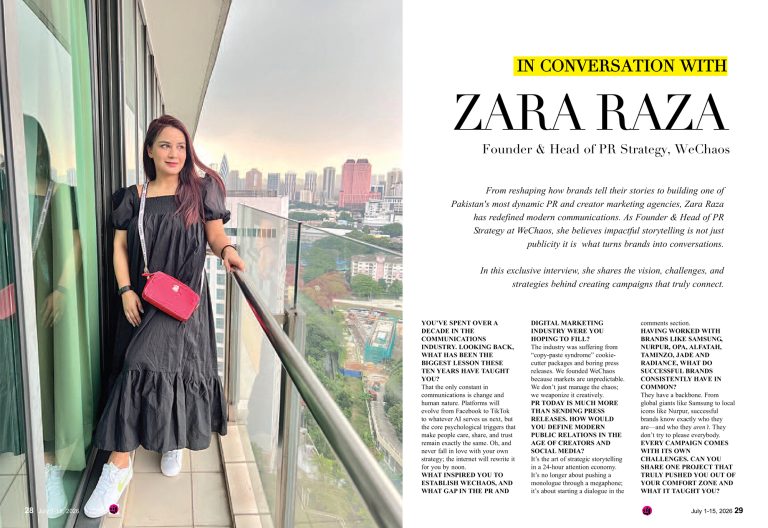
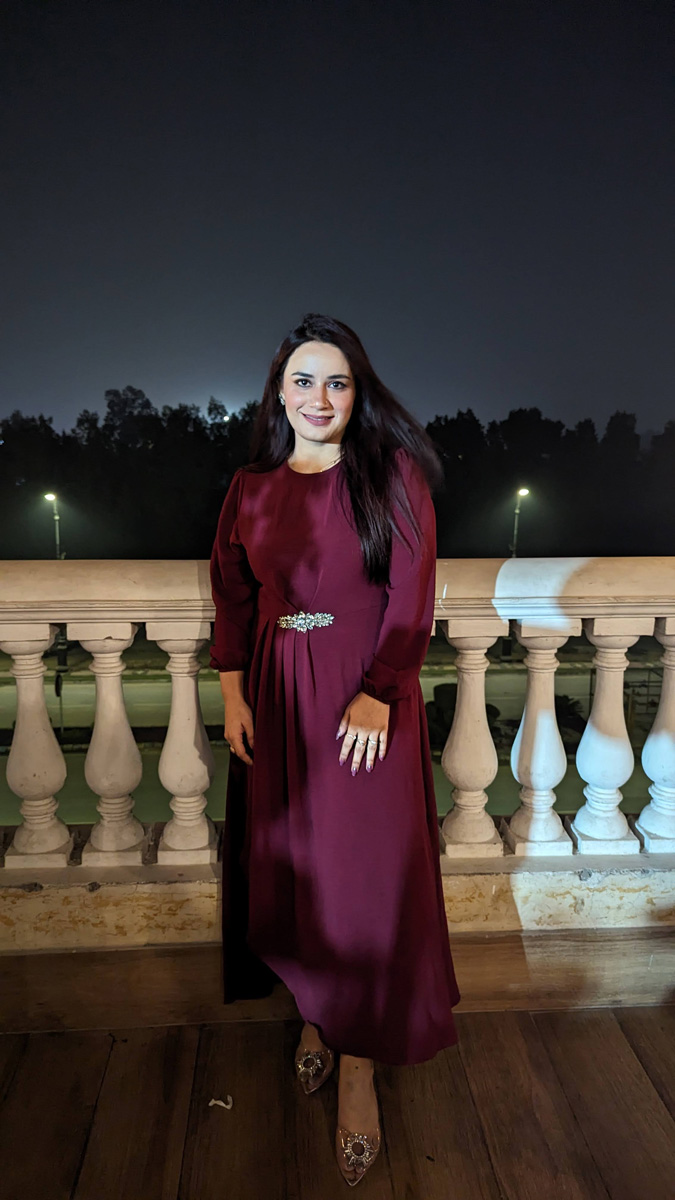
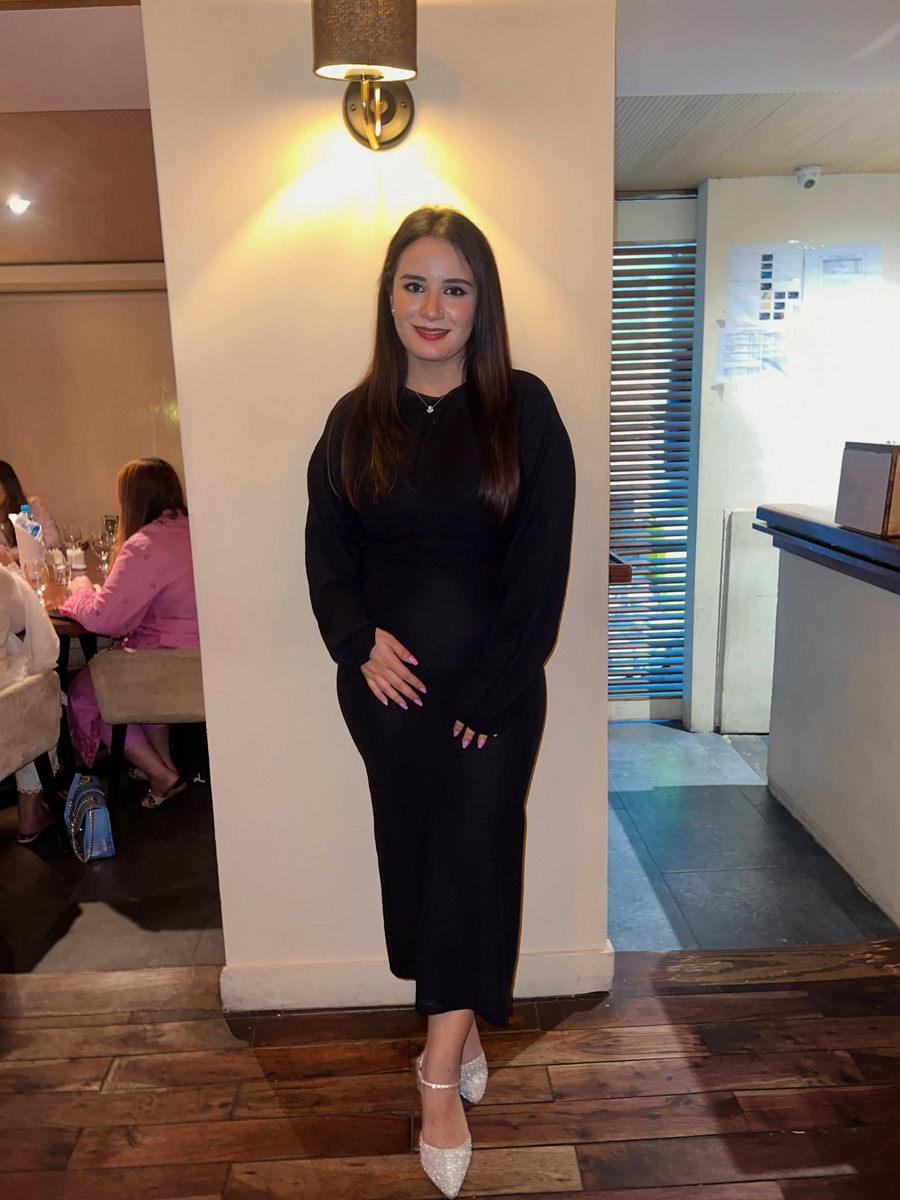
From reshaping how brands tell their stories to building one of Pakistan’s most dynamic PR and creator marketing agencies, Zara Raza has redefined modern communications. As Founder & Head of PR Strategy at WeChaos, she believes impactful storytelling is not just publicity it is what turns brands into conversations.

In this exclusive interview, she shares the vision, challenges, and strategies behind creating campaigns that truly connect.

You’ve spent over a decade in the communications industry. Looking back, what has been the biggest lesson these ten years have taught you?

That the only constant in communications is change and human nature. Platforms will evolve from Facebook to TikTok to whatever AI serves us next, but the core psychological triggers that make people care, share, and trust remain exactly the same. Oh, and never fall in love with your own strategy; the internet will rewrite it for you by noon.

What inspired you to establish WeChaos, and what gap in the PR and digital marketing industry were you hoping to fill?

The industry was suffering from “copy-paste syndrome” cookie-cutter packages and boring press releases. We founded WeChaos because markets are unpredictable. We don’t just manage the chaos; we weaponize it creatively.

PR today is much more than sending press releases. How would you define modern public relations in the age of creators and social media?

It’s the art of strategic storytelling in a 24-hour attention economy. It’s no longer about pushing a monologue through a megaphone; it’s about starting a dialogue in the comments section.

Having worked with brands like Samsung, Nurpur, OPA, Alfatah, Taminzo, Jade and Radiance, what do successful brands consistently have in common?

They have a backbone. From global giants like Samsung to local icons like Nurpur, successful brands know exactly who they are—and who they aren’t. They don’t try to please everybody.

Every campaign comes with its own challenges. Can you share one project that truly pushed you out of your comfort zone and what it taught you?

Managing a massive, unexpected digital backlash for a major client over a holiday weekend. We had to pivot our entire strategy in under two hours. It taught me that true PR leadership is about being the calmest person in the storm.

Many businesses confuse marketing with PR. How do you explain the difference, and why should brands invest in both?

Marketing is you telling someone at a party, “I’m rich and good-looking—buy me a drink.” PR is when three other people whisper to them, “Hey, that person over there is brilliant.” Marketing drives the transaction; PR builds the relationship.

How do you decide whether a creator or influencer is the right fit for a campaign beyond just follower count?

Follower count is just vanity math. I look for cultural alignment and engagement quality. Give me a micro-influencer with 20k fiercely loyal fans over a mega-celebrity whose followers just drop generic emojis.

In today’s digital-first world, what are the biggest mistakes brands make on social media?

Blindly hopping on every viral TikTok trend when it doesn’t fit their identity (pure cringe), and treating social media like a one-way billboard instead of a two-way conversation.

As a woman leading a communications agency, what challenges have you faced, and how have they shaped your leadership style?

Early on, it was earning a seat at tables dominated by old-school mindsets. It shaped my leadership style into one that values empathy and radical candor. I don’t hire “yes-men”—I hire disruptors.

AI, content creators and changing algorithms are transforming the industry. Where do you see PR heading over the next five years?

AI will automate the mundane data work, freeing us up to do what AI can’t: human-centric emotional strategy. The lines between PR, entertainment, and tech will completely blur.

What advice would you give to young professionals hoping to build a successful career in PR and brand communications?

Develop thick skin and a relentless curiosity. Read everything from global politics to local memes. You cannot cultivate public relations if you don’t actually understand the public.

What’s next for WeChaos, and what exciting projects or goals can we expect in the near future?

We are expanding our experiential PR wings to create immersive, cross-border campaigns. We have a few disruptive launches lined up that will challenge how brands interact with consumers. We’re about to cause a lot more beautiful chaos.

In an age where careers are often defined by linearity, Hassan Hakeem’s journey resists convention. Once advising parliaments across South Asia and the Pacific on sustainable development and gender equality, he now crafts something far more intimate yet equally impactful, experiences built around food, space and emotion.
His transition from the structured world of multilateral policy to the fluid, sensory language of cuisine is not a departure but an evolution. At Wild Fig, Hassan approaches food as more than sustenance. It becomes a medium of care, a tool for connection and a way to shape memory in times that demand both comfort and meaning.

Rooted in a multicultural upbringing and informed by years of global exposure, his work brings together flavour, story and atmosphere with quiet precision. What emerges is not just a meal but a curated moment, one that lingers far beyond the table.

You have moved from shaping policy at the UN to shaping experiences through food. What was the moment that made you choose this transition?

Inspiration often comes quietly; there wasn’t a single moment but a gentle unfolding; an idea that became a rhythm. After years in structured institutions, I realised I wanted to create something that could touch people more intimately; food became my language to convene, connect, and offer care; it is experiential, mindful and deeply human.

Your work sits at the intersection of food, space and mood. How do you define a complete dining experience today?

A complete experience is about balance; flavours, textures, light, space and emotion; every element should feel purposeful and unhurried, like a conversation with a loved one you don’t want to end; the experience is as much about the atmosphere and gesture as it is about the dish itself.

Having worked across South Asia and the Pacific, how has that exposure influenced your culinary philosophy?

Those experiences shaped my lens to be plural, attentive and inclusive; I learned to see subtle variations in culture, ingredients and traditions; they inspired the birth of Wild Fig – my kitchen named for the fig’s beauty, its evolution, texture and layered complexity; like my approach to food, it is slow, aesthetic and experiential.

You describe food as a language of connection. What are you trying to say through your creations right now?

At Wild Fig, I speak through the fig itself; its delicate skin, evolving sweetness, and textured bite mirror my approach; slow, intentional, and layered; every dish is a conversation; a way to offer care, celebrate community, and remind us that food carries memory, emotion, and meaning; especially in testing times when food can be weaponised through famine or blockades, it becomes a profound reminder of its value and responsibility.

There is a strong sense of intentionality in Wild Fig. How do you curate menus that feel both personal and culturally expansive?

Menus begin with reflection; I consider the seasons, ingredients and the story I want to tell; I source locally and ethically; each dish balances intimacy with exploration, honouring both the ingredient and the experience it creates. The result is mindful, curated and culturally expansive.

From advising on gender equality to building a food brand, do any principles from your policy work still guide you in the kitchen?

Absolutely; listening, observation and intentionality are constant; policy work taught me the stages of legislative development and accountability; in the kitchen, the same applies: pre-taste, the construction, palatability and the post-taste reflection; every dish requires foresight, iteration, and inspiration, just policy; every choice from ingredient to presentation carries meaning.

Your aesthetic leans toward edible art. Where do you draw inspiration from, whether it is architecture, memory, travel or something more internal?

Memory and travel sit at the core; spices, textures and moments from childhood or a distant market; every plate is a canvas, from texture to tone, where boutique food and couture cakes become experiential art. I take cues from architecture and light to create harmony between food, space and mood; each dish is curated to feel familiar yet unexpected, mindful and immersive.

In a fast moving, trend driven food culture, how do you stay rooted in meaning rather than momentary hype?

By moving slowly and intentionally, Wild Fig has never been about shortcuts or fleeting trends; vanilla pods instead of essence; herbs over heat. In a world of fast food and air fryers, I remain grounded in creating mindful experiences that last in memory rather than in momentary excitement.

You mention cooking as an act of care. How does that philosophy translate into your client experiences?

In the testing times that the world lives in, food has been weaponised through starvation, blockades and sieges. This gives a deep appreciation of its value; every plate, every bite is curated with attention, the menus, the pacing, the presentation – they are all gestures of care; cooking becomes a way to nurture, comfort and create connection beyond the food itself.

What has been the most challenging part of leaving a structured institutional career for a creative and entrepreneurial path?

In institutions, rules guide you; in creativity, you must rely on instinct, patience, and a strong belief that things will work out; that trust has become a daily practice. There is beauty in trusting the unknown and embracing the rhythm of creation.

Pakistan’s food space is evolving rapidly. Where do you see boutique and couture dining experiences heading in the next few years?

There is a growing appetite for authenticity and thoughtfulness; people will increasingly seek curated, personalised and immersive meals that tell a story, connect communities and honour ingredients; dining will be as much about feeling as it is about taste; experiential cuisine will define the next phase of boutique dining.

If you could design a meal that represents your entire journey from the UN to Wild Fig, what would it look like?

A starter of stuffed zucchini flowers with pistachio ricotta and herbs; a main of slow-cooked lamb shank with plum glaze, served with pickled scones; and a dessert of almond and poached pear tart with crème anglaise; each dish is slow, intentional, ultimately an offering of care and connection; together, they echo beauty, evolution and texture.

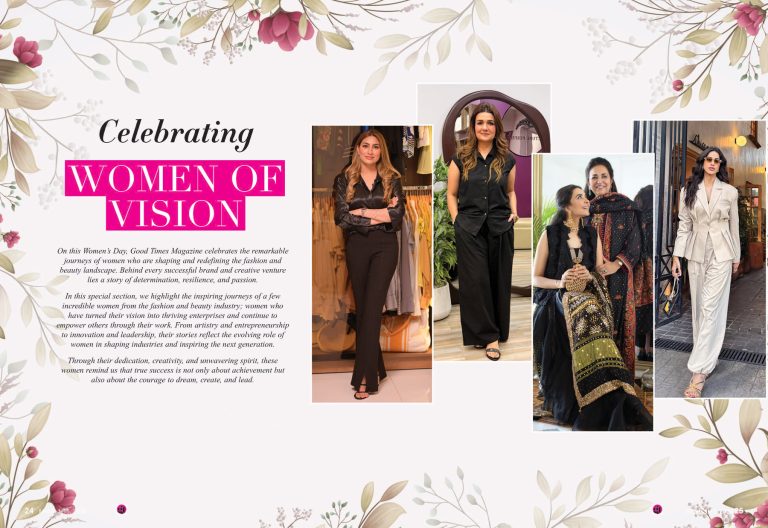
On this Women’s Day, Good Times Magazine celebrates the remarkable journeys of women who are shaping and redefining the fashion and beauty landscape. Behind every successful brand and creative venture lies a story of determination, resilience, and passion.

In this special section, we highlight the inspiring journeys of a few incredible women from the fashion and beauty industry; women who have turned their vision into thriving enterprises and continue to empower others through their work. From artistry and entrepreneurship to innovation and leadership, their stories reflect the evolving role of women in shaping industries and inspiring the next generation.

Through their dedication, creativity, and unwavering spirit, these women remind us that true success is not only about achievement but also about the courage to dream, create, and lead.

In Conversation with Kanwal Malik The Woman Who Turned a Dream into an Empire

Every powerful brand has a story behind it, and behind Kanwal Malik’s name is a journey of resilience, ambition, and unwavering belief in dreams.

On this Women’s Day, her story is more than just the rise of a successful fashion house it is a reminder that women can build, lead, nurture, and inspire all at once.

Where the Dream Began

For Kanwal Malik, fashion was never just a profession; it was a childhood fascination.

As a young girl, she spent hours stitching tiny outfits for her dolls, experimenting with styles and imagining new designs. Those playful moments quietly planted the seeds of what would later become a thriving fashion empire.

Recognizing her passion early on, she pursued formal education in fashion, determined to transform her childhood dream into a lifelong career.

The Courage to Begin Small

Eight years ago, Kanwal Malik took her first step into entrepreneurship. With just five workers and a vision, she launched her brand.

The beginning was humble, but the ambition was limitless.

Through dedication, patience, and relentless hard work, the brand gradually grew not just in recognition but in impact.

Today, that small beginning has transformed into a thriving organization with more than 800 employees, a remarkable journey that reflects the power of persistence and belief.

A Woman Who Leads and Nurtures

Beyond her role as a designer and entrepreneur, Kanwal Malik is also a proud mother of two.

Balancing motherhood with the demands of building a large fashion brand is no small achievement, yet she has embraced both roles with equal passion.

Her journey reflects the reality of many modern women navigating family, ambition, and personal dreams simultaneously.

And in doing so, she has created more than a brand; she has created opportunities for hundreds of people who are now part of her growing team.

Lessons from the Journey

Like every success story, the road was not without challenges. There were moments of uncertainty, setbacks, and lessons learned the hard way.

But failure never discouraged her.

Instead, it became motivation pushing her to grow stronger, think bigger, and keep moving forward.

Her story proves that success is rarely instant. It is built through perseverance, resilience, and the courage to continue even when the path feels difficult.

Fashion with Purpose

Today, Kanwal Malik is known for her refined aesthetic luxurious fabrics, intricate embroidery, and timeless silhouettes that celebrate femininity.

But beyond the beauty of the garments lies something deeper: a philosophy that fashion should empower women.

Every collection reflects elegance, confidence, and individuality values that resonate with the modern woman.

A Story of Empowerment

On Women’s Day, Kanwal Malik’s journey stands as a reminder that women are capable of building legacies.

From a little girl stitching clothes for dolls to a woman leading a brand with hundreds of employees, her story reflects the extraordinary possibilities that arise when passion meets determination.

Because sometimes the most powerful stories begin in the simplest ways with a dream, a needle, and the courage to believe in yourself.

Picture Perfect By Zunaira Ovais The Artist Redefining Beauty Through Precision and Passion

My journey into the world of advanced cosmetology and semi-permanent makeup stems from a lifelong passion for fine arts. From a young age, I was naturally drawn to drawing, coloring, and painting, which nurtured my appreciation for detail, creativity, and aesthetics. Over time, I realized that these artistic abilities could be transformed into something far more meaningful through the art of semi-permanent makeup, a field where creativity meets precision and beauty meets confidence.

With that realization, I dedicated myself to learning modern techniques and advanced procedures in SPMU and aesthetic treatments. The ability to subtly enhance natural features and positively impact someone’s confidence is what truly drew me toward this profession. Semi-permanent makeup is an emerging and evolving field, and it continues to fascinate me because of how beautifully it blends artistry, skill, and innovation.

At my studio, we offer a wide range of aesthetic and semi-permanent makeup treatments designed to enhance natural beauty. These include microblading for eyebrows, lip tint, permanent eyeliner, cheek tint, BB Glow treatment, scalp micro-pigmentation, eyelash extensions, hair botox, permanent hair extensions, and many other advanced cosmetic services. Each treatment is carefully performed with attention to detail, ensuring that the results look natural, refined, and tailored to every client.

People often assume that such procedures were once considered taboo in our society, but I personally believe that enhancing beauty has always been part of our cultural traditions. If we look back through history, practices such as kajal, surma, piercings, and other forms of adornment have long been used in bridal and everyday beauty rituals across our region. Of course, whenever modern techniques are introduced, they are initially met with skepticism and curiosity, especially when they involve the face and body. However, that phase has long passed in Pakistan. Today, people understand the safety, reliability, and affordability of these procedures, and they have become a normal and trusted part of the beauty industry.

One of the most rewarding aspects of my work is the diversity of my clientele. My clients come from many different backgrounds in terms of age, gender, ethnicity, geography, and income group. Over the years, I have had the privilege of working with individuals from all walks of life;  from political elites and public figures to celebrities and members of the underprivileged community. Every client is unique, and each treatment is approached with the same dedication and care.

With self-care becoming a growing priority for many young women today, there has also been a greater awareness about aesthetic treatments and personal grooming. However, I strongly believe that business ultimately flourishes when you are truly good at what you do. For me, the growth of my work has always been a result of professionalism, dedication, and sincerity. Sustenance is in the hands of Allah, and when one focuses on being ethical, balanced, and committed to their craft, success follows naturally.

What brings me the greatest satisfaction is seeing my clients leave happier and more confident than when they arrived. I particularly enjoy working with young women and helping enhance the natural beauty that God has blessed them with. Being able to combine art, science, and care in a way that empowers people is what makes this profession so deeply fulfilling for me.

Today, I am the proud owner of Picture Perfect Aesthetic Clinic, based in DHA Phase 5, Lahore, where I continue to practice my craft and welcome clients from all walks of life who trust me to help them look and feel their absolute best.

In Conversation with Farah Talib Aziz & Maliha Aziz 

Twenty-five years ago, what began as a small venture in a basement has grown into one of Pakistan’s most recognized fashion houses. When Farah Talib Aziz first started her namesake brand, she borrowed 10,000 from her husband, who initially saw the effort as little more than a functional hobby. What followed, however, was a remarkable journey driven by determination, vision, and relentless hard work.

From a team of just three people working out of a modest basement setup, the brand steadily expanded, reflecting Farah’s unwavering commitment to quality and craftsmanship. Over the years, that small operation transformed into a thriving enterprise employing more than a thousand people today.

One of the brand’s earliest milestones was the opening of its first store on Karachi’s E Street, a moment that marked its transition from a homegrown venture into a recognized retail presence. Since then, the label has continued to break new ground. Most notably, it opened Pakistan’s first international boutique in Sugar Land, Houston, Texas—an achievement that signaled not only the brand’s global reach but also the growing international appreciation for Pakistani design.

Over the years, Farah has been the recipient of numerous awards, recognizing both her creative excellence and her entrepreneurial spirit. Yet beyond accolades and expansion, what truly defines the brand is the resilience and dedication behind it.

Today, the Farah Talib Aziz label stands as a testament to the power of persistence, offering celebrated collections across bridal wear, luxury prêt, and unstitched lawn. Each piece reflects the same passion and craftsmanship that began in that small basement a quarter century ago.

On this Women’s Day, Farah’s story serves as a reminder that great journeys often begin with humble beginnings, a bold vision, and the courage to pursue it.

In Conversation with Aden Rehan A Force of Authentic Influence

Few personalities embody modern Pakistani entrepreneurship and influence quite like Aden Rehan. With her contagious energy, enlightened outlook and uplifting presence, Aden Rehan has emerged as one of Pakistan’s leading and most versatile content creators, seamlessly balancing business, family life and digital influence.

A graduate of Fashion Marketing from the Pakistan Institute of Fashion and Design (PIFD), Aden founded ARPR, a boutique PR consultancy specializing in fashion, food, and lifestyle brands. Through strategic storytelling and experiential marketing. Beyond the world of PR, Aden has built a powerful digital presence. As one of Pakistan’s top content creators, her blog and social platforms are known for their warmth, authenticity, and versatility. Her content beautifully blends glamour, exquisite travel experiences, and food discoveries from around the world, alongside reflections from her personal life as a devoted wife and mother of two.

Her audience particularly loves the wholesome glimpses into her family life. Aden and her husband are admired for the values and manners they instill in their children, creating content that feels uplifting, relatable, and deeply genuine.

Another meaningful extension of her platform is the series “Relationships Today,” where Aden appears alongside her husband to discuss modern relationship dynamics and encourage young couples to navigate partnerships with empathy, communication, and understanding.

What truly sets Aden apart is her contagious positivity and natural warmth. Whether she is building a brand, sharing a family moment, or inspiring conversations about life and relationships, Aden brings a sense of joy and sincerity that resonates deeply with her audience.

In a digital world often driven by trends, Aden Rehan stands out for something far more powerful — authenticity, connection, and an energy that naturally uplifts everyone around her.

In a world where childrenswear often mirrors adult fashion in miniature, Mehreen, founder of Mini’s by M, has carved a space that feels entirely its own — whimsical, refined, and deeply rooted in storytelling.

Born from a mother’s search for something truly special for her daughters, Mini’s by M has evolved into a luxury kidswear label that celebrates imagination, heritage, and elegance in equal measure. From butterfly fountain layers to heirloom-inspired lehenga cholis, Mehreen designs not just outfits but moments.

In this exclusive feature, she speaks to Good Times Magazine about fairytale motifs, fabric philosophy, desi couture for little girls, and why timelessness will always win over trends.

Rapid Fire with Mehreen

Butterflies or florals?
Butterflies
Pastels or bold jewel tones?
Pastels
Silk or organza?
Definitely silk
Ballgown moment or gharara elegance?
Can’t I choose both?
One word that defines Mini’s by M?
Timeless

Mini’s by M is described as “timeless luxury for young girls.” How did the idea for a luxury kidswear brand first begin for you?

I think it was last year February, when I was looking for Eid outfits for my girls. It would be the same routine before every Eid or wedding event: endlessly scour the internet, search local shops, find nothing that felt truly unique or special. I’ve loved fashion and designing, so at that time it clicked that the best way forward was to start something small, design a few clothes and see what happens. And here we are today!

Your aesthetic feels whimsical yet minimal — butterflies, stars, florals, cherries, seashells. What draws you to these fairytale-inspired motifs?

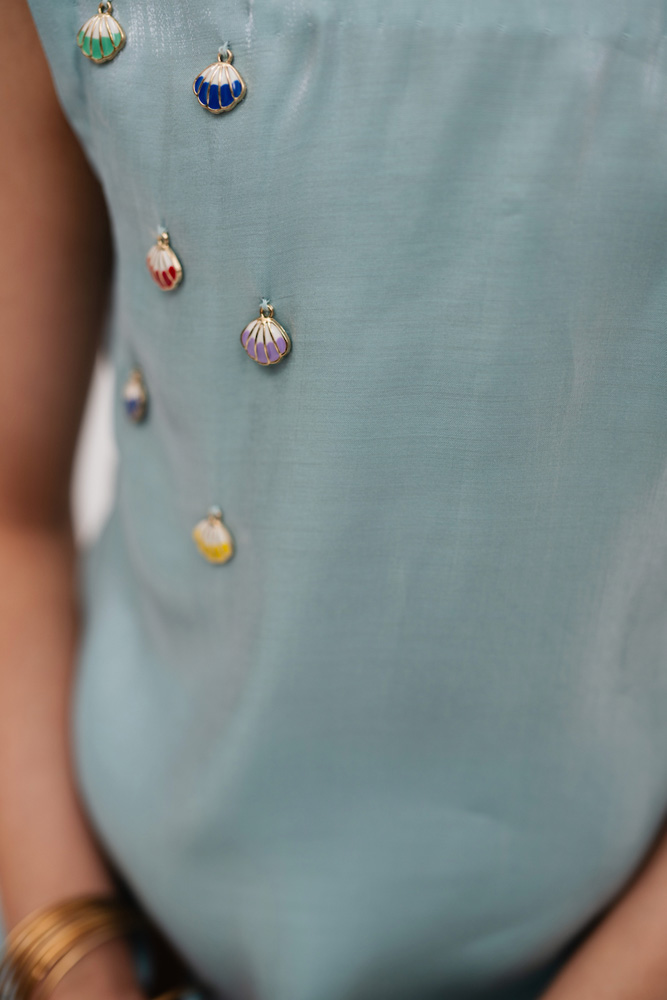
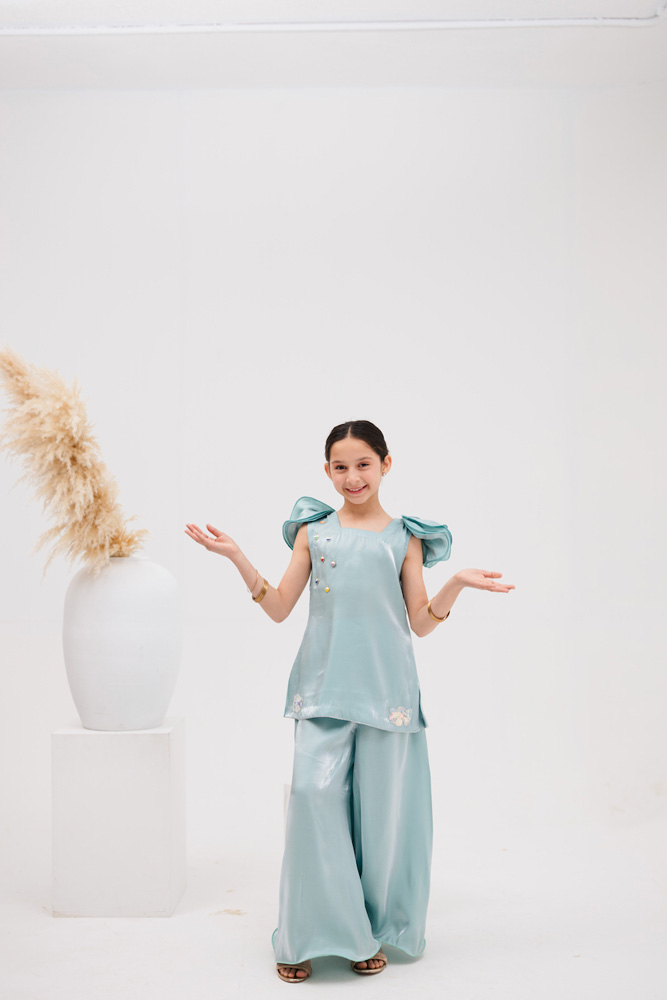
I’m a literature major, and a romantic at heart. I like to make stories out of everything, and weaving a soft, fairytale feeling into every piece. Think of The Little Mermaid, with sea green hues and seashells, or The Grimm’s fairy tales, which I loved reading as a child. My work has dainty details from Snow White to Red Riding Hood, everything that I feel represents childlike imagination and wonder.

Your first collection, *Secret Garden*, explored silk, 3D chikan, net and moonlight textures. How do you approach fabric selection for such delicate, structured silhouettes?

I love playing around with fabrics! With kidswear, unless it’s a wedding wear collection, you don’t focus on intricate embroideries or elaborate patterns the way you would with womenswear. We source the purest fabrics, keeping in mind that young girls are constantly moving rather than sitting still. The silhouettes need to feel flowy and breathable, yet structured enough to hold their shape. I look for materials that are dainty, elegant and luxurious—yet still comfortable. And I love the moonlight fabric. It gives such a princess like shine.

From butterfly fountain layers to floral-shaped sleeves and ballgown drama — how do you balance playfulness with sophistication in childrenswear?

Our designs balance experimentalism with minimalism. We have a simple rule: every outfit should carry a hint of playfulness, or a touch of drama if you must say, but it must still feel timeless. Personally too, I have gravitated towards timeless, elegant couture and accessories rather than something overly seasonal, and I think that perspective translates into my work as well. Even when we create ballgowns, statement sleeves, or dramatic silhouettes, the foundation is always classic.

Your wedding collection introduced traditional elements like lehenga cholis, embroidered birds, and cotton net jackets. What inspired you to merge heritage with youthful design?

I love desi couture, especially motifs that beautifully reflect our culture and traditions. I deeply admire the work our local designers have done in womenswear, whether it’s Deena Rahman, or Shehla Chatoor, or Faraz Manan. Each of them has built their signature style while experimenting with desi silhouettes and heritage motifs.

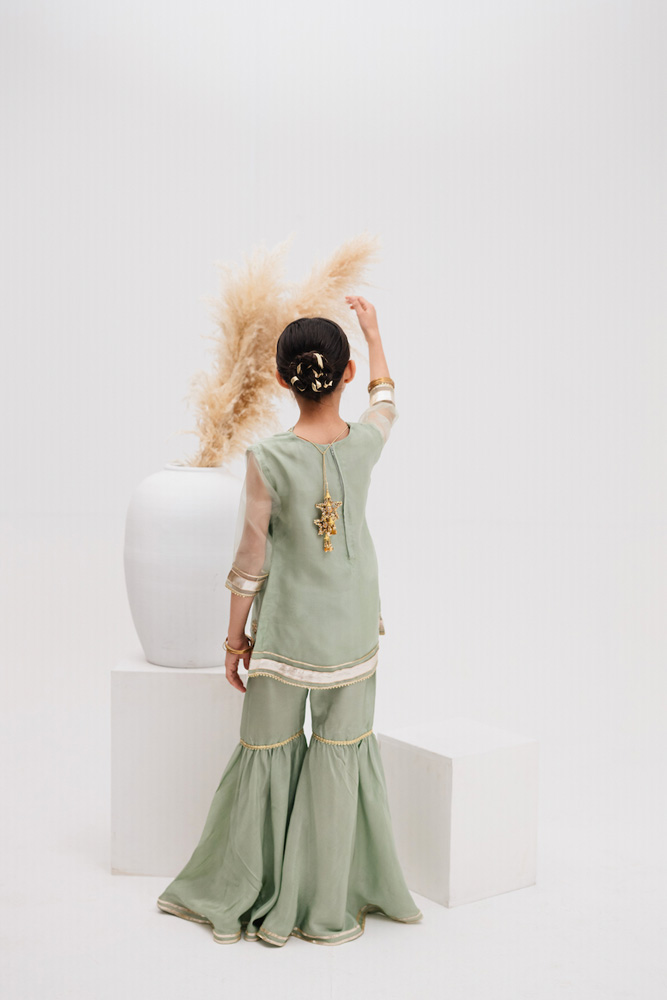
However in kidswear, there hasn’t been much exploration in that direction. There is so much room to create unique, meaningful pieces that don’t just replicate adult fashion in miniature, but truly set trends for young girls in their own right. Our pieces treat girls as the centrepiece, with each motif meant to mix desi silhouettes with childlike wonder. You’ll see birds and elephants mixed with lehenga cholis and front open jackets, ghararas finished tassels made of golden stars. It’s about creating pieces that honour heritage while infusing it with imagination.

The current Eid collection blends cherries, florals and seashells with traditional chikan and organza ghararas. How do you reinterpret classic Eastern wear for little girls without losing innocence?

For us it’s about balancing traditional designs with storytelling. I want to preserve Pakistani tradition and heritage through ghararas and traditional fabrics, but at the same time infuse each piece with joyful, childlike motifs. We try to keep the structure and craftsmanship intact, then we layer it with playful elements like cherries, florals or seashells to make it feel whimsical and age appropriate. The innocence is in the details: shiny fabrics, delicate hangings and handwork, flowy lehengas and ballgowns for our lovely girls to twirl around in.

“Mommy and Me” pieces are such a heartwarming concept. What does that segment mean to you emotionally as a designer?

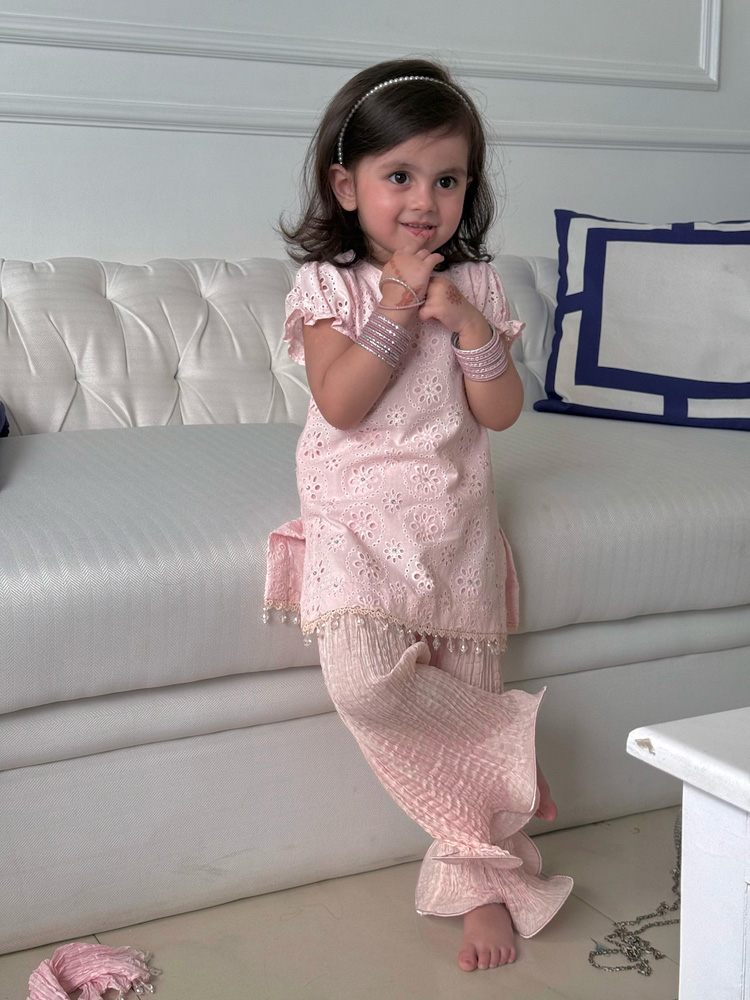
I think little girls want to be just like their mommies. It warms my heart to see daughters looking just like their mothers, being clothed just like their mothers, and vice versa. That feeling of belonging, of being each other’s likeness and of also having the chance to match outfits together, is what I enjoy witnessing.

Luxury kidswear often walks a fine line between comfort and couture. How do you ensure Mini’s by M outfits remain wearable for children?

For us, comfort is a non negotiable. We source the purest fabrics to start with. Every element of our garments, including our linings and dupattas, are meticulously sourced and tested to ensure it feels gentle against a child’s skin. Breathability and lightness are just as important as visual appeal. As a designer, while I can sketch and plan my heart out, the real responsibility lies in execution. Every embellishment, every stitch, and every loom of fabric is well planned out.

It hasn’t even been a year since your launch, yet the brand has gained impressive traction. What has been the biggest learning curve so far?

I think the biggest learning curve has definitely been maintaining consistency. It was easier in the beginning to manage and send pieces across, but once our brand took off Alhamdulillah, and there was a significantly higher volume of orders, there were one or two instances where we had issues with our fittings, especially with Lehenga cholis which need to be impeccably fitted. I remember we had sent an outfit to the Netherlands and the client had an issue with the opening of the kameez. Without hesitation, we made her a new outfit, paid the extra DHL shipping charges ourselves, and sent it off before her event. That made us realise that quality and consistency must be triple checked before delivery. At the end of the day, care and accountability builds trust, and ultimately keeps our clients coming back.

How would you describe the Mini’s by M girl in three words?

Playful. Delicate. Timeless.

What role does storytelling play in your collections? Do you design with a narrative in mind before sketching?

I start with a few motifs in mind, then my literary background kicks in and a story comes to life. Is the wearer of this outfit walking through a garden? Twirling in a Bridgerton style ballroom? That narrative helps me decide everything from fabric choices to embellishments.

Looking ahead, what is your vision for Mini’s by M over the next five years?

To grow definitely, in the most stable and consistent way possible. To serve our clients in the best way we can. And to design unique creations that are both timeless and true to our heart.

MINI’S Eid Soirée ’26

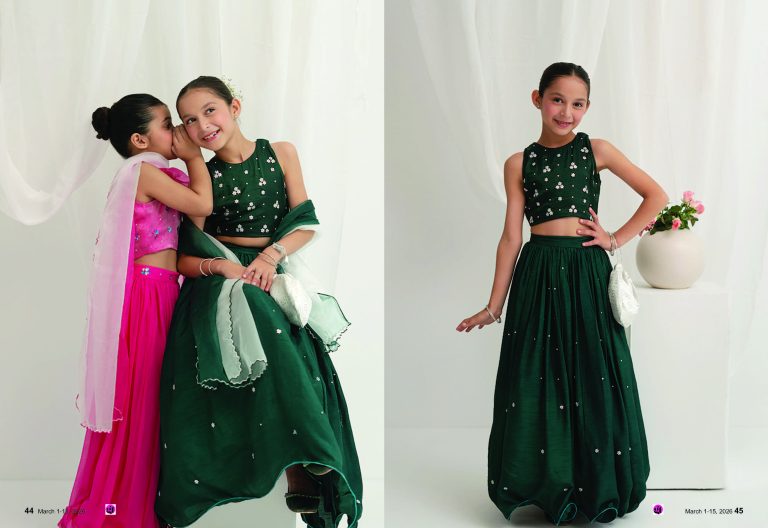
Mini’s Eid Soiree ’26 is a love letter to the magic of Eid: a celebration woven with childlike wonder, joy, and timeless elegance. Designed for little girls who lead with confidence and imagination, this collection captures the beauty of tradition through a modern, trend-forward lens.

Crafted in flowy, breathable fabrics, each piece is adorned with delicate motifs: playful cherries, soft florals, and whimsical seashells, that echo sweet reveries and festive charm.

True to our design philosophy, Mini’s Eid Soiree ’26 is where experimentalism meets classicism. Soft, childlike details blend seamlessly with refined tailoring, creating garments that reflect stories within them.

Because even at a young age, our girls don’t follow trends.

They set them.

In an industry where trends come and go, Sahar Razi built something that stayed.

Long before brows and lashes became mainstream obsessions, Sahar identified a gap in Pakistan’s beauty landscape and turned it into a movement. What began as a hobby in 2016 evolved into Get Lashed – a brand synonymous with precision, professionalism, and unwavering consistency.

From celebrity clientele to international certifications, Sahar’s journey is not just about beauty, it’s about discipline, trust, and setting standards in an industry that once underestimated the power of niche expertise. As she continues to expand beyond borders, one thing remains clear: for Sahar Razi, brows and lashes are not services, they are art forms.

In this exclusive conversation, she speaks about credibility, competition, consistency, and what it truly takes to build an empire; one perfect arch at a time.

Your work has redefined brows and lashes as an art form rather than just a service. When did you realise that this could become a serious profession and not just a beauty trend?

When I started this in 2016, all I wanted to do was bring something new to Pakistan. A niche in the beauty industry that wasn’t tapped into yet. It actually started as a hobby and snowballed into a proper business.

From Lahore to international platforms, your journey reflects both ambition and consistency. What were the biggest challenges you faced while building credibility in an industry that was once underestimated?

I feel if you stay consistent, don’t let success get to your head, and spearhead in the right direction towards your goal, you automatically build credibility. I feel I built this industry in the country and created the need for brows and lashes. The challenge is more for the new artists who are trying to build a name in the market when there is already competition.

You’re known for working with international and celebrity clientele. How do expectations differ at that level, and what does professionalism truly mean to you in such spaces?

I focus on getting the job done right. There is absolutely no room for error in my business, even though I’ve been at it for over 10 years. You can’t get complacent at any point, whether it’s a celebrity, a foreigner, or people across the country.

SPMU is as much about trust as technique. How do you balance artistry with responsibility, especially when clients place their faces and confidence in your hands?

When clients come and say, “You have been recommended and we have been told, ‘Just close your eyes and let her do her job,’” I feel that I have truly built that trust with my clients.

You’re also a certified international trainer, shaping the next generation of artists. What is one misconception you actively try to break among aspiring brow and lash professionals?

As an internationally certified trainer, I try to make new artists understand that they should learn one skill at a time. Master it and then move on to the next. Learning too many techniques together will not let you excel in any.

Beauty standards evolve rapidly. How do you stay ahead of trends while still creating results that are timeless and personalised?

I stay very consistent with my education at an international level. Never think you know too much because there is always room for improvement and more learning.

Your brand feels strong, refined, and intentional. What role did personal branding play in the growth of Get Lashed, and how consciously did you build it?

I am Get Lashed, and I believe my audience should know exactly who they are coming to when they visit our studio for any service. Because I have built all these techniques and operations single-handedly. So everything reflects who I am and what I’m aiming for: a complete, professional, and satisfactory experience.

Running a beauty business in Pakistan comes with its own realities. What advice would you give to women who want to scale their beauty ventures beyond local recognition?

I feel Pakistan has great potential and lots still to do. The market for such services is saturated in Dubai and Europe, etc. Build a name locally first. Prove you are consistent, and then there is no one stopping you.

On days when creativity feels blocked or pressure feels overwhelming, what grounds you and brings you back to your purpose?

I can be underslept, exhausted, ill, or stressed, but nothing can deter me from doing my job right. Tried and tested.

Looking ahead, what’s next for Sahar Razi; new cities, new techniques, or an entirely new chapter you haven’t revealed yet?

I already cover the major cities in Pakistan. More international expansion. And some huge news that I will be revealing soon.

Founded by Sadia Mazher and her husband Noor Turk, Zarah Nur is a label born from both creative vision and personal legacy. Named after their daughter, the brand carries an intimate narrative; one where emotion, craftsmanship, and thoughtful design come together seamlessly.

The latest collection, Whispers and Wonders, celebrates effortless elegance through flowing kaftan silhouettes crafted in fine blended silks, elevated with delicate prints and refined hand embellishments. From sculpted necklines to graceful movement, each piece is designed to feel festive yet timeless.

True to Zarah Nur’s aesthetic, the collection reflects a signature balance of romance, artisanal detail, and modern luxury, creating designs that speak softly, but leave a lasting impression.

Zarah Nur feels like a brand built on emotion and storytelling. What was the original vision behind the label, and what feeling did you want women to experience when they first wear your designs?

Zarah Nur was created with the idea that clothing should carry feeling, not just form. The original vision was to design pieces that felt joyful, feminine, and personal, garments that made women feel seen and celebrated the moment they put them on. I wanted every design to feel like a small escape into beauty, colour, and softness, while still remaining refined and wearable.

Your collections are rich with illustrated motifs, hearts, florals, and whimsical elements. Why does narrative and playfulness matter so deeply in your design language?

Narrative and playfulness are central to my design language because they allow clothing to connect emotionally. Hearts, florals, and illustrated motifs bring warmth and charm to a garment, but they also tell a story. Fashion should spark feeling, and I love creating pieces that feel light, expressive, and quietly uplifting.

Each drop feels like a chapter, with names such as Dreamy Garden and Pink Lemonade. How do you translate an abstract mood or story into a wearable collection?

Every collection begins with a mood rather than a product. I start with images, memories, colours, and emotions, then slowly translate them into prints, textures, and names. Once that story is clear, silhouettes and details follow naturally, allowing the entire drop to feel like a complete chapter rather than separate pieces.

What usually leads your creative process the print, the colour palette, or the silhouette, and how do you decide which element becomes the hero of a collection?

It changes with every collection, but usually colour or print leads the way. Sometimes a single shade or illustrated motif becomes the anchor, and everything else grows around it. From there, I decide which element should take centre stage and support it with softer silhouettes or subtle detailing so the collection feels balanced.

Colour plays a powerful role in your work, especially pinks, pastels, and joyful brights. What do these colours represent to you and to the Zarah Nur woman?

These colours represent optimism, softness, and confidence. Pinks and pastels bring romance and ease, while brighter tones add energy and joy. For the Zarah Nur woman, they reflect a spirit that is feminine yet strong, playful yet polished.

Your silhouettes strike a balance between ease and statement dressing. How do you approach designing pieces that feel comfortable yet visually impactful?

Comfort is always the starting point. I work with flowing shapes, relaxed cuts, and fabrics that move with the body, then elevate them with strong prints, embroidery, or trims. The aim is for a woman to feel effortless in the piece, while still making a statement the moment she enters a room.

Detail is a recurring strength in your designs, from scalloped edges to delicate trims. Why are these finer elements essential to the Zarah Nur signature?

Detail is what turns a garment into something memorable. Scalloped edges, delicate trims, and fine finishes add depth and character to a design. These elements reflect our craftsmanship and are part of what makes a Zarah Nur piece instantly recognisable.

How do you ensure consistency in your brand identity while still offering something new and exciting with every collection?

Consistency comes from staying true to our core, storytelling, colour, and feminine ease. Innovation comes from exploring new moods, palettes, and techniques each season. I keep the soul of the brand intact while letting every collection introduce something fresh.

Who is the Zarah Nur woman today, and how has your understanding of your audience evolved since launching the brand?

The Zarah Nur woman today is confident, expressive, and appreciates thoughtful design. She enjoys colour, detail, and individuality. Over time, my understanding of her has grown more refined, she seeks pieces that feel special but still fit beautifully into her everyday and festive life.

With a presence in both Karachi and the UAE, what differences have you observed in how your designs are worn and received across regions?

In Karachi, clients often embrace the playful and festive elements, while in the UAE there is a strong appreciation for polish, fluid silhouettes, and refined finishes. Both markets value quality and storytelling, but it is fascinating to see how women style the same piece differently across regions.

What role does fabric selection play in shaping the final look and feel of your garments, and what qualities do you prioritise most when choosing materials?

Fabric is everything. It shapes how a garment falls, feels, and lives on the body. I prioritise softness, flow, print clarity, and durability. The material must elevate the design while remaining comfortable enough to wear with ease.

Before launching Zarah Nur, you worked with several designers and learned the industry from within. How did those formative years shape your confidence as a founder, and what lessons from that phase still guide you today?

Before launching Zarah Nur, I spent over a decade working closely with several designers and learning the industry from within, from sourcing and production to understanding craftsmanship and client expectations. Those years built my confidence because I witnessed how ideas turn into lasting creations. They taught me that fashion is not only about creativity, but about consistency, integrity, and strong systems. I remain deeply hands on with quality and detail today because those early lessons continue to guide how I lead.

Building a fashion label while raising two children is no small feat. How has motherhood reshaped your sense of ambition, discipline, and purpose as a creative entrepreneur?

Building a fashion label while raising two children reshaped my ambition in the most meaningful way. Motherhood made me more focused, disciplined, and intentional with my time, while giving my work deeper purpose. After years in the industry, I did not simply step into this role, I grew into it through experience, persistence, and long hours behind the scenes. I am not only creating a brand, but setting an example of resilience and belief for my children. That sense of responsibility keeps me grounded and quietly motivated every day.

For women who may feel that timing, responsibilities, or self-doubt are holding them back, what has your own journey taught you about starting anyway and believing that it’s never “too late”?

My journey has taught me that there is rarely a perfect moment to begin, and that responsibility and doubt often travel alongside growth. What matters is choosing to start anyway and letting confidence build through action rather than waiting for certainty. More than a decade in fashion taught me that every experience adds depth to your vision and strengthens your perspective. To women hesitating because of timing or fear, I would say this: your path is not a disadvantage, it is your greatest strength. Start where you are, trust yourself, and grow into what you are meant to build.

Running a print-focused fashion label comes with its own challenges. What has been the most demanding aspect of building and sustaining Zarah Nur?

One of the most demanding aspects has been maintaining quality while growing. Working across both prints and intricate embroidery requires precision at every stage, from colour development and craftsmanship to production timelines. Protecting the integrity of the brand while scaling thoughtfully has been both challenging and deeply rewarding.

In a fast-moving fashion landscape, how do you stay true to your creative identity while navigating trends and market expectations?

I stay rooted in our identity first. Trends are inspiring, but they never lead the brand. I filter everything through the lens of Zarah Nur, does it feel joyful, feminine, and timeless? That balance allows us to remain current without losing ourselves.

Looking ahead, how do you envision the growth of Zarah Nur in the coming years in terms of design direction and brand presence?

I see Zarah Nur continuing to evolve with stronger storytelling, richer textiles, and expanded international presence. Design wise, I want to explore new silhouettes and techniques while keeping our signature romance and colour at the forefront. Growth, for me, is about refinement rather than rushing.

If Zarah Nur were not a clothing brand but a feeling, how would you describe it, and what do you hope women carry with them after wearing your pieces?

If Zarah Nur were a feeling, it would be joy wrapped in elegance. I hope women walk away feeling confident, light, and beautifully themselves, carrying not just the garment, but the mood and memory it created.

Whispers and Wonders celebrates effortless elegance through flowing kaftan silhouettes crafted in fine blended silks, finished with delicate prints and refined hand embellishments. Each design is thoughtfully detailed, from sculpted necklines to graceful Va movement, creating pieces that feel both festive and timeless. The collection reflects Zarah Nur’s signature balance of romance, craftsmanship, and modern luxury.

In a city that rarely slows down, Wonder Whirl offers something quietly radical: space.

Space for children to play freely, for parents to pause without guilt, and for families to feel held rather than hurried.
Founded by Urmea, Wonder Whirl is not just a play area — it is a thoughtfully designed ecosystem rooted in Montessori principles, sensory balance, and community care. From open, sunlit play zones to wellness spaces for mothers and a café designed for lingering conversations, every corner has been shaped with intention.
In this conversation, Urmea walks us through the philosophy, design, and emotional architecture behind
Wonder Whirl — a place that is redefining what family spaces in Karachi can look and feel like.

Wonder Whirl is designed very deliberately. Walk us through the space what do you want a child to feel the moment they step inside?

The moment a child enters Wonder Whirl, I want them to feel safe, curious, and free. I want their imagination to switch on. Whether they run towards football, soft play, or a sensory corner, the space immediately feels welcoming. It quietly tells them: this place was made for you; a place where play is real and joy feels effortless.

From colours to corners to flow, how did you decide what the space should look and feel like and what was non-negotiable in the design?

Through my own experiences of family spaces abroad, I learned how deeply environment shapes emotion and behaviour. Many local spaces felt tight and overstimulating, so I wanted the opposite. Wonder Whirl is an open concept filled with sunlight, warm colours, and room for movement. Nothing feels boxed in or overwhelming. Openness, safety, and gentle sensory balance were non-negotiable.

Montessori-inspired spaces often balance freedom and structure. How does Wonder Whirl achieve that balance physically within the play areas?

We believe in real play that allows children to choose their own experience. From soft play and football to air hockey, STEM corners, messy play, and art stations, every age group is included. The space gently guides without controlling. Children move freely, yet everything has purpose. That balance builds confidence and independence.

Every play space has a heartbeat. Which corner best represents Wonder Whirl’s philosophy and why?

The Community Pod is the heart of Wonder Whirl. It holds birthdays, workshops, wellness sessions, messy play, and educational activities. It changes daily, just like families do. Around it are small worlds of play and creativity. That living energy reflects who we are.

How important was sensory balance while planning the space?

Extremely important  for children and parents alike. Sound, movement, and calm coexist here. Children regulate through sensory play, while parents emotionally decompress. Nothing feels too loud or too quiet. The environment itself supports wellbeing.

Wonder Whirl isn’t just for kids — it holds parents too. How did you design the space to give caregivers breathing room, not just seating?

Wonder Whirl is family-centred, not child-only. Parents are given space to breathe, not just sit. There are cosy corners, open seating, a café, and a massage room to unwind. Conversations happen naturally. Caregivers feel supported, not overlooked.

Why was it important that Wonder Whirl function as more than a play area?

Families need more than entertainment. They need nourishment, rest, wellness, and emotional connection. Everything here is intentional — from partnering with Blend Café for food and coffee, to bringing in Montessori-trained teachers for arts and crafts.

Our massage room offers pre- and post-natal care, deep tissue massages, candle wax massage, and buccal and lymphatic drainage. While children play safely nearby, mothers are cared for. It sends a simple message: your wellbeing matters too. That balance defines Wonder Whirl.

Parents often say Wonder Whirl feels “different.” What do you think they’re responding to?

Everything here is built with intention — the design, the energy, the smallest details. Nothing is random or rushed. People feel the care the moment they enter. That’s what families respond to.

Why was building a mom community central to Wonder Whirl?

Motherhood can be deeply isolating, especially in Karachi. There are very few spaces designed for moms. I wanted Wonder Whirl to become part of the village that raises a child,  a place to share, breathe, and belong. Community was always the goal.

Why did this concept need to exist in Karachi?

I experienced how powerful these spaces can be for families; places where children play freely while adults unwind and connect. That balance was missing here. Parenting already carries heavy responsibility with limited support systems, especially for mothers. Karachi needed a nurturing environment built around real connection. Wonder Whirl fills that gap.

The weekend dad culture has become a highlight. Was that intentional?

It evolved organically and became something beautiful. We noticed dads stepping in on weekends so moms could rest. We now actively encourage it with special dad offers. That shift deserves support — it’s changing family culture.

How do you ensure workshops remain child-led rather than adult-driven?

We follow the child’s curiosity. Activities offer guidance, not control. Children choose how they participate, and the environment adapts to them. That freedom builds confidence.

What has the space itself taught you since opening?

That people don’t just need services — they need to feel held. They need belonging. No blueprint could teach that. The community did.

If Wonder Whirl could teach every family one thing through its environment alone, what would it be?

That raising a child is not meant to be done alone. That community is essential. That care is collective. Every family deserves support.

How do you see Wonder Whirl evolving?

Wonder Whirl is evolving with purpose — not just as a local space, but as a community platform for parents, early education, and family support. We are aligning our work with global organisations like the World Forum Foundation and NAEYC, bringing international standards and best practices to Pakistan.

We’re expanding our STEM facilities and introducing globally recognised, hands-on learning tools. Ultimately, we want this concept to grow across Pakistan so more families can access the support systems they deserve. Wonder Whirl is becoming a bridge — connecting global excellence with local heart.

Rooted in memory, texture, and quiet intention, Sajni is a brand born from emotion as much as design. Founded by Asma Mansoor , an environmental science scholar with an instinctive love for fabric.

Sajni reflects a thoughtful approach to fashion where simplicity, sustainability, and soul come together.

From her grandmother’s carefully preserved textiles to dressing some of Pakistan’s most influential women, Asma’s journey is a testament to mindful creativity and purpose-driven design.

You hold an MPhil in Environmental Science—how did that academic journey shape the way you see creativity, sustainability, or even fashion today?

My academic journey taught me to look at everything through the lens of responsibility and balance. I naturally think about long-term impact, resource use, and simplicity, which also reflects in my approach to fashion. For me, creativity feels more meaningful when it is conscious and thoughtful.

Your earliest memories of fashion are tied to your grandmother and her carefully stored fabrics. Can you share a moment or lesson from her that still guides your design philosophy?

My grandmother treated fabric with great respect and never wasted a single piece. She taught me that clothes hold memories and emotions, not just beauty.

Solid colours and textures clearly define Sajni’s aesthetic. What is it about minimal palettes and fabric feel that speaks so deeply to you?

Solid colours feel calm, honest, and powerful to me rather than printed designs. They allow the fabric, cut, and craftsmanship to speak without distraction. Texture matters because I want the wearer to feel comfort and confidence the moment they touch the cloth.

Sajni is only a year old, yet you’ve already launched five collections. What inner drive or discipline keeps you creating at such a rapid pace?

Sajni is deeply personal, so working on it feels natural rather than forced. I create when inspiration feels strong, and I try not to delay that energy. Discipline comes from my academic and professional background, where consistency was essential.

Was there a particular moment when you realised Sajni was no longer just a passion project, but a serious fashion brand?

Yes, when women I didn’t personally know started reaching out and connecting emotionally with the designs. Their trust made me realise Sajni had a real voice. That moment shifted my mindset from hobby to responsibility.

Your designs have been worn by Hania Aamir, Mira Sethi, Zeb Bangash, and other influential women. How did that visibility impact Sajni’s growth and your confidence as a designer?

Seeing such confident and strong women wear Sajni was very encouraging. It gave the brand visibility and helped people take it more seriously.

How do you want women to feel when they wear Sajni—powerful, comfortable, expressive, or something else entirely?

I want women to feel comfortable and grounded in themselves—powerful, but in a calm and effortless way.

As someone deeply connected to fabric, how do you choose your materials? Is it an emotional process, a technical one, or a mix of both?

It is always a mix of both. I pay attention to quality, durability, and how the fabric behaves, but emotion plays a big role too. If a fabric feels right in my hands, I know it belongs to my creativity.

In an industry that often celebrates excess, Sajni feels quietly intentional. How do you stay true to your vision without chasing trends?

I remind myself why I started Sajni in the first place. Trends come and go, but personal values stay. I focus on designing pieces I truly believe in, even if they are not loud or seasonal.

What challenges did you face in your first year as a brand owner, and what did they teach you about yourself?

Managing time, finances, and expectations was challenging in the beginning. It taught me the process of patience and self-trust. I believe that growth takes time, and consistency matters more than perfection.

Do you see your background in environmental science influencing future directions—perhaps in sustainability or conscious fashion?

Yes, definitely. Sustainability revolves around three pillars: society, environment, and economy. It is something I naturally think about and want to explore more deeply in Sajni’s future. My goal is to move towards more conscious choices by selecting fabrics with longevity and producing less waste.

How do you balance creative intuition with the commercial realities of running a fashion business?

I listen to my intuition first, then adjust with practical thinking. Not every creative idea becomes a product, and that’s okay.

Looking ahead, what is your dream for Sajni five years from now and what legacy do you hope it leaves behind?

I dream of Sajni becoming a timeless and trusted brand known for sustainability, simplicity, and honesty. I hope it leaves a legacy of mindful fashion and respect for craftsmanship. My long-term goal is to incorporate eco-friendly techniques and better substitutes.

Where Craft Meets Legacy; Defining Pakistani Beauty for Over Four Decades

Few names in Pakistan’s beauty industry carry the kind of legacy, trust, and artistic authority that Nighat Misbah does. As the Director and Creative Head of Depilex Group, she has shaped generations of makeup artists, set bridal trends, and transformed Depilex into a powerhouse synonymous with timeless beauty and professional excellence.

In this exclusive conversation, she opens up about her creative evolution, winter bridal trends, long-lasting glam, and what truly defines the Depilex bride today.

Depilex has shaped Pakistan’s beauty industry for decades. How do you continue reinventing your creative vision year after year?

The secret is to simply keep pushing yourself out of your comfort zone and focus on creating unique concepts. I have been heading the group’s creative direction for decades, and I can’t think of a year where my team and I haven’t pushed our boundaries to experiment with new techniques, materials, and trends. It’s been a tremendous journey, and I look forward to the future.

How would you describe the Depilex bride today? What defines her look and attitude?

The Depilex Bride embodies a modern elegance that feels effortless yet impeccably refined. She favours makeup that enhances her natural beauty — luminous skin, softly sculpted features, expressive eyes, and lips that balance grace with confidence. She is empowered, modern yet culturally rooted, timeless yet trend-aware, and elegant without effort.

Winter weddings are around the corner — what makeup trends will take the spotlight this season?

Winter trends focus on making the skin the star of the show. Think very dewy, soft foundations and bases, with hints of warmth added through eyeshadows, blushes, and bronzers.

What colour palettes work best for winter brides, especially for Barat and Walima?

Both events have distinct colour stories. Baraat brides lean towards bolder, warmer tones — reds, browns, and golds. Walima looks, on the other hand, are softer and more neutral with shimmery peaches, nudes, and subtle metallics.

Skin prep becomes tricky in colder months. What essential skincare steps should brides follow before their makeup?

Skin prep is everything — it’s like laying the foundation of a skyscraper. The better the prep, the stronger what you build on top. I identify the client’s skin type and select a cleanser, toner, serum, and moisturiser based not only on her skin condition but also on the event timing, weather, and duration. I focus on prep as much as the makeup itself.

Glowing skin is a signature bridal trend. How can brides achieve a luminous finish without looking oily or heavy?

Many people overload on creams and highlighters, which makes everything feel heavy. True luminosity comes from prep. A hydrating serum and moisturiser, paired with a strobe primer, are usually all you need for that radiant, weightless glow.

What is one makeup mistake winter brides commonly make, and how can they avoid it?

Winter brides underestimate how dry and textured their skin becomes. Makeup alone can’t fix that — it actually makes things worse.
A. Hydrate: Start days before. Use HA/ceramides, drink more water, and apply a richer night moisturiser.
B. Exfoliate gently: 2–3 days before.
C. Use a nourishing mask: A sheet mask on the morning of the wedding boosts moisture.
D. Choose a winter-friendly base: Avoid overly matte foundations; opt for breathable, hydrating formulas like the MM Ultrawear Flawless Foundation.
E. Prep the lips: Lip scrub + balm are essential.

Bridal makeup needs to last 10–12 hours. What longevity tips or products do you swear by?

I rely on Masarrat Makeup Silk Foundation, a good setting spray like the waterproof one from Charlotte Tilbury, and Masarrat Misbah Liquid Lipsticks. I also send clients home with the lip colour they’re wearing, along with a balm and facial mist for touch-ups.

From soft glam to bold reds — what lip looks will dominate this winter season?

Burgundy lips are trending and beautifully complement our skin tone. For softer looks, muted mauves paired with brown liners, nude or pink lips, and a touch of gloss will be very popular.

How important is personalisation in bridal makeup, and how do you tailor each look?

Consultation is everything. I take time before every appointment to understand the bride’s event details, outfit, preferences, hair condition, and skin type. Many artists skip this step, but it’s essential to creating a truly customised bridal look.

Depilex has trained countless professionals. What qualities define a great makeup artist today?

At the Depilex Institute, launched in 1980, we offer international qualifications unmatched in Pakistan. The qualities that stand out for me are humility, lifelong learning, and professionalism. No matter what you achieve, you must remain grounded and committed to growth.

What advice would you give brides who want to stay timeless yet still embrace trends?

No matter what’s trending globally, it has to work for you. Always book a consultation with your makeup artist before the big day — that conversation shapes the perfect balance of timeless beauty and contemporary flair.

Known for crafting visually rich and emotionally resonant wedding experiences, Haleema Sadia Riaz, the visionary behind Lively Events, has established a signature aesthetic rooted in warmth, artistry, and meticulous detail. From handcrafted installations to deeply personalised design narratives, her work reflects a rare blend of creativity, authenticity, and heart.

In this exclusive conversation with Good Times Magazine, Haleema opens up about her process, inspirations, challenges, and the magic behind some of her most celebrated setups, including the unforgettable Garden of Vows.

Lively Events is known for its warm aesthetic and visually rich setups. How did this signature style develop over the years?

The signature style grew naturally from my love for creativity. My mother was incredibly artistic, and I grew up watching her create beautiful pieces. That early exposure shaped my eye for detail, and over the years, those influences evolved into the aesthetic Lively Events is now known for.

How would you describe the ethos behind Lively Events in three words?

Creative. Authentic. Quality-driven.

How do you approach understanding each couple to make their wedding truly unique?

I aim to give every client a bespoke experience, one that’s completely tailor-made for them. I focus on their personalities, preferences, and the emotions they want to share, so every detail feels personal and unlike any other event.

Can you walk us through your creative process for “Garden of Vows” — from initial concept to final execution?

For “Garden of Vows,” the bride gave us full creative freedom, so we envisioned an event completely immersed in floral artistry. We hand-crafted 50,000 individual flowers, painted them in our chosen palette, and mounted each on laser-cut styrofoam bases. The production took 30 days — a true labor of love. The craftsmanship was exceptional, and the final result was breathtaking, leaving guests in awe.

What inspired the choice to handcraft 50,000 flowers instead of using ready-made ones?

We handcrafted them to achieve the exact size and shade we envisioned — something ready-made simply couldn’t match.

If you were to recreate “Garden of Vows” today, would you do anything differently?

I would incorporate kinetic props, which were part of our initial plan. Due to certain constraints, we had to exclude them, but they would have added an extra layer of movement and magic to the experience.

What were the biggest challenges in executing such an elaborate floral setup?

The biggest challenges were the extended production time and safely transporting fragile props, ensuring every detail remained flawless.

Were there any eco-friendly or sustainable practices you incorporated in this event?

Yes, we prioritized sustainability by repurposing décor, using long-lasting materials, and carefully minimizing waste throughout the event.

How involved were the couple in the design process, and how did that collaboration work?

The bride gave us complete trust and creative freedom, allowing us to explore our vision fully. That level of confidence and collaboration made it possible to create an event that was both unique and a huge success.

How do you ensure your events leave a lasting impression on both clients and guests?

We treat every client like family and craft each event as our own. That personal care naturally leaves a lasting impression.

What role does storytelling play in your event designs?

Storytelling is at the heart of our designs, turning each couple’s journey and emotions into a personal, unforgettable experience.

What advice would you give to couples planning their weddings in peak seasons?

Book early and confirm vendors ahead of time, as peak seasons fill up fast. Early planning ensures a seamless, stress-free celebration.

What sets Lively Events apart from other event planners in Pakistan?

We stand out by prioritizing quality over quantity and crafting each wedding as a unique, original creation rather than simply following trends.

What budget-friendly décor choices do you recommend that still create a luxurious effect?

Choosing a naturally scenic outdoor venue lets the surroundings do the work, making it easy to transform into a stunning wedding space without overspending.

And finally — what is one timeless piece of advice you’d give to every bride and groom planning their big day?

Stay true to your vision and enjoy the process. Your wedding should reflect your story and personalities, not trends or external pressures.

The artistic eye behind Shayan Ather Photography shares her top tips for brides and grooms preparing for the camera. From natural posing to capturing raw emotion, she reveals what makes wedding photos timeless and truly unforgettable.

photography begin, and what inspired you to capture love stories through your lens?

Originally, I got in to wedding photography to support my family through a time of financial and emotional difficulty for us, after my father’s passing. I was still in school so there were no jobs, so I had to get creative. Shortly after I got in toLUMS which was more than what we could afford at the time, so I really started investing in my photography business simultaneously with my studies, so I could help pay for tuition. My father always wanted me to be a doctor like my him, and he had a traditional way of thinking, so arts was never really the plan. I was always interested in visuals and aesthetics, fascinated by simple things like how light would enter through a window, but never considered it as a viable career option before. So, what was more of a financial necessity at the time slowly grew into something I developed such a deep love for.

Today, I can’t imagine my life without this feeling. I love being able to freeze moments and emotions in time, to tell a story through my lens, and to capture love between partners and families. Its special when brides look at their pictures that we have shot and they feel beautiful and confident, and they see themselves in the same way that their loved ones see them. I recently had an old client tell me their mother passed recently and the family got together to see her old pictures from their wedding which we shot 5 years ago, and she said she felt comfort in those pictures, seeing her mother healthy and smiling. This is what inspires me today; because it feels like what we are doing as a company is something worthdoing and it holds meaning. It spreads some small form of joy to the people I work with, and that’s so meaningful to me.

How does the winter wedding season influence your photography style and approach?

Our style is not really influenced by the seasons to be honest. Logistics and operational factors change, yes, but not our style. I strongly believe that every wedding and client is unique, and what may work perfectly for one client may be terrible for another. My job as a wedding photographer is to truly take the time to understand the intricate nuances of that specific wedding and build around that. We like to have discussions and meetings with our clients, and then develop mood boards, storylines and color palettes for each event. We want to take the time to understand what each bride and groom are like; are they the happy, loud, vibrant couple in love who are the life of the party and joke around with each other, or are they the shy awkward couple who are feeling conscious about being in the limelight on their wedding, or a host of other options. We like to understand their personalities and priorities, and then we combine that along with our company’s signature candid storytelling style, and decide how we will stylistically approach the coverage of that wedding.

What are the key challenges of shooting in winter (like lighting or weather), and how do you overcome them to get flawless shots?

Every season has its complications. But winters in Pakistan get very intense for the wedding industry because everyone and their sister is getting married in winter. There are hardly any days of decent sun, the fog and smog in the evenings become very bad (especially due to the decreased visibility) and the cold weather means our couples are shivering and so are the hands of their photographers. Most vendors of choice are not available because everyone who is good at their work is fully booked. An unfortunate reality is that because wedding season is so packed, a lot of vendors behave extremely unprofessionally such as cancelling bookings (even venues), delaying appointments, and other factors which adversely then affect all the vendors involved for that wedding and most of all, really compromise the experience of the couple getting married.

What we do is to make sure to have everything planned ahead of time with our clients, and I have my incredible manager and team to thank for that. We have our plans and backup plans in place, which keep things running smoothly from our end always. We leave a margin for time between shoots, have backup shoot locations in mind, have backup lighting sources so that no matter whatever the lighting is, we are fully equipped to handle it. We do regular follow ups and keep checking in with our clients leading up to the event to keep everything on track. We have 12 years of experience which means we are hardly surprised by anything anymore, and we feel ready for everything thrown our way. The main priority for our company is always singular: keep the client happy, calm and comfortable. That’s all that matters. And I believe that’s our company’s superpower right there.

What kind of lighting or color tones work best for winter weddings to create that dreamy, romantic feel?

As a photographer, you need to be technically trained to face all kinds of shooting conditions, and then make the best aesthetic choice for that event. You could use available, ambient light or controlled, strobe lights with source, or you could end up with blinding sunlight or very dazed, foggy skies. If it’s a daytime open air wedding Nikah with pastel shades of décor and he bridal, then you would want to go for a softer, dreamier, airy look but the same client could have an evening baraat event with low light and deep maroon bridals, so they you’ll want to create a darker, moodier, almost editorial aesthetic. So again, there is no one singular format that applies to winter weddings. You need to be equipped for everything in terms of the technical skill you possess, your ability to design a mood board around the specifications of each wedding and its look, the equipment required to deliver that, and then finally your editor’s ability to polish and finish that look in the post processing. If I had to categorize an overall look that we prefer to go for, its warm tones that celebrate our deep, beautiful South Asian skin tones, with a natural and soft look. I’m not a big fan of overprocessed or  over edited aesthetics (except in limited cases).

What posing or candid tips would you give to brides and grooms for looking their most natural and radiant on camera?

You are not meant to be models, and that’s completely okay. People feel intimidated by seeing Instagram images of the “perfect wedding”. We need to stop comparing ourselves. A lot of my brides initially approach me saying “Im camera shy and I cant look like the other brides”. People don’t realize that majority people feel like this. Behind those picture-perfect Instagram shots are 20 other shots we took before that, which didn’t look as great.

So don’t worry about the perfection and just let the shoot flow as it would naturally. Be yourselves and let the bad pictures with 4 chins and the laughing too much and the imperfect lehnga settings happen in between, as it’s all part of the process. Some shots should be curated to perfection because you know your mom wants to hang up one perfect portrait in her home (she’s cute that way) and your photographer should direct that for you, but for the rest, lean into the imperfection. Allow that to happen and you will always find the perfect emotions and moments in that, and that is what will truly create those priceless candid shots.

How can couples prepare in advance for their wedding shoot — from timelines to outfit choices — especially during colder months?

Here is one of the most valuable lessons I’ve learnt from the destination weddings we cover: hire a wedding planner, please! I cannot stress this enough. If your budget allows, please hire a wedding planner who can guide you in the process with their experience and keep things running smoothly on track. Clients assume they can do it just as well as a wedding planner. No, you really cannot. And even if you can, it’ll take a lot of time and mental effort to be able to do that, which is not the additional stress you need leading up to your wedding. It’s really good to see the wedding planner culture finally coming into Pakistan more.

Secondly, please have meetings and conversations with your wedding photographer. If they haven’t taken the initiative with you, then you can always reach out to them yourselves. We send lists of tips and notes to all our couples leading up to the shoot for how they can make the shoot process easier for themselves, what they need to do or bring with them. Our clients often express their gratitude afterwards that xyz tip really helped them. So take advance of your wedding photographers vast experience, and ask for their advice and put faith in them.

What’s your advice for couples on selecting locations or décor themes that photograph beautifully in winter?

If it’s an outdoor location, please avoid evening events. The fog and visibility issues are too much, and even during the events, pictures and videos end up not looking as sharp. Guests will be scrambling to leave early to avoid the nighttime fog, and the general mood becomes more panicked. If it’s a sundowner, then it should start a little early and not around 4 because then you lose the sun anyway. If its indoor, then it may as well be afternoon or evening, that’s fine. Also, if you feel you event would require time, then go for a farmhouse instead of a wedding hall. Families start rushing to cram everything into a Shendi or Mashalima in a hall and the event becomes extremely rushed to fit into 3 hours. So, if you foresee your event being longer and having a lot of activity, don’t limit yourself to the 3-hour hall slots, so you can actually enjoy the wedding without panic for time. Lastly, try to select something central to the city for practicality purposes, since your guests will be coming from all over. In previous years, Bedian would be the place to go, and the rush hour traffic with the broken roads became an absolute nightmare, with most people running late. Now that’s changed and there’s many popular venues towards Canal Bank, Adda Plot, Gulberg and Raiwind so consider those options more.

In terms of the aesthetic value of the décor and the venue itself, really evaluate what the mood of the event is. If its an elegant, regal event such as a Baraat or a Qawali, then consider venues like Asif Jah Haveli which offer so much historic value and are a visual treat. If it’s a Nikkah, then open air green spaces look beautiful in the afternoon with pastel shades and an airy mood or if its in the evening, then you can go classic and timeless with venues like Haveli Barood. Point is, you should first clearly determine what the overall mood and visual for the wedding is, and then plan your outfits, locations, décor etc in tandem so it’s all coming together on the final day. It shouldn’t look like multiple components looking good individually, but it should come together as a cohesive and complementary concept and visual.

Are there any trends in bridal or couple photography you’re excited to see this season?

Absolutely! Every season the team and I are constantly reinventing ourselves and trying new things for how we can improve ourselves. I would consider my team to be artists in the truest sense, since they are always trying to experiment and attempt new things., in terms of concepts, visuals and techniques. We all already know the low shutter shots and blurred shots have been in trend, and now flash photography has finally paved its way back into the industry as it should have a long time ago, so that’s always fun to fully get back to.

One of my main priorities as a destination wedding photographer is to learn new concepts and techniques from our projects in different parts of the world, and bring what I learn into the Pakistani wedding landscape. This year we have gathered a lot of information and learnt a lot that we are extremely excited to implement here, but with that infusion of Pakistan flavour and magic of course!

What should brides and grooms avoid doing during their photoshoot to keep the images authentic and effortless?

Don’t overthink everything and don’t be fussed on the perfection of it all. The more you over orchestrate things, the more rigid the process becomes. If it feels uncomfortable, then trust me, in looks uncomfortable in the lens as well. Allow the shoot to flow more organically which means yes, you’ll definitely get some shots in the there which are bad, but that’ll allow room for those amazing moments and shots to happen in between. Also, do not be afraid to experiment. If your photographer has a crazy idea, be open to trying it sometimes. Because while sometimes it’ll still look crazy in the end, in which case you can just discard those images, but other times, it’ll often generate magic. So don’t be afraid to try new things. If you have hired a photographer, then you should put your trust in them as well. When your photographer feels your trust, it’ll creatively fuel them too to deliver your shoot in a way that feels authentic to you. Lastly, while it is always great to have shoot references and a vision board (which I highly encourage), I think it’s important to know what suits you and what doesn’t. No wedding shoot should be everything all wrapped up in one. For instance, some brides want those very serious, moody Sabyasachi style shoots with flat expressions, but when they attempt to do that, they will either keep laughing, or their serious face may end up looking almost angry. Another bride may be more comfortable with moody shoots, and her look would be very grand and regal and suit that kind of moody vibe, but she may not feel as comfortable smiling widely in front of the camera. So, identify what works well for you. Just because something looks good on instagram, doesn’t mean it’s the look for you.

What are your go-to shots that never fail to capture the magic of a wedding day?

Candids, candids, and also, some candids. Our team specializes in candid storytelling through our lens. I feel we have really mastered that component of our craft over the years of experience we have, shooting hundreds of weddings. I feel no matter what each wedding or couple brings, the smaller organic moments of storytelling will always capture the magic, whether it’s a father keeping his hand on his daughters back as she makes her wedding entrance, or whether it’s a bride lovingly looking towards her husband as he’s dancing with his friends, or if it’s your grandfather slowly taking a picture of the couple on his vintage camera. We will see the smaller moments that others wont, and we will capture it for you with authenticity, and that’s always where the magic lies!

Finally, what advice would you give to couples planning their wedding photography — from choosing the right photographer to creating timeless memories?

Identify what components of the wedding are your priority and set aside a greater cut of the budget to splurge on that. For instance, catering may not be my biggest priority, for me but I might be very concerned about my wedding dress. The answer would be different for everyone, so identify that and plan around it. I feel your photographer should be one of the most important components. I don’t just say that because I’m a wedding photographer. I say it because you could have the perfect dress, makeup, jewelry, décor, timeline, everything pretty much but after the few hours of the wedding, the only thing that’ll remain of any of those things is your wedding photos and videos. So, if those aren’t captured well, then none of that planning and investment in your wedding event stays timeless, and it’s just the memories. A lot of people have come to us and said their respective wedding photographers messed up a lot in the past, and now they regret it because its not like they get a do-over on the wedding.

To select the right photographer for you, do not just look at their Instagram profiles. That means close to nothing. Everyone can get a few good shots. Really try to assess what the whole experience would be like, end to end, from your query as a potential client to the final deliverables being submitted. If the energy of the photographer doesn’t match yours, and the vibe doesn’t match, then there’s a problem. If they aren’t timely in their responses, or not responding at all (even in these initial steps), how can you expect them to be reliable and responsive later on? If they aren’t taking the time to get to understand you and your events, then they may not be as invested later on either. Take the time to talk to people who have worked with them before and ask them their experience. They can comment best on what it is like to work with them, their strengths and weakness, and see if those align with your priority points. You’ll know when someone is the right photographer for you.

Founder of Meeral Khan Pilates Boutique, Meeral shares her wellness wisdom for brides and bridesmaids. Her approach blends strength, posture, and inner calm, ensuring every bride walks into her big day feeling centered , confident, and beautifully aligned.

Tell us a little about Meeral Khan Pilates Boutique — what inspired you to start your own studio and what makes it unique? 

I never really planned on opening a studio — it simply began with me taking a few classes. Alhamdulillah, with time and Allah’s blessings, the response grew beyond what I had imagined. One client led to another, and before I knew it, it naturally evolved into Meeral Khan Pilates Boutique.

Wedding season can be hectic for both brides and bridesmaids — how can Pilates help them stay centered and stress-free during all the chaos?

Pilates is a complete mind-body workout. It not only strengthens and tones the body but also helps calm the mind. So the controlled movements and mindful breathing help brides stay centered, release tension, and feel grounded.

How soon before the wedding should brides start Pilates if they want to see visible results in their posture, tone, and confidence?

Ideally, brides should start Pilates 3–4 months before the wedding. As Joseph Pilates the founder said ‘In 10 sessions, you’ll feel the difference. In 20 sessions, you’ll see the difference. And in 30 sessions, you’ll have a whole new body.’

What areas of the body does Pilates focus on that are especially beneficial for brides looking to enhance their posture and poise for the big day?

Pilates is especially beneficial for brides because it strengthens the core, which is the foundation for good posture. A strong core helps you sit and stand gracefully, carry yourself confidently, and move with ease.

Bridesmaids are constantly on their feet during events — how can Pilates help improve stamina and relieve body fatigue?

Pilates improves circulation, strengthens the legs and back, and releases tension from the hips and lower body. It not only builds endurance but also helps the body recover faster.

Many brides experience pre-wedding anxiety — what role does mindful movement and breathing in Pilates play in calming the mind?

Pilates teaches you to breathe with purpose. Deep, mindful breathing makes the body relax, lowers stress hormones, and helps clears the mind. It’s a moving form of meditation.

For brides who are short on time, what’s one quick yet effective Pilates routine they can incorporate into their daily schedule?

Even 30 minutes of Pilates can reset your body and mind. I usually recommend a short flow that includes core activation, spine articulation, and gentle stretches.

Winter weddings can make it harder to stay active — how do you keep your clients motivated during this cozy season?

I remind my clients that movement doesn’t have to be intense — it just has to be consistent. Winter is the perfect time for slower, more mindful Pilates sessions that warm up the body from within.

What makes Pilates a more balanced choice compared to high-intensity workouts for brides who want long-lasting fitness and glow?

Unlike high-intensity workouts that can stress the body, Pilates strengthens gently but deeply. It tones without bulk, improves posture, and enhances flexibility — giving a sleeker look.  Pilates creates a glow that comes from balance, not burnout.

If you could give one wellness tip to every upcoming bride and bridesmaid this season, what would it be?

Always listen to your body. Nourish it, move with intention, and rest when you need to. Strength and confidence doesn’t just come from how you look — it comes from how you feel within yourself.

The Modern Love Story of Faraz & Claudia

When two worlds meet—Mexico and Pakistan—magic happens. Faraz and Claudia’s Lahore wedding wasn’t just an event; it was a cross-cultural celebration of love, hospitality, and modern wedding design. Behind this seamless experience stood wedding planner Hamza Cheema, whose meticulous planning, global sensibility, and signature hospitality brought the celebration to life.

In this exclusive interview, Hamza shares the artistry, logistics, and heart behind planning a multicultural destination wedding in Lahore.

How do you manage international guests who fly in from abroad—like Faraz and Claudia’s families?

“When guests are flying thousands of kilometres to attend a wedding, their comfort becomes our responsibility. For Faraz and Claudia, we managed everything end-to-end.

We built a complete wedding website with visa support, travel guidelines, venue details, cultural notes, and wardrobe suggestions. We also had dedicated coordinators assigned to the guests—right from airport pick-ups to hotel check-ins.

We planned their full itineraries, taking them around Lahore so they wouldn’t just experience the wedding—they experienced the city: its food, culture, heritage and warmth. Their perception of Pakistan changed completely.”

What was the design and planning process like for this wedding?

“We wanted a modern English-style wedding with Pakistani craftsmanship. That meant moving away from the classic love seat and ornamental stage. Instead, we created a personal, intimate setup where the décor complemented the emotion.

The bride and groom exchanged vows—something rarely seen in Pakistani weddings. Food was served directly on the tables, just like Western receptions.

We pushed ourselves out of the traditional mindset and questioned every stereotype. The result was a warm, contemporary celebration that still honoured both cultures.”

For those who don’t know—what does wedding planning actually entail?

“Everything—from the concept to execution.

We shortlisted all the vendors: photographers, videographers, caterers, makeup artists, and décor teams. We designed the event flow, created timelines, and mapped out each segment.

On the day, our coordination team was on the ground managing vendors, handling logistics, solving issues proactively, and making sure every moment unfolded smoothly. A wedding is like a live show—no retakes—so the precision matters.”

How was the food managed for such a multicultural event?

“The food was one of the highlights. We created an entire Mexican–Desi fusion menu just for Faraz and Claudia.

We experimented, tested, and perfected dishes like:

  • Corn on the Cob with mayo & spices
  • Tacos with samosa filling
  • Chimichangas (fried burritos)
  • Peri bites
  • Pecan Chocolate Cake

This was paired with Pakistani classics—Badami Qorma, Biryani—and of course, everyone’s favourite: pina coladas.

It was a celebration through flavours.”

What was the toughest part of planning this event?

“Honestly, everything flowed beautifully because it was planned with intention. The challenging part of wedding planning isn’t one specific task—it’s the weight of responsibility. You’re accountable for every vendor, every guest, every moment.

But I believe energy matters. If you plan well, act with sincerity, and truly care about the couple, things fall into place.”

What made this wedding different from others you’ve planned?

“The intimacy. There were just 25 guests.

That gave us the freedom to curate meaningful experiences. It wasn’t just about the wedding day—it was about the entire week.

We planned every dinner, outing, and cultural experience. Our goal was for the guests to leave with memories, not just photos.”

What did the guests enjoy the most?

“They were blown away by the hospitality. Their perception of Pakistan changed. Every guest was treated individually—guided, hosted, welcomed—and they had never experienced something this personal.

They’re already excited to host us in Malaysia and Mexico now. That’s the power of human connection.”

As a wedding planner, what changes do you see in the Pakistani market?

“There’s a shift. People are moving towards personalized, meaningful events.

It’s no longer about massive set designs or heavy décor—it’s about storytelling, intimacy, and creating lasting memories. Clients are becoming more conscious about spending and more thoughtful about experiences.”

Tell us your story. How did you start?

“I started in 2015, planning my sister’s wedding. Everyone loved it, and I discovered that this wasn’t just an event—this was my calling.

From there, it grew organically. Today, it has become a full family business, and we work across Pakistan and internationally. Every wedding still excites me the way the first one did.”

Finally, what does a wedding like Faraz & Claudia’s represent to you?

“It shows that love has no borders. When people trust you with the most important day of their life, it’s not just a job—it’s a privilege.

This wedding was a reminder that hospitality, culture, and sincerity transcend language and nationality. It was a celebration of connection, and I’m proud to have been a part of it.”

Sarah Ali Zahid, one of the Directors of Damas Pakistan brings her refined eye to the world of bridal jewelry. She walks us through selecting pieces that elevate your bridal look — from timeless classics to modern heirlooms that shine with meaning and elegance.

With the winter wedding season in full swing, what jewelry trends are you seeing brides gravitate toward this year?

Statement chokers and dramatic earrings, particularly jhumkas, are having a moment this bridal season. There’s also a beautiful shift toward sentimentality, with many brides choosing to reimagine heirloom pieces from their mothers and grandmothers, giving them a modern, personal twist.

Our new bridal campaign, Silsila celebrates this very idea- heirlooms are living legacies. Each piece carries the echoes of those who came before, embodying emotions and memories, and evolves with every wearer, moving through time and telling a story that is uniquely yours.

How can brides choose jewelry that complements the deeper hues and luxurious fabrics often seen in winter bridal wear?

I don’t really believe in tying bridal jewellery to specific seasons. I always encourage investing in pieces that transcend trends, as these are the ones that stay with you for a lifetime and often become cherished heirlooms. Timeless gold jewellery enhanced with polki diamonds and emeralds is a choice that never goes out of style.

What are your top tips for layering jewelry elegantly without overpowering the overall bridal look?

Honestly, it really depends on the look the bride wants to achieve. For the best kind of layering, if she’s going all out with a jhoomar and tikka or matha patti, I recommend pairing a small choker with a larger mala and medium-sized earrings. The biggest faux pas is trying to do it all at once—statement earrings, statement choker, statement mala, and oversized jhoomar and tikka—it ends up looking overwhelming rather than elegant.

Gold or diamonds — what’s taking the spotlight this season, and how can brides strike the right balance between tradition and modernity?

With gold prices on the rise and more people recognizing its value as a sound investment, we’re seeing a surge in gold and white gold bridal pieces this season. For the perfect balance, the most important factor is the bride’s personal style. Whether traditional or modern, the pieces must reflect her individuality, otherwise the look simply doesn’t work.

What timeless jewelry pieces do you believe every bride should invest in — ones that remain relevant long after the wedding?

A beautiful gold mala is incredibly versatile, it pairs effortlessly with traditional outfits as well as saris. Add statement diamond earrings, a delicate diamond string, and a tennis bracelet, and you have the essentials. That said, I always stress that a bride should also invest in small, everyday gold or diamond pieces. Bridal jewellery only comes out a few times a year, but everyday pieces are worn and cherished far more often

Many brides are now opting for personalized or custom pieces. How does Damas cater to that growing demand?

At Damas Pakistan we offer every kind of customization and pride ourselves on being completely flexible. Our approach is simple: give clients exactly what they want. If brides wish to mix and match our designs or change the stones or size, we make it happen. It’s your big day, and we’re here to ensure your jewellery is as perfect and as YOU as possible.

How can brides care for their jewelry before and after the wedding to keep it sparkling for years to come?

It’s very very simple! The most important thing to do is to wrap each piece individually in tissue paper or a soft, lint-free cloth and store them in an airtight container in a cool, dry, moisture-free place. I also recommend taking your jewellery to your local jeweller for a professional clean once a year. Please avoid washing your pieces at home, as detergents and home cleaning methods often damage jewellery.

If you could give one key piece of advice to upcoming brides choosing their jewelry for this winter season, what would it be?

Please, please, please pick jewellery that speaks to you—not your mother, not your aunt, not even your husband. It’s your look, your day, and it should reflect your personal style. Don’t chase trends blindly; what works for an influencer or on social media might not suit you. Focus on what truly complements your features and reflects your individuality. Authenticity always shines through—and it’s that genuine sense of style that makes the final look unforgettable.

Hifsa Khan, the visionary behind Hifsa Khan Salon, shares her expert advice on achieving flawless bridal beauty this winter wedding season. Known for her timeless aesthetics and signature glow, she reveals how brides can keep their makeup fresh and radiant despite the chill.

What are the top makeup trends you’re seeing for winter brides this season?

This time our focus is on Frost-Kissed Radiance such as ultra-luminous ‘glass skin’ paired with dramatic, rich Berry Lips for a bold romantic statement. Eyes would illuminated with soft, icy shimmer like champagne or soft silver or gold, mimicking inspired by our newly introduced in our Bridal Beauty Edit 2025 as HKS Lumiere & HKS unfiltered.

How does the cold weather affect bridal makeup, and what are your best tips to ensure the look stays flawless all day?

The cold and indoor heating cause dehydration, leading to flaky skin and dull makeup. My tip is to swap all powders for cream-based foundations and blushes and use a heavy-duty, long-wear setting spray to lock in hydration and prevent cracking.

What are the three most important services every bride should get from your salon before her big day?

My prior recommendation would be HKS Hydrating Facial Range, tailored to your skin type based on our comprehensive Skin Spectrum Analysis, will give you that radiant glow. Second , Our Hair Nourishment Treatment, customized according to your hair scalp analysis, will give your locks the strength and shine they deserve. Lastly HK’s Laser Treatment is a must for flawless skin prep, avoiding damage from polisher or waxing.

Can you share a few winter-friendly products or formulas that help achieve that perfect bridal glow?

Incorporate Hyaluronic Acid Serum under your primer for maximum hydration lock. Use a cream or liquid highlighter mixed into your foundation, or a nourishing facial oil patted on high points for that ‘lit-from-within’ sheen.

What’s one makeup mistake brides should absolutely avoid before their wedding?

The biggest mistake is experimenting with a totally new skincare product or treatment in the final month. It risks unexpected irritation, allergies, or breakouts right before the big day. Stick to your proven routine.

Wihich color tones and styles do you predict will dominate this bridal season?

Rich jewel tones like deep, espresso brown, and classic gold will dominate the eyes for warmth. The style will be Soft Matte Glam—luminous skin paired with softly diffused colour for a look that’s striking but not harsh.

How important is skin prep before makeup, and what kind of routine do you recommend?

Skin prep is 70% of the flawless final result; makeup only perfects the canvas. The night before, cleanse, apply a Hydrating Sheet Mask, and use a rich Occlusive Night Cream to seal in moisture.

What are the four must-have products a bride should keep in her pouch or clutch throughout her wedding events?

So if you’re HKS bride, we facilitate every bride of ours with a Touch-up pouch that includes Lipstick, a small pot of Concealer & compact powder for spot-corrections, HK beauty blender, lash glue, mints & cotton buds to ensure a bride has all the essentials with her for makeup touch-ups after her shoot.

How do you help brides find the right balance between traditional glamour and modern elegance?

I choose one Traditional Anchor and pair it with a Modern Technique—the flawless, dewy, contoured base & luminous eyes. This fusion honours heritage while ensuring the look feels fresh and timeless.

Finally, what advice would you give to winter brides to feel confident, camera-ready, and truly themselves on their big day?

Trust your preparation and stay present. The best confidence comes from knowing you’ve hired the right team; relax, surrender to the joy, and let your genuine happiness be the most beautiful glow.

Bringing global fashion closer to home, About The Fit by Saleha Ali is an online shopping platform that connects style enthusiasts in Pakistan with the finest picks from the USA – delivered straight to their doorstep in just four weeks.

Founded by Saleha Ali, a New Jersey-based entrepreneur with over a decade of experience in the fashion and retail industry, the brand has built a loyal clientele through trust, quality, and personalized service. With a sharp eye for trends and an unwavering commitment to customer satisfaction, Saleha continues to bridge continents, one stylish order at a time.

Saleha, tell us about the inspiration behind *About The Fit by Saleha Ali*.

After my internship at Deloitte Singapore, I realized something for sure: the corporate world wasn’t for me. As a LUMS accounting and finance graduate, I had the skills to climb the ladder—but not the passion. I wanted to build something of my own, just like my father and grandfather did. Even during university, I was earning a steady income as a content writer on Upwork, which gave me the confidence to take risks.

That’s when About The Fit was born—not as a fashion label, but as a beauty gateway. I saw how hard it was for people in Pakistan to access top-tier US beauty brands, and I knew I could change that. Today, I help customers get their hands on cult-favorite cosmetics and skincare products—delivered straight from the US to Pakistan within just four weeks.

This isn’t just a business. It’s a movement for beauty lovers who refuse to settle. If you’ve ever wanted that viral lip gloss, that sold-out serum, or that exclusive palette—About The Fit is your shortcut to the global beauty scene.

You’ve been in the business for over 10 years — that’s quite an achievement!

How has your brand evolved over the years, and what key moments have defined your journey?

Over the past 10+ years, About The Fit has evolved with every wave of digital change. We started as a simple e-commerce website, but as media trends shifted, so did we—moving from static product photos to dynamic social content, from curated feeds to viral reels, and now to personalized product unboxings that connect directly with our audience. Each step has brought us closer to our customers, turning beauty delivery into an experience. This journey isn’t just about selling—it’s about staying ahead, staying real, and building a brand that grows with the people it serves.

Your tagline, “Everything from USA to Pakistan in 4 weeks,” says it all.

How do you ensure smooth logistics, quality assurance, and timely deliveries across continents?

Logistics is hands down the most complex part of what we do. Every order we handle is unique—no bulk shipments, no shortcuts. Each product travels over 7,500 miles from the U.S. to Pakistan, tailored to individual customer requests. What makes it work? Meticulous planning. From sourcing to packaging to final delivery, every step is mapped out with precision to ensure quality, speed, and reliability. That’s how About The Fit lives up to its promise: delivering the most-wanted U.S. beauty products to your doorstep in just 4 weeks—without compromise.

Being based in New Jersey while catering to clients in Pakistan must come with its own challenges.

What has been your biggest learning experience managing *About The Fit by Saleha Ali* internationally?

Managing About The Fit from New Jersey while serving clients across Pakistan has been a masterclass in commitment. The time difference is no joke—I haven’t slept a full six hours in years. But that’s the reality of running a customer-first business across continents. Whether it’s responding to late-night queries, tracking shipments, or sourcing the latest beauty must-haves, I’ve built this brand on relentless dedication. That kind of hustle is what sets About The Fit apart: when you order from us, you’re not just getting exclusive U.S. products—you’re getting a founder who’s awake, alert, and obsessed with delivering excellence.

Tell us about the kind of products and brands featured on *About The Fit by Saleha Ali*.

How do you decide what makes it to your platform?

Our platform features high-end makeup, branded shoes, and designer bags from the most coveted global labels. I personally track every major launch, every limited-edition drop, and every seasonal sale to make sure my clients get first access to the best deals. Whether it’s a viral lipstick from Sephora or a must-have handbag from Nordstrom, I handpick each item with care and authenticity. If it’s trending, trusted, and worth the hype—it’s on AboutTheFit. That’s how we turn beauty cravings into fast-moving, satisfaction-guaranteed deliveries.

Your clients often praise your reliability and personalized service.

What’s your secret to maintaining such strong customer relationships in an online setup?

The secret behind our strong customer relationships? It’s simple: authenticity, transparency, and heart. Every product at About The Fit is personally handpicked by me from trusted U.S. retailers like Sephora, Ulta, and official brand stores—never third-party sellers, never replicas. I keep every receipt, inspect every item, and pack each order myself. Then, my brother in Pakistan takes over to ensure safe, timely delivery. It’s a family-run process from start to finish, and that’s exactly how I see my customers—like family. That personal connection is everything. When someone comes back to order again, that’s when I know I’ve truly earned their trust. For me, it’s not about the first sale—it’s about building a relationship that lasts.

With fashion constantly changing, how do you balance American trends with Pakistani tastes when curating your collections?

Fashion is always evolving, and curating collections that resonate across borders is both an art and a strategy. At About The Fit, I stay deeply tuned into American trends—tracking launches, seasonal styles, and viral moments from retailers like Sephora, Nordstrom, and Ulta. But I also understand the pulse of Pakistani tastes: what’s wearable, what’s aspirational, and what fits our cultural vibe.

My goal is to bridge both worlds. I select products that are globally loved but locally relevant—whether it’s a universally flattering lipstick shade, a designer bag that elevates eastern wear, or shoes that blend comfort with statement style. I also listen closely to my customers, noting what they repurchase, request, and rave about. That feedback helps me refine every drop.

It’s not just about trends—it’s about translating them. And that’s how About The Fit delivers fashion that feels fresh, familiar, and always a step ahead.

Social media, especially Instagram, plays a major role in your business.

How has digital presence helped you grow and connect with shoppers globally?

Social media—especially Instagram—has been the heartbeat of About The Fit. It’s where my brand lives, breathes, and connects. From showcasing new launches and exclusive deals to sharing behind-the-scenes moments and customer unboxings, Instagram has helped me turn a small beauty venture into a trusted global platform.

It’s not just about posting—it’s about building relationships. I use stories, reels, and DMs to engage directly with shoppers, answer questions, and offer personalized recommendations. That real-time connection builds trust and keeps customers coming back.

Instagram also allows me to stay ahead of trends and respond instantly to what my audience wants. Whether it’s a flash sale, a viral product, or a restock alert, I can reach thousands within seconds. That kind of visibility is priceless—and it’s helped me grow a loyal community that feels more like family than followers.

As a woman entrepreneur running a cross-border business, what advice would you give to others who dream of starting something of their own?

As a woman entrepreneur running a cross-border business, my biggest advice is this: don’t wait for permission—create your own path. There’s no shortcut to success, and yes, the journey is demanding. But you don’t have to choose between ambition and home. The real magic lies in balancing both. I’ve built AboutTheFit while managing household responsibilities, sleepless nights, and the pressure of international logistics—and I wouldn’t trade it for anything. Working as a woman isn’t just about income—it’s about feeling empowered, appreciated, and truly valuable. If you have a dream, chase it with grit and grace. Your mark isn’t something you wait to make—it’s something you define, unapologetically.

Looking ahead, what’s next for *About The Fit by Saleha Ali*?

Are there any exciting new categories, collaborations, or expansions on the horizon?

The future of About The Fit by Saleha Ali is all about scaling with heart and staying true to what our customers love. We’re expanding beyond high-end makeup, shoes, and bags to introduce new categories that reflect our clients’ evolving lifestyles—think skincare essentials, wellness picks, and curated fashion finds that blend U.S. trends with Pakistani flair.

I’m also exploring exclusive collaborations with U.S.-based brands to bring limited-edition products directly to my audience in Pakistan—items you won’t find anywhere else. And as demand grows, we’re working on streamlining our logistics even further to reduce delivery times and enhance the unboxing experience.

But most importantly, I’m committed to keeping About The Fit personal. Every product will still be handpicked by me, packed with care, and delivered with the same family-run warmth that built this brand. We’re not just expanding—we’re evolving, and I can’t wait to bring our community along for the ride.

Shahrukh Imtiaz is the creative force and marketing visionary behind Élan and Zaha, two of Pakistan’s most iconic fashion houses. With over a decade of experience in fashion marketing, she has collaborated with top Pakistani and Indian celebrities, built strong PR networks across the subcontinent, and worked with leading international fashion brands. In addition to fashion campaigns, she directed TVC’S Also, showcasing her versatility and storytelling skills. Through her campaigns and global collaborations, Shahrukh has redefined how fashion stories are told in Pakistan, blending creativity, strategy, and cinematic vision.
Over the years, Shahrukh Imtiaz has been at the heart of countless milestones — from launching Élan and Zaha stores to orchestrating Élan Lawn events, and curating solo shows for both Élan and Zaha, including a PFDC showcase for Zaha. She has also introduced and launched several fresh faces in the industry, shaping the next generation of talent. Each project reflects her signature vision, meticulous attention to detail, and ability to turn every moment into an unforgettable experience.


Screenshot

What inspired your journey into fashion marketing and creative direction?

My journey into fashion marketing and creative direction was inspired by a fascination with the poetry of aesthetics, How emotion, beauty, and storytelling intertwine to create something unforgettable. Luxury, to me, has always been about more than design, it’s about crafting desire, shaping dreams, and evoking a world that feels both intimate and aspirational. The ability to translate vision into emotion to make people feel something extraordinary  is what continues to inspire me every day!

You played a key role in launching Zaha under Élan. What was the vision behind the brand?

I remember back in 2017 when we began working on the idea of creating a retail brand that felt both attainable and aspirational. After nearly a year of brand building, ZAHA launched in 2018, an exciting and deeply rewarding journey for our team. Of course, it had its challenges, but we believed in what we were creating. Guided by my mentor, Khadijah Shah, this experience taught me that true luxury lies in confidence, emotion, and individuality. For us, the ZAHA woman embodies that spirit, she’s confident, aspirational, and truly, every woman is ZAHA. #IAMZAHA

How would you define your creative direction style in a few words?

The Visionary’s Manifesto

Trends come and go, but emotion endures. I create stories that become references, not replications because true vision doesn’t echo the world, it redefines it.

How do you strike a balance between modern trends and timeless elegance in Élan and Zaha campaigns?

Élan is about creating high-fashion, editorial moments — aspirational and timeless.

Zaha, on the other hand, celebrates the modern woman — relatable, expressive, and effortlessly stylish.

Which campaign or collection holds a special place in your career so far?

Every collection has its story, but Silsilay — Élan Lawn 2024 was nothing short of a dream. It was a three-day shoot set against the breathtaking beauty of Swat — the people, the warmth, the hospitality — everything felt touched by magic. We recreated the essence of the film Silsila, and everyone on set was completely immersed in that world — the romance, the nostalgia, the poetry of it all. I had been listening to ‘Dekha Ek Khwab To Ye Silsilay Hue’ all year, and when it played on set, it truly felt as though the universe had orchestrated that moment. Even back at the Élan headquarters, we’d play that song while designing and stitching — the entire office was wrapped in that same ethereal energy. It’s incredible how deeply it affects you — when you breathe that mood for so long, it becomes a part of your soul. Adnan and Mushk looked otherworldly, and with the most wonderful team beside me, the campaign became everything I had ever dreamed of — and more !

Collaborating with Celebrities;

You’ve worked with some of the country’s biggest stars like Mahira Khan,Ayeza Khan Mawra Hussain, and Urwa Hocane. What makes a great brand-celebrity collaboration?

For me, a great brand–celebrity collaboration goes far beyond fame It’s about energy, authenticity, and shared emotion. I’ve been lucky to work with some incredible women Mahira Khan, Mawra Hocane, and Ayeza Khan , each one so distinct yet equally inspiring. Mahira is truly beautiful, inside and out. Mawra is my other half — we just understand each other’s creative rhythm without words. And Ayeza, she’s the epitome of grace and humanity. They’re all consummate professionals, and when their energy aligns with the brand’s story, the result is

nothing short of magic.

How do you cultivate such strong, meaningful relationships with the celebrities you work with

Every celebrity I’ve worked with holds a special place, and my relationship with each of them is unique. Amar Khan is like a sister to me, and her mother feels like my own. Durey Fisha is humble, supportive, and a joy to collaborate with. Saba Qamar, Aymen Saleem , Urwa Hocane, Areeba Habib, Sonia Hussain, Sara Khan, Ushna Shah — all have beautiful souls, and talking to them feels like chatting with best friends. Each connection is different, each bond meaningful, and that’s what makes every project so special.

Any memorable moments from these collaborations that stayed with you?

I’ve been fortunate to work with some of the most remarkable women in the industry.

Mawra Hocane, my creative soulmate, has been by my side for nearly a decade — her dedication, warmth, and tireless spirit never cease to inspire me.

Ayeza Khan is the definition of professionalism and grace  during our last 26-hour shoot, she didn’t utter a single complaint, just pure commitment and brilliance. And

Mahira Khan — she’s pure magic. When you’re around her, you can’t help but fall under her spell. Each of them brings a light that elevates everything they touch.

How do you deal with high expectations and creative pressure?

I’ve learned to trust myself and Allah — that’s how I manage it all. Every single day brings its own challenges, but I choose to face them with faith and turn them into something amazing. When you create with belief, gratitude, and purpose, even the hardest days become part of something beautiful.

What inspires your creativity outside of work?

What inspires me,

My mother — her strength, grace, and unwavering faith keep me grounded and inspired.

Life itself — every emotion, moment, and experience holds a story waiting to be told.

The beauty of nature — its colors, silence, and ever-changing moods remind me of balance and creation.

Art and music — they move me, awaken emotions, and spark new ideas.

People and connections — my friends, their energy, laughter, and honesty constantly remind me what authenticity looks like.

Stillness and observation — sometimes, the quiet moments teach me more than the loud ones.

Any dream projects or collaborations you’d love to do?

With Vogue, and also with filmmakers like Mohit Suri and Karan Johar. I’d love to blend fashion, emotion, and storytelling on that kind of cinematic scale.

How would you like your contribution to be remembered in the Pakistani fashion industry?

I want to be remembered as a “free bird”  just like my mom and her friends call me. Someone full of life, energy, and light. A woman who worked hard, stayed graceful under pressure, and never lost her joy, no matter how tough things got. I want people to remember me as someone who made her parents proud, who dreamed fearlessly, and who always chased perfection, not for approval, but for the love of creating something beautiful.

How is your relation with Khadijah Shah?

K SHAH is so much more than a mentor — she’s my friend, companion, and guardian angel all in one. For nearly 11 years, we’ve learned, grown, and evolved together. She saw a spark in me when I was just a communication designer and nurtured it into everything I am today. We’ve travelled together for countless shoots, shared laughter and tears, creative chaos and calm, and moments of pure understanding. She’s taught me strength, grace, and resilience — how to lead with heart and create with purpose. Wherever I stand today, it’s because she believed in me — and for that, I will forever love and cherish her.

Most Difficult Shoot/Campaign?

My Sri Lanka campaign — Élan Lawn 2023 — will always hold a special place in my heart. On the last day, everything fell apart: no production, no lights, no vans, no location permits. Just me, Nadir, and K. Shah, navigating the streets with our cameras and creativity. We chased the light, trusted our instincts, and somehow, the campaign turned out beautifully editorial. It reminded me that true magic doesn’t need perfection — just passion, vision, and the right people by your side.

Zaha Lawn 2025 was another test of resilience. Shooting in sprawling meadows, battling unpredictable weather, rain on the third day, long hours, and the harsh elements — it could have stopped us. But we pushed forward, fully immersed in the work, and the images captured the energy and beauty of the moment. These experiences taught me that creativity thrives in adversity, and that even climate challenges and obstacles cannot dim the power of passion, teamwork, and relentless determination.”

Nadia Jamil’s journey is one of extraordinary courage, artistry, and an unwavering commitment to living fully. From her remarkable performances on stage and screen to her heartfelt advocacy for children, women, mental health, and the environment, Nadia exemplifies resilience and grace.

In this exclusive feature for Good Times Magazine, Nadia reflects on the roles that shaped her career, the personal challenges that redefined her perspective, and the practices that allow her to radiate light even in dark times. She shares insights into how acting, singing, and art serve as powerful tools for healing, how faith and gratitude have guided her through life’s toughest moments, and the philosophy that continues to inspire her activism.

Join us as we step into Nadia Jamil’s world—a space where vulnerability meets strength, creativity meets purpose, and the present moment is embraced as the seed of infinite possibility.

Nadia, you’ve had such a remarkable career in television and theatre. Looking back, which role feels closest to your heart and why?

A stage performance I did with Shoaib Hashmi—Jean Anouihs Antigone, in which he was Creon—back in the nineties. Because it was sharing the stage with one of my greatest mentors. A true legend.

Eve Ensler’s V Monologues, because it liberated my femininity and allowed me to celebrate it unapologetically.

Mere Paas Paas, because it was the serial that began HUM TV’s rise and was MD Productions’ first hit—a beautiful love story.

Lorelie, directed by Haissam Hussain, because it taught me how strong a mother can be.

Taming of the Shrew, because we shone at the Globe Theatre.

Damsa, because it tells the story of the children I work with. And Asma Nabeela was fantastic as a writer and storyteller.

How can there be just one? 🙂

Honestly, most of them have taught me unique lessons. All are precious.

How has your approach to acting evolved over the years, especially after the profound personal experiences you’ve gone through?

I’ve understood that acting is telling the truth as the character you have embodied—not your truth, but hers. The character’s truth. It’s a profound mix of disassociation and honesty. Very healing and empowering. And it’s in the nuances. It’s a delicate, powerful art. I use the emotions my body, mind, and soul store, but she (the character) uses them. It’s her story, her truth—not Nadia’s.

You are also known to sing at times — is music more of a personal passion, or do you see yourself exploring it professionally?

Personal passion 🙂 My dad loved singing with me. I sing for Allah, Abu, and myself. I sing for love and connection. I sing to make hope a life-active experience, and I sing because it brings my heart, head, gut—my whole being—joy.

You’ve been very open about your battle with cancer. What did this journey teach you about strength, vulnerability, and resilience?

I survived cancer because of the doctors, medication, early detection, Allah’s Will, and total Tawakkul in Him. I had no personal fear. The only thing I had power over was my response to cancer—and I chose gratitude and trust in Allah, believing in the lessons sent my way through pain and heartbreak.

During cancer, I realized the importance of the pause—stopping to be in beautiful solitude with my precious breath. I discovered how stunningly empowering solitude is, and that one is never truly alone. The planet is alive, our bodies are alive, Allah is Samad, and in every iota of everything—including us—we are connected via the Creator. How beautiful it is to be alive and able to serve His Will and creation.

In what ways did surviving cancer transform your perspective on life, art, and even your work as an activist?

Cancer taught me that the only person responsible for my happiness, mental health, and overall well-being is me. I am responsible for not distracting myself from the connection the Universe—Allah, the Source Energy—is providing us with all the time. Distractions from the peace within and around us are our problem. We can solve it by being mindful and breathing into the essence of Truth—Haq—and acting on it. Knowledge is meaningless if not acted upon; all true knowing is in the doing.

Cancer taught me humility and what true healing is. Necessity forced me to learn how to heal—not just from cancer, but from the past and from mental struggles.

What kept you grounded during the most difficult days of treatment—was it family, faith, or perhaps creativity itself?

All of it 🙂 Faith, creativity, and accepting love from total strangers on social media. Leaning into the resources that strengthen and empower me—NLP, Art of Living, mBIT. The loop of all these, woven together with faith, keeps me centered.

Life. Loving it actively. Living it actively. Whether it is embracing the pause, doing nothing but sitting on the grass and breathing, reading, dancing, teaching, praying, or learning—the power of now and my choice in this moment keeps it real. My son once told me, “Reach out for the stars, but keep your feet firm on the ground.”

Beyond the screen, you’ve been a tireless activist, raising your voice for children’s rights, women’s empowerment, and mental health. What drives this side of you?

I also speak up for animal rights and the environment—climate change. It is my duty as a human being to feel responsible for everything that affects us. Social media has made it easier to be a voice for positive change.

Children are my path, my Sirat ul Mustaqeem. Mental health is critical, especially at a young age. I love sharing with children, learning from them, and teaching them. Healing is a shared experience.

Pain was my initial driver—when I was 17 and started working in orphanages. Now it’s healing and the glow of living with the freedom that you are powerful enough for your own healing. Lean towards yourself and service. Sharing this truth creates a domino effect of love and healing. It fuels my heart and connects me to others’ hearts. It’s a surrender to a larger truth. Alhamdulillah.

Do you feel your public platform comes with a responsibility to speak about uncomfortable truths—and has that ever felt like a burden?

Never. The truth frees us and empowers us. How can it ever be a burden? 🙂

Which cause is closest to your heart right now, and how can your fans/readers support it?

Life. Living. Gratitude.

We can all support our own truth, our own life, and our own commitment to gratitude. It’s a muscle that needs practice, like gym or prayer. It allows us to embrace a healthy self. Mental health is a path to freedom, requiring work and commitment. It encompasses what we eat, how we love, how we move, how we choose our thoughts, and how we learn to go beyond language and noise. Committing to the present moment via breath and appreciation frees us. Acting on this knowledge—embodying it in our choices—is the true practice of life. Alhamdulillah.

Do you see art—whether acting, singing, or writing—as a form of healing for yourself and others?

Always. And what isn’t art? Medicine, science, maths, language, colours, light, sound—energy and creation are all art. Art is perfection. How you perceive creation is your healing. I see a tree and see art. Friendship. Oxygen. Mother. Nature. Solace. Beauty. Colour. Texture. Everything. From a surgeon’s work to a beautiful cup of tea—it’s all art. Allah’s art, and our art through Him.

Many of your fans describe you as someone who radiates light even in dark times. What practices or philosophies help you maintain that?

We all radiate light—you, me. If there was no dark, how would we know light? I find solace, truth, and healing in both dark and light. The dark holds truths we benefit from in solitude—my inward time. Pain is a fantastic teacher. The light is when we go external with healing truths, connecting with others. That’s where others see the light. We must perceive, feel, and act from what we learn.

If you could describe yourself today in three words after all these transformations, what would they be?

I would like to give three versions:

  1. Nadia Fazal Jamil – Work in Progress – Unique. Commonplace. Nothing.

What excites you most about the next chapter of your life—personally and professionally?

Now. This moment. This second. The enormous potential hidden in its seed and the blossoming of that potential tomorrow—whether I live to see it or not. The richness and power of NOW. Wah! Even now, I am smiling, feeling it :))

Are there any projects or collaborations we should look forward to?

Lots of fun stuff coming up—small, powerful role for television, some children’s theatre, poetry readings, talks, and healings.

I also curate retreats—transformational healing, mental health, and wellness retreats for women in Hunza. Additionally, I run a thriving mental health and positive-living coaching clinic and practice in Gulberg. So there’s plenty to look forward to as well 🙂

Finally, what message do you want to leave with women and young readers who see you as a symbol of courage and grace?

I belong to you. I feel deep love and connection to you. Let’s live, together, making this world a better place NOW. We are the heroes we wait for. We hold the answer to suffering and joy. He has created us powerful, unique, beautiful, responsible, resilient—even in our incredible vulnerability.

We are the same—humans, animals, trees. And we are nothing in the scheme of the universe; our birth affects nothing. These three things in symbiosis, my Abu taught me, are the path to being whole, unique, and yet unified in commonness, humility, powerlessness, and power together.

What a beautiful, wonderful experience we share. If only we open our hearts and connect. As E.M. Forster said: Only Connect. I open my heart to you and invite you to connect with love, trust, and respect.

In a world where fitness often feels intimidating or rigid, Amina Sibtain brings a refreshing perspective. An internationally certified fitness trainer and nutrition coach, Amina believes movement should be joyful, empowering, and sustainable.

From busting myths to balancing nutrition with real life (yes, sometimes that means cake!), she’s on a mission to make fitness accessible and fun for women everywhere.

Amina, you’re an internationally certified fitness trainer and nutrition coach. Tell us a little about your journey—what inspired you to step into the world of fitness?

Movement has been my passion since I was 19; it has empowered me, made me feel confident, and helped me become the best version of myself. I want every woman to be able to feel that.

You often say, “I make fitness fun.” What does that mean to you, and how do you bring that energy into your training sessions?

I want you to look forward to movement—whatever that may be for you. I focus on creating a safe and welcoming environment and try to teach women to find the joy in it. Movement is a privilege, and when you realize that, your perspective changes. It’s not a punishment, it’s not something to punish yourself for eating poorly. It will bring you strength, stability, joy, and clarity. That’s what I aim for women to realize.

Many people start workouts with enthusiasm but struggle to stay consistent. What’s your secret to keeping clients motivated?

I tell them on day one that motivation is fleeting. It’s about discipline. When someone wants to skip, I tell them, “Just give me 10 minutes, and then if you still don’t want to move, we’ll stop.” More often than not, they’ll do the session. I don’t follow a cookie-cutter approach— all the women I work with know that I go by how they’re feeling on that particular day.

What’s one fitness myth you’d like to bust for our readers?

“More is always better.” You don’t need to exercise for hours, 7 days a week. Rest is equally important.

What kind of workouts do you personally love the most, and why?

I love jumpy, fast-paced workouts—that’s how I generally like to train.

Do you think everyone needs a personal trainer, or can someone achieve their fitness goals with self-discipline and the right guidance?

If you’re a beginner, yes—you definitely need someone to guide you. Not everyone needs a trainer for their entire life; you can absolutely do it yourself too. I trained myself for years without a trainer.

As a certified nutrition coach, what’s one small diet change that can make a big difference in someone’s health?

Just eat more fruits and vegetables. Simple.

How do you personally balance nutrition—are you strict with your diet, or do you believe in “everything in moderation”?

I have a history of restrictive eating, so I now don’t follow anything very rigid. I eat in balance and just focus on eating well and giving my body what it requires—and sometimes it requires cake, and that’s okay.

What’s your go-to pre-workout fuel and post-workout recovery snack?

I usually train fasted, but dates or a banana with coffee is a great pre-workout. Post-workout, I focus on protein!

For someone who feels intimidated by the gym or starting fitness, what’s your advice?

Start slow and take a friend along. Everyone was a beginner once. You don’t need to go from 0 to 100 in the first week. Ease yourself into it.

How important is the mental side of fitness—confidence, discipline, and mindset—compared to the physical workouts?

They go hand in hand! Your physical fitness will help your mental health, and your mental health will help you stay on track.

Can fitness truly be fun for everyone, even those who hate exercising?

Absolutely! Firstly, stop looking at it as a chore. Secondly, movement will look different for everyone. These days, social media will tell you if you aren’t moving in one particular manner then you’re doing it wrong. I disagree—try different things, and you’ll find what you enjoy, then stick to it.

Movement is natural for humans. We’ve turned sedentary lifestyles into the normal routine and movement into an anomaly, when it’s supposed to be the other way around.

If you weren’t a fitness trainer, what other career do you think you would have pursued?

If I had the choice, I would be a rapper. Unfortunately, that’s a talent I severely lack.

Three things always in your gym bag?

I don’t own a gym bag  but I always have water, my AirPods, and a towel with me.

Cheat meal confession: what’s the one food you just can’t resist?

I’m a sucker for chocolate and fries. Not together, though.

How do you like to spend your downtime when you’re not training clients or working out yourself?

Doomscrolling TikTok and trying to maintain my friendships.

What’s next for you—any exciting projects or plans our readers should look out for?

I just moved to a new studio, so I’m focusing on that.

Finally, what’s the one golden rule of fitness you want everyone to remember?

Fitness is for life. There’s no deadline. Move with the intention of moving for the rest of your life.

In a world where trends shift overnight, Sofia Badar has built a name on timelessness. Since officially stepping into the fashion industry in 2007, she has steadily evolved into one of the most distinct voices in Pakistan’s luxury pret and formal wear space.

Known for her heirloom-worthy craftsmanship, fluid femininity, and a design philosophy rooted in slow fashion, Sofia creates garments that are not just clothes, but stories — pieces that women carry with them as part of their personal histories.

In this exclusive conversation with Good Times Magazine, the designer opens up about her journey, inspirations, challenges, and the philosophy that sets her brand apart.

Journey & Inspiration

Sofia, tell us about your journey into fashion — when did you first know this was the path for you?

I formally stepped into fashion in 2007, but the seed was sown long before. I grew up surrounded by a love for textiles, craft, and tradition. Designing wasn’t just a choice — it was the most natural extension of who I am.

What inspired you to start your own label, and how has the brand evolved since its inception?

I wanted to create pieces that felt timeless yet relevant — garments that become part of a woman’s personal history. Over time, the brand has evolved from bespoke bridals into a label known for luxury pret and heirloom-worthy formals, while still holding on to that same emotional connection.

Who were your biggest influences growing up, and do they reflect in your work today?

I deeply admired designers like Bunto Kazmi, Umar Sayeed, and Faiza Samee — masters of craft who told stories through fabric. Their ethos of respect for tradition and detail is something I consciously weave into my own work.

Design Philosophy & Aesthetic

How would you describe your design philosophy in three words?

Heirloom. Slow Fashion. Heritage Craftsmanship.

Pret luxury and formals are your forte — what draws you to these categories specifically?

They’re the perfect space between tradition and modernity. Luxury pret and formals allow me to experiment with silhouette and detail while still creating pieces that mark life’s most important moments.

What elements do you believe make your brand’s pieces instantly recognizable?

A mix of refined detail, fluid femininity, and a sense of poetry in the way fabrics fall. My pieces are designed to feel luxurious but also deeply personal — you recognize them by the way they make you feel as much as by how they look.

Craft & Collections

Can you walk us through the process of creating a new collection, from concept to runway/showroom?

For me, it begins as an image in my head — a color, a silhouette, or even a fleeting memory. From there, it’s about building layers: choosing the fabric, sketching, experimenting with embroideries, adding or subtracting textures, trinkets, and details until the final garment matches the vision. Every collection is a journey of editing and refinement until the story feels whole.

What fabrics and techniques do you love experimenting with the most?

I gravitate toward pure silks, airy chiffons, and organzas — fabrics that carry both structure and movement. In terms of craft, hand embroidery remains my favorite playground; it’s where tradition meets modern design.

Which collection or piece do you feel best represents you as a designer?

Every collection has a part of me woven into it. But the ones that linger in my heart are those where heritage meets a modern edge — they feel like the truest reflection of my creative spirit.

Clients & Fashion Industry

How do you balance commercial appeal with creativity in your designs?

That balance is the eternal challenge. I focus on staying true to my creative instincts while keeping a pulse on what my clients actually want to wear. For me, commercial viability never means compromise — it means finding beauty in functionality.

Who is the Sofia Badar woman? How would you describe her style and personality?

She’s confident, elegant, and self-aware. She dresses to honor herself, not trends. Her style is an effortless mix of grace and strength — she knows her worth and chooses pieces that echo it.

With Pakistan’s fashion scene growing rapidly, what sets your brand apart from others in luxury pret and formals?

I don’t chase fast fashion or momentary trends. My brand is about timeless heirloom quality — pieces that outlive a season and become part of a woman’s story. That commitment to slow, soulful fashion sets me apart.

Challenges & Growth

What has been the biggest challenge you’ve faced as a designer in this industry?

For me, the greatest challenge has been marketing creativity — translating deeply personal work into something that speaks to a wider audience while staying authentic. It’s a delicate dance of vulnerability and visibility.

How do you deal with the pressure of trends while staying true to your brand identity?

I listen, but I don’t follow blindly. Trends may inspire detail, but the foundation of my work is always heritage and timelessness. That grounding makes it easier to filter out the noise.

Where do you see your brand in the next five years — locally and globally?

I see it anchored firmly in Pakistan but with a strong international footprint — capsule collections, collaborations, and global showcases that carry the essence of our craft to new audiences.

Personal Touch

What’s a day in your life like outside of the studio?

Outside the studio, my day is about balance — early mornings in the gym, cooking for my loved ones, long walks, and quiet time with my son. My life is built on structure, but it’s also filled with rituals of joy and gratitude.

Do you have a personal favorite outfit from your own collections that you wear on repeat?

Yes — a classic ivory silk tunic with hand embroidery. It’s versatile, timeless, and reminds me of why I started: to create beauty that lives beyond occasions.

If you weren’t a designer, what career do you think you would have pursued?

A chef, without a doubt. Cooking and feeding people is one of my love languages. For me, design and food share the same essence: creation, nurture, and memory.

Style & Advice

What’s one fashion rule you swear by — and one you love breaking?

Rule I swear by: invest in quality over quantity.

Rule I break: wearing “occasion wear” on ordinary days — every day is worth celebrating.

What advice would you give to young women aspiring to enter the fashion world?

Don’t chase instant recognition. Learn your craft, respect your journey, and let your voice evolve. Fashion is not just about clothes — it’s about storytelling, and the most powerful stories come from authenticity.

From spontaneous DIY setups to becoming one of Pakistan’s most trusted names in event design, Jannat Gulzar has carved out a space that’s equal parts whimsical and awe-inspiring. As the visionary behind Pastels Events, she’s built a brand known for its dreamy aesthetics, attention to detail, and heartfelt storytelling through décor.

In this exclusive interview with Good Times, Jannat opens up about her journey – from being recognised as one of the 101 Most Influential Women in Pakistan to curating events that feel like poetry in motion.
With warmth, wit, and unshakable passion, she shares the highs, hurdles, and the creative chaos behind the scenes of every celebration she brings to life.

Let’s begin with the spotlight moment – how did it feel to be recognised among the 101 Most Influential Women in Pakistan and receive the award from the First Lady, Mrs. Alvi?

What was running through your mind when you held that award?

Honestly, surreal! I was standing there holding the award, trying not to cry or trip over my own excitement. It felt like my journey – from DIY birthdays to grand weddings – flashed in front of my eyes. Getting that recognition from the First Lady was a huge honour and a reminder that all those sleepless nights and crazy timelines were worth it.

Take us back – how did Pastels Events begin? Was there a defining moment that sparked your journey into event planning?

Pastels began very accidentally (and very colourfully)! I used to do pretty table setups for friends and family – nothing serious. One day, someone asked me to do a birthday party. I had no team, no idea, and zero budget, so I got my household staff to help, took all the waste material lying around the house, and transformed it into fun, festive décor. That party was a hit, and I just… never stopped after that.

Pastels has such a dreamy aesthetic – where do you draw your creative inspiration from?

From everything romantic and whimsical! Old movies, Pinterest black holes at 2 a.m., random café corners, and sometimes from the fabric of a dress or a flower I spot on the street. I like to mix a little nostalgia with softness and just enough drama to keep it interesting.

Over the years, you’ve curated countless events. Is there one that has stayed closest to your heart? Why?

Every event feels close to my heart — especially when it’s a brand-new theme. We pour our hearts, minds, and way too many sleepless nights into creating something that’s never been done before. That process of bringing a fresh vision to life, from sketches to reality, is what makes each event so special for me.

Being a woman in the events industry can be both challenging and empowering. What have been your biggest hurdles and proudest wins so far?

Biggest hurdle? Being not taken seriously in a male-dominated logistics world where you have to fight for your vision.
Proudest win? Building a brand that’s now trusted, respected, and run by a team of incredible women – and getting recognised nationally for it!

How do you balance creativity with logistics under pressure – especially during big weddings or high-stake corporate events?

With coffee, chaos, and checklists! Honestly, I’ve learned to plan for the worst and hope for the best. I start every event with a dreamy vision, but I pair it with a rock-solid Plan B, C, and sometimes D. And having a dependable team makes all the difference.

Pastels is now a name people trust. What do you think sets your work apart from others in the same field?

We don’t just “do décor” – we tell a story. Whether it’s a wedding or a birthday, we try to weave emotion, memory, and personal touches into every element. Plus, we’re obsessed with the little details that others might miss.

What’s your creative process like when a client comes in with just a vague idea or a mood-board?

That’s actually my favourite part! I love when someone says, “I don’t know what I want, but I want something magical.” I dive into their vibe, their personality, their Pinterest saves, and then bring them something they didn’t even know they wanted – but instantly love.

Do you have a signature touch or design detail that clients say screams “Jannat”?

Yes! People often say, “This setup looks like Pastels – it’s so you.” I think it’s the romantic colour palettes, the softness, the play with textures and lights – and the way we always add something personal and meaningful, not just pretty.

How important is collaboration with vendors, designers, and stylists when creating an event experience?

It’s everything! This industry runs on trust and teamwork. I always say – we don’t do this alone. It takes florists, carpenters, lighting guys, artists, and often last-minute miracle workers to make magic happen. The best events come from the best collaborations.

You wear many hats – entrepreneur, planner, award-winning woman of influence. What keeps you going on the tough days?

The thought that I get to create joy for people. And my team – they’re my biggest motivation. Also, let’s be real – sometimes it’s just chocolate and a good cry followed by a deep breath and a “Let’s go again!”

Tell us a bit about your lifestyle outside of events – where do you like to travel, unwind, or find inspiration?

Give me beaches, beautiful architecture, and a good iced coffee — and I’ll come back with a hundred new ideas and a sunburn! Travel is my therapy. I return with a creative kick, ten thousand photos of chairs and walls (yes, seriously), and at least one mood-board in my head before I even unpack.

Is there a dream event or client (local or international) that’s on your vision board?

I’d love to design a destination wedding on the Amalfi Coast or create a vibrant mehndi setup in the heart of Marrakech — something that blends culture, colour, and breathtaking backdrops. My dream event is one where the client gives us creative freedom, trusts the process, and lets us turn their story into something unforgettable.

What advice would you give to young women looking to enter the event planning space in Pakistan?

Start small, stay consistent, and don’t be afraid to say, “I don’t know – but I’ll figure it out.” Build your own aesthetic, and trust your gut. And never underestimate the power of good lighting and a solid backup plan.

Finally, what’s next for you and for Pastels Events? Any exciting projects, expansions, or secret plans you can share with Good Times?

Well, we somehow blinked and ended up with two marquees — don’t ask how, but they’re fabulous! We’re now plotting (in a totally legal way) more collaborations, bigger setups, and future projects that are currently brewing like a strong cup of chai. Let’s just say… the Pastels empire is growing, and we’re not slowing down anytime soon!

In a world where bridal fashion often blurs into the predictable, Kanwal Malik dares to dream differently. With a design philosophy rooted in timeless femininity and intricate craftsmanship, she has quietly yet powerfully reshaped what luxury means for the modern bride.

From ethereal pastels to opulent formals, her pieces speak a language of grace, grandeur, and deep cultural resonance.

In this exclusive conversation, Kanwal opens up about her journey, her inspirations, and what truly sets her atelier apart in the ever-evolving landscape of Pakistani couture.

Kanwal, your name has become synonymous with luxury and elegance. Can you take us back to the beginning—how did your journey as a designer begin?

It was my deep-rooted passion for textiles, craft, and visual storytelling that encouraged me to start my own brand. Initially, it was a humble setup—a small team, limited resources, and a dream that refused to fade. I started on a very intimate scale, not knowing where it would lead, but the response was overwhelming. I’ve always envisioned myself as a trendsetter, someone who doesn’t just follow fashion but shapes it. That belief, paired with the love we received, laid the foundation for the Kanwal Malik brand as you see it today.

What were some of the biggest challenges you faced in the early years, and how did you overcome them?

In the formative years, our biggest hurdle was developing collections in a saturated space with limited machinery and a lean workforce. But challenges teach you how to make the most of what you have. We stayed focused, paid attention to detail, and kept pushing creatively. Slowly, with consistency and the trust of our clients, we expanded beyond those initial constraints.

How has your creative vision evolved over time?

It has become more intentionally nuanced. Initially, I was more experimental with cutlines, layering, and embellishments—exploring aesthetics. Now, I’ve grown more mindful of wearability, especially in the local market. My design process has matured to combine creative expression with commercial sensibility—something beautiful, yet relatable.

What does fashion mean to you personally?

To me, fashion is a form of power. It’s about feeling confident in your skin, expressing yourself without saying a word, and owning your space. It’s not just about how you look, but how you feel—strong, graceful, and self-assured.

If you weren’t a designer, what would you be doing?

I’d probably be an interior designer. I’ve always been fascinated by spaces—how colors, textures, and light can tell a story. My love for aesthetics goes beyond clothing.

Your pieces always carry a distinct aesthetic. How would you define the Kanwal Malik signature?

Our signature lies in our ability to blend modern silhouettes with a regal touch. Every piece carries a balanced interplay between softness and structure, tradition and trend. We love experimenting with craftsmanship and surface techniques, but the essence always remains rooted in elegance.

Where do you draw inspiration from? Are there places, people, or emotions that play into your designs?

Inspiration is everywhere for me. It often comes from a heritage building, a color palette in nature, a fleeting emotion, or the beautiful women I meet. I’m especially inspired by South Asian architecture and cultural heritage. Whenever I travel, I absorb textures, patterns, and even the moods of a place. It’s those little details that often find their way into my collections.

How do you balance tradition and modernity in your collections?

That duality is at the heart of what I do. Tradition gives depth to a garment, while modernity brings relevance. I often use classical techniques like zardozi or resham embroidery but apply them to innovative cuts, modern drapes, or new-age fabrics. That fusion is where the magic happens. I strive to create pieces that honor the past while remaining pertinent to the present.

Tell us about your latest collection featured in this cover story—what’s the story behind it?

This collection is a celebration of romance and beauty. I wanted to create something that resonates with everyone during shaadi season—whether it’s the bride, the sister, the bridesmaid, or the groom. It blends traditional craft with contemporary aesthetics and innovative tailoring, offering a versatile range for different wedding events.

What was the starting point or spark that inspired this collection?

The idea stemmed from the excitement that surrounds wedding season. I was also inspired by how modern girls are leaning into unique color choices—like butter yellow and lime green—so we introduced those shades in our *Nysa* luxury pret line. I wanted to embrace that playful energy and create something new and refreshing.

Are there any new elements—silhouettes, motifs, or fabrics—that you experimented with this time?

Yes, this time we introduced a flowy draped sari and a silk skirt with a unique silhouette—something that feels both graceful and edgy. We also played with silk and organza in new ways to create movement and layering that feels festive yet effortless.

Which look from this collection is closest to your heart and why?

*Rayen*, without a doubt. It’s black, bold, and rooted in tradition. The cut is distinctive and graceful, and it carries a sense of drama that I personally love.

How would you love to see a bride or muse style this collection?

I’d love to see it styled with individuality. Whether she chooses to go traditional by layering it with statement heirloom jewelry or keeps it modern with minimalism, each piece in the collection allows the wearer to feel confident and express her own story.

You travel quite often—what are your favorite destinations that continue to inspire your creativity?

Europe holds a special place in my heart—especially France and Italy. Their art, architecture, and effortless sense of style are incredibly inspiring. I also find deep cultural richness in places like Lahore, Jaipur, and Istanbul. Their beauty lies in rich heritage and timeless historical charm.

Are there any cities or cultures that have had a lasting impact on your design perspective?

Istanbul, absolutely. It is an enchanting city with a perfect blend of East and West. Its architecture, mosaics, deep-rooted cultural legacy, and rich history have left a lasting impression on my design sensibilities. Istanbul’s charm is undeniable.

What’s always in your carry-on when you’re traveling for work or pleasure?

My sketchbook to capture moments, a laptop for creativity, my skincare essentials to keep me refreshed, and my favorite perfume. I travel light but always keep my creative tools and comfort items close—those make travel feel like home.

What does a perfect day off look like for you when you’re not working or designing?

A peaceful day with family, laughing together, watching movies, and just being fully present. That’s what refuels me the most. I find immense joy in the simplicity of solitude.

Are you more of a mountain soul or a beach lover?

Mountains, always. The fresh air, the quiet, the vastness—it brings a sense of serenity to my soul. There’s a grounding calmness in them that speaks to me.

If you had to design a collection inspired by a city, which one would it be and why?

Jaipur! I’m deeply inspired by its breathtaking beauty, strong cultural identity, vibrant colors, and intricate palace architecture. It’s a dream to translate that richness into my couture.

How do you stay creatively energized amidst the busyness of managing a brand? 

Creativity demands space—mentally, emotionally, and spiritually. I carve out time to be still, disconnect, and reflect. Whether it’s traveling to different cities or spending time in nature, those pauses help me return with a fresh perspective. My team also keeps me inspired; we’re always bouncing ideas off each other.

What role does your personal life play in your work? Do your emotions or life experiences seep into your designs?

Absolutely. I design from an emotional and deeply personal space. My life experiences, my mood, even personal memories—all of that informs the tone and energy of a collection. Designing, for me, is very intuitive.

Do you follow trends, or do you prefer to create outside the trend cycle?

I observe trends, but I don’t let them dictate my direction. My focus has always been on creating timeless pieces that outlast a season. Trends come and go—craftsmanship and emotion stay.

What’s your favorite way to unwind after a hectic fashion season?

A long drive, some soulful music, and just silence. That’s the reset I need. Then it’s time for chai, comfy clothes, and downtime with family.

What’s next for the Kanwal Malik brand? Any new ventures, collaborations, or dreams you’re chasing?

We’re expanding the Kanwal Malik universe with a new brand that will cater to a broader audience. We’re also planning to open flagship stores internationally to bring our pieces closer to a global clientele. The goal is to keep evolving while staying rooted.

What legacy do you hope to leave in the fashion industry?

I hope to be remembered as someone who empowered women, celebrated South Asian craft, and redefined couture without compromising authenticity. I want to leave a mark that shows women can succeed, create, and lead while gracefully balancing life and work.

And finally, what advice would you give to young women who admire your work and want to follow in your footsteps?

Believe in your vision. Stay consistent, stay passionate, and don’t let fear or society’s expectations dim your light. Every hardship is part of the journey, what matters is that you keep going.

From introducing the cult-favorite Dezzato to now leading multiple food ventures like Dumbo Donuts, Murrads.pk and Fried.pk, Syed Muhammad Murrad Gillani is more than just a self-taught chef—he’s a storyteller, a style icon, and a creative powerhouse.

Known for his raw honesty, dramatic flair, and jaw-dropping personal transformation, Murrad brings a unique blend of culinary passion and visual narrative to everything he touches. Our editor sits down with the multi-hyphenate to talk about food, fitness, fashion, and the flavours of life that matter most.

You’re known as “The Self-Taught Chef”—what sparked your passion for food?

I think it all began with the way I was raised—in a family where eating out was frowned upon, and there was a deep-rooted belief that only home-cooked food was truly safe. That mindset pushed me to recreate at home all the things I wasn’t allowed to try at restaurants. Somewhere in that quiet rebellion, a passion was born—and the rest is history.

From Dezzato to *Dumbo Donuts*, *Fried.pk*, and now *Murrads.pk*—how do you decide what culinary concept to pursue next?

My process starts with identifying market gaps—spotting what’s missing or underserved. From there, I assess the resources I have and determine whether I can realistically bring the concept to life. It’s all about aligning opportunity with capability.

Your Instagram is as much about food as it is about fashion. What’s your personal style philosophy?

As I’ve grown older, my style has become more refined and minimal. I’ve moved away from flairy clothing and leaned into more conservative, timeless pieces. For me, the ultimate style statement is a well-built body—when your physique is on point, even the simplest outfit falls perfectly into place. I usually stick to solid blacks, whites, and deep blues, but I like adding a personal touch through accessories like bracelets.

What does a typical day of meals look like for you now?

My typical day revolves around hitting 150 grams of protein in the leanest form possible. I’m pretty consistent with it… until I spiral into a full-on cake bender. It’s kind of my thing, haha.

Your fitness journey is incredibly inspiring. What motivated your transformation?

My fitness journey is deeply tied to my love for fashion. It all started because I could never find clothes that actually fit me.

Where do you usually shop for clothes and accessories?

I usually rely on my siblings and cousins to bring me clothes from abroad. I’ve got all my sizes memorized across different brands—haha, it’s a whole system at this point!

What has been your biggest challenge in running food businesses in Pakistan?

There’s a serious lack of originality in the food industry here. People are far too quick to copy rather than create.

One outfit that truly felt “so you”?

Every time I put on a suit, I feel like a solid 100—no exceptions.

What’s the legacy you hope to leave behind?

I want my food to be a source of healing. The legacy I hope to leave behind is one where the industry embraces honesty, where food is treated with respect, and where we shift the way people see, feel, and connect with what they eat. I want my legacy to be rooted in compassion and serve as a reminder to lead with kindness. And if there’s one thing I hope to inspire, it’s for the world to be a little braver, a little bolder in chasing what truly matters.

Can we expect a cookbook, clothing line, or maybe a lifestyle brand from you in the future?

Yes, I definitely plan to step into clothing and lifestyle once I’ve built my foundation in food. I have a real passion for creating jackets and suits, and I already have a name in mind for the brand—**M-Tag**. Eventually, I’d also love to explore the world of interior design.

In this blooming season of brilliance, we sat down with the woman at the helm of Damas’ dazzle, Sarah Ali Zahid.

As Jewels in Bloom gets ready to enchant the world, Sarah shares her glittering thoughts in this fun, feel-good, and fabulously unconventional chat!

Interview by Syeda Ifra Abbas

If the ‘Jewels in Bloom’ collection were a mood, what would it be?

Golden hour nostalgia in the summer.

You walk into a garden of dreams — what flower is wearing the most bling? And what jewel would it be wearing?

I’d say the sunflower! I imagine it would be wearing bold, chunky gemstones — something playful and funky that really reflects its bright, confident vibe.

If you could bottle the spirit of Damas in a perfume, what would it smell like?

Luxury wrapped in trust!

Your ideal marketing brainstorm snack: diamonds or doughnuts?

A foamy cappuccino and fudgey brownies — all the way!

Which gemstone matches your personality best — and why?

I’d choose tourmalines or pink sapphires. I’ve loved all things pink as long as I can remember, and that love has only grown over the years. I’m drawn to every shade of pink — it’s a colour that really resonates with me. One of my most treasured pieces is a pink sapphire and diamond gold ring my parents gave me for my 30th birthday. It’s incredibly special and absolutely beautiful.

Tell us the last idea you had that made your team go, “Wait, that’s actually genius.”

You’d probably have to ask my team that! For a long time, it was more or less a one-woman show, but over the past couple of years, I’ve been fortunate to build a strong team of smart, creative young women. I feel really lucky to have them by my side. That said, I think our new campaign, ‘Jewels in Bloom’, stands out as something truly different from anything we’ve done before. We’ve all put a lot of heart and hard work into it, and I’m genuinely excited to see how people respond.

“Jewels in Bloom” is all about celebrating inner beauty — what’s a personal mantra you live by that keeps you blooming?

I wouldn’t say I have a specific mantra, but I strongly believe in the value of hard work. Whatever you want in life, you have to be willing to put in the effort — don’t be entitled, nothing should be taken for granted. I’ve always felt that if you stay focused and work hard, what’s meant for you will find its way to you.

The boardroom meets the ballroom — what statement piece from the new collection would you wear to rule both?

Uff, there’s a stunning pair of statement gold floral earrings with rubies and diamonds that I absolutely love. They have this incredible versatility — they’d elevate any outfit and suit almost any occasion beautifully.

If Damas could collaborate with any fictional style icon, who would it be — and what would they wear?

Ariel from ‘The Little Mermaid’! I can absolutely see her wearing the stunning pearl pieces from the ‘Jewels in Bloom’ collection — they’d suit her perfectly. I was completely obsessed with ‘The Little Mermaid’ growing up, so pairing her with this collection feels like a perfect match.

HR hats off — what’s one trait every dazzling team member must have to shine at Damas?

I believe as an employee anywhere, it’s important to take full ownership and responsibility for your work. Being accountable not only builds trust but also ensures you’re constantly learning and growing in your role.

How does it feel to be the face of a legacy that sparkles through generations? And what’s your vision for the future?

It’s a tremendous privilege and responsibility. While many people assume the jewellery business is all glamour and fun — and there certainly are moments like that — the reality is that like any other business, it requires hard work, dedication, and sacrifice.

My parents built Damas from the ground up, and I’ve witnessed first-hand the incredible effort they’ve put in and continue to put in every day. Our reputation, along with the quality of our products and service, is something we take immense pride in. I feel a strong sense of responsibility to uphold that standard and to keep pushing for excellence in every aspect of the business.

Looking ahead, we definitely plan to expand Damas beyond Lahore, where we currently have two branches. We’re aiming to open stores in both Karachi and Islamabad soon, and we’re excited about what’s to come!

What’s a piece of advice from your mother (or Ruby Zahid) that you carry with you every day — in work and in life?

More than any single piece of advice, I’ve learned the most from simply observing my mother — how she carries herself both professionally and personally. People often tell me I take after her in many ways. If I had to highlight one thing she always says, it’s this: ‘don’t doubt yourself — once you’ve made a decision, stand by it and don’t regret it.’

When you’re not running the show at Damas, what’s your version of ‘unwinding in style’?

Besides the classic Netflix marathons and what the internet now calls ‘couch rotting’ — one of my favourite ways to unwind is heading to a coffee shop. There’s something therapeutic about sipping on a latte, pretending to read or work, and doing some good old people-watching. Thankfully, Lahore keeps the café scene exciting with a new spot popping up every other week!

What’s one signature element of your personal style that reflects the essence of Damas — timeless, bold, or ever-evolving?

Since entering my 30s, my personal style has definitely evolved. These days, it’s more classic and effortless — matching separates are my go-to. As for jewellery, my wedding ring and Cartier love band are everyday non-negotiables. I also go through phases — every couple of months, I’ll get obsessed with a new pair of earrings, wear them to death, and then move on to the next. One of the many perks of owning a jewellery store!

This Eid, designer extraordinaire Mohsin Naveed Ranjha invites us into a world where tradition tiptoes through a haze of elegance. His latest collection, Ankh Macholi, is a poetic interplay of nostalgia, innocence, and grace—brought to life entirely in ethereal white. With intricate handwork and timeless silhouettes, the collection whispers stories of childhood memories and festive warmth. In an exclusive cover feature, MNR shares the soul behind the stitches, the symbolism of white, and why Ankh Macholi may just be his most heartfelt collection yet.

Tell us about your new Eid collection “Ankh Macholi”—what inspired its name and concept?

The name comes from the childhood game we all know, but for us, This collection delves into the nuanced way a woman observes a man, capturing the essence of her gaze filled with honesty, depth, and tenderness. It explores the subtle complexities of that silent connection, imbuing the entire concept with an intimate and heartfelt inspiration. Every piece reflects the beauty of vulnerability and the profound understanding that often exists between two souls, inviting viewers to ponder the richness of those unspoken moments.

Why did you choose an all-white palette for this collection? What does white symbolize for you in the context of Eid?

We selected white as our color choice because it embodies a sense of purity and tranquility. This hue perfectly captures the essence of Eid, a celebration that radiates joy and reflection. With the warmth of June’s sweltering summer sun upon us, white evokes a refreshing coolness, enhancing the festive atmosphere and invoking a feeling of serenity amidst the heat.

There’s a beautiful nostalgia in the name “Ankh Macholi”—does the collection reflect any memories or moments from your own past?

Absolutely. It brings back vivid memories of my childhood in Punjab. I can almost feel the warmth of those Eid mornings, filled with a sense of joy and togetherness. The air was fragrant with spices and sweets, and everyone wore their simplest yet most beautiful clothes, adorned with vibrant colors. It’s a nostalgic reminder of that pure, innocent love we all seem to recall from somewhere deep within us, capturing the essence of simpler times and cherished moments.

How did you approach the embroidery work in this collection? Can you describe the kind of craftsmanship that went into it?

We focused on creating a design that is both delicate and intricately detailed. The piece features exquisite threadwork that weaves a tapestry of texture, complemented by charming eyelet details that add an airy elegance. Each element has been meticulously hand-finished, showcasing our commitment to craftsmanship. Every stitch and embellishment has been infused with love and care, resulting in a product that truly reflects our passion for quality and artistry.

White is often seen as a minimalist color, but your designs are known for their richness. How did you strike a balance between simplicity and opulence?

That was the challenge—making white feel distinctly MNR. We wanted to preserve the purity and elegance of the color while infusing it with the brand’s signature character. To achieve this, we worked meticulously with texture, layering, and fine embroidery, allowing the fabric to come alive with subtle complexity. Each detail was carefully considered to create dimension and depth without adding visual or physical weight. The result is a piece that feels light and effortless, yet unmistakably rich in craftsmanship and identity—true to the spirit of MNR.

Would you say “Ankh Macholi” is a departure from your usual work, or is it an evolution of your signature style?

This experience represents a pivotal moment in both my personal development and the progression of our brand. It adopts a more nuanced and reflective tone, while still being firmly anchored in the unique details and narratives that characterize MNR. We have gained a deeper level of maturity, which is also reflected in the evolution of our brand storytelling.

What kind of woman do you see wearing this collection? What mood or energy does she carry?

She’s confident, kind, and graceful. She doesn’t need to shout to be seen because there’s power in her calm.

Which piece from the collection is closest to your heart and why?

There’s a white kurta with floral vines. It’s simple but has such emotion in the embroidery. It feels like home to me.

You’ve always had a deep connection to tradition in your designs—how do you keep that alive while staying relevant and contemporary?

By being honest. I love our culture and our people, but I also see how people live today. So I blend the two. It is never forced, always natural.

How do you want people to feel when they wear “Ankh Macholi”?

Happy, and loved.

What was the creative process like behind the scenes—mood boards, materials, late-night design sessions? Give us a glimpse.

Lots of chai, lots of sketches at 2 a.m., discussions with my team and many beautiful messes in the studio.

What does Eid mean to you personally, and how does that reflect in this collection?

It’s family, prayer, food, and dressing up with love. This collection carries that spirit.

Can we expect any signature MNR silhouettes or are you introducing something fresh with this line?

Some signatures are there, yes but we’ve played a lot with  new silhouettes and fabric textures, especially in menswear. It will feel new.

You’ve dressed celebrities and royalty—any hints on who might be spotted wearing “Ankh Macholi” this Eid?

Let’s just say you’ll see some familiar faces but to be honest the real joy is seeing everyday people wear it their own way.

What’s next for Mohsin Naveed Ranjha after this collection?

Something very close to my roots, think stories from the soil and abroad but with a twist. I’m excited.

In a world where fashion often follows fleeting trends, SADHBARG stands out as a breath of fresh air—rooted deeply in meaning, craftsmanship, and spirit. Proudly made in Pakistan, SADHBARG draws its name and philosophy from the marigold, a flower celebrated for its vibrant beauty, strength, and resilience. Much like its floral muse, SADHBARG brings a burst of optimism, timeless elegance, and individuality to every piece it creates.

In this exclusive interview, we sit down with the creative minds behind the brand to talk about their journey, the values that shape their vision, and how they are redefining fusion western wear for the modern soul.

What is the story behind the name “SADHBARG”? How does it reflect the brand’s identity and philosophy?

The name ‘SADHBARG’ translates to a flower with a hundred petals, referring specifically to the marigold. The marigold is a symbol of happiness, resilience, and enduring beauty – qualities that deeply resonate with our brand’s identity and philosophy. Just as the marigold thrives and brings vibrant energy to its surroundings, SADHBARG is about celebrating strength, optimism, and individuality. Our designs aim to embody this spirit – offering pieces that are both joyful and timeless, encouraging individuals to embrace their own unique journey with confidence and grace.

What was the vision when you started SADHBARG, and how has it evolved since its launch?

Our objective has always been to develop a distinctive and original product that resonates with our cultural identity. To create a luxury high-street apparel brand offering both affordability and wearability. I am pleased that our inaugural collection successfully implemented this concept and we intend to maintain our ongoing efforts in alignment with the same vision.

SADHBARG focuses on fusion western wear-what does that mean to you, and how do you define the aesthetic?

For us at SADHBARG, fusion western wear means blending the elegance of traditional craftsmanship with the ease and versatility of contemporary western silhouettes. It’s about creating pieces that are rooted in cultural richness but are globally relevant and effortlessly wearable. Our aesthetic is defined by clean lines, refined details, and subtle nods to heritage – resulting in designs that feel both familiar and fresh. We aim to offer clothing that allows each individual to express a sophisticated, modern identity while still carrying a sense of timeless grace.

As a brand proudly made in Pakistan, how do you incorporate local craftsmanship or resources in your design and production processes?

Being proudly made in Pakistan is at the heart of SADHBARG’s identity. We actively incorporate local craftsmanship by working closely with skilled artisans, and fabric makers from different regions of the country. Our designs often feature techniques that celebrate Pakistan’s rich textile heritage, reinterpreted through a modern lens. By sourcing materials locally and investing in homegrown talent, we not only support the local economy but also ensure that every piece carries a sense of authenticity and cultural pride. Our aim is to honor and preserve traditional craftsmanship while making it relevant for today’s global audience.

Who is the ideal SADHBARG client? What kind of woman do you envision wearing your pieces?

“The ideal SADHBARG woman is confident, independent, and unapologetically herself. She values authenticity and seeks clothing that reflects her individuality rather than just following fleeting trends. She appreciates craftsmanship, thoughtful design, and pieces that tell a story. Whether she is attending a formal event, traveling, or simply expressing her personal style, the SADHBARG woman chooses pieces that resonate with her spirit – timeless, elegant, and empowered.

Launching a new brand always comes with its set of challenges-what were some of the early hurdles, and how did you overcome them?

I maintained a clear vision of my objectives.  The realization of this vision encountered some challenges like production and launch delays; however, none proved insurmountable. Through the collaborative efforts of my team, family, and friends, i was able to overcome them.

How do you strike the balance between trend-forward fashion and timeless wardrobe staples in your collections?

At SADHBARG, we believe that true style lies in the balance between innovation and timelessness. While we stay attentive to global fashion trends to keep our collections fresh and relevant, our core focus remains on creating pieces that transcend seasons. We design with longevity in mind – ensuring that every garment not only reflects contemporary aesthetics but also holds a classic appeal, allowing our clients to wear and cherish them for years to come.

How important is sustainability and ethical production to SADHBARG, and how are you approaching it in your business model?

Sustainability and ethical production are integral to SADHBARG’s philosophy. We are deeply committed to building a brand that respects both people and the planet. Wherever possible, we prioritize sourcing local materials, supporting traditional artisans, and minimizing waste throughout our production process. While we are still evolving, our approach is rooted in mindful design, responsible sourcing, and fair labor practices. We believe that true luxury is not just about the end product, but also about the journey it takes to create it – with integrity, respect, and care at every step.

What does the creative process look like at SADHBARG-from inspiration to final execution?

At SADHBARG, the creative process is a thoughtful and layered journey. It often begins with inspiration drawn from nature, art, culture, or even emotions we want to evoke through our collections. From there, we translate these ideas into mood boards, color palettes, and initial sketches. Once a concept is refined, we move into material selection – focusing on high-quality fabrics that align with both our aesthetic and values. After prototyping and sampling, each piece undergoes meticulous attention to detail before reaching its final form. Throughout this process, we remain deeply connected to our core vision: to create designs that are meaningful, wearable, and resonate with the modern individual.

In a competitive fashion market, how does SADHBARG plan to differentiate itself and build brand loyalty?

SADHBARG differentiates itself by offering a distinct fusion of thoughtful design, cultural depth, and contemporary elegance. We are not just creating garments; we are telling stories through our pieces – stories rooted in resilience, joy, and authenticity. Our focus on quality craftsmanship, attention to detail, and a personalized client experience sets us apart. We aim to build brand loyalty by fostering genuine connections with our audience, delivering consistent value, and staying true to our brand philosophy, rather than simply following trends. In a crowded market, authenticity and emotional resonance are what truly create lasting loyalty.

Where do you see SADHBARG in the next 3-5 years, and what are your long-term goals for the brand?

In the next 3-5 years, we envision SADHBARG growing into a recognized name both locally and internationally, celebrated for its unique blend of contemporary design and cultural authenticity. Our goal is to expand our presence through curated collections, strategic collaborations, and meaningful community engagement. Long-term, we aspire to build a lifestyle brand that not only offers beautiful clothing but also inspires confidence, resilience, and individuality in every woman we dress. We are committed to growing thoughtfully – maintaining our core values of quality, sustainability, and creativity as we evolve.

Any upcoming campaigns, pop-ups, or collaborations your audience should be excited about?

We are very excited about the upcoming projects we have in the pipeline for SADHBARG. We are working on a new campaign that will further explore the themes of resilience and individuality, which are at the heart of our brand. Additionally, we are planning a series of exclusive pop-up events to offer our clients a more personal and immersive experience with our collections.  Each initiative is designed to bring our community closer to the essence of SADHBARG – celebrating authenticity, creativity, and meaningful connections.

Lastly, what message do you want SADHBARG to send to young Pakistani women through fashion?

Through SADHBARG, we want to send a message of strength, authenticity, and self-celebration to young Pakistani women. Fashion, for us, is not just about trends – it’s about empowering women to embrace who they are with confidence and grace. We want them to know that they don’t have to fit into any predefined mold to be beautiful or successful. Our pieces are designed to reflect individuality, resilience, and the quiet power that every woman carries within her. SADHBARG is a reminder that true style comes from being unapologetically yourself.

Rooted in the timeless grandeur of South Asian royalty, The Mughal Jewellers are redefining elegance for the modern connoisseur. With brass pieces luxuriously plated in 22-karat gold, every creation is a tribute to the regal artistry of a bygone era — meticulously handcrafted by master artisans who breathe life into tradition.

Their designs, such as the now-iconic Mini Dejhoor, weave old-world charm with effortless contemporary glam, captivating hearts across the digital landscape.

Join us as we delve into their journey, inspirations, and the magic behind their irresistible jewels.

Your pieces have a royal soul and modern edge – what’s the story behind The Mughal Jewellers?

The Mughal Jewellers started from my love for the past – the beauty in old Mughal paintings, buildings, and sculptures. I’ve always felt that kind of art shouldn’t just stay in history books; it should be worn, lived, and celebrated today. I wanted to create jewellery that carries that old-world charm but feels bold and fresh for the modern world. Each piece is a small way of keeping that timeless beauty alive.

Brass, plated in 22 Karat Gold – tell us why you chose this particular combination and what it symbolizes for you.

I chose brass plated in 22-karat gold because I wanted my pieces to feel luxurious but still be accessible. Brass has strength and warmth, and the gold plating adds that richness without making it unreachable. For me, it’s about creating jewellery that feels special and lasting – something you can treasure without it feeling out of reach.

Each piece looks like it’s straight out of a museum. Who or what inspires your designs? Any historical influences?

I find a lot of inspiration in Mughal architecture, old sculptures, and the craftsmanship of the past. I’m drawn to the shapes, the details, and the sense of grandeur that feels timeless. My designs are my way of bringing that forgotten beauty into the present.

The Mini Dejhoor has taken over social media – what sparked the idea behind this iconic piece?

The Mini Dejhoor was inspired by traditional Kashmiri jewellery, but I wanted to reimagine it for today’s world – something bold yet wearable. I loved the idea of taking something deeply cultural and giving it a fresh, modern spirit. I think people connected with it because it feels both personal and powerful – a small piece that carries a lot of meaning.

How do you strike the perfect balance between traditional craftsmanship and current-day elegance?

For me, it’s about respecting the past while embracing the present. I look at traditional techniques and craftsmanship, but I want my pieces to feel fresh and relevant today. I focus on the details – the quality, the design, and how the piece feels when you wear it. By combining timeless materials with a modern twist, I aim to create jewellery that feels both rooted in history and completely of the moment.

Talk to us about your master artisans – how important is the ‘handcrafted’ element in your brand’s philosophy?

My artisans are the heart of The Mughal Jewellers. The handcrafted element is incredibly important to me because it’s where the soul of the design truly comes to life. Each piece is made with skill, care, and attention to detail, passed down through generations. I believe that the human touch in creating something is what makes it truly special.

Which Mughal era symbols or motifs do we most commonly see in your jewellery?

Paisleys have always been a huge source of inspiration for me. The intricate curves and flowing patterns are not only beautiful but also deeply symbolic of growth and movement. I love how they can be both bold and delicate at the same time, which is what I aim for in my designs – to create pieces that feel timeless but still have a sense of fluidity and modern elegance

What does “regal artistry of Asia” mean to you personally – and how do you weave that into every collection?

To me, the ‘regal artistry of Asia’ represents the rich history, culture, and craftsmanship that have shaped the continent for centuries. It’s the intricate patterns, the luxurious materials, and the timeless beauty that have always inspired me. I weave this artistry into each collection by focusing on detail, using traditional techniques in a way that feels fresh and modern. I want each piece to carry that same sense of elegance and grace, making the wearer feel like they’re part of something royal, yet personal.

Who is the Mughal Jewellers muse? The woman you imagine wearing your pieces.

My muse is a woman who is confident in her individuality and embraces both heritage and modernity. She’s someone who values craftsmanship and the stories behind the pieces she wears, but isn’t afraid to stand out. I imagine her as someone who wears jewellery not just to accessorize, but to make a statement, to express her uniqueness, and to create moments that are unforgettable.

What’s next for The Mughal Jewellers? Should we expect a new collection, maybe more viral-worthy jewels?

The future of The Mughal Jewellers is all about pushing boundaries while staying true to our roots. Yes, we’re working on a new collection that blends classic inspirations with fresh, bold ideas. I want to keep creating pieces that tell a story, capture attention, and become timeless favorites. As for viral-worthy jewels, I believe in creating pieces that resonate with the wearer, and if they become iconic along the way, that’s just a beautiful bonus.

Pin It