Author

Good Times

Browsing

Designers Saira and Shakira are increasingly chipping away the walls of convention in fashion

GT talks to the duo about their remarkable creativity

How did you get started with Saira Shakira?

Shakira: We started working after we graduated from fashion school. We were married and we weren’t doing anything, so from a very small setup at home we began making clothes for our family and friends. Then our husbands supported us and pushed us because we were pursuing this slowly. It’s been three years. We did our first prêt show in 2014, PFDC, and then we did bridal week too.
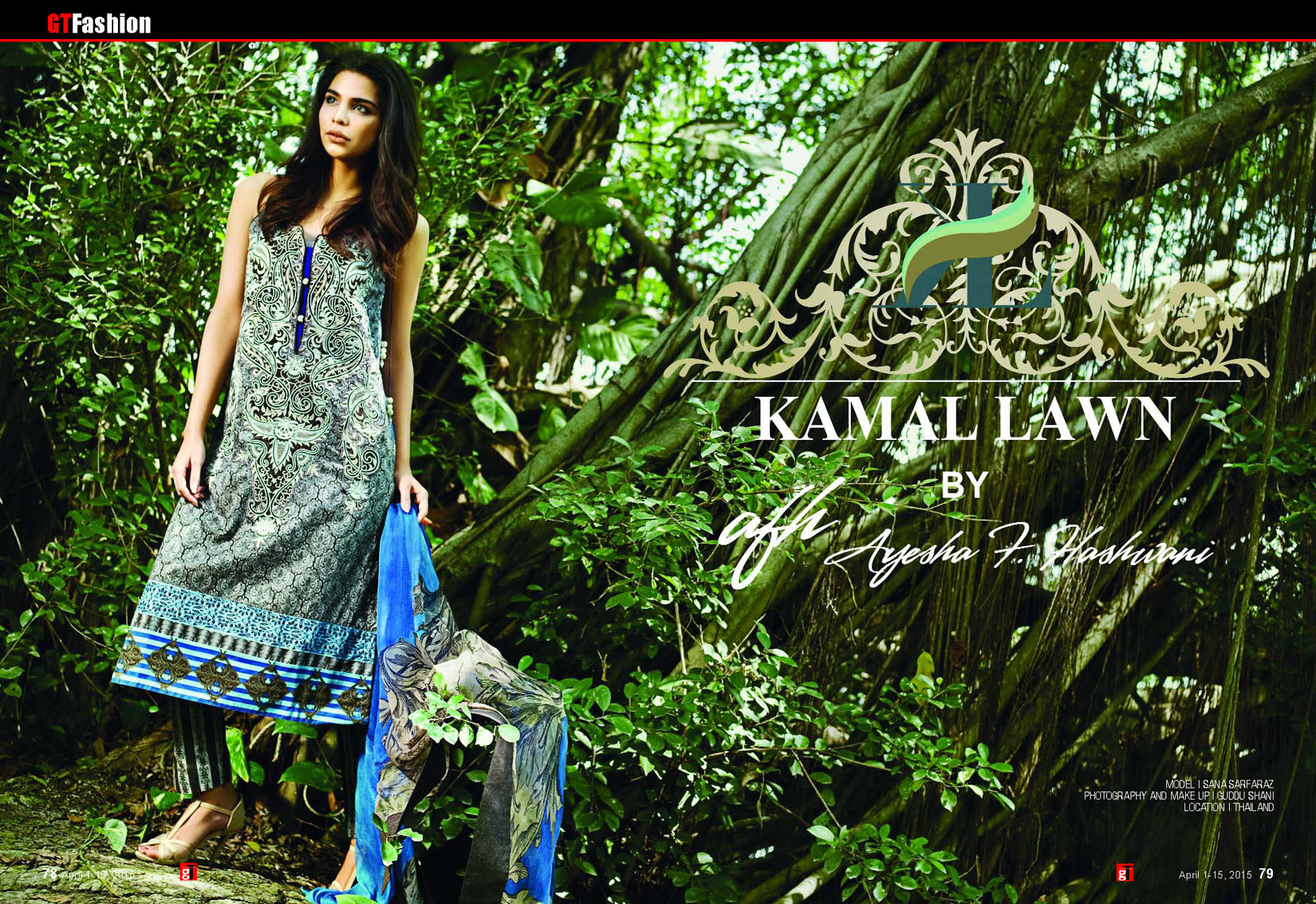
Saira: We started off with prêt and that became our forte. Now we have started venturing into formals and bridals too.

Are you more interested in bridals or prêt?

Shakira: We like doing prêt more because you can experiment. With bridals, everyone wants very typical stuff. When a bride comes to us, she usually wants something very “pretty pretty” and flowy and long.

Saira: Prêt requires just as much money, cloth, trimmings, etc., except for the work (kaam). But the margins are definitely bigger in bridals and formals when compared to prêt.

gi1

image-9

image-10

‘Men tend to do better in this industry because the workers take them more seriously’

Tell us about your production and design processes?

Saira: We prefer doing our production in-house but during the busy wedding season we are compelled to outsource work too. We’re doing our digital printed line on silk karandi next. It’s fun stuff: kurtis and nice prints. 
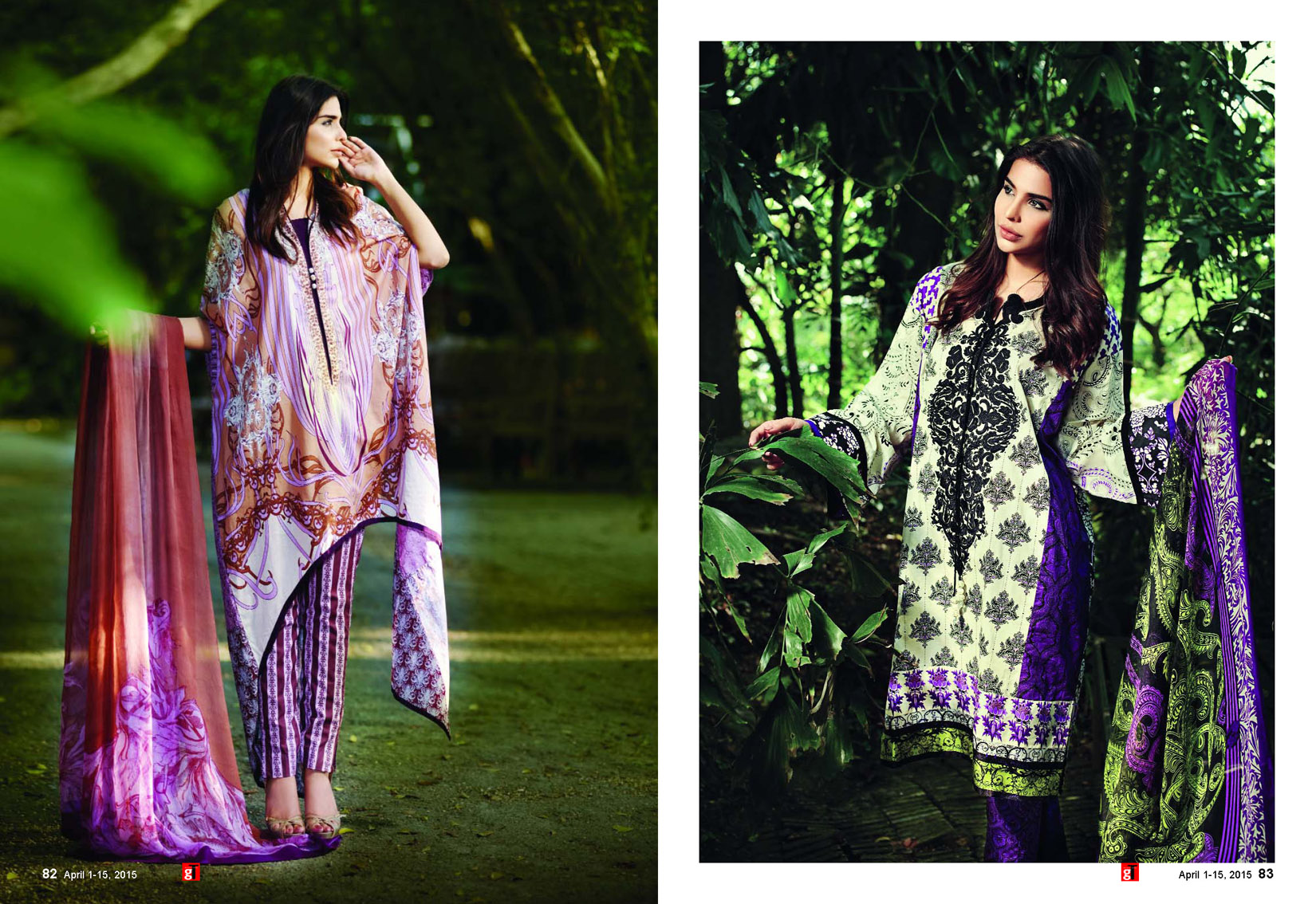
Shakira: We don’t have a design process as such because there’s not one thing in particular that either of us handles. Whenever we want to design, either we sit together and do it, or if we’re busy and we need to design separately, we’ll design some pieces on our own, then get together and discuss them. She (Saira) is very good with work (kaam), I’m very good with motif placement so we combine our work and come up with something together.

What was it like exiting PIFD and entering the real fashion market?

Saira: Mostly we were dealing with western cuts, larger-than-life and over-the-top stuff—because obviously we were learning and all this is a part of the training process. But with the market, it’s a whole different ball game. It has to be wearable and more practical. We had to tone down a bit.

Shakira: It was difficult for us, we used to include lots of elements in one design. The cost of production of the design was becoming too high for us to compete in the market.

image-15

image-23

image-30

‘Shalwars are coming back’

Whatis your standard request from your clients?

Shakira: The standard request we get from almost all our clients is for us to make them look thinner.

Any new trends in bridals this season?

Shakira: I think for outfits of the relatives of the bride and groom, a lot of western input is coming in. Crop tops with lehngas, a lehnga with a collared shirt. People actually want to wear them! With the fashion week, we did a lot of capes, jumpsuits and shrugs, crop tops, collared shirts and lehngas.

Saira: It’s difficult to set a new trend in formals and bridals because people have very set notions about how they want to look.

New trends in prêt?

Shakira: Jackets are very in, waistcoats and faux fur in trimmings, collars and sleeves.

Saira: Shorter lengths have been back for a while in prêt and bridals. Slowly and steadily but shalwars too are coming back.

If you were to characterize yourself within the industry, do you have a particular identity?

Shakira: We do a lot of fusion, modern stuff, you would be hard pressed to call us traditional.

Saira: We use a lot of pastels, lighter colours and you’ll always find a bit of androgyny in almost all our pieces.

image-31

image-32

image-33

Behind the scene with Humaima Malick, Abdullah Haris, Saira, Shakira & others

‘The standard request we get from almost all our clients is for us to make them look thinner’

Tell us about your latest shoot with Humaima Malick?

Shakira: This was our biggest shoot to date. Humaima’s a celebrity and her movie had just come out and we think she’s pretty and she just won at the Masala awards—all great things to have in a brand ambassador. The woman we want to dress up is a woman like her. I think she carried the clothes very well. It started at 8am and ended at 11pm! Part of it was shot at Jallo Park which was interesting since it was the first time I had been. Abdullah Haris did our shoot, we decided to work with him because we think his work is different.

Saira: Abdullah’s work is edgy and he takes it very seriously. We’ve done both our PFDC prêt and bridal videos with him.

Where is your client base located?

Shakira: We get a lot of clients from all over Pakistan and the world, the U.S., Italy, South Africa and India too. But our base is from Lahore since we live there. We’re planning an outlet here in Lahore and in Karachi featuring Saira Shakira prêt basics. Mainly stocking off-the-rack stuff featuring kurtis and three piece suits. But slow production is something that really holds us back.
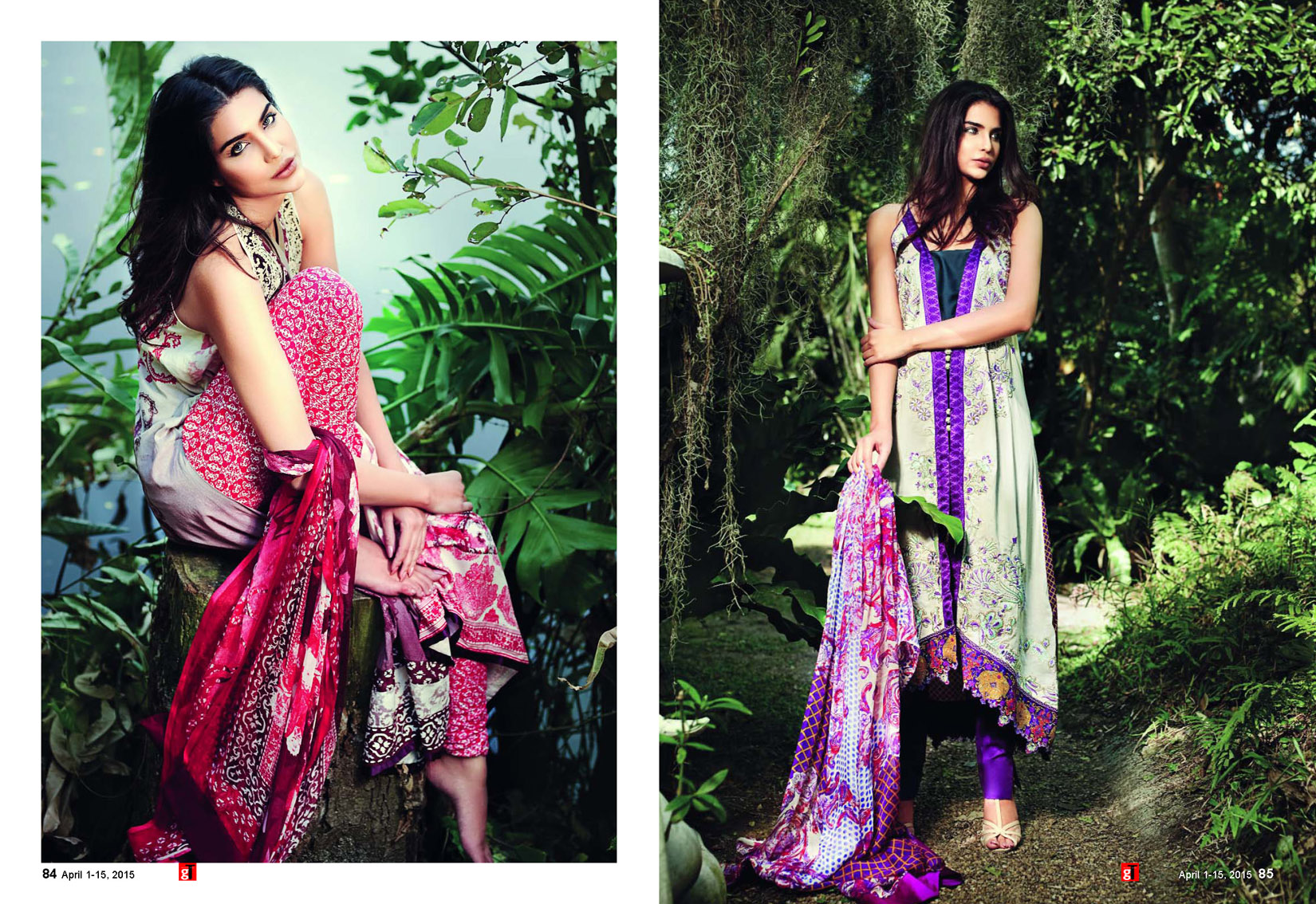
Saira: People automatically think we’re from Karachi once they look at our Facebook page!

image-36

‘When a bride comes to us, she usually wants something very “pretty pretty”‘

How much do you think gender plays a role in your industry?

Shakira: As sad as it is to say, men tend to do better in this industry as the workers take them more seriously than they would a woman who’s telling them what to do. We have had to get our husbands to intervene when someone is just not cooperating with us!

How is your working relationship with each other?

Shakira: Thankfully, we’re both fairly laid back and we don’t argue and fight. I tend to freak out more and panic when something goes wrong and Saira is the one to smooth it all out. She’s the calmer one. We complement each other.

What do you dislike about the industry?

Saira: There should be copyrights, but it really is impossible to avoid other people from outright copying your work.

Shakira: Everyone nowadays is a designer! Every household seems to have a designer. There should ideally be some way to regulate how and why one can become a designer. But it sounds absurd even as I say it!

We asked some of your favourite celebrities: What are your views on valentine’s day?

Juggun Kazim - Secondary PR Images (1)

Juggun Kazim, Actress

Valentine’s Day is a great occasion to celebrate the love you have with your significant other. Yes, I do celebrate it but I try to celebrate it every day because every day should be special in your relationship. The best part of romance, be it on this day or any other day of the year, is being with your family and loved ones!

HSY-(2)

HSY, Designer

I personally think love shouldn’t be confined to one V-Day. The best thing about Valentine’s Day is that it brings back the fondest memories from my childhood and later growing up as a teenager. I think contrary to common perception, V–Day should not be confined to a girlfriend/ boyfriend or husband/wife relationship. It’s a day for appreciating relationships in any form. Apart from that you also get gifts from loved ones on this particular day so V–Day is something I always look forward to!

Adnan Pardesy - Profile Image [F]

Adnan Pardesy, Designer

I absolutely love the idea of celebrating Valentine’s day. I think there is nothing wrong in couples celebrating this day unlike a lot of people who think the idea of Valentine’s day is overrated, and one must celebrate love every day. You can’t celebrate your birthday every day. So let’s not hesitate in celebrating and acknowledging the love and joy! Happy Valentine’s day!

Ammara-Khan-[F]

Ammara Khan, Designer

In my personal view, Valentine’s Day has become a bit over-glorified in today’s world. To be honest, I see it targeting teenage/high school love. Love is something that should be celebrated every single day with your loved ones.

Layla-Chatoor-Profile-Image-F

Layla Chatoor, Designer

Without getting into the roots of the day, any day which celebrates love and inspires people to appreciate and cherish their loved ones is the need of today’s world. I celebrate Valentine’s Day with the same spirit every year but if you truly love someone, every day is Valentine’s Day.

Maria B. - Profile Image (4)

MARIA.B, Designer

Valentine’s Day is a good reminder for us to do something special for the loved ones in our lives. We often tend to take our loved ones and relationships for granted! I’m not big on the consumerism associated with it though.

Frieha-Altaf-wearing-Maheen-Karim

Frieha Altaf, Event manager 

Valentine’s Day is about love and affection towards the people we love. I wish all my friends family colleagues happiness and love. I also wish love to those refugees who are displaced by war, the families who lost their children in Peshawar and our armed forces that are working to eradicate terrorism from Pakistan. Last but not least to the Pakistani cricket team at the World Cup!

saba

Saba Sharjeal, Chef 

Valentine’s Day is one of the busiest days of the year for me. I’m drowning in sugar hearts and teddy bears, roses, assorted baskets, chocolate covered strawberries and so much more! I make a lot of couples happy with all that sugar rush. Personally, I believe you dont need a particular day to celebrate your love for the other person. I’m such a stupid romantic at heart, though, and maybe a dozen roses and a really good home cooked meal is all that I want on this day.

ahmad

Mohammed Ahmed, Writer

Whenever and wherever there is an occasion to be happy about, I want to celebrate it. Especially in these times that we live in, if there is any thing to be happy about, I don’t want to miss it. Whether its a small or a big occasion, I don’t ask where it’s coming from or why, I just want to celebrate it and be happy.

Frieha-Altaf-&-Shaniera-Wasim-Akram-copy

Shaniera Akram, HomeMaker & wife of wasim Akram

Valentine’s Day reminds you to believe in love and that fairytales really do happen. Happy Valentine’s Day everyone.

Ayesha-Omar-at-Uth-Records-Press-Conference

Ayesha Omer, Singer and Actor 

Love can be expressed or spread any day of the year but it’s cute to do it with rest of the world on one special day. But I think Valentine’s Day has become far too commercial and less personal. It should be about doing something special for your loved ones and taking out time to tell them you love them—not just spending lots of money buying expensive presents. Maybe make something yourself, like cards or a scrapbook, or cook a loving meal or bake something yummy. Also it shouldn’t only be about expression of romantic love. Platonic, family, sibling and general love for special people in your life can also be expressed if you don’t have a partner or special person in your life. You shouldn’t feel left out.

GT talks to ultra-talented stylist and photographer

How did you get into styling?

I’ve been sketching since I was a child. Whenever I would draw a portrait it would never turn out properly—I would always mess up the proportions because I’m attracted to distortion. As I grew up, I began thinking I would become a painter. But when I was in college in Gujrat, at the School of Art, Design and Architecture, I studied communication design, which is basically an advanced form of graphics. From my first year I started shooting portraits. I got into photography. As I got to know myself, I realized I was attracted to distortion, darkness, disfigurement,  even filth. I like unusual faces.

Who are your inspirations?

Nobody in Pakistan! The work here is very commercial whereas I am drawn to more artistic things. There is a Spanish photographer Paco Peregrin whose style is similar to mine; he also shoots head transformations. I stylize and drape normal faces as if they are a piece of art. I’m inspired by eastern and western mythologies, in particular the goddess Morrigan who is one of the great “negative” goddesses of Irish mythology. She represents battle and strife.

Why is there so much darkness in your work?

I’m an unusual person. When we used to study Maths in school, I used to ask my teachers “Why do I need to learn algorithms? I don’t need algorithms in my life! I need art.” I always used to ask questions, and nobody had answers. For my thesis, I wanted to do my project on Azab-e-Qabr—when our bodies will be all bones and ash. But then my father fell ill, and I understood that to be an omen of some sort. I put a hold on the darkness. I got more into art, beauty, and fashion.

1

10003

10016

10018

10011

10012

‘I am attracted to distortion, darkness, and disfigurement’

Do you come from an artistic family?

Yes, my grandfather used to make pottery! But sad to say no one kept up his work.

You moved to Lahore in 2013. How do you like it?

It’s very small. People think small. They need to start thinking bigger. The people in Karachi are better, more cosmopolitan. The fashion industry in Lahore is not very approachable.

IMG_3359

10051

10047

10046

10042

10033

What is your most memorable shoot?

I did a shoot called “The Diseased” about people who are shadowed by a deep and persistent melancholy—those who have no lasting comfort for the soul.

‘I wanted to show hijras in an entirely new concept. I wanted to capture a feeling of sadness’

Why aren’t people getting out of their comfort zones?

People are preoccupied with money. Money is important, certainly, but it’s not everything. For example, I wanted to show hijras in an entirely new concept—the title I had imagined was “The birthless mothers.” It’s in process. I have to justify my concept. Hijras dance and sing but they have a lingering inferiority complex that they can’t birth a child. They sometimes adopt a child. It’s a feeling of sadness that I wanted to capture in a shoot. The shoot will involve babies stuck to the bodies or to the head. People still look at hijras with a filthy look. There is no acceptability in our society, frankly. We get embarrassed. And I wanted to show that.

Do you think art flourishes under difficult circumstances?

I’m not a very political person. I don’t absorb tragedy like that. For example, when the Peshawar tragedy happened, I was deeply sad, but I don’t think I incorporated it into my work. I continue to be obsessed with transforming and playing with established norms of what things are like.

10031

10027

10025

IMG_4855-Edit-2

10019

When did you first realise you wanted to be a journalist?

After college I tried teaching and then advertising before I realised that mine had to be an unfettered path. I searched for a career that gave hope, passion, freedom and a tremendous sense of adventure, so journalism was my natural destination.

Recount an incident during your years as a journalist that has deeply impacted you.

There are many but when I was a crime reporter, I worked on an extensive story about families who had lost their sons, husbands, brothers, fathers to brutal state oppression and target killing. It taught me so much about the curse of fear, and changed my direction completely.

gp1

‘I love spending mad evenings with friends and family. Mad is mandatory’  

What would you say is your interesting writing quirk?

Playing mind games with myself, and sometimes with others, to create imagery I suppose. And I do that till a deadline whacks me out of it.

What is the inspiration behind your new book on the Historic Temples in Pakistan?

It has a single message — As long as Life is infinite, Faiths will remain indestructible — that was the idea, inspiration and the cause.

Where did you get your information for your book?

Some two years of research and travel. So, archaeology departments, British Museum, scholars, works of ancient archaeologists and travelers, the on-ground research such as visiting sites, measuring every crevice, recording details of architecture, tales of the locals, village elders, and priests.

What do you like to do when you’re not writing?

I love old Western and Eastern music, reading, travel, yoga, staring at the night sky or the television. Or spending mad evenings with friends and family. Mad is mandatory.

gp2

‘Pakistanis are inherently tolerant, despite being deeply wounded in some pockets’

What impact do you hope your book will have in fostering a better relationship with India?

It isn’t a peace mission but a reaction to the half-truths about this country. The book showcases the massive gulf between the people of Pakistan and the perception of Pakistan. So as a humble attempt at documenting antiquity and its value for the populace regardless of faith, I hope it is seen as a window into an unseen or forgotten Pakistan, which is essentially pluralistic.

What was one of the most surprising things you learned in creating your book?

I discovered my people and my country. Both are beautiful, all-embracing, inherently tolerant, despite being deeply wounded in some pockets.

How was it collaborating with Madiha Aijaz who did the photography for your book?

It was a wonderful experience; we were able to enhance and complement each other’s vision and had a lot of fun at the same time. Madiha captured a moment or a detail with equal passion and beauty.

gp3

Do you have any suggestions to help aspiring writers? If so, what are they?

Hold on to idealism and the hunger for a cause. And please be a purist with language.

What do you think makes a good story?

The human condition. A story comes alive in the treatment of details, and the angle. Just don’t abuse it for ratings and sink to calamity porn.

As a woman, what challenges did you face whilst travelling around in Pakistan?

Our gender worked in our favour; we got access into areas where men were not permitted. Being a woman broke down many social boundaries.

Tell us about your roots and the influence they had on the theme of your book.

I dont know how to answer this. Most of my family is in India but that had nothing to do with my book. It is my work on socio-political issues that led to it.

On a lighter note, what is your favourite attire when you are writing?

Really not fussed. From a sari, pants to kaftaan, anything that helps meet a deadline comfortably.

What do you look for in your surroundings that gives you inspiration?

I try to look out for anomalies — social, individual, circumstantial — and also absorb a lot of what people I look up to say, be it a conversation or the written word.

Name a living Pakistani author who’s style you admire.

Mohammed Hanif. I love his journalism and his books. A truly original thinker.

Have you begun work on another book? If so, what is the theme?

Its research, features and columns at the moment. Something will eventually start to brew soon.

What is the image of Pakistan that you want the world to see through your book?

That nothing can wipe out history and thousands of years of pluralism embedded in us; and that there is harmony in the most unexpected of places. Pakistan’s real people are its best kept secret.

What is your favourite quote?

“What happens if you drop all the things that make you I?” — Graham Greene.

“The victor belongs to the spoils” — F.Scott Fitzgerald.

What advice would you like to give the youth of this nation who are so hungry for change?

Stay angry, aware, idealistic and reclaim your space. Don’t wait for promises to be fulfilled.

THE CO-LEAD SINGER OF JOSH 

You’ve recently worked with Deepa Mehta and taken a serious shot at acting. Tell us about your latest big-screen roles:

Acting has always been a passion of mine. I just didn’t know how much I liked it until I really tried it. I’ve dedicated a lot of time in learning the craft. There’s a lot more learning to do. I’ve shot two features in 2014. The first is with world-renowned director Deepa Mehta, in her latest film “Beeba Boys.” It was a small role, but I learned a lot from her.  The second film is called “The Black Prince, directed by Kavi Raz.”  He’s an incredibly committed and talented film maker whose drive simply amazes me! The film is a period biopic about the son of Maharaja Ranjit Singh, Maharaja Duleep Singh. I play the role of Arur Singh, who was the right-hand man of the Maharaja.

You’ll shortly be releasing a cookbook featuring South Asian cuisine, with an emphasis on easy recipes for men. Any particular personal experiences that led to you focusing on cooking for men?

Lets face it, the majority of guys don’t cook. Its a sad fact. After careful deliberation, I’ve come to the realization that there are a number of things that support the absent male in the kitchen. The book is designed to make guys feel comfortable in the kitchen. Cooking is not as scary or difficult as it may seem. Sometimes, a guy needs to hear it in his own language: guy talk!

gi1

Performing alongside Nelly Furutado at Andheri Stadium in Mumbai: over 70,000 fans, new years eve, amazing evening, and lots of love’

Tell us about your musical journey from the tabla at gurdwaras at age 6 to pioneering your own style of contemporary South Asian music.

Like any living entity, one’s journey is forever evolving. Let’s just say the journey has been amazing. When you love what you do, you usually take the road less traveled. Thats the road I’ve always been on, and its the road I chose. JoSH’s experiences, inspirations, and backgrounds have brought us to the style of music we have. Like any living entity, it’s always evolving.

gi2

The film is a period biopic about the son of Maharaja Ranjit Singh, Maharaja Duleep Singh. I play the role of Arur Singh, who was the right-hand man of the Maharaja’

New York or Montreal?

Home is where the heart will always be, Montreal.

What’s your most memorable musical performance and why?

Performing alongside Nelly Furutado at Andheri Stadium in Mumbai. Over 70,000 fans, new years eve, amazing evening, and lots of love.

Pin It