

Who did you choose as your designer? And why?
Rema Qureshi: I was in India and chose my outfit there, and I am yet to order my mehndi outfit!
Fatin Gondal: I am generally a very picky person, and in this case I was very clear about the kind of look I wanted to go for. I didn’t go on a jora hunt from one designer to the other. For me it was always going to be Khadija Shah of Élan. I love her work, the choice of color palates that she works with, and most importantly I trust her.
Mishaal Anwar: I’ve always wanted an element of traditional red in my shadi outfit, without it being overwhelming. After speaking with Dr. Haroon, he totally won me over with his enthusiastic idea of that perfect red dupatta in an overall pink color scheme. For my valima I wanted a completely different look. Shehla Chatoor with her modern cuts and contemporary style promised just that.
Sameen Khan: My mother, Kauser Humayun, is a fashion and jewelry designer and is making my jewelry, formals, nikkah and mehndi outfits. I would trust her blindly with it actually. For the wedding itself, I decided to go to Rizwan Beyg: he made my sister’s wedding jora and my mother, sister, and I all consider him to be one of the most-if not the most-talented designers here.

Who did you choose as your makeup artist? And why?
Rema: Have not decided yet, but will go for someone who can complement the traditional look I have in mind.
Fatin: Ather Shahzad for my valima and Leena Ghani for my wedding. Leena is one of the few who gives you a very natural non-caked up look, which is exactly what I needed for my day-time wedding event.
Mishaal: Honestly, I’m waiting to take that decision. Lets see how the December and January brides do. Better to learn from other people’s mistakes!
Sameen: I wear very little makeup on a daily basis, and I wanted to go to a makeup artist who knows her stuff but will not a) change me, b) go overboard, or c) make me look like a creampuff. I chose Leena Ghani, because she doesn’t change faces and she uses bronzer liberally (something that very few Pakistani makeup artists are willing to do)!

Are you planning on going sans makeup on the mehndi?
Rema: No makeup, just lots of color and flowers!
Fatin: No. Everyone attending looks their best on mehndi, why shouldn’t the bride!
Mishaal: What’s the point of the out-of-bed look before the big day?No one should look less than perfect when lights and eyes shine bright on you. Natural doesn’t mean literally. It also doesn’t mean party makeup.
Sameen: I won’t lie: I’m planning on wearing a touch of cover-up under the eyes but mehndis are meant to be makeup-free so I wouldn’t do more than that. I like the idea of flowers as adornment instead of makeup and jewellery.

Are you involved in doing up the house you’ll be moving into? What will you miss most about your own home?
Rema: Yes that’s work in progress! I’ll be missing my bedroom, and most of all coming home to my parents.
Fatin: Not really. I didn’t want to do it up in a rush. Shezy, my fiancé, is extremely busy with work right now and I have been caught up with all the other wedding preps. I’m really looking forward to doing it up together with him, in ease, once the craziness is over. There’s so much I will miss about my home. But I think most of all my room, I love my room, it’s always been my happy space, being able to walk around in my pajamas and eating midnight snacks and chilling with my mom.
Mishaal: I’ll be setting up my home in Los Angeles once I get there. Better in person than online. Thankfully my mother-in-law has taken up the stress to do up my place here. I can totally rely on her to do something amazing.
Hollywood aside, I’ll definitely miss being served tea in bed, like a boss!
Sameen: I am indeed involved in doing up the house and it’s the most stressful part of the entire experience! I’m very particular about having an inspiring yet livable space that reflects one’s personality. My fiancé loves the minimalistic look and I love moody, dark (sometimes shabby chic) spaces so we are trying to find a balance. What I will miss most about my own home is alone time: the ability to lock myself in my room for hours and make time for my self and my creative ventures i.e. reading, writing, painting, etc. That is very precious to me.
Weddings in Pakistan have become such big blockbuster events. People are hiring choreographers from India, flying in flowers from Holland. Do you agree with this approach or does it bother you?
Rema: It doesn’t bother me but I feel that the hosts, friends, and family should enjoy the wedding. Sometimes I find wedding events become more about showiness and ostentation rather than about the couple, and all the fun involved!
Fatin: I don’t believe in too much or too many functions. It’s hectic for everybody including the bride. I think what’s important is the intention behind it. Some brides may want the perfect outfit, others may want the perfect dreamy wedding with beautiful exotic flowers. To each their own. What’s important is that no one should stretch themselves beyond their comfort zone to prove anything to anyone.
Mishaal: “Grand” has a positive correlation with stress! I don’t care for such drama and so much khowaari. My friends have choreographed some dances nothing short of Bollywood productions. I try not to judge people who spend exorbitant amounts on their weddings, because it’s quite entertaining to witness:
Sameen: I don’t believe in spending so much time, energy, and money on a single day. An event manager can relieve the burden of organizing a wedding yourself, and I am using one for that reason. However, one must draw a line between a wedding and a show. Just ask yourself: Am I doing what I’m doing for the right reasons? And always lean away from the latter, because that’s never a good way to live. What bothers me about blockbuster events is how they are used to make statements.
For those brides without a host of female siblings and cousins, they have to host and organize dance practices themselves? How are you managing the dance practices?
Rema: For my sister’s wedding, I took on that role, so I’m hoping that’s her turf this time!
Fatin: Honestly, you don’t feel the lack of if it you have friends like sisters. Mine have completely taken over and been great sports about my dance practices from organizing to participating.
Mishaal: I don’t really have that problem, MashaAllah. I’ve got the siblings, the cousins and the friends. Not to forget I’m not at all averse to the idea of stealing a few dances from all the weddings I have to attend. Ladies beware!
Sameen: Actually, I am quite fortunate to have a whole host of female relatives (and some good, good friends)! Considering how very little I know of the latest Bollywood tunes and moves, I’ve delegated dance practices to my sister and cousins as well as those friends who are particularly talented at choreography and dancing. We’re only practicing a week to ten days; I believe in having fun with it and not taking things too seriously.

In an exclusive feature, we ask Pakistan’s leading event managers about the A-B-C of the business
How important is it to dress for an event?
QYT: If someone has invited you and it’s a formal event, for example, you should always dress formally. People who don’t dress accordingly and just attend as they please—without making an effort with their shoes or clothes — it’s a kind of disrespect to the host. I personally feel that wherever you go, you should dress according to the venue and type of event.
Alena Peerzada: It’s important to dress appropriately for all occasions. As far as weddings go, one should dress to enjoy the occasion. We are still lucky in the subcontinent to dress the way we do, but I miss seeing more people dressed according to their own individual styles. I think being fashion forward is fun as long as one is honest about what suits their personalities and bodies. You should dress to enjoy yourself, and wear what and who you are.
Shazreh Khalid: I think it is extremely important to dress according to the occasion. For mehndis, for example, I always suggest traditional, festival outfits. At the reception itself, you can play with different silhouettes and styles. We have such an amazing fashion industry so there is a lot to choose from.

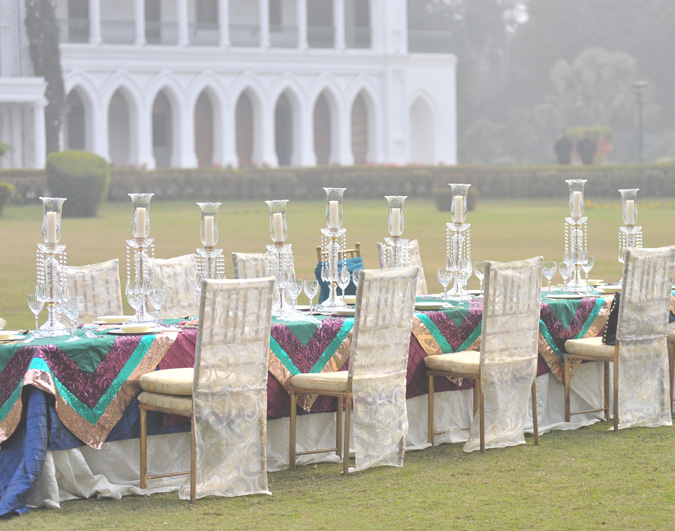


There is an increasing trend of having bigger and bigger haan and nikkah functions. How does this make you feel?
QYT:Â I don’t do haan and nikkah events and instead I do main events, be it a mehndi or a big musical evening or a baarat or valima or a joint reception. With the nikkah, I personally feel it shouldn’t be a separate event, it should be on the day when the maximum guests are attending. This is because the son or daughter who’s getting married will have that many hands raised in prayer for them. If you invite a 1000 people for the main events and only ten for the nikkah, then only ten people are praying for the couple. To all my clients, I suggest that a nikkah should be held on the night of the mehndi or the baarat because that’s when most people attend and everyone raises their hands in prayer for the couple.
Alena Peerzada:Â Weddings are such personal events; it’s just not normal for all to be the same. Some people like them extravagant, and some like them low-key. Currently the trends revolve around hosting more functions, but this is because Pakistani weddings are all about celebration, fun, colour. The more the merrier!
Shazreh Khalid:Â Some people prefer smaller, quieter events for a nikkah or haan and others like to go all out. Ultimately, it’s the client’s big day so they should do whatever makes them happy!

How, mainly, does hiring an event manager benefit the host?
QYT:Â For me, more important than the wedding itself are the bride and groom, especially the bride. For them, this day will only come once, well, for most of them! So the bride and groom and their respective families should be given proper respect. If I am being hired to do the event then all the pressure and tension of organizing the event should fall on me. I tell them to come as guests would, to be relaxed, to enjoy the occasion.
Alena Peerzada:Â Hiring an event manager definitely takes the stress off. I feel the benefit is huge because I can help in both practical and creative ways, providing resources and advice for your functions, and finally take complete charge of putting the event together. All along I keep in mind your personal requirements and taste along with incorporating aesthetically pleasing elements. I think it benefits the host by having one person responsible and deliver the above. The trends are changing rapidly! Now people want more from weddings; they want themes, concepts, beauty, and seamless execution. Moreover, today, many brides are working women, who don’t have as much time as women previously used to have. Therefore, they turn to event managers to translate their needs on-ground!
Shazreh Khalid:Â Hiring an event manager means that you attend your function as a guest and your vision of the perfect wedding is turned into reality. One can relax and focus on the thousands of things that come with a wedding and leave the managing of the event in the hands of a professional.
For product launches, what’s the recommended way? Is there such a thing as too much hype? Is a soft launch advised?
QYT:Â At first, we start with a product but then I make it into a brand by creating tons of hype around it. The main purpose is for as many people to get to know the product. I don’t believe in soft launches and if I’m doing a launch, it’s got to be with a big bang. I tell the clients that either I do it all out or I don’t do it at all. If they tell me “we don’t have the budget for it,” then I tell them to hold off until they do have the budget to launch in a big way. I think it’s better for the product as I feel the whole point of a launch is to create hype for the product, otherwise just directly launch the product in the market. It helps to invite media people, models, artists, celebrities, and keep some giveaways.
For fashion events and launches, I style the models as well as the host: I tell them to wear this outfit and that shoe. Especially if the host is a bit simple, I style them too. If I’m launching a product, I feel the host should also be looking glamorous, it’s very important since he or she is going to mingle with all sorts of people, society and media.
Alena Peerzada:Â It depends on the product and its launch. If it’s a mass scale brand launching a project for the masses then there is no such thing as too much publicity. We at Peer Events have mainly done larger nationwide product launches where what you really want is maximum viewership, mileage and attendance. For products that are investing huge amounts of money to launch themselves I don’t think a soft launch can be advised.
Shazreh Khalid:Â I would always advise a soft launch, especially for a restaurant or cafe as it gives the staff an opportunity to deal with real customers and work out the kinks, if any.

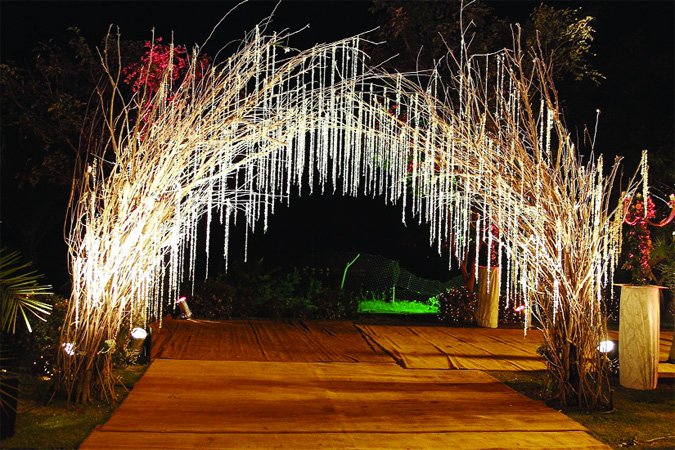

Any guidelines for wedding proprieties and decor?
QYT:Â The bride and groom should come at the right time, with a perfect song playing. As far as the stage is concerned, I always keep it in muted tones and subtle colours, basically in complete contrast to the bride so that she stands out. My stuff is classy and elegant and I generally use very subtle tones when it comes to receptions. Mehndis are the only exceptions, naturally!
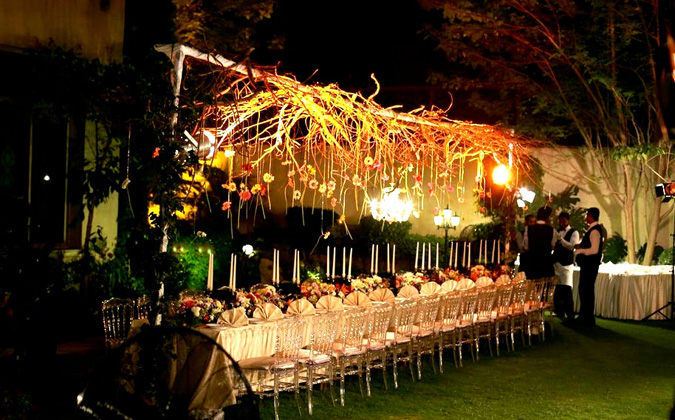
Alena Peerzada: The décor is different for every event. Mehndi functions are always colourful and use traditional styles whereas baraat and valima functions use more sombre colours. A clustered stage and too many flowers is not the way to go. I feel it’s important to play with heights and ceiling décor. With all the people and hustle bustle at weddings, the only constant that can be truly impactful is the ceiling. Day-time weddings are lovely in good weather, especially if you want to decorate your wedding in lighter tones such as pearls and lace. Lighting, for me, is the most important part of my setup. Lighting can make or break an event. From the actual ceremony to the car parking area, lighting plays an essential role in setting the stage for your wedding. At Peer Events we have Pakistan’s foremost lighting designers who know how lighting can elevate the profile of an event from special to unforgettable. Whether you are getting married outside or bringing the outdoors in, lighting is the key to creating the perfect environment.
Shazreh Khalid:Â I love using fresh flowers! Every season, we have such beautiful flowers here. If used, they make the event extra special. I keep myself updated with international decor trends and implement them as much as possible. In this business you have to frantically innovate, in a sense, so you don’t repeat your ideas. My style is generally elegant and classic and you can never go wrong with that!



Fashion weeks or solo shows?
QYT:Â Before the trend began of having big fashion weeks, there used to be solo fashion shows. I recently organized a solo show for Faraz Manan and Ather Shehzad at Faletti’s Hotel in Lahore. The guests thoroughly enjoyed the show and it was all wrapped up within 35 minutes. Solo shows are coming back again and I have had a tremendous response from many designers after this recent solo show. I did a solo show for Damas in Marriott Islamabad a few months ago and some others are in the pipeline.
Alena Peerzada:Â I’m not really into attending fashion shows, but if I had to pick I guess I’d only take the time out to see a solo show of someone whose work I really appreciate.
Shazreh Khalid: Solo shows!
How different are events from city to city?
QYT:Â Every city has a different flavor. As of late, I’ve been doing many events in Sialkot, where I launched a Super Cinema recently. I was pleasantly surprised to see that the fashions there are not very far from the fashions of Lahore and Karachi. The girls were very nicely dressed with elegant and sublte make-up and the boys were also fashion forward. In Faisalabad, for example, people make a lot of comparisons, ‘I want my event to be better than x persons event.’
Alena Peerzada:Â Regarding weddings, they have become very theme-oriented, which in my personal opinion is a trend that needs to be broken! I feel one needs to concentrate on wedding activities, ambiance and decor in a more feel-good manner rather than restricting oneself to a theme-specific event.
Shazreh Khalid:Â I’m inspired by every city’s charm and character and try to incorporate that into the decor and food.


Inside your Closet With
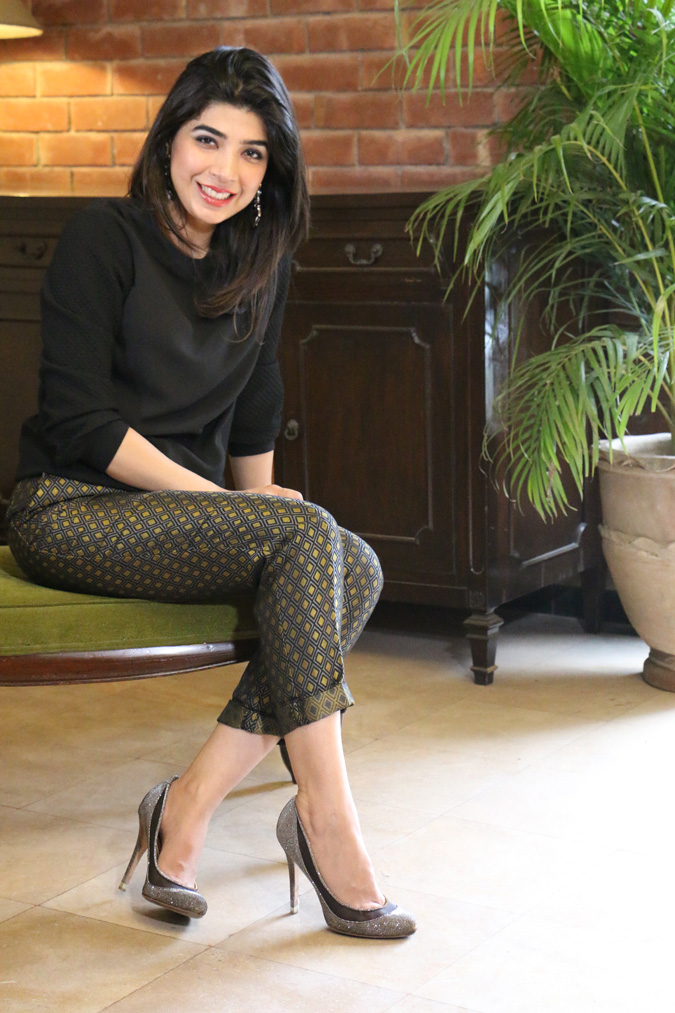
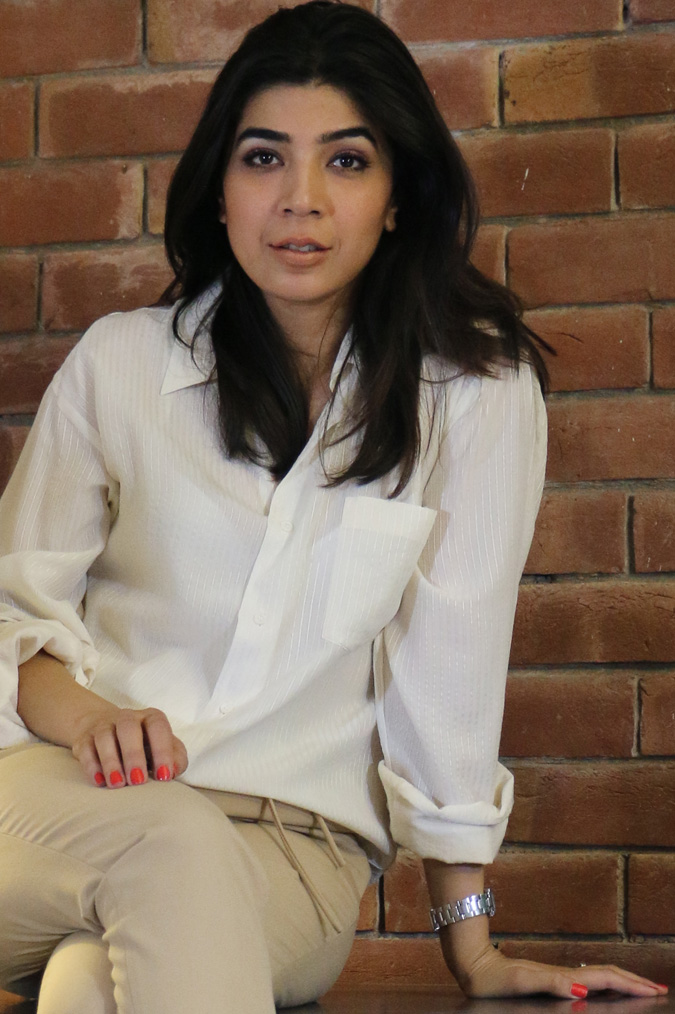
founder of blog SiddySays
1. How did the idea of starting a fashion blog come to you?Â
I started SiddySays.com as a personal blog during a career break while expecting my daughter in 2011. I had noticed that the majority of blog readers were young people, between the ages of 18-35, so I honed the content to “inspire,” and that shaped SiddySays as one of the first style blogs—which also covers fashion extensively. I aspire for SiddySays to be a window to the world out there for all our readers, opening their eyes to the stylish possibilities that exist in every facet of their lives.
2. How would you describe your personal style?Â
I feel fashion is a way of expressing one’s self, so my style varies literally from day to day, I don’t take fashion too seriously. I have fun with it, I enjoy it. But I guess if I really had to sum it up in a word, I’d say chic.

3. Your favourite fashion designer?Â
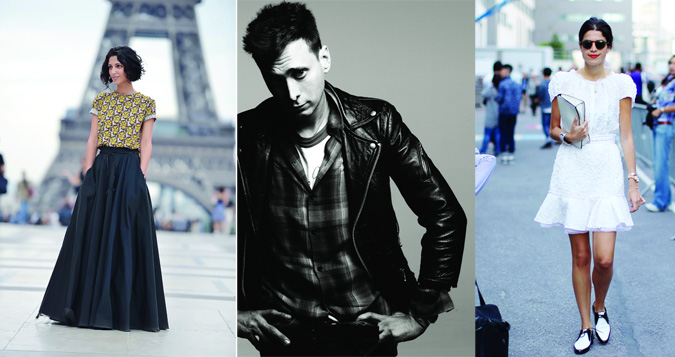
I’d be lying if I said I have a favourite designer. I fall in love with pieces and looks all the time. I do however love what Hedi Slimane has done for Saint Laurent since he took charge as the creative director. He fascinates me immensely.
4. Where in Pakistan do you love to shop?
My go to brands are Sania Maskatiya, MUSE, Sublime and Khaadi. I wish I had more time to explore, but this is my comfort zone.


5. Who are your inspirations when it comes to style?
I absolutely adore Yasmin Sewell and Leandra Medine. They are both so effortlessly chic, I wish the latter was a little less self-deprecating though!
6.What is the oldest item in your closet?
I love men’s clothes, I have stolen shirts from my father for as long as I can remember. I still have some of the shirts he wore when he was young. I absolutely love wearing them.
7. What is the most prized possession in your closet?
A beautiful hand embroidered shawl given to me by my mother-in-law. I look forward to winters only so I can wear it.
8. Any fashion regrets?
Anyone who experiments with fashion will have regrets. In my case it happens a bit more often than most, I almost always know how to make an outfit better after I see pictures of myself wearing it, but it’s a little too late by then usually!
9. Your blog has become pretty influential in terms of defining tastes in Pakistan. What advice would you give to bloggers struggling to find an audience?
Honestly, the blog is still very niche, but we found some very gracious patrons who work with us and have helped us put SiddySays on the map. Blogs, unlike magazines, are more personality driven; you don’t find an audience, the audience finds you. You just have to be true to your self and those who appreciate your perspective will slowly start following you. Also, I don’t think you should depend on blogging as a sole source of income. If you do, you will always find yourself compromising on content. Learn to say no. Sometimes it’s okay to say “this doesn’t work for me” so I won’t feature it.
Â
A beautiful hand embroidered shawl given to me by my mother-in-law. I look forward to winters only so I can wear it.


Sisters Nickie and Nina pay tribute to the inspiration in their lives
1. For this recent bridal collection, what inspired you?
Nickie: Hameeda Bano, our mother, is the inspiration for this collection and the greatest inspiration in our lives. She is a very strong woman with deeply-thought out values. I think the perspective she’s given us is that we need to be strong and yet not to forget our feminine side.
Nina: Strong women, particularly those facing hardships, have always influenced our collections. One collection was influenced by the strength of Swati women and the difficulties and pain they had to endure during the war. Our Sindhi collection was influenced by the women of Sindh and Thar and what they have to go through living life in the desert. Our Turkish collection was centered on a Turkish queen. Our collection Katcha Taanka was taken from the life of a circus woman and her hardships: how the girls and women, after performing, have to leave and give food to their families when the circus is dismantled.
We believe that a woman’s garment is best understood by a woman. This is the basic strength behind the label: a woman understands best how to dress another woman. We also believe that a woman has to wear many hats, which is to say she has to multitask. In a sense, she has no choice but to live a holistic life.


2. What’s it like working together? How often do you fight or disagree?
Nina: The connection between us sisters is so strong because we share the same mother! She has been a pillar of support for us all our lives. The emotion that comes across in the collection is mutual. Everybody’s been telling us how good this collection is. But it’s the result of years of absorbing the wisdom imparted to us by our mother. As young kids, we used to sew and stitch and knit. Even today our mother gives us advice on what to wear. Because our father died when we were very young, she as a single mother taught us how to do the chores in the house and made us go out in the world to work.
We encourage women to work at our factory, we facilitate them and we understand their problems. When we started out, our kids were young and we had to balance work with household chores, the demands of our husbands and our in-laws. So we understand the many issues women face.
With regard to the fights, yes, of course we fight — we are human! We argue and we put our own points of view forward in very strong ways, but we are also quick to accept and understand the other’s opinion. There are no egos involved.
Next year, we are celebrating 25 years!
3. Are there any fabrics we should keep an eye out for this upcoming season?
Nina: Sheer fabrics coupled with rich textures are a trend you want to incorporate in your ensembles this season


4. Velvet has come back in a big way this year. Any fabrics that are your personal favourites when it comes to this collection and why?
Nina: Velvet has definitely come back this season. As our A/W silhouette is mostly sleek and flowy, our favourite fabrics have to be silk net and organzas paired with rich velvet appliqués. Another fav at NN has to be the velvet & jamawar embellished shawls that we have introduced that instantly enhance and enliven any outfit.
5. Is fashion buying swaying towards prêt or bridal? Which do you think is taking over the other and why? And does this affect your design decisions?
Nickie: Not to say it’s swaying towards either, but there has been a considerable rise in the number of people who purchase prêt and luxury prêt now. It mostly has to do with the limitation of time on the part of the consumer and the availability of fashionable prêt in the market that has brought about this change.
At NickieNina, we have clearly differentiated between a bridal, couture and ready-to-wear piece and take pride in giving our consumer a look from the ramp, simply off the rack. Our design philosophy for prêt incorporates wearability, fashion and particularly to keep the ramp look in the ready-to-wear we produce, in that order.
6. Why NickieNina, what sets you apart from the others?
Nina: We’ve revived the old cuts and paired them with modern elements. Our family was known for being expert in the old style of cuts, our mother and khala were known for cutting ghararars. Our khala was married into an old Urdu speaking family from Lucknow and she knew the old cuts of the farshi gharara and the Delhi pajama and all the other ghararas. So as young children, we had seen them cut ghararas for people. We got3 training from them as young kids and later, we got our mother, our khala and our maami to come and train our tailors. In the olden days, the ghararas were worn with see-through shirts and with a small embellished blouse underneath. We’ve adapted that in our own style and made elaborate backs for these blouses.


Saba Ahmed talks to jewellery designer Zohra Rahman
On a cool Saturday afternoon, I walked past an orange tree and up a flight of exterior stairs straight into Zohra Rahman’s beautiful, cement-floored studio. The designer welcomed me with a big smile. We were surrounded by various metallic contraptions — a blowtorch, a rolling mill that creates metallic sheets, a large wooden table where cutting and delicate sawing takes place — as well as pieces of Zohra’s latest collection, “Unsent Letters.â€
Months before I went over to Zohra’s studio, I had admired her commissioned pieces — rings, necklaces, even a knuckleduster. “Unsent Letters,†Zohra’s newest collection, is a stunning portrait of what we leave unsaid in our relationships.The pieces are individually handmade and hand engraved, mimicking the effect of ripped pages. Just think of silver and gold in the form of a ripped paper and you have a sense of the meticulousness involved in the creation of the collection. To me, Zohra’s jewellery boasts a sincerity of form, an elucidation of the basic tenets of design. The clean lines and construction conform to the body with pliable ease, respecting the bond between the piece and its wearer. The sparse and thoughtful use of colour calls for a simplification of fashion, which, as it so happens, characterizes the designer’s own style aptly: Zohra’s pieces are at once modern, tactile, functional.


“My design process is really personal; I usually look inwards rather than outwards,†Zohra tells me. “I get bored easily and keep experimenting with new shapes,†she says. After spending six years in London immersing herself in the art and craft of jewellery, the designer returned to Pakistan three years ago to create her own pieces. While at Central Saint Martin’s, Zohra worked with art jewellery that emphasizes personal expression and design above all else. It was after her move back to Lahore that Zohra shifted her focus to the shapes, lines, composition, and colours of her pieces. “I started looking into pure abstract design and wearability as a kind of design therapy,†she says with a wry smile.
Her collaboration with college friend Daniel Hurlin kindled an affinity for working with stones. The menswear designer was selected for the Hyères Fashion and Photography Festival in Southern France for which Zohra designed and produced all the jewellery, including the belt buckles and shoes accompanying his collection. The shoes were Peshawari chappals using new leathers and colours, making for some spectacular iterations of our beloved local shoe. And she did this much before Paul Smith!The collaboration with Daniel, she says, helped her “take the plunge and get started.†It was also the first time she seriously got into using gems in her pieces.


The resulting collection presented at Paris Mens Fashion week, “Moenjodaro,†was all gems and rivets, maintaining an edge of androgyny. But perhaps the most interesting part of the story behind the collection: Zohra scouted her male model at a traffic light in Gulberg. “A lot of the male models here are really buff whereas I was looking for someone with a leaner look,†she says. Having exhaustively searched through her friends and acquaintances, she found her model as he passed by her car headlights. “He was a natural and the shoot was a delight.â€
Zohra’s artistic nature — the almost compulsive desire to think out of the box — dates back to her childhood. She spent a lot of time around her family’s garment production factory that produces the clothing line known to all as Generation. She would go to the factory and design her own clothes; she wore what she wanted and cut her own hair too. “No matter how ridiculous my sketch was, I would be wearing that very sketch on Eid,†says she, adding, “There were tassels everywhere, belts on all the shalwar kameez, I had a good time with it!â€
“People spend a lot of money here, but they allow themselves to spend endlessly for weddings,†says Zohra. She talks of wedding goers trapped in a time warp, preoccupied by the jewellery of the maharajas ofthe Mughal era and the Raj. The desire not to push boundaries irks her, as does the proliferation of the same designs everywhere. The existing types of jewellery available are either traditional designs (some of which are lovely) or copies of big jewellery design houses such as Cartier and Tiffany’s. “What I’m trying to do here is something new,†she says. “Only when you try, through trial and error, do you find out what is possible and what is not.†Having previously designed in an industry (London), where all varieties of metals and tools were available at a moment’s notice, it was tough at first to be confronted with the lack of these things in Lahore.


But Zohra persevered. She set up an extensive workshop and began managing the production processes from the first to the last. Battling against the practical impediments to her artistic vision was not easy. “I’ll tell you, it causes a lot of grief trying to realize your designs! It’s taken a long time to get things going, but I hope it will pay off.†As with her unusual decision to choose a flower seller as a model, when trained kaarigars refused to follow instructions, Zohra hired a completely untrained apprentice and trained him in her own way. The same apprentice later chuckled how his sister was flabbergasted at the idea of a lady goldsmith. Watch out for this lady goldsmith, as her nimble designs take Pakistan by storm.
Shoot Photography by Umar Riaz