

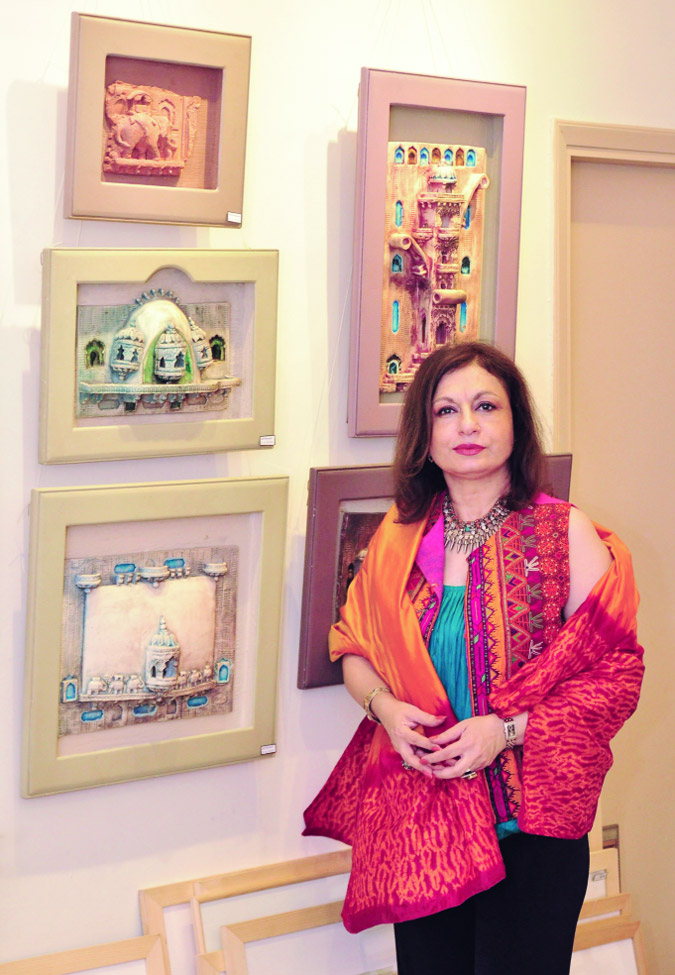
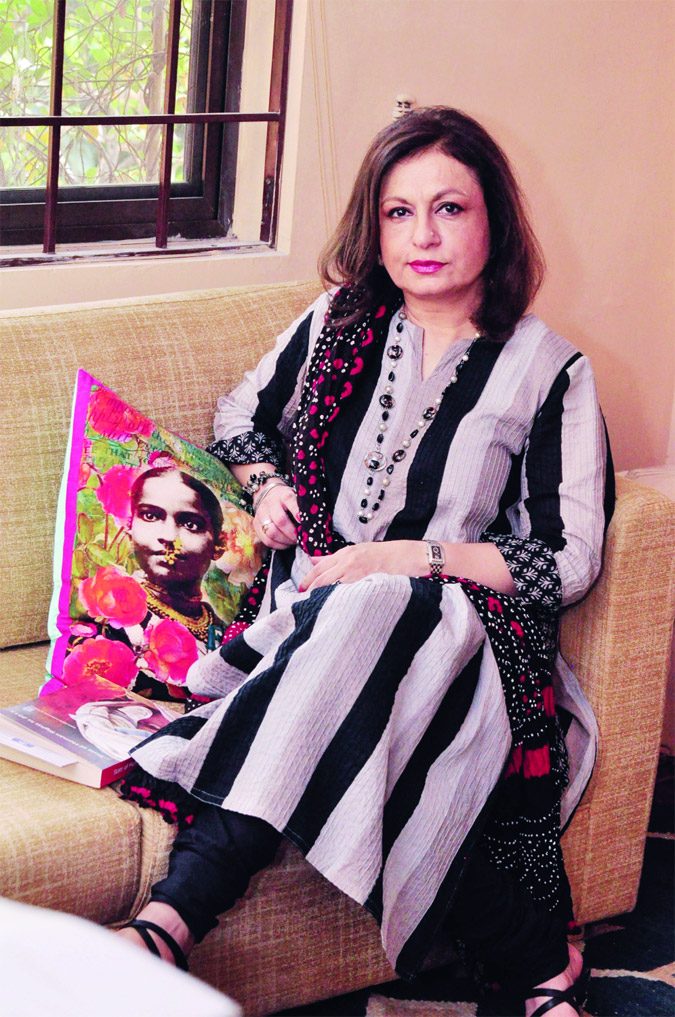
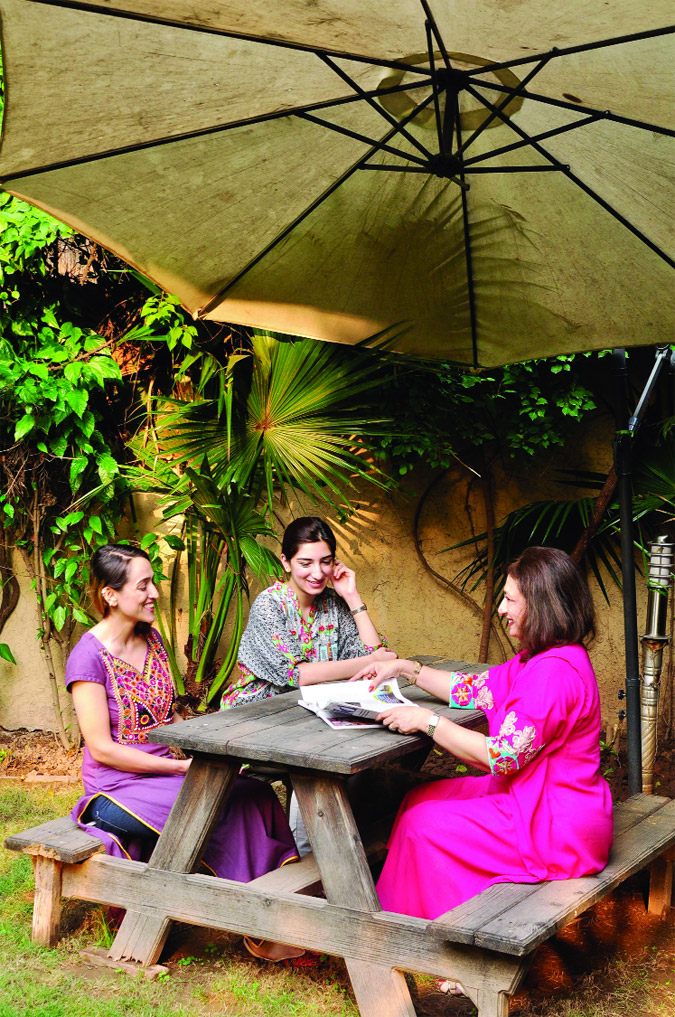
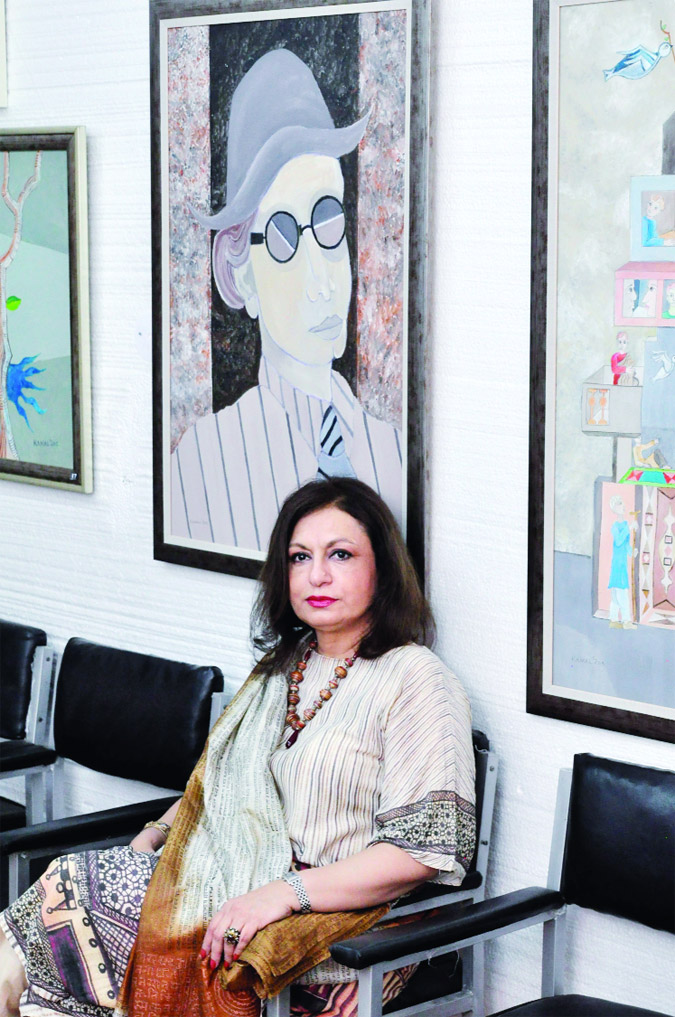
It’s true that it takes an artist to make one. The founder of Nomad Art and Cultural Centre in Islamabad, Nagin Hayat, is an artist first and then an ardent crusader for the arts and crafts. And Nagin’s outlook is visionary. Nomad has become a major hub of creative and cultural cross-pollination in Islamabad and boasts creative partners from all four provinces. Fearfully articulate and enterprising, talking to Nagin is a thoroughly engaging experience. She was a founding member of the Islamabad chapter of the Women’s Action Forum, as well as the brains behind the small art and design consultancy called Nagin Hayat and Associates. She worked on integration with villages and their communities years ago, in 1984, when social entrepreneurship was relatively unknown.
“When people walk into Nomad, everybody gets treated as a visitor or a guest. We don’t have what we call buyers, because we look at Nomad as a larger cultural space,†says Nagin. Half the work done by the small team at Nomad is voluntary and community based. The times I have visited Nomad, it’s always bustling with people and creative activity of some kind or the other. The café is laid back, the type of place where you can converse and discuss art (the food too is light, similar to the fare of a tea house). Vocational training is provided through Nomad’s program called Art for Social Change, Peace and Activism. The subjects range from organic paper-making to graphics and media. “The outreach,†Nagin tells me, “is great because we do a lot of work through other organizations.â€
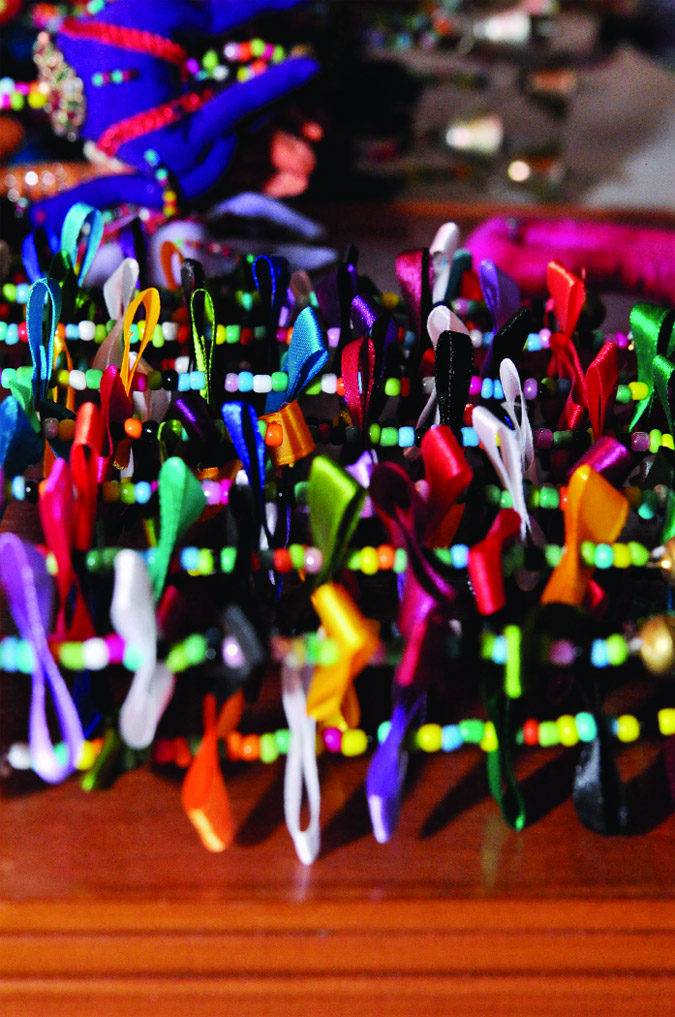
The good news: all of this comes back to us as colorful and delightful indigenous craft pieces
The training programs at Nomad have a domino effect on teaching and outreach. Working with different profiles of workers and communities, Nagin creates specific outreach programs for women and the villages they come from. Such programs bring back up on their feet those home-based workers who have been through trauma, abuse or are barred from leaving the home. The good news: all of this comes back to us as colorful and delightful indigenous craft pieces.
“It’s very difficult to choose a favorite amongst the crafts,†she replies when asked which her favourite is. Not only is Nagin an avid painter and photographer herself, she also guides and critiques many artists who have been coming to her over the years. “To me, an artist is any person who has a creative side,†says Nagin. A lot of contemporary art spaces have sprung up in Lahore, Karachi, and Islamabad, and they automatically provide the kind of creative and nurturing environment that she thinks can only be positive. “With an artist, irrespective of art education, I think it’s the end result that matters,†says Nagin. “As long as they get a good critique and guidance, and places where they can exhibit their work, they can get a response and a reward. That’s what matters.â€
Nagin acknowledges the presence of commercial art and commends the skill of those who create and market such artworks. At Nomad, you’ll see more abstract, expressionist, symbolic work. “I find that more exciting†says Nagin. “And it’s got to excite me to be here.†Nagin and I both agree that art snobs need to realize that art is not always for art’s sake, especially in a country like Pakistan. “You and I may like that idea, it’s very romantic,†says Nagin, “but everybody would like to get a little paycheck if they’ve invested something.†It’s true. Successful Pakistani artists like Shazia Sikander and Rashid Rana have made a name for themselves, and helped expand the horizons for Pakistani artists. Christie’s and Sotheby’s too have now picked up Pakistani art along with the Dubai, Miami and Basel art fairs.

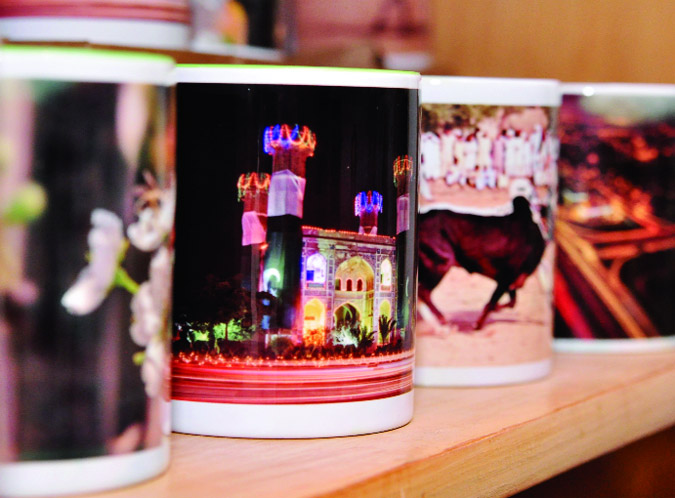

Nomad has been running film festivals with Amnesty International and has only recently held the first Nomad Media Film Fair for young Pakistani filmmakers
In Pakistan, the media — TV, especially — is a very important tool with there being more than a hundred channels. â€Forget the public sector,†says Nagin, “Just look at what the scripts and drama serials say about women or how they reflect our society. Sometimes it’s as bad as the texts and the curriculums and the history which has been distorted.†The media industry desperately needs a dose of progressive education. Nomad has been running film festivals with Amnesty International, Vancouver and has only recently held the first Nomad Media Film Fair for young Pakistani filmmakers.
Up at Nomad these days is a major show by Nahid Raza and Sumera Jawed called Counter Narrative, Redefining feminism. In a country like ours, exploding the stereotypes associated with feminism becomes crucial. “Even most women don’t understand it,†says Nagin. “They believe you’ve got to be a bra-burning feminist lesbian to get accepted as a feminist. This is not true.â€Â As with most of us, Nagin feels pain and sadness at the diminishing pluralism in Pakistani society. But everyday she persists in her work and the fight to make this country a more tolerant, diverse place. “You must be empathetic and go out there and treat others with kindness,†she says. “I don’t see too much of that around and this is sad, because we lose so much.â€


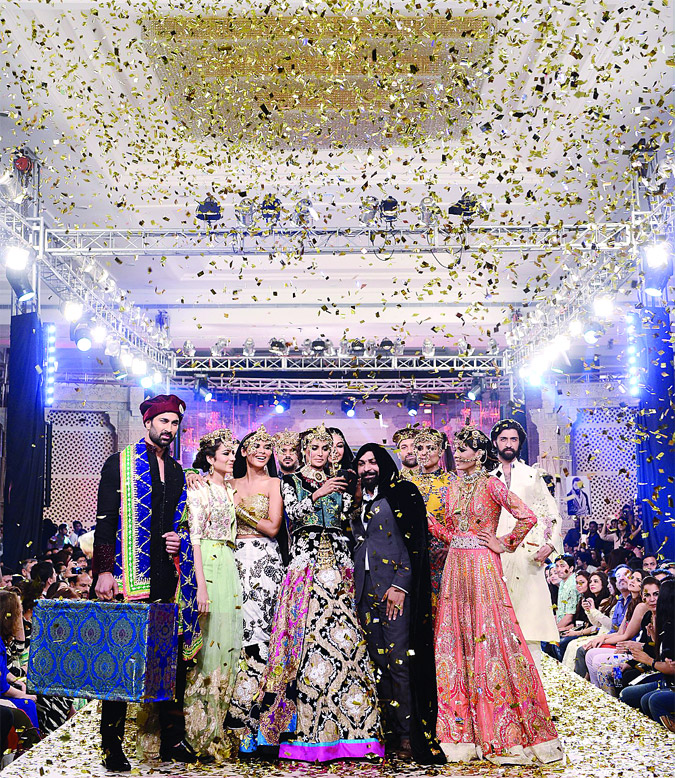
The Lotus Raj collection was well thought-out this bridal season. From milad to walima, the range covered everything. More than 35 dresses were showcased at the finale of day one by Karma Red. We saw lots of vibrant, fresh and bold colours. Intricate dabka, gota, sequins, jamdani, resham, stones and beads were used on kimkhawab, silk, chiffon, net, jamawar and organza fabric. Rose pink, Russian red, jonquil and Mikado yellow, plum, dark spring green and teal blue were used. Trousers, jumpsuits, ghararas, lehngas, cholis, sarees and gowns were complimented by net embellished dupattas. Loved the way kids walked the ramp as flower girls.

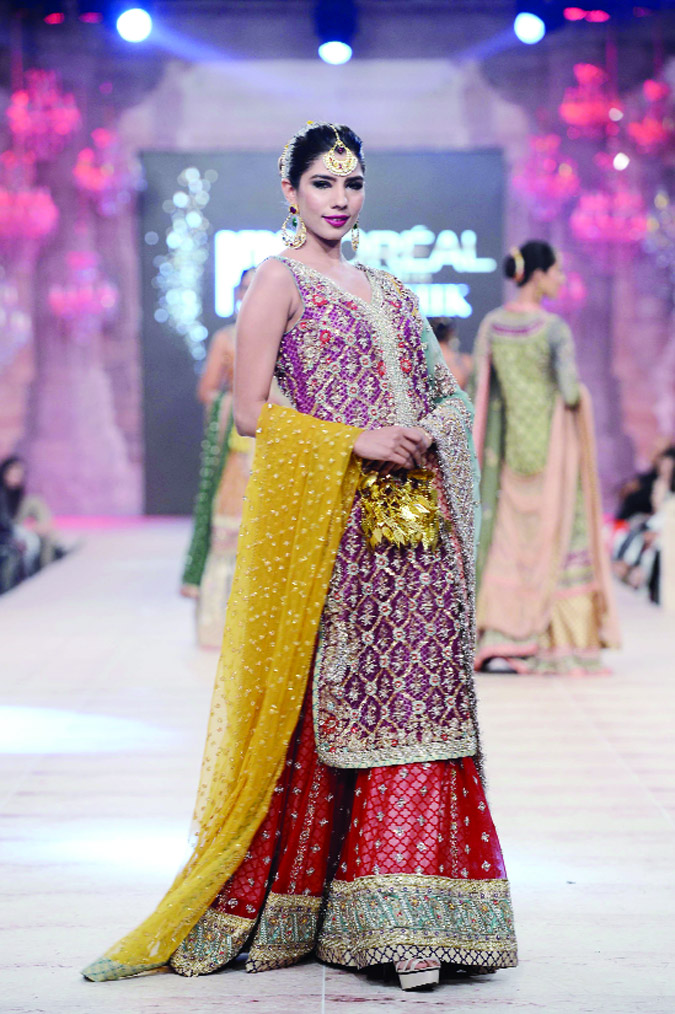
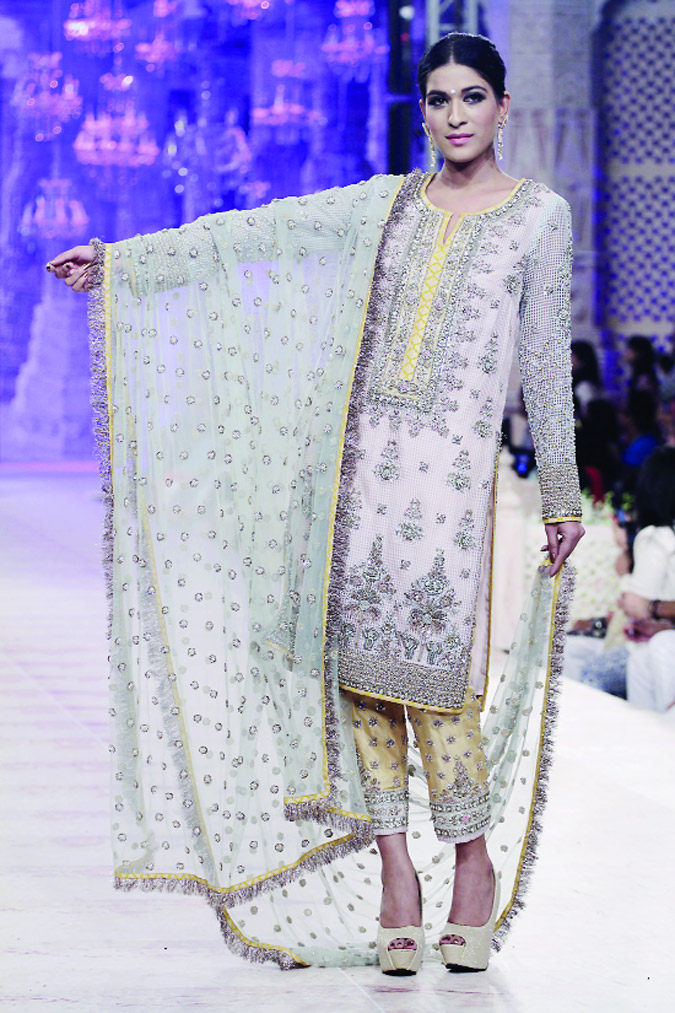
The white outfits that opened the show set the tone for a down-to-business bridal collection. Free from excessively busy print or embellishment, Nida Azwer’s collection uses diamante bling sparingly in simple geometries. The outfits are different shades of the sea, greens, blues and teals and the mermaid fitted lehngas work perfectly with the colors. Their signature cutouts made appearances throughout the collection. Good stuff.


Nickie Nina continue their romance with boho chic glamour. Coatis and starkly contrasting colours set this collection apart as being confident and edgy. Innovating a new take on the sari by combining it with a sheer floor length jacket is a first see. A collection with something for everyone, be it the bride herself or just a distant cousin!


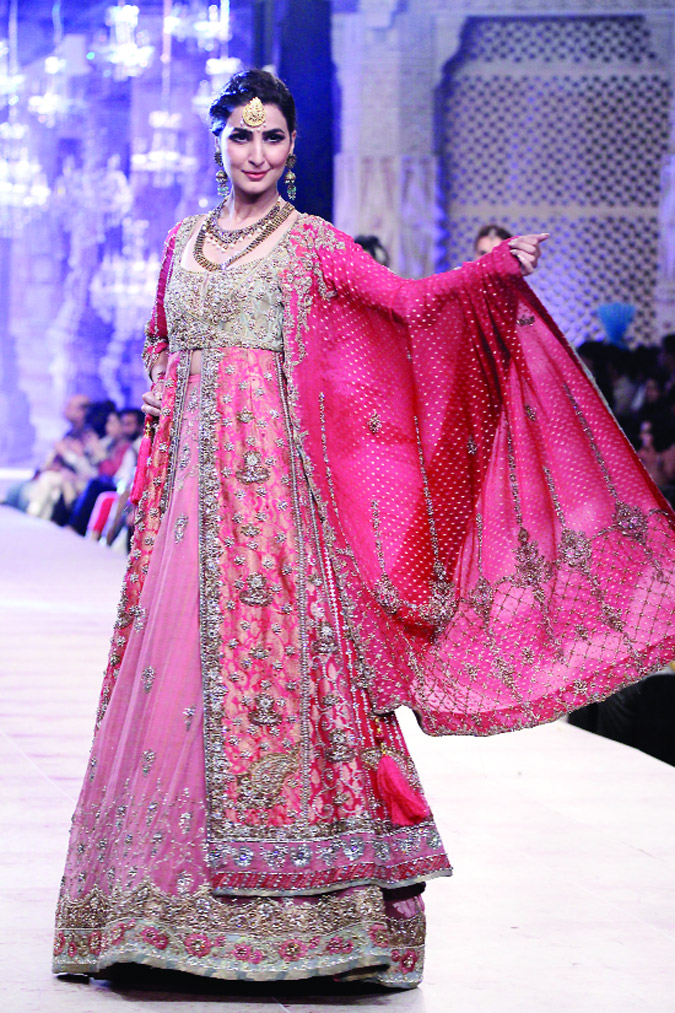
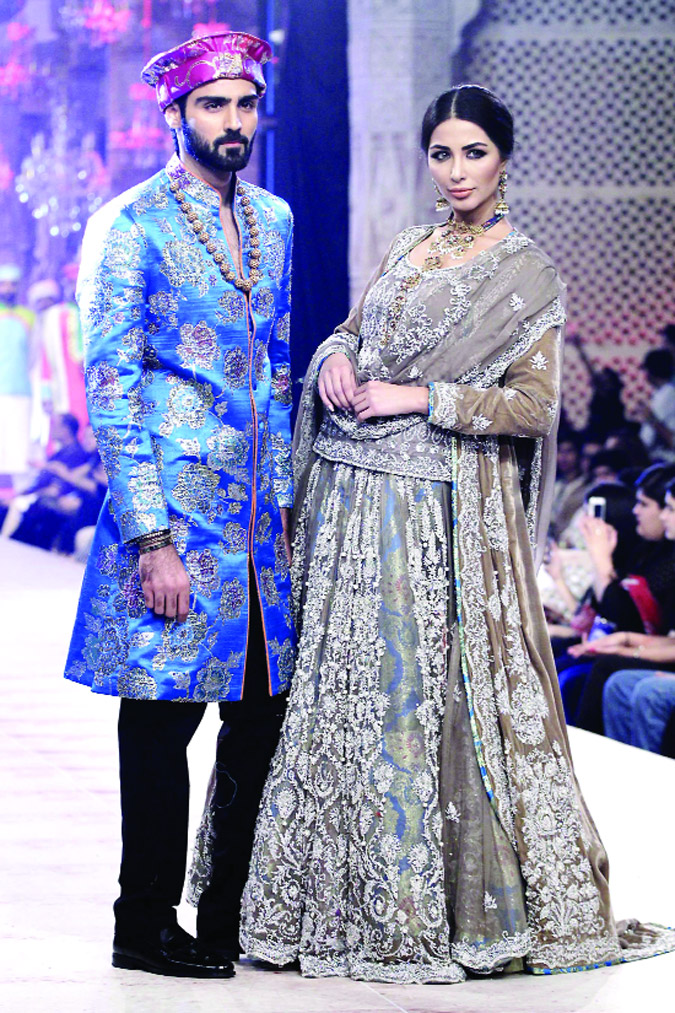
Fahad’s show started with Wahab Shah and Fahad’s muse Nooray Bhatti taking center stage and putting on a dance performance for the audience. His collection was called “Putlighar” and the models were inspired by dolls from Thatta. Fahad’s fur jackets were a huge hit on the ramp. His silhouettes and cuts included long flared dresses, half-sarees, shararas, and kameezes ranging in length from short to long. Each model’s outfit was brought to life by a unique headpiece. Hussayn’s collection is the perfect combination of the traditional Pakistani bride with a touch of modernity. Though there was a lack of menswear (with only one sherwani worn by Vikar Ali Khan), his collection was very definitely one of the strongest showcased on the second day of the PLBW this year.


Ali Xeeshan’s “Baghawat” was a response to perceived ideas about beauty. It was inspired by a mix of ancient Roman civilisation, warriors and the idea of defiance. Ali’s colour palette ranged from bright neons to pastels. As the models walked onto the ramp in signature Ali Xeeshan pieces, we saw the ramp painted in vibrant shades of orange, green and blue. The designer’s unconventional use of neon colours for a bridal collection gave him an edge over the others. The cuts and silhouettes ranged from short hemmed dresses to flared lenghas paired with cholis along with sherwanis and kurta shalwars for men. It seems that Ali worked especially hard on the jewellery. Each outfit was complimented with bold headpieces that made a statement on the runway. The collection consisted of his signature gota work along with textured fabrics. One can always trust Ali’s collections to have a wonderful performative element. Every thing, from the dramatic Ram Leela music to the stuffed peacocks carried by the male models and unique choreography was right on point.




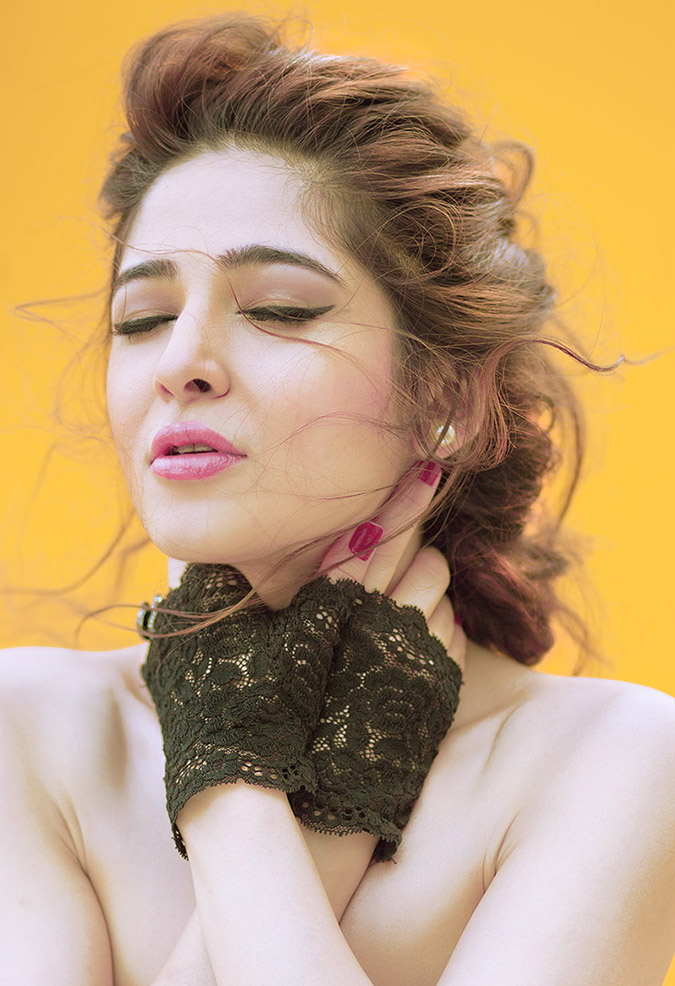
Saba Ahmed talks to Ayesha Omar about her film debut
It’s always a pleasure to meet Ayesha Omar, as much as it is to watch her on screen. Her down-to-earth candor and easiness catches one, both in real life and on TV where she is best known as Khoobsurat in the super hit comedy “Bulbulay.†From seeing her gorgeous artwork hung up front and center in the principal’s office at the Lahore Grammar School, and now chatting with her about her latest project, film “Yalghaar,†I’ve seen Ayesha traverse every kind of artistic landscape: cooking shows, a recorded album, stage plays, musicals and now a movie.
These days, she finds herself switching from her glamorous self from the likes of “Dolly Ki Ayegi Baraat†for a somber role in “Yalghaar.†The most expensive film yet to be made in Pakistan—I know we’ve heard that before, but all reports confirm this is true!—“Yalghaar†is not dissimilar in subject matter to “Waar.†It’s based on the true events that took place around the Pakistan army’s military operation in Swat. It’s also got a stellar cast: Shaan, Humayun Saeed, Adnan Siddiqui, to name a few industry heavyweights, alongside newcomers Aleeze Nasser and Sana Bucha. “My first spell of shooting has been very intense,†says Ayesha who found herself in a system of caves constructed on set in Karachi. The set was so realistic, Ayesha tells me, that even the bats began to call it home! “Without revealing too much, I’ll just say that it was not all fun and games. It was hardcore, very dingy and dirty but that’s the environment we wanted.†So for six grueling days of shooting, she left herself go and would only experience luxury and comfort when she returned home to her bed. It’s hard for our actors to shake off their inhibitions while acting, certainly Pakistani girls who are expected to look and act a certain way. “We’ve grown up with this kind of conditioning,†Ayesha tells me, “And I had to break away from all that for the film and really had to stop caring about how I looked. Let’s hope it works!â€


Ayesha tells me candidly that she got cold feet while shooting for the film, the kind one may get on the day of their wedding. “I felt like I would not be able to come up to the expectations of the director, [Hasan Waqas Rana], but the director had so much faith.†Ayesha was fortunate enough to have been offered the film alongside her friend and filmmaker Bilal Ashraf. He has been an objective and harsh enough critic on set to satisfy Ayesha’s perfectionist streak. “The film team is like a family now,†says Ayesha. “We have a WhatsApp group, we’re sharing ideas and we’re constantly in touch. The supporting crew as well, like the wardrobe assistants and the DOP’s are all young and energetic people who are new to the industry and full of fresh ideas.â€
For any actor, the big screen is the ultimate place where you get to make an impact. “I never thought I’d ever get into films. Especially the kind of local films that we grew up with!†says Ayesha. But with the revamping of Pakistani cinema, there are all sorts of people joining the industry armed with creativity, new ideas and new technologies. “We don’t know where cinema is headed and we don’t have an identity yet, so everyone is experimenting with what will work,†says Ayesha for whom this is a real change from her known and loved screen identity as Khoobsurat on “Bulbulay.†Laughing, she says, “Most people now choose to call me Khoobsurat instead of my real name, even people who I’ve known all my life!â€



The golden era of PTV, an era of calm rehearsals before the shoot, no longer exists in the drama industry. The few directors who go the extra mile are richly rewarded for their efforts. Ayesha has immense respect for Hina Dilpazeer, an actor who seems to have perfected the juggling act of building depth into her many TV characters. According to Ayesha, who is a co-star and also a fan, “She is the coolest person I have worked with, a real institution. I learn from her every day, I share everything with her. We’ve been working together for years and when we’re working, we don’t even need to talk to each other to know what we’re going through.â€
Hair & Makeup: Ayesha Omar
Photo Courtesy: Abdullah Haris