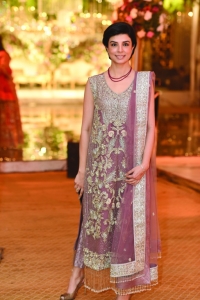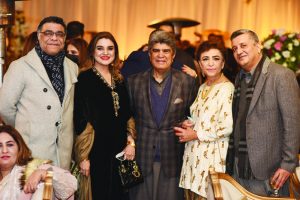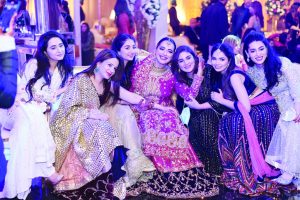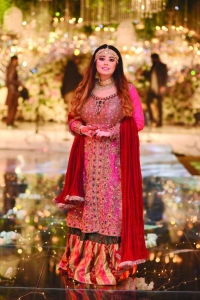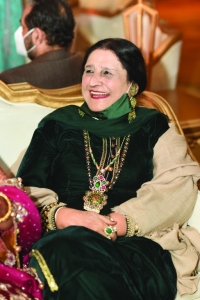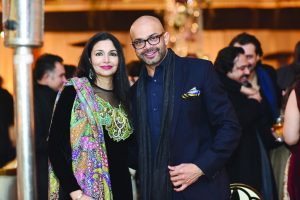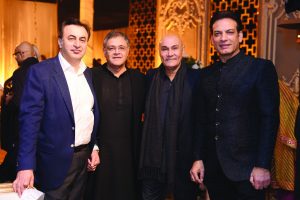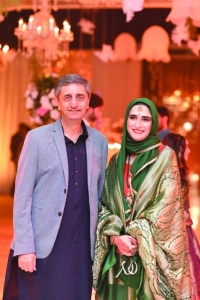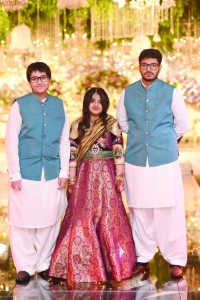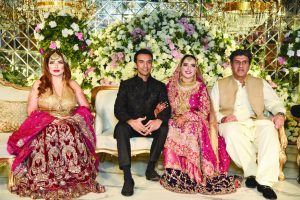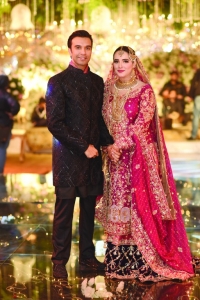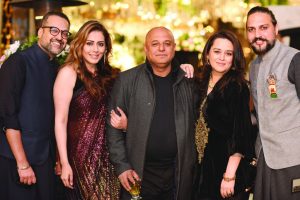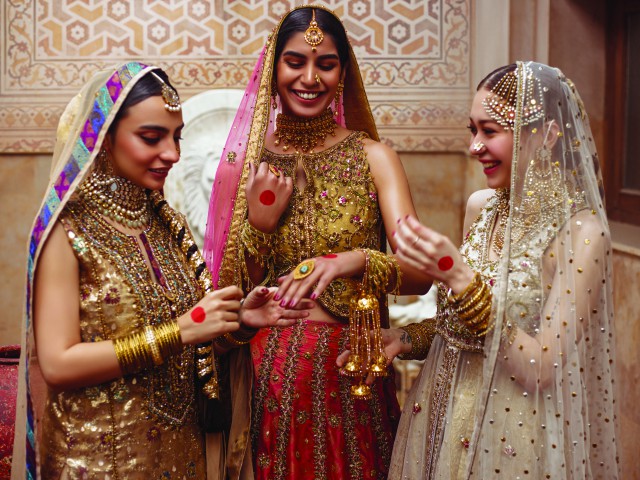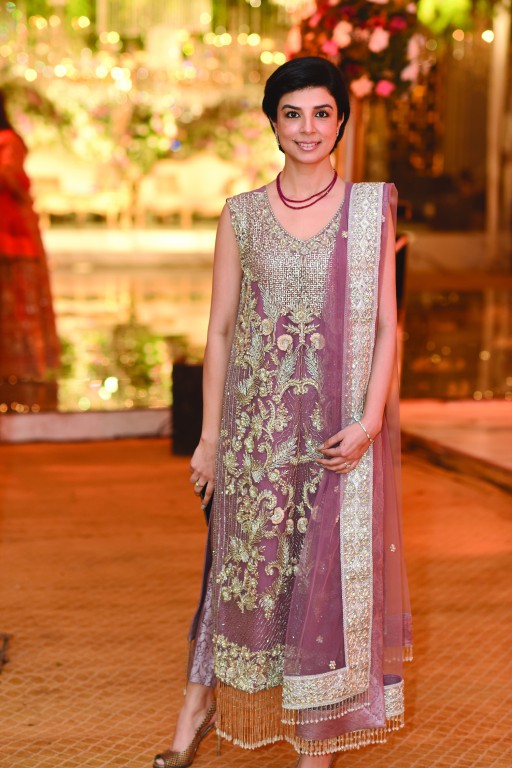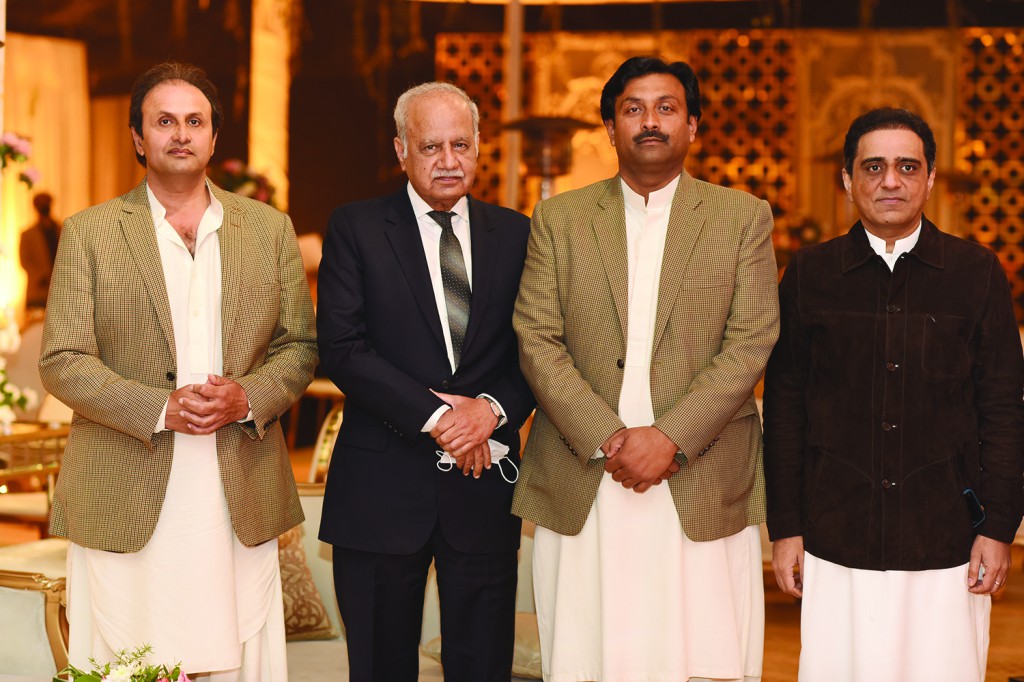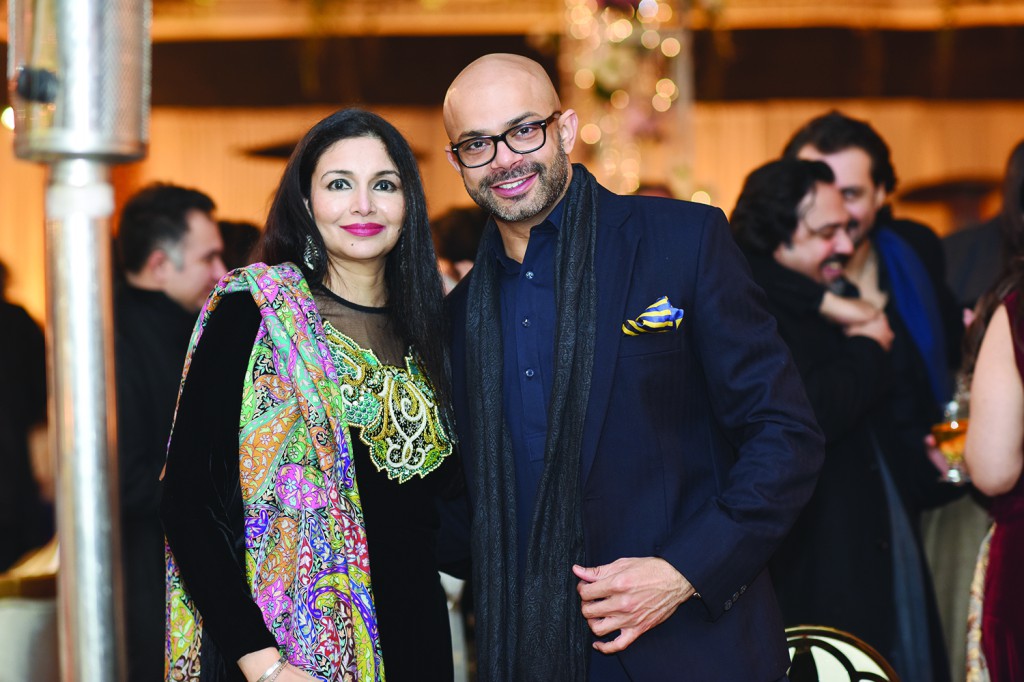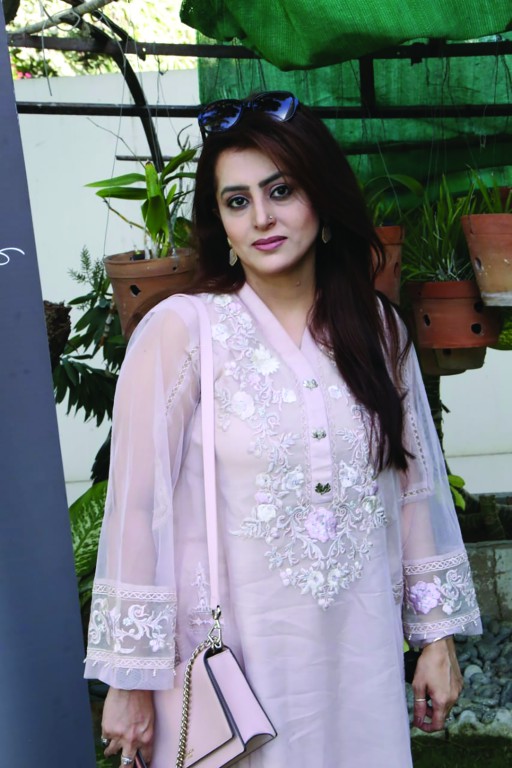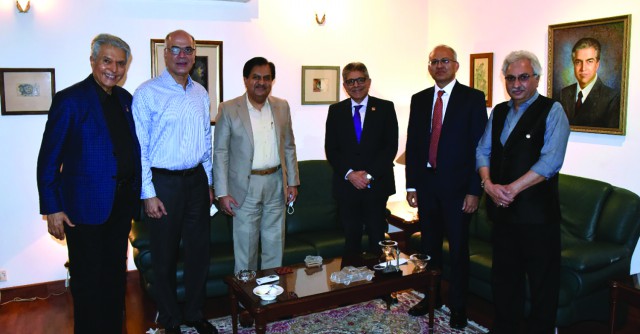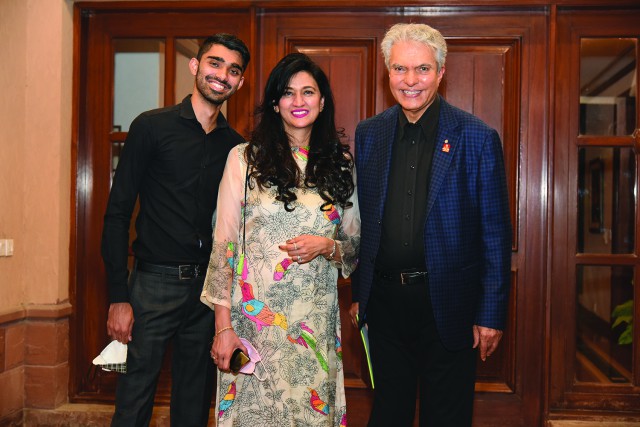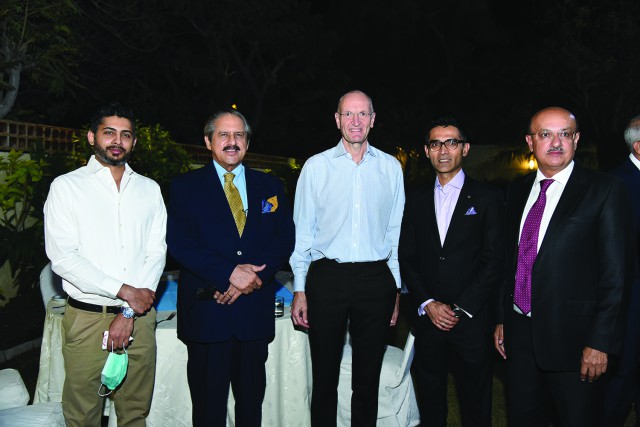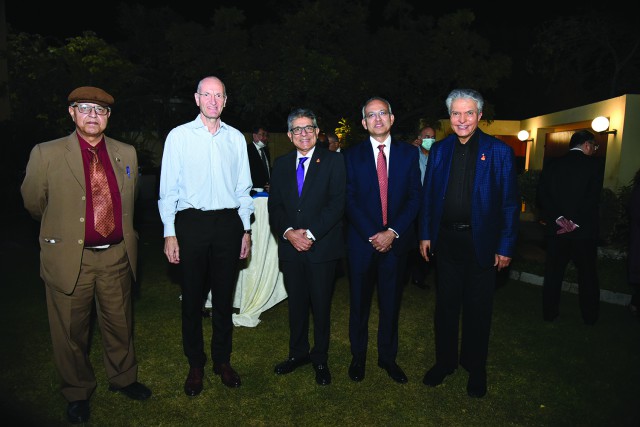

Asim and Humera Malik celebrated the wedding of their daughter Rameesha with Hamza earlier this year. Family and friends joined in the celebrations.

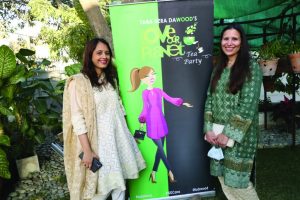
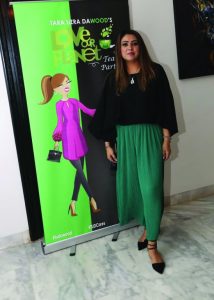
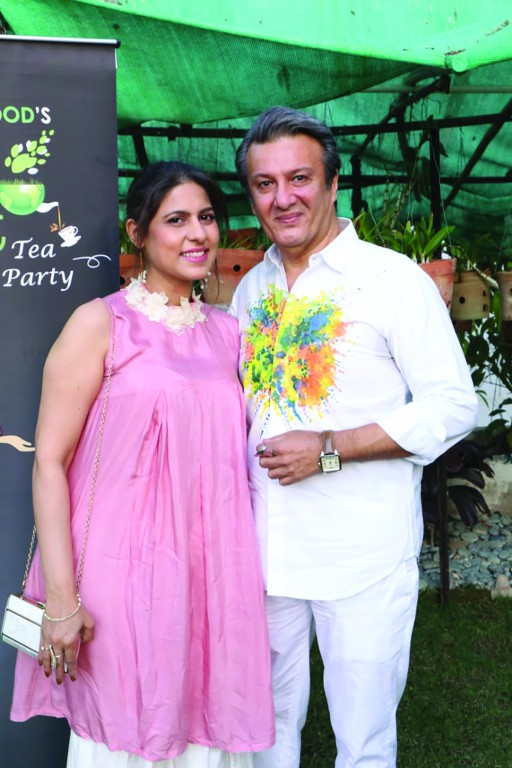
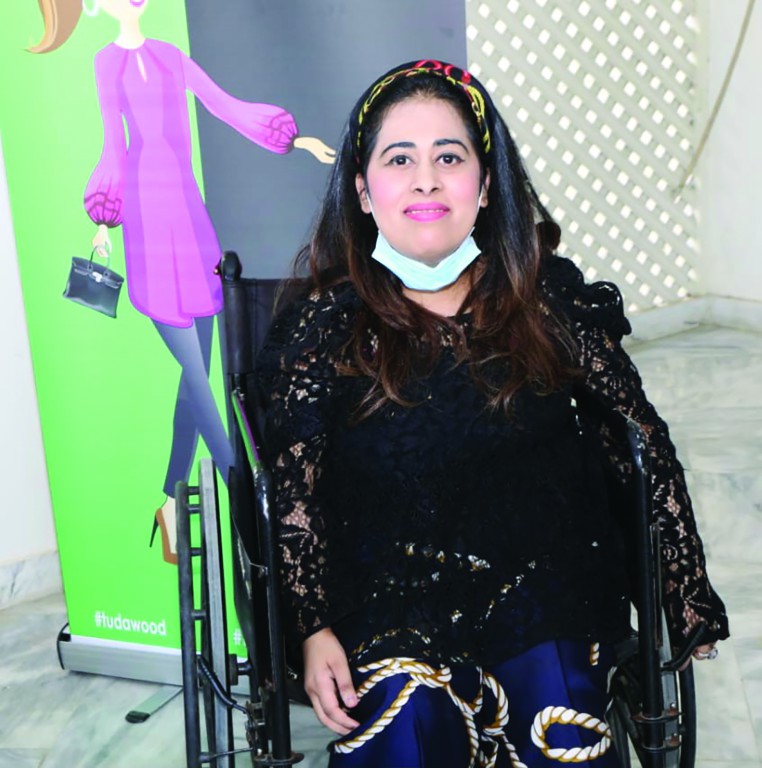
Tara Uzra Dawood held an eco-friendly “Love Your Planet†themed garden tea party for her birthday. Each guest received a neem tree as
an appreciation gift.

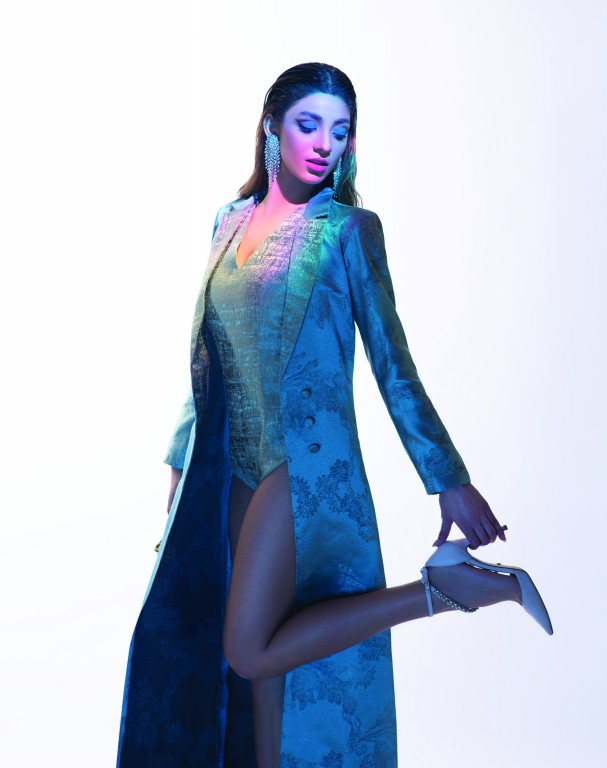
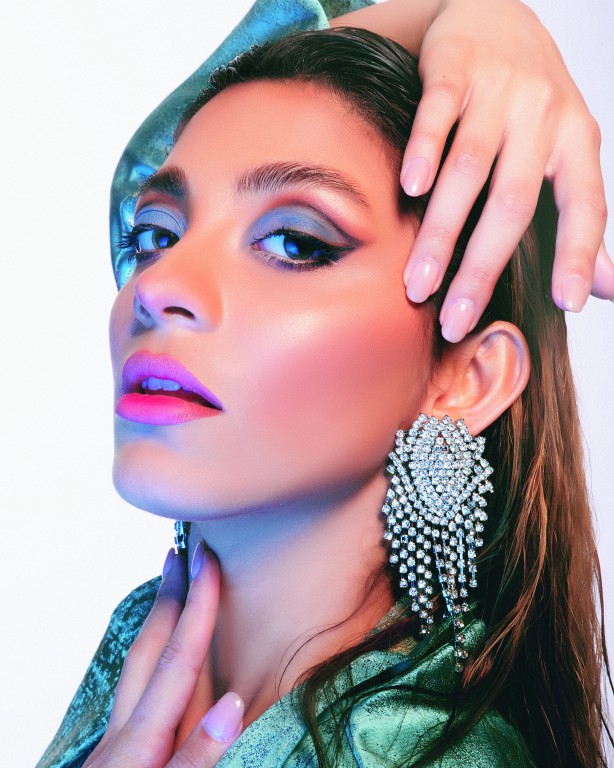
Spotlighting new talent has always been at the forefront of GT’s mission and this fortnight we bring you Natalia Castillo—a rising star in the fashion industry. Styled in Lajwanti by Zahra Sarfraz and captured by the lens of Asad Bin Javed, she proves in this editorial why she is here to stay.

What inspired you to take up modelling professionally?
I’ve always loved being in front of the camera, but modelling wasn’t something I had ever planned on taking on professionally. Friends would always ask me to model for things in the past, because I’m quite tall and then when I came back to Lahore six months ago, things surprisingly took off quite quickly. I realised I could make a serious career out of it. Honestly, days on set barely feel like work, so I figured I found my calling.

What do you feel are your strengths and weaknesses as a model?
I would say my strengths are definitely with editorial style posing; I love contorting myself into new shapes and seeing the results on camera. Weaknesses would probably be my 41 shoe size, because I never fit into sample size shoes.

Biggest career high so far?
This right here, right now-my very first magazine cover!

Do you have a fitness and beauty regimen?
I box fairly regularly, but sometimes it’s hard to find time if I’m shooting back to back. However, I’ve boxed for years and just really enjoy hitting things. As for a beauty regimen, not really. I’ll take my makeup off with coconut oil at the end of a day and then just use face wash and call it a night. I’ve been blessed with skin that doesn’t give me any issues. Oh and I always use sunscreen in the day!
How would you describe your personal style?
That’s a difficult one, as some days I feel very colourful and feminine; on other days I’ll just be in all black or sweats. But one thing is for sure, I love crop tops. I don’t even think I own a shirt that covers my midriff all the way.
What do you consider the toughest aspect of your job and how do you overcome it?
5am call times and shoots that go on for 15-16 hours. Waking up is hard for me, even if I’ve gotten a full 8 hours, so I’d say that’s definitely the toughest part. Not letting how exhausted you are show up on camera can be very challenging at times.

Where do you hope to see yourself in the next five years?
On the cover of Vogue.

Describe your dream project.
My dream project would be working for a brand that flies me out to somewhere tropical and also gives me some creative freedom with my posing.


Photography: Asad Bin Javed
Muse: Natalia Castillo
MUA: Imran
Styling: Zahra Sarfraz
Wardrobe: Lajwanti
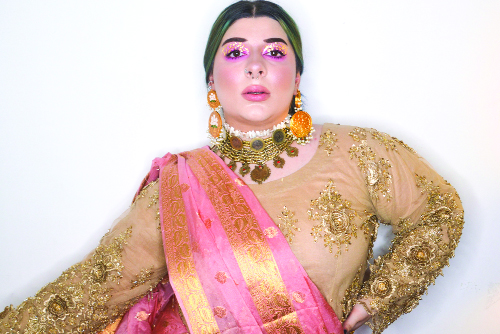
There’s a high chance that your Instagram feed was recently filled up with women in saris. No, it wasn’t coincidence. It was the result of a viral video, online trolls and a campaign to champion sisterhood and body positivity. The #sariforallsizes is a social media effort by three ladies that encourages women to proudly wear saris, especially if they’ve been previously judged or bullied for doing so. The sari garment is a staple in South Asian women’s wardrobes and has a history that can be traced back to the roots of our civilisation on this Subcontinent. Yet, society continues to ridicule women who don’t fit the mould of a ‘perfect body’ if they choose to don this garb. Here, the women behind the campaign give us a brief look into why owning your sari with confidence is akin to a fashion revolution. Sabah Bano Malik (RJ and journalist) speaks about the start of the campaign, online trolls and her own relationship with her body; Baemisaal (artist and body positivity advocate) lays down a call to action, explaining fatphobia’s role in restricting women’s fashion choices; and Mina Malik-Hussain (writer and TV show host) comments on being part of the campaign.
May all of you who feel judged for wearing saris reclaim your confidence!

How did the #sariforallsizes campaign begin?
After I faced some backlash on a video I did for a fashion brand where I wore a sari, with some commenters saying a bigger body like mine did not belong in one, Mina Malik-Hussain reached out and invited me and Baemisaal to come talk on her show about bodies and body shaming. Naturally, we wore saris. It was then Baemisaal who brought up the idea of starting this hashtag to encourage more people to join in as an act of solidarity against the shaming I had been dealing with. Very badass of her.

A sari is generally a very versatile garment; why do you think it receives this much hate when put on different body types?
I think anybody with any body who exhibits confidence, especially if that body is outside of the parameters of what is seen as acceptable or attractive, generates hate. If we see where hate comes most from, it’s social media. There people usually photos of themselves when they feel confident about themselves. But if you have fat rolls or dark skin or you’re flat-chested, and continue to exude confidence, it’s a siren call for bullies who want to tear you down. Bullies and trolls feel encouraged to do this because of mainstream media, widespread fatphobia, diet culture, and in particular Pakistani culture (could go so far as to say sub-continental), where bigger bodies are viewed almost as vulgar. Larger bodies mean larger hips, larger breasts, and therefore hypersexualised and villainised. People want you to put it all away.

Why do you choose to engage with online trolls, rather than look the other way?
I have been fat my entire life, so I have built a level of confidence around dealing with such commentary, but I know a lot of people, if not majority of people, who have not. I believe people who comment hatefully on the internet need to be called out and answer for what they said, they need to explain themselves and what I have found in my time engaging with them with pure curiosity and in some cases sympathy (though I won’t lie it can be a performance on my end) is they cannot handle it; they end up getting defensive or taking back what they said themselves. They don’t expect someone to stand up for themselves. I personally find these people sort of sad and pathetic. Truthfully, if what makes you feel powerful is to diminish a person’s light then you’re not someone whom I could ever respect let alone whose opinion should hold value. My hope is that women, even young kids or teens, reading my comments back or watching my instastory take downs may feel a little less alone. Or they understand the points I’m making hold value. At least I hope that happens.
 What has been the impact of this campaign?
I have gotten the chance to speak to so many women about their experiences with hearing awful things about their body from the people meant to love and nurture them, from their partners, from the world, and commiserate, laugh together and also make steps towards forgiving ourselves for letting this stuff get to us and finding ways to cope for when it comes next. Also for almost two weeks Twitter and IG feed for me was filled with gorgeous, beaming, glorious women just enjoying feeling good about their bodies and about their choice to rock a sari and I loved that.

 Do you think brands are veering towards genuine diversity or is it still surface?
I think some brands are definitely trying, but there is a very long way to go. We need to start thinking about how our fashion brands can build a relationship with customers by having their customers reflected in their imagery. That means more than one plus-sized model or one dark-skinned model here and there, but a constant evolution of their campaigns when it comes to inclusion and diversity in casting.
A while ago Sabah Bano Malik did a digital collaboration with a brand on styling a sari for them. In her viral video, she was praised by many, but also scrutinised for owning and flaunting her beautiful body and style. Later we went on to Mina’s show “The Coffee Table” to talk about Bigger Bodies, Fat Shaming and Fat discourse, while wearing saris together in solidarity for Sabah’s video, simultaneously supporting the fact that bigger bodies should not be excluded in any part of society, in this case: fashion.

The sari then, since Sabah wore it, represented something more to us, which was a barrier given to us and many other bigger women especially growing up. We were shamed constantly for wearing them or even wanting to wear them and we still are.
I’ve been shamed for wearing a sari since forever. I used to see my aunts and mom wear them (they’re all straight sized, considered “slender-medium”). I didn’t fit the category and so was always made to feel bad for my rolls, tummy, chest, arms, legs, hips, etc.

This is when we decided that no more. No matter what you look like, whether you’re short, tall, fat, slim, differently abled, dark or whatever other flaw you perceive in yourself, you deserve to feel powerful and strong.
So join us and support other women. Motivate them to feel good rather than tearing them down.
No more exclusion! Here’s to #sarisforallsizes
I am so proud to wear a sari. I look beautiful. My stomach looks beautiful. My arms look beautiful. I never see women like me flaunting themselves here but thanks to #SarisForAllSizes, I saw so many of my sisters far and wide embrace themselves. And my God I can’t wait to see the rest of you in your saris.

A sari to me is a woman’s defiance and a woman’s ownership of her body. One can be modest, or flaunt it. It’s up to them. And NO woman should be broken down or made to feel guilt or shame for what she looks like and how she chooses to use what she has. This is not a place of hate.

I will no longer worry about whether I look older than my age, or that my stomach hangs out or my chin or back don’t fit the mold you’ve created so horribly for me to fit in. I refuse.
To all my sisters and brothers who wear saris, this is for you and only you. I love you. You look phenomenal and so powerful.

Protect each other. Protect yourselves and please be kind (unless someone’s begging you to unleash your beast, in which case, let ’em have it!). Do not rain on other people’s parade if they’re not hurting you. Let people be.

“As a woman who doesn’t have a perceptibly bigger body, I’m also not the size many brands cater to either, which is frustrating and baffling. I’ve been body-shamed, although in no way comparable with the sustained criticism and judgement my bigger-bodied friends have endured. I see my role in this wonderful hashtag (and one day, movement?) as one of an ally, and I hope to support and amplify the brilliant, courageous work my queens are doing in whichever way they want or need.â€

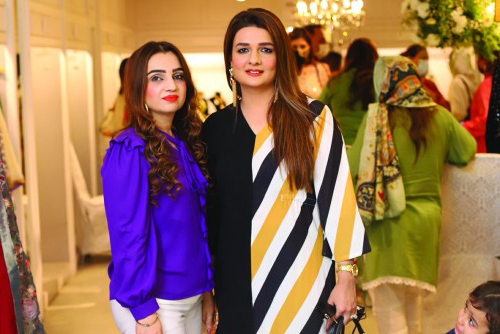
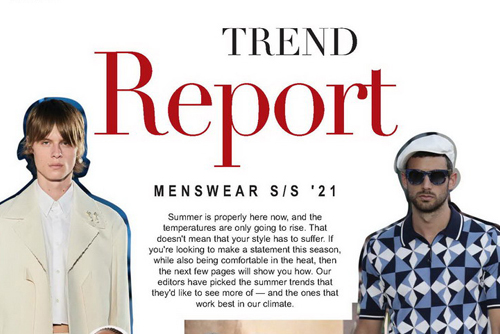
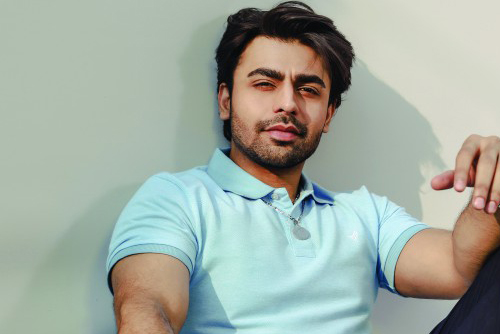
Farhan Saeed stole hearts with his singing and then through some memorable roles on television. This fortnight he chats with Mehek Raza Rizvi about his upcoming projects, fame, family and more

You’ve won over your fans both as a singer and an actor, but what would you say is closer to your heart?Â
To me being a singer and an actor are both essential forms of entertainment. At the bottom of my heart, I’m an entertainer in every way. Singing is my passion and acting is my craft, so choosing between the two isn’t an option for me. Each of these is a medium of art that I use to express the passion and emotions in me. Through my work I try to connect to my fans on a level that is far deeper. Whether it’s a live performance or an acting project, I believe I take each up in a way that reflects my creativity and dedication. Singing and acting are equally close to me because I tend to put my heart in each of them.

We’re anxiously awaiting the release of ‘Tich Button’. Tell us a little about your role and the equation all co-stars had on set.
‘Tich Button’ is entertainment for the entire family, as it captures the essence of a lively Punjabi-centric household. However, at this point I can’t reveal much about my role. What I can say is that through it we aim to give the audience a full impact of emotions, from some action-packed drama to sweet romance.
Connecting with all my co-actors on set was a great experience. Working with Iman Ali, Feroze Khan and Sonya Hussyn was very refreshing as our chemistry on set coincided in the best way possible. Furthermore, there are many well-known senior actors in it that I finally got the opportunity to work with. I firmly believe that this was one of the main reasons that ‘Tich Button’ was such a joy to work on. The amount of wisdom and support they showed us on set actually guided us through the entire process of making the film.
To sum it up, it’s a labour of our love and hard work. I really hope that people will enjoy watching it as much as we relished making it.Â

You’ve worked with Qasim Ali Mureed in the past and he’s a close friend of yours. How different was this project from the others?
Qasim and I have worked together on numerous singing and acting projects over the years. Working with someone who knows you well both in front of the camera and behind it is gratifying in its own way. I strongly feel that it’s much easier to work on the craft of a character smoothly when two minds think alike. The best part about working with him is that he’s familiar with my strengths and weaknesses and understands me well.

Now that ‘Prem Gali’ has ended, are there any new drama serials in the pipeline?
Yes, I do have a couple of new projects lined up that I’m currently working on. One of them is a web series that we’re shooting these days and I also have some new songs in the works that’re going to come your way real soon.

Both your parents are doctors; what inspired you to pursue a career in music and acting?Â
I truly believe that music was (and is) my destiny. Despite belonging to a background of doctors, music always held significant value in my life. It’s been an integral part of our household since I was quite young. I remember my entire family would sit together and enjoy jamming sessions on our favourite melodies. Seeing the true calling in me, my father told me that I just needed to be sincere to whatever I chose to do and do justice to it. Here I am today, doing something that’s very close to my heart and I hope I’ve done justice to it so far.

Out of all the characters you’ve portrayed, which one do you think is closest to your personality and how?Â
Every character that I do more or less has some shades of me. I feel whenever you choose to do a character, there’s always a part of yourself that reflects in it. This is the main reason that attracts you to a particular role. Be it my character in ‘Udaari’ or ‘Suno Chanda’, each of them has a sense of being quintessentially me. Each character is special to me and I try to infuse what I am into every one of them. If I really have to choose, then maybe the closest character twould be Arsal from ‘Suno Chanda’.

Before saying yes to a script or character, how mindful are you of the impact it will have on your audience?Â
I always try to analyse all the connotations that my characters are going to project onto the audiences. Whether it’s a light-hearted character or a headstrong one, I ensure that I give thought to how the audience, and especially my fans, will interpret it. It’s quite important to me that whatever character I choose delivers a message for people to learn from.

What would you say have been your biggest learnings as a public figure so far?Â
One of my biggest learnings from this profession has been that gratitude is the right attitude. I’ve also learnt that as long as you’re patient and strive to work hard, things work out just fine. Being thankful to God, your friends, family and fans in all circumstances is the only way that you can move forward; many doors open if you’re true to yourself. However, I also feel that being a public figure in today’s day and age is not at all easy. With the social media era, the level of negativity has somewhat amplified to a point that it’s hard to stay focused and persistent.

You’ve spoken about memories from your childhood. Tell us more about those years.
Well I’ve been lucky enough to experience a childhood that has to be one of the best, with a constant balance of family gatherings, cousins, musical evenings, festivities and cricket. I truly lived every moment of it with my loved ones. We were blessed to have parents that supported us in every way. If I could sum up my childhood in one word, then that would have to be: beautiful.

What is Farhan Saeed like at home?Â
A mix of everything: I’m an artist, a musician, an actor, a dancer, and anything else that I want to be when I’m at home. I believe I’m a simple man and mostly enjoy my time with my family, close friends and some good food. On the whole, a little ordinary and a little fun-that’s what Farhan is at home.


Photography: Rehan Khan
Wardrobe: Fitted
HMU: Ateeq at Toni & Guy
Stylin: Arbaqan Changezi
Art Direction: Maha Rehan
PR: MINT PR and Image Consultancy


Ramazan Kareem greetings are soon to echo across the world as Muslim communities look forward to the spiritually rewarding month. Geo Entertainment has always welcomed Ramazan with programming that aims to educate as well as entertain its audience.
This year, Geo Entertainment promises to be different and much refreshing as we bring to you four new shows; Dikhawa: Season 2, KuruluÅŸ: Osman, Makafat Season 3, and Ishq Jalebi.


Our Ramazan specials will begin with the series Dikhawa: Season 2 which will premiere on the first day of Ramazan at 3:30 p.m. Dikhawa’s second season follows in the footsteps of the first series which highlights the social and religious repercussions of pretentiousness, showing-off, and posturing.
With this moral-based series, Geo Entertainment has joined hands with many popular faces and hopes to invoke a wholesome understanding of the principles of empathy and kindness.
Geo Entertainment also hopes to acquaint its audience with great insight into Muslim bravery and historic folktale with the Turkish TV series “Kuruluş: Osman†on its platform. Kuruluş: Osman will premiere on the first day of Ramazan at 4:30 p.m. and will be available for spectators in Urdu language.
The series KuruluÅŸ: Osman holds significance for its majestic storytelling about the establishment of the Ottoman Empire and how Osman goes on to follow the footsteps of his father Ertugral. It features the glory of the Muslim empire and the way it became one of the longest-reigning empires in the world.
Another short fiction series Makafat has also been renewed for a third season with a star-studded cast and phenomenal writers. Makafat: Season 3 will premiere daily at 7:00 p.m.
The third season of Makafat comes after constant success with earlier seasons which were conceptualized around the theme of makafat-e-amal and sought inspiration from the ‘what you reap is what you sow’ dictum about life.
Geo Entertainment brings a romantic family drama serial “Ishq Jalebi†which will also be launch on the first day of Ramazan at 9:00 p.m.
This drama serial arrives with a fresh take on family issues and many veteran actors including Qavi Khan, Wahaj Ali, Madiha Imam, Usama Khan, Mahmood Aslam, Hina Bayat, Kashif Mehmood, Irsa Ghazal, Noor Ul Hasan, and Humera Bano will be adding their charm to the fictional family reunion. Wahaj Ali and Madiha Imam are appearing as an onscreen couple as cousins Bela and Basim who realise their newfound love for each other.
While promoting the ideas of empathy, compassion and togetherness, Geo Entertainment decided to simplify this year’s Ramzan programming in compliance with PEMRA rules. Geo Entertainment has always hoped to influence its viewers with thought-provoking content and inspire them to be better, and do better.
Haleema Alam
Karachi: As new parents to a three-month old, I can’t tell you how grateful I am to social media and especially Facebook parenting communities. When Misha was born, her father and I had just moved from Karachi to Islamabad. As if the move wasn’t big enough, being thrust into motherhood without my own mom to guide me through it gave me full blown anxiety.
One night, after my husband put Misha to sleep, he came to sit by me. I lay my head down on his shoulder and started crying. I had spent the entire day with my baby wrapped across my belly while I cleaned our new space and unpacked our belongings. At some point while I was clearing this up, I felt warmth growing all across my body. I know I was feeling hot – but this was very strange. I went to my bathroom mirror to see what had happened and then I saw it. Misha’s diaper had leaked and I just couldn’t take it anymore; I was covered in baby pee and poo, I was surrounded by cartons and my baby was now wailing because she had become aware of the wetness. I looked at myself in the mirror, sat down on the bathroom floor and started bawling.
You see this wasn’t the first time Misha’s diaper had leaked. I have tried and tested three diaper brands since she was born – all of them leaked, most of them gave her rashes and none of them allowed for a full-night’s sleep – neither for Misha nor for her parents. We were so sure we were doing something wrong that we took Misha to the pediatrics where a nurse checked to see if we had the right size and had put the diaper on correctly or not. To our surprise, we had done everything right. The nurse suggested a different brand and we changed it. Thrice.
When I lost all confidence, I turned to the one place I had the least hope in; social media. I know people are generally helpful, but they are also awfully judgmental – and I was just too vulnerable to be attacked for not knowing how to handle my own baby.
I put up a status asking if there were any mommy/parenting groups I could join to exchange parenting advice. Thankfully I got an entire list of recommended groups. Overwhelmed, I started my foray into the world of virtual mommies, baby brands and meal plans. There were thousands and sifting through them to find the right ones for me was a task and a half. Anywhere I felt the slightly bit of judgment was a no-go zone for me.
After all my research, there were eight groups with mommies who went out of their way to help me find the perfect solution to my diaper problems. I went in there with all my guards up but the moms on the group were so accommodating – and best of all was that all of them seemed to have been through similar issues.
Anyway, what I learned really quickly was that the size and type of diaper mattered a lot. I was using the premium line of one of the most popular international brands but it wasn’t suiting my baby at all. Then I moved to the most popular local brand but the leaking would not stop! Many of the moms I came across on Facebook suggested I give new diaper brand Fine Baby a try. Resistant to just one group of mommies suggesting the brand, I went on all the groups I was part of to find out what diapers they recommended.
SCREENSHOT OF THE FACEBOOK GROUPS RECOMMENDING FINE.
Still unconvinced, I started looking up reviews everywhere.
https://www.instagram.com/p/CMthsGthvB0/
https://www.instagram.com/p/CMukG9ChF57/
https://www.instagram.com/p/CM_8OYAhqUP/
https://www.instagram.com/p/CMy_egLntLq/

Today, after one month of using Fine Baby diapers, I am here to acknowledge and thank all my mom-pals on the Facebook groups for pushing me to do my research and give them a try.
For those who want to know, apart from all the reviews, I did a whole lot of research on my own before making the final switch. Here is why I decided to give Fine Baby a chance:
I did have one bad experience with the diaper magic-tape becoming loose but that entire packet seemed to have been damaged. Overall, these diapers are great and have really changed my life. I am extremely satisfied and I think my baby is too.
For those mommies out there struggling with similar issues, here are the eight mommy-communities I have loved being a part of:
I don’t know if this will help anyone out there or not, but I really needed to read something like this a couple of months ago. I hope it helps all the new mommies and daddies out there who just need a little hand from time-to-time. Be kind guys, raising a child isn’t easy!
Karachi: In today’s day and age, every Arshad, Jamshed and Bilquis can be seen donning masks and squirting liquid sanitizer on their hands. Recently, however, conversation on hygiene seems to have flooded social media. Given the unpredictable nature of the current times – it is, perhaps, a blessing that hygiene and sanitization have finally taken center stage. After all, hygiene has become one of those crucial factors that help us distinguish a healthy person from one likely to attract disease.
Anumta Faisal, an influencer on Instagram put up this public service message about the importance of hygiene and the use of sterilized products, especially with coronavirus on the rise.
https://www.instagram.com/p/CMht1OtrM7F/?utm_source=ig_web_copy_link
Fitness expert and influencer Daniyal Afzal Khan also took some time out to talk about the etiquettes of working out at a gym and why staying clean means staying fine – for you and those around you.
https://www.instagram.com/p/CMfKXp8hTN5/?utm_source=ig_web_copy_link
One company in specific, however, made waves like no other when it came to clean products.
https://www.instagram.com/p/CMkJ3ICJngM/
https://www.instagram.com/p/CMjq7g6B155/
Fine Tissues, a product of Fine Hygienic Holding, recently entered the Pakistani market with four brands; Fine Tissues, the only line of sterilized tissues in the world untouched by human hands, Fine Baby, a range of premium baby diapers with a smart-lock technology, Fine Care, a line of adult diapers and Fine Guard, a leading edge mask with a patented technology that neutralizes germs and viruses upon contact.
https://www.instagram.com/p/CMb9jDPB0ZO/
https://www.instagram.com/p/CMe9g5OBB0A/?igshid=a9wv8p074bnz
In 2020, Fine Tissues were awarded the title “Sterilized Brand of the Decade†by the Family Hygiene Institute and have also been endorsed by medical and wellness professionals in the United States.
But why is this important today?
Our eyes, nose, and mouth are intimate gateways for germs to enter our bodies and tissues touch all three. It is becoming increasingly important that a sterilization process be adopted by hygiene products. All of Fine’s products come with a patented sterilization process that uses ultraviolet waves killing 99.9% of germs and viruses during the manufacturing process, delivering highly sterilized products that are untouched by human hands.
With the need of sanitary hygiene goods rising in the country, Fine’s products were received with open arms. In fact, influencers across social media platforms urged people to become more conscious of the products they were using – especially on their faces.
https://www.instagram.com/p/CMe70GGhrNO/?igshid=1r6db05812cmw
https://www.instagram.com/p/CMhf0zvJxOb/?utm_source=ig_web_copy_link
Following immense success in the Arab World, Fine entered the Pakistani market with a vision to raise the standards of living in the country by providing premium quality, sterilized hygiene products at the same cost as an unsterilized alternative.
In a press conference announcing partnership between Fine and the Quetta Gladiators on February 21, 2021, Fine Wellness Pakistan CEO Moutaz El Nahrawy said, “Wellness is very important to us and we are committed on supporting local, regional and international events initiatives that encourage communities to look after their healthâ€
If you’re curious to know why Fine Tissues have garnered such a response or if you just want to know more about their sterilization process, visit their website: https://www.finetissues.com/

The Nikkah ceremony of GT’s very own editor, Mehek Raza Rizvi, daugther of Begum and Justice (R) Syed Shabbar Raza Rizvi, with Irtaza Syed Nawazish, son of Begum and Syed Tahir Nawazish was held last month. The intimate affair was full of love and warmth.
Gt Magazine 1-15-2021

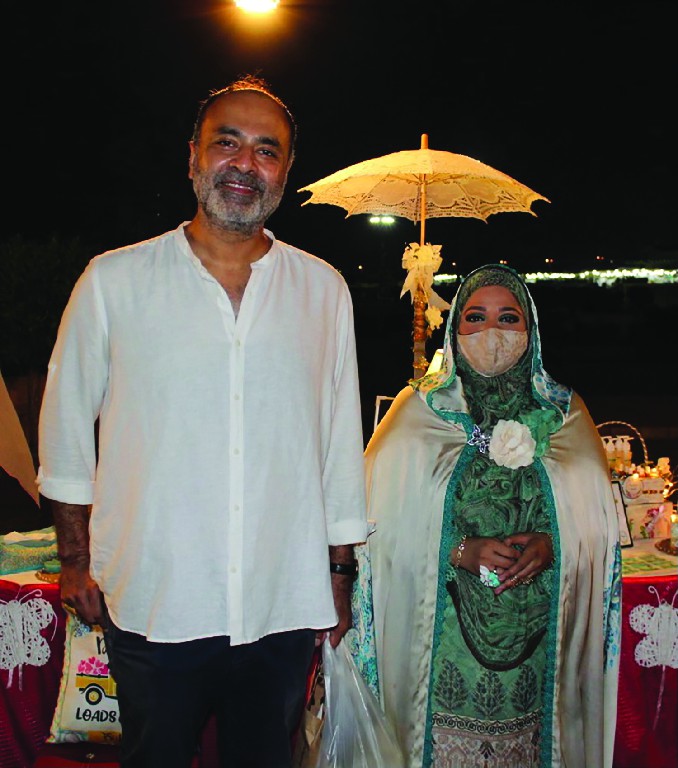
Rural women artisans from all over Pakistan, from the mountains of Kalash to the deserts of Thar, came to Karachi to showcase and sell their work at the Karachi Night Market by LADIESFUND at Bagh Ibn-e-Qasim Park, as
part of the All Fruit, Flower and Vegetable show organized by KMC and Horticulture Society of Pakistan.

On her biggest career high, overcoming her weaknesses and love for fashion

What inspired you to take up modelling professionally?
I’ve always had a keen interest in fashion and loved being in front of the camera, so I’d say it all started from there. It’s also a blessing that my friends and family have always encouraged me to pursue my passion.

What do you feel are your strengths and weaknesses as a model?
My strengths are my versatility, creativity, flexibility, focus and the ability to take initiative. It’s important to stand up, speak up, be bold and unafraid of judgments.
My weakness would probably be being too detail-oriented.

Biggest career high so far?
I’ve been featured in the song “O Kehndi Na Na†by Navv Inder, who previously sang the popular “Wakhra Swagâ€. This gave me recognition not only in Pakistan, but India as well.

Do you have a fitness and beauty regimen?
I do yoga and pilates religiously. I also like to eat healthy and stick to organic food products.
How would you describe your personal style?
Quirky and fabulous.

What do you think about the competition in your industry and the relationships models have with each other?
I’m not here to compete with anyone. The other models have their own style and I want them to shine too.

What do you consider to be the toughest aspect of your job and how do you overcome it?
The toughest job is perhaps having to shoot in the heat and the fact that you need to look glamorous at all times, regardless of how you feel. I keep reminding myself that I’m strong and I can do it; nothing can break me!

Where do you hope to see yourself in the next five years?
Come on, I can’t even see far enough into the future to know what’s for dinner tonight!


Words: Mehek Raza Rizvi | Photography: Altamash Urooj
Wardrobe: Euphoria | Makeup: Deepika Dehshta
Hair: Dani | Location Courtesy: Mahesh Tourani

Saira Shakira’s Chikan Kari collection celebrates spring/summer through its soft hues and sophisticated designs.
Choose from a range of options for the perfect wardrobe


Wardrobe: Saira Shakira
PR & Coordination: Centaur One
Model: Amna Babar
Photography: Alee Hassan
MUA: Sonia Nazir
Jewellery: Meraki, Zelo & Jawahir by Amna


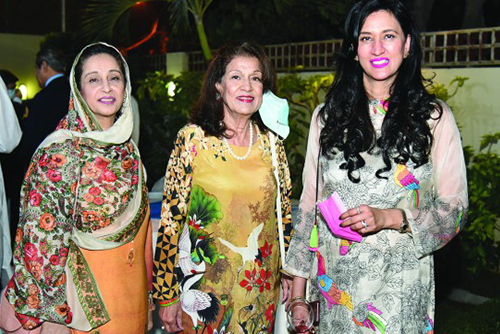
Aziz Memon and Samina hosted a small dinner to honour Dr Hamid Jafari, Director of Polio Eradication for the WHO Eastern Mediterranean Region. Distinguished medical professionals, educators, diplomats, media heads and others attended.
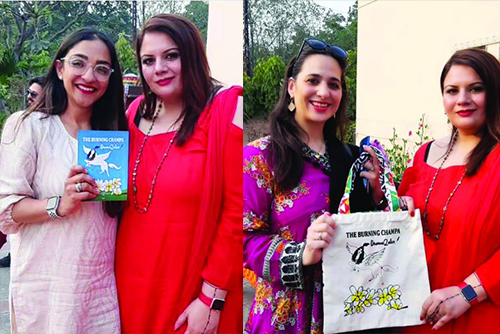
Zuka Books launched ‘The Burning Champa’, a collection of poems by Zahra Hameed focusing on body positivity and mental heatlh. The event had readings by Usman Raza Jamil.
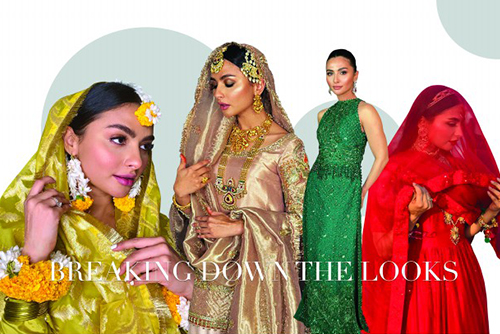
Fashion model Yasmeen Hashmi’s spring wedding to Karachi-based lawyer Hasaan Shah was an intimate and elegant affair that also flouted tradition in favour of individuality. Hassan Tahir Latif speaks to her about modern bridal looks, planning a wedding during Covid and more
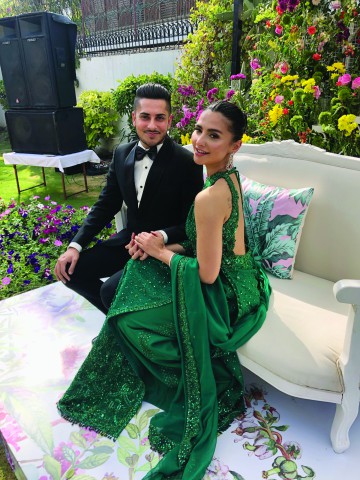
Talk us through your mood board for the wedding.
I’ve always enjoyed looking at pictures of weddings from our grandparents’ time; the intimacy and festivity infused in them informed my mood board. The small weddings in drawing rooms, in personal gardens, with close loved ones all around—that’s what I wanted. And colour; lots and lots of colour.
Considering that you’ve been part of some memorable bridal campaigns, how did you ensure that your own wedding looks stood out?
I’ve worked with brands that have a strong aesthetic and that’s helped me define my own. Having this understanding of my style, of what looks good on me and what I can pull off really allowed me to comfortably go for what I wanted, knowing full well that that confidence would alone be enought to make me stand out. I even went for my fittings on my own, as I wanted it to just be a one-on-one conversation with the designers, and I guess they appreciated that as well. They all knew that I like to experiment with cuts and silhouettes and that I can pull off unconventional looks. With all this in mind, I wasn’t worried about my bridal looks not standing out.
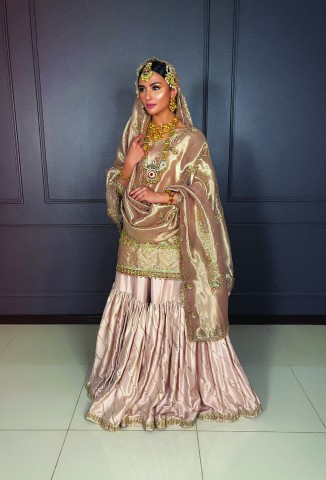
Weddings are stressful for most brides. Was it the same for you? How did you cope with it all?
Being a very chilled out person in general helped me a lot. I made sure everything was organised and delegated to the right people. Once all the orders had been placed and tasks appointed, I didn’t need to worry. The designers knew me, so that end was sorted. Similarly, I went for Carbon Events by Sara Chapra for the décor, as she knew my style. She suggested ‘Walking on Sunshine’ as my theme and I fell in love with it instantly. To reduce stress, my advice is to know yourself and to know who understands you the best. Once you delegate tasks to them, the stress dissipates.

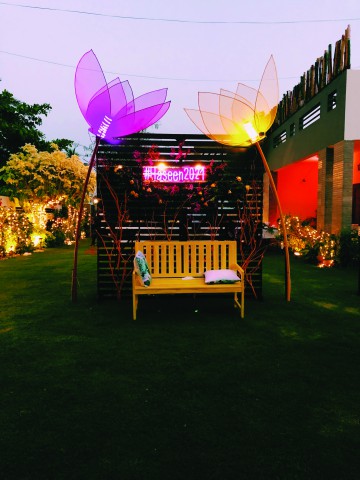
What were your rituals before the wedding? Did you change up your skincare regimen, for example?
To be honest, I’m not very into rituals. I tried the whole ubtan thing, but I felt too uncomfortable. In terms of skincare, I didn’t change anything at all and didn’t go for any treatments.
I believe to look pretty all you need to be is confident—a lesson learnt through my modelling campaigns. I don’t recommend anyone to change their skincare routines or get treatments right before the big day. It’s best to incorporate new products a few months in advance. Even for my bridal looks, I went for skincare and makeup products that I knew worked on me. In fact, I didn’t even go for a facial; I went for it afterwards to detox my skin from all the products during the wedding days.

Your reception look as a modern bride was refreshing. What was the thought process behind it?
I’m glad you think so. I’m a modern girl at heart, so it was a no-brainer. Don’t get me wrong, I love traditions, but they’re not for me. I knew I was never going to be a bride with a dupatta on her head, at least not for my main day. I believe a lot of the traditions are there for other people and they were incorporated in some of the other events of my wedding. But, the main bridal look was going to be quintessentially me. Faraz Manan understood that and that’s why he started off with the emerald colour actually. The initial outfit he showed me wasn’t too far off from the final look. Anyone who knows me knows that I’d always wanted to be a Faraz Manan bride. However, it was important that it be a comfortable look, with no fuss on embroidery or heavy detailing. A backless outfit with minimal embellishments on the pants was perfect—for the wedding lunch and the party afterwards.
We fell in love with your bridal shoot. How did you come to the decision of choosing Fatima Tariq for your portraits?
Fatima’s work is gorgeous and I’ve been obsessed with it. However, the portraits were a gift from my cousin Farishteh; once she told me about that, I knew I had to get Fatima to cover the rest of the event as well. The way she creates moods and captures moments is truly magical. Both my husband and I are ecstatic at how the shots turned out.

They always call it the bride’s big day. But, did Hasaan have specific wishes for the events or did he leave it all up to you? How did you balance what you both wanted?
As I said, I’m a chill person and don’t generally freak out, especially when I know everything’s been sorted. Hasaan, on the other hand, is a lawyer who works all day; he wasn’t able to see a lot of the backend work and got a bit antsy towards the end. But he was also very trusting of me and that helped a lot. His main thing was that he wanted his friends to have fun, but he was also concerned about Covid. So, I decided to stagger the guest list at my wedding lunch; the elders came for lunch and once they left, we had a black-tie sundowner. I wanted to throw him the best party of his life. It was intimate, it was manageable and it was a lot of fun.
Both of you look adorable together. Tell us more about you two. What’s the story?
Hasaan and I go way back. Although we were in different schools, we both knew of each other through our friends. However, when we got back from college and saw each other again, it was love at first sight. He’s always been the person I kept going back to and couldn’t get him out of my head. He’s the funniest person in the room, he’s humble, he’s kind, he doesn’t gossip, he’s not uptight—I automatically gravitated towards him and the positive aura that surrounds him. When his family found out I was single, they sent me a proposal and now we’re excited to spend the rest of our lives together.
Were there any big day mishaps that you can share with us?
No mishaps at all! One funny incident, though, was how my youngest brother’s Gen-Z friends took over from DJ Shakir at the sundowner and played their rave music. We are still laughing at the image of a bunch of teens in sunglasses on the dance floor. But ultimately, it was endearing.
You decided not to have a mehndi. Any particular reason for that, or is that something that you’re personally not interested in?
I’m not a mehndi person at all. Even in non-Covid circumstances, I wouldn’t have had one. I run away from dance practices and I didn’t want to put my friends, who all work, through that. At the end of the day, it was about having a good time and that’s what we had.
What was your experience as a bride during Covid-19? Would you have done your wedding differently if there was no pandemic?
Quite fun actually. I enjoyed the intimacy of it and, as I said, would’ve done it that way regardless. The smaller affair allowed Hasaan and I to hang out individually with all our friends and loved ones, without the pomp and circumstance of a bigger, traditional event. At all the events leading up to the wedding, we had everyone whom we love present and were able to interact with them. It’s also quite affordable, so I do recommend everyone look into smaller weddings, even after Covid.
Any tips for other brides who’re preparing for their big day during the ongoing Covid-19 crisis?
Divide your guest list. That’s what we did at most of our events. The elders would come for lunch or dinner, enjoy some music and leave. Then our friends would join us. We didn’t want too many people in closed spaces and this really helped with that. Strategic guest list making should be your biggest priority if you’re planning on getting married during this time.
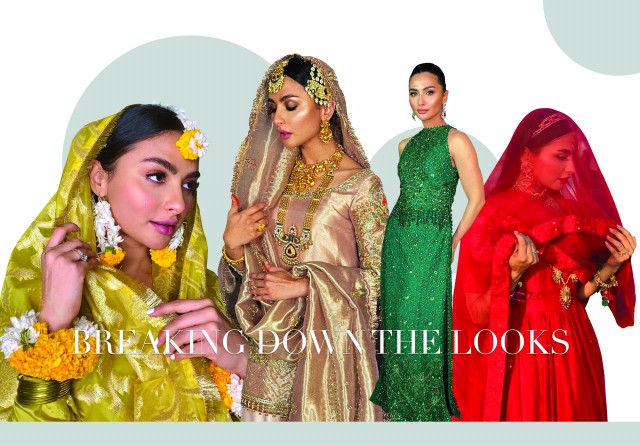
What would’ve been your ideal destination wedding, if you could’ve had it anywhere in the world?
Oh that’s easy! Hunza or Skardu if in Pakistan (I’m in love with our northern areas) and Lake Lugano in Italy if anywhere abroad. The Lake Lugano and Como region is my favourite place in the world; I went to college there and a wedding event in that area would’ve been the stuff of dreams.
Now that the wedding is over, what are your plans for the honeymoon?
We’re going on a safari trip to southern Africa. I’m looking forward to visiting Botswana, Tanzania, Kenya and Zimbabwe. The wide open spaces and the wildlife are going to be amazing. But, both Hasaan and I are city people as well and enjoy good nightlife. So, we’ll be sure to spend some time in Cape Town as well and explore a bit more of South Africa.


How do you even begin to write about a year that was unlike any other? A year that challenged notions of time and tore through the veneer of constructed reality; a year that confronted us with our place in the world. How do you fully encapsulate in words all the fear, the panic, the crippling anxiety, the mistrust, the personal awakenings and the heartaches? How do you collect fragments of shattered dreams and dashed plans, and give meaning to them again? In fact, how do you even start to examine a year that, in many ways, wasn’t really there even.
Tracing the year back to its roots is a place as good as any, I guess. My own isolation began exactly a year ago, a full week before everyone else was forced to withdraw into themselves. It’s almost surreal to think that this week last year we were optimistic that flattening the curve was achievable in a short amount of time. I can’t believe it’s been a whole year since I imagined us to be going down a rabbit hole. Have we emerged from it? Or are we still trudging along? I do, at times, feel that we’re stuck in a loop. When we hunkered down last year, Pakistan was lodged in a fierce debate over Aurat March in Pakistan. A year later, we’re still there. Did we even learn anything?
I find myself in an odd stasis though. I didn’t buy a 2021 planner; it seemed that I’d be inviting the ire of the Fates by doing so. Funnily enough, this year has reached the date when my 2020 planner stopped being useful. There are pages upon empty pages, waiting to be filled in, with only a handful of appointments sprinkled here and there-most of them Zoom calls. I pick it up and continue to scribble in it, it seems frivolous to throw it away. But somehow, it seems as if I’m reliving the year that wasn’t, injecting life into it posthumously. Do I think that filling in the pages of my 2020 planner will somehow create memories that ought to be there? Possibly.
It would be unfair, though, to completely disregard last year. Perhaps where we can begin when we talk about an impossible year is the new vocabulary we imbibed. ‘Unprecedented’, ‘flatten the curve’, ‘the new normal’, ‘work from home’, ‘Zoom calls’, ‘distance learning’ and many more immediately became commonplace. Or we can recap it in the number of Zoom calls we had to attend, the banana breads we baked, the dalgona coffees we made, the flowers we planted, the books we bought and thought we’d read, the memes we laughed at, the books we actually read, the calls we made or the podcasts we queued up (and didn’t listen to).
Maybe it would be more accurate to record the year in the numbers of tears we shed, the hair we pulled out, the hugs we missed, the masks we bought, the bottles of sanitiser we drained, the friendships we let fade away or, sadly, the people we lost.
There are many ways to record the past, but in a break from my personal tradition of nihilism, I choose ‘hope’ as the one thing that defined this lost year. Hope sprung up unexpectedly in unlikely places—like the flowers in my garden that I thought would never bloom again. These pockets of hope are the ones that I keep going back to. Those blissful moments that pierced through the darkness, like sunbeams through drawn curtains. The ambient sunbeams that even illuminate the motes of dust floating, suspended mid-air, like time itself.
Whether it was a cool breeze on a summer day, while I was sprawled on the grass in my garden, or videos of the kindness of strangers—hope was there. Or in the night sky full of stars that I hadn’t viewed in ages. It was also in the clean air we finally got to breathe in Lahore, signalling to us that the change we desire is within our reach.
Hope was in the gut-wrenching concert of Andrea Bocelli in front of the Duomo di Milano, as all of Italy wept and we wept with them. Hope was in the brave protestors across the world who declared ‘Enough is enough!’ and took to the streets to reclaim the dignity that was denied to them.
Hope was in the live sessions on Instagram that were determined to keep the arts alive; hope was in the laughter of babies born in the oddest year of them all; hope was in video calls with friends across time zones; hope was in the small gestures of love witnessed over Zoom weddings, when the mere visual of human touch was beauty itself. Hope was in every drop of watercolour that spilt from my paintbrush; it was in every travel plan made and every new item added to the bucket list. It was also in the rekindling of old friendships and the forging of new ones and ironically.
Hope is the vaccine that promises that we can go back to the ‘before times’. But will we really? Is it even possible to go back to how things used to be? Unlikely. The scars from this year will remain with us for quite some time, prompting us to do better. They’ll urge us to change the way we interact with the world, with nature, with each other. They’ll continue to haunt us and insist that we learn from our mistakes. Over time they’ll fade, as all scars do, leaving this time but a bump on our journey. And that’s when our true reckoning of this year will begin.
Photo Courtesy: Author
Â
Â
Â
Â
Â
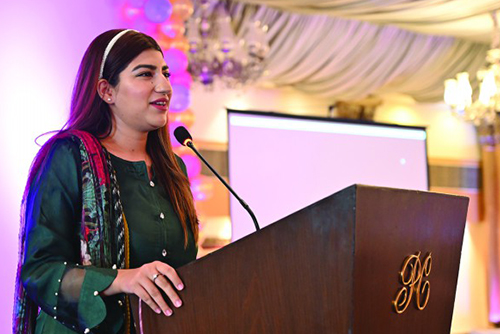
Pearl Continental Hotel Karachi celebrated International Women’s Day. It was an evening filled with joy and women who were there to inspire and support each other


Wednesday 3rd March, 2021:
 ARY Digital proudly conducted its first “ARY People’s Choice Awardsâ€. Commemorating the achievement of  individuals from entertainment, fashion & lifestyle. An opportunity to celebrate noteworthy projects and artisans who have exceled in their field.
In these testing times of the COVID-19 pandemic, ARY Digital feels privileged to recognize and celebrate
those individuals, who have worked tirelessly in order to spread hope and positivity through their professions. In these testing times, ARY Digital has made every effort to ensure the health and safety of all those involved, maintaining by a strict adherence to Covid-19 SOPs. The awards ceremony hosted by Ahmed Butt and Vasay Chaudhry was recorded on a closed set with zero public attendance.


Comprised of 29 categories, the audience at home were encouraged to cast their votes via online polls, supporting their favorites. Conducted throughout the month of February 2021, the event received an over whelming response from fans and patron. With multiple options available in each category, ranging from an actor’s skill in a particular role to clothing design, ARY People’s Choice Awards had something in store for everyone. Special awards were also given to some of the most prominent programs in their particular categories.


ARY Peoples Choice Awards is sponsored by Brite, Presented by Tresemme, Powered by TUC, Canolive, Nestle Cerelac & Digitally Connected by Jazz Super 4G.
The following is the list of winners after a month long voting process by the fans, which is a testament to the quality of the productions and the talent of the artists as shown by the public:


Special Awards:
Please find below the link of the winners with trophies from the event: