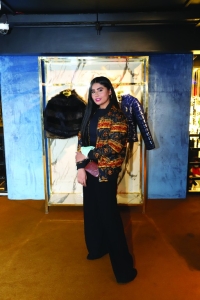


This fortnight we speak to this talented young photographer about her creative journey

Tell us about your introduction to photography.
I don’t remember it in particular, but as far as I can recall, I used to take self portraits in grade 10. Then I started photographing people, since I love exploring new places and meeting new people.
Who are your biggest influences?
There are so many. But I absolutely love Natasha Zubair, because her work ethic is amazing. Apart from her, my sister has been my rock since day one and I’m quite proud of her journey as an artist; it really inspires me.

What is the creative process like when you’re preparing for a project?
A story is very important to me, so I always create an inspirational mood board and share it with my client or model and see if it matches with their vibe.
How do you balance work with your education?
As a medical student it’s kind of hard, but I try my best. Recently, I’ve had to skip some exciting projects, but I guess that’s part of life.

What’s been your favourite photograph or project so far?
A fashion shoot that I did for for Hira Ali. I love it when designers give you creative freedom and trust you with your perspective.
What equipment do you use?
I use a Nikon D750 with a 35mm lens.

How would you describe your photography style?
I love doing portraits and fashion photography. Sometimes I do wedding shoots too, but only if my clients understand my art and perspective. So, my style is mostly comprised of candid, colourful portraits with a play on light and shadow.


What’s a piece of advice you always keep in mind?
Keep going. Never give up. NEVER! And the only person you should compare yourself with is who you were yesterday. You are your biggest competition.

9Lines, staying close to its ethos and pop quirk roots, puts forward the first ever unstitched lawn collection, as “9LINES SS21â€
The collection focuses on driving towards a modern update to the usual lawn, by adding a signature 9Lines quirky narrative. The collection is inspired by infusing art in fashion for an off-the-wall update. Prebooking on 12th March online > www.9lines.store


Wardrobe : 9Lines
Photography : MHM
Hair & Makeup (female models) : Qasim Liaqat
Hair & Makeup (male models) : Turab Haider
Art Direction & Styling : 9solutions
Models : Abeer Asad, Abeer Rizvi, Alicia Khan
Eesha Asad, Manal Saleem, Khushhal Khan
Qamar Khawaja, Suleman Hussain & Zarrar Khan

Karachi, February 17, 2021 – Bayer’s leading Consumer Health brand, vitamin and mineral supplement Berocca, has signed on to become the Official Energy Partner for the Quetta Gladiators in the upcoming HBL Pakistan Super League (PSL) season 6.
A ceremony to mark the partnership was held on February 17, 2021, at a local hotel, at which members from the leadership teams of the Quetta Gladiators and Bayer Pakistan were present.
Nadeem Omer, the owner of the Quetta Gladiator franchise was happy to announce that 2021 also marked the second year of partnership between Berocca and the Quetta Gladiators. “We are very pleased to be reuniting with this great brand which has helped boost the energy and fitness of our players. Quetta Gladiators is a star team, constantly on the quest for excellence, and our partnership with Berocca reflects this mindset. Energy and fitness are one of our top priorities, and that’s what Berocca stands for. It is a great fit for what we anticipate to be a terrific HBL PSL season ahead. By partnering with brands such as Berocca, we are not only increasing our brand equity but also ensuring that strong and recognisable brands are part of the biggest sports event in Pakistan,†said Nadeem Omer, the owner of the Quetta Gladiators team.
To mark the occasion, Dr Imran Ahmad Khan, CEO and Marketing Director of Bayer Pakistan said, “Bayer Pakistan is really looking forward to the HBL PSL 6 and  is proud to be the first life science company in Pakistan investing in the great sport of cricket. Berocca is one of the world’s leading vitamin and mineral supplements, and the Quetta Gladiators are some of our best athletes – it’s an excellent fit.â€
“Bayer’s Consumer Health division is going to continue maintaining its focus on supporting sports in Pakistan to promote healthy, active lifestyles among our youth,†added Mirza Khalid Naseem Baig, Country Head of Bayer Pakistan’s Consumer Health division. “This is not only part of our business strategy, but also ties in with Bayer’s global vision ‘Health for All, Hunger for None’.†He added that Berocca reduces tiredness and fatigue by helping improve alertness, concentration and physical stamina.
Season 6 of the much-awaited HBL PSL is set to start from February 20, 2021 and the Quetta Gladiators are set to play the innaugral match against Karachi Kings at the National Stadium in Karachi.
About Bayer
Bayer is a global enterprise with core competencies in the life science fields of health care and nutrition. Its products and services are designed to benefit people by supporting efforts to overcome the major challenges presented by a growing and aging global population. At the same time, the Group aims to increase its earning power and create value through innovation and growth. Bayer is committed to the principles of sustainable development, and the Bayer brand stands for trust, reliability and quality throughout the world. In fiscal 2019, the Group employed around 104,000 people and had sales of 43.5 billion euros. Capital expenditures amounted to 2.9 billion euros, R&D expenses to 5.3 billion euros. For more information, go to www.bayer.com.
Contact:
Hafsa Zubair, Head of Communications and Public Affairs
Phone:Â +92-21-111-000-227
Email:Â hafsa.zubair@bayer.com
Forward-Looking Statements
This release may contain forward-looking statements based on current assumptions and forecasts made by Bayer management. Various known and unknown risks, uncertainties and other factors could lead to material differences between the actual future results, financial situation, development or performance of the company and the estimates given here. These factors include those discussed in Bayer’s public reports which are available on the Bayer website at www.bayer.com. The company assumes no liability whatsoever to update these forward-looking statements or to conform them to future events or developments.

Karachi, February 21, 2021 – Fine Wellness Pakistan, subsidiary of Fine Hygienic Holding, one of the world’s leading wellness groups and the MENA’s leading hygienic products manufacturer, formally announced its partnership with Pakistan Super League’s franchise the Quetta Gladiators for HBL PSL season 6.
A signing ceremony to celebrate Fine Wellness Pakistan as the Official Hygiene Partner for the Quetta Gladiators was held on February 21, 2021, during a press conference at Beach Luxury Hotel in Karachi. The occasion was attended by the CEO of Fine Wellness Pakistan Mr Moutaz El Nahrawy and the owner of the Quetta Gladiator franchise Nadeem Omer.


To mark the occasion, CEO of Fine Wellness Pakistan, Mr Nahrawy said, “…As a wellness company, sports play a big role in maintaining a healthy body, mind and spirit. Cricket is one sport directly connected to Pakistan’s heartbeat and hygiene is now more important than ever. Bringing the two together was only natural. We are very pleased and excited to support the Quetta Gladiators as their Official Hygiene Partner for season 6 of the HBL-PSL.â€
“I was amazed when I found out that Fine products kill 99% germs and viruses. And their masks are out of this world! We are not conscious of our hygiene in Pakistan, but as Quetta Gladiators hygiene is very close to my heart and it is about time we make such partnerships a common feature here.â€
Following the immense success in the Arab World, Fine Hygienic Holding has now entered the Pakistani market with a vision to raise the standards of living in the country by providing premium quality, sterilized hygiene products at the same cost as an unsterilized alternative.
Earlier this year, Fine Wellness Pakistan in partnership with Burque Corporation brought a startup investment of 7 million USD into Pakistan launching its line of premium hygiene products. The investment will include setting up state-of-the-art diaper and tissue manufacturing facilities along with the mega launch of four brands for the Pakistani market; Fine Tissues, the only line of sterilized tissues in the world untouched by human hands, Fine Baby, a range of premium baby diapers with a SmartLockâ„¢ technology, which locks in wetness and prevents leaks, Fine Care, a line of adult diapers and Fine Guard, an innovative antiviral face mask with a patented technology that kills germs and viruses, including Coronavirus, upon contact.


In 2020, with the rise of the coronavirus pandemic, consumers realized that using sterilized products was no longer a commodity but a necessity. Fine is the only company that has been offering sterilized tissues for over 63 years. Being a hygiene company, Fine products are unique across the world because they use world-class patented technology that looks after the safety and wellbeing of a consumer.
“Wellness is very important to us and we are committed to supporting local, regional and international events and initiatives that encourage communities to look after their health – sports are among those initiatives. Fine wants to help teams and communities feel assured and safe when participating in sports and other activities knowing that they are using sterilized and hygienic products that are germs free,†said Mr Nahrawy.
One of the most important sporting events in the country, the much-awaited HBL-PSL, kicked off on February 20, 2021, with a spectacular opening ceremony and inaugural match between the Quetta Gladiators and Karachi Kings at the national stadium in Karachi. The Karachi Kings won the match by 7 wickets.
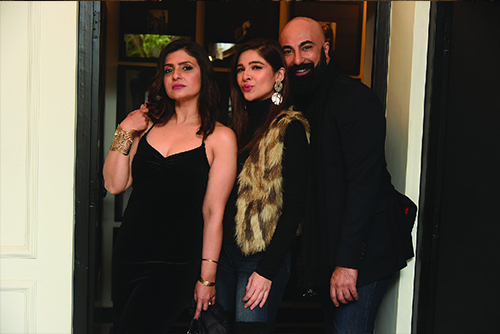
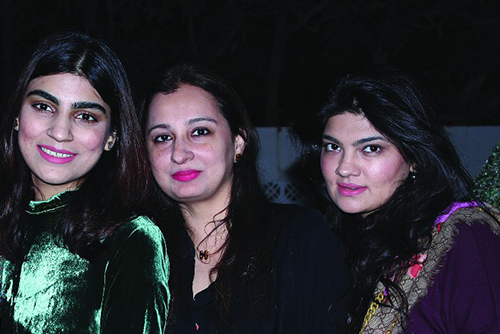


London-based model Sadaf Khan has walked for Pakistani fashion designers across the globe. Here, she speaks to GT about her career and more

What inspired you to take up modelling as a profession?
I always had a keen interest in fashion and isn’t it amazing when you get paid to look good?
What I love about modelling is that you have a good sense of style, adaptability, a positive attitude, excellent stamina, communication skills and the ability to look good at all times.

Tell us about your first modelling job?
My first job was in London for Virgin Airlines. It was such a big shoot, and I was so nervous, but thankfully I did great in the end and everyone loved me.
What’s your experience been like working with Pakistani fashion designers? Do you have any favourites?
It’s been very good. I love Pakistani fashion and have done many shows around the world, where I’ve walked for all the top Pakistani designers. All of them are lovely, but Umar Sayeed and Rana Noman are my favourites.

What’s the one thing you enjoy most about your job and what’s the one thing you dislike the most?
I love walking the ramp and I’ve missed it a lot during the pandemic. I can’t think about anything I dislike, as I always try to find the best in everything.
What’re some things you wish you knew before you started your career?
The way people judge and criticise you in this career.

How would you describe your personal style?
I’m really into skirts and anything high waisted—that’s my thing.
Do you have a specific beauty and exercise regimen?
I do wear a lot of makeup, so it’s very important to look after the skin. I cleanse a lot using an oil cleanser (I love the Elemis range, as my skin is dry and it really helps), followed by a rose toner and thick moisturiser. I always use sunscreen before going out. Masks are really important for me too, so I apply them twice a week to get that glow. I try to drink a lot of water and never miss out on my vitamins.

Exercise for me is important not only for my physical health, but also for my mental well-being. It releases endorphins that keep you feeling happy and energetic. I’m quite addicted to reformers and I combine it with cardio three days a week.

What’s been the best advice you’ve received?
Be kind and treat people as you would like to be treated. Everyone loves to feel special; everyone loves to be noticed. So, if you care for people and treat them as the special people that they are, then they’ll love you for it. If you help enough people get what they want, then you’ll get what you want.

Photography: Altmash Urooj
Wardrobe: Euphoria
Makeup: Deepika Deshta
Hair: Dani
Location Courtesy: Mahesh Tourani

Dr Greene explains to Mahlia Lone why umbilical cord stem cell therapy is so revolutionary as a regenerative medical treatment that’s now available in Pakistan.
Please note that Good Times Magazine doesn’t support any one medical treatment over another; this content is merely informational. We recommend consulting your physician before embarking on any medical procedure
Who doesn’t want to avoid and minimise chronic illnesses? So, when I found out that Dr David Lawrence Greene, Founder and CEO of R3 Stem Cell, based in California, was bringing his groundbreaking FDA-approved treatments to Pakistan at affordable prices, I wanted to help get the word out to as many as possible.
“The root cause of no less than seventy diseases can be mitigated by stem cell therapy, whereas traditional medicine only manages the symptoms of most of these diseases, while offering no permanent cure,†Dr Greene said during his recent visit to Lahore. Stem cell therapy options are available for musculoskeletal degeneration of joints and cartilage, neurological diseases like Bell’s Palsy, Alzheimer’s and Multiple Sclerosis, cardiac problems such as peripheral arterial disease, diabetes, COPD (chronic obstructive pulmonary disease) and even erectile dysfunction, amongst many other serious illnesses.

However, it should be noted at this early time in stem cell research, it’s used as a supporting treatment on top of traditional medicine. Moreover, it should not be confused with embryonic stem cells, derived from aborted foetuses, which is an ethically questionable practice, illegal and is proven to cause tumours in patients.
Dr Greene explained the procedure, “Donated umbilical cords after caesarean sections, which’re otherwise medical waste, are collected at the Umbilical Cord Bank in California, a state of the art facility, where the cells are first tested for communicable diseases. From some of these stem cells, exosomes are derived that’re 4 times smaller in size and used for aesthetic improvements in face and hair, as they can pass through tiny needles. Stem cells can repair and regenerate damaged tissue anywhere in the body and can be administered in a variety of ways depending on the illness. For example, they can be injected into the spine to combat neurological diseases, at joints for arthritic issues, intravenously for organ disease, like liver or renal failure, and even intramuscularly with the number of cells needed depending on the severity of the issue and the weight of the patient. The average minimum effective number is 50 million stem cells at a time. The treatment has to be followed up as degeneration of the human body is a part of ageing.â€

“A positive side effect of the treatment is that apart from the issue we aim to deal with, other functions of the body and organs improve as well. For example, patients have reported that after receiving stem cell treatment, any macular degeneration of their eyes they may have also shows improvement.â€
“We’ve conducted 16,000 procedures worldwide with no adverse reactions. Stem cell therapy is a safe and effective treatment that makes your body function better,†Dr Greene said emphatically. “Our patient satisfaction rate after 1 year from treatment is 85 per cent.â€
“We’re extremely selective with whom we work, and in Pakistan we chose to partner with a first class team of doctors at the London Aesthetics and Rejuvenation Centre with branches in Lahore, Islamabad and Faisalabad (the Karachi branch to become operational in the summer),†he added, satisfied with the level of care at the Pakistani centre. “Additionally, we have an export license in the U.S. and registered with the Pakistani government as well.â€

“Most of the existing treatment options offered in the country are based on using a patient’s own adipose fat to derive PRP (platelet rich plasma). What we’re offering is the much more advanced umbilical cord stem cell treatment. This is not just beneficial for older patients by injecting young stem cells into them, but even for children with developmental issues, like Autism. After a course of 50 to 100 million stem cells administered three times a year, autistic children have shown remarkable improvement,†pointed out Dr Greene.
“Being an expatriate doctor in research and development, I wanted to make a significant contribution towards medical treatment for the Pakistani public,†said Dr Tauqeer Ahmed, International Director of London Aesthetics and Rejuvenation Centre.

“Specifically for women,†Dr Shaila Anwar, Lahore’s only Aesthetic Gynaecologist, who also consults at the Centre, said “non-invasive treatments, such as lasers and stem cell therapy, can be used most effectively for female issues, like weak bladder control and to alleviate menopausal dryness by increasing blood supply and boosting collagen and elastin. Earlier, more invasive surgeries were required to deal with severe incontinence issues women suffered from after normal deliveries and the passage of time. Furthermore, stem cells can even be injected into the ovaries to help conception.â€
“While at this time, we don’t offer stem cell treatment for cancer, umbilical cord stem cells offer anti-inflammatory properties that work as prevention against forming cancers in the future,†said Dr Greene. “We even offer effective treatment for lungs post Covid-19, by easily administering stem cells to the patient through a nebuliser.â€


Fresh, young talent always has a place in our pages. In this issue, we speak to upcoming actor Bilal Dar about his auditions and trying to break into the industry

Tell our readers about your background in acting.
I had my first audition in 2017 in the US about a play on partition, which turned into my first acting gig. It was such a memorable experience and I learned so much about my history. It really solidified my interest to pursue acting professionally. I also did a few short films in the US, after which I decided to take a break from acting.
How would you compare your experience acting in the US with your experience acting in Pakistan?
Acting in the US is pretty straightforward. You have auditions which’re posted online or through casting websites for everyone to see and try out for. I saw acting roles online and went in for the auditions. Acting in Pakistan is somewhat trickier to navigate. You need to be connected to the right circles and networks to even know about the auditions. It definitely requires more networking. Acting in both countries is fun, but comes with its cultural challenges.

Where do you hope to see yourself in the next five years?
I’m moving to Los Angeles this year to pursue acting in the US. I’m excited as this has been my dream ever since I started acting. I hope in the next few years I’ll be a professional actor working with some of my favorite directors and actors there.

Which actors inspire you and why?
Leonardo DiCaprio, Jake Gyllenhaal, Joaquin Phoenix are some of my favourite actors. They’re some of the most versatile and empathetic actors. Acting is all about empathy for the characters and their stories and these actors have delivered some of the strongest performances in my opinion.

Tell us about your upcoming short film and music video.
I’m currently working on a short film titled ‘Rukhs’ set in 1970s post-partition Pakistan. The story revolves around three characters and how they navigate love in the strict, religious society under Zia’s regime. This film has been guaranteed screening at the UK Asian Film Festival’s 23rd year (London, Edinburgh, Birmingham, Leicester), the University of Cambridge, King’s College London and will be sent into multiple festivals across the globe. Khoosat films is collaborating for post-production and the film production is funded from a commission by the UK Asian Film Festival.


Photography: Ahmed Kaleem

Trends come and go, but a traditional bridal remains timeless. Captured by the lens of Rehan Khan, fan-favourite Sumbul Iqbal dons the regal trousseaus of Diva’ni Pakistan in a magical shoot


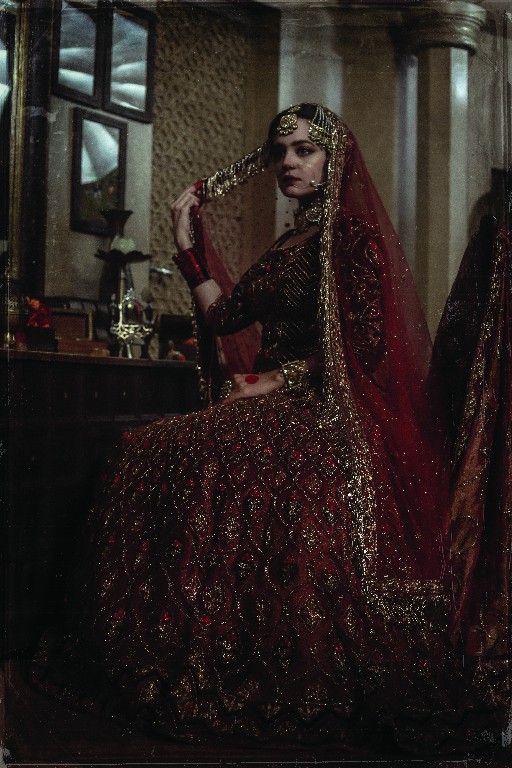


Talent: Sumbul Iqbal Khan
Wardrobe: Diva’ni Pakistan
Photography: Rehan Khan
Art Direction : Maha Rehan
Hair and makeup: Qasim Liaqat
Jewelery: Grace Jewellers


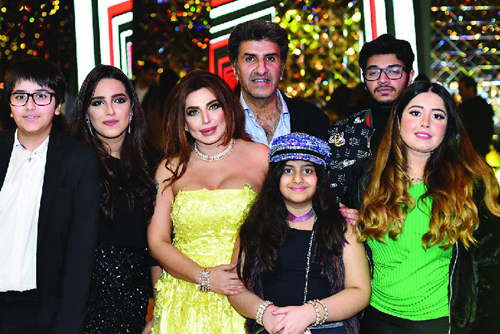


There’s no better way to beat the dreary winter days than to doll yourself up in jewels. The Jewel Company and Maha Tahirani show you how


M o d e l : M a h a T a h i r a n i
P h o t o g r a p h y : N a j a m M e h m o o d
Je w e l l e y : T h e J e we l C o m p a n y
H a i r & M a k e u p : S y e d H u s s a i n
C o o r d i n a t i o n : C e n t a u r O n e

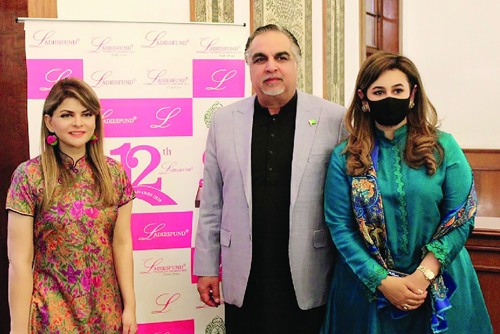
The 12th anniversary of the Dawood Foundation’s LadiesFund Award was held at Sindh Governor House to award 12 female front-line workers, who risked their lives to save others during the ongoing COVID-19 pandemic. We are indebted to all frontline workers.

The team at GT has had so much fun putting together issue after issue every fortnight for its readers. Despite the challenges faced and a huge change with WFH, we’re proud of the many collaborations and star-studded pages we’ve worked on. Here’s a quick look at our covers in 2020, as we gear up for a fabulous year ahead.


Ayesha Omar is many things: an actress, a style icon, an activist and an artist. This fortnight she speaks to Mehek Raza Rizvi about fame, fortune and family

It wouldn’t be wrong to say you’re one of Pakistan’s most coveted style stars. Do you feel that’s helped you in your profession? Or on the contrary, have you ever feared that might take away from people taking you seriously as an actress? Â
Thank you so much for your kind words. I was always a tomboy growing up and not really concerned about what I was wearing. My wardrobe was simple and functional; I never followed fashion icons or magazines. In fact, even when I first joined the industry, I wasn’t too fussed about my style statement. It’s only in the last six to seven years that I’ve started to have fun with fashion, by figuring out what my preferences are.
I’m an artist; I’ve studied painting, so I use my outfits as a sense of creative expression. Keeping that in mind, yes, I’d say fashion does give me a medium to translate my artistic sensibilities into a tangible form. It allows me to express what I’m trying to say without actually having to say it. It also helps me bring the characters I portray to life, because I style them myself.

“I’m an artist; I’ve studied painting, so I use my outfits as a sense of creative expressionâ€
—on her style
On the other hand, though, it’s true that sometimes when a lot of stress is put on how an actor is dressing, it can take away from them being taken seriously for their craft. I wouldn’t say this is a fear of mine, but I want to be remembered as a hardworking actor, host and activist, not just a style icon. There’s way too much focus on external appearances, which also becomes a point of comparison between contemporaries. An actor’s sense of style does matter to some extent as it’s part of one’s image, but it should be a secondary concern.
You mentioned in one of your interviews that your accident was a defining moment in your life. How did it change your perspective?Â
Sometimes in life you experience something that alters your perspective on things completely—my accident did that for me. When you witness death so closely and see your whole life flash in front of you, it makes you rethink a lot of things and reassess your priorities. I’ve definitely started valuing life more, particularly the little things in life, like small acts of kindness. I feel I’ve now become a lot more empathetic to the struggles of other people and have realised the importance of being there for people in their time of need. More importantly, I’ve understood how to be there and when to give space to someone coping with pain.
This experience also gave me a lot of clarity regarding who my real friends are. It was a real eye opener in that sense. Above all, I felt a deep sense of gratitude as my connection with my creator and my belief in His divine plan became much stronger.

“I’m very fortunate to have grown up with my friends who’re my sisters and have really compensated for the lack of support from relativesâ€
—on friends like family
The fame and influence celebrities enjoy puts immense responsibility on them to use it wisely. Do you ever feel burdened by the constant spotlight?
Yes, of course I do, as do all other public figures. There’s this constant pressure of behaving the way people want you to. The criticism we receive isn’t limited to just our work, but extends to personal preferences as well: from what we eat, to our relationships, our choice of clothing, etc. One’s life does change once you’re in the public eye; anonymity allows you to live your life the way you want, but you don’t have that privilege as a public figure.
Despite being human, there’s very less room to make mistakes, because people are extremely unforgiving and sometimes it can take a toll on you. Having said that, I also enjoy the responsibility and feel very thankful that I have a voice that enables me to talk about issues that concern me. There are so many people, young people in particular, that look up to us for direction and also various occasions where we get to be representatives of our country. It’s a duty I take seriously and feel immense gratitude for.

One of the reasons we love you the most is for being outspoken and never being afraid to stand up for issues close to your heart. How do you deal with the inevitable backlash though? Especially on social media.Â
You’re very kind. It does take a lot to be that way because many things aren’t received well. In the end, you just have to stay true to yourself regardless of any backlash. As long as your intentions are right and you aren’t hurting anyone, you should stand by what you believe in. Eventually people understand your point of view as well.
It’s true that you do need thick skin to survive the negativity. Social media in particular can be such a dark place, but then there’s also light and love. Where there are haters, there are also people who show support and faith in you.

Have you experienced any prejudice as a woman in your line of work?
When I first joined the industry, I was fresh out of college—very young, trusting and friendly. I dressed a certain way, because I grew up in a progressive household. I studied with boys in college and went to a school where there was freedom of decision-making and confidence building, so I was forward-thinking as well I guess. All of this led to a lot of preconceived notions and prejudice against me.
People thought that because I was new so they could say and do whatever they wanted. I feel I was judged for my pleasant nature and the way I dressed; I was stereotyped. I’ve faced both, sexual and verbal harassment. Nothing has come easy to me and I’ve had to learn things the hard way. I’ve had to build a hard exterior and keep people at a distance to be able to be taken seriously.

Also, because I moved away from Lahore and didn’t have family in Karachi, I didn’t have any backing or anyone to protect me. Knowing this, multiple people have been unfair and unprofessional with me—with full knowledge of me being the sole breadwinner for my family. I’ve had to face delayed payments many times; many of them still owe me money.
People who’re close to me know that things haven’t been so smooth for me and I’ve worked very hard to get where I am. I’m extremely committed and professional and have developed strong a work ethic. Despite that, people have so many assumptions about me and there’ve definitely been times when I had to prove them wrong.
With the conversation on gender equality and feminism on the rise, how important is it for female actors to choose their roles carefully and avoid playing the damsel in distress?
I find conversations about gender equality and feminism heartening. In an environment where so much is being said and done to protect and empower women, it’s extremely important for female actors to choose their projects wisely. The stereotypes created by society are validated by our content, so we must make sure we aren’t responsible for carrying such ideas forward, as this affects the women in our society on a daily basis.
The media plays a very crucial role in influencing people’s minds. Female actors should avoid opting for characters that’re detrimental to the role of women in society and that glorify injustices against them, whether it’s enabling domestic abuse, rape culture or victim shaming. This is the reason why you see me in such limited projects; I don’t agree with plots where you see women surrendering to their circumstances.

“When you witness death so closely and see your whole life flash in front of you, it makes you rethink a lot of things and reassess your priorities. I’ve definitely started valuing life more, particularly the little things in life, like small acts of kindnessâ€
—on her brush with death
Out of all the characters you’ve portrayed, which one do you relate to most and why?
It’s always tough to choose, as there’re lots of them with different shades to their personalities. But if I had to pick, it would be my character in the serial “Kaisa Yeh Junoon.†I played the lead role, who was a very strong and principled girl who grew up to be a determined, solid individual with a lot of integrity and self-respect. She was also studying to be an artist, so I really related to her. We shot this project in London, Mumbai and Karachi, so we travelled to three different cities and I worked really hard on it.

What is Ayesha Omar like at home? Tell us about your childhood and family?
I was born in Karachi, but after my father passed away when I was only a year and a half old, my mother, brother and I moved to Lahore. My mother was a young widow, who’d only been married a few years. She had no emotional or financial support from the rest of our family, so she raised us singlehandedly. I saw her working very hard to provide us with an education; she started teaching at a school, gave tuitions and also drove a school van that she bought with the help of a friend. My mother did everything she could to make ends meet; she’s sacrificed her life for us, but of course there was a lot of financial insecurity and anxiety related to that. It was very hard for me, as a child, to see my mother going through this. But, today I feel that I get my sense of independence and strength from her. I’m very self-sufficient, just like her.

My brother and I went to an expensive school that we may never have been able to afford without our merit scholarships. But this also meant that we had to work very hard on our grades. We were studying with rich kids but couldn’t afford to be spoilt the way they were. My mother also encouraged us to participate in extra-curricular activities, so I was very active in the school choir, theatre group and art workshops. Growing up surrounded with such cultural experiences makes me who I am today.
Despite the difficulties, I feel my childhood was full of love and warmth from my six best friends and their families. Of course, sometimes I did complain to God when I saw all other kids had two parents, but I’m very fortunate to have grown up with my friends who’re my sisters and have really compensated for the lack of support from relatives.

After graduating from college, I started supporting my family and became the sole breadwinner and have been since then. My brother is doing his PHD in Denmark right now, so he still has a few years to go. It makes me really happy to see him doing what he’s doing and also to see my mother enjoying retired life and taking care of herself. The three of us have always been very very close. I hope my mother is proud of me today.
“Female actors should avoid opting for characters that’re detrimental to the role of women in society and that glorify injustices against them, whether it’s enabling domestic abuse, rape culture or victim shamingâ€Â —on choosing roles wisely
At home, I’m very domesticated. When I moved to Karachi, I shared an apartment with flat mates and continued doing so for thirteen years. It’s only been a year and a half since I started renting my own apartment. I never thought I’d be able to live alone, but I’m honestly loving it! I love doing up my space and creating this zen haven for myself that I love coming back to. I enjoy hosting and feeding people as well. I’ve surrounded myself with a lot of plants, since nature calms me and I try to stay clean as much as I can with my eating habits. I’m gearing towards a more holistic lifestyle and staying away from artificial and synthetic products—that applies to people as well. I’m beginning to realise that more and more every day and try to be around wholesome, positive energy only.

Pakistani actresses whose style you admire?Â
Meesha Shafi, Kiran Malik and Mahira Khan
Favourite co-stars?
Hina Dilpazeer, Sanam Saeed, Saba Hameed, Sawera Nadeem, Azfar Rahman, Adnan Siddiqui, Ali Rahman, Mikaal, Ahsan Khan—there are so many!                           Â
Theater, film or TV?Â
Film, theatre and TV—in that order
Your biggest strength?Â
My resilience, self-sufficiency and ability to balance things
And weakness?
Being unable to say no
Favorite ‘90s jam?
Michael Jackson and The Cranberries all the way!
What was the last lie you told?
I lied to someone about working today when I actually just wanted to be by myself

Last impulsive buy?
A pair of shoes
One habit of yours that annoys your family?
My sleeping pattern
Do you have a nickname?
Some of my friends call me Jacks, while others call me AO
A decision you really regret?
There’re quite a few work decisions I regret, along with some personal decisions
Favourite movie quote?
“May the force be with youâ€
—Star Wars
“After all, tomorrow is another dayâ€
—Gone with the Wind
“You make me want to be a better manâ€
—As Good as it Gets
Photography:Â Najam Mahmood
Wardrobe: Saira Shakira
Coordination: Centaur One
Jewellery: The Jewel Company
Styling: Arbaqan Changezi
Hair & Makeup: Sonia Nazir