Author

Good Times

Browsing

Ready. Set. Eid!

One of the best times of the year is here. Turn that frown upside down and put your shopping hat on! The exciting part is you can do it from the safety of your home. IDEAS Eid Sale has arrived and you will be pleasantly surprised. With up to 70% off on more than 2500 products, you should be ready to snatch some great deals this Eid.

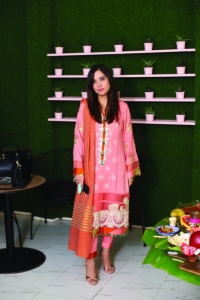
From festive summer shirts to luxury bath linen, the IDEAS Eid Sale has a gazillion deeply discounted items. I bought myself this gorgeous 2-piece suit at FLAT 30% OFF for PKR 3,850. Yup, that’s right! An Eid outfit without breaking the bank.

If you scan through their website, you will see mind-blowing discounts of 50%, 60%, and even 70%!

Ideas Pret Up To 70% OFF

Did someone say BBQ? Yes, Please! Ladies, your head-turning, jaw-dropping Eid: Day 2 look is just a few clicks away. Shop the newest and best printed kurtis and luxury formals from IDEAS Pret at up to 70% off. This gorgeous digital kurti can be yours for just PKR 2,450. Keep it fresh and breezy and match it up with these gorgeous embroidered trousers for PKR 1,890.

Shoes & Bags Up To 70% OFF

A girl can never have too many shoes–or bags. There are dozens of stunning fashion accessories available at IDEAS Eid Sale. These beige sliders are perfect for your Eid look.

GulAhmed Summer Special Edition Lawn

There is no denying. When it comes to lawn suits, no brand is more iconic than GulAhmed. With the heat wave in full swing across the country, I guess we are all wearing lawn on Eid. At IDEAS Eid Sale, you can stock up on the latest 3-piece prints from the Summer Special Edition for just PKR 2,391.

Want 2-piece suits? Get your hands on these beautiful and vibrant ethnic prints for just PKR 1,790.

Ideas Home Up to 70% OFF

Give your living space an Eid makeover. And if you are on the lookout for a budget-friendly one, stop your hunt as IDEAS Home has the perfect fix for you. Add that much needed festive vibe to your living space this Eid with a picture-perfect mix of cushion covers, bed sheet sets, duvet cover sets and yarn-dyed rugs from the latest collection by IDEAS Home at up to 70% OFF!

Get your hands on these internet favorite bed sheets starting from just PKR 850. That’s not all. Enjoy FLAT 70% OFF on complete quilt sets! Yup, you heard us right. Shop from a range of luxury and bridal bedding at unbelievably low prices.

Towels Up to 70% OFF

This chand raat, treat yourself to a spa-like comfort at home this season. Choose from an array of super soft and absorbent combed cotton, zero twist, yarn dyed, jacquard or bamboo towels. Starting from PKR 450 only.

Men’s Apparel Up to 70% OFF

Get ready for some summer time BBQs in comfy polo, tees, and casual shirts. Ideas Man has solid discounts on everything. Everything from polos and tees to khakis and jeans is up for grabs at IDEAS Eid Sale.

Get your hands on the latest ready-to-wear men’s fashion starting from just PKR 1,180. From classy blues to the timeless greys, IDEAS Eid sale has something in store for all of you.

GulAhmed Men’s Collection Up to 70% OFF

Looking for a great deal on men’s unstitched fabric for Eid? You’re in luck, GulAhmed Men’s Collection is now up to 70% OFF. From breezy poplin to stunning wash-and-wear and magnificent latha, you can get all your favorites at amazing discounts.

Kids Apparel – Up to 60% OFF

The biggest sale of the season brings hefty discounts for every member of the family. Not leaving the little ones behind, because let’s face it! Kids are the ones who whole-heartedly enjoy the festivities. IDEAS Eid Sale is offering kids apparel starting from as low as PKR 425. Shop the perfect Eid outfits for your little ones at all new amazing prices.

Free Delivery All Over Pakistan

Every order during the IDEAS Eid Sale is delivered for FREE in Pakistan. Yes, that’s right. Living abroad? You can enjoy FREE SHIPPING on orders worth USD 300 or above. So, what are you waiting for? Visit www.gulahmedshop.com and enjoy up to 70% OFF on all your favorite items with free delivery!


Acclaimed couturier Ali Xeeshan tied the knot in a resplendent ceremony that lived up to his artistic reputation. He speaks to Mehek Raza Rizvi about married life and what he’s learnt so far. The gorgeous Myrah chimes in as well

Tell us about how you two met and the journey from love to marriage.

I first saw her at a fashion show in Islamabad and something just told me she’s the one; I just followed my instinct.

Have your expectations about marriage changed from what they were when your were single?

Yes, of course! I could’ve never imagined what a huge impact your partner can have on every aspect of your life.

How do you make sure your bond is continually nurtured and grows with time?

We both try to give each other love, respect, time, and most importantly,  space.

Do you believe it’s important for partners in a marriage to maintain their own separate lives and identity?

Well, I believe that’s a personal choice. However, one should always remain supportive of their partner.

What’re the things you two have in common? And the things that set you apart from each other?

We have a lot of things in common. We always have the same opinion about people when we’re judging them for example! What sets us apart are our sleep patterns for sure.

What has been your fondest memory together so far?

Travelling together to Rashakai to procure fabric.

Tell us about your beautiful wedding — who was more involved in the preparations?

We planned everything in three days only. My amazing team and I were in charge of most things, but I have to say, more than any other detail, getting the shade of a giraffe sculpture right was the prime concern; this was Myrah’s responsibility. She had to pull a few strings, get a few factories to open and have it painted on time.

What aspect of marriage were you most pleasantly surprised by?

The fact that it’s made me calm and wiser.

How do you envision your lives together ten years from now?

We want to grow old with each other and just live happily ever after, together forever.

If you could give one piece of advice to couples about to tie the knot, what would it be?

Please respect each other’s personal space.

SHORT & SWEET

Who’s the better cook?

Myrah

Who apologises first after an argument?

We haven’t really had any massive arguments yet. Let’s wait and find out.

What’s an activity you two enjoy doing together?

Hisab Kitab.

Ali, do you have a say in putting together your wife’s wardrobe?

I like her personal style and don’t want her to be an extension of me. However, there are a few minor tweaks that I make here and there.

Myrah, do you ever give input to Ali on his designs?

Yes, he always asks my opinion.

If you could, which one trait would you change about each other?

We’ve embraced each other the way we are. Even if we have shortcomings, we accept them as part of the package.

What are the traits you value most in each other?

Ali: I admire her spirituality

Myrah: Honesty and creativity

What do you think is your greatest strength as a couple?

Our love and admiration for each other

What’s the most challenging part of being married?

Knowing there will be no days off—you’re married for the rest of your life.

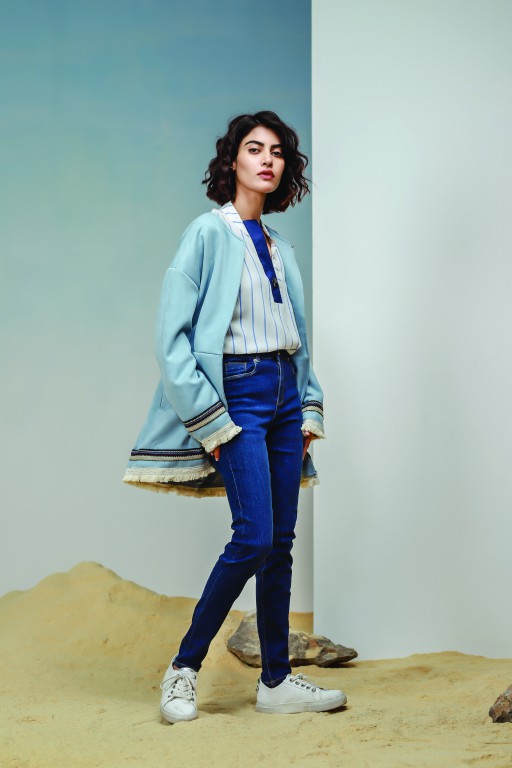
Designer Murrad Rahim Khan presents a collection that is a tribute to the different facets of a woman, with each design capturing a unique aspect

Designer : Murrad Rahim Khan

Photography: Ali Abbas at 360 Degrees

Art Direction: Hussein Kazmi at 360 Degrees

Videography: Furqan Bhatti at 360 Degrees

Styling: Lara Madhuwal & Murrad Rahim at 360 Degrees

Hair & Makeup: Tuba Shehzad at 360 Degrees

Production: GS Productions

Models: Mohsin Ali, Eesha Assad and Kanwal Ilyas


Photography: Asad bin Javed Hair, makeup & styling: Arbaqan Changezi

First fashion memory?

Observing my mother find exquisite fabrics and style unique combinations into beautiful, wearable art. I get my obsession with fashion and beauty from her. My father, too, has always been very particular about what he wears. When I look at photographs of him from his early 20s, it always feels like looking at my own reflection.

When and how did you decide to become a stylist?

Back in 2015, when I’d just done my intermediate, I decided to go to the Pakistan Institute of Fashion and Design (PIFD), fully aware I wanted to pursue a career in fashion. My degree in Fashion Marketing helped me tap into the industry, learn the technicalities and refine my skills.

Everyone feels great when they look like the best version of themselves; being able to bring a smile on people’s faces through my aesthetic motivated me.

Fashion campaigns or editorials: what do you enjoy more and how different is each process?

I enjoy both equally, but since my approach for editorials and campaigns is different, the process differs too. For commercial campaigns I try understanding the requirements of my client, the target audience and the theme of the collection. I do thorough research, which I think sets me apart—it helps to have a degree in fashion. Also, I don’t believe in putting together aesthetically pleasing looks only. I customise looks according to the model/celebrity I’m working with, because it’s important to not just highlight the product, but also make the person wearing it look good.

Photography: Asad bin Javed Hair, makeup & styling: Arbaqan Changezi

Tell us about the creative process behind putting together looks for a campaign.

It usually starts with a thorough discussion with the client, understanding what they want and what they have to offer.  This is followed by the creation of a mood board that includes references for hair, makeup and the general vibe. Once the mood board is finalised, I start handpicking accessories and discuss my ideas with the creatives I’m working with. The looks are locked in at this point, but a few extra options are kept for impromptu changes.

What’s your approach on mixing luxury brands with more affordable ones?

I personally mix and match anything that looks good. I’d happily wear a designer suit with local footwear, but it’s important to note that there are instances where this can go wrong as well. For example, I’m not a fan of people stacking designer jewelry, designer handbags and designer shades over a lawn jora—lawn literally loses its essence.

Do you ever use items from your clients’ closets?

Not really. I’d only use items from my client’s closet if particularly asked to do so. I’m not against the idea, but am usually prepared enough with my own things.

Photography: Asad bin Javed Hair, makeup & styling: Arbaqan Changezi

Describe your personal style in three words.

Laid back

Mood-dependent

Casual

Photography: Asad bin Javed Hair, makeup & styling: Arbaqan Changezi

What’s a wardrobe staple you can’t do without?

My everyday style is extremely comfy. The staples in my closet include plain, black and white t-shirts, black or blue jeans, a pair of chunky sunglasses (I like the ones that cover half my face), black trainers or sandals and a nice watch.

What would you never wear?

I work as a part-time model too, but have sworn never to wear a turban with a sherwani, even if I’m paid for it. I’m all about a well-tailored sherwani, but you’ll never see me wearing a kulla and posing as a dulha.

Styling projects for Mohsin Naveed Ranjha

If you could only wear one designer for the rest of your life, who would it be?

Locally, it has to be Hamza Bokhari.. He makes the most breathtaking clothes and I’m the biggest fan of his designs. I admire his fresh and modern take on menswear. Internationally, I loved Givenchy under Clare Waight Keller. Currently, I’m obsessed with Balmain, Vetements, Prada and Ralph Lauren.

Styling projects for Mohsin Naveed Ranjha

Which trends are you most excited about right now?

Love how silhouettes are becoming baggier. I’m not fond of fitted garments, so solid colours and lose cuts always excite me. Also, when it comes to Pakistani fashion I love that shararas and khari shalwars are making a comeback.

What is one no-fail styling trick you have? 

Less is more. Sounds unoriginal, but I always like making a big impact by doing as little as I can. Overdoing a look is very easy, I think. It’s nailing the right amount that takes effort, experience and an eye. I’m also a staunch believer in comfort over all else. Even if a look doesn’t seem aesthetically pleasing, if the person wearing it is comfortable and confident in it, it’s good enough.

Arbaqan’s work for Mohsin Naveed Ranjha as their official stylist

What are some fashion mistakes to avoid?

There are plenty, but wearing a choli the length and fit of a t-shirt and overdoing lawn outfits top my list. Also, can we please get rid of cakey makeup? Embrace the skin you’re in, drink lots of water and take care of it.

Arbaqan’s work for Mohsin Naveed Ranjha as their official stylist


When dapper meets all things summer! Give it up for 9Lines’ quirky, colourful yet super trendy menswear SS’20 collection. These outfits will take you through a refreshingly fashionable ride. With a mix of tasteful floral, feisty animal prints and graphic stripes, this collection is the perfect way to introduce a bit of colour and pattern into your wardrobe

You want to scare a Pakistani man? Say the magic word: feminism.

Credit: Nazuk Iftikhar Rao from Aurat March 2020

Over the years, this innocuous word that stands for the equality of all human beings has been equated with moral depravity and the decline of society. We see this more prominently in patriarchal societies, where women rising up to demand their rights is seen as vulgar, propagandist and even calamitous (women in jeans are the reason why earthquakes happen right?).

However, I’m not here to reiterate common knowledge. It is not news anymore that the word feminism and its basic meaning has been turned into something filthy—a plague that all ‘good’ women should avoid. We all know that we live in a society entrenched in myopic views and we are all aware of the slew of hatred and abuse that women receive on a daily basis. Whether they’re organising the Aurat March, or reporting harassment at the workplace, their demands are contorted and twisted. In the case of sexual crimes, the victim, mostly the female, is slut-shamed and victim-blamed. This isn’t the worst of it though—the worst are the supposed allies, the performative woke men and the ones with who carry the mantle of #notallmen.

Barely a second after a woman, fed up of the system that’s continuously stacked against her, decides to voice her opinion of men, relay an incident that she’s experienced or bash a man for his atrocious behaviour, a barrage of #notallmen is offered up. This is where the problem lies. Cisgender, masculine men are the most privileged of our society, yet are immediately threatened when someone exposes one of their lot. They run to defend the entire group of them, but for what? Many it seems, want to provide hope for the victims; that there is a world of decent people out there. But, how does this help a person who’s been through the worst at the hands of a man? What men should be doing is stop feeling so insecure and own up to the gross failings of other cisgender men; they should hold them accountable and actively encourage a relearning of their behaviour towards women. Sadly, the majority of the #notallmen crowd is a long way from that sort of reformation.

I, therefore, would like to focus more on the ones who are woke because it’s cool, the performative allies, whose allyship remains on the surface at best. Additionally, there are many who label themselves as feminists, but are always looking towards others to guide them along. So if your feminism as a man is a bit suspect, here’s a refresher on how to fix it, in no particular order (I’d like to thank writer, comedienne and radio jockey Sabah Bano Malik for her input):

  1. Educate Yourself: the burden to explain what feminism is about, the problems women face and the road to a reformed society isn’t on the affected party. Don’t expect them to sit you down and expend emotional labour to explain to you what you need to be doing. Do a simple Google search. There are plenty of resources out there that will inform you of the issues at hand.
  2. Listen: when women are talking, it is imperative that you listen to them without judgement. Believe them when they tell you about their problems or the abuse they’ve experienced and then listen to them when they tell you what needs to be fixed. Do not, for the love of God, try to minimise their trauma or lived reality and do not offer any other variation of #notallmen.
  3. Use your Privilege: It’s not enough to simply show up to feminist rallies and tweet your opinion on the matter, feminism starts from home. Look around you, see what’s happening with domestic staff and their rights, see if you’re being given extra love due to being a son, observe your friends and call out their misogynist behaviour and educate them. If you can’t use your privilege to create opportunities and a safe environment for the oppressed, then your feminism is futile.
  4. Follow their Lead: Never mansplain. If you think you’re in fact more informed or educated about a certain topic, then find a courteous way to highlight that. Do not talk down to women when they’re discussing solutions to problems they face. If they say x is a problem, then it is a problem—even if you weren’t previously aware of it. Let the ones affected by the patriarchy define what change they want to see.
  5. You’re Not Always Required: There will be times when a feminist discussion or forum will be held where you, even a well-meaning individual, will be excluded because you’re not a woman. Do not complain, do not fuss and remember: it’s not about you. Women need spaces where they can feel safe. So don’t impose on such gatherings.

A few other things to keep in mind are:


l               Do not expect a badge or medal for your efforts, or even a reward

l               Be intersectional in your feminism (look it up)

l               Being a feminist to get a girl’s attention makes you the opposite

l               It’s not about you

l               Constantly analyse your own behaviour


I spoke to friend, journalist and fashion stylist Haiya Bokhari and she stated that the first thing men should do is to learn empathy. She says, “It’s difficult to empathise with anyone else if you’re suppressing your own emotions. Before men can embark on a journey of becoming allies, they must be able to look inside and have difficult conversations with themselves.” This is incredibly true. Men need to realise that the patriarchy is also damaging to us and our own development. Learning to be in touch with our own emotions isn’t weakness; toxic masculinity and fragile egos must go.

And as Sabah said to me, “Acknowledge that a divide exists, acknowledge that the world is different for women and girls and non cisgendered males. Acknowledge your privilege and don’t make excuses.”

Because the fact of the matter is, till the patriarchy survives and cisgendered men reap its benefits: #yesallmen


One of our favourite lifestyle photographers, Areesh Zubair, speaks to Mehek Raza Rizvi about his popular new “Duur se Portrait” series launched to document life in the Covid-19 lockdown and how he kept his creativity alive during this time

What inspired the “Duur Se Portrait” series?

I wanted to document people during the lockdown; it all started when a prominent photo-journalist proclaimed on his Insta live that it’s very important for photographers to document this time, as this period will be remembered in the annals of  history. I realised that we as photographers have a duty upon ourselves to archive it. My initial plan was to go out on the streets and photograph the general day-to-day life during the lockdown, however, I came across quite a few talented people that were already doing a great job of it. Hence, I thought I’d do something a bit more unique, so I came up with the idea of photographing people on their balconies. Initially I was only going to photograph my friends and family but now with time it’s morphed into something much bigger than I could’ve ever imagined.

After capturing people dressed up on their balconies, have you considered doing another series focusing on their more natural/realistic quarantine moods?

The idea behind the project was never to photograph folks who were all dressed up, I just wanted to photograph people in whatever way they were most comfortable.  Surprisingly, the series kind of gave people a reason to get up and ready for a change, especially during the early days when the lockdown was quite strict. I seldom give people a brief or reference points—I just simply ask them to come outside on their respective balconies in whichever way they’re most comfortable and from there onwards I photograph them.

In order to continue the series, o ne thing I’m certain of is that I’m looking to photograph people from more diverse backgrounds, certainly outside my friends, family and industry circles.

How do you see the creative industry altering during Covid-19?

Covid-19 isn’t going anywhere anytime soon—that’s a given. Our industry, like all others, needs to adapt to the current situation by developing SOPs and working with them. This is the best time to improvise and be as creative as possible.  We have access to some of the best technology at our fingertips; I’ve seen some brilliant shoots done via Facetime. It’s time to use our cell phone cameras more appropriately. I believe we need to make the most out of what we already have, as art created under limited circumstances is always special.

Has the current global uncertainty had an impact on your aesthetic and vision as a photographer?

Obviously! Like any other person it has had a serious impact on my work. Before this series, I didn’t really have much experience working with zoom lenses. Truth be told I don’t even have my own zoom lenses; it wasn’t exactly my style. But the lockdown compelled me to use them. For the project I borrowed the zoom lenses from my friends and colleagues. I’ll definitely be investing in my very own pair soon.

For most people, having a creative outlet is more important than ever now. We know you’ve conducted online classes in the past, so can we expect more in the future to help anyone seeking guidance free of cost?

Definitely! Having a creative outlet or any outlet for that matter is very important during these days. I did one photography workshop in the early days of the lockdown—it was free of cost. I’m always open to the idea of sharing and guiding as much as I can and now that you’ve asked I think it’s time for another workshop.

Other than that, I’m always available to offer my guidance or answer any photography related questions; my DMs are always open.

Have you discovered any other secret talents of yourself in quarantine?

That I am really bad at Ludo Star!

What’s something you’ve learnt from this crisis that you hope to keep with you long after it’s over?

That nothing can stop you from doing something that you really want. You just need to make sure that you’re doing it the correct way. The excuses we make every day are honestly speaking just lame. I just had an idea to start with—I didn’t even have the right equipment to get it off the ground. But look where it’s gotten me. I can’t complain.

We need to work together more, collaborate, help one another and find positivity in every possible situation.


Saba Qamar has become a force to be reckoned with in the entertainment industry. Through her poignant performances, she’s captured the hearts of millions and continues to be a voice for downtrodden women everywhere. Mehek Raza Rizvi speaks to the reigning queen about her upcoming projects and how she’s spending time in lockdown

“Fortunately, criticism has never been a source of fear for me. I enjoy criticism as much as I enjoy appreciation”

Through the characters you portray on screen and the content of your recent YouTube channel, you echo the sentiments of many women. How important a part can female role models like yourself play in making the world a kinder place?

I believe that I’ve been blessed with the utmost responsibility of influencing. As an actor I hold the power of breathing life into stories; the characters I play not only leave a mark on screen, but they also leave a mark on the audience. Thus, it’s extremely important for me to carefully choose the message I’d want to convey to my audience and how I’d want to impact their lives. Playing my role in making this world a kinder, safer and better place is a priority for me.

Do you feel gender portrayal in Pakistani media has seen a shift in recent years?

I do believe that as an industry we’re breaking free from the world of gender stereotyping. The ethical value of the work I’m creating is far more important than any monetary value and I believe that’s what makes me stand where I do today. Ending gender stereotyping on screen is a cause close to my heart and I pray to continue working towards this cause.

Unlike most actors, even the biggest critics would find it challenging to typecast you due to your versatile body of work. Has this been a conscious effort from your end?

Definitely! There’s nothing that excites me more than a challenging and out-of-the-box script. That’s what keeps me going as an actor: the hope that I’ll get to live a new character every morning. I’ve grown both individually and professionally through the characters I’ve chosen to play over the years.

What led you to explore YouTube as a platform? Is digital media the way forward for mainstream actors too?

My underlying passion for writing and direction led me to explore YouTube as a channel. I’ve found it to be a medium which enables me to communicate with my audience through my creativity, and most importantly, my originality. People are finally getting to know Saba Qamar up close. I do believe that exploring digital media is integral in the world we live in today.

Your video titled “Isolation”, the first episode on your YouTube channel, resonated with many on  a personal level. How’re you dealing with these strange times?

This has been a period of reflection for me—these challenging circumstances have drawn me closer to myself and God. I took this time as an opportunity to reflect on all that I’ve neglected and to pay attention to the smaller things in life. I find myself to be healing as a creative and exploring new strengths every day.

“There’s nothing that excites me more than a challenging and out-of-the-box script. That’s what keeps me going as an actor: the hope that I’ll get to live a new character every morning”

Most people are keeping busy by exploring new talents—from cooking to painting and writing. What does a typical day in quarantine look like for you?

The talent I not only explored but revealed, was the talent of writing along with the talent of direction. A typical day in quarantine is filled with the warmth and presence of my family, far away from the noise of the world, where my soul and body heals from all the exhaustion, where I find time for my creativity, where I work and hold Zoom meetings with my team, where we keep each other motivated with new ideas.

While most fans find your sincere, unfiltered and genuine spirit refreshing, there are certain disapproving parties that can subject you to criticism. Is that ever a fear?

Fortunately, criticism has never been a source of fear for me. I enjoy criticism as much as I enjoy appreciation.

You’ve been part of the industry since 2004, experiencing countless highs along the way. What’re the biggest lessons you’ve learnt?

To stay consistent and persistent despite all odds and setbacks. It’s also extremely important to stay positive and take everything in a positive manner.

Tell us about your upcoming films “Kamli” and “Ghabrana nai hai”.

The characters I’ve played in both the films are poles apart from each other. In one my role is quiet and calm, whereas in the other I’m overly enthusiastic and vibrant. I can’t wait for the audience to watch both the films.

How would you like Saba Qamar to be remembered?

I’d want to be remembered as someone who was more than just a good actress. I’d want people to remember me for my soul, heart and faith—for the positive change I’ve tried to bring in this world through my work.

SHORT & SWEET

What’s the first thing you’ll do once this global pandemic is over?

Get on the next flight and explore a country I’ve never been to before.

What’s something you’re surprised you don’t miss in quarantine?

Going to the gym and working out.

What’re some things you’ve come to realise aren’t as necessary as you thought earlier?

My YouTube video ‘Isolation’ is an in-depth response to this question.

If you could only eat one thing in quarantine, what would it be?

Fruit

If you could only use one app during this time, which one would it be?

Instagram

Are you guilty of panic buying?

No

Are you an early riser or night owl?

Night owl

Texts or phone calls?

Phone calls

Do you have a nickname?

My sister calls me ‘Sabi’, my elder brother calls me ‘Bubniya’ and my best friend calls me ‘SQ’

Out of all the characters you’ve played, which one do you relate to most?

Mashal in ‘Besharam’

A dialogue from one of your projects that describes you best?

‘Kabhi Kabhi Kadion Ko Apnay Kaid Khanay say Mohabbat ho jati hai. Mujhay Bhi Ho Gayi Hai’ (Sometimes prisoners fall in love with their prison; I too have fallen in love with mine)

Your favourite performance of yourself so far?

‘Baaghi’


Photography: Rizwan Baig; MUA: Shoaib Khan; Stylist: Zahra Sarfraz; PR & Coordination: Meshal Cheema

The recent protests in the United States following the extra-judicial killing of George Floyd, an unarmed African-American man, at the hands of the police have reignited the #BlackLivesMatter movement and the conversation on race in America. Granted this conversation never really went away, as the equality and justice that was demanded of their government was never provided to the Black community.

Donald Trump’s term in office continued to see a rise in violence against coloured people in the USA, propagated by the police or white Americans, with it largely being against African-Americans. George Floyd’s murder, which was captured in a horrific video, is just another in a long line of murders committed at the hands of the American police. Trayvon Martin, Breonna Taylor and Ahmed Aubrey are all names we’ve heard and read in the news and yet, the cycle just doesn’t seem to stop.

Police brutality is sadly not the only culprit here, as many regular American citizens continue to condone this behaviour and in fact partake in it themselves. Every day there’s a new video floating on the Internet where a white person is using their privilege to racially profile a Black person. The ‘Karens’ or ‘Kevins’ of the Internet, as they’re now being called, display their white supremacy and white privilege for the entire world to see, yet apart from them losing their jobs or being dragged online, nothing much happens in the way of substantial institutional change.

You might be wondering what this has got to do with us. Living tens of thousands of miles away with our own problems, why should we care about what’s happening in the USA? The simple answer is: humanity. More than that, I believe this is the right time to check our own endemic racism and colourism, in order to carve a better world for the generations to come.

It’s no secret that colourism is rampant in our society; darker skin tones have always been less desirable than their fairer counterparts. We grow up cracking jokes at the expense of those darker than us and these are invariably racist in nature. Using derogatory terms we compare darker people to Africans, as if being an African (which is not a nationality) is a bad thing. The worst part, these jokes go unchecked and unchallenged. And why wouldn’t they be? That’s what grown ups around us engage in as well: girls with duskier skin tones are told they’re undesirable and are admonished for not using the array of skin whitening products available to remedy this. While this is a lot more nuanced than this article can focus on, I bring this all up due to the inherent links with anti-blackness that the brown community, whether in South Asia or the Diaspora, continues to promulgate.

People around us continue to take from the Black community without lending support when it’s required. We obsess over music produced by Black artists, think we have some innate right to use the ‘N’ word (please don’t), try to adopt African-American accents and mannerisms, but remain performative in our protection of their rights. Be honest, how many of you have heard the following—or similar—from those around you:

“Yeah, but I would never want my child to date a Black man”

“I’m not going to go watch Black Panther, too many Africans”

“Habshi lag rahay ho”

“Trump is right, they’re all criminals”

“You’re my N——”

Sadly, the above are all real conversations from people I’ve had to argue with and persuade to see their racism. The “I’m brown I can’t be racist” argument is the most ignorant response ever. Now, this article doesn’t mean I absolve myself of any prior racist or anti-black attitudes; I’ve had to identify my own anti-blackness over the years and methodically rid myself of it. The point is, to continue to learn and recognise one’s biases, in order to defeat them. A few steps that you can take:

  1. Recognise your internalised anti-blackness: are you fearful of Black people? Do you associate the same negative attitudes towards them that white supremacists do?
  2. Educate those around you: notice who else is being overtly or inwardly racist. Talk to them about the injustices faced by Black people globally and how systems continue to be biased against them.
  3. Call out: whenever you see a person, company or brand being anti-black, call them out. It’s imperative that you do.
  4. Donate: if you can, then donate to organisations that are fighting for racial equality.
  5. Ask: there were many instances where I was unsure of whether my behaviour constituted racist undertones, or if someone else’s did or didn’t. The easiest way was to call up a friend and ask them. With the Internet, you don’t necessarily need to have Black friends for this to happen, just ask on a relevant forum and you’ll be answered.

It should be clear as day that racism can’t exist, yet it isn’t so. Recently, I’ve read a bunch of books dealing with racism and slavery, as well as watched shows and documentaries that have narrated the effects of these on the lives of modern African-Americans. It’s been an eye-opening, blood-boiling experience. Some of them that I recommend for you:
Read: The Underground Railroad by Colson Whitehead

Read: Homegoing by Yaa Gyasi

Read: Any essay of James Baldwin

Watch: When They See Us on Netflix

Watch: Selma (a movie on the life of MLK Jr.)

We’ve all heard a version of the phrase that those who turn a blind eye towards oppression are complicit and that’s true now more than ever. We might have our own problems here, but that doesn’t mean we can’t lend our support to others subjected to systemic violence.


Pakistani couturier Nauman Arfeen has preferred to stay away from the spotlight and always let his work speak for itself. Last year, he garnered worldwide recognition for crafting a timeless teal sherwani for Prince William during his visit to Pakistan. Haider Rifaat was in conversation with him about his thoughts on the fashion industry, dressing royalty and more

You’ve created something special with your label ‘Naushemian’ that resonates with a lot of people. To what do you attribute your success?

It’s been a blessing and the result of the boundless support I’ve received fromthose around me. I was more interested in the field of medicine, but my father wanted someone to look after ‘Hat Villa’, his millinery business. I was the youngest in my family, so my father expected me to assume this role. It was a struggle for sure, but I was able to persevere and it culiminated in the launch of ‘Naushemian’. My first fashion show, Fashion Pakistan Week, was in 2009 where I presented my collection ‘Raven’; this was a turning point in my career. The designing of shoes followed and the rest, as they say, is history.

What drew you to fashion in the first place?

There was always a gap—a missing piece in men’s fashion that needed to be addressed. When I heard that Fashion Pakistan was on the lookout for new talent, I registered for a slot. Presenting my first collection was daunting, but I credit Rizwan Beyg and Raheel Rao, as their their critique and encouragement led me to be lauded on the ramp.

I recall making turbans for almost every label in the mid and late 90s. They ranged from Aitchison College turbans to traditional Rajasthani ones, so thinking about eastern wear all the time inspired me to launch ‘Naushemian’, which essentially translates to ‘bridegroom’ in Urdu.

What is a core component of your fashion ethos?

My embroidery and craftsmanship; they make me a different designer. Men’s sherwanis are my forte, but I have also ventured into womenswear and men’s western formal wear.

Have you ever experienced a creative block? 

I don’t believe true artists face creative blocks. Creativity is innate and inspiration can be found from myriad sources. I’m inspired by nature, the world around me and the people I meet.

Why has Pakistan’s fashion fraternity not been inclusive of all shapes and sizes? 

Maybe designers find it a hassle to cater to mass crowds and designing for a range of sizes. Not everyone can think on a macro scale. For me, fashion is for the masses. I don’t understand why garments are designed for a specific size or body type. I’m everyone’s designer. If you visit my atelier, I have four sizes that range from small to extra-large. I drive satisfaction from providing people with custom-made products that they want to wear.

What’re your thoughts on sacrificing personal creativity over trends? 

Fashion changes by the minute; it’s about how you perceive an attire and make it your own. Fashion is what makes you feel attractive and confident. So I believe it’s silly to follow trends. Sadly, many contemporary designers are working strenuously to follow trends, rather than creating them. True fashion should be that which is a true reflection of onself.

How is androgynous wear changing the way we look at style? 

Style is something we are comfortable and confident in carrying. Androgynous wear is harder for men to swallow than women. Then again, if you’re confident, you’re stylish.

What’ve you planned so far for the summer and fall 2020 collections? 

Our entire team is working to devise a collection. I have matching separates and soft pastel colours in mind for the summer season. They can work well for Eid festivities too. We’ll surely come out with dark, vibrant colors for this fall.

What’s a more creative substitute this season for overdone floral prints? 

Checks and stripes

Who do you cite as your fashion icons?

Tom Ford—I admire how he made a name for himself in fashion after having studied architecture. After finding success with Gucci, he went on to give the world one of the best brands there is.

What draws you to his work ethic? 

I met Tom once. His products are well thought out, beautifully designed and incredibly practical. These factors attract millions of people towards him, me included; I even love his fragrances. He is an all-rounder.

Last year, you were the only male couturier from Pakistan to have designed for HRH Prince William while he toured the country. The teal-coloured sherwani was stellar. How were you approached for this and why did you specifically choose the colour teal? 

I’ve been stocking in London for a decade now. The royal team reached out for my designs there, got my contact details and closely reviewed my credibility. As you may know, royal managers handle things with precision. They initially required a classic blue sherwani with green buttons. I designed according to their demands and had an extra sherwani as an option as well, which they loved.

They strictly scrutinised my design and made sure no calligraphy was embroidered on the piece. On complete satisfaction, they opted for my garment for His Highness.  It was my personal vision to see the prince in teal for the occasion. Teal is an upcoming hue in fashion. The colour sends out a message of solidarity and peace.

What went through your mind when you saw HRH Prince William wearing your label?

It was a memorable moment for me as a Pakistani designer. I was honored to be selected as the only male couturier from my country to create a garment for the future king of England. This was the first time he’d worn another country’s traditional attire on tour and that was a tremendous feeling in itself. He overshadowed Duchess Kate on that day, if I may say so. That sherwani will remain a timeless piece for decades to come.

Did this achievement garner your label immense recognition across Pakistan and the world? 

Yes—not only this but an attire that had lost its identity globally returned ferociously as a new trend in fashion. Those who consider it a long buttoned jacket now know very well that it is a traditional sherwani.

Of all the public figures you have dressed, who has been the most special?

Although I’ve designed for many dignitaries, I believe that every client we cater to is a prince and princess. They are all not just my clients, but my family. I’ve witnessed happy tears in the eyes of mothers when they saw their sons wearing the complete ensemble at my stores. Such moments often humble you.

Who has mentored you in your craft? 

Time and experience have been my best mentors. I learn in my everyday life. I don’t follow people in our industry, because they’ve hardly guided me. Learning from time to time, however, has given me the confidence to reflect on what I’ve accomplished so far.

What important lessons has your profession taught you?

Many—the best would be to never show your cards. Showing off is a fool’s idea of glory so if you’ve noticed,m not a fan of sharing my ideas.


Pin It