


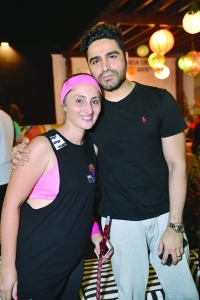
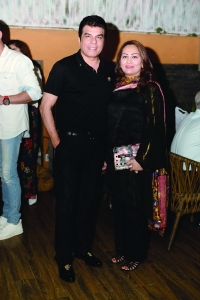
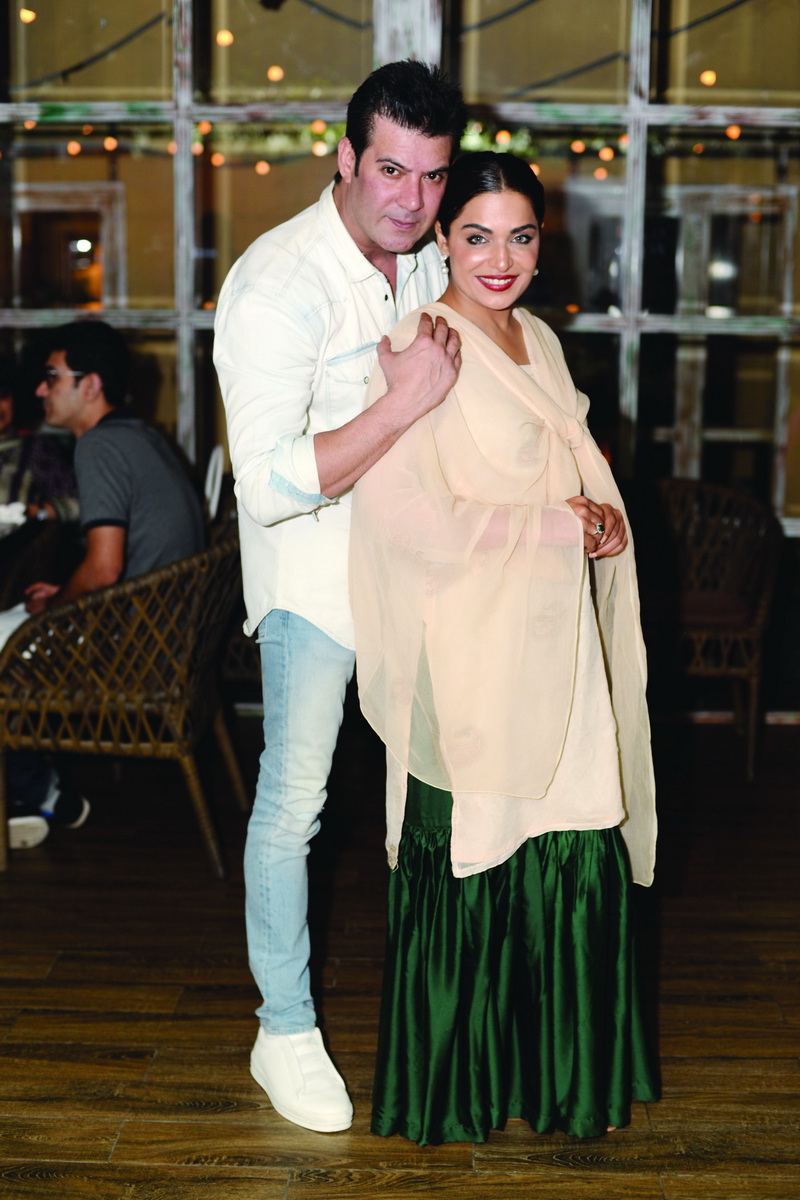
Who? Ahmed Ali Butt
Why? The comedian sports a slimming and laid back look. His streetwear sneakers are right on trend

Who? Mubashra Ali
Why? The elegant fashionista is stylish in an asymmetric Pucci dress paired with stand-out high end accessories

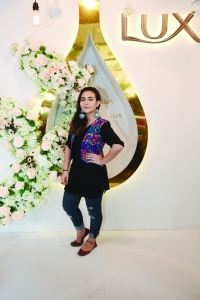
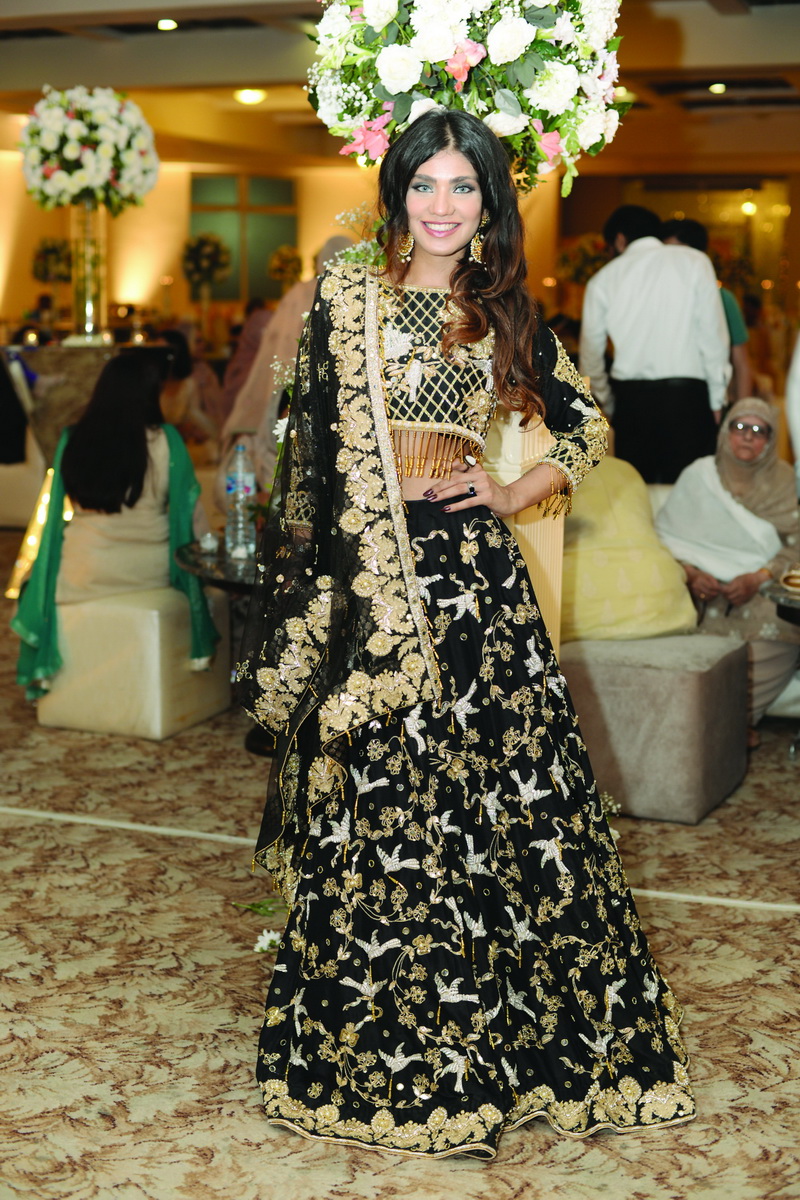
Who? Tehmina Muggo
Why? What a fun print to wear!
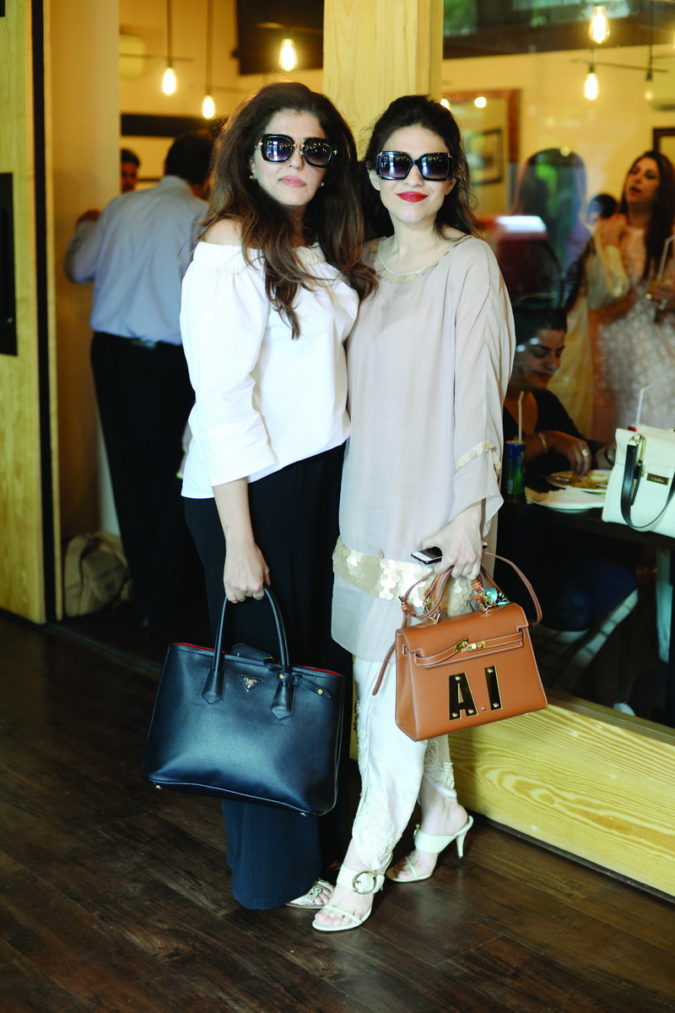
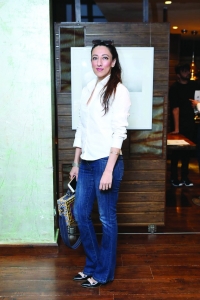
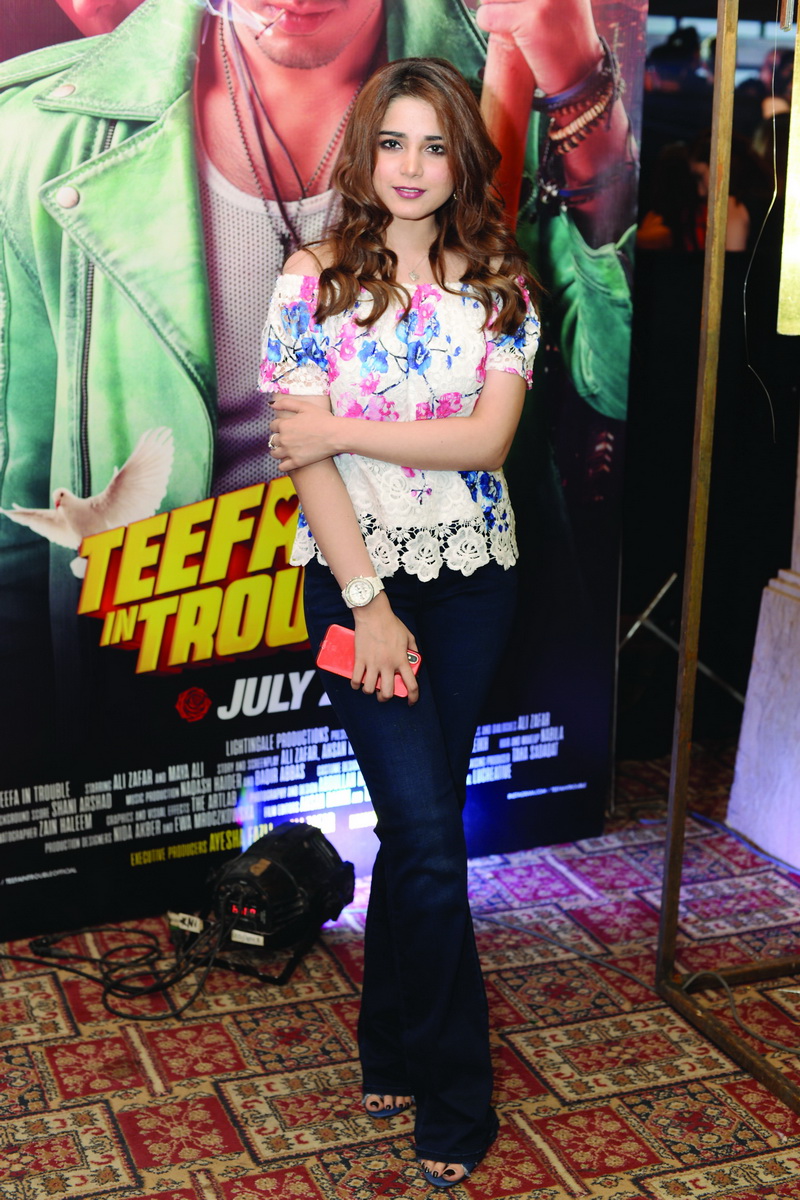
 Who? Amina
Why? She’s quite the swan, her long neck and red pout mirroring that of the Judith Leiber bird she’s carrying

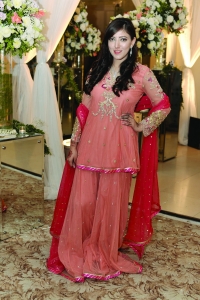
Who? Zainab Abbas
Why? A pink suit! Ooh la la
 Who? Shandana
Why? She’s patriotic in Pakistan’s colours


After ten successful years as Pakistan’s most popular and enduring music program, Coke Studio will be returning to the air waves in August. Musicians Zohaib Kazi and Ali Hamza take on the mantle of production in the eleventh season of the series. Passionate, determined and talented, the duo is working hard to produce a season that highlights the people, history and culture of Pakistan, in addition to its music and musicians. In an exclusive interview for GT, the two young men talk to Ally Adnan about the upcoming season of Coke Studio, the challenges and pleasures of producing the program, and the dimensions that they plan to add to the music franchise

Coke Studio is one of the most popular – if not the most popular – Pakistani music programs of all time. How did you feel after landing the opportunity of producing Season 11 of the series?
We were thrilled, absolutely thrilled! The initial excitement, albeit great, was short lived because the work came with a tremendous amount of responsibility. Coke Studio is enormously popular all over the world and the program’s fans have high hopes of the show. The responsibility of living up to the expectations is huge. It feels good but is sobering at the same time.
Umber and Rohail Hyatt produced the first six seasons of Coke Studio whereas the last four were made by the Strings duo of Bilal Maqsood and Faisal Kapadia. What do you think of the different production styles of the two producer teams?

The two teams were masters in the field. Each had its own unique style and did excellent work for Coke Studio. The Hyatt duo had a great vision for the program and, along with its team, turned it into a marvelous reality. Maqsood and Kapadia inherited a wildly popular program and carried it forward with great style and success.
“Coke Studio has a way of connecting with people using a language that is understandable, honest and refreshingâ€
Coke Studio Explorer takes Coke Studio to different parts of Pakistan
What has been your favorite season of Coke Studio thus far?
We do not have any one favorite season but have favorite songs instead. Each season has produced songs that are wonderful and have hijacked our playlists for years.
What is the reason for the immense popularity of Coke Studio?
Coke Studio has a way of connecting with people using a language that is understandable, honest and refreshing. People relate to it. The elements of hope, optimism, empathy, thoughtfulness, unity, and pluralism are hallmarks of the program. They speak to the viewers on an aesthetic level, individually and collectively. The music, of course, is very good. And it is presented in an effective and interesting manner. The program allows the Pakistani nation to express itself in a uniquely powerful manner. That, perhaps, is the single biggest reason for the phenomenal popularity of the series.
How has Coke Studio contributed to the music of Pakistan?
Coke Studio has successfully brought the diverse, vibrant and inimitable music idiom of the nation to a single platform and helped develop a concordance between traditions that have varied sensibilities, ideas and subjectivities. It has helped blend folk, classical and contemporary music into songs that resonate with the public at large. Most importantly, it has allowed us to discover, examine, study, and reconstruct our cultural and musical heritage.
The series has been accused of cultural appropriation for the personal gain of money, prestige and fame. Is the accusation fair?
No, it is not. Coke Studio is truly a platform for musicians of different ethnicities, backgrounds and styles to come together and collaborate in an atmosphere that is simultaneously creative, invigorating and harmonious. This, in no way, can be deemed to be cultural appropriation. In fact, it is the exact opposite of cultural appropriation.


How are musicians selected for participation in Coke Studio?
It is a three-step process.
We start by defining an overarching theme for the season. Once that has been done, we explore ways of introducing, exploring and presenting the theme. Finally, we look for musicians who embody the notions of the theme and meet the requirements of the musical pieces that we have in mind.
Do you know, or feel, that nepotism has ever played a part in the selection process?
No. We have been associated with Coke Studio, in one way or another, for a very long time. The people associated with the program treat the program with great reverence and respect. It is far too important to them to allow the ills of nepotism and favouritism affect its merit. The exceptional quality of the program is sufficient testimony to the fact that it has always been produced with integrity, honesty and professionalism.
How can a talented musician – one who does not have money, influence, clout, or social connections – apply to audition for Coke Studio?
Coke Studio has an active email address – demos@frontfoot.media – that is meant to receive demo videos and audio files. We listen to all submissions very carefully and conscientiously, in order to be fair and because we genuinely like discovering new talent.
We have expanded the selection process in Season 11, where we have ventured out of the studios to go to the field and actively find musicians to feature in a new module that we have named Coke Studio Explorer.

What is the new module, Coke Studio Explorer, that is being introduced with Season 11 of the show about?
Coke Studio Explorer takes Coke Studio to different parts of Pakistan. It uses music to explore the diverse cultures, locales, traditions, and values of the country and celebrates the spirit, strength and resilience of its people. The program is centered around a few amazingly talented and driven musicians whose songs will do Pakistan proud and help put the unique music of the country out on the international landscape. The musicians represent all provinces of Pakistan. We hope that the module will spark a vibrant conversation about diversity, pluralism and understanding amongst viewers.
How is Season 11 of Coke Studio going to be different from the programs produced by Strings and the Hyatt husband and wife team?
It will be different from the seasons produced by Strings and the Hyatt husband and wife team in the same manner that we are different from Bilal, Faisal, Umber, and Rohail. Each person is unique and brings his own personality, intellect and vision to the table. Viewers of the program will notice the difference in the way we approach the program.
The tagline of Coke Studio has been changed from “Sound of the Nation†to “Spirit of the Nation†in Season 11. What does the change signify?
The change is not final and still being discussed. If it happens, it will be a consequence of the evolution of Coke Studio. The program no longer represents just the music of Pakistan and is a veritable celebration of its culture, ethos and character, today. The new tagline – Spirit of the Nation – will, therefore, be more apropos given the expanded influence, popularity and scope of the program.
Coke Studio has an active email address — demos@frontfoot.media — that is meant to receive demo videos and audio files. We listen to all submissions very carefully and conscientiously
What challenges did you face while producing Season 11?
The two of us had worked with Coke Studio in the past and had an idea of the work that producers needed to do to produce the series. Nevertheless, the scope of the work was immense and far greater than what we had imagined. The program asks for a lot, but we found its demanding nature to be a source of strength, energy and motivation. We were happy to give Coke Studio all that it wanted plus some more.
What pleasures did producing the season afford you?
The greatest pleasure, without a doubt, was the act of putting all the diverse, disparate and different elements of the program together and seeing them come together as a single, unique and meaningful entity.
A lot of time, energy and effort has been put into producing Season 11 of Coke Studio. What would constitute success for the program?
The appreciation of its viewers. We are looking for nothing else.
Photographs by Insiya Syed

Ally Adnan lives in Dallas and writes about culture, history and the arts. He tweets @allyadnan and can be reached at allyadnan@outlook.com.
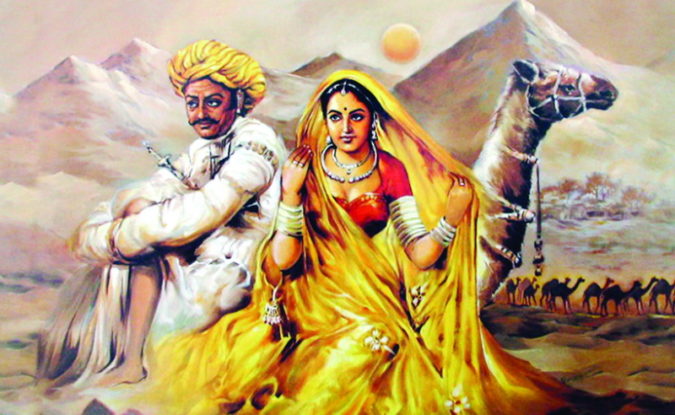
A Rajasthani/Sindhi folktale replete with beautiful princesses, enchanted castle, a brave and ingenious hero, passionate romance, ordeals of separation and edifying tragedy

By Mahlia Lone
Background
The famed Rajasthani folktale is set in Lodhrawa in Jaisalmer district Rajasthan, India, around the mid-14th century. Lodhrawa stood on an ancient trade route through the Thar Desert, which was vulnerable to frequent attacks.
In the Sindhi story, Momal Ji Maari (Momal’s mansion), the heroine’s house was located in Ghotki district, near Sukkur. The story occurred in the times of Hamir Soomro, the King of Amarkot (now Umerkot district in south-east Sindh). The city was named after its Hindu founder Maharaja Amar Singh, belonging to the Sodha clan of Hindu Rajputs, who built the Amarkot Fort to wade off Muslim invadors. During the Mughal Empire, Emperor Akbar was born in Amarkot 1542, his father Humayun having fled from his capital in Delhi after his military defeat at the hands of Sher Shah Suri and the Rajput ruler Rana Prasad giving him refuge.

The story in classical Sindhi literature
The first time the story was written down was by 17th-century classical Sindhi Sufi poet from Nasarpur, Shah Inat Rizvi (circa 1613– 1701). Combining the folklore lyrical poetry of travelling minstrels (singers) with the cultivated spiritual thinking of the Sufi saints, Inat brought in a new style of Sindhi poetry. He combined popular songs commemorating the valour of heroes in wars and wise rule of kings during peace that included elements of fantasy, magic, legend and quasi historical romance with the Sufis’ spiritual ideas. Fond of music since childhood, Inat would raptly listen to professional musicians and itinerant minstrels in village gatherings. Belonging by birth to an orthodox Syed family, he was educated in Muslim spiritual poetry.
The story in 20th century Sindhi literature
Shaikh Ayaz (1923 — 1997) translated Abdul Latif’s magnum opus Shah Jo Risalo to Urdu, establishing him as an authority on the subject. He received the Sitara-i-Imtiaz for his efforts and was regarded as a “revolutionary and romantic poet†in his own right.
 Tajal Bewas (1938 — 2008) born near Khairpur, was a classical Sindhi poet who authored 44 books, including the story of Momal Rano.

Inat, hence, forged a new genre of Sindhi literature with his groundbreaking work as a “saint-poet of the people singing about their heroes in war and peace and their traditional tales and romances as well as about the traders, weavers, and monsoon rains on which the prosperity of the people depended. He also dealt with the spiritual themes of love and hope, and composed verses in praise of the saints and selfless devotees in the search of God,†commented an expert of classical Sindhi literature. In addition, Inat experimented with idioms and imagery to make his poems more descriptive, further enrichening Sindhi literature.

Inat’s contribution to classical Sindhi poetry was built on by Shah Abdul Latif (c. 1689 – 1752), a young man in his twenties when the older poet died. According to oral tradition, Abdul Latif met the elderly Inat and they would recite their parallel verses on common themes. Regardless of the veracity of this occurrence, Inat’s form, technique and subject matter greatly influenced Abdul. The latter used some of the same idioms and expressions more skillfully and with greater insight, to produce his Shah Jo Risalo, the poetry book on the Seven Heroines of Sindh, one of which was the story of Momal Rano.
The Sindhi version of the folktale
Beautiful Princess Momal of Ghotki lived in a luxurious and magical palace named Kak Mahal or Mirpur Mathelo, near Lodhrawa, north-east of Amarkot (now known as Umerkot). Momal oiled, perfumed and draped in exquisite silken ensembles was a beauty beyond compare. She lived with her seven equally indulged sisters and attendants in the seclusion of her grand mahal. Two of her most famous sisters were named Somal, known for her intelligence, and Natir, infamous as a schemer.


Over the vast grounds of the palace, a magnetic field was spread that gave the appearance of a gushing river. Just as in the fairytale of Sleeping Beauty, a thickly wooded forest had sprung up around the castle protecting it. The jungle housed many wild animals, including ferocious man-eating lions and tigers.
Similarities with tales in World mythology
Apart from the more obvious comparisons with the classical fairytale Sleeping Beauty, the story of Momal Rano shares similarities with the Greek mythological enchantresses the Sirens who lived on the island of Anthemoessa and lured sailors with their enchanting songs and made them crash their ships on their island’s rocky shore. Very few heroes were sharp enought to outwit these deadly mermaids. The mythological hero Ulysses stuffed wax in his sailors’ ears so they couldn’t hear the sirens’ singing and had himself tied to the ship’s mast. This story has parallels with Homer’s epic poem The Odyssey when Odysseus does the same. Similarly, in the mythological story of Jason and the Argonauts Orpheus, the legendary musician, plays his lyre, his lilting music drowning out the siren call.
The condition on becoming Princess Momal’s consort was set on a man being brave enough to enter the magical magnetic field and cross the jungle to enter the mahal and being clever enough to solve the puzzles devised by her wily sisters. Many princes hearing about the unmatchable princess tried but failed; they were robbed by the sisters and attendants and lost their way forever in an unsolvable maze of laybrinths and mirages much like in a House of Mirrors attraction at an amusement park. The princes were never heard from or found again. The more unattainable the princess and the more impregnable the castle, the more legendary and enticing became the prize.


Now men by nature love a challenge, want what they cannot have and are egotistical by nature, and kings are great men
The ruler of Amarkot, Hamir Soomro and his three ministers Seenharro Dhamachanni, Daunro Bhatyanni and the youngest Rano Mahendro, all Rajput Sodhas by caste, used to go horseback hunting in far flung areas of the kingdom. Adventurous and intrepid by nature, they would even cross the boundaries of the small state to neighbouring areas. One day, on a hunting trip, the four men encountered a bedraggled looking man to whom they did not disclose their identity. Grateful for their help and for sharing their food and water, the young man told them what had befallen him. He was a Kashmiri prince who, having heard the legend of Momal’s beauty and charm, got so inspired that he travelled all that distance to try his luck. Having finally fought through to the enchanted castle, the prince was so overcome by Momal’s beauty that her seven sisters and attendants successfully played all types of tricks on him, confused him with multiple puzzles and stripped him of his wealth. Finally, he ran for his life.
Now men by nature love a challenge, want what they cannot have and are egotistical by nature, and kings are great men. Hamir badly wanted to succeed where so many men before him had failed. Having extracted the whereabouts of Kak Mahal, he decided to conquer the castle and win the princess’s hand but failed to do so. Then, in turn, his ministers tried as well, and also failed.
The youngest, Rano was an extremely intelligent, courageous and persistent young man; when it was his turn at last to try his luck, he succeeded in cracking the code of the illusion and reaching the palace. Impressed with hi, Momal accepted him as her consort and that night they consummated their marriage. The next morning, Rano left Kak Mahal and returned to Amarkot to continue his day job of working for Hamir Soomro.
Rano kept visiting Momal every night and their feelings for each other kept growing. Though it was quite a distance between the two palaces, his journey was shortened as if by magic. King Hamir felt envious that his young minister had succeeded where he couldn’t—it was a matter of pride for him. So he forbade Rano from meeting Momal and had his guards keep a check on his nocturnal movements.
Being Hamir’s subject, Rano had no choice but to obey his ruler. But try as he would, his passion would not let him rest. Stealthily, he would slip out at dusk on his camel and return before dawn. He hardly got any sleep, feverishly burning the candle at both ends, gripped by his passion.
Finally, one day the guards caught Rano sneaking off and Hamir had him thrown in the dungeon. After some time, thinking he had learnt his lesson and feeling guilty imprisoning such a loyal and trusty minister, Hamir released him on the condition that he would not meet Momal again. Not being able to resist her pull, Rano snuck off to meet Momal again.
Momal too had started pining for Rano. One night when he was late, thinking he had stood her up, the princess asked her sister Somal to disguise herself in men’s clothing and lie beside her in bed. She wanted to test Rano’s love for her by making him jealous. As was expected, when Rano saw the two sleeping together, he mistook Somal for Momal’s lover. Furious, he left Kak Mahal for Amarkot, leaving behind his cane. Momal woke up, saw the cane and realized what happened. Fearing that he had left her for good under the misapprehension that she had cheated on him, she lit a candle in her window to message to him to return. At last, when there was no sign of Rano, Momal was left with no choice but to set off to Amarkot in search of him. Disguised as a man, she set up residence in Amarkot and Rano recognized his princess.
When the two parted lovers met, Momal pleaded Rano for forgiveness for playing a thoughtless trick on him. But he remained obstinate in his resolve to punish and not forgive her. Out of desperation, Momal jumped in a raging fire to prove her love to him. Rano jumped in after her and both got consumed by the fire, the flames of their mutual passion purifying their bodies and souls.
Moral of the story
The love of Momal and Rano is an allegorical metaphor for the love of the soul and divine. The separation and longing between two lovers parallels the separation of the Divine and the human soul, the longing for the two to merge and dissolve into each other much like Momal and Rano were unified in the burning fire. The human soul longs for Allah, and the beloved renders himself up, caring nothing for the material world in his/her quest to seek union with divinity in the crazed love experienced by Sufis.

By Eman bandey
Colour blocking, florals, patterns, why not patch them all up? This look will be best for chunky Fall knits, accessories and outerwear. Why go for one simple look, when you can try them all?!

Layers upon layers for Fall? Maybe not. This long and lean silhouette can refresh your standard autumnal choices. Go high neck to midi length to elongate your body.
As Mahira Khan would say “EXTRA!” Many designers have been showcasing their oversized designs on the runway. If you’re not that bold, try the trend on a smaller scale like accessories i.e. bags, sunglass
es, etc.


 Flared pants are a throwback but flattering silhouette, going back to the Seventies and the Noughties. Pair up with a matching top, simple blouse or white tee. This will either be a hate it or love it trend as it emphasises your curves while lengthening your legs. High heels are a must!

Again a throwback to those Eighties shoulder pads. Literally, carry the weight on your shoulders. This adds a masculine feel but broad shoulders on suits not only accentuate a slim waist but also signify female strength. Do I hear Girl-boss? No one will dare mess with you.

Shine can be found on just about anything but it looks best coated on leather or patent leather pieces to give the most high-quality feel. Keep your hair and makeup minimal and let your clothes shine.


Everyone knows that hot and humid weather plays havoc with one’s hair. Not only does it look frizzy and unkempt, but hair loss becomes a major issue. Dr. Tauqeer Ahmed tells Mahlia Lone about the latest technology to combat thinning hair

Explain the biology behind hair.
On average, a human head has 100,000 strands of hair made of keratin, a protein. Each hair grows out of a follicle anchoring it to the scalp. A tiny hair bulb with living hair cells lies at the root; building up the hair shaft and making it grow. Once the hair strand grows out and becomes visible to us, it’s made up of dead cells. Blood vessels in the scalp deliver nutrients to the cells in the hair bulb. Nutrients, hormones, and genes determine your hair’s appearance and growth. That’s why it’s very important to have nutritional and hormonal balance for healthy hair. Viviscal Supplements for Men and for Women are great to ensure your body doesn’t lack in the essential vitamins and minerals. But at the end of its cycle, every strand of hair will shed regardless.
Tell us more about the hair’s lifecycle?
The lifecycle of a strand of hair is approximately six years. The less healthy your hair is, the shorter its lifecycle. Each strand passes through three stages:
Anagen is the active growth phase. The strand sprouts out of the hair follicle and grows for about 2-6 years depending on hair health and genes. About 90 percent of your hair is at this stage at any given time.
Catagen is like hitting a pause button for about a month. This is a transitional phase during which hair growth slows down.
Telogen occurs when the strand stops growing completely, gets detached from the follicle and is shed.
So when is hair loss considered excessive?
In men, it’s when a receding hairline and hair loss at the crown becomes marked due to male pattern baldness. In women, menopause and perimenopause may play a role in marked overall thinning of hair. The hair growth cycle shortens and miniaturization of the hair occurs till it completely stops growing back.
In men, the hormone DHT is mainly to blame and there are several products on the market that block DHT but they carry side effects. In women, it occurs when estrogen levels decrease and androgen levels increase. Again, chemical hormones are proven carcinogens.
“In three to four month InshAllah, you will experience new hair growth and be very pleased with the resultsâ€
—Dr. Tauqeer Ahmed


As you know, a natural way to reduce hair loss is to improve the blood circulation of your scalp and deliver much needed nutrients to hair bulbs and follicles. Traditionally, we get oil massage for this reason. A more advanced solution is using Platelet Rich Plasma Therapy (PRP), Carboxy therapy and laser treatments for thinning hair, especially if used in conjunction.
That sounds great. What does that entail?
First, a numbing agent is applied to your scalp. While you wait for it to take effect, a laser helmet is slipped on, the light of which stimulates hair growth. A vial of your blood is taken, spun in a centrifuge machine and the enriched cells or the platelet-rich plasma is extracted from it. PRP contains essential proteins needed to stimulate natural hair growth. This plasma is combined with another nutrient rich formula and injected into targeted areas of your scalp using a special PRP gun. It’s a painless procedure. PRP Therapy for hair is done once a month.
As a weekly procedure, I recommend Carboxy Therapy. Again after numbing your scalp, tiny doses of Carbon Dioxide are delivered to your scalp using a needle. Oxygen rich blood rushes to the spot increasing blood circulation.
Combining the two treatments proves most effective.
This sounds very Star Wars Storm Trooper-esque, but how well does it work?
PRP contains a powerful concentration of seven growth factors activated from your own blood that stimulates the stem cells around hair follicles, encouraging hair to grow back that had stopped, as well as makes existing hair grow thicker, stronger, faster and healthier. I also add extra hair growth nutrients to PRP Plus. Depending on your hair loss, a treatment protocol is developed specifically to suit your needs.
In three to four month InshAllah, you will experience new hair growth and be very pleased with the results.
The only time when these treatments may not be effective is when you have a completely smooth scalp and truthfully in that case only a hair transplant will work.


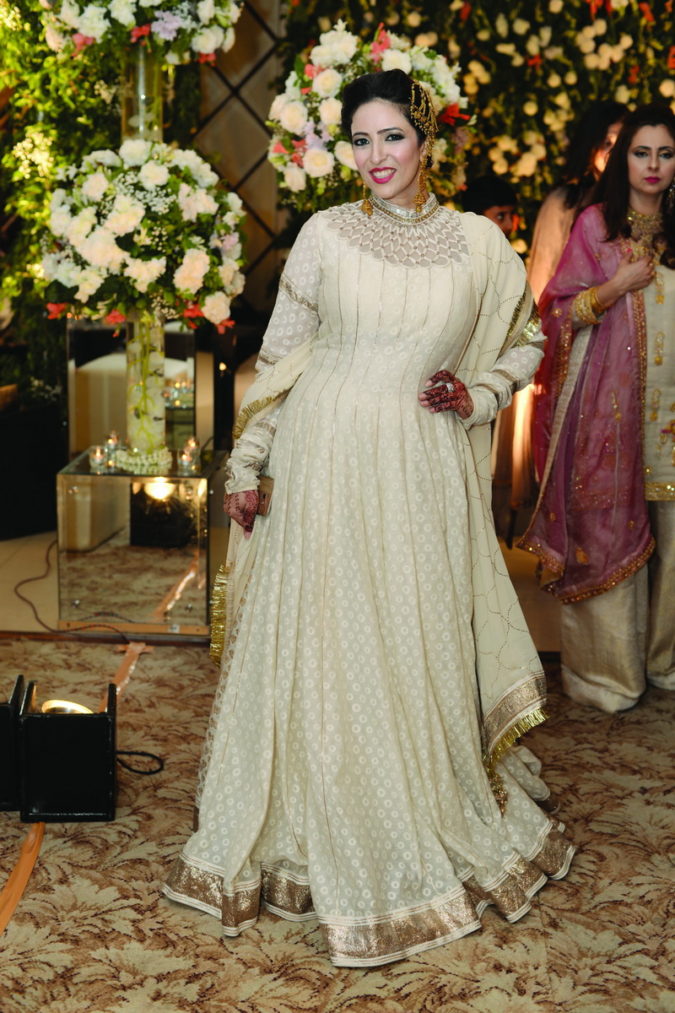




























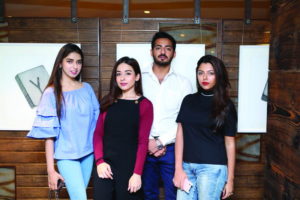
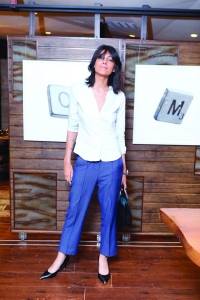

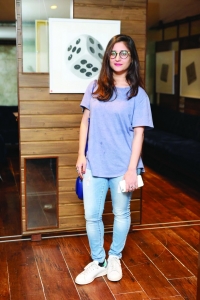


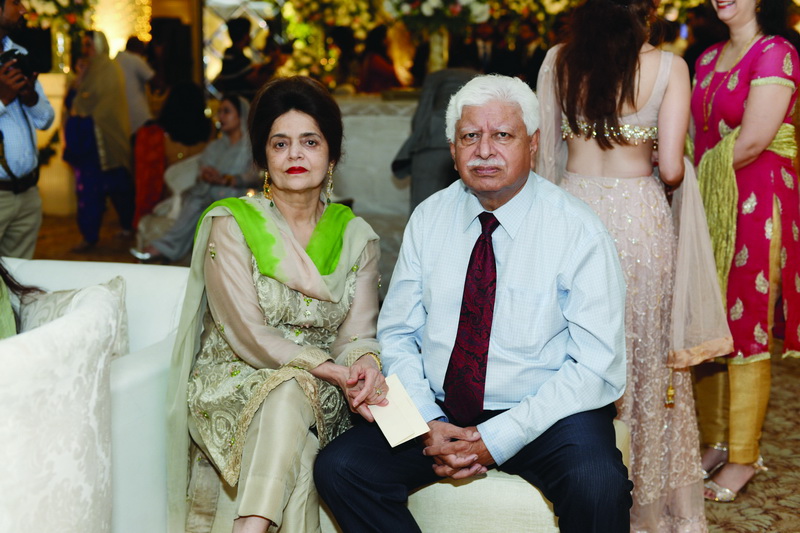










By Mahlia Lone
Diva by Sana Rashid
Old World Charm


MNR Studio by Mohsin Naveed Ranjah
Velvet Vixen


Komal Nasir
Shawl-tastic


Haris Shakeel
Neon shades


Boheme by Kanwal
Colour Me Happy


Gogie by Hassan Riaz
Origami

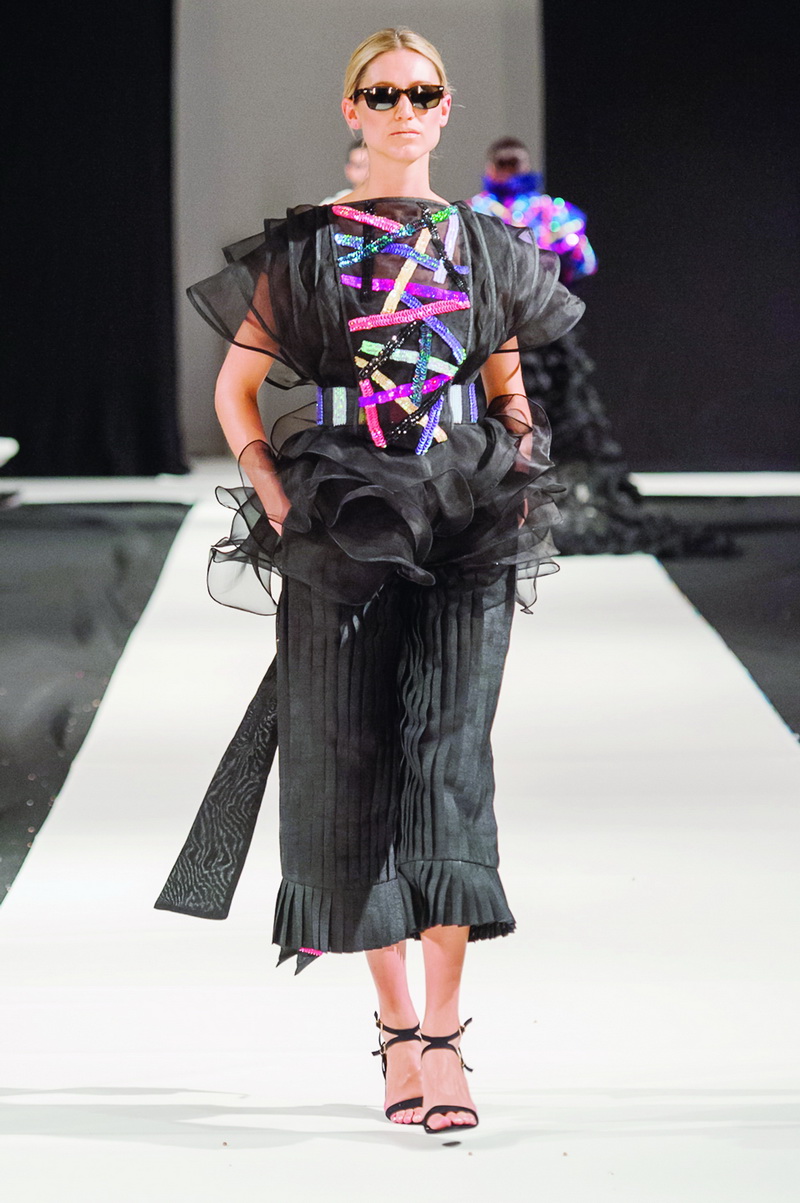


Fahad Hussayn
Grafitti Artist


Shazia Kiyani
Vintage


Sheeba Kapadia
Traditional


Sam Dada
Tinseltown


Sadaf Amir
Glitz


Sonia Mahajan
Flattering & Forgiving


HEM by Sumbal Asif
Light Gold


HSY
Fully Embroidered


Umsha by Uzma Babar
Trousseau Joras


Laeeq Akber
Wearable


Attire by Bushra Wahid
Girlish Appeal


Mahlia S. Lon
I often wondered why Sufi poets retold the tragic tales of Muslim lovers who rebelled against their families, met in stealth, eloped and were punished, given that goes against our society’s strictures and constraints. During my research, I discovered that one of the main reasons is because the heroines from our part of the world have historically not been passive, whimpering Misses like the quintessential western “damsel in distress,” but played a dynamic, central role in the story. They bravely spoke up and acted against their forced marriages, and reclaimed their Islamic right to have a say in their choice of husband. Some girls are still denied that here, as are some women denied their right of divorce, but self-determination is culturally and religiously ingrained in us as opposed to what certain segments of society would have you believe. Read the Memorable Romance of Mirza Sahiban for further elucidation.
This issue of GT is chock-a-block with fashion features ranging from Summer Trends to Resort Wear to Fall/Winter Wedding Wear. In addition, Islamabad based artist, Raja Changez Sultan believes that we most easily express our emotions through Art. He should know he started his career working in a psychiatric hospital in the U.S. and went on to make a name for himself producing atmospheric paintings accompanied by corresponding poems, the process known as Ekphrasis.
Telling you stories no one else is telling, we bring you this issue of GT.


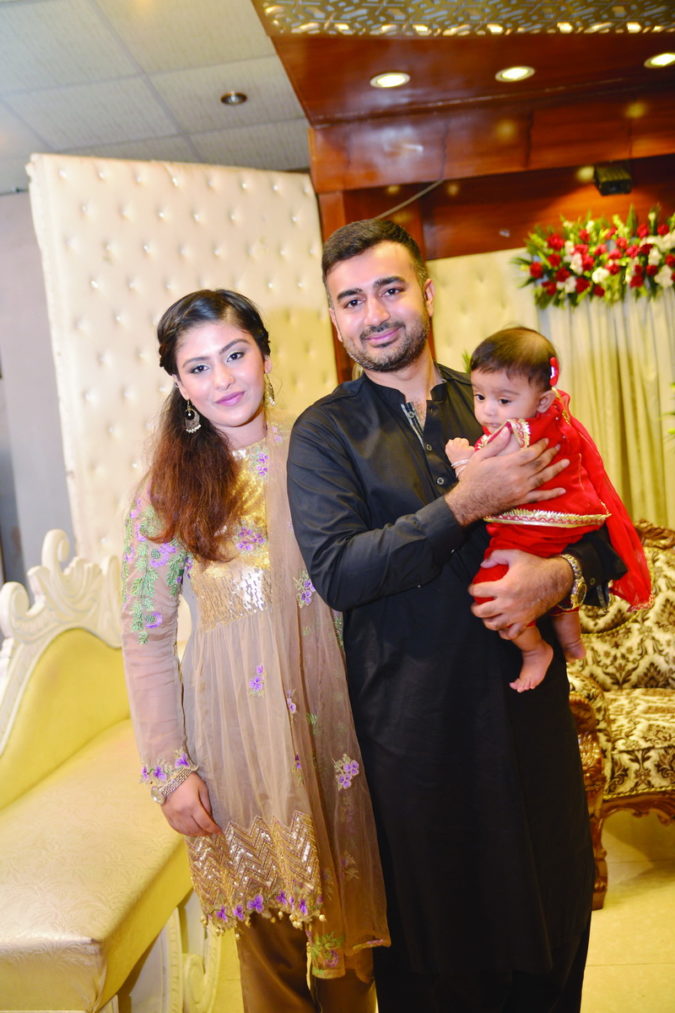
Who? Mawra Hocane
Why? The actress looks cute as a button in her Sophia Webster Jessica Watermelon PVC pumps perfectly paired with her coordinating outfit
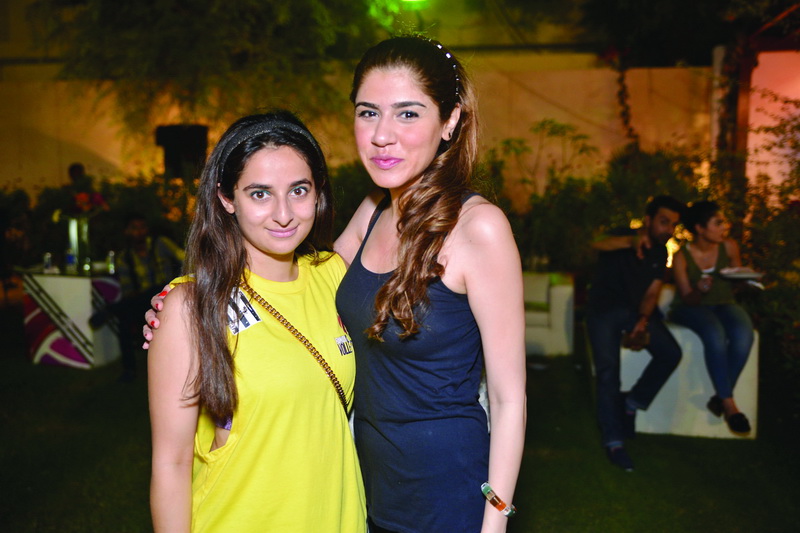
 Who? Kamiyar Rokni & Sanam Taseer
Why? The besties make for a sophisticated pair

Who? Bushra
Why? A lady-like look

Who? Maya Ali
Why? The starlet is on trend in polka dots

Who? Hajra Ahmad
Why? The Londoner is in top to toe designerwear, but the ensemble is stylishly put together so doesn’t overwhelm

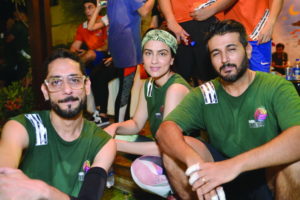
Who? Waleed
Why? The model has documented his weight loss and fitness journey and the results clearly show


Morning Show host, Sahir Lodhi is foremost a humanitarian, contributing through the Sahir Lodhi Foundation, which has been providing quality education and health care for those in need for three and a half years now. Sahir reveals his true self to Sana Zehra

Sets the record straight:Advertorial
You are probably one of the most misunderstood celebrities. People have called you “an over the top narcissist†and your Morning Show “one of the worst shows that has ever happened to television.†What’s your reply?
You yourself are admitting that I’m the most misunderstood person. It’s a misunderstanding that has been created by people’s own insecurities. I only praise people. I’m a down to earth person who meets and greets new people on a daily basis; I don’t think of myself as a big personality. Honestly, I’m a nobody! I live a really simple life; I work all day, go home and sleep.
Everyone can think what they want to think of me, I can’t change their thinking. If they envy and blame me for my success that’s their own problem, not mine and I can’t fix it. If somebody is successful that doesn’t mean they are narcissistic or self-obsessed. I have earned my success. That’s why I am where I am today. It has not been gifted to me by people. I have worked hard for it. I’m working even when people are fast asleep; I work 22 hours a day!
As far as my Morning Show is concerned, it’s one of the best Morning Shows and it’s been proven. No matter which channel it’s on, the ratings prove its popularity. Morning Shows are a vital part of our daily dose of infotainment

Whether you like it or not, I’m going to be there. People should not judge, but should learn to be more accepting.
Though your debut movie Raasta was considered a flop, you were adamant that it was a success. What is your definition of success?
I never said Raasta was a success at any point. I never even said I wanted it to be a success. I just wanted to make a good film, which I believe we did. As far as Raasta being successful or not is concerned, there was a lot of conspiracy attached to it and a lot of harm was done to the film before it was even released. I won’t go into the details.
I’m doing another movie. I’m not producing it, but I’m acting in it and I hope people like it.
The makers of Morning Shows are known for doing absolutely anything to increase their show’s TRP (Television Rating Points). What are your views on that?
What about in journalism and social media? Why single out Morning Shows? Isn’t everything about ratings? It is, in television, journalism or on any other platform!
Morning Shows raise awareness about various issues. We have helped people in need whether it has been related to financial issues, education or saving someone’s life. Then, how come we are always the ones to be blamed?!
The Sahir Lodhi Foundation has been a saviour for many. Please tell us more about it.
A lot of details have already been given out about SLF. SLF was my dream and we started this about three and a half years ago. Alhamdulillah we are running the Roshan Clinic successfully, which caters to approximately 150 patients everyday with zero money charged, everything is funded. I pay for it from my own pocket. We’ve catered to 176,000 patients so far in total, out of which 56,000 are registered patients.
My dream now is to build a 25 bed hospital. All the medical facilities are going to be provided free of cost. First, we’ll start from Karachi and InshAllah later on we will spread our branches in other cities. I’m not sure if this is going to be possible during my life or not but it’s my dream to build at least 15 hospitals.
As far as SLF is considered to be a saviour, I don’t think so because Almighty Allah is the only saviour and He has gifted me this wisdom to cater those in need.
What’s the real Sahir Lodhi like?
The real Sahir is a different person than Sahir Lodhi, the celebrity. Sahir Lodhi can do wrong, but Sahir can never be wrong. The day Sahir Lodhi takes over is going to be a really sad day. Sahir should always be in charge of Sahir Lodhi, as the former makes the right decisions in difficult circumstances.

Tell us about your wife. How did you guys meet and how has married life been treating you?
My marriage has been a blessing for me, Alhamdulillah. My wife’s a much better person than I am. We were best friends and I had never thought I would get married to her. It’s been 11 wonderful years. I’m blessed to have her and I don’t think anyone else could have borne me for this long. She’s someone I can always count on.
We have a daughter, Zara. The way I feel for her, I’ve never felt for anyone in my life. Ever since she came in our life, everything has changed. The love and peace I feel in my heart is something I can’t express in words. I’ve always adored my mother but after Zara was born I started worshipping her for raising me and my other three siblings. Now I see my wife do the same for my daughter. Being a mother is not an easy job.
Any message for your fans?
I never call anyone a fan. I’ve always thought my viewers are my friends. I say to them, keep working hard. People will say what they want, you can’t change the world but don’t let the world change you. Whatever you’re doing is for your own satisfaction and you’re only answerable to yourself. If you think you’re doing right, then keep doing it.

The women from this part of the world have, since time immemorial, been strong, out spoken and courageous; they have defied social norms and restrictions to become heroic figures in their own right whose tales have been retold by each generation. Amongst these tragic heroines is the story of Sahiban who openly and intrepidly defied convention and her family in her love for Mirza

By Mahlia Lone
The Bigger Picture
The romance of Mirza Sahiban was first written by the Punjabi Sufi Jat poet Hafiz Barkhudar Ranjha from Tahat Hazara, Sargodha in the latter half of the seventeenth century. Becoming a student in the household of a Hakeem family, he moved to Chitti Sheikhan, Sialkot where his shrine is now located. A few decades after him, the Sindhi poet Shah Abdul Latif Bhittai included the romance in his tragic Seven Queens of Sindh. Hence, the story is shared by Punjabis and Sindhis equally.                 It’s interesting to note that none of these love stories portray the heroine passively pining or quietly accepting her fate while secretly clutching her forbidden love to her bosom as would be accepted culturally of Muslim women. The heroines play a central dynamic role within the story. Their mortal love gained the stature of worship of God as per Sufi tradition. They didn’t die meekly at the altar of love, but rebelled against the conventional norms of society, and sacrificed not only their body but also their soul for love.


The Punjabi Sufi poet Waris Shah wrote:
“Be thankful to God
For making love the root of the world
First he himself loved
Then he made the prophets
His beloved ones.â€
Waris Shah, like other Sufi poets, started his poems with an invocation to Allah. Social and moral conventions seem trivial when viewed from the larger perspective of God and creation. The heroines rebelled against society’s double standards and may have been condemned by their friends and families but in the larger context, they were revered in folklore and by Sufi fakirs alike for taking a stand for what they believed in and for holding out for their right given to them by Islam to marry of their own choice.
The Story
Mirza Khan was the son of Chaudhry Wanjhal Khan, the leader of the Kharral tribe in Dhanbad, a village of Jaranwala, near Faisalabad. They belonged to the Jat community, the land owning but non-elitist farmers that originally hailed from the lower Indus valley of Sindh during Mohammed Bin Qasim’s conquest of Sindh in the 8th century and gradually migrated to the Punjab, Haryana, Rajasthan, etc.
“As Sahiban stepped out with a lungi tied
around her waist,
The nine angels died on
seeing her beauty
And God started counting
his last breath”
—Translated from
Shayer Pillo

Sahiban was the daughter of Sardar Mahni of Khewa, a village in Sial, near Jhang. As it happened, in the village of Khewa, Mahni’s mother had died at the time of his birth. A sympathetic and kindly neighbouring woman, who had recently given birth to a girl, took it upon herself to care for the motherless baby boy and breastfed him along with her daughter. The two children thus grew up as “milk†siblings, as was the custom of the day to call this special relationship.
In time, the girl, named Fateh Bibi, got married to Sardar Wanjal Kharral and moved a day’s journey on horseback away to the village of Dhanbad. The couple had a strong, healthy boy that they named Mirza. Fateh Bibi’s milk brother, Mahni Khan, Sardar of the Sial Jats, also got married and had a lovely daughter named Sahiban.
Mirza was sent as a boy to Khewa to study at his “milk uncle†Mahni’s house who made his daughter and her “cousin†study the Quran together. At first, Mirza didn’t notice how lovely Sahiban was since he was just a regular boy not into girls. But once puberty hit, the two teenagers began to feel attracted to each other.


One day, Mirza took a different path home walking back from school through a bazaar to while away the time. Sahiban was at the vegetable seller’s stall buying squash. Mirza saw the vegetable seller absent mindedly weigh out extra squash transfixed by the teenage girl’s beauty. Mirza saw his playmate with new eyes and too was struck by her blossoming good looks.
Shayer Pillo described Sahiban’s beauty as such:
“As Sahiban stepped out with a lungi tied around her waist,
The nine angels died on seeing her beauty
And God started counting his last breath…â€
Meanwhile, Mirza too was growing up to become a strong and athletic young man, an excellent horseman and highly skilled archer who never missed his target. He rode about the countryside on a powerful steed named Bakki, hunting deer and other animals with his bow and arrow. Sahiban, growing more beautiful each day, became aware of the dashing young man’s physical prime. Love sowed its seeds, which began to sprout and blossom. The two became inseparable, lost in their own world.
Sahiban was no meek miss but had a strong personality and knew how to stand up for herself. Once, upon mispronouncing Arabic, the maulvi (religious cleric) beat her with a chimmak (thin branch used for thrashing that stings). Instead of crying, the young girl admonished the maulvi for his unduly severe chastisement.
The youngsters idyllic days of blissful love were sadly not to last. When Sahiban’s parents found out about the love affair, they promptly sent Mirza back home to his parents, confined their willful, errant daughter to her room and arranged her marriage to Tahir Khan Chadhar who belonged to the same village.
The resourceful heroine sent a taunting message to her lover through Kammu, a Brahmin fakir who was travelling to Dhanbad: “You must come and decorate Sahiban’s hand with the marriage henna. This is the time you have to protect your self-respect and love, keep your promises, and sacrifice your life for truth.â€

Her sarcastic words bit and worked their power on the hot blooded youth. Mirza’s sister pleaded with him not to leave for Khewa, as it was her marriage day and she wanted her brother to be present. His entire family beseeched him that the Sial brothers were very violent and he shouldn’t interfere where their family honour was concerned. But Mirza heeded no one. He was determined to rescue Sahiban from the forced marriage.
Before he left, his father told him that if he went, then he must be sure to return with Sahiban or else family “ki naak kat jai gee†(he would bring great dishonor to their family). It had become a do or die mission. Left with no choice in the matter, Chaudhery Wanjhal grudgingly gave his beloved son his blessings to pursue his love.
“Chal, my Bakki,†(Let’s go) Mirza clicked his trusty steed and thundered towards his lady love in Khewa. He reached her house just as the mehndi ceremony was in full swing and, knowing the lay of the land, managed to steal her away. Pulling her on his horse beside himself, the two lovers galloped off.
When they had left her village far behind, and seeing no one in hot pursuit, Mirza stopped to rest, water and feed his spent horse. Having been riding for over a day now, he too lay down under the shade of a tree to rest for a few moments with his head in Sahiban’s lap and promptly fell asleep in exhaustion with Sahiban watching over him.
Sahiban just knew that her brothers would follow them. Not wanting her hands to be dyed red with blood instead of henna, she desperately wanted to avoid a bloodbath. Knowing how skillful her lover was with his bow and arrow, she decided that she would be able to convince her brothers not to attack a defenseless Mirza. Thinking she would appeal to their love for her, she hastily broke Mirza’s arrow heads as he slept.
Back at the wedding party, Sahiban’s family couldn’t find her anywhere on the wedding day. Realizing she must have eloped with Mirza, her furious brothers and male cousins, accompanied by her jilted bridegroom, rode off on horseback brandishing swords in their hands. When they finally reached the lovers resting under the tree, they disregarded Sahiban who hadn’t given a jot for their izzat (honour).
Mirza awoke to an arrow whizzing past his throat shot by one of her brothers; he reached for his bow, but then spied all the broken arrows strewn about. Looking up at her in perplexity for an answer to what had transpired, he narrowly ducked as an arrow grazed his chest.
Sahiban threw herself on top of him, protectively covering his body with hers. Pushing her aside, her brothers reached them and ganged up on Mirza.

Though he valiantly tried his best to defend himself and Sahiban, Mirza was easily outnumbered. A blow from a sword on the back of his head ended his fragile life. Seeing her lover drop down dead, Sahiban in anguish picked up the same sword and pierced her body, ending her own life.
“When the sheet tears,
It can be mended with a patch
How can you darn the torn sky?
If the husband dies,
Another one can be found,
But how can one live if one’s lover dies?â€
—From a folk song

Saeeda Imtiaz grew up in Long Island, New York where she got a Bachelor’s degree in Psychology from Stony Brook University. Though a confident, outgoing girl, never imagined she’d get a chance in the Pakistani film industry. Saeeda got her break portraying no less than Jemima Khan in Kaptaan (2012), the yet to be released film based on Imran Khan’s life. Mostly recently, she stars in the Jawed Sheikh directed and produced revenge thriller Wajood. Saeeda’s latest ambition is to start an NGO and join politics, which she divulges to Sana Zehra

For the movie Kaptaan you spent some time with Imran Khan. What did you learn about him?
He is very health conscious. When we went to Bani Gala, I still remember we had been sitting, conversing for a while; he suddenly stood up and started exercising. That’s great because he is aged 65+. It’s good to stay active.
What is that one thing that you think will fail social media?
I think for it to really fail, it needs to be banned. Just like how it happened with YouTube when it got banned and no one could use it. Unless that happens, social media will stay powerful and nothing will fail it.
Which charity is very close to your heart and why?
I admire two personalities in my life Shaheed Benazir Bhutto and Mother Teresa.


Recently I did a social campaign with a political party that I plan to join. I feel like there is no empathy left in us. I’m a very sensitive soul and it’s hard for me to see someone struggle. If we all start caring, we will be a very successful nation.
Celebrities nowadays are openly discussing serious issues. Stars like yourself are a role model for their younger fans who look up to them. What real change do you plan on making in people’s lives?
I hope that my work can give people courage. I’ve been doing social work lately and plan on joining politics. My hope is to hear people out and help them as much as I can.
Saeeda said at Bani Gala during their conversation, Imran Khan suddenly stood up and started exercising
Who have you taken the most retakes with?
Oh gosh! (Haha)
It was with Danish Taimoor while filming Wajood. And it happened twice that we had to do retakes repeatedly. I was injured at that time and had a muscle pull so I had to do a dance sequence 16-17 times. Danish was extremely patient about it and Jawed Sheikh as well was very calm and understanding.
How can one get your attention?
I’m a very friendly person. If anyone comes up to me, I would like them to talk to me. I like mingling a lot so I’ve never had an issue to converse freely. Most of the time I am in a good mood.

You were a Psychology major at SUNY Stony Brook. What is that one thing you learned studying the subject?
Empathy. Putting yourself in others shoes and thinking before speaking can make a huge difference.
Have you ever felt like you were taken for granted?
Many times. People who are sensitive to others are always taken for granted. I’m a very caring person like I said before and I see innocence in everyone. I actually don’t like that because you see goodness in others and you forget to see who they really are.
Most embarrassing comment ever made?
How my parents have disowned me. I just heard this from someone and it’s not at all even true. It’s more shocking than embarrassing.
What is that one role you feel like you will never ever take?
Actresses that have to do a lot of cheap titillation and overacting. I can never do that.

One actor you’d really like to work with?
Oh, there are lots of actors I would like to work with. I think Salman Khan in Bollywood. In Pakistan, I would love to work with Humayun Saeed and Fahad Mustafa.
Out of these three which role would you like to play?
Reema in Munda Bigra Jaye, Mahira in Raees or Mehwish Hayat in Punjab Nahin Jaungi?
Honestly, I haven’t seen any of these three movies, but if I were to pick one I would like to play Mehwish Hayat’s role. The reason for this is that I love traditional outfits and so far I haven’t done any projects that have a traditional Punjabi touch to them.
The actress is coy about which political party she is joining
Rapid Fire
Your career in one word?
I’m passionate about it.
One word for fillers?
I don’t know; I guess it’s a good thing to get them.
What gives your life meaning?
A smile on my mother’s face
Who do you stalk on social media?
So many people!
Texting or talking?
Calling because I hate texting, I hate Watsapping. I’m not the sort to sit and chitchat.
Fill in the blank
Danish Taimoor is so kind.
Jawed Sheikh is down-to-earth.
Who has it easier men or women?
Women
If you were to give a vote for best actress who’d you give it to?
I like Zeba Bakhtiar. I think she’s a very natural actor so I think her.
Favourite actor?
I recently watched Bilal Ashraf’s movie Janaan and I think he did a really good job. Definitely him!
If you were to give your co-star a piece of advice what would it be?
To Danish Taimoor: How come I’ve never met your children?
Define love in three words?
Caring
Empathy
Romance
Most googled questions about Saeeda?
Saeeda Imtiaz’s husband is?
Oh lord, this is the first time I’m actually hearing this! This is the funniest thing I’ve ever heard. I don’t have a husband. I was never married and when I will everyone will know.

Saeeda Imtiaz’s age?
That’s another question that people are very curious and keen to know but you should never ask a girl her age.
Is Saeeda Imtiaz related to Imran Khan?
I’m not related to him, but I’ve done a film based on Jemima Khan so we’ve met. We’re not related, I’m a Kashmiri-Punjabi and he’s a Pathan.
Saeeda really wants to work with Bollywood star Salman Khan
Ms. Imtiaz swears never to do cheap titillation or overact

The newest resort wear label on the block, W by Whyte has us enthralled. Chic and minimalist, these ensembles will sort out your holiday needs
Location: Four Seasons Jumeirah Dubai
Model: Vinisha Vaswani
Photographer: Gabriela Bell




As Salvador Dali famously said, a true artist is not one who is inspired but one who inspires others. This holds true for Raja Changez Sultan, a remarkable artist, writer and author of the book Shakarparian. He has created at least 5,000 paintings throughout his eminent career spanning nearly 50 years. Changez shares insight about his early life, mastered artistry and new painting series with Haider Rifaat

Give us your background.
I started painting 1967. I did my MFA and MSc in Communications and Writing from Columbia University. Before that, I studied in England at a boarding school as well as Lawrence College, Murree. I worked for the United Nations and came back to Pakistan to serve the government, mostly in the tourism sector. I was appointed Director General for Pakistan National Council of the Arts (PNCA) in Islamabad.
PNCA, being a fantastic institution, deals with artists, thinkers, writers, visual and performing arts and the country needs something like that, possibly in a more invigorated sense. The provinces have their own art councils but they are not quite active and barely contribute to the community of artists.


I believe that arts awareness in our country is not as revered as it is in India or Sri Lanka. If you are an artist or a thinker in such countries, the state machinery gives you a lot of respect and regard. In Pakistan, you are subject to serve their purposes and not contribute to the vision or direction of the country. Thus, there is a huge difference in perception.
“The biggest problem many people have is the inability to communicate and express themselves and it eventually blocks them up in a neurotic or psychotic state of mindâ€
Which are some of the more significant art shows you have participated in?
Let me be honest here. I am not a member of a group. I do not belong to the Punjab or Karachi lot. I have an independent education and awareness of where my art has taken me. Yes, I have communicated with such individuals as Director General but I did not contribute to their group. My name was up for the Pride of Performance Award a few years ago but I practice my art irrespective of what other people do and what accolades are given. I do not believe in such things.

The government of Austria organized my notable exhibition at the Winter Palace (in Vienna). It was not open for exhibitions for the last 100 years but they made an exception for me. I have also had artistic displays in Switzerland, England, Singapore, India and so on. Having worked 16-17 hours a day throughout my life, I have never veered off the track.
You are unique in the country because your paintings are inspired by your poetry. Each poem has a corresponding painting. Describe your creative process.
“A woman subdivides more than a man does because when a woman gives birth to a child, a physical part of her becomes an extension of herâ€
The definition of aesthetics is how a person walks or talks, and a part of that translates into certain things that you may end up doing, be it painting, writing or any form of creativity. A part of his or her personality becomes an aesthetic, a signature that a person carries throughout his or her life. Being able to refine and define that aspect of yourself is what arts is all about.

When I paint, I always think in terms of series, not something that starts today and finishes tomorrow but something that starts today and stays with me for the rest of my life. It is pointless to invest my energy for three days on a one of a kind painting and work on something else the next day.
“The importance given to a man sacrificing himself is one in many centuries but a woman is put on a cross every dayâ€
The first series I started to paint was the Divided Self. It came about because I had been working in mental hospitals in the United States and using creative therapy to help mental patients. The biggest problem many people have is the inability to communicate and express themselves and it eventually blocks them up in a neurotic or psychotic state of mind. There are so many personalities in us; some push us forward while others hold us back.
To find a visual representation of the Divided Self, I had to do a lot of thinking on how to approach the subject. One should know that it is an invariable representation of the same person but different aspects of a person. Even today, many people ask, why it is mostly women? It is because a woman subdivides more than a man does because when a woman gives birth to a child, a physical part of her becomes an extension of her. A man, however, ends up narrowing his perspective. A woman further splits; her subtotal will be herself and all the people she loves, especially her children.

I write on similar themes and paint them. The second series I took on was Himalayan Odyssey, which was about a series of mountains. It is based on my experiences traveling different mountain ranges. A part of them became a part of me. It makes sense when I paint about mountains because I have had a long-term interaction with them.
The themes of your paintings range from such diverse topics as politics to female beauty but your style of course is similar. Describe your painting style. What other themes have you tackled?


The most recent series I have been working on is the Crucifixion of Eve. The philosophy behind it is simple; from Adam and Eve’s time to the present, a woman has had to bear the brunt of responsibility of the world, whether it is childbirth or looking after generations. The importance given to a man sacrificing himself is one in many centuries but a woman is put on a cross every day. We give respect to a woman when we think of our mother or sister but generally, we do not regard woman the way we should. So, I replaced Christ with Eve on the cross in my latest painting as it made more sense. More or less, my painting style is a blend of expressionism and impressionism.
Ekphrasis
A Greek term meaning a dramatic, verbal description of a visual work of art
The Himalayan Odyssey
In these silent wastes
Only spirits roam
Searching an elusive peace,
The primal union of man and stone!
An art critic wrote that your “work is linked in its various moods by a sense of timelessness, a fantasy that remains to haunt the viewers memory.†What does this sense of timelessness represent? What feelings in the viewer do you seek to evoke?
People have used art for different purposes. Today, if I start painting Nanga Parbat, it is making it as regional as it can be. To me, a mountain is something common and so is a woman. When you paint images that are universal, they never age and may never transcend to an expected level. I will not paint something that makes a woman belong to a specific era. If I do that, it takes the universality away from the image.
If you aim for universality of art, you build bridges to bring people together. You are not looking for differences that separate them. There are different approaches that people assume and people do not wish to think about such things. I do, because it is easy for me to build a bridge than a castle. The timelessness aspect comes in only if you are dealing with permanent thoughts; mountains, rivers and a flower’s body are timeless.

“My painting style is a blend of expressionism and impressionismâ€
The selection of imagery used defines the kind of work you do. Every individual has a set of responses to art. I would never want anyone to feel some way about my art. If I have done justice to my piece, I will be more interested in what I am capable of doing.
Your paintings have an otherworldly element to them, i.e. bathed in mist. How do you achieve this effect? Do you use thin washes of paint? Tell us about your technique.
Yes, I use thin washes of paint. I always look for my own solutions. I do not live with other people’s work. I always find what I am capable of doing, not what others have done or not done. I use cloth to make a brush as opposed to using a conventional thick brush. The control on the canvas is much more freeing and you can create more textural effect with it.
A majority of artists add paint to the canvas and they create their images that way. I, on the other hand, might put paint on a canvas but I would often remove it to create images out of the same canvas. So, it is almost a reverse application of paint.


“If you aim for universality of art, you build bridges to bring people together. You are not looking for differences that separate themâ€
Who are some of the more avid and notable collectors of your work?
There are many people but I won’t take names as it draws emphasis to them. What people buy or don’t buy will never define your art. I have been lucky that I never had to compromise my work to suit someone else’s purpose.
Tell us about your latest series?


The latest one is Crucifixion of Eve. I will complete the next three or five paintings in a year or so. I may exhibit them when I have at least forty paintings made. It is a slightly controversial subject so one has to be careful with it; however, it is better to keep doing what you do best.
Photography by Haider Rifaat

- Ultra Light Loose Glitter Pigments by Stage Line Spain
The new ultra light loose glitter pigments by Stage Line Spain are iridescent and duo-chrome. The desirably highly pigmented loose glitter with true staying power creates the latest fad of glittery eye looks flawlessly. Available in 6 stunning shades.

- Stole my heart
East Breakout has launched a new collection of colourful geometric and floral stoles. These scarves will make you look like the cool fashion diva you always wanted to be. Tie them in a myriad of styles for Parisian chic.


- Digital Realm
Calling all Lahoris! Digital Realm, a noveltly gifts and collectibles company has now opened its doors at Vogue Towers. A vide range of customized t-shirts, collectible toys, action figures and gadgets are on offer. So what are you waiting for? Head on over now.


