Author

Good Times

Browsing

Actress-songstress Ayesha Omer’s tips on staying healthy while travelling

Drink plenty of fluids

Water is truly a girl’s best friend. There is nothing more indispensible for holistic health, beauty and brains than a steady 15 glasses a day. And no, not juice, not Vitamin water and not even sparkling water can take the place of good old plain, clean and still water.

Airplane cabins are notoriously devoid of moisture and you can shrivel up like a prune if you’re not diligent and conscientious about your water intake. Take an extra trip to the loo if necessary but whatever you do, do not skimp out on drinking water at regular intervals.

Invest in a handy reusable water bottle. You’ll be saving money, plus you won’t be stranded without any water where there’s no place to buy any. And you can take it through airport security, too, albeit empty.

“It’s good to stay hydrated, lemon is always a good pick me up and is always refreshing. You have late nights when you’re travelling usually and waking up early and hence you’re not really sleeping much, so it’s very very important to stay hydrated. I try to have coconut water here and there also. That’s a great way to get hydrated when you’re travelling. I also always carried around my water bottle everywhere!”

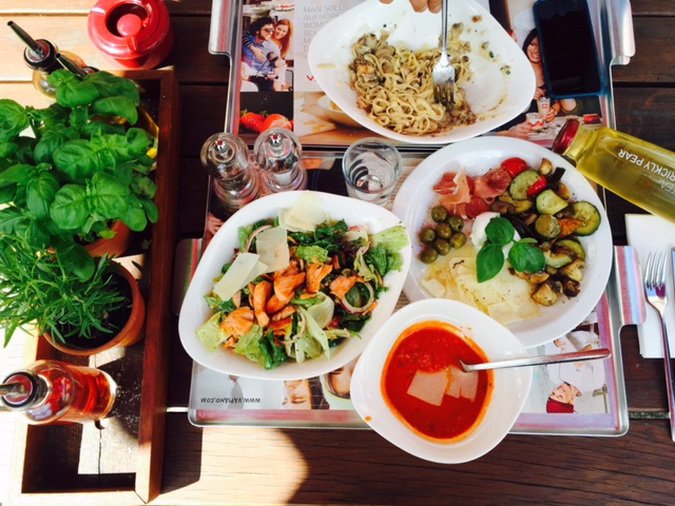
image7

image6

image3 (2)

“What’s more familiar to a McDonald’s lover than seeing the massive golden arches of the McDonald’s M and wanting some Mc meal or other? It’s important to exit your comfort zones!”

Try the local cuisine

As a rule, even when in the homeland, it’s always advisable to indulge in local AND seasonal produce. It’s fresher and healthier and more climate appropriate. For example, oranges come to us in Pakistan in the winter season and stave off cold and flu using their copious quantities of immunity boosting vitamin C.

So wherever you travel, let go of your inhibitions and take a chance on the local cuisine. It may even be miles away from what you’re used to, it’s still an integral part of the cultural experience of visiting another place.

Stay away from generic fast food

Humans are, after all, creatures of comfort and comfort lies in the familiar. What’s more familiar to a McDonald’s lover than seeing the massive golden arches of the McDonald’s M and wanting some Mc meal or other? It’s important to exit your comfort zone and ditch familiar fast food chains for local and small eateries. Not only will you be in for an alternative experience and a cornucopia of variety inaccessible to you in the run-of-the-mill fast food chain, fast food is notoriously unhealthy, full of unsaturated fats and sodium and God knows what else.

If you’re worried about hygiene standards in the local mom and pop eatery, take comfort in knowing that the world is growing smaller and that food standards and hygiene are becoming more and more regulated across the globe each day. So there will more or less be at least some hygienic, local and healthy food sources for you to choose from.

Keep healthy dry snacks in zip lock bags (nuts, seeds, trailmix, etc.)

When there is absolutely nothing around to eat or you’re trapped in that airport limbo where there is not an ounce of food in sight and you need sustenance, you can rely on your own private stash of dry, portable foods to keep you going. Take a Ziploc bag and stuff some nuts, seeds, trailmix, whole wheat crackers and the like and keep hidden away for when you’ll most need it. Dried fruits also provide essential vitamins and minerals when you can’t access the real stuff.

These portable snacks are excellent alternatives to a dreary and icky airline meal that’s all carbs and grease. Dried yogurt covered cranberries are a favourite of mine and provide a whole host of nutrients, essential for your good health and for having a good time on the go.

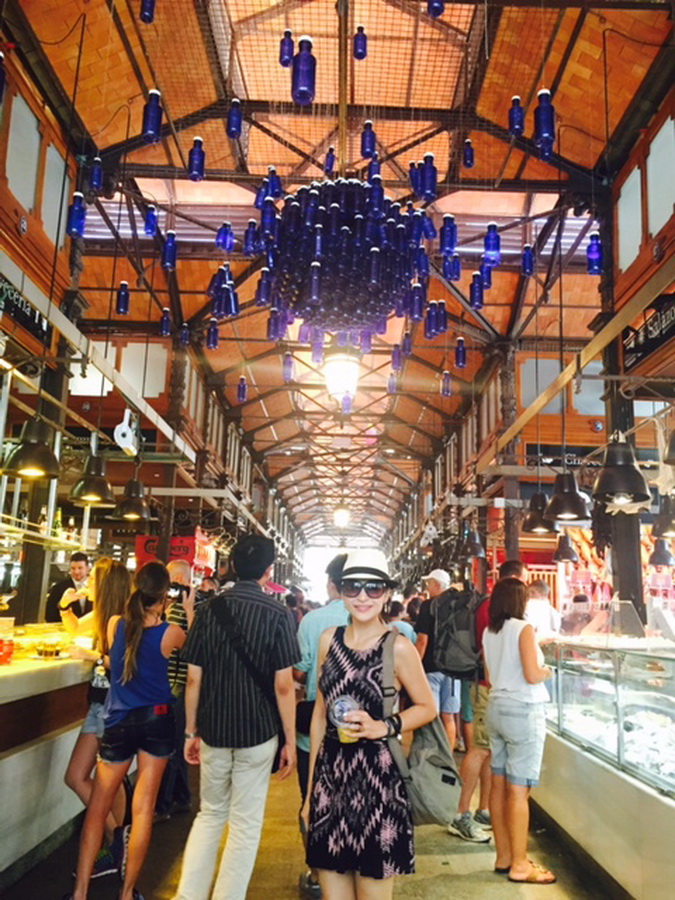
image8

image4

image1 (2)

“And I always carry some snacks in my bag, a bit of dark chocolate or some nuts or some handmade energy bars. Not the processed ones, try and scope out some homemade or handmade ones or try making them yourself at home. Mints also give you some energy, they’re good to have around.”

Keep meals light and frequent to stay energised

Most of us know the feeling of lethargy after having scarfed down a huge meal of festive and/or comfort food. The two possible outcomes are either sleepiness or frequent trips to the bathroom coupled with intestinal discomfort. Who wants to experience either on a trip? Not us.

That’s why it’s smarter to eat small meals more frequently throughout the day rather than the usual three solid ones. Not only will you be able to do more regional food sampling this way, you’ll stay energetic, keep your metabolic rate up and hence be able to see and do more.

Opt for salads, smoothies, and grilled lean meats or scope out the healthier and more nutritious options on your own using some basic nutritional common sense.

“So chaltay phirtay, one can just stay energised with quick bites on the go like fruits, nuts and the like without much fuss. It’s always so much better to have little tidbits instead of huge meals. Any green salad is great for a light snack and so healthy too.”

image2 (2)

image2

image3

“It’s so great to get a lot of sun when you go to beachy places and that’s actually good for you, believe it or not”

AYESHA’S HEALTH TIPS FOR A BLAST OF A VACATION:

“It’s so great to get a lot of sun when you go to beachy places and that’s actually good for you  believe it or not. In Pakistan, we don’t get out in the sun a lot so the vitamin D is really welcome.

We did some walking and sightseeing, chilling in the park or biking around. It’s good to be getting at least a bit of exercise because you’ll probably be eating a lot of junk when you’re on holiday.

Whenever you’re walking around, you can get fruit almost everywhere, on the street, fresh cut up fruit like the one I got in the fruit market. So indulge in the local produce.

It’s important to take vitamins and supplements while you’re travelling. Not only is your body under more duress than usual and you may not be able to access the full spectrum of nutrition that you need for optimum health.”

Interview by Ally Adnan

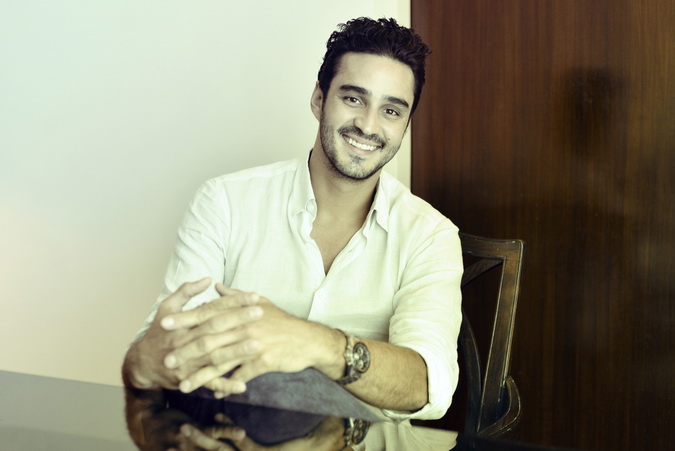
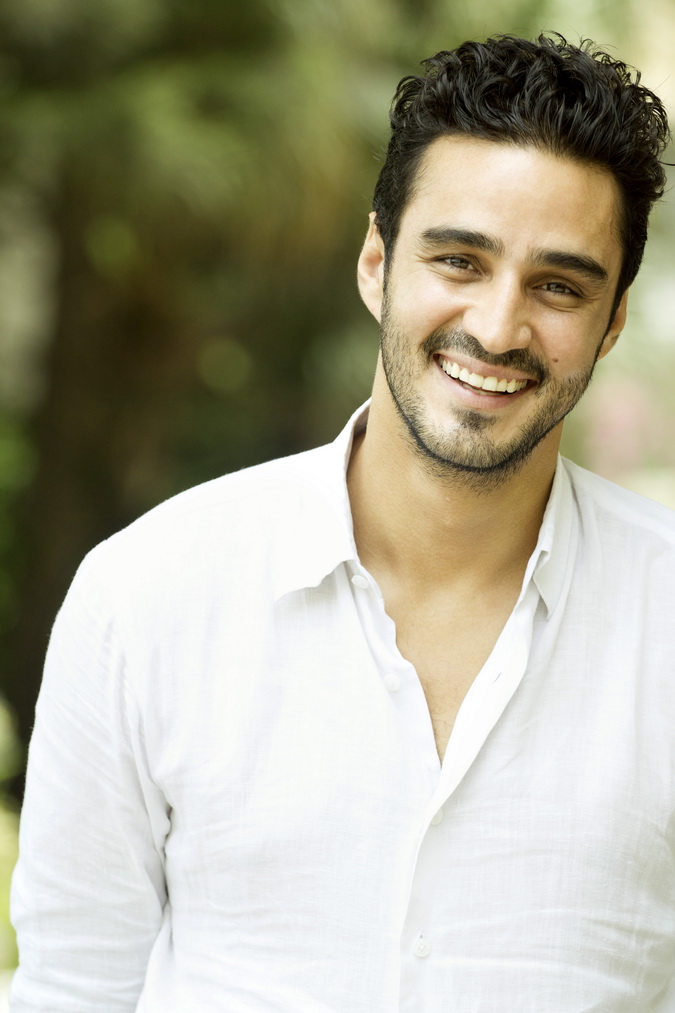
Noted restaurateur, the grandson of the greatest songstress of all time, and now the male lead of Asad Ul Haq’s upcoming feature film, Dekh Magar Pyaar Say, Sikander Rizvi talks to Ally Adnan about show business, growing up without a father at home, his illustrious grandmother and much else

What is it like to be the grandson of the biggest star India and Pakistan have ever produced?

Noor Jehan was, first and foremost, my daado and then a star. Generous, indulgent, kind and loving, she was a great grandmother. I grew up thinking of her as warm and caring person in my life and not as a star. I was always aware that she was someone special because of her aura and how everyone treated her but it wasn’t until I was in my teens that I began to realize the enormity of her talent and the magnitude of her stardom. And even though I now have a grip on how big she was as a star, I remember her as my doting and loving daado. She was the best grandmother anyone could have.

How do you remember her?

Daado was full of life. She was always surrounded by people. There was a positive energy about her. She was loving, she was warm and she was a lot of fun. She had a larger than life persona but she was approachable and kind. I loved her presence and her company.

As a child, I used to spend my summers in the South of France with my mother and her parents. Daado used to visit us with her entourage of attendants, musicians, friends and family members. Those visits constitute some of my fondest childhood memories. Daado would sing for us during those visits, tell us stories and entertain us with her jokes. And she would take over the kitchen during her visits and cook for the entire family.

Ally Adnan & Sikander Rizvi - Photograph by Ammar Shareef - 01 copy

Poster - 02

Sikander Rizvi - Photograph by Ammar Shareef - 03

“The audition did not go well and I was surprised when I was called back and offered the role of the lead. It really fell in my lap”

And she was one hell of a cook.

Yes, she was. An amazing, amazing cook who could work wonders in the kitchen. I have not had desi food as good as that cooked by Daado in my life. Listening to desi music, while eating desi food and enjoying desi jokes, all in a French setting, was an unreal and exceedingly charming experience.

Noor Jehan was not the only strong woman in your life. Your mother, Florence Villiers, is an amazing woman herself?

Of course, she is.

My mother is one of the strongest, most resilient and enterprising women that I have ever met in my life. As a young lady, she hitchhiked her way to Pakistan, met my father and married him after a heady romance. When my parents divorced, she raised me and my sister, Sonya Jehan, entirely on her own.  As a young lady, she ran a boutique which was very successful. This was followed by the opening of her own restaurant, Café Flo, in 1998. It has been running successfully for more than seventeen years and continues to be one of Karachi’s toniest eateries. She treats her guests, her staff and herself with great respect. I have immense admiration for my mother. She is honest, straight-forward and does not believe in playing games. She suffers from multiple sclerosis but is fighting the disease like a tigress.

Your parents divorced when you were five years old. Did the divorce affect your childhood negatively?

To some extent, it did but not terribly.

Sonya and I lived with my mother after the divorce. She assumed the roles of both the mother and the father to a large extent. There were, of course, times when I wished that we had a father in the house but those were few and far between. My mother filled what could have been a terrible void very well. Sonya and I were allowed to meet our father. We loved him and would visit him in Lahore. He would come to see us when he was in Karachi. He had great love for us. Sonya and I were never short of paternal love. I think that my mother had made a concerted decision to not use us as pawns in a game against her ex-husband. That, more than anything else, helped me have a positive, happy and fulfilled childhood.

Sikander Rizvi - Photograph by Ammar Shareef - 01

Sikander Rizvi - Photograph by Ammar Shareef - 06

Sikander Rizvi - Photograph by Ammar Shareef - 05

“I remember Nur Jehan as my loving and doting Daado”

Show business is not an easy industry to enter. A lot of people have to work hard for years, dealing with disappointment, rejection and humiliation, not to mention abuse, before they see any success. Did you have to work hard to get the lead role in Dekh Magar Pyaar Say?

No, I did not. My entering show business was pure happenstance. I had done an advertisement for Asad Ul Haq. Six months after the ad, he invited me to audition for a role in his upcoming romantic feature film. The audition, in my opinion, did not go well and I was surprised when I was called back and offered the role of the lead. It really fell in my lap. I had never had a serious plan to enter show business. I am grateful that I did not have to grow through what a lot of people have to before they get their first starring role in a feature film.

Do you think that your financial and social standing helped make your entry into show business easy and protected you from abuse?

It probably did but it was not the only thing. I think the manner in which one conducts himself also protects him from predators. Confident people who work with dignity and integrity are less susceptible to abuse.

Show business in Pakistan, and elsewhere, has a dark side. Did you see it?

I have heard about it but, fortunately, I have not seen it myself.

Dekh Magar Pyaar Say was shot in a spell of forty-five days. Was it hectic?

It was hectic but a lot of fun. Director Asad Ul Haq’s team is very capable and managed the project very well. Travel, logistics, costumes, rehearsals, shoots were all done on time. I do not think many movies have been shot in periods as short as forty-five days.

Is acting in a film glamorous?

No. My mother, who had lived in Shah Noor studios for a long time, had warned me that shooting for a film required a lot of patience. I was prepared but was surprised at the amount of waiting that was involved. I had to wait for hours between takes. It also always seemed to be very hot. And I was always sleep-deprived. Waiting, heat and sleeplessness are the three facts of shooting for a film but I enjoyed the experience nonetheless. It was good to take a break from my restaurant, Xander’s. After running it for almost four years, I had become very comfortable managing the restaurant. It was nice being forced out of my comfort zone.

I am new in the industry and really do not consider myself to be a part of it but I have seen a lot of successful actors work very hard day in and day out. Acting may seem to be glamorous, it may actually be glamorous, but it is not easy. Managing dates, memorizing lines, rehearsing, dealing with the media, promoting projects, and handling celebrity make up for a grueling livelihood. And then there is the heat, sleeplessness and waiting!

Sikander Rizvi - Photograph by Ammar Shareef - 02 Sikander Rizvi - Photograph by Ammar Shareef - 04

“My mother hitchhiked her way to Pakistan, met my father and married him after a heady romance”

Did your furlough affect business at Xander’s ?

It did. The restaurant did better business when I was away!

A lot of Pakistani films have been criticized for imitating films from Bollywood and for their stereotypical depiction of women as weak, emotional and dependent. Is Dekh Magar Pyaar Say going to be different?

Yes, it most certainly is. It will be a refreshingly different film. The story is good, the music is good and the direction is good. The story is romantic and fresh. Dekh Magar Pyaar Say is certainly not Bollywoodesque. I think people will enjoy watching the film.

The film certainly has a very fresh look and feel?

Yes, it most certainly does. It has an ethereal, almost fantastic feel. The city of Lahore has been shot in a manner that is completely new and unique. Asad chose excellent locations to shoot for the film and cinematographer Nic Knowland did a masterful job capturing them on film. Dekh Magar Pyaar Say is very appealing both aesthetically and visually.

How did you prepare for Dekh Magar Pyaar Say?

I trained, primarily on diction and dialog delivery, with Asad and some other folks for a month. I speak Urdu fluently but not like a Lahori. It was a challenge to learn how to speak the language as Lahoris do but a great learning experience. The rest of the training was about acting basics, camera angles, continuity, and body language. Asad made it easy and fun for me.

Did you have to learn how to dance for the dance number with Amina Ilyas?

Actually, no. I know how to dance and enjoy dancing. It is something that I am very comfortable doing. Wahab Shah choreographed the dance and I rehearsed some moves with him but did not have to learn how to dance for the film. It was the one thing I had down before Dekh Magar Pyaar Say. The real challenge was shooting the number in Lahore’s blistering heat while wearing a sherwani and pretending to be having a lot of fun.

Isn’t Amina Ilyas lovely?

She most certainly is. Very down-to-earth, intelligent and very interesting.

Did you make new friends while working in Dekh Magar Pyaar Say?

Yes, the entire Dekh Magar Pyaar Say team. I got along very well with everyone on the set. As far as friends in the industry go, I knew a lot of people already, because of my restaurant, through my sister and because of my grandmother. I have socialized with a lot of people from the industry for a few years. Doing the film did not add to my set of close friends.

Your mother who is French has made Pakistan her home. You studied in Switzerland, worked in the Netherlands and elsewhere in Europe, and spent a part your childhood in France but are settled in Pakistan. What do you like about Pakistan?

The people. Pakistani’s are warm, friendly, loving and hospitable. One can forge lifelong friendships in Pakistan, ones that survive the toughest of times. When they want to be, Pakistanis can be unbelievably hardworking and conscientious. And they are genuine, sincere and kind.

The French are not like that, are they?

No, they are not as warm as Pakistanis.

They also have a reputation for being rude.

Yes, they do.

Is the reputation fair?

Not really. I have met some very polite and kind French people over the years. People in Paris tend to be rude but once you get out of the city, you see a gentler and kinder type of the French. The reputation for being rude is somewhat dated, in my opinion. Things have been changing for the better for several years. The French government understands the power of the tourist. It has been educating its citizens that people will stop visiting the country if they find the French rude and inhospitable.  The museums, boutiques and cafés will not survive without tourists. It makes business and economic sense to be warm, polite and friendly.

Do you ever think about leaving Pakistan for France?

I have dual citizenship and could move to France whenever I want to but like it here in Pakistan. There are things that bother me in Pakistan but the country has great people and a lot of opportunities. I like it here. This is my home.

Ally Adnan lives in Dallas and writes about culture, history and the arts.
He tweets @allyadnan and can be reached at allyadnan@outlook.com.

Photographs:
Ammar Shareef

Bin Roye

bin_roye_banner

gi5 Faisal-Qureshi---13_resize

Bin Roye is a romantic drama directed by Momina Duraid and Shahzad Kashmiri and stars Mahira Khan, Humayun Saeed, Armeena Rana Khan, Zeba Bakhtiar and Javed Sheikh amongst others. It is an adaptation of Farhat Ishtiaq’s novel, Bin Roye Aansoo which is soon to be a HUM TV drama serial also.

A classic love story involving Irtaza (Humayun Saeed) and Saba (Mahira Khan), the story takes a turn for the predictable as Irtaza makes his transition from desi to pardesi when he leaves to go abroad for his studies. The triangular love story evolves with the entrance of Saman (Armeena Rana Khan) who lures Irtaza with her modern and Western styling choices and values with Irtaza responding favourably and losing his indigenous footing.

Finding out the fate of the three lovers is probably the most interesting thing in the movie, followed by the songs and dance performances. Balle Balle, from which we had expectant hopes, is just short of a Tarang ad, with nothing new brought to the table except for the debut of Adeel Hussain’s spectacular dance skills.

Wrong No.

55a5f805b3833

Faisal-Qureshi---13_resize

Wrong No. is a romantic comedy film directed by Yasir Nawaz and starring Javed Sheikh, Danish Taimoor, Nadeem Jaffri, Danish Nawaz, Shafqat Cheema, Sohai Ali Abro and Janita Asma amongst others and is scheduled for local release on July 18, 2015.

An ambitious Danish Taimoor is the bratty and spoiled golden son of Javed Shaikh, a butcher by trade who owns his own shop. Smothered by his mother and given false hopes of confidence by his father, Danish aspires to be a movie star and wants nothing to do with his father’s smelly, dead-end butcher shop. Danish is betrothed to and relentlessly pursued by Sohai Ali Abro, whom he detests. All in all, the walls of responsible adulthood seem to be caving in on him, because of which he hits the road. He subsequently experiences a pleasant reversal of roles, not dissimilar from Trading Places (1983) featuring Eddie Murphy and Dan Akroyd and the rest is for you to find out.

Wrong No. has many an entertaining moment specifically held up by Javed Sheikh and his dysfunctionally entertaining family: from funny instances like a little boy’s circumcision proceedings to deciding whether to cook champay or koftas. There is a featured band of three fat ghundas who are fumbling all over the place and who provide much comic relief.

Taking much from Na Maloom Afraad in the way of chasing scenes around Karachi’s city streets and dreams of being rich, Wrong No. is an entertainer with some good jokes that doesn’t take itself very seriously. It does have the privilege of coining #selfiyaan which is sure to create some shaadi song skits and spinoffs come this year’s shaadi season.

Dekh Magar Pyar Se

dekh-magar-pyaar-say

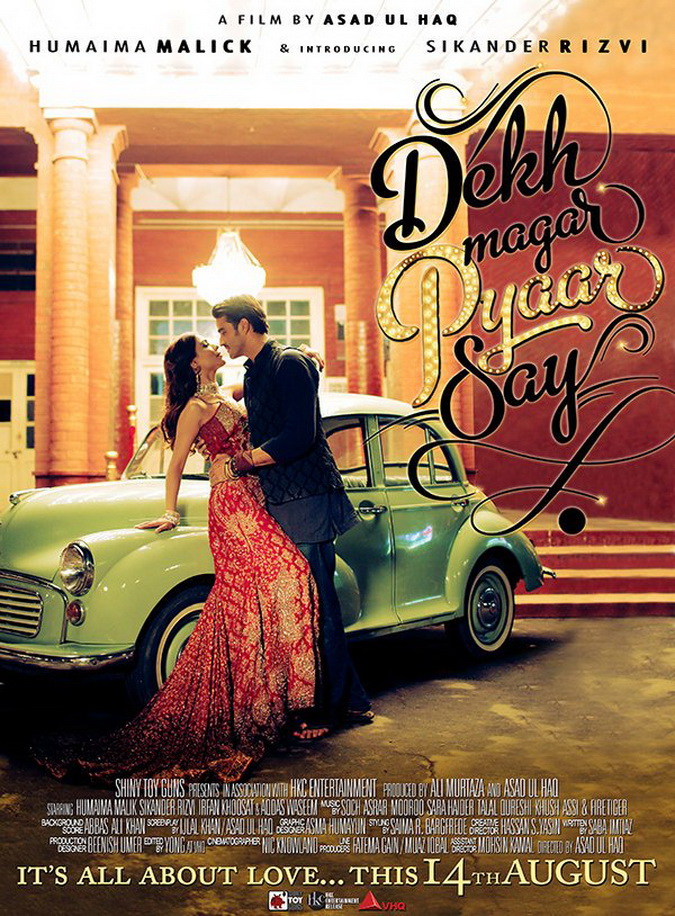
Dekh Magar Pyar Se is an upcoming Pakistani romantic comedy film directed by Asad ul Haq and starring Humaima Malick and Sikander Rizvi and is set to release on Independence 14 August 2015.

Set in Lahore, Dekh Magar Pyar Se takes its name from the slogan commonly popularised by the truck, bus and rickshaw industry across Pakistan. Steeped in familiar cultural phenomena, the trailer exudes realism, set in gritty real locations and deep inside complex emotional sequences, not very dissimilar from the cultural projection in Bollywood’s Dev. D starring Kalki Koechlin and Abhay Deol.

Sikander Rizvi’s acting debut has been much anticipated as has Humaima’s acting performance in a local film since she’s stepped up her game last year. Dekh Magar Pyaar Se will most likely be the stop for the-harder-to-please cinema goer this summer season.

Karachi se Lahore

dekh-magar-pyaar-say

dekh-magar-pyaar-say

Karachi se Lahore is an upcoming comedy road film directed and produced by Wajahat Rauf starring Shehzad Sheikh, Ayesha Omer, Javed Sheikh, Mantaha Tareen Maqsood, Yasir Hussain, Ahmed Ali, Eshita Syed, Aashir Wajahat and Rasheed Naz and is set to be release on July 31, 2015 locally. It is famously Pakistan’s first road-trip film which covers in real time the 36-hour journey from Karachi to Lahore by road.

For those left wondering about the road trip phenomenon, think Little Miss Sunshine and We the Millers. Karachi se Lahore is expectantly packed with the fun-isms and unaccounted twists and turns one can only (not!) expect when on a road trip with so many people and with such an agenda. Shehzad Sheikh’s beloved is always threatening him with getting married off by her parents to which he responds by making an impulsive and passionate plan to stall the wedding.

The Noori clan makes its way back into the mainstream with Shiraz Upal for the music. Ayesha Omer’s item number is actually not an item number but a stand on empowerment for women and their ability to use their cunning and strengths for the greater good. Karachi se Lahore also promises to showcase some rich cultural diversity, something remaining amiss from much local cinema nowadays. A good one to catch with the whole family!

 Interview by Ally Adnan

Known both for his immense talent and for his looks, Faisal Qureshi is one of Pakistan’s most well-known, versatile and popular actors. Faisal has maintained his status as an A-Lister amongst actors for almost a quarter of a century and appears all set for greater success, fame and renown in coming years. In an exclusive interview for GT, Faisal Qureshi talks to Ally Adnan about himself, his career as an actor and show business in Pakistan.

You have been in the field of acting for more than thirty years. How has the world of show business in Pakistan changed during this period?

The industry has undergone a tremendous change during this period. In the early years, there was very little competition. Pakistan Television Corporation was funded by the state and was the only network around. People in the industry, therefore, did not have to worry about the commerce of show business and were able to devote all of their energies to art. They could undertake daring projects without having to worry about their commercial viability. They also knew that viewers had no choices other than the ones that were broadcast on their network.

Things have changed. The industry has grown tremendously since those times. We have had greater exposure. Much better equipment than was ever available to us is now at our disposal. And we have a lot of competition now. More than a hundred channels and production houses compete with each other in Pakistan today. Viewers have dozens of choices at any given moment. They are no longer bound to watching a single television channel. On the international level, Pakistani programs compete with those from the United Kingdom, India, Turkey, the United States and several other countries. As a result, producers, directors, writers and even actors have to pay attention to both the quality and the commercial viability of programs. Daring projects come with risks.

Has the focus on the commercial aspects of show business taken away from the quality and content of programming?

No, fortunately, it has not. If I were to sum it up in one sentence, I would say that we used to focus almost exclusively on art in the past and now we focus on both art and commerce. There are those who will disagree with me but I firmly believe that our television plays are as good as, and occasionally better than, those that were produced in the first thirty years of Pakistani television. They can also hold their own against those produced in India, Turkey and several other countries. Our plays are enormously popular in India where we have channels dedicated exclusively to Pakistani serials. Bollywood films have never been as popular in Pakistan as our plays have been in India. We may be making money but are not doing so at the expense of art.

gi1

I have always paid a lot of attention to people around me and studied their actions, emotions, speech and mannerisms

Traditionally, a career in show business has not been considered respectable in Pakistan. Indeed, it used to be more of a hobby and not aserious vocation for a number of people in the field. Has that changed?

That was the case a long time ago. Things have changed greatly. We have a number of highly educated, extremely talented and highly experienced people in the industry, many of whom have studied film and television in some of the most prestigious international schools and universities. Scions of respectable and well-known families are actively involved in show business. It can no longer be a hobby. Acting is now a demanding, competitive and serious profession; 1) because, there is money in the field and, 2) because there is a lot of competition. Any actor who appears on television today competes with hundreds of others. Only the best can survive. In Pakistan, a career in show business is respectable, financially viable and rewarding in Pakistan today. The days when one could get into acting just because of good looks and social standing are mostly over. Today, it is necessary for people to have real talent and a serious desire to make acting their career in order to succeed in show business.

That probably makes it very difficult for newcomers to enter the industry.

Yes, very difficult. It is not easy to enter the field these days. It seems that everyone wants to get in. Hundreds, if not thousands, of people audition for acting roles on a daily basis in Pakistan. Patience, persistence and perseverance are needed to succeed in addition, of course, to talent and good looks. This is actually a good thing because the competitive atmosphere eliminates those who are not serious about show business and are trying acting just for fun.

Does the competitive environment, along with the allure of show business make newcomers susceptible to emotional, sexual and financial abuse?

Yes, it does. The problem has exacerbated in Pakistan during the last decade because there is more money and glamour in the field than there ever was in the past. A lot of people want to get in and at any cost.The problem, however, is not unique to Pakistan. It may be a little worse in our country but it exists all over the world.

Other countries, however, have laws, acts and regulations to address issues of abuse. We do not. We also do not have unions to protect the interests of actors and prevent their exploitation. Do we not need an actors’ union in Pakistan?

We most certainly do and we are working on it. Atiqa Odho is leading the charge. Faysal Rehman, Sania Saeed, Nauman Ejaz and I, along with a few others, are involved. It may take a little while but we will eventually have an actors’ union in our country.

gi3

Good looks have become a pre-requisite for becoming an actor. In the long run, though, much else is required

Are Pakistani actors paid residuals and royalties for re-runs? 

No. It is something that will happen eventually but I do not think that now is the time to address the issue. The business case for making residual payments is not solid at this point. It is easy to blame the channels for being greedy and not paying actors when programs are re-televised: that is unfair. The cost of producing good programs is very high in Pakistan and the returns are often rather slim. So, there is not enough money in the pot to pay residuals. Once we start exporting our programs on a large scale, the revenue of channels will increase and it will become both fair and necessary to set up a mechanism to pay actors residuals for re-runs. We are not at that stage today.

You said that talent and several other factors are necessary for success in show business. Good looks, however, seem to be necessary, and often sufficient for people to become actors in Pakistan. Why?

That is certainly the case. The primary demographic that television caters to in Pakistan likes good looking young men and women. The industry is bound to pay attention to the demographic. As a result, good looks have become a pre-requisite for becoming an actor. In the long run though, much else is needed. I do not think entering show business on the basis of good looks is a very serious problem. At the end of the day, we sell dreams to people. There is no real harm in making those dreams pretty and glamorous.

Do you think that it is socially responsible to always show good looking people, wearing designer clothes, living in palatial homes and driving luxury cars, in our plays?

It is not if it is done excessively and exclusively.

gi2

In your case, was it looks or talent that helped you become a successful actor?

I don’t think it was looks. I have worked very hard to bank on my histrionic talents during my career as an actor and on nothing else. I have played some decidedly unglamorous roles on television. There have been many roles – many, many roles – where my characters have been far from good-looking. I have often worked without make up to look the part. Actors are judged on the basis of talent and not on looks. I had made a conscious choice, a long time ago, to become a highly skilled and well respected actor. It has never been my desire to become a superstar. My desire is to have my name in the list of capable and competent Pakistani actors.

Who do you think are Pakistan’s capable and competent actors?

Talat Hussain, Muhammad Qavi, Firdaus Jamal and Abid Ali are certainly very capable and hugely talented. Ali Ejaz and Khayam Sarhadi are excellent. I don’t think any of them have ever worried about anything other than the demands of the characters they play. Appearance, clothes, homes and cars have only been used when there has been a need.

Do you like any of the younger actors?

Yes, there are some who are good and quite a few who show promise. I think that Fahad Mustafa is a very good actor. He has immense talent and is likely to emerge as a major actor in television as well as film.

How did you learn to act?

It was by watching the performances of good actors. My mother is a well-known actor. I, therefore, had the opportunity of meeting and spending time with a lot of great actors and directors as a young man. I also spent a lot of time on sets as a child. I used to watch directors like Nusrat Thakur and Yawar Hayat direct actors. I paid attention to actors while they prepared for their roles, had discussion with directors and co-stars, and memorised their lines. Early on in my life, I realized that the power of observation was an essential trait in actors. I have always paid a lot of attention to people around me and studied their actions, emotions, speech and mannerisms. This has helped me a great deal as an actor.

gi5

My mother is a well- known actor. I had the opportunity of meeting and spending time with a lot of directors and actors as a young man

There was no formal education in acting?

Not really but some of the senior actors coached me for long hours. Ali Ejaz helped me prepare for the role of Boota in Toba Tek Singh. We discussed my role with him at great length. There were scenes that he enacted for me to make sure that I knew how to deliver some key lines correctly. He was a great teacher as were many others. I think that my education in acting, albeit informal, was great.

Did you also learn from any international actors?

I respect a lot of international actors but have not learnt acting by observing any of them. It is not possible to learn from them. If we are depicting Pakistani society in our plays and films, then our references need to be Pakistani as well. Actors fail when they use foreign references while playing indigenous characters.

The world of show business is not known for its sense of morality as much as it is for beauty, glamour and splendor? Does this make life difficult for married actors?

It would seem that way but it does not. Today, acting is demanding, arduous and grueling. The atmosphere on the set is far from being conducive to romance. Actors are too busy memorising lines, getting make-up done, managing schedules, and understanding their roles to be le to think about romance. They also see each other without make-up and, trust me, a lot of us are not as attractive as we seem on-screen.

Ally Adnan lives in Dallas andwrites about culture, history and the arts.
He tweets @allyadnan and can be reached at allyadnan@outlook.com.

Photographs: Yaseen Lakhani

Pin It