


Gallery not found.
















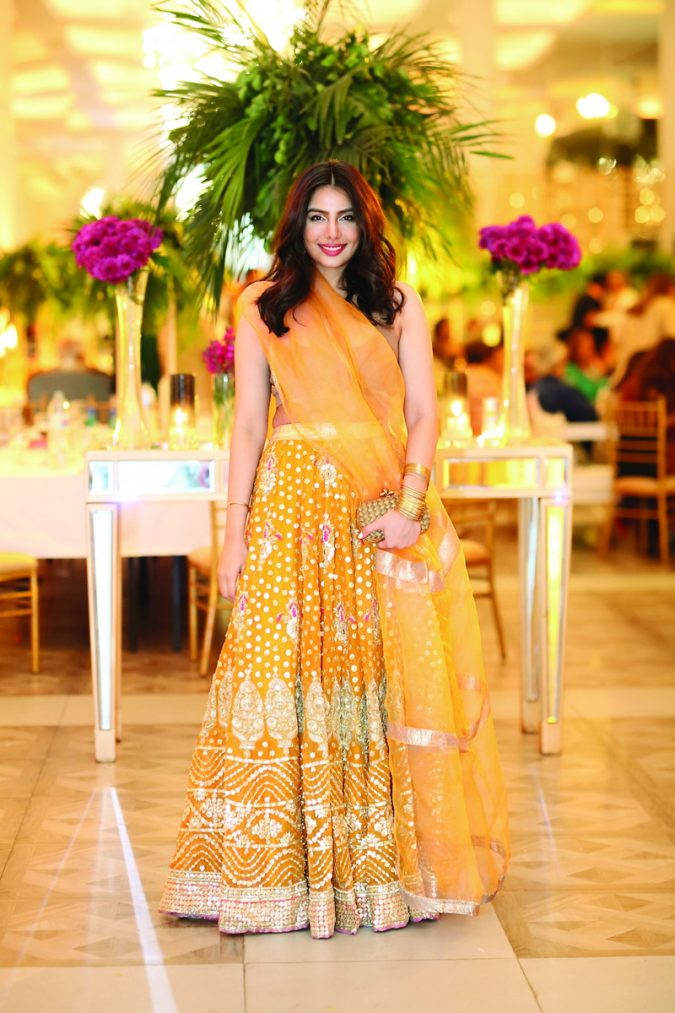





























Kamiar Rokni is one of those few coveted designers who can do no wrong.  His new collection, titled Moonrise, has women swooning over the outfits. Mehek Raza Rizvi talks to him and Eman Suleman — the face of the campaign featured in our pages — about fashion, business and diversity

Why did you choose to become a fashion designer and how has The House of Kamiar Rokni aesthetic evolved over the years?
I find that question hard to answer because I feel this profession chose me and not the other way round. I was a very artsy child who was always interested in creating things. I had an early eye for clothing so my mother and aunts would ask my opinion about the colours and prints they should wear. As a result, I found the one thing I’ve remained focused on for two decades: designing clothes.
My aesthetic has been quite defined from the beginning, but yes, it’s certainly evolved. I started off as a young and funky designer who was intrepid and high-spirited but over the years that aesthetic has become more serious, yet retains a certain boldness.
What has stayed with me from the very beginning is the use of colour. I’ve always been very comfortable with putting together colour combinations that are beautiful but unexpected. An element of surprise is always important in design and over the years I’ve grown to appreciate that more and more. I also believe my sense of quality and refinement has improved with time. I’ve learnt a lot from our local artisans, so my embroideries have become a lot better.
I’ve definitely grown as a designer but it’s mostly been the honing of an aesthetic. I’ve learnt how to mix different mediums together and create harmony in design, but essentially I’m the same creative mind who loves different cultures, history and nature.
Does being a creative person mean you ever struggle with the business aspect of your work?
Being creative and being good at business don’t necessarily go hand in hand. I think it’s definitely something I’ve had to learn and pick up over the years. I haven’t been the most astute businessman but you live, you learn and you grow. After spending so many years in the industry, I’ve finally come to rely on myself in this aspect as well. Age and experience teach you a lot.
What’s the inspiration behind Moonrise? Tell us about the collection.
Moonrise is very close to my heart because in my twenty years in fashion, this is the first collection my team and I have put together entirely on our own. I have a collaborative spirit and have enjoyed teaming up in terms of design from the beginning of my career, but it was a differet experience doing everything myself. The collection itself is represented by the moon, which is a feminine symbol. It’s an exploration of the different aspects of femininity, the Pakistani woman and how she expresses herself. Our country’s modern age woman is contemporary and relevant but also respectful of tradition. My slogan for Moonrise is “brace your inner rock star as well as your inner princess.â€
I tried to put myself in the headspace of the girl of today and create what she wants to wear. The idea was to provide multiple options suitable for anywhere in the world and for any wedding affair. Also, like every collection of mine, art, culture and imagination were elements I put together into the garments, bearing in mind what I want to say about shape, form, silhouette and also embellishment.
How does your muse, Eman Suleman, personify the vision behind Moonrise?
Muse is a word that gets thrown around a lot. While Eman definitely personifies the current Pakistani woman and is very inspirational to me, I’d like to clarify that my all-time muse has always been my childhood best friend, Maleeha Naipaul.
In some ways Eman reminds me of her. She has this ethereal beauty and always looks like there’s something going on inside her head or that she lives in a world of her own, which I really like. She’s very professional and gets into character extremely quickly as a model. That just worked well with Moonrise.
We did two shoots for Moonrise, one which you see in this feature by Umar Nadeem and Azka Shahid (the duo photographer and stylist who are extremely young and talented) and the other at my beautiful family home in Bahawalpur, featuring Farwa Kazmi, Rubab Ali, Maham Ali and Eman Suleman.
I love working with new people but over the years, everybody from Noor Bhatti, to Aaminah Haq, Tanya Shafi Khan and Vaneeza Ahmad have become friends and muses. I generally enjoy the company of women — they inspire me. However, Maleeha Naipaul, my grandmothers, my mother, my aunts and friends, Sanam Taseer, Juggan Kazim, Meherbano Sethi and Zara Peerzada have influenced me the most with their beauty and grace.
The word ‘muse’ has been misused in fashion. How do you respond to the belief that its excessive use objectifies women?
Yes, muse is indeed a tricky word but essentially a muse is a conduit. It’s someone you look at from afar and get inspired by or somebody who is a collaborator — who you can talk to, work with and bounce ideas off. As I mentioned earlier, Maleeha embodies both those things for me. She acts like a sounding board. In fact, I often ask all my female friends if they would wear a certain garment I’ve made. If yes, where and how would they wear it?
I don’t know whether or not it’s sexist to have a muse. We live in a very charged climate where everything can be politicised. Social correctness has become a little extreme. As far I’m concerned I love, respect and admire all women.
“Moonrise is very close to my heart because in my twenty years in fashion, this is the first collection My Team and I Have put together entirely on our ownâ€
SHORT & SWEET
How do you react to fashion being called frivolous, wasteful or indulgent?
I think it’s very silly to call a multi-billion dollar industry frivolous. It just shows a limited mindset.
Three skills one needs to survive in fashion?
A thick skin, talent and a certain amount of flamboyance
Your favourite design created by you so far?
It’s like having a favourite child; everyone has one but you never say which one it is.
Favourite models from the current lot?
I love the influx of new models. Rubab Ali, Farwa Kazmi, Mushk Kaleem, Roshanay, Eman Suleman and Zara Peerzada
A veteran model you wish made a comeback?
I would love to see so many of my old friends make a comeback on the ramp: Aaminah Haq, Tanya Shafi Khan, Iraj Manzoor and ZQ—the models of that time were just incredible, it was when I was growing up and had just begun my journey in fashion. I have very fond memories from those days.
Worst experience with a client?
Some people can be quite rude but when people are getting married it’s a stressful time. I always try staying calm.
Apart from yourself, which Pakistani designers do you think are doing admirable work?
I’m a huge fan of Faiza Samee, Nilofer Shahid, Bunto Kazmi, Maheen Khan and Rizwan Beyg. They’re pioneers who paved the way and created a space that we now embody. From the younger lot, I admire the work of Misha Lakhani, Sania Maskatiya, Mahgul, Khaadi, Noorjehan Bilgrami, Hussain Rehar and Feeha Jamshed.
A line from a movie that best describes you?
There’s a movie called All That Jazz in which the main protagonist wakes up every day, looks in the mirror and says, “It’s show time folks!†That’s my attitude towards life too.
Alternate career choice?
A writer, director or actor
Describe the Pakistani fashion fraternity in three words
Like any family—some people get along, some can’t stand each other, some fight, some make-up and some break-up. That is our fashion fraternity, just like any other family.
EMANÂ SULEMAN

Why did you choose to become a fashion model and how has your understanding of the fashion world altered over the course of your career so far?
It wasn’t really a choice, it just happened. I continued for many reasons; it pays well, you get to explore places you wouldn’t have otherwise and you get to meet talented and interesting people. It can be exhausting too, all of it. Modelling is hard work, requires a lot of time, sweat and sometimes, even tears. I never could’ve imagined it being so laborious.
“I think the fashion fraternity needs to start being more inclusive of genders and body type. We need to deviate from the conventional standards of beautyâ€
You’re not one to shy away from social issues most people are afraid to address and that always leaves room for backlash. I’ve always wondered where the fearlessness comes from.

I don’t understand why these topics (oppressed genders, harassment etc.) are always labelled as controversial. They’re not. They shouldn’t be. And I’m not fearless, the fear is always there. I think ten times before I post something that might generate online abuse. In the end, I’d rather speak up than remain complicit.
You recently gave up your nomination for the Lux Style Awards. Does declining an accolade from such a prestigious platform not worry you that you may lose support?
Possibly, but it’s all right. I can either remain complicit, or lose support and I choose the latter.
How do you personify the vision behind Kamiar Rokni’s new collection Moonrise?

I think this answer has to come from people who planned and envisioned this shoot, Umar Nadeem and Azka Shahid. My two favourite people to work within the industry.
Tell us about your relationship with Kamiar Rokni and why you enjoy working with him.
Kamiar and I have worked on two projects thus far. He’s one of the finest designers Pakistan has produced. I truly believe that he’s incapable of disappointing and one can see the hard work that is invested in his designs. Pictures have become so deceiving nowadays, but I feel that pictures don’t do justice to Kamiar’s creations. Not only that, he himself is a professional and a very pleasant man.
SHORT & SWEET
How do you react to fashion being called frivolous, wasteful or indulgent?
The textile industry is one of the biggest and most successful in Pakistan, so it’s none of the things mentioned above. However, I do feel fashion brands can take an initiative to be more ethical, but that seems like a long shot.
Three skills one needs to survive in fashion?

Very honestly, self-control in many regards is very important. As a model your body language counts for a lot. It’s not just about your face, and creativity, you need to have an ability to move, which is quite lacking in Pakistan’s fashion fraternity.
Your favourite campaign so far?
Shaadi wala ghar shot by Umar Nadeem for Zara Shahjahan.
A veteran model you wish made a comeback?
Iraj Manzoor, of course.
Apart from Kamiar Rokni, which Pakistani designers do you think are doing admirable work?
Zara Shahjahan, Rano’s Heirlooms, Fahad Hussayn, Misha Lakhani, I can go on and on.
Do you have any mentors within the industry?
Fahad Hussayn taught me a lot and so did Zara Peerzada. Outside the industry, I have my brother, Kayhan, to keep me sane.
If you could, what would you change about your job?
I think the fashion fraternity needs to start being more inclusive of genders and body type. We need to deviate from the conventional standards of beauty. It’s starting to become boring — everyone and every campaign almost looks the same.
Describe the Pakistani fashion fraternity in three words
Exhausting, competitive and talebearing.
A line from a movie that best describes you?
I have absolutely no idea.
Alternate career choice?
A bartender.
Model Emaan Suleman
Photographer Umar Nadeem
Stylist Azka Shahid
Hair and Makeup Ayaan Khan at Nabilas

 Share five fun attributes about yourself
I’m an introvert
I can be moody
I love video games
I love animals
I’m a hoarder
How did you start your career?

I started with commercials three years ago. The rest as they say, is history.
Why do you think your drama serial Kaisa Hai Naseeban has drawn so much attention?
No woman chooses a life of pain. The drama serial sheds light on an issue that is close to many Pakistani households. Since the day our first promo aired, people began sending me messages and sharing stories on social media of women with experiences similar to my character Mariam. It’s the realistic portrayal that has captivated audiences.

You’ve receieved criticism for playing a victim at a time when females are in dire need of strong, powerful roles. How do you respond to that?
The drama serial narrates Mariam’s journey. She’s a typical, middle-class Pakistani girl who involuntarily agrees to her parents’ decision of marrying her first cousin in Malaysia. To her, this marriage signifies a picture-perfect future. However, that’s not the case. Many young girls are brought up with the belief that marriages are forever and it’s incumbent upon them to always please their husbands and in-laws. It takes time for my character Mariam to fight back and find her footing. If you watch the drama serial, you would see how she manages to save herself from a horrible marriage. If that’s not showing a strong, powerful character, what is?

What intrigued you about this project?
It was a no-brainer, considering it’s a real story and sends a strong message to everyone about marital abuse. It’s wrong of parents to marry off their daughters without knowing the other family properly, especially if they’re abroad.
What’s next in store for you?
I’ve just signed a rom-com opposite Ahsan Khan.

How do you choose scripts?
I base my decision on whether the script appeals to me or not. If it excites me, I go for it and let the team know.
I only sign scripts that speak to me personally. God has been very generous with the kind of projects I’ve landed so far and how the audience has received them.
What are your thoughts on the emerging concept of web series in Pakistan?
While I haven’t signed a web series project yet, it’s a great platform to share alternative stories that the television audience is not ready for. Even our conventional drama serials have massive following online. Almost every episode of Kaisa Hai Naseeban took YouTube in Pakistan by storm and received millions of views. As actors and content creators, it’s to our benefit if we are accepting of this change.
What secret can you share about the entertainment business?
There isn’t any secret. Everything is out there.
Do you find today’s media invasive?
To a certain extent, yes. However, one needs to know where to draw the line. The media is inept to figure out everything on its own. It also depends on how much you put out on social media for people to see and talk about.
How do you approach a rough situation?

I try to forget about it, so it’s easy for me to move on.
Describe your personal style.
I enjoy sticking to the basics. Fashion needs to be personal and comfortable in my opinion.
Is marriage on the cards?
Right now my only priorities are family and work. Life’s good!
Photography:
Raza Jeff
Makeup:
Kami Bhatti by AList Salon
Location:
A List Salon

Bold prints can seem tricky to style, but are extremely on-trend.  Actress and model, Uzma Khan, demonstrates how to incorporate an explosion of print and colour into your day-to-day closet


Model: Uzma Khan
Photography: Hamza Khan
Styling & coordination: Areesha Chaudhry
Makeup: Waqas Nelson at Nabilas salon
Outfits: MANGO

Let’s go back to the beginning. How did you both meet?
We met ten years ago at a party and it’s been a joyride ever since. We’re best friends united by music and it’s our aim to spread love and happiness through it.

What kindled your passion for music?
Victorien: It’s a long story. I began performing and mixing music at the age of eight for my parents because they’re fond of it. Gradually, I began playing for larger audiences at private parties. It was then that I met Florent and together we hosted bigger events.
Tell us about your collaborative work.

We’ve worked with people from Chicago, Cape Town and France and now plan to team up with Pakistani musicians. We’ve performed a transition with ten artists where we merged traditional Pakistani folk songs with house music. So far it’s been well-received.
How do you define your music?
In our DJ sets, we transition from melodic, ethnic to more powerful house music while keeping the tunes light. By the end of our performance, everyone is in full swing and our job is done.
Which music genres are you most drawn to?

Florant: Techno, French rap and pop.
Victorien: It’s a broad variation of folk and funk. I listen to a lot of tribal music from Africa too. I feel it’s important as producers to open ourselves to a wide variety of musical genres.
What instruments do you like to play?
We engage with many musicians who play different instruments. They bring their own creative energy to the table. We really enjoy the guitar, piano and brass instruments.
Are you planning new music?

We have remixes and a few original songs that we plan to release soon. We’re also remastering and re-releasing our old track ‘Pale Sun Rose,’ a project we’re very excited about. It was the first song that got us international recognition.
How do you cope with blunders on stage?
Mistakes are a part of life and we need to learn from them. It’s less about mixing and more about the vibe we create in bringing people together. As long as the vibe is there, mistakes don’t matter.

As a duo, it must be difficult to reach a decision, especially considering you have slightly different musical inclinations. How do you reconcile?
Good question! We learn to surrender and trust each other’s judgement Worst-case scenario: we will call our manager to sort things out.
Were your families supportive of your decision to pursue this line of work?
Florent: Not initially. My family was sceptical of me playing music for a living during my early days but they’re very happy for me now. Victorien: They were supportive of my career choice, but were concerned about me attaining success.
How do you strike a balance between work and personal life?

We’re doing our best. Music is our passion, so for us, it doesn’t feel like work. However, we make sure to spend time with family and friends while on tour breaks.
How was your experience performing in Pakistan?
Florent: This is my first visit here, so I was excited to see how the local audience would respond to our music. Many Pakistanis are familair with us, but it was time for us to get to know Pakistan.
Victorien: We love Pakistan. I visited in November for a private event as well and everybody welcomed me with warmth and kindness. It was special.
What advice would you give to aspiring music producers?
The best advice is to always follow your heart. Being a DJ is not about simply playing or producing music. It’s managing finances, marketing and communication. If your passion is strong enough and you want to pursue music, do it. You need to be ready to take risks and remember that even if you fail, at least you tried.