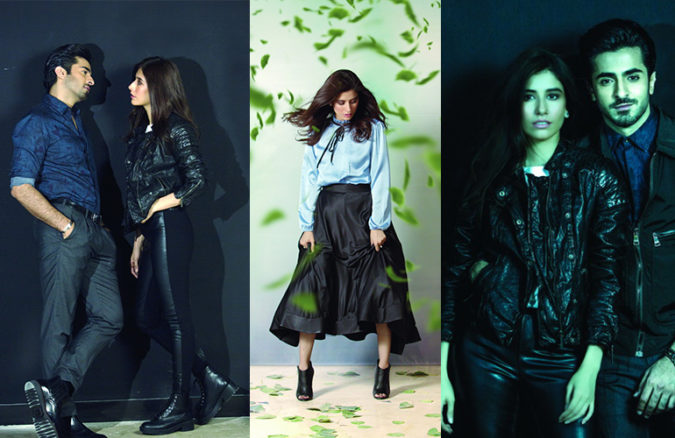
Hania Aamir’s pale, innocent beauty belies a chilled wisecrack temperament that keeps one in fits of laughter. She’s savvy, achingly young yet fiercely independent; she’s also a genuine social media star whose Dubsmash game is truly a skill to behold. Young women can learn a thing or two from this fuss free rising star who is unafraid to be herself. Hania has fun with Afshan Shafi
What has been your most favourite role to date and why?
My most favourite characters were in Parwaz e Junoon and Titli, they were something different.
If you had to choose a profession other than acting, what would it be and why?
Production, because I think I’m good at managment, etc.
Which actor is your greatest inspiration?
Priyanka f***** Chopra
What kind of characters would you love to play in the future?
I think I just want to play Rapunzel in Tangled, not joking haha. And Harley Quinn!
Are you a social person or a loner?
I’m not a loner per se, but like a little bit of both .
Favourite perk of the job?
I get to discover more sides of me in each role, and meeting new people.
Worst pitfall of the job:
Sleepless nights
What’s the last thing you watched?
American Sniper
The weirdest habit I have is…
Spitting chewing gum at people.
Heels or Flats:
Flats…no actually both
The one lipstick shade I wear the most often is…
I’m more of a tint person.
A character I wish I had played…
Harley Quinn
One thing I just won’t eat is…
Mcdonald’s!
Can you remember your last dream?
Yeah but I’m not telling.
Kardashian or Jenner:
Jenner
Celebrity crush local/international:
Local no one . Internationally, Jennifer Lawrence
Dogs or cats?
Dogs
A historical figure you’d love to have coffee with?
Why? This girl never gets it wrong. We love her creative take on fashion with that sports luxe dress and the coat thrown over the shoulders!
Who? Rizwan Ali Jafry
Why? Because nothing is more stylish than a guy in a well constructed suit. We love this look on Rizwan!
Who? Ayesha Toor
Why? We love the deconstructed denim dress. With the relaxed hair and sandals the styling is right on point!
Who? Fouzia Aman
Why? Because monochrome is always a good idea, especially when you keep it sleek and simple the way Fouzia does
Who? Zaheer Abbas
Why? Zaheer has got the casual chic look down pat. We love the grandfather cardigan over the white button down, not to mention the distressed jeans that bring the cool factor up a notch
Who? Maria Wasti
Why? We love the earthy colours that are so perfect for fall. The harmony that Maria has created between her clothes and accessories is just beautiful
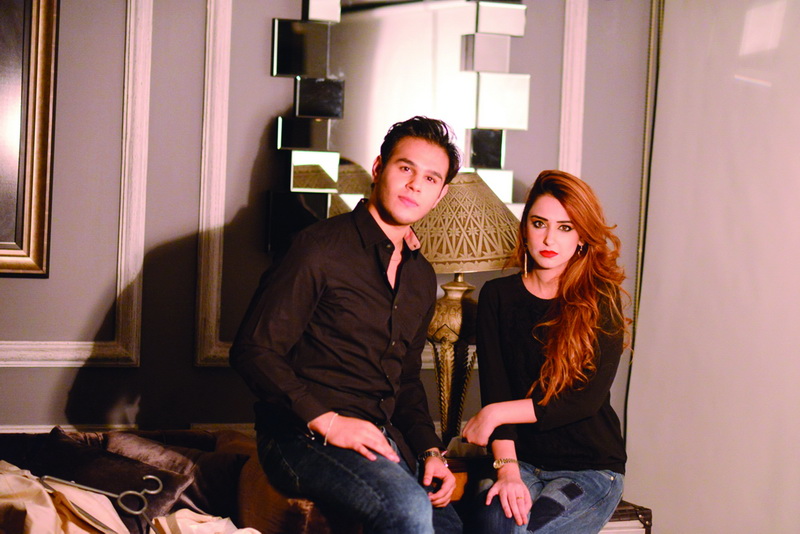
SFK Bridals by Sadaf Fawad Khan imparts subtlety and modernity. Sadaf’s vision offers youthful glamour that balances traditional detailing with fresh silhouettes. Sadaf discusses her recent collection styled exculsively for GT on her muse, the stunning Anaum Hammad
By Afshan Shafi
How would you describe your design journey?
I’ve been designing for five years now so SFK bridals was a very natural progression for me.
Do you have a muse?
For today’s shoot Anaum is my muse who is truly beautiful and looks stunning in each and every color and every cut.
In life, who would you say is your muse?
I think there are so many well dressed inspirational women across the world so it would be hard to choose one.
What inspires you when you’re designing?
I’m quite a minimalist person anyway and I don’t like ostentatious things, so we always keep that in mind. Motif wise I’ve gone with sticking to patterns, mosaics, florals. As we go further, we’ll develop a signature style so to speak but for now we take inspiration from everything.
How would you describe SFK in three words?
Comfortable
Classic
Colourful
What was the starting point for this particular collection that you showed at Pfdc?
Since I’m a business graduate, I handle the business side of things and work with my design team who develop the khakas and we together we add to the databank for inspiration. For the recent collection, we looked at the moonbow which is quite a rare phenomenon and uncommon.
What are your plans for expanding SFK in the future?
I think Bridals will remain an integral focus and since there is no bigger category then couture we will keep on expanding with that in mind. We have big plans let’s see how they roll out.
Rapid Fire
Favourite designers (International)
Ellie Saab and Sabyasaachi
Favourite designers (local)
Elan, Muse, Faraz Manan & Zara Shahjahan
Favourite piece of jewellery
A pendant that Fawad has gifted me, which is my favourite so far.
A celebrity you would love to dress
Deepika Padukone
Non-celebrity you would love to dress
Kate Middleton (Laughs)
Favourite fashion show that you attended in person
The recent showcase by Elan. The ambiance, clothes everything was 100/100
Favourite high street designer
Zara
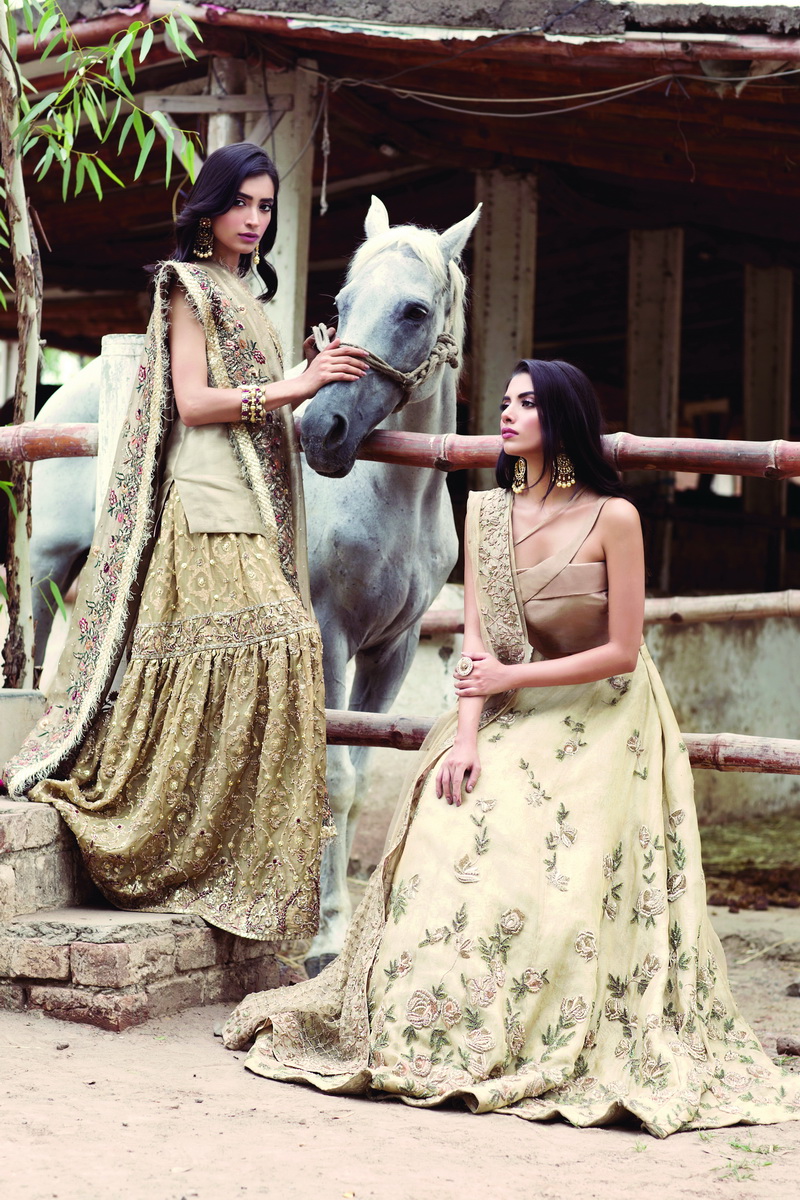
The perfect metallic look for a dholki with a high low hemline adding a modern twist. Pulled back hair gives the right sleekness to the ensemble
 Just the outfit for a glam mehndi with those Shafaq Habib beauties adding the right lustre
Anaum is a knockout in this ivory sari. We love the ruffled fall and pallu and the glints of gold throughout. The deep pink lips and the perfect highlighter finish the look perfectly
We love the entiwining branches of the grand motif here as well as the shimmering fabric. Shiny fuss free hair adds a carefree vibe to this evening ensemble
 Anaum dazzles in a floor length jacket with metallic high waisted trousers. Subtle side swept waves add a traditional elegance to the look
Love the on-trend fringing and high low modernity of this outfit. Anaum rocks those aubergine trousers with strappy heels
2017 has been a year of challenges for Pakistani cinema.
With more flops and a few debatable hits, Rangreza’s trailer seems to be a breath of fresh air in the cinema smog.
The trailer looks enticing, Gohar Rasheed especially seems to be a contender for an acting award next year.
Sana Zehra sits down with Bilal Ashraf, Ghana Ali and Gohar Rasheed for a quick rapid fire on love, life and Rangreza
Interview: Sana Zehra
Photography: Arsalan Bilgrami of a.bilgrami studio
Hair & makeup: Nabila’s
Outfits: Deepak Perwani
Jewellery: Kohar
Bilal Ashraf
What’s your favourite place on earth?
Karachi
Favourite food?
Qeema Roti
Denim or pants?
Denim
Collared shirt or t-shirts?
T-shirts
One thing you can’t live without?
Family
What does love sound like?
Sounds beautiful
What’s on your Ipod right now?
Phool khil jaingay
Favourite song to play on the guitar?
Wish I did but unfortunately I don’t know how to play the guitar.
Favourite song to play in the car?
Bulleya from Rangreza
What’s the best song to sing while you’re getting ready for a night out?
Namumkin from Pepsi Battle of the Bands
What’s the best song to put on when you are having a romantic night in?
I don’t know.
If Adele came up to you right now what would you say to her?
Sing
What’s the closest you have ever come to death?
Pretty close. When I was 13 I had a relapse of typhoid and it was pretty bad.
Biggest inspiration?
My father
What turns you off?
Bad body odour
If you weren’t an actor you’d be?
An architect
Favourite perk of the job?
To travel a lot
How did you make your first buck?
Making sandwiches at college
TV series you’d watch to back to back?
Game of Thrones
Song you’d listen to back to back?
Coke Studio’s Uss Rah Paar
First album you ever bought?
Bryan Adams
One thing you are really bad at?
Managing things
One superhero power you would love to have?
Mind control
Favourite fan moment?
It was when I was in London at Selfridges and I had people from across the border come and take pictures with me. Guess they’d seen Jaanan and were super happy to meet me.
Three qualities you want in your partner?
Adventurous, sporty, honest.
Advice to men with a broken heart?
Give it time, it will heal.
Relationship advice to a 15 year old Bilal?
Stay away
Craziest thing you ever did for a woman?
I flew to New York.
What would your ex-girlfriend be thinking right now?
I hope she is not thinking about MR (Mr. Right).
How many donuts are you able to eat in one sitting?
I don’t like donuts.
Favourite kind of cookie?
Double Dark Chocolate Dark from Ben’s Cookies, London
If you were a biscuit what flavor would you be?
Definitely dark chocolate
Who, in your opinion, is the best dressed man in the industry?
Fawad Khan
Who, in your opinion, is the best dressed women in the industry?
Mahira Khan
What song best describes your work ethics?
Born to be Wild
If we came to your house for dinner, what would you make for us?
Burgers
What would your dj name be?
Dj Billo
Would you rather be giant or microscopic?
Microscopic
What’s your favourite colour?
Green
Least favourite colour?
Beige
What’s the weirdest word in the English language?
Burp
What’s your favourite season?
Winter
How do you describe living in Pakistan?
Dangerous and unpredictable
What’s your favourite movie of all time?
Scent of a Woman
Favourite movie in the past five years?
Baby Driver
Favourite TV show that’s currently on?
Game of Thrones
Is this the strangest interview you’ve ever had?
No.
Ghana Ali
Who should every one be following right now?
Dj Khaled
What’s the coolest thing in your wardrobe?
At the moment, it’s a Stella McCartney dress I wore to the Lux Style Awards.
What’s your favourite restaurant in Karachi?
None
What do you love on your pizza?
Mushrooms
Favourite drink?
Virgin Mojito
Dark chocolate or milk chocolate?
Dark chocolate
Weirdest thing you’ve ever eaten?
I don’t like sushi
Dogs or cats?
Dogs
Best gift you’ve ever received?
My sister had this beautiful diamond necklace, which I ended up wearing to the Lux Style Awards. She gave it to me without ever wearing it. That was something very special to me.
Last gift you gave a friend?
I gave some makeup and a fragrance to my really good friend.
Jeans or trousers?
I like trousers more.
A person you want to have coffee with?
My sister
Who is Ghana Ali?
A born actress my mom used to say: “She is always acting. Dramay kar rahi hay.†(She is acting like a drama queen).†My parents were both working and I had a lot of time to be on my own and watch a lot of TV. I remember watching a movie with Katrina back to back and ended up cutting my own hair just like her.
Who gave you your breakfast this morning?
My best friend Waqas.
Any thoughts on Rangreza?
Am very close to the cast and crew of Rangreza, it is my family. Everyone has been nothing but nice to me. There were a few problems in the beginning but Munib, Urwa, Gohar and Bilal they have all been extremely nice to me and am super excited about this.
What does GT means to you?
I have spent good times with GT and by the way my original name is Ghana Tahir so GT is my nickname too!
Gohar Rasheed
Describe Gohar Rasheed in three words?
Loyal
Risk taker
Adventurous.
One thing you can’t live without?
People who I love I’m extremely close to them I can’t imagine my life without them.
What’s the coolest thing in this room?
The piano in the back
Favourite season?
Winter
What do you like to do in your extra time?
Dining out and watching movies
Favourite movie?
The list is huge. Gangs of New York, Fight Club, Scent of a Woman so yeah the list goes on.
Favourite movie in the last five years?
Punjab Nahin Jaongi
What’s a book you plan on reading?
My friend Bilal Lashari recommended The Kite Runner. Am really looking forward to reading that.
Iphone or Android?
Neither
Favourite food?
Desi
Do you have a tattoo?
No
Are you in love?
No, not atm.
Favourite solo artist?
Nusrat Fateh Ali Khan
Favourite song?
I love all Nusrat Fateh Ali Khan songs.
If your life were a song, what would the title be?
How do you like me now by The Heavy.
If you could sing a duet with an actress, who would it be?
Saba Qamar
A historical figure you’d love to have coffee with?
Quaid e Azam Mohammad Ali Jinnah
What’s your favorite board game?
Ludo/Parcheesi
What’s your favorite country to visit?
UK
What’s the last country you visited?
Dubai
What country do you wish to visit?
Canada and I’d really like to visit Vancouver.
If you had one superpower, what would it be?
Being a healer.
Is this the strangest interview you’ve ever had?
No, I’ve been through worse.
What does Rangreza mean to you?
Rangreza is my heart! I’m extremely attached to it. My character Waseem Wallay has become my better half I have been living with the character for the past 2 years.
How so?
I have emotionally invested in this character. I changed my appearance for Waseem Wallay and it eventually became a part of me.
What does GT mean to you?
You know being featured in GT was a huge deal, I remember I got featured once and I got myself into trouble (laughs) so yeah I’ve had great time with GT. I grew up with it!
It came as a shock to my friends and family when I decided to spend my holidays in Singapore. Their (family and friends) suggestion was the usual i.e. Thailand, London or Dubai especially the latter since it was closer to home. Contrary to the popular recommendations, I opted for Singapore mainly to attend the Singapore Grand Prix.
On September 13th I boarded the flight to embark on the rather unusual route to Singapore from Karachi i.e. via Dubai. But once I landed in Singapore, the pollution-free breeze, greenery and infrastructure immediately made me forget about the long flight, boredom and loud baby cries I had encountered on the flight. This time on strong insistence of my friend I opted for Airbnb and booked a studio apartment in China Town that was 10-15 minutes away from all the central tourist points of Singapore.
My first three days revolved around Formula 1 activities, attending the training, qualify round and of course the main race. Watching the cars in real life was like a teenage dream come true, the passion, excitement experience on the race day was phenomenal! A large number of people sporting their favorite team jerseys, caps and merchandise showed up at the venue chanting in support of their team, and even though it rained the race went on as planned.
Once the Singapore Grand Prix fever was over it was time to embark on some typical touristy adventures i.e. wandering around the streets, tasting new cuisines, shopping and of course asking your friend to take your photograph at every step of your adventure.
First stop, the much talked about Haji Lane. If you’ve ever visited Singapore I doubt if you had missed out on this beautiful fashion paradise. There’s something so special about the beautiful yet quirky graffiti displayed on the walls of the narrow lanes of Haji Lane that cannot be described in words. The cozy roadside cafes, pop art shops, compact book shops, antique shops make you instantly fall in love with this tourist hotspot. Instead of two hours, I ended staying there for 8 hours and got most of my shopping done from there. Also getting my first ever tattoo from the much talked about tattoo parlor called Visual Orgasm located in Haji Lane makes this place even more memorable. While I continued to be mesmerized and fascinated by Haji Lane, I did take some time out to visit the famous Marina Bay Gardens, China Town shopping street and Universal Studios.
Home to a diverse ethnic group means you get to meet people from all corners of the world including Pakistanis and of course get to taste some amazing mouthwatering dishes such as Hainanese Chicken Rice, Laksa, Char Kuay Teow, Char Siew Rice/Noodles.
There were some great things to learn from this country such as people patiently waiting in queues for their turn, cleanliness maintained on the roads/streets, how Singaporeans respected and obeyed the law, most importantly their openness and hospitality towards tourists. All these reasons and more have convinced me to visit Singapore at least once a year.
As I left for Changi Airport on September 20th for Dubai I couldn’t hold back my tears, without any exaggeration I had the best time in the longest time. Singapore you continue to amaze me, I’ll be back soon!
Fashion designer, Mona Imran last showcased her collection Goldrush at FPW 16 to positive reviews. Her signature look is a mix of rich golds and reds with intricate hand embroidery. Sana Zehra catches up with Mona in Karachi
What sparked your interest in fashion?
It’s my passion.
How has your work evolved over the course of years?
We all grow in terms of our work. The essence of my brand is modern cuts but staying true to our roots. We make wearable clothes for Pakistani women.
What is the biggest fashion mistake women make?
Overdoing makeup
What was the first break you got in your career?
My first bridal show
What is your source of inspiration?
I find inspiration in everything—books, music, nature.
Favourite place to find budget buys?
Sapphire
Favourite place to shop in Karachi and why?
Dolmen Mall Clifton, where all brands are under one roof.
If you’d choose to give any celebrity a makeover who would it be and why?
Anushka Sharma, she’s got a lot much to offer.
What are the must-haves a woman must have in her closet at all times?
Bags, a good watch, and of course, a sexy black evening dress.
Favourite all time designer?
Versace
If one is really stuck and don’t know what to wear, what would you suggest?
A black flared cocktail outfit with an embellished belt.
Item worth splurging on?
Chanel bag
Who is the most difficult celebrity you’ve worked with?
All celebrities think they deserve to be treated a certain way and have this totally over the top attitude.
Favourite vacation spot?
London
Have you ever been in love?
I believe everybody has fallen in love at some point.
Any fashion related message?
Shop till you drop.
Any styling advice?
Don’t style past your comfort zone.
What are the key trends for bridal and wedding wear for the upcoming season?
Simplicity
Pastels
Trendy cuts
Long dresses
What are classic silhouettes that flatter every woman?
Well tapered and well finished
What trends would you like to see die?
Modern contemporary
What trends would you like to see more women experiment with this season?
From futuristic fabrics to tonal dressing, fashion is throwing some frivolous, and some revolutionary ideas our own way for the new season.
What do you hope to see more of from designers in bridal and wedding wear this season?
Gifted and complex, Humaima Malik burns with a fierce magnetism. She remains both an enigma and the talk of the town. Humaima spends the day with Afshan Shafi and Saleha Shah as artist extraordinaire Abdullah Haris photographs her with his unerring aesthetic in Marina Qureshi’s beautiful designs
Clothing: Marina Qureshi London
Makeup & hair: Toni and Guy
Styling: Abdullah Haris
Jewelry: Gold by Reama Malik
Coordination: Afshan Shafi
Shot by Abdullah Haris
Do you have any special nicknames?
Yes (laughs) Mehma. I love it when my niece calls me that!
What is your most annoying habit?
I confess…I bite my nails.
Your favourite toy growing up was?
Dolls, of course
Movie you’ve watched more than five times?
Hum Aapke Hain Kaun probably.
Character you wish you had played?
Gone Girl
The lipstick shade you wear the most
Ruby Woo
The one thing you would want to change about yourself?
My anger
Plain or patterned
Plain
Lipstick or lip gloss?
Lipstick
Cats or dogs?
None
Who’s your biggest inspiration?
Mum
What’s the best bargain you ever got on a designer item?
Dior shades
What does it feel like to be Humaima Malik?
It feels like me. (Laughs)
Favourite vacation spot
London
What’s your biggest fear?
Losing my parents
Which future project are you most excited about? Maula Jutt or Arth?
Both
How would you describe your character in Maula Jutt?
As strong as I am
What was it like working with Sanjay Dutt in your most recent Bollywood movie?
Amazing! He’s great, has real charisma
What kind of roles would you like to work on in the future?
Something I haven’t done before. Something different and crazy!
Why? Her neon Valentino Rockstud pointed toe flats take the casual outfit up a notch
Who? Amna
Why? We don’t usually go for matchy matchy, but she’s pretty as a picture in her pink and white outfit topped with a happy smile
Who? Zahra
Why? Her bell sleeves are on trend, updating a classic kameeze
Who? Sara Irfan
Why? This fashinista always accessorises her outfits perfectly. We love her Chanel tweed bag
Who? Fatima
Why? Another simple yet effective outfit that stands out for all the right reasons
Who? Sidra Akram
Why? This stylish ensemble consisting of a fringe kimono jacket worn over jeans and a simple T, and accessorised with embroidered mules is a study in effortless elegance
Junaid Khan has been the lead vocalist of the band Call since 2003, a group known for its hard core, metal and rock music. Junaid has stood out with his strong vocals with songs like Sub Bhula Ke, Shayad and Hojanay De. Junaid has won several awards and to prove his talent even more he is also a successful actor and has worked in promising projects such as Tumhari Maryam, Jalti Rayt Par, Natak, Mujhey Rootney na Denay, Mata e Jaan, Nikkah and many more. Junaid chats with Sana Zehra
What are you doing right now?
I’m shooting with the awesome GT peeps along with the stylist Ethesham Ansari.
Favourite place on earth?
Home
Favourite food?
Paaye and naan
Denim or Pants?
Slim fit pants
Collar or T-shirt?
T-shirt
One thing you can’t live without?
Cell phone
What is love?
Love is heaven.
What’s on your IPod right now?
Ironically, I don’t have an IPod.
Favourite song to play on the guitar?
With Arms Wide Open by Creed.
Your go-to song to sing while getting ready for a night out is…
Summer of 69 by Bryan Adams
Song for a romantic night in?
Wicked by Chris Isaak
While in the shower you sing…
It’s My life by Bon Jovi
While walking down the street I hum…
Any song by Bryan Adams.
If Adele came up to you right now what would you say to her?
There is a lot of controversy surrounding her weight. I’d just tell her you are a great looking woman and you will look even more beautiful after losing a bit but I’m happy to see how proud you are of yourself. Positive body image all the way!
What is the closest you ever came to death?
I was going back from work and I was really tired and just as I was about to doze off at the wheel when all of a sudden for a brief second I closed my eyes and woke up again. Glad to be safe and alive!
Biggest inspiration?
Life in general.There is not one thing and not a single person, there are lot of things in this world like nature, people and events, which inspire me and I just collect the best out of all of them.
Pet peeve?
Diva attitude
If you weren’t a singer you’d be?
I’m an engineer by profession with an MBA. I was doing a 9 to 5 before this, so most probably the same routine.
Favourite perk of your job?
Doing what I love and pursuing my passion I think that’s the best part of what I do.
How did you make your first buck?
I was working at a call centre right after I graduated. Won’t forget that ever!
Last thing you binge watched?
South Park Season 16.
Song you’d listen to back to back?
Sun Yara title track of my play
First album you ever bought?
Junoon first album Talash.
One thing you are really bad at?
I’m bad at saying no at times.
Superhero power you’d want to have?
Flying! I won’t need visas anymore.
Favourite fan moment?
There was this lady who came up to me right after my concert and asked me where I got the surgery done from? I was a bit taken back and asked which surgery? She answered surgery that makes you look so good. (Laughs)
Three Qualities you’d want in your partner?
Patience
Intellect
Beauty
Advice to men with a broken heart?
Move on—-if your heart has just been broken, trust me there is someone else for you somewhere. It is absolutely that true couples are made in heaven. If you are single right now there must be someone somewhere for you for sure.
Relationship advice to a 15 years old Junaid?
Stress less. People come and go, such is life.
Craziest thing you’ve ever done for a woman?
I am not that crazy but yeah took a pirate boat ride and regretted it afterwards.
How many donuts can you eat in one sitting?
I absolutely love sweets! So 3 to 4.
Agree or disagree? Harry Potter was selfish as some people claim?
Thankfully I’ve never seen any of the films.
What do you do when a baby stares at you?
Wassup?!
Favourite kind of cookie?
Chocolate chip
What’s best done slowly?
Talk
Best dressed man in the industry?
Fawad Khan
What do you think when you are alone?
Relax and unwind
Song which would describe your work ethic?
Tough one never thought about that one before. Here I am by Bryan Adams.
“I was going
back from work and I was really tired and just as
I was about to doze off at the wheel when all of a sudden for a brief second I closed my eyes and woke up again. Glad to be safe and alive!â€
If we came to your house for dinner what would you make us?
Any type of eggs
What is at the edge of the universe?
The world is round. Yee haw!
If you leave the galaxy what will you find?
Space
What would be your dj name?
Dj Khan
Would you rather be a giant or a microscopic?
Giant
One word for marriage?
Stability
One word for awards?
Only for the famous
On screen romance?
Of course!
One word on being human?
Experience
One word: Fahad Mustafa?
Very good performer
Advice: Sanam Saeed?
More onscreen presence please
Advice: Mathira?
She can learn a lot more dance moves other than just belly dancing.
Why is your band named Call?
Long story but basically it means a message.
Interview by Sana Zehra
Hair by Clippers for men
Stylist Ehtesham Ansari
Photography by Arsalan Bilgrami of a.bilgrami studio
Location: HSY Mansion
Outfits: Humayun Alamgir, Deepak & Fahad, Splash and Naushemian
Many of you remember Penelope Cruz and Javier Bardem from their unforgettable movie roles—Penelope for her beauty and Javier for his formidable acting prowess. As we know, love does not always bloom at first sight. Penelope met her current husband Javier on the set of her first movie Jamon, Jamon (1992) when she was just a teenager. Fifteen years later, on the set of Vicky Christina Barcelona (2007) they reconnected and Bardem decided she’s The One for him. By then, each had the maturity to fully comprehend what it was they were looking for in a spouse. This is their story
Bardem Worked As Actor From The Age Of SixJavier Played rugby for The Junior Spanish National Team
Javier spent his childhood at theatres and on film sets, making his film debut at only six years old in Fernando Fernán Gómez’s El PÃcaro (The Scoundrel). Javier told The Guardian about his childhood in Spain, “It was a very troubled time, to the point that to have the surname Bardem in those times was not good; you were pursued and put in jail. I was too little, but I saw things. People being arrested, my mother crying because colleagues of hers and people she loved were imprisoned or disappeared. The streets were violent….My mother is an actress; my grandfather and grandmother were actors. The parents of my grandparents were actors, in a time when actors were not allowed to be buried on sacred land. Terrible. My uncle is an actor, my brother is an actor and a writer, my sister used to be an actress. My cousins are actors. I’ve seen since I was born all that you can imagine in an actor’s life. So I don’t buy anything. I don’t buy success. I don’t buy failure. I only buy commitment.â€
However, the boy was ambitious to become not an actor as you would imagine but a painter. He studied painting for four years at Madrid’s Escuela de Artes y Oficios and took on acting jobs only to pay the bills. Perhaps this was due to the fact that he was well aware of the non glamorous aspect of the showbiz world. In addition, the sporty, well built youth played rugby for the junior Spanish National Team. In time, not having enough talent or skill to make it as an artist, Javier wisely decided to pursue acting seriously. Struggling to make it, he even worked as a stripper for a day to subsidize his income between acting jobs. He nearly threw in the towel though when in 1989 after donning a Superman costume for a comedic sketch for the Spanish comedy show El DÃa Por Delante (The Day Ahead), he questioned this choice of career as well.
Penelope Studied classical Ballet for Nine Years at Spain’s National Conservatory
As it happened, the year they started filming, Javier had already started dating his English teacher Christina Pales, a relationship that was to last nearly fifteen years. He was in love and committed and he didn’t have eyes for his ambitious nubile costar. He said at the time, “I’m in love with my English teacher. We have many of our lessons in bed.â€
With Her First Serious Boyfriend (bf) Musician And Record Producer Nacho Cano
Penelope had a happy childhood and spent long hours at her grandmother’s apartment. She remembers “playing with some friends and being aware that I was acting as I was playing with them. I would think of a character and pretend to be someone else.†But, like Bardem, she initially focused on pursuing a different career and studied classical ballet for nine years at Spain’s National Conservatory. She said that ballet instilled in her discipline that helped in her future acting career.
With Ex Bf Czech Filmmaker Thomas Obermaier
Aged 10, she became interested in movies and her father bought her a Betamax VCR to watch films on, a rare thing to own in her neighborhood. After watching Spanish director Pedro Almodóvar’s film, Tie Me Up! Tie Me Down! (1990) she wanted try her hand at acting. She started doing casting calls for an agent but was rejected multiple times because the agent felt that she was too young. Cruz said in an interview, “I was very extroverted as a kid….I was studying when I was in high school at night, I was in ballet and I was doing castings. I looked for an agent and she sent me away three times because I was a little girl but I kept coming back. I’m still with her after all these years.†Finally, after she won an audition at a talent agency beating over 300 other girls, she was signed by a talent agent Katrina Bayonas at age 15 and made her acting debut at 16 on TV hosting TV channel Telecinco’s talk show for teenagers.
In The Hi Lo Country With Billy Crudup
Katrina Bayonas recalled her audition, “She was absolutely magic. It was obvious there was something very impressive about this kid…. She was very green, but there was a presence. There was just something coming from within.â€
In an interview given to the Los Angeles Daily News in 1999, Cruz said that “it was a great part, but…I wasn’t really ready for the nudity….But I have no regrets because I wanted to start working and it changed my life.â€
Charlie Rose announced on 60 Minutes that Cruz “became an overnight sensation as much for her nude scenes as for her talent.â€
With the success of this film, the director cast Javier for a third time in his next film Luna as well, while Penelope starred in the Academy-Award-winning period romance drama Belle Epoque playing a very different character that of a virginal young girl.
With Tom Cruise & Cameron Diaz
Scenes From Vanilla Sky
From 1993 to 1996, Cruz appeared in ten Spanish and Italian films. At 20, she went to live in New York to study ballet, theatre at Cristina Rota’s New York school and English between films. She said sheorized the dialogue for casting calls and learnt English “kind of late,†getting by on only saying, “How are you?†and “Thank you.â€
Bardem Collateral
Actor John Malkovich impressed by Bardem’s acting talent offered the 27-year-old Spaniard a role in his English film in 1997, but despite the lessons with his girlfriend Javier felt his English was still poor. Instead he chose to do director Ãlex de la Iglesia’s bilingual (released in Spanish and English) action crime horror film Perdita Durango (Dance with the Devil), in which Bardem and Hispanic American actress Rosie Perez play a psychotic criminal couple.
HOLLYWOOD – FEBRUARY 24: Actor Javier Bardem poses in the press room during the 80th Annual Academy Awards at the Kodak Theatre on February 24, 2008 in Los Angeles, California. (Photo by Jeff Kravitz/FilmMagic)
When he had approximately two dozen Spanish films under his belt, Bardem finally gained widespread international recognition when he portrayed homosexual Cuban poet Reinaldo Arenas who was persecuted by Fidel Castro in Julian Schnabel’s Before Night Falls (2000). For his sensitive portrayal, his idol Al Pacino left an appreciative message on his answering machine, something he considers one of the most beautiful gifts he has ever received. Bardem received an Academy Award nomination for Best Actor, a first for a Spaniard.
2007 Love In The Time Of Cholera 035
Having broken up with her Spanish long distance boyfriend, Cruz started dating Czech filmmaker Tomas Obermaier and appeared in her first American film as Billy Crudup’s down to earth Mexican girlfriend in Stephen Frears’ Western, The Hi-Lo Country (1999). She reported that she still had difficulties understanding people speaking English while filming. The movie which starred Woody Harrelson and Patricia Arquette bombed. Cruz followed this up with Almodóvar’s well received All About My Mother, playing a pregnant nun with AIDS. She went from strength to strength starring in the delightful Hollywood rom-com Woman on Top in the lead female role playing a sexy world class chef. Variety magazine ran a story saying that Penelope “burst off the screenâ€, and had a charming accent. The curvaceous and pretty actress came to be known as the “Spanish enchantress.â€
Saharaa
With Ex Bfco Star McConaughey Both Off & On The Screen
Another review in Box Office magazine stated, “Cruz is stunning in the role—innocent and vulnerable yet possessing a mature grace and determined strength, all while sizzling with unchecked sensuality.â€
In 2000, she was cast as A-lister Matt Damon’s love interest in Billy Bob Thornton’s film adaptation of the Western bestselling novel, All the Pretty Horses. Claiming that her career ambitions were responsible for her breakup with Obermaier, Penelope started seeing Damon. Though they never confirmed their onscreen romance, they both made a promotional appearance on Oprah Winfrey’s talk show together. On the show, Cruz said: “Matt’s a very special man, he’s funny and he’s one of the most generous people I’ve met in my life. He has no defects.â€
On Set Of Vicky Cristina Barcelona With Scarlett Johansson & Woody Allen
Damon blushed and replied: “That’s the most amazing thing to say.â€
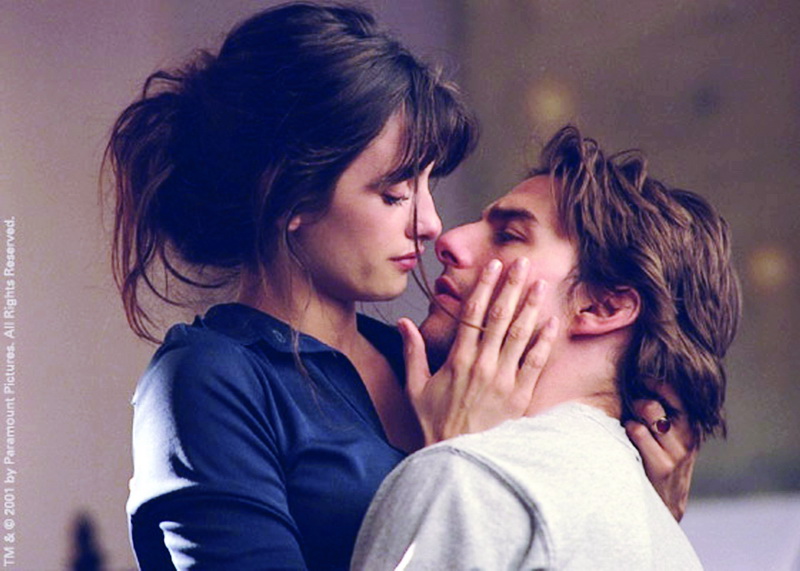
When Spanish sci-fi blockbuster film Open Your Eyes (1997) was being remade by Hollywood heavy weight director Cameron Crowe as Vanilla Sky (2001) Cruz was asked to reprise her role opposite mega star Tom Cruise. The movie also starred Cameron Diaz in a supporting role who came across blond, bland and insipid next to Penelope’s more exotic dark looks. This was a huge budget movie that grossed $200 million worldwide and marked the turning point in her career. After the movie premiered, when Tom Cruise was in the midst of divorcing Nicole Kidman due to her infidelity, he took up with Penelope in a high profile relationship that lasted till 2004. We don’t know if it was a publicity stunt/cover up relationship but it managed to generate Cruz countless tabloid headlines that made her a household name Stateside, and gave him a beautiful actress on his arms while his ex-wife engaged in a series of public hookups.
With Ex Bf Orlando BloomShe Had A Summer Fling With Josh Hartnett
The same year, Cruz next starred opposite Johnny Depp in the biographical crime film Blow about the American cocaine smuggler George Jung, adapted from Bruce Porter’s 1993 book Blow: How a Small Town Boy Made $100 million with the MedellÃn Cocaine Cartel and Lost It All. It was her second big hit of the year, grossing $80 million worldwide. Her third film of 2001 was the epic World War II love saga Captain Corelli’s Mandolin starring Nicholas Cage, also an adaptation of a novel of the same name. They sweeping lyrical movie did well with women and made $62 million worldwide. Three huge movies with three huge movie stars—it was a great year for Cruz that made her an A-list star despite her heavily accented English.
Penelope Won An Academy Award For Best Supporting Actress For Vicky Christina BarcelonaMandatory Credit: Photo by GUILLAUME COLLET/SIPA/REX/Shutterstock (9044676d) Javier Bardem and Penelope Cruz ‘Loving Pablo’ photocall, 74th Venice Film Festival, Italy – 06 Sep 2017
In an ironic twist, Bardem made his Hollywood debut in a small but significant role as a crime lord who summons Tom Cruise’s (Penelope’s boyfriend at the time) hit man in the action crime thriller Collateral (2004). Then, he starred in Miloš Forman’s film Goya’s Ghosts (2006) opposite Natalie Portman, in which he played a twisted monk during the Spanish Inquisition.
The two mega successful and talented Spanish Stars fell for each other on set of Vicky Christina Barcelona. Bardem later told GQ that he initially Had reservations regarding Penelope’s on set Passion, which both drew him to her and also Made him worried for their future. He said that She shares the same fiery personality as her onscreen Character in the movie, “Oh, boy. She has That feistiness. There are those scenes where we Are arguing, she’s throwing plates and so on. I Had to wonder, ‘Do I really want this?’ She has What I call the loving blood. Passion for everything.†But Javier in the end fell for her after Deciding that Penelope’s passionate personality Is what makes her both beautiful and sexy. ‘That’s what I find attractive. There is beauty And there is being sexy. Penelope has both.’â€
In 2007, Bardem acted in two film adaptations: the violent Coen Brothers’ No Country for Old Men in which he played a sociopathic assassin and the adaptation of the romantic and soulful Colombian novel Love in the Time of Cholera by Nobel laureate Gabriel GarcÃa Márquez.
VENICE, ITALY – SEPTEMBER 06: (L-R) Penelope Cruz and Javier Bardem walk the red carpet ahead of the ‘Loving Pablo’ screening during the 74th Venice Film Festival at Sala Grande on September 6, 2017 in Venice, Italy. (Photo by Pascal Le Segretain/Getty Images)
In No Country for Old Men, his character is a sociopathic assassin. He did such a fantastic job as a cold blooded killer that he was awarded an Academy Award for Best Supporting Actor, becoming the first Spaniard to win, as well as won a Golden Globe Award and Screen Actors Guild (SAG) Award, the Critics’ Choice Award and British Academy of Film and Television Arts (BAFTA) Award. This was his star making turn that not only catapulted him to the position of a globally recognizable star but the character he played also went down as one of the most vile villains in cinematic history. Because of his broken nose that was the result of a bar fight in his youth, Bardem had a face that could look very menacing. He didn’t need to shout or overact, rather underplayed his villains, so that they realistically appear like emotionless, cold psychopaths. Though after the horrible bar fight he said he struggles to watch violence play out on screen, “From that moment on, I couldn’t stand violence. I still can’t even watch it. I can’t bear it. So if I hate violence so much why did I do No Country For Old Men, right? I know, I know.â€
Bardem mixed it up by playing a love lorne character that pines all his life for his married childhood crush only to finally attain her at a ripe old age in Love in the Time of Cholera, a move that displayed his range. This too was an unforgettable film.
With so much to thank for, the couple with a conscious signed an open letter during the 2014 Israel–Gaza conflict denouncing Israel’s actions as a “genocide.†They didn’t care that their move was criticized by some in Hollywood and could potentially cost them jobs
“Pirates Of The Caribbean: On Stranger Tides” Premiere 64th Annual Cannes Film Festival
Francis Ford Coppola named Bardem as an heir to such greats as Al Pacino, Jack Nicholson and Robert De Niro, and lauded him being ambitious, hungry, unwilling to rest on his laurels and always “excited to do something good.â€
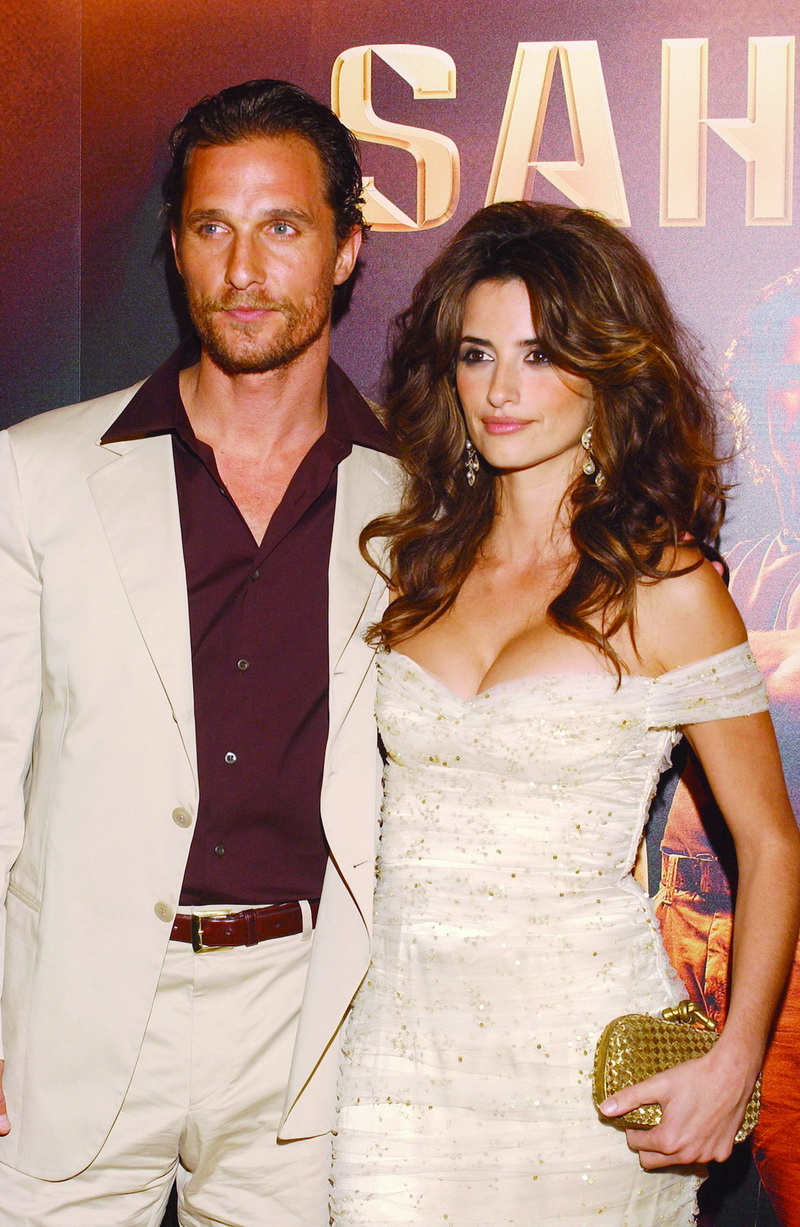
At her end, Penelope started seeing yet another costar, this time the sexy Texan at the time wild child Matthew McConaughey during the film of their box office dud Sahara, but the relationship fizzled out within a year. Next she starred in another Western, this time a female bonding summer comedy movie alongside her good friend Salma Hayek in the Bandidas (2006) in which they play “lusty dream team†of bank robbers.
With Daniel Craig In Skyfall
In fall, just in time to be nominated for the Oscars, Cruz gave a serious turn in her mentor Pedro Almodóvar’s Volver (2006). A review in The Los Angeles Times stated, “Cruz, who has remarked that in Hollywood she’s rarely allowed to be anything more than pretty, instills her with an awesome resoluteness and strength of character.†It was quite a gripping performance for which she tapped in to her working class roots. For her uninhibited fearless acting, Cruz shared a Best Actress award at the 2006 Cannes Film Festival with five of her co-stars, as well as receiving a Goya Award and European Film Award, and was nominated for the Golden Globe, SAG, BAFTA, and Academy Award for Best Actress in a leading role. She was the first Spanish actress to ever be nominated for an Academy Award for Best Actress. She also briefly dated Orlando Bloom during this year, another feather in her cap.
Penelope stars in an all star ensemble cast of agatha christie’s murder on the orient express directed by kenneth brannagh to be released in november
Woody Allen is actually indirectly responsible for finally bringing the two top Spanish stars together when he cast them in Vicky Cristina Barcelona (2008), which also starred Scarlett Johansson and Rebecca Hall. Both the Spanish stars were single simultaneously during the filming. Javier played a painter and Penelope his tempestuous ex-wife. Pe (her nickname) arrived on set after a brief summer fling with actor Josh Hartnett with whom she had vacationed win Turks and Caicos. Clearly, her Hollywood relationships were not working out and getting shorter each time. Javier had broken up his long term romance with his serious girlfriend in 2005. He probably had rebounded with hookups, but they didn’t leave a dent.
On The Set Of Everybody Knows
Cruz’s masterful and energetic performance won her a Goya Award and her first Academy Award and BAFTA Award for Best Supporting Actress. Cruz was the first Spanish actress to ever be awarded an Academy Award in that category and the sixth Hispanic person to ever receive the award.
Keeping their burgeoning relationship under the radar, the couple tied the knot in July 2010 in the Bahamas in a private ceremony. Penelope was three months pregnant at the time. Both had been raised as Roman Catholics by their respective grandmothers, so not finding any reason to wait, they probably wanted to make their relationship official as soon as they discovered the pregnancy. Bardem is an atheist now, but he probably wanted to seal the deal with his hot girlfriend and felt it was time he settled down for good. Their son Leonarodo was born in January in the new year in Los Angeles. That year Bardem was awarded Best Actor at the Cannes Film Festival for his performance in Biutiful directed by Alejandro González Iñárritu, who had written the film with Bardem in mind, quite an honour.   He became the first all Spanish-language Best Actor nominee at the 2011 Oscars and won his 5th Goya Award, which he touchingly dedicated to his wife and newborn son. However, generally the couple maintains a low public profile, seldom discussing their personal lives.
Completely unlike his onscreen persona, Bardem is a gentle, one-woman man who likes intense, lasting monogamous relationships. A telling example of how different he is in real life to the randy thugs he usually plays, he doesn’t even know how to drive a car in real life whereas in films he is seen racing cars at breakneck speeds in car chase scenes. In his downtime, Bardem unwinds by listening to heavy metal, his favourite band being AC/DC, while Pe devotes her time to philanthropic pursuits and advocates breastfeeding.
The biggest hit of Penelope’s career to date grossing more than a billion dollars she filmed when she was pregnant. This summer blockbuster is Rob Marshall’s Pirates of the Caribbean: On Stranger Tides, the fourth installment in the film series, starring Johnny Depp. Cruz was the only actress considered for the role, as she fit Marshall’s description. He invited her for the role as they wrapped the production of Nine, a musical with an ensemble all female cast, which she dominated with her superbly sensual dancing.
The actress spent two months working out and learning fencing for her role in the pirate flick. During filming, she discovered she was pregnant with her first born. The costume department obligingly redesigned her wardrobe to be more elastic, and the producers got her sister Mónica Cruz to double for her in risky scenes. That year, Penelope got her star on the Hollywood Walk of Fame, becoming the first Spanish actress to receive the honour.
Bardem also turned in a remarkable villainous portrayal of defaced rogue agent Raoul Silva ranked among the greatest villains in the James Bond series in the Daniel Craig starrer Skyfall (2012). He too received his Hollywood Walk of Fame star.
Both such bankable stars with worldwide fame, Academy and other prestigious industry awards and tens of millions of Euros in their bank accounts, they were soon to be blessed with a baby girl named Luna born in Madrid in 2013, completing their family.
In the next installment of Pirates of the Caribbean: Dead Men Tell No Tales (2017), it was Bardem’s turn to star as the main antagonist. This year, he also has the recently released Darren Aronofsky horror film Mother! with Jennifer Lawrence, Michelle Pfeiffer, and Ed Harris that is not doing too well either commercially or critically.
Yet another recent release is the Spanish film Loving Pablo in which the two spouses play the corpulent Columbian drug lord Pablo Escobar and his journalist mistress Virginia Vallejo. In an interview, Javier revealed they were careful not to bring the dark subject material home with them after a day on set: “One of the joys, and the fun of what we do, is to create. We were very careful (during shooting) to make sure we kept that joy and that we keep being able to create and use our imagination.’
A critic wrote in The Guardian, “the heat really rises when their fiery attitudes mix and threaten to combust; though the script is in (Colombian accented) English for what Bardem has confirmed were wrangling-a-budget reasons, their spats spark with such passion that a viewer can nearly hear the Spanish behind it.â€
The couple is currently busy having a blast creating what is expected to be another film masterpiece by Oscar winning Iranian director Asghar Farhadi called Everybody Knows. Bardem commented on Farhadi in a recent interview: “He sees everything. He may not understand a word, but he knows what you’re saying. He only wants honesty to its deepest level so you are really obliged to take the mask off and go there completely naked. I believe in giving it all, but the hands have to be sensitive, caring, nice — that’s why you give it to him. You trust him. And, he’s super funny.â€
Upcoming fashion designer Anam Salman is a graduate from Karachi American School and Asian Institute of Fashion Design. Her work is both a fusion of modern and classic cuts. She focuses on haute couture and luxury pret. She recently launched her high fashion collection Chimera, a wearable mix of eastern and western high fashion; she also launched two Eid Collections this year by the name of Khayal that focused only on traditional designs, proving her to be a bridge between both worlds of fashion
What is the biggest fashion mistake women make?
Women need to start accessorizing more.
What is your design aesthetic?
I like to play with classic cuts and infuse them with trendy silhouettes.
How would you describe your brand?
The brand is for the bold, strong and independent woman.
If Anam Salman could have any celebrity spokesmodel who would it be?
Priyanka Chopra
Favorite place to find budget buys?
Depends on the budget and what you’re looking for.
Favorite place to shop in Karachi and why?
Again, depends on what I need.
If you’d choose to give any celebrity a makeover who would it be and why?
I think everyone has their own individual style and they know how to carry themselves so really no one.
What are the must-haves a woman must have in her closet at all times?
A woman must have a black, white and blue dress, a good handbag and a great pair of heels.
Favourite all time designer?
Abu Jani Sandeep Khosla
If one is really stuck and you don’t know what to wear, what would you suggest?
Go for a dress that has a classic cut. You can never go wrong with a classic design.
Item worth splurging on?
A good handbag.
What helps you get in the zone when you are designing?
Good music and good company. A positive mindset is always productive.
Any suggestions for older ladies?
Don’t let anyone tell you that you can’t be evergreen. I feel that women can carry anything no matter what their age. They just need to block out the criticism and be confident. Wear what makes you happy.
How do you come up with your designs?
My designs come from inspiration. Sometimes the smallest thing can inspire me and I begin sketching immediately, which is why I always carry a sketch book with me at all times. You never know when inspiration can hit you.
Who is your favourite makeup artist?
Akif Illyas
Favourite vacation spot?
I love Koh Samui in Thailand. It’s beautiful. I would recommend it to anyone that just wants to sit back and relax.
Any fashion related message?
The most important thing you should have is confidence. No matter what you wear. If you’re not confident wearing it then no matter how great the dress you won’t look nice. Confidence is what makes you stylish everything else comes second.
Any styling advice?
Always accessorize. Invest in good watches, jewellery, bags and shoes. If you have a good collection you can never go wrong.
What are the key trends for bridal and wedding wear for the upcoming season?
A lot of designers are focusing on pastel colours because of the winter season. Dark colours with gold work look more royal. The only trend that is relatively brighter is the collection for mehndis.
What are classic silhouettes that flatter every woman?
Silhouettes depends on the woman’s body type. For example, if you are apple or pear shaped and are heavy in your mid-section you should try to avoid fitted trousers and wear something that compliments your physique rather than focus on the problem areas.
What trends would you like to see die?
Overly exaggerated floral digital prints. I think there is too much going on in those prints and it ruins the beauty of the design. Casually worn gharara and tulip pants are another trend that I am not fond off. Simply because they do not complement every shirt and its very tricky to mix and match.
What trends would you like to see more women experiment with this season?
Definitely with different types of sleeves and maybe match them with different cuts and designs. I would want women to experiment with minimalistic work that makes a big impact.
What do you hope to see more of from designers in bridal and wedding wear this season?
I think the brides should be allowed to customize her own dress. I feel that since it is her wedding, she would also want to give her creative input regarding her wedding dress. Only the bride would know what will complement her.
What does GT mean to you?
GT is my one stop entertainment guide to everything happening in Pakistan.
Photography:
Arsalan Bilgrami of a.bilgrami studio
Hair & makeup:
Eric Sen at JY style studio
Chimera Collection
Anam Salman in her versatile and eclectic Chimera Collection plays with bold colours and modern aesthetics, imparting it a unique and contemporary look
Aliha Chaudry, TV personality, wife and graduate of BNU, is a naturally introverted but ambitious young woman who is not afraid to grow and make her mark on the Pakistani showbiz industry. Aliha tells Fatima Sheikh what makes her tick
How did you come into this field?
I have done my bachelor’s in filmmaking and acting that’s how I entered this field. Right from the start when I was in my freshmen year, I started getting offers. By the time I was in the second year of college I had my own TV show.
How did you join singing?
It’s a funny story. I have always been passionate about music and hosted a show on which we would play songs of different artists and videos for a channel called style 360. Basically, I was a VJ and I used to sing songs during the free time between recordings. One of the show’s producers heard my voice and encouraged me to sing professionally and the rest as they say is history.
How many songs and videos have you released so far?
I have done about 5 to 6 music videos, which went on air on all music televisions of Pakistan and India as well. They are also widely available on social media.
Have you done concerts too?
Yes, I have done many concerts, not just all across Pakistan but also abroad.
Which concert did you enjoy the most?
I enjoy doing school and college events the most because the energy is great and the overall vibe is just oh so amazing! However, the corporate events are more of like a job, which you obviously enjoy because that’s well paid. But if I compare them then the school/college events take the trophy.
You got married a year back in a very grand affair? How did that change your life?
I got married a year ago and it has changed my life quite a lot. (Haha) Yeah we had a lot of functions, like a Sangeet night, a Bollywood night, followed by two mayun and a bridal shower so roughly there were about 10 functions. Although, I wanted a very quiet wedding considering I’m more of a private person, but my husband wanted an ample amount of functions. And, moving on to the part how it has changed me, it has made me a more responsible person. Also, I was less communicative, but I guess now I have become more so because marriage is about understanding and communication is the key.
“I enjoy doing
school and college events the most because the energy is great and the overall vibe is just oh so amazing!â€
You took time off from work? And you have sort of made a comeback after marriage? How supportive is your husband?
It has only been a year I got married and I was travelling abroad a lot with my husband. He’s an architect and his projects are also abroad, so there was a lot of travelling. The first few months of marriage are always very busy. One is taking time to adjust to a new home, to a new kind of a lifestyle, adjusting with your new family, getting to know them so I was busy in all of that. I had put work on hold and I always planned on continuing it again, but only when I could properly give it time. A year into my marriage, the dust has settled, therefore, I’m working again. My husband is quite supportive because we are both from creative fields. I support his work and understand it and he does the same.
What kind of an equation do you share with your husband?
I believe friendship is really important in any kind of relationship whether it’s with your parents or with your spouse. So we have this comfort where we can talk about anything. Like I said earlier communication is key. I was more of an introvert but after my marriage I have become more expressive. We share a healthy relationship because we were family friends before getting married. We have that bond where we can talk about anything.
You said you have done a lot of travelling this year? Which city or country did you like the most?
I went to Azerbaijan with my husband two months ago and Baku had a very pleasant feel to it. Apart from that I love New York City, my brother lives there and I always have an amazing time when I go there.
“Communication is key. I was more of an introvert but after my marriage I have become more expressiveâ€
How was your childhood? What did you aspire to be?
I was the youngest out of my siblings and my sister got married when I was a child and my brother went abroad for his schooling. I felt like the only child of my parents. We shared a very close bond. I had aspired to be a teacher actually. I was always very fascinated by my teachers as they were extremely nice to me. It was my dream to be a teacher. I was also in Student Council and was a bit of a geek. I had 6 A’s in my O Levels and I was the teacher’s pet.
Tell us about your cat?
I have an adorable cat called Leo. She’s of Persian breed and she’s like family. I know most people don’t understand your equation with your pets but I believe your pets are like family and so you should treat them like a family member.
You talk a lot about animal rights as well on your shows.
There are no proper NGO’s in Pakistan for animal rights. The ones which exist are on a very small scale. Not like PETA which works internationally and there are no proper rules and regulations for animal rights. It really makes my heart heavy. I believe animals are living things and they deserve our love and attention as much as humans. I don’t wear real fur even the ones that were gifted to me. I only wear faux fur not made from animal hair. I love animals and they deserve to be treated right and sometimes I come across videos on social media where animals are not being treated right, and it really saddens me. I wish one day I could do something about it.
Who was your inspiration for singing?
If you talk about Pakistan I really appreciate Atif Aslam’s songs and his whole journey actually. The kind of passion he has for singing and it rightly shows in his performances. Apart from that I love Selena Gomez for how humble she is off the camera, and how she is there for her fans. Taylor Swift I admire for the amazing powerhouse of a talent that she is.
Who was your inspiration for hosting?
I grew up watching Nadia Khan because my mother used to watch her show a lot. I loved her positive attitude and if you talk internationally I really enjoy The Ellen DeGeneres Show.
How are you in your private life?
Well, like I said before I’m more of a private person. I’m an introvert. I have a very close-knit circle of friends. I like to spend time with my close friends and family when I’m not working. And, I’m a simple person at heart. I enjoy simple things.
What do you feel our industry is lacking right now?
I feel that people have to be more supportive and encouraging rather than only focusing on strategy. They should also experiment with their filmmaking skills. It’s about time TV dramas evolved.
What do you feel the industry’s strength?
I think how so many new people have joined the industry, be it in movies, dramas, music productions. It’s bringing in new talent, ideas and creating job opportunities for a lot of people, which is a great thing. Thumbs up!
Can you cook?
Well, I can’t really cook except a few things but I’m a foodie. I can eat. (Haha)
Who do you like in international politics??
I really like Justin Trudeau and his positive vibe and how he seems so approachable to his people.
Which actor do you like in Pakistan in terms of acting?
I think Saba Qamar is a phenomenal actor and so versatile.
Who’s your favourite fashion designer internationally and locally?
Internationally, I like Valentino and Alexander Wang for their gowns. For more of an edgy look I really like Balmain. They have really upped their fashion game. Locally, I like Muse and Sana Safinaz.
What’s your personal style like?
I love fashion, but I also wouldn’t wear something, which isn’t going to suit me or my personality. If you ask about my personal style, I love rocker chic and if I am going out formally, I love simplicity and class. I’m not a fan of bling bling or very loud clothes. I love earth tones and black is also my favourite colour. You’ll see a lot of black and grey in my wardrobe and in summer pastels.
What’s one make up trend you wish would go away?
All that layering of foundation along with excess of highlight and contour.
What is one fashion trend you wish would go away?
Boyfriend jeans—I just don’t get them. I never have.
What’s your favourite movie of all times since you have also studied filmmaking?
There isn’t just one. I love Leonardo DiCaprio and the way he does justice to each and every character he plays. I love Shutter Island; I loved watching Eternal Sunshine of the Spotless Mind. Jim Carrey being the comic hero that he is, in such a serious role was just phenomenal. I liked Atonement. And, on a lighter side, I enjoy Owen Wilson’s movies.
What are your current projects? What will we be seeing you doing next?
I have signed two dramas; I’m venturing into acting as well.
You will be seeing me on TV again soon. Also, there are some collaborations on the music side, along with some brand endorsements and ads.
What’s the one thing you can’t live without apart from any human?
I’m a huge coffee addict. I don’t think I can live without coffee and, if I may add my cat, Leo.
What’s one quality you hate in a person?
I’m not an advocate of hate but I don’t like people who are unkind, act rude or full of themselves.
The city life or the beach life?
City life
Favourite sport?
Cricket
What’s your favorite emoji?
It’s the clap sign. (Hahaha)
Describe yourself in 3 words?
Introvert
Kind
Good at keeping secrets
Nickname?
Nonie and Lazy
What makes you angry?
Stupidity and people who try to act unkind or too smart
What annoys you?
Traffic
Last item you purchased:
A highlighter kit
What did you google last?
Hmm, I actually YouTubed a song and kept listening to it: Feel by Mahmut Orhan
Favourite quote?
“Be yourself cause the world will adjust to it anyway.†—Anonymous
Where can your fans find you?
I have an Instagram handle which is @aalliihha and a fb fan page as well by the name of aliha chaudry
George Clooney And Amal ClooneyHelen MirrenDavid E. Kelley & Michelle PfeifferAmanda SeyfriedBianca BaltiRebecca HallStella MaxwellSusan SarandonJane Fonda
Jennifer LawrenceJennifer LawrenceKristen Wiig 1Kristen WiigKirsten DunstKirsten DunstChloe SevignyChloe SevignyJulianne MooreJulianne Moore
Diamonds maybe forever but fashions certainly aren’t. Rizwanullah has made his mark in the fashion industry with his combo of ethnic and edgy design along with his quirky sense of style. Future proof your collection by adding these daring whites to your wardrobe
Before the War of Independence in 1857, after which India became part of the British Empire, many British men working for the East India Company, who had come to India to make their fortune, got married to local women and settled down to raise families. William Dalrymple documents this lesser known fact in his entertaining history book The White Mughals; he tells the tale of the romance between James Achilles Kirkpatrick, the British Resident at the court of the Nizam of Hyderabad and his Muslim wife Khair-u-Nissa Begum for whom he converted to Islam and with whom he had two children. Because he had “gone native,†the British mistrusted him and thought he was a double agent
By Mahlia Lone
James Achilles Kirkpatrick was a bit of a hybrid Brit, born at Fort St. George, Madras in 1764 but sent back to Britain where he attended Eton College. To make his name and his fortune, the ambitious young man returned as a “cocky young imperialist intending to conquer India†by working for the British East India Company and became a Lieutenant Colonel in the Company’s Army. His colourful and unusual story is told by William Dalrymple in his entertaining history book The White Mughals, which many of you may have read.
To understand the context of the story, it’s important to look at the geopolitical situation of the time.
Panoramic view of the Chaumohalla Palace at Hyderabad, photographed by Deen Dayal in the 1880s
Nizam-ul-Mulk Nawab Mir Nizam Ali Khan Siddiqi Bayafandi Bahadur Asaf Jah II reigned Hyderabad from 1762 to 1803; he belonged to the Asaf Jah dynasty founded by Mir Qamar-ud-Din Siddiq, a Mughal appointed Viceroy of the Deccan. When Mughal control collapsed after Shehnshah Aurungzeb’s death in 1707, Asaf Jah declared himself independent and in control of Hyderabad in 1724.
Following the decline of the great Mughal Empire, the Hindu Maratha Empire rose in the Deccan. Maratha warrior Baji Rao I expanded his empire by defeating the Mughals in Delhi and Asaf Jah’s forces in Hyderabad. The Nizam lost all the major battles that he fought against the fierce Marathas. After the conquest of Deccan by Bajirao I and the imposition of chauth (tribute tax) by him on Hyderabad, the Nizam essentially became a tributary of the Marathas.
Chowmahalla Palace
The East India Company meanwhile was fighting against Hyder Ali and later his son Tipu Sultan in Mysore who were supported by the French. Four Anglo-Mysore Wars were fought to establish the Company’s control over this region.
The grand interior
During the First Anglo-Mysore War (1767–69) the British convinced the Nizam to attack Hyder Ali, but the Nizam changed sides at the last moment and supported the Sultan. When Hyder Ali attacked Madras, the British convinced the Nizam to sign a new treaty with them in 1768 to maintain the balance of power: the British, Marathas and Hyderabadis on one side and Mysore on the other.
Nawab Mir Nizam Ali Khan Asaf Jah II, the Nizam of Hyderabad
James was initially appointed as the translator at the Nizam’s court during his elder brother William Kirkpatrick’s tenure as the Company’s Resident (ambassador) in Hyderabad. In 1795, savvy and skilled at diplomacy, at only 33 years of age, he replaced his brother as the Resident. Said to be a good looking and charming young diplomat, he was responsible as the East India Company’s Resident in Hyderabad for nurturing relations with the State’s rulers and keep them on the side of the British.
Taking his diplomatic tasks very seriously, he fluently conversed in Persian, Hindustani, Tamil and Telegu and immersed himself in Hyderabadi Indo-Persian culture.
One his first tasks was to build a stately Residency at Hyderabad. The Palladian style house was designed by Lt Samuel Russell of the Madras Engineers, the son of the Royal Academician John Russell.
The plan was submitted for approval to the Nizam since he would be granting the 60 acres land plus paying for the construction. Not used to western scale plans, the Nizam at first refused to sanction such a huge building. It seemed to him that the Resident was trying to appropriate a vast area of the Nizamate under the pretext of building a house. Wily Kirkpatrick cleverly had the identical plan redrawn on a much smaller scale as a tiny as a postage stamp, and the Nizam fell for the deception. The finished house bore a resemblance to Gov General Wellesley’s then newly finished Government House in Calcutta. The architecture and scale of the house impressed the viewer with the power and control of the East India Company in India.
The British Residency at Hyderabad engraving by William Miller
In 1799, James was depicted in “Hindostanny dress,†draped with long ropes of pearls, and with khussas on his feet. James smoked hukkahs, chewed paan, attended mujras and even had a zenana, living the life of a veritable White Mughal. He fathered many children with various local women that he kept there, just like the Hyderabadi elite. “Thanks partly to these women,†wrote a contemporary Hyderabadi historian, “he was always very cheerful.â€
Living like a Hyderabadi out of choice, Kirkpatrick related to them and understood their point of view, which he would present to his superiors. The Nizam awarded him with titles like Mutamin ul Mulk (Safeguard of the kingdom), Hushmat Jung (Valiant in battle) and Nawab Fakhr-ud-Dowlah Bahadur (Governor, pride of the state, and hero).
James Kirkpatrick in a Mughal angarkha
In 1798, Lord Richard Wellesley, Earl of Mornington, later Marquess Wellesley, had been appointed as Governor-General of India. After Great Britain lost her American colonies, the British government under Prime Minister William Pitt the Younger, Earl of Chatham, turned its attention fully towards India with the ostensible aim of limiting the East India Company’s corruption but actually with the conscious design of extending British power by acquiring a great empire in India.
Britain’s main rival was France. Mornington came to India with the express design of annihilating French influence in the Subcontinent. Soon after his landing, he learned of the alliance between Tipu Sultan and the French Republic that was seen as a direct threat to British interests in India. Mornington immediately ordered preparations for war and disbanded the Nizam’s French troops. This time the Nizam would have no choice but to stick to his alliance with the British. “Wellesley was an imperialist determined to reduce the Nizam to subservience,†wrote one historian.
During the Fourth and final Anglo-Mysore War, Mysore was attacked on all sides. Tipu Sultan’s forces were outnumbered by 4:1 and the Army chose as his adversary, Mornington’s younger brother, Colonel Arthur Wellesley who later became Field Marshal, 1st Duke of Wellington, responsible for defeating Napoleon. The war concluded with the death of Tipu Sultan and his kingdom being carved up by the three allies. This was the geopolitical situation at the time, precarious with alliances betrayed, espionage, and backdoor diplomacy.
After his experience in the Deccan, Colonel Arthur Wellesley warned authorities in Calcutta that Kirkpatrick seemed to be so solidly “under the influence†of the Hyderabadis that “it was to be expected that he would attend more to the objects of the Nizam’s court than those of his own government.†The Company officers took heed of the victor of the hour who had succeeded in finally taming “The Tiger of Mysore,†and started to keep a closer eye on Kirkpatrick.
Hyder Ali, a steel engraving from the 1790’s
While all this mayhem was going on and the fate of nations being decided, James had other matters on his mind when in 1800 he met the fourteen year old granddaughter of the Vizier of Hyderabad, Nawab Mahmood Ali Khan. Though Khair-un-Nissa (the incomparably beautiful) was kept in strict purdah (veil) during the betrothal ceremonies for her elder sister, she saw Kirkpatrick in the court and fell in love. She somehow managed to leave the confines of the zenana (ladies’ quarter) one evening, presented herself before Kirkpatrick and pleaded her love. In a letter to his elder brother William, Military Secretary to the Governor General at Calcutta, James Kirkpatrick justified h
A rendition of the Anglo-Mysore War
imself: “I, who was but ill-qualified for this task, attempted to argue this romantic creature out of a passion which I could not, I confess, help feeling myself something more than pity for. She declared to me again and again that her affections had been irretrievably fixed on me for a series of time, hat her fate was linked to mine.â€
Tipu Sultan
Not only did Khair-u-Nissa belong to the ruling family, but she was also a Sayyida, a descendant of the Prophet, and of Persian descent. If he wanted to be with her, he would have to marry her and for that he would have to first convert and become a Shia Muslim.
Kirkpatrick met all the conditions plus the Nizam made him his adopted son. The couple was duly married in a nikkah ceremony. Kirkpatrick was elevated to the ranks of Hyderabadi nobility. The couple became known in Hyderabadi circles as Sahib Begum and Sahib Allum (The Little Lord of the World, and the Lady of High Lineage).
Governor General of India, Lord Richard Wellesley, Earl of Mornington
James built a separate zenana in the Residency compound for Khair-u-Nissa who still observed purdah. The couple lived “in an enchanted world of scented gardens (scent was believed to be the ‘food of the soul’), luscious fruits, cooing pigeons (the sound of which was thought to stimulate the mind), sparkling jewels, veils fluttering in the balmy evening breeze,†wrote Kate Chisholm poetically in The Telegraph.
Field Marshall Arthur Wellesley, 1st Duke of Wellington
Living in his own world, immune to the changing world around him, James nearly completely eschewed wearing English clothes for all but the most formal of occasions, and now “habitually swanned around the British Residency in what one surprised visitor had described as ‘a Musselman’s dress of the finest texture.’†Another noted that he had hennaed his hands and even had Indian “mustachios.â€
Khair became renowned for her fair complexioned, delicate featured beauty. Her portrait was said at the time to do no justice to her good looks.
William Dalrymple
The good looking couple had two children: a son, Mir Ghulam Ali Sahib Allum, and a daughter, Noor-un-Nissa Sahib Begum. The leading artist of the British community in India, George Chinnery, painted a portrait of the siblings in Madras in 1805 that is regarded as one of the masterpieces of British paintings in India.
Shortly after the marriage in as early 1801, a major scandal broke out in Calcutta over the nature of Kirkpatrick’s role at the Hyderabad court. His reputation had become iffy of late but it was not unheard of British officers to dress and even live like the natives. However, in James’ case his loyalty was questioned.
Rumours started to float about Kirkpatrick’s interracial liaison. There was a steady stream of reports that he had “connected himself with a female†of one of Hyderabad’s leading noble families. The girl had become pregnant and given birth to his child. The girl’s grandfather was understandably livid and had ‘expressed an indignation approaching to frenzy at the indignity offered to the honour of his family by such proceedings, and had declared his intention of proceeding to the Mecca Masjid (the principal mosque of the city)†where he threatened to raise the Muslims of the Deccan against the British. Worse, Kirkpatrick had formally married the girl, by converting not just in name but in deed and had become a practising Shi’a Muslim.
Governor General Wellesley was not kindly disposed to Kirkpatrick’s relationship with the Nizam. Wellesley was responsible for welding British India into an integral entity and the process necessarily involved gaining ascendancy and control over the Indian Kingdoms, or Princely States as the British had begun to dismissively referring to them. Wellesley, having decided to dismiss Kirkpatrick, summoned him to Calcutta.
The authorities in Bengal started questioning Kirkpatrick to determine whether his political loyalties could still be depended on or had he in fact become a double-agent.
Upon questioning, James at first denied his marriage with Khair un-Nissa, but upon the Company’s further investigation into the matter he confessed that he had married her in an Islamic ceremony. He was summarily dismissed and as a punishment for his religious conversion it was decided that his two Anglo-Indian children would be taken away from the parents and sent to Britain to be raised as Christians.
The same year, following the British victory in the Second Anglo-Maratha War, the Nizam of Hyderabad had come under the protection of the British East India Company. Though he was the premier Prince of India, Hyderabad being the largest and most prosperous state of all princely states, the Nizam’s kingdom was now a protectorate. Moreover, Hyderabadi citizens were 85 per cent Hindu so their ruler could easily be replaced. The Nizam was shrewd enough to keep quiet about Kirkpatrick’s fate.
A tearful Khair-un-Nissa had secured a settlement of £10,000 each on five year old William and three year old Kitty, a substantial sum at the time. When they were taken from their parents, the children spoke little or no English only Urdu, the language of their mother.
James, perhaps already perhaps terminally ill, died of a fever in 1805 in Calcutta shortly after his kids were shipped off. “He had lasted longer than the proverbial two monsoons allowed to the British in the India of those days but still died young, aged 41,†wrote Sudarshan in a blog.
Khair-u-Nissa heard of his death 18 days later. In his will, Kirkpatrick stated: “the excellent and respectable Mother of my two children for whom I feel unbounded love and affection and esteem.â€
Dalrymple describes George Chinnery’s painting of the Anglo-Indian Kirpatrick siblings: “Two of them in their Hyderabadi court dress, standing at the top of a flight of steps…. Sahib Allum – an exceptionally beautiful, poised, dark-eyed child – wears a scarlet jama trimmed with gilt brocade, and a matching gilt cummerbund; he has a glittering topi on his head and crescent-toed slippers. Round his neck hangs a string of enormous pearls. His little sister, who is standing one step from Sahib Alum, and has her arm around her big brother’s shoulders, is discernibly fairer-skinned, and below her topi is a hint of the red hair that would be much admired in the years to come. Yet while Sahib Alum looks directly at the viewer with an almost precocious confidence and assurance, Sahib Begum looks down with an expression of infinite sadness and vulnerability on her face, her little eyes dark and swollen with crying.â€
The two children were transported under the care of a Mrs Ure and a retinue of “black†servants. Their baggage included shawls, jewellery and valuables worth £2000 and Captain George Elers, a fellow passenger, bribed the customs officials at Portsmouth twenty guineas to clear their baggage unopened.
Without her children and her husband, Khair-un-Nissa turned for protection to Kirkpatrick’s assistant Henry Russell who replaced him as the Resident in Hyderabad. After spending a few years with the widow, Russell tired of her and married a younger half-Portuguese heiress he had met in Madras. Hyderabad aristocracy hadn’t approved of Khair-un-Nissa’s suspected liaison and banished to the coastal town of Masulipatam for a while. She died heartbroken at the young age of 27 in 1813.
Our story doesn’t end there. We follow the children to England where they had been sent to live with their grandfather Colonel James Kirkpatrick at his London residence and country estate in Keston, Kent. Upon arriving in London, they were baptised at St. Mary’s Church, Marylebone Road, and christened as William George Kirkpatrick and Katherine Aurora “Kitty†Kirkpatrick. Henceforth, they became Evangelical Christians and never again saw India or any members of their maternal family.
Calcutta harbour
Tragically, William fell into a copper of boiling water seven years later. His burns were so bad that doctors had to amputate his arm and he became a recluse. He graduated from Oxford in 1820, married and had three daughters, before dying in 1828 aged only 27.
Kitty’s story is more interesting. She was educated privately with the aid of a governess, like most girls of her social class, and brought up to be a typical Christian Victorian lady. After the death of her brother, grandfather and other close relations, Kitty became an heiress with £50,000, a huge sum in those days. Like most mixed race children and with such good looking parents, Kitty was extremely fetching.
After the death of her grandfather, Kirkpatrick lived with several of her aunts and married cousins all of whom were well connected. She lived in the homes of Clementina, Lady Louis, the wife of a naval hero and baronet; Julia, the wife of Edward Strachey (grandfather of the writer Sir Lytton Strachey) and Barbara Isabella, the wife of an M.P.
St. Mary’s Church, Marylebone Road in London where the Anglo-Indian Kirkpatrick children were baptised
In 1822, while staying with her Strachey cousins at Shooters’ Hill, near London, she fell in with the children’s Scottish tutor, Thomas Carlyle who went on to become a famous philosopher, satirical writer, social commentator, author and historian. After Kitty travelled with the family to Paris in 1824, Carlyle seems to have fallen head over heels in love on the trip.
Watercolour sketch of Thomas Carlyle
The romance was encouraged by Kitty’s cousin Julia Carlyle but the rest of the family didn’t think the impoverished writer was a suitable match for the wealthy, beautiful and well-connected girl despite her mixed blood. At that time, if an Anglo-Indian was fair and looked English, they didn’t have a problem being accepted. Those that were born darker, however, were left behind in India.
Bitter after being rejected, Carlyle later immortalized Kitty in his 1836 novel Sartor Resartus (The Tailor Retailored), posthumously published in 1887, as the Calypso-like Rose Goddess Blumine. In Greek mythology, Calypso is a nymph who lived on the island of Ogygia where she kept Odysseus captive for several years to make him her immortal husband.
Carlyle immortalised Kitty as “fairest of Orient Light bringers,†“many-tinted, radiant aurora,†and “a strangley complexioned young lady with soft brown eyes and floods of bronze-red hair, really a pretty looking and amiable, though most foreign bit of magnificence …. that answers to the name of ‘Dear Kitty’.†He described her as lovely but suspicious due to her mixed-race ancestry:
It was a blessing in disguise for Kitty that she didn’t marry Carlyle because he developed ulcers and became a cranky, argumentative, and angry man . His cantankerous personality was reflected in his prose. In 1826, he married fellow irascible intellectual Jane Baillie Welsh.
In 1829, the famous beauty and considerable heiress, Kitty married James Winslowe Phillipps, a dashing army officer in the 7th Hussars Regiment. They were well matched. Phillipps, a member of the Kennaway family of the west country, too had Indian connections.
The Kennaway Baronetcy of Hyderabad was created in 1791 for John Kennaway, British Resident at the Court of Nizam Ali Khan, Asaf Jah II, Nizam of Hyderabad, in recognition of his services in the negotiation of the 1790 alliance between the Nizam and the East India Company against Tipu Sultan.
Kitty’s father in law had thus been the British Resident at the Nizam of Hyderabad’s court before her uncle and father, although his stint was vastly more successful than theirs.
With so much in common, their union was a happy one and blessed with seven children. The four who survived to adulthood were Mary Augusta, John James, Emily Georgina, and Bertha Elizabeth.
Kitty wrote in a letter to her grandmother Sharaf-u-Nissa in Hyderabad:
“My dear Grandmother, I received many years ago, your kind letter of condolence with me on the death of my beloved brother. I was very grateful to you for it, tho’ by my not answering it, I am afraid that you may have thought that I little regarded it. But indeed I did, & the more so, because I felt that you too mourned for him I loved so well & that you too were connected with him by the binding of blood ties.
Two years after his death I was married to a nephew of Sir John Kennaway’s. My husband is of my age & is Captain in the English army.
I have 4 children living, my eldest daughter is 11 years old. She is exactly like my husband. I have a boy of 8 years & a half, then another girl of 7 and a half who is exactly like my mother’s picture & one darling infant of 19 months. I have had 7 living children – 1 sweet boy and two sweet girls are gone, but I am blest in those that survive. My boy is so striking an image of my father that a picture that was drawn of my father as a little boy is always taken for my boy. They have a good intellect & are blest with fair skin. I live in a nice pretty house in the midst of a garden on the seacoast. My dear husband is very kind to me & I love him greatly.
I always think of you and remember you and my dear mother. I often dream that I am with you in India and that I see you both in the room you used to sit in. No day of my life has ever passed without my thinking of my dear mother. I can remember the verandah and the place where the tailors worked and a place on the housetop where my mother used to let me sit down and slide.
When I dream of my mother I am in such joy to have found her again that I awake, or else am pained in finding that she cannot understand the English I speak. I can well recollect her cries when we left her and I can now see the place where we sat when we parted, and her tearing her long hair – what worlds would I give to possess one lock of that beautiful and much loved hair! How dreadful to think that so many, many years have passed when it would have done my heart such good to think that you loved me & when I longed to write to you& tell you these feelings that I was never able to express, a letter which I am sure would have been detained& now how wonderful it is that after 35 years that I am able for the first time to hear that you think of me. And love me, and have perhaps wondered why I did not write to you, and that you have thought of me cold and insensible to such near dear ties; I thank God that he has opened for me a way of making the feelings of my heart known to you.
Will this reach you & will you care for the letter of your grand child? My own heart tells me you will. May God bless you my own dear Grandmother.â€
And in other she wrote:
“I often think of you and remember you and my dear mother. I often dream that I am with you in India and that I see you both in the room you used to sit in. No day of my life has ever passed without my thinking of my dear mother. I can remember the verandah and the place where the tailors worked and a place on the house top where my mother used to let me sit down and slide. When I dream of my mother I am in such joy to have found her again that I awake, or else am pained in finding that she cannot understand the English I speak. I can well recollect her cries when we left her and I can now see the place where she sat when we parted, and her tearing her long hair. What worlds would I give to possess one lock of that beautiful and much loved hair! How dreadful to think that so many, many years have passed when it would have done my heart such good to think that you loved me & when I longed to write to you & tell you these feelings that I was never able to express, a letter which I was sure would have been detained & now how wonderful it is that after 35 years I am able for the first time to hear that you think of me, and love me, and have perhaps wondered why I did not write to you, and that you have thought me cold and insensible to such near dear ties.â€
A portrait of the beautiful heiress Katherine Kirkpatrick, ca. 1830
Back in India, the Third Anglo-Maratha War (1817–1818) and the final and decisive conflict between the British East India Company (EIC) and the Maratha Empire had left the Company in control of most of India. The British government’s aim of fully colonizing India was coming to fruition. They were now nearly fully in charge. Only Maharaja Ranjit Singh still held out in the Punjab.
With the rise of the Victorian Evangelical movement in the 1830s and 40s not only mixed race unions but also intermingling of Indian and British ideas, religions and ways of life became increasingly frowned upon.
Mixed race unions were on the decline. Wills left by East India Company officers show that while one-in-three wills between 1780 and 1785 were made in favour of an Indian wife and Anglo-Indian children, these shrunk to one-in-four between 1805 and 1810, one-in-six by 1830, and all but disappeared by the middle of the century.
After the War of Independence, the British executed the entire top rank of the Mughal elite and fully imposed the British way of life on India as a means of stamping out Indian national identity.
For these reasons, Kitty too had been forbidden by her grandfather from maintaining any contact with her family in India. Decades after leaving India, in 1830 with the help of her father’s former assistant and mother’s reputed lover, Henry Russell, Kitty began a correspondence with her maternal grandmother Sharaf-u-Nissa in Hyderabad. Although they never met in person, they wrote each other emotional letters for six years till the old lady’s death. Although Kitty was only a toddler when she left India, she has still retained vivid memories of her childhood.
In 1846, Kitty, now Mrs Phillips, made a chance visit to Swallowfield, the home of Sir Henry Russell and and spotted the Chinnery portrait of her and her brother. The painting had come into his possession and, at his retirement, he had brought it back with him and hung in his country home, Swallowfield, in Berkshire. Moved at the memory of her brother (who had died in 1828) and of her grand, but barely remembered, mansion in Hyderabad, Kitty started bawling inconsolably. This moved Sir Henry to bequeath the painting to her after his death.
Till the end, Kitty had a special place in Carlyle’s heart who wrote of her in his Reminisces published in 1881, “ Amiable, affectionate, graceful, might be called attractive (not slim enough for ‘pretty’, not tall enough for ‘beautiful’); had something low-voiced, languidly harmonious, placid, sensuous, loved perfumes & c; a half-Begum in short; interesting specimen of the Semi-Oriental Englishwoman. Still lives, near Exeter (the prize of some idle ex-Captain of Sepoys), with many children, whom she looks after with a passionate interestâ€.
Kitty went on to live a happy, full life and died at her home, the Villa Sorrento, in the charming seaside town of Torquay, Devon, in 1889, having outlived her husband by 20 years.
Four years after her death in 1893, Sir Edward Strachey, the son of Kitty’s cousin Julia, wrote an article in Blackwood’s Magazine under the exotic title, The Romantic Marriage of James Achilles Kirkpatrick Sometime British Resident at the Court of Hyderabad. He recounted the romantic, but ultimately tragic story of James Kirkpatrick and Khair-u-Nissa.
Strachey described her, “She (Kitty) was ten years my elder, but I remember her from girlhood to old age as the most fascinating of women.â€
Telling her story, Strachey added poignantly, “in after years the daughter told her own children how long she and her brother had pined for the father and mother they remembered, and longed to get away from the cold of England to Hyderabad, and were sad at hearing that they were not to go there again, which was all they could understand of their father’s deathâ€.
The sensational story created a stir in the late-Victorian era, a time when the British Empire with its clear demarcation between the white master and brown colonist was at its height and Indian born and bred Englishman Rudyard Kipling wrote, “Oh, East is East, and West is West, and never the twain shall meet.â€
According to Dalrymple, “James was among the last of the English officials in India who found it possible to truly cross cultures.â€
The cast of the comedy Punjab Nahi Jaungi spends a day with Afshan Shafi. In between wardrobe changes for the shoot, they spill the beans in an irreverent and insightful chat
What was the most fun part about shooting for this movie?
Sohail Ahmed is very funny. He used to add lines of his own to the script. He did that many times when in scenes with Ahmed Ali Butt and used to crack us up constantly with his ad-libs and spontaneous behaviour.
Who was the most fun to work with on set?
Ahmed Butt for sure!
What did you love/hate about the character you were playing?
I loved his attitude and his accent. Usually I don’t hate much about the characters I play. I usually sympathize with them. This character in particular is an admirable one.
If you could have one superpower what superpower would it be?
I would like to be a mind reader, and try to see what people are thinking. I wouldn’t mind having the power of mind control as well.
What is one thing that annoys you the most?
Backbiting
You and Mehwish worked together on Jawani Phir Nahi Ani. How was it like working together again?
Wonderful! We always have a great time working together because of our comfort level. We also did a play together after JPNA. People say we have great chemistry together, which is always a plus.
What is one thing you know now about your co-stars that you didn’t know before?
Well, I’m now attuned to Mehwish’s expressions and know exactly when to deliver a pause. There’s an ease in acting with her, which is a huge advantage.
Where would you go if you where invisible?
I won’t disclose that just in case I do one day acquire this power.
What is the worst job you could have?
Any 9-5 office job
Which celebrity annoys you the most?
Wouldn’t be gentlemanly of me to say
If you were stranded on a tropical island what two things would you want with you?
Family and friends
“I would like to be a mind reader and have the power of mind controlâ€
What is the song you hear most often?
Kya yahi pyaar hai
Which is your dream car?
Range Rover sports
What makes you angry?
Backbiting
What’s your favourite country to visit?
Italy
Mehwish Hayat
What was the most fun part about shooting for this movie?
The rain sequence was really fun. We were shooting late and I was drenched completely. At one point, I literally felt like steam was rising from my body. It was really funny!
Who was the most fun to work with on set?
Honestly, I’ve been blessed with great co-actors. Everyone is very nice but Humayun and Ahmed Ali Butt are a laugh a minute.
What did you love/hate about the character you were playing?
I hate nothing about the character; I own it. What I love about her is that she’s a sensible girl but at the same time she knows where to take a stand and speak up for herself.
What do you think audiences will be surprised to see in this movie?
They will be amazed, mesmerized and more. It’s a fabulous production and a piece of art for viewers. Our dialogues are amazing since they’ve been written by the brilliant scriptwriterKhalil ur Rehman Qamar who is just unbeatable.
“It was really
fun filming the rain sequenceâ€
What annoys you the most?
People lying about you and making assumptions about you when they don’t even know you.
You and Humayun previously worked together on Jawani Phir Nahi Ani. How was it like working together again?
We did a play called Dil Lagi between these movies, which was loved by audiences. We have good chemistry and I think people like to see our pairing. We look good on screen together honestly. He’s also generally so much fun and such a nice person to work with.
What is one thing you know now about Humayun that you didn’t know before?
That we both eat a lot! Even though we are on diets we still eat and eat.
Cats or dogs?
Always dogs!
What is the most precious thing in your wardrobe?
A few things that purchased in Soho, New York, and some in Turkey.
What’s the most embarrassing thing you’ve ever done?
Do you really think I’ll tell you that? Haha
Who’s your biggest inspiration?
My mother
Are you a morning or a night person?
Night
Who is your favourite superhero and why?
Wonder Woman or Lara Croft
If you could trade lives with anyone for a day who would it be and why?
Lady Diana because she was Princess of Wales as well as an ideal mother and wife
What is the first thing you notice about someone when you first meet?
Their whole vibe or energy
What is the song you hear most often?
(Sings) You just want attention, you don’t want my heart.
Maybe you just hate the thought of me with someone new by Charlie Puth. This song is in my head all day long.
What fashion trend do you just not get?
Culottes
Beauty must have?
A lot of water and a good moisturizer
Azfar Rehman
What was the funniest part about shooting for this movie?
Well, we were shooting in a palace, and Mehwish thought it would be funny to convince me that this palace was haunted. Actually that wasn’t the case, but I was scared throughout.
Who was the most fun to work with on set?
It has to be Mehwish because she is a dear friend and is one actress who is great on screen and off screen. Director Nadeem Baig was also great fun to work with because I feel that to truly enjoy something you have to have a sense of humor and possesses that in spades. I think it was great working with both of them,
“This may sound sleazy, but I would like to be inside someone’s wardrobe when Invisibleâ€
How would you describe Punjab Nahi Jaungi in one line?
Don’t take away my girlfriend haha.
What did you love/hate about the character you’re playing?
What I love about him is that this guy is natural, he’s not pretentious. What I hate about him is that this guy can be too practical and too stiff at times; he doesn’t really get the emotional side of people. Like you know they say that love is illogical, everything can’t be practical and logical all the time. Wasay, my character is very practical, posh and up to date, but he’s slightly unfeeling.
Where would you go if you where invisible?
This may sound sleazy, but I would like to be inside someone’s wardrobe when invisible. Now don’t ask me why. (Haha)
What is the worst job you could have?
A janitor
Which celebrity annoys you the most?
I think self proclaimed celebrities or people with a very limited body of work really annoy me. Your craft should be the most important thing about you.
If you were stranded on a tropical island what two things would you want with you?
A water bottle and my cell phone
What is your dream car?
They keep changing but right now it’s the Mini Coupe.
Suleyman was the only son of Sultan Selim I the Resolute responsible for increasing the Ottoman Empire in size by 70 per cent during his reign (1512-1520) by conquering the Mamluk Sultanate of Egypt and the Middle Eastern heartlands. Selim I became the guardian of the pilgrimage routes to Mecca and Medina and is generally remembered as the first legitimate Ottoman Caliph. Sixteenth-century Italian historian Paolo Giovio who compiled a book on Turkish history wrote it was inconceivable to expect that “the dauntless lion would leave his throne to mansuetto angelo (a timid lamb).â€
Another European historian of the Ottoman rulers called Selim and Suleiman: “Patris fortis filius fortior,†(a courageous father of an even more courageous son).
In September 1520, twenty-six years old Suleyman’s carefree life as governor in the Manisa province came suddenly to an end when he was called back to Constantinople after the accidental death of the Sultan; he succeeded his father and subsequently established the classical Ottoman state and society; he made important new conquests in the East and West, including Belgrade, Rhodes and much of Hungary all the way up to Vienna; he overhauled the legal system; he also patronised artists and writers at his court so the arts and culture scene flourished. Thus, with his reign began the golden age of Ottoman history.
Sixteenth century Venetian chronicler, Marino Sanuto in Tome XXXV of his historical chronicles quoted a report of the Venetian ambassador: “His not being prone, in contrast to his father and many other Sultans, to pederasty (homosexuality) made his majestic dignity and nobility of character shine even brighter.†Rather in his case, it turned out to be the love of a fair Ukrainian slave girl that was to enslave this Sultan for life.
Hafsa Valide SultanSultan Selim I the ResoluteExpansion of Ottoman Empire by Sultan Suleyman the Magnificent (r. 1520-1566)Ottoman dignitaries on horseback during a marchBattle Of Mohács Depiction
Intelligent, benevolent and erudite but also a sound military tactician, Suleyman, in contrast to his father who expanded his Empire to include other Muslim realms, began his rule with campaigns against the Christian kingdoms in Central Europe and the Mediterranean, starting with Belgrade in 1521 that led to a large-scale advance north of the Danube. The Island of Rhodes ruled by the Knights of St. John was conquered in 1522. In 1526, Suleyman defeated the combined Hungarian-Croatian-Czech forces and took over Hungary. Hungarian King Louis II drowned ignominiously in a bog during the battle. A Turkish historian wrote at the time that “there has never been a battle like this since ancient times.†Turkish soldiers piled 2,000 heads of their enemies (eight heads belonging to bishops) in a heap close to the Sultan’s tent as a tribute to the victor. Suleyman drove the Habsburgs from all of Hungary and besieged Vienna in 1529, but could not sustain the siege. Facing problems with supply, transport, and military organization, the Sultan wisely realized he had reached the limit of possible Ottoman expansion in the West.
Though Ukraine was never conquered by the Ottomans, it became a steady source of white slaves for the Ottoman Empire. Back then just as now, Ukrainian women were highly prized for their fair skin and delicate bone structure. Muslims, it was argued, were barred by the Quran for capturing fellow Muslims as slaves, but non Muslims were fair game. The Crimean Tartars flourished in this lucrative trade of supplying white Christian slaves. Mykhailo Lytvyn, a Ukrainian diplomat in the service of the Lithuanian government, wrote in his memoirs (1548–1551) that the krymchaky (Crimean Tartars) engaged only in two trades: cattle-breeding and capturing Ukrainians to be sold to the Ottomans as slaves. “The ships that often come to their ports from across the sea, bring weapons, clothes and horses, which are exchanged for slaves who are loaded onto these ships. And all the Ottoman bazaars are full of these slaves who are sold and bought to be used in the households, to be resold, to be given as presents….There was one Jew, amazed at the great numbers of these slaves to be seen at the slave markets who asked whether there were any people left in the land where these slaves are brought from.â€
Holy Roman Empire’s Charles V Versus Ottoman Empire’s Suleyman I
From among the countless virgins captured during military raids and auctioned at the slave markets, the rare gem of a girl was handpicked for the Sultan’s harem. One such was the adolescent daughter of a Ruthnian (Russian) Orthodox priest. According to the Polish poet Samuel Twardowski who visited Turkey in the sixteenth century, Roxolana, the girl from Roxolania or Ruthenia, was born in the town of Rohatyn, 68 km southeast of Lviv, a major city of the Ruthenian Voivodeship in the Crown of the Kingdom of Poland (today in western Ukraine). Reportedly named either Aleksandra or Anastasia Lisowska, she was captured by Crimean Tatars during a regular raid who transported her to the Crimean city of Kaffa, a major centre of the slave trade. Then the little slave girl was shipped to Constantinople, where she was selected by Valide Sultan Hasfa Sultan as a gift for her son Süleyman and taken to his harem in the old palace in Beyazit, 2 kilometers away from Topkapi.
The heir apparent’s room
Imperial RoomStained glass window
The Sultan’s harem was strictly cloistered, guarded by eunuchs and ruled by harem hierarchy and full to the brim with nubile beauties that had “dark burning eyes like black olives, big sensuous lips, and ample, zaftig, curvaceous and voluptuous figures.†The newly acquired slave girls were first taken to the hamam where they were inspected for diseases and flaws, and then deloused, scrubbed, polished, massaged, oiled and clothed. Then, their extensive grooming and training process started. Looks were not enough to ensure success at the harem as there were countless virginal beauties on display. Under the supervision of the kagia-kadin, the top female attendant in charge of the harem, the virgins were trained in housekeeping, gardening, sewing, embroidering, dancing, singing, playing musical instruments, manipulating puppets, reciting fairy tales; they were also taught the basics of Islam, literature and philosophy; last but not least, they were given pointers on the essential the art of erotic love. The trainees had to pass through several stages in mastering these skills before they could take part in the final selection: the adjemi (novice), jariye, shagird, gedikli and usta. At this final stage, the Sultan’s mother, the Valide Sultan would carefully pick only the best to offer up to her son at the Topkapi Palace.
Unlike the West where royals married into other royal houses to make strategic alliances, Ottoman Sultans used slaves for procreation so that there would not be any other family to gain prominence or aspire for power in the empire. Moreover, the established imperial harem principle of “one concubine mother — one son†was designed to prevent both the mother’s undue influence over the Sultan and the feuds of the blood brothers for the throne. Once the Sultan’s son reached maturity at 16-17, he was sent to a far off province as governor with his mother and could only return on his ascension to the throne after the death of his father. There was no formally designated heir. Once the new Sultan’s ceremony of girding the sword had taken place, his half brothers were killed. This seemingly cold system ensured the longevity and stability of the Ottoman realm.
Concubines from the imperial harem not chosen for the Sultan were given as gifts to his favourites or high ranking government officials. Some got married to these men and became the head of their own household. Those that had been “promoted†to the imperial harem were given separate rooms and servants. The haseki lucky enough to bear the Sultan sons were clothed expensively in silks, brocades and furs, allowed to publicly kiss the Sultan’s as a mark of high status and received the title bash-kadin. The girls in the harem were ranked as Gözde (the Favourite), Ikbal (the Fortunate), Kad?n (the Woman/Wife) and Valide Sultan (Queen mother). As can be expected, there was intense rivalry between the women of the harem. Additionally, there were strict rules to be followed. For example, if a harem wife was walking from one part of the seraglio to another, heard the click of the Sultan’s silver-studded shoes, she would have to quickly get out of the way and hide as unsanctioned meetings with the Sultan were considered a gross violation of the harem rules and offense to the Sultan. Offenses or violations of the harem hierarchy were punished severely, even by death.
Portrait of Hurrem Sultan titled Rossa Solymanni Vxor, c. 18th century (Topkapi Palace Museum)
Modern reproductions of Hurrem Sultan’s jewelleryRoxolena & the Sultan (1780) by Anton Hickel
After being educated and trained according to palace etiquette, Roxolana was renamed Hürrem, meaning the cheerful or joyful one in Middle Persian, due to her smiling face and good-humored personality. Süleyman met fifteen year old Hürrem the same year that he succeeded to the throne and hit it off with her nearly immediately. She was pretty, but not beautiful and on the short side. “Giovane ma non bella†(young but not beautiful) , “graceful and short of stature,†a Venetian ambassador was told in 1526.
Since her arrival, she had voraciously gathered as much knowledge as she could in Ottoman language, mathematics, astronomy, geography, diplomacy, literature, and history. She was even interested in alchemy. During recent excavations in the Edirne Palace, some of her tools for the preparation of perfumes were discovered. Additionally, the Ottoman Empire’s economy was largely based on textile production and trade of carpets, silks and cottons mainly with Europe to which women confined to their homes contributed by spinning cloth and embroidering. The finest, most intricate embroidery in the empire came from the imperial harem and other harems of high officials. Hurrem’s embroideries, or partly done under her supervision, that was gifted in 1547 to Tahmasp I, the Shah of Iran, and in 1549 to King Sigismund II Augustus have survived to this day and can be viewed at the Topkapi Palace.
La Sultana Rossa (c. 1550s) by TitianHurrem Sultan holding court in the haremLetter from Hürrem to Sigismond Auguste complimenting him upon his acsension to the Polish throne (1549)
The clever girl with the strong survival instinct transformed herself into a fit companion for the Sultan. It only took a few months from the day that she first met Sultan Suleyman to the moment when she became the most important consort in the harem. This strengthened her position in the Palace so much that she initiated a new order in the harem.
The next year she gave birth to their first son, Sehzade Mehmed. As per tradition, the harem girls who became mothers to Shehzade (a sultan’s son) were given the title haseki (mother of a prince), meaning has gelin (the royal bride). Hürrem too was now called Hürrem Haseki. Loath to part from her, Hürrem was exempted from the rule of one haseki one son and was allowed to give birth to more than one son. Soon after their only daughter Mihrimah Sultan, Sehzade Abdullah, Sultan Selim II and Sehzade Bayezid followed in quick succession. Their last child Sehzade Cihangir was born later and had a hunchback. Mehmed became Süleyman’s favourite child but he died at a young age after contracting an infectious disease. In his memory, Süleyman built the Sehzade Mosque in Istanbul.
One day Suleiman’s jealous former favourite, Mahidevran, also called Gülbahar (Rose of Spring) got into a fight with her chief rival Hürrem and beat her badly. To punish her, Suleiman banished Mahidevran to the provincial capital of Manisa with their son and the heir apparent, Mustafa. Officially, it was not called and exile but was portrayed as the traditional training of heir apparent, Sancak Beyli?i. After this, Hürrem became Suleiman’s unrivalled favourite haseki.
Hurrem was hardly the odd Slav out at court. Due to the expansion, an ever increasing number of Slavs had become integrated into Ottoman life not just as part of the Janissaries (armed forces) and harems but even the ruling elite. Serbian language could be heard spoken from bazaars to the Sultan’s court and was used in official documents in addition to Turkish. The Polish traveler Strijkowskij wrote that when he was in Istanbul he heard with his own ears kobzari (bards) singing songs in Serbian in the streets and in the taverns about victories of valiant Muslims over the Christians.
GulbaharSehzade Mustafa, her son with Suleyman and the heir apparent who was later assassinated
Giovio wrote: “At the court (of Suleyman The Magnificent) several languages are spoken. Turkish is the language of the ruler; Arabic is the language of the Muslim Law, Koran; Slavic (Sclavonica) is mostly used by the Janissaries, and Greek is the language of the populace of the capital and other cities of Greece.â€
Bassano, an Italian visitor to Suleyman’s court, claimed that “he (the Sultan) respected and highly valued his wife (Roxolana) and understood her native language to some extent.†One of the Sultan’s viziers was Rustem Pasha, a Croat.
Oleksiy Pyvovarenko, head of the Lviv Club of Socionics in his article about the psychological portrait of the couple Suleyman-Roxolana, wrote that they were “duals,†two persons who ideally matched each other in character. The Sultan became faithful to Hurrem whose main asset was her mind. She was able both to entertain the Sultan with clever and witty talk and give good and sound advice. Due to her excellent education, she also became Suleiman’s chief adviser on matters of state and had a considerable influence upon foreign affairs and international politics. For example, she took care of maintaining the peaceful relations between the Ottoman Empire and Polish state with a Polish-Ottoman alliance. Two of her letters to King Sigismund II Augustus of Poland have been preserved and survive to this day. According to Crimean historians, she also intervened to control Crimean Tatar slave-raiding.
Suleyman & Hurrem’s daughter Mihrimah SultanTheir Croat born son in law, Grand Vizier Rustem Pasha
During their 200 year long dynasty, on the rare occasion the Sultan married, his legal wife would belong to a foreign royal house or a distinguished Ottoman family. Suleiman was about to break with that tradition, carefully manipulated by Hurrem who did not outright ask him to marry her. In 1533, she confessed to him her growing love for Islam and how badly she wanted to convert to the true faith. He was thrilled and readily consented. After converting to Islam, Hurrem did not allow the Sultan to come to her bed, citing that now it was against the teachings of the Quran. After three days of being kept at a distance, the Sultan capitulated and married his concubine in a magnificent formal ceremony. She received the title Haseki Sultan (Empress) becoming the first consort to hold this title. An Ottoman Sultan had married a haseki for the first time in history. The title of Haseki Sultan was used for the next century and reflected the great power of imperial consorts (most of them former slaves) in the Ottoman court, elevating their status higher than Ottoman princesses. In this case, Süleyman not only broke the old custom, but created a new tradition. With Hurrem’s new title came a stipend of 2,000 aspers a day, making her one of the highest paid hasekis. Sultan started to be viewed by his people as being dominated and controlled by his foreign wife.
A fawning love letter penned
by Hurrem for her Sultan:
After I put my head on the ground and kiss the soil that your blessed feet step upon, my nation’s sun and wealth my sultan, if you ask about me, your servant who has caught fire from the zeal of missing you, I am like the one whose liver (in this case, meaning heart) has been broiled; whose chest has been ruined; whose eyes are filled with tears, who cannot distinguish anymore between night and day; who has fallen into the sea of yearning; desperate, mad with your love; in a worse situation than Ferhat and Majnun, this passionate love of yours, your slave, is burning because I have been separated from you. Like a nightingale, whose sighs and cries for help do not cease, I am in such a state due to being away from you. I would pray to Allah to not afflict this pain even upon your enemies. My dearest sultan! As it has been one-and-a-half months since I last heard from you, Allah knows that I have been crying night and day waiting for you to come back home. While I was crying without knowing what to do, the one and only Allah allowed me to receive good news from you. Once I heard the news, Allah knows, I came to life once more since I had died while waiting for you. My dearest sultan! If you ask about Istanbul, the city still suffers from the plague; however, it is not like the previous one. God willing, it will go away as soon as you return to the city. Our ancestors said that the plague goes away once the trees shed their leaves in autumn. My dearest Sultan! I am begging Allah for you to send me your blessed letters. Believe me when I say this: if I cannot hear a word from you for more than two weeks, the world collapses. There will be rumors about your well-being around the city. Please do not think that I want to hear from you just for my own sake.â€
After becoming the legal wife of the Sultan, Hurrem Sultan was exempted from harem rules. She became the first woman to remain in the Sultan’s court for the duration of her life. In the Ottoman imperial family tradition, a sultan’s consort only remained in the harem until her son the Sehzade came of age and following the practice of Sanjak Beyligi, both mother and son would leave for a faraway province. The Sultan kept Hürrem close to him at Topkapi Palace, even after three of their sons were sent off.
“The current wife of the Turkish Sultan who loves her dearly is a woman who was captured somewhere in our lands,†wrote Mykhailo Lytvyn, ambassador of the Grand Duchy of Lithuania to the Crimean Khanate.
The complex of Haseki Hurrem Kulliyesi, the first in the Ottoman Empire named after a woman, designed by Mimar Sinan Aga (1539), also included darussifah (hospital), imaret (soup kitchen), mosque and hamamThe Haseki Hürrem Sultan Hamam
The Venetian ambassador, Navagero, also reported in 1533, “There has never been a woman in the Ottoman palace that had more power than she.â€
When Hafsa Valide, Süleyman’s mother and the daughter of the Khan of Crimea died, Hürrem became the sole female power in the Topkapi Palace.
Traditionally, to avoid rebellions and civil unrest, it was the prevailing Ottoman custom called kardes katliami that when a new Sultan gained the throne, all of his brothers were killed in order to ensure the stability of the empire. This is why one haseki was only allowed to bear one son. Mahidevran’s son Mustafa was the eldest of the Sultan’s sons and preceded Hürrem’s children in the order of succession. To avoid the eventual execution of her sons, Hürrem used her considerable influence on the Sultan to eliminate those in power, like Süleyman’s Grand Vizier Pargali Ibrahim Pasha who supported Sehrezade Mustafa’s accession to the throne; she flexed her muscle to push for his 1936 execution after he had made some tactical blunders. Later, 1544 onwards, the post of Grand Vizier was held by Suleyman and Hurrem’s wily Croatian born son in law Rustem Pasha who was in cahoots with his mother in law.
Mausoleum of Sultan Suleyman in the Süleymaniye Complex
Iznik tiles decorating Hurrem’s tombInside Hurrem Sultan’s mausoleumSelim IISelim The Sot
When the Sultan left for military campaigns through which he annexed Persia, Mesopotamia, Central Asia, Yemen and Abyssinia (in total he spent 10 years out of 46 year reign away from court on military campaigns) Hurrem Sultan was left in charge by him to oversee palace order, head state affairs, deal with foreign emissaries and even be his eyes and ears gathering intelligence for him. She apprised the Sultan of the latest news through her constant stream of neat, grammatical letters, interspersed with sentimental poems. One such read: “My lord, Your absence has kindled a fire in me that cannot be put out. Take pity of my suffering soul and write a letter to me as soon as You can so that I could find at least some consolation in it. My lord, I hope that when You read these words, Your wish to write to us will be fortified and You will express all Your longing to see us again. When I read Your letter, Your son Mehmed and Your daughter Mihrimah were close by my side and tears were rolling down their to the Sultan.â€
The Sultan replied:“At last we shall unite in souls, in thoughts, in imagination, in will, in heart, in everything that I have left of mine in you, and have taken of you with me, o my only love!â€
In the public realm, Suleyman won the title of Muhtesem (The Magnificent) for his military exploits and political success. He was also referred to as Suleyman Kanuni (the Lawgiver) as he had all the archaic laws of the empire updated and reorganized and was compared to the Biblical King Solomon because of “his wisdom and the splendour of his court.†In addition, Suleyman became known as “the creative conquerer†who wielded a pen as well as a sword. His reign became known as the Ottoman Golden Age. Culture and the arts flourished. The architect Sinan, the poet, thinker and writer, Fuzuli, the mathematician, painter and cartographer, Matrakci Nasuh, and the innovative illuminator Karamemi all lived and worked under his patronage.
The book of Suleyman’s poems Muhibbi Divani written in Talik inscription by the calligrapher Mehmed el-Serif and illuminated by Karamemi
When Hurrem was fifty and well past her prime, the Venetian ambassador Navagero wrote: “His Majesty the Sultan loves Roxolana so much that never has in the Ottoman dynasty been a woman who would enjoy a greater respect. They say that she has a very nice and modest appearance, and that she knows the nature of the great ruler very well.†Though the Europeans were very impressed by the slave girl turned Empress because she favoured them; however, the Turks felt otherwise about Hurrem.
Handsome and brave Sehzade Mustafa had grown extremely popular amongst the common people due to the generosity he lavished upon them and amongst the soldiers that he led valiantly in many successful campaigns. He reminded the people of his grandfather Selim I and was generally expected to succeed Süleyman even though there was no formal succession system in the Ottoman Empire. As Süleyman ruled for 46 years, the younger generation wanted Sehzade Mustafa to take the throne instead of his elderly father, but Hurrem knew this meant the death of her sons.
In 1533, during Suleiman’s Persian campaign, the Sultan halted his army in Eregli on the Black Sea where his Grand Vizier and son in law/husband to his daughter Mihrimah, Rüstem Pasha invited Mustafa to join his father’s army. Duplicitously, Rustem convinced Suleyman that Mustafa was coming to kill him. Not realizing he was being double crossed, Mustafa assembled his army to join his father’s. Suleyman thought he was revolting and ordered the execution of his son. When Mustafa entered his father’s tent to meet with him, Suleyman’s guards attacked the Sehrzade and after a long struggle strangled him using a bow-string.
Angered at their warrior leader’s senseless murder, Mustafa’s Janissaries and Anatolian soldiers railed against Suleiman’s peremptory decision. Suleiman dismissed Rüstem from his position as Grand Vizier and sent him back to the capital, but even there the people blamed Hürrem, Rüstem and Mihrimah for their cunning plot and the Sultan for being duped by them. That year—1553, Constantinople was filled with tension and fear. Topkapi Palace was attacked by thousands of angry protestors crying out against the foreign “witch.†To appease them, Suleiman ordered that Mustafa be given a state funeral with a full week of lying in state at Hagia Sophia for the people to pay their respects. Mustafa was laid to rest in a large mausoleum in Bursa. After the death of her son, Gulbahar lost her high status and moved to Bursa. It is said that Cihangir, Hürrem’s youngest hunchback son died of grief a few months after the news of his half-brother’s horrific murder that lay at his mother’s door.
My resident of solitude, my everything, my beloved,
my shining moon
My friend, my privacy, my everything, my shah of beautiful, my sultan
My life, my existence, my lifetime, my wine of youngness, my heaven
My spring, my joy, my day, my beloved, my laughing rose.
My plant, my sugar, my treasure, my delicate in world
My saint, my Joseph, my everything, my Khan of my
heart´s Egypt.
My Istanbul, My Karaman,
my land of Rum
My Bedehsan, my Kipchak,
my Bagdad, my Horosan
My long-haired, my bow like eyebrow, my eye full of discord,
my patient
My blood is on your hands if I die, mercy o my non-Muslim
I am a flatterer near your door,
I always praise you
Heart is full of sorrow, eye is full of tears, I am Muhibbi and I am happy.
Mustafa’s execution had caused great unrest in Anatolia, especially in Amasya, Manisa and Konya where he been a just governor. The people remembered him as Sultan Mustafa, even though his life had been cut short before his ascension to the throne, and his legend grew to become a part of Anatolian Turkish literature. The poet Taslicali Yahya composed a haunting elegy for Mustafa that read:
“The slander and the secret grudge of the liars shed tears from our eyes; ignited the fire of separation
He never murdered anybody, but his life was drowned in the flood of calamity, his comrades were disbanded
I wish I had never seen this event. What a shame: my eyes didn’t approve this treatment to himâ€
Rustem Pasha strove to get Yahya executed as punishment. The Sultan prohibited his execution but instead deprived him of his offices and banished the poet to the Balkans. In 1574-75, while in Bosnia, Yahya met Mustafa Âlî, a well known Ottoman historian and bureaucrat who referred to him as “a poet too talented to be supported by jealous politicians and subsequently condemned to exile in the border provinces.â€
Both Hurrem and her son in law the Grand Vizier Rustem Pasha made a deadly team successful in cut throat court politics and intrigues. They were the outsiders not only surviving, but flourishing at the Ottoman court. Suleyman himself lived to regret both the executions that of his Grand Vizier and of his son and heir. European historians argue that Mustafa did not deserve the throne. Although he was courageous, he lacked two important qualities for a ruler, patience and cautiousness. After Mustafa’s death Selim, his son from Hurrem, became the heir apparent. Though obedient to his father, he was unpopular for being cruel and an alcoholic. Süleyman and Hürrem did not hesitate to execute their own son Sehzade Beyazid and grandsons in 1561 when they revolted over the issue of succession, such was their tenacious grip on power and control.
Given the grisly backdrop of the bloodshed, in 1554, Dominico Trevisano wrote about the Sultan and Hurrem’s continued love affair: “His Majesty the Sultan loves her (Roxolana) so much that, as they say, he has refused to be with any other woman but her; none of his predecessors had ever done that and such a thing is unheard of among the Turks who have a custom of sleeping with many wives.â€
Because of her inordinate amount of power and influence from which even Suleiman’s own children from other women were not safe, her meteoric and unprecedented rise and her unassailable position for forty years, Hurrem Sultan was widely believed to be a witch who had put a hypnotic spell on the Sultan using voodoo incantations and potions. At the time, this was not a farfetched theory. Only a century later, Louis IV’s mistress Madame de Montespan would be disgraced and banished for visiting the witch La Voisin to perform rituals by killing babies to make love potions used on the French King. Similarly, the Austrian ambassador Busbek wrote in 1554 that he was told of women in the capital who supplied Hurrem Sultan with bones from the skulls of hyenas which were believed to be a very strong aphrodisiac. After investigating the claims, he wrote, “But none of them agreed to sell these bones to me saying they were meant exclusively for Hurrem Sultan who, they said, made the Sultan continuously attached to her by making love potions and other magic means.†It was a wide-spread popular belief that Suleyman was so obedient to his wife and putty in her hands because of the magic spell that she put on him. She, people said, was behind the Sultan’s decisions to execute Ibrahim, his closest friend and vizier, and Mustafa, his first-born son and heir to the throne. Her children had directly benefitted from these heinous crimes.
One day, Hürrem became suddenly very ill and perhaps deciding to atone for her sins, curry favour with Allah and win people’s approbation, she dedicated herself to charitable works. Inspired by the Caliph Harun al-Rashid’s consort Zubaida, she commissioned many public works including two domed mosques built in Istanbul’s Haseki neighborhood along with fountains and madrasahs, a poorhouse and the Haseki Hospital for women near the women’s slave market of Avret Pazary that is remarkably still functional. She also commissioned a bath, the Haseki Hürrem Sultan Hamam, to serve the community of worshipers in the nearby Hagia Sophia and Suleyman’s mosque. This Hamam also continues to function today. In 1552, she went on to establish the Hasseki Sultan Imaret in Jerusalem a public soup kitchen to feed 500 needy twice a day. Ironically, the money to build the mosques had come from the customary tithes that the Christian pilgrims had to pay for visiting the holy sites in Jerusalem. Suleyman imposed fees on the use of mosques as well, when the need for extra money arose usually to fund a military campaign.
Hürrem died in 1558 and was buried in a purpose built domed mausoleum türbe built by Mimar Sinan Aga the Grand Architect and decorated with exquisite Iznik tiles depicting the Garden of Paradise in memory of her joyful nature in the courtyard of the Süleymaniye Mosque. It is said that Suleyman was so sad that he did not regain happiness for the rest of his life and pined away for his wife. Eight years later in 1566 the aged Sultan too died while besieging the fortress of Szigetvar in Hungary and was laid to rest in a somber mausoleum adjacent to that of his beloved.
Their remaining son ascended the throne as Selim II and ruled the Ottoman Empire until his death on December 15, 1574. One of his first acts was to save Mahidevran from penury and put her on a lavish salary. Despite all of Hurrem’s machinations, her son did not make a good ruler, in fact he became the first sultan who took no interest in military matters. Instead he lived a debauched life steeped in alcohol and orgies, earning him the sobriquet Selim The Sot (the drunkard). He left all state matters in the hands of his Grand Vizier Mehmed Sokollu, a Bosnian native.
Hurrem Sultan, the slave girl who became “The Wife of the Sultan of the World†caught European imagination and inspired many paintings, musical works (including Joseph Haydn’s Symphony No. 63), an opera by Denys Sichynsky, a ballet, plays, and several novels mainly in Ukrainian, but also in English, French, and German. In 2007, the Muslims in Mariupol, a port city in Ukraine, opened a mosque to honor Roxelana. In the vastly successful Turkish TV series Muhtesem Yüzyil (Mera Sultan), Hürrem Sultan is played by Turkish actress Meryem Uzerli.
Suleyman’s faithful love and ardor for Hürrem is best illustrated by the love poems he sent to her when he was away on campaigns. The book of Suleyman’s poems Muhibbi Divani written in Talik inscription by the calligrapher Mehmed el-Serif and illuminated with beautiful and evocative illustrations by Karamemi is a testament to his love for her. Suleyman’s love poems to his wife were signed Muhibbi (lover or sweetheart) and include the following:
Throne of my lonely niche, my wealth, my love, my moonlight.
My most sincere friend, my confidant, my very existence, my Sultan, my one and only love.
The most beautiful among the beautiful…
My springtime, my merry faced love, my daytime, my sweetheart, laughing leaf…
My plants, my sweet, my rose, the one only who does not distress me in this world…
My Istanbul, my Caraman, the earth of my Anatolia
My Badakhshan, my Baghdad and Khorasan
My woman of the beautiful hair, my love of the slanted brow, my love of eyes full of mischief…
I’ll sing your praises always
I, lover of the tormented heart, Muhibbi of the eyes full of tears, I am happy.
And so the powerful Sultan Suleyman The Magnificent broke with the old Ottoman tradition and created a new one of being monogamous till the end of his days to a slave girl that he willingly made his legal wife and consort.
As our story opens, Queen Victoria is 68, has been a widow for 26 years and has even buried her attendant/companion Mr. Brown four years earlier; she’s getting ready to celebrate her Golden Jubilee on the throne of great britain. to help entertain the Princes from the colony that was, in the phrase coined by PM Benjamin Disraeli, “the Jewel in the Crown” of the british empire–India, The Queen has asked for Indian servants be brought to her court for a year to wait at the royal table and help entertain her princely guests
Queen Victoria at her desk, assisted by her servant Abdul Karim, the ‘Munshi’. Date: c. 1885
Queen Victoria’s unusual relationship with her Munshi who started out as a server, Abdul Karim, has been chronicled in Stephen Frear’s upcoming film Victoria and Abdul, to be released in September, starring the redoubtable Dame Judi Dench and Indian actor Ali Fazal. The movie is based on London-based journalist and author Shrabani Basu’s 2010 book by the same name in which she painstakingly researched over four years the friendship between the most unlikely of companions, the aged Queen and Empress with her young, Indian Muslim clerk. Though much of the correspondence between the Queen and Abdul Karim was destroyed after her death by her son and heir King Edward VII who resented and mistrusted their friendship, Basu said she traced back the story meticulously through several sources including the diary kept by the Queen’s physician Sir James Reid, letters between the Queen and the Viceroys of India, letters between the Royal Household and the Viceroys, newspaper reports and other sources. After the hard copy was published, Abdul Karim’s descendants who had migrated to Karachi during Partition, came forward with the 13 volumes of the Hindustani Journals, a daily account through which the Queen practiced her Urdu, as well as their ancestor’s personal diary of his time in England. These had been carefully hidden by his family, as the diaries corroborated the story and provided intimate details into Karim’s life at the royal court consorting with the Queen in a private sphere.
At her wedding to Prince Albert of Saxe-Coburg & GothaYoung Victoria
“At a time when the British Empire was at its height, a young Muslim occupied a central position of influence over its sovereign,†Basu said in an interview. The Queen used Abdul Karim’s briefings on political developments in India to order her Viceroys, much to their chagrin, on measures to reduce communal tensions and to favour Muslims in a Hindu majority country. Abdul taught the Queen Urdu, Hindi and even cooked curry for her, which she found so flavousome that it became a part of the Sunday luncheon menu. Quickly Karim became so close to the matronly Queen and gained such a high position that she gave him and his wife three residences on royal palace estates in Britain and 141 acres in Agra where he built his house Karim Lodge; he was allowed to carry a sword and wear his medals in court, and was permitted to bring family members from India to England. “The queen’s Munshi was named in court circulars, given the best positions at operas and banquets, allowed to play billiards in all the royal palaces and had a private horse carriage and footman….Mr. Karim’s father even got away with being the first person to smoke a hookah in Windsor Castle, despite the queen’s aversion to smoking.â€
The royal couple & brood of nine children
Albert was moral, prudent, practical and hard woking, whereas Victoria who had been “the best catch in Europe†was emotionally needy, obsessive in her love and prone to tantrums. The Prince Consort knew how to calmly and masterfully handle his wilful, strong headed bride who he taught to follow his lead rather than the other way round. Victoria had a very high libido
How did a young man with limited education and from an ordinary Indian background gain the royal ear of the Empress?
The year was 1887. Courtiers and government officials were getting ready to celebrate Queen Victoria’s Golden Jubilee Celebration. It had been exactly 30 years since India had been officially handed over from the East India Company to the Crown after the 1857 war. At the time, Great Britain was the most powerful country on earth. More than a quarter of the world’s population, a portion of every continent, was under its dominion. India was considered to be the Jewel in the Crown among all of Great Britain’s colonies. Queen Victoria was also the longest serving monarch in British history. The nation was ready to celebrate its imperial, bureaucratic (since it took considerable organisational skill to keep the Empire together) and technological achievements. A large number of Indian Princes were expected to grace the occasion to pay homage to their Empress in person. Therefore, it was decided that two servants be brought from India to serve the Indian Princes.
“When Prince Albert died, Victoria famously said that he was her husband, close friend, father and mother. I think it’s likely that Abdul Karim fulfilled a similar roleâ€
—Shrabani Basu
One of them was a 24 year old clerk at the Agra Jail named Abdul Karim. The young man originally hailed from Jhansi where his father, Haji Mohammed Waziruddin, was a hakim stationed with the Central India Horse, a British cavalry regiment. The boy had been taught Persian and Urdu privately, and as a teenager travelled across North India into Afghanistan with his father as part of the march to Kandahar, which ended the Second Anglo-Afghan War in 1880. After the war, Abdul’s father transferred to a civilian position as an apothecary or assistant at the Central Jail Hospital in Agra and Abdul also started working there in a junior clerical position. Waziruddin arranged a marriage between Abdul and the sister of a clolleague.
Queen Victoria with her equerry/companion John Brown
Agra Central Jail Superintendent John Tyler organized a trip of prisoners that had been trained to weave carpets to demonstrate their skill at an exhibition in England where he also presented the Queen with two gold bangles. Pleased, she asked Tyler to recruit two Indian attendants who would be employed for a year during the Golden Jubilee celebrations. Abdul Karim and Mohammed Buksh were given rudimentary English lessons, quickly trained to wait tables, given a course in etiquette and sent to Britain by mail steamer.
Glas Allt Shiel on the banks of Loch Muick at Balmoral estate, built on the orders of Queen Victoria as a remote getaway for her & Mr. Brown
The first time Abdul served the Queen was at breakfast in Fromore House, Windsor Castle in the summer of 1887. The young man displayed the right mix of deference and confidence by kneeling and kissing her feet but gazing steadily back at her. He wrote in his diary that night, “I was somewhat nervous at the approach of the Great Empress… I presented nazars (gifts) by exposing, in the palms of my hands, a gold mohar (coin) which Her Majesty touched and remitted as is the Indian custom.†This gold sovereign had been expressly given him by the Viceroy to present to her Majesty as a tribute from India.
Queen Victoria being served by Abdul Karim & Mohammed Buksh
The Queen in her turn described Karim in her diary that night, “The other, much younger, is much lighter (than Buksh), tall, and with a fine, serious countenance. His father is a native doctor at Agra. They both kissed my feet.â€Â She was much more taken by the tall, fair and grave young man than the older, darker and plain looking Buksh who never progressed from waiting tables and remained a khidmatgar or servant, until his death at Windsor in 1899.
The Queen’s official portrait for the Golden JubileeVisiting European Heads of State at Queen Victoria’s Golden Jubilee, 1887
Five days later, the Queen noted their progress, “The Indians always wait now and do so, so well and quietly.†In another entry she wrote, “I am learning a few words of Hindustani to speak to my servants. It is a great interest to me for both the language and the people, I have naturally never come into real contact with before.†Next she wrote that she had some “excellent curry†made by one of the servants. In no time, Abdul became relaxed and comfortable in the Queen’s presence. She was interested in India but could not visit due to her age. He told her stories about life in his home country, the customs and cuisine and even started to teach her Urdu and Hindi, which she used to great effect during an audience in December to greet the Maharani Chimnabai of Baroda.
Hafiz Mohammed Abdul KarimA painting of the Thanksgiving Service at the Golden Jubilee
Having taken a great liking to Abdul, Queen Vic ordered that he was to be given English lessons and even instructed him herself. In less than a year after his arrival, he had “learnt English wonderfully†according to Victoria. He complained to her that though he had been a clerk in India, he was now being treated like a servant in England, which was beneath him. Worried that he may return, she promoted him to the position of Munshi, as the Queen’s teacher and personal clerk. In her journal, the Queen admitted that she elevated his status so that he would stay on in England. “I particularly wish to retain his services as he helps me in studying Hindustani, which interests me very much, & he is very intelligent & useful.â€
Golden Jubilee Service at Westminster Abbey, 21st June 1887
According to Abdul Karim’s biographer Sushila Anand, the Queen’s letters testify that “her discussions with the Munshi were wide-ranging—philosophical, political and practical. Both head and heart were engaged. There is no doubt that the Queen found in Abdul Karim a connection with a world that was fascinatingly alien, and a confidant who would not feed her the official line.â€
Abdul was in charge of the other Indian servants. “I am so very fond of him†wrote the Queen in her journal. “He is so good & gentle & understanding all I want & is a real comfort to me.†She wrote of her admiration for him, “her personal Indian clerk & Munshi, who is an excellent, clever, truly pious & very refined gentle man, who says, ‘God ordered it’ … God’s Orders is what they implicitly obey! Such faith as theirs & such conscientiousness set us a great example.â€
So struck was she by him that at Balmoral Castle, the Queen’s Scottish estate, Victoria allocated Abdul the room previously occupied by John Brown, her personal attendant and probably her lover who had died in 1883. She wrote how happy he was with his elevation in status, “he (Abdul) is very friendly and cheerful with the Queen’s maids and laughs and even jokes now—and invited them to come and see all his fine things offering them fruit cake to eat.â€
In 1888, Karim was given four months’ leave to return to India and visit his father. From there, Abdul wrote to his sovereign that his father who was due to retire wanted a pension and that his former employer, John Tyler, also wanted a promotion. As a result, Victoria wrote to the Viceroy of India, Lord Lansdowne, that both of Abdul’s demands be met. But the Viceroy felt the two applicants were not worthy and was reluctant to do so.
Unusually for her time, Queen Victoria was neither racially prejudiced nor concerned with the class divide
The members of the Royal Household also were not pleased at the privileged position that the upstart Indian now occupied. The Royal Household is responsible for taking care of the needs of the sovereign and his relations, and the position holders are carefully vetted from aristocratic families. Many of the posts are hereditary. Hence, the members of the Queen’s Household felt they only needed to accord respect to Indian Princes and Nawabs, and considered ordinary Indian citizens beneath their dignity to associate with. Partially this was due to racism, partly it was due to a class divide that even existed between Indians themselves at the time. Abdul demanded to be treated as an equal and not as a servant. He gave the Queen the impression that his father was a surgeon general in the British Indian Army and not merely an assistant/hakim at the Agra Central Jail Hospital.
Windsor CastleOsborne House, the Queen’s holiday home Isle Of Wight where she spent most of her timeDarbar room at Osborne House, which was built by Indian craftsmen to receive Indian Princes
When Albert Edward, Prince of Wales (later Edward VII), hosted an entertainment for the Queen at his home in Sandringham in 1889, Abdul was given a seat with the servants, but feeling insulted, he retired to his room. To placate him, the Queen insisted that he be seated among the Household. Similarly, when the Queen attended the Braemar Games in 1890, her son Prince Arthur, Duke of Connaught and Strathearn, admonished the Queen’s private secretary Sir Henry Ponsonby after he saw the Munshi among the gentry. Ponsonby suggested that it was “by the Queen’s order†and that the Duke should approach the Queen about it. “This entirely shut him up,†noted Ponsonby.
English society was based on hereditary rights, snobbery and rigid class divide at the time so their attitude was hardly surprising. What was refreshing was the Queen’s attitude. Just as years before she had taken Mr. Brown, a Scottish commoner, as her companion, she had also taken Abdul under her wing despite the colour of his skin, his social standing or his religion; she was quite progressive in that regard.
Sandringham Castle
Victoria’s biographer Carolly Erickson wrote: â€The rapid advancement and personal arrogance of the Munshi would inevitably have led to his unpopularity, but the fact of his race made all emotions run hotter against him. Racism was a scourge of the age; it went hand in hand with belief in the appropriateness of Britain’s global dominion. For a dark-skinned Indian to be put very nearly on a level with the queen’s white servants was all but intolerable, for him to eat at the same table as them, to share in their daily lives was viewed as an outrage. Yet the queen was determined to impose harmony on her household. Race hatred was intolerable to her, and the ‘dear good Munshi’ deserving of nothing but respect.
When complaints were brought to her, Victoria refused to believe any negative comments about Karim. She dismissed concerns about his behaviour, deemed high-handed by Household and staff, as ‘very wrong.’ In 1889, Karim’s brother-in-law, Hourmet Ali, sold one of Victoria’s brooches to a jeweller in Windsor. She accepted Karim’s explanation that Ali had found the brooch and that it was customary in India to keep anything that one found, whereas the rest of the Household thought Ali had stolen it. Next month, Karim was assigned the room previously occupied by Dr (later Sir) James Reid, Victoria’s physician, and given the use of a private sitting room.â€
The Queen, influenced by her Munshi, continued to write to Lord Lansdowne with directions on how to govern. She expressed reservations on the introduction of elected councils in India on the basis that Muslims would not win many seats because they were in the minority, and urged that Hindu feasts be rescheduled so as not to conflict with Muslim ones. Though he didn’t reschedule any religious feasts for fear of it being “potentially divisive,†the Viceroy finally relinquished and appointed the irascible Tyler as Acting Inspector General of Prisons in 1889.
To make matter worse, to the Household’s consternation, during Victoria’s stay at Balmoral in September 1889, she and Abdul stayed alone for one night in seclusion at the remote cottage Glassalt Shiel at Loch Muick. She had had this cottage built as a private retreat for her and Mr. Brown. After his death, she had sworn never to stay there again, but she made an exception for Abdul. Whether the septuagenarian monarch and her young Munshi actually consummated their relationship is anyone’s guess. But Basu conjectures that “When Prince Albert died, Victoria famously said that he was her husband, close friend, father and mother. I think it’s likely that Abdul Karim fulfilled a similar role.â€
When in 1890 Abdul fell ill with an inflamed boil on his neck, the Queen got her personal physician Reid to treat him. Reid performed an operation to open and drain the swelling; he wrote on 1st March 1890 that the Queen was “visiting Abdul twice daily, in his room taking Hindustani lessons, signing her boxes, examining his neck, smoothing his pillows, etc.â€
Basu said that in the Hindustani Journal volumes, “Initially his (Karim’s) English was weak and she would correct him, and her Urdu was faulty. By the end of the 13th journal, his English had improved and she was writing half a page in fluent Urdu.
The little details…provided the insights into their life. The Queen would often go to the Munshi’s house for tea and take the royalty of Europe to visit. When the Munshi’s cat had kittens, she noted that she was going to see them. It was the ordinary things they shared….The Queen never missed a lesson, whether she was in her palaces or travelling. She would take her lessons on the ship or in the summerhouse in Balmoral. If Karim was ill, she would go to his house, prop him up on pillows, and take her lesson.
Their relationship worked at various levels — he was her closest friend, her confidant. He was also like a son to her. At the same time, the physical aspect was important. Queen Victoria liked a strong young man standing by her side and taking care of her. She had liked John Brown and Abdul Karim later filled that space. She wrote to him every day, sometimes several times a day. She ended her letters with crosses (kisses).â€
Basu added that although Abdul “asked for a pension for his father. The rest — land, titles — was freely bestowed on him by the Queen. He was allowed to spend a large sum in renovating his house, was given his own carriage and servants, land in Agra and titles.â€
Banerjee in his review of Basu’s book wrote, “Karim acquired the accessories and privileges, which went with his position. He had his own carriage and his own separate houses in the Royal Palaces of Windsor in England, Balmoral in Scotland and Osborne House in the Isle of Wight. Karim now moved among the higher circles as the Queen’s ‘Secretary.’ He was awarded various honours, including the CVO which could be given by the Queen at her personal discretion. She could not promote Karim to what he really aspired to — the knighthood — because that was in the hands of the Prime Minister and his advisors.
Karim’s rapid rise to favour led to jealousy among the other Indian servants and, more seriously, among the members of the Queen’s Household, who described him as repulsive and disagreeable. Racial feelings crept in, and members of the Household started to talk about the prevalence of the ‘black brigade’ in the Palace. The Queen was outraged and forbade all such talk and propaganda. Much to the displeasure of the Household, the Queen did not recognize any class or racial barriers between herself and her Indian servants. As she got to know them, especially Karim, the Queen developed a great affection for India and the Indian people. It is the special merit of Basu’s book that it illustrates and documents this fact in the Queen’s life very convincingly. Victoria deeply regretted the fact that, because of old age, she could not visit India. She had become familiar with the Indian princes and several of them paid visits to her regularly, and she decided to build an Indian extension to Osborne House, called the Durbar Room, where she could receive them with appropriate ceremony. She appointed an Indian architect Bhai Ram Singh who drew out the plans for it. When completed, it became a magnificent addition to the Palace, with its glittering Banquet Room, a Billiards Room and the Queen’s own India Room. It was decorated with arts and crafts from India and its walls and corridors displayed rich and colourful portraits of Indian princes. Several Indian princes visited her there.
The Munshi Abdul Karim painted for Queen Victoria by Laurits Regner Tuxen, 1887
On a personal level, Karim brought his retired father from India. He had worked as an ‘assistant’ in Indian hospitals and desired to visit hospitals in Edinburgh. He was duly taken round. Karim grew bold, and after his next visit to India he brought back with him his wife and her mother. (He had another wife but probably the Queen never knew about her; neither of his wives gave him any offspring.) The Queen welcomed Karim’s relatives and ordered that they all be comfortably housed within the Palace premises. She also made sure that money would be paid for their extra expenses. She visited Karim’s wife in his quarters frequently and ensured that she and her mother were well looked after. She gradually developed an affectionate bond with Karim and his family. Sometimes she signed her letters to Karim as ‘Your loving Mother VRI.’â€
Julia Baird in Victoria the Queen: An Intimate Biography of the Woman Who Ruled an Empire argued the flip side, writing that the opportunistic Munshi “inveigled his way into Victoria’s affections as her servant and then as a clerk. Her family disliked and distrusted him.â€
At Balmoral, 1897
In 1890, the Queen had Abdul’s portrait painted by the Austrian artist Heinrich von Angeli. According to the Queen, it was von Angeli who was keen to paint Karim as he had never painted an Indian before and “was so struck with his handsome face and colouring.†In her turn, she gave Abdul a photo of herself signed in Urdu. The same year, she wrote to Lansdowne, and the Secretary of State for India Lord Cross for “a grant of land for her really exemplary and excellent young Munshi, Hafiz Abdul Karim.â€Â The ageing Queen did not trust her son, the Prince of Wales to look after him after her death, so wanted to secure his future in her lifetime. Lansdowne replied that grants of land were given only to soldiers with long and meritorious service to the Crown. However, to please his recalcitrant sovereign, the Viceroy agreed to find a Rs. 600 annual grant for the Munshi, the same amount that an old soldier could expect after performing exceptionally. Lord Lansdowne telegraphed the Queen: “quite recently one of the men who at the peril of his life, and under a withering fire helped to blow up the Kashmiri Gate of Delhi in the Mutiny, received, on his retirement from the service, a grant of land yielding only Rs 250 for life. Abdul Karim, at the age of 26, had received a perpetual grant of land representing an income of more than double that amount in recognition of his services as a member of your Majesty’s Household.â€
Due to Abdul Karim’s influence, Queen Victoria favoured Musims over Hindus
When Lansdowne visited Agra, he arranged for Karim to be seated with the viceregal staff during a durbar; he also met both the Munshi and Waziruddin privately, and Lady Lansdowne met his wife and mother-in-law.
The next year, Waziruddin visited Britain and stayed at both Balmoral and Windsor Castles. He retired in 1893 and in the New Year Honours 1894 he was rewarded, on express command of the Queen, with the title of Khan Bahadur, which Lansdowne drily noted was “one which under ordinary circumstances the Doctor (could) not have ventured to expect.â€
Hotel Excelsior, Regina Palace at Cimiez near Nice, South of France where the Queen took an annual holiday in March
In the summer of 1892, Abdul returned to India on six months leave and, on his return, brought back his wife and mother-in-law with him. Both women travelled while observing strict purdah. Queen Victoria wrote upon meeting them, “the two Indian ladies … who are, I believe, the first Mohammedan purdah ladies who ever came over … keep their custom of complete seclusion and of being entirely covered when they go out, except for the holes for their eyes.â€Â She regularly visited the women, bringing with her such high profile female guests as the Empress of Russia and the Princess of Wales.
Queen Victoria proceeds down Pall Mall during the Diamond Jubilee celebrationsAbdul looking rather grand at his desk in Windsor Castle
Marie Mallet, the Queen’s maid-in-waiting and wife of senior civil servant Bernard Mallet, wrote, â€I have just been to see the Munshi’s wife (by Royal Command). She is fat and not uncomely, a delicate shade of chocolate and gorgeously attired, rings on her fingers, rings on her nose, a pocket mirror set in turquoises on her thumb and every feasible part of her person hung with chains and bracelets and ear-rings, a rose-pink veil on her head bordered with heavy gold and splendid silk and satin swathings round her person. She speaks English in a limited manner.â€
Abdul and his wife had no children. The Queen had kindly asked a lady doctor to examine her and see if she could be helped, but there was nothing to be done.
Christmas of 1892 was spent as was her wont at Osborne House. Every year, the Munshi participated in the tableaux arranged as a private entertainment for the royal family, and every year the character he played became increasingly more important in reflection to his standing much to the envy of those around him. So indispensable did the monarch find her Munshi and so ingrained had he become that his name appeared in the Court Circular among those of officials accompanying the Queen on her annual March holiday to the French Riviera.
When Victoria insisted that Abdul would accompany her to the Riviera in 1893, “she had a revolt on her hands. The Queen’s Household informed her that they would refuse to take meals with him. When the Queen made clear her disapproval of their attitude, they relented,†wrote Baird.
Courtier Henry Posonby, her private secretary, wrote, “Things have come to such a pass that the police have been consulted…But it is of no use, for the Queen says that it is ‘race prejudice’ and that we are all jealous of the poor Munshi.â€
Abdul as Queen Victoria’s Indian Secretary was privy to state affairsQueen Victoria by Bassano
The Queen’s Household officers, her family members (especially her son the Prince of Wales), and politicians got dragged into the controversy over her favourable treatment of Abdul. His enemies claimed he inflated his family background and even stole from Victoria. She defended him furiously, often accusing those who criticized him of racism.
“I am so very fond of him,†she wrote. “He is so good and gentle and understanding….and is a real comfort to me.â€
“Karim himself continued to get special favours from the Queen: he now travelled in style in his own carriage, accompanied by a footman; and when she travelled to Europe, he was given a spacious room all to himself on the same floor as the Queen. Despite the welcome that her foreign hosts gave to her and her entourage, they sometimes flinched at the latter. At home, all this aroused envy and anger not only among her own Household but also among the other Indian servants who all lived at a much lower level. That a servant belonging to the subject race, of low origin and with practically no education should have been elevated among the members of the Household was regarded as highly suspicious and unjust. But the Queen remained supremely untouched and continued to bestow generous favours to him, wrote Bannerjee.
When the Munshi was presented to King Umberto I of Italy, according to a contemporary newspaper account, “the King did not understand why this magnificent and imposing Hindoo should have been formally presented to him. The popular idea in Italy is that the Munshi is a captive Indian prince, who is taken about by the Queen as an outward and visible sign of Her Majesty’s supremacy in the East.â€
Abdul’s opponents in the Household accused him of having published an advertisement in the Florence Gazette stating that “(h)e is belonging to a good and highly respectful family.†Abdul refused to travel with the other Indians and took over the maid’s bathroom for his exclusive use. On a visit to Coburg, he even refused to attend the marriage of Victoria’s granddaughter Princess Victoria Melita of Saxe-Coburg and Gotha, because her father, Victoria’s son Alfred, Duke of Saxe-Coburg and Gotha, had assigned him a seat in the gallery with the servants.
The Queen vociferously defended Abdul. She wrote to her private secretary Sir Henry Ponsonby: “to make out that the poor good Munshi is so low is really outrageous & in a country like England quite out of place … She has known 2 Archbishops who were sons respectively of a Butcher & a Grocer … Abdul’s father saw good & honourable service as a Dr & he (Karim) feels cut to the heart at being thus spoken of.†But this was not entirely true and she had been purposely deceived by Abdul about his family’s social standing back in India.
After Lord Lansdowne’s term of office ended in 1894, he was replaced by Lord Elgin as Viceroy. Ponsonby’s son Frederick was Elgin’s aide-de-camp in India before being appointed an equerry to Queen Victoria back in Britain. Victoria asked Frederick to visit Waziruddin, the “surgeon-general†at Agra. On his return to London, Frederick informed the Queen that Waziruddin “was not the surgeon-general but only the apothecary at the jail.†She “stoutly denied†this and insisted that Frederick “must have seen the wrong man.†When the honest young man did not agree with her statement, to “mark her displeasure,†the Queen withheld her dinner invitation to him for a year. Frederick wrote to Elgin that Abdul was deeply unpopular in the Household, and that he occupied “very much the same position as John Brown used to.â€
Her family and the senior members of government were very concerned about the state of affairs. Her children, Princesses Louise and Beatrice, Prince Henry of Battenberg, as well as Prime Minister Lord Rosebery, and Secretary of State for India Henry Fowler raised concerns about the Munshi with the Queen. She “refused to listen to what they had to say but was very angry, so as you see the Munshi is a sort of pet, like a dog or cat which the Queen will not willingly give up,†one wrote. Elgin was warned by both Ponsonby and the India Office that the Queen gave his letters to the Munshi to read and that he should not reveal any state secrets in them. Victoria’s advisors were mistrustful of Abdul’s association with Rafiuddin Ahmed, an Indian political activist in London who was connected to the Muslim League. They suspected that Ahmed got Abdul to reveal confidential information that he passed onto the Amir of Afghanistan, Abdur Rahman Khan. There was, however, no basis to their fears.
After the 1895 UK general election, Lord Salisbury and Lord George Hamilton replaced them as the new PM and Secretary of State for India. Lord Hamilton considered Abdul not out rightly duplicitous but “a stupid man, and on that account he may become a tool in the hands of other men.â€Â When Abdul returned to India next year on six months’ leave, Hamilton and Elgin placed him under “unobtrusive†surveillance in fear of the wrath of the Queen, but they could not find any wrongdoing on the Munshi’s part. This time on his return to England, he brought his young nephew, Mohammed Abdul Rashid with him.
The next milestone in Queen Vic’s life occurred with her Diamond Jubilee, the 60th anniversary of her accession to the throne when she became the country’s longest serving monarch. Colonial Secretary Joseph Chamberlain proposed that the Diamond Jubilee should also be the Festival of the British Empire.
Union Jacks, festoons of flowers and rainbows of bunting were strung up in London streets. “The streets, the windows, the roofs of the houses, were one mass of beaming faces, and the cheers never ceased,†the Queen recorded in her journal that night.
Abdul Karim & his nephew Abdul Rashid whose descendants now live in Karachi
It is reported that “thousands of Britons slept in the parks outside the Palace walls in their eagerness to watch the grand royal procession to St. Paul’s Cathedral the next morning. Vendors hawked souvenir jubilee flags, mugs and programs. A human fence of soldiers, their bayonets protruding like pickets, walled off the route of the six-mile procession. Before the 17-carriage convoy carrying the royal family and leaders of Britain’s dominions departed Buckingham Palace, Queen Victoria, with a touch of a button, sent an electronic message to her vast Empire. Her telegraph message would have been tailor-made for today’s Twitter sphere: ‘From my heart I thank my beloved people. May God bless them. V.R. & I.’ At 11:15 a.m., cannon fired in Hyde Park to announce the monarch’s departure from the palace. Eight cream horses pulled the queen in an open carriage….The procession, which included representatives of all Empire nations, swept by many of London’s world famous landmarks, such as Trafalgar Square, the National Gallery, London Bridge and Big Ben. The queen’s subjects, many of whom had never known another monarch, cheered her along the entire route and broke into spontaneous verses of ‘God Save the Queen.’ Deeply touched by the outpouring of affection, Victoria occasionally wiped tears from her eyes before arriving at St. Paul’s Cathedral for a Thanksgiving service.
Funeral procession of Queen Victoria on 22nd January 1901
Since painful arthritis impeded the 78-year-old queen’s ability to climb the cathedral steps, the decision had been made in advance to hold the service outside at the foot of St. Paul’s west steps. Crowds packed specially erected bleachers on surrounding rooftops. The steps of St. Paul’s were so crowded that choir members were forced to stand on the massive pedestals flanking the cathedral’s entrance. The queen, shading herself with a parasol, remained in her coach for the 20-minute ceremony. Following the brisk service, the procession drove off as the Archbishop of Canterbury shouted out, ‘Three cheers for the Queen!’
When darkness fell, a series of bonfires were set simultaneously on hills throughout Victoria’s kingdom to light up the British night. The cheering and singing continued well into the night, no doubt aided by pubs remaining open until the special time of 2:30 a.m.â€
Queen Victoria called it “a never to be forgotten day,†in her diary. “No one ever I believe, has met with such an ovation as was given to me, passing through those six miles of streets. The crowds were quite indescribable and their enthusiasm truly marvelous and deeply touching. The cheering was quite deafening, and every face seemed to be filled with real joy. I was much moved and gratified.â€
In preparation for her next trip to the South of France in 1897, members of the Household again insisted that the unpopular Abdul not be part of the royal party or they would collectively resign. Harriet Phipps, one of the Queen’s maids of honour, informed her of the decision. In a ferocious fit of fury, the Queen swept off all the objects of her desk and immediately the tremulous Household backed down. The Queen accused the members of the Household to be motivated by “race prejudice†and jealousy. The carefree holiday spirit was replaced with tension, simmering rage and resentment. Ponsonby wrote contemptuously that “(the Munshi) happens to be a thoroughly stupid and uneducated man, and his one idea in life seems to be to do nothing and to eat as much as he can.â€
Reid advised the Queen that her attachment to Karim was leading even her near and dear to question her sanity; the doctor was treating Abdul for gonorrhea at this time. Karim had a penchant for hosting mujra parties at his Agra estate where he liked to act nawabi.
Hamilton asked Elgin to investigate Abdul’s family and friends back in India in an effort to find dirt on him and discredit him. Elgin replied that they were “Respectable and trustworthy…but position of family humble.â€Â Hamilton concluded that “the Munshi has done nothing to my knowledge which is reprehensible or deserving of official stricture … enquiries wd not is right, unless they were in connection with some definite statement or accusation.â€Â Hosting drunken private parties was hardly a crime. Hamilton added that the Brits had wanted “to put him (the Munshi) more into his humble place, so his influence will not be the same in the futureâ€.
Realising that her time was limited and the Munshi’s English enemies countless, the Queen wrote to Abdul, “I have in my Testamentary arrangements secured your comfort, and have constantly thought of you well. The long letter I enclose which was written nearly a month ago is entirely and solely my own idea, not a human being will ever know of it or what you answer me. If you can’t read it I will help you and then burn it at once.â€
The Queen told Reid she worried that all this strife had damaged Abdul’s health but he replied skeptically he doubted it “judging from his robust appearance and undiminished stoutness.â€
With the ascension of Edward VII, thus began the Edwardian AgeQueen Victoria dliligently at work with her beloved Munshi at her side in 1893
The Queen admonished the doctor, “I thought you stood between me and them, but now I feel that you chime in with the rest.â€
Lord Salisbury told Reid that the Queen enjoyed all this drama because it was “the only form of excitement she can have.â€
Yet again, in 1899, members of the Household asked that Abdul not be one of the royal party on the Queen’s annual holiday to Cimiez, near Nice. This time she left him behind at Windsor, but when the party had settled into the Excelsior Regina hotel, she wired him to join them.
The wily Abdul had amassed a substantial amount of personal wealth by now and purchased yet more land adjacent to his earlier grant in Agra. Reid wrote in his diary that he had remonstrated with Abdul over his dubious financial dealings: “You have told the Queen that in India no receipts are given for money, and therefore you ought not to give any to Sir F Edwards (Keeper of the Privy Purse). This is a lie and means that you wish to cheat the Queen.â€Â However, Victoria dismissed the accusations and dismissed them as “shameful.â€
Still not content, the Munshi requested the Queen for the title of Nawab, and to appoint him a Knight Commander of the Order of the Indian Empire (KCIE). Elgin was horrified at the political ramifications of such a move in India. He suggested instead that she make him a Member of the Royal Victorian Order (MVO), which was in her personal gift.
Abdul returned to India in late1899 for a year during which time his father Waziruddin, described by the new Viceroy Lord Curzon as “a courtly old gentleman†died. When the Munshi finally returned to Britain, he found the Queen remarkably aged and frail. Within three months she too was dead. After her death, her son, Edward VII, immediately dismissed the Munshi and his relations from court. As per the Queen’s instructions before her death, however, the Munshi was the last to view her body before her casket was closed, and he was allowed to be part of her funeral procession.
All of the correspondence between Victoria and Abdul that could be found was burned by the new King’s orders and all the Indians at court were put on a ship back to India.â€Suddenly, the colourful turbans and the smell of curry disappeared from the royal scene. And the special connection Victoria had developed with India was severed,†wrote Banerjee.
Lady Curzon wrote in 1901,†Charlotte Knollys told me that the Munshi bogie which had frightened all the Household at Windsor for many years had proved a ridiculous farce, as the poor man had not only given up all his letters but even the photos signed by Queen and had returned to India like a whipped hound. All the Indian servants have gone back so now there is no Oriental picture & queerness at Court.â€
George, Prince of Wales, on his visit to India, wrote to the King from Agra in 1906, “In the evening we saw the Munshi. He has not grown more beautiful and is getting fat. I must say he was most civil and humble and really pleased to see us. He wore his C.V.O. which I had no idea he had got. I am told he lives quietly here and gives no trouble at all.â€
Abdul died soon after at his home, Karim Lodge, Agra in 1909. As per the instructions of Edward VII, the Commissioner of Agra W. H. Cobb went to Karim Lodge expressly to check if any correspondence between the Munshi and the Queen or her Household was left in the house. Abdul’s two wives hid the journals and diaries, but the rest of the mementoes and letters were confiscated and sent to the King.
Historians agree with that “no political papers of any kind are ever in the Munshi’s hands, even in her presence. He only helps her to read words which she cannot read or merely ordinary submissions on warrants for signature. He does not read English fluently enough to be able to read anything of importance.†The general consensus after Abdul’s death was that it was unlikely that he influenced the British government’s Indian policy or provided secrets to Muslim activists.
Abdul Karim remained steadfast in his loyalty and devotion to his Queen till the very end.
Denim got a makeover this season as fashion houses, like Roberto Cavalli, sent down models rocking distinctive boho jeans paired with detailed tops. It’s the failsafe option for fans of laidback glamour, offering variation and ease in one ensemble.
Saint LaurentKatrina KaifAlessandra AmbrosioLottie MossKourtney KardashianAngel RomeeRoberto CavalliDakota Johnson
Shehryar: If you have to think that much then it can’t be your ultimate fantasy!
Syra: (Turns the table) What is your ultimate fantasy?
Shehryar: Someone in a full white sari, not me of course. (Laughs)
Syra: I hope not.
Shehryar: (Laughs) But, yes, full on rain scene
Syra: (Asks in excitement) Rain Scene? Even me, even me! Not in a white sari, but definitely a rain scene.
Shehryar: Do you mean a full on romantic scene with rain falling?
Syra: Yeah, I don’t mind that.
Syra: What turns you off about a girl?
Shehryar: Do you mean like physical stuff?
Syra: Anything
Shehryar: I tell you what turns me on–I like nice hands and feet and decolletage. I think those are very interesting…
Syra: (Interrupts) That wasn’t my question!
Shehryar: (Laughs) I think I got carried away; I should stop now.
Shehryar: (Repeats the question) What turns me off? Let me think!
Shehryar: If I say body odor…
Syra: (Interrupts) That’s what I’m saying, no BO or bad breath, that’s just basic. Who can tolerate that?
Shehryar: (Repeats the question) What turns me off? Girls who use the “I’m a girl†card. That’s a complete no, no!
Syra: (Imitates) But I’m a girl.
Shehryar: Yes, I dislike that. I believe in equality. I give you respect, you give me respect. Don’t pull out that I am a girl card that is very demeaning to all girls, period.
Shehryar: What turns you off about a guy and what turns you on?
Syra: Turns on include he has got to smell good, and be smooth and confident, but not cocky. It’s a turn off if they guy is full of himself.
Shehryar: OKAYYYY!
Syra: Don’t take it personally.
(Shehryar and Syra both laugh)
Shehryar: No, I wasn’t taking it personally really, just self-analyzing. Ok let’s take Shehroz out of the picture…but let’s say you have a celebrity crush who would it be?
Syra: See all my friends make fun of me, but my type of boys are more like Edward Cullen type.
Shehryar: (Laughs)
Syra: So he must have that don’t talk to me kinda look.
Shehryar: OK, OK!
Syra: Your celebrity crush?
Shehryar: You mean currently? ‘Cuz it keeps changing. Well apart from you…
Syra: Awww…
Shehryar: Maya!
Syra: Yes, I think Maya is pretty.
Shehryar: Yes, she is doing amazing work these days. I wouldn’t mind working with her.
Syra: Why do you select these roles where you are always fighting with yourself? Is there a fight within you?
Shehryar: It’s interesting you asked me that. It’s because I really look for those kinds of roles. They allow you to do a lot.
Why do you like having the girl next door image?
Syra: I don’t enjoy that and I don’t like playing that.
“That is why I am super excited about Project Ghazi because I have a very different role in itâ€
Shehryar: But you do. I have to say that because she (the girl next door) is sitting right next to me.
Syra: I have no idea why, but yeah that’s what I get offered. And that is why I am super excited about Project Ghazi because I have a very different role in it.
Shehryar: Would you do a negative role?
Syra: I’ve done a negative role.
Shehryar: Oh yes, I saw it.
Syra: I would love to do it again.
Syra: Did you see it really?
Shehryar: No, I didn’t!
(Both laugh)
Syra: You know a lot of people want to know about you?
Shehryar: They do?
Syra: Yes
Shehryar: Can I be honest? Whenever we go to work we put on our public face and I am really good in public but then I come home exhausted.
Syra: You can’t do small talk?
Shehryar: I can but for me that is work too. It takes me a long time to open up to someone.
“I think Maya Ali is doing amazing work these days. I wouldn’t mind working with herâ€
Syra: So you are very reserved.
Shehryar: Yes, I am very closed up. I don’t like showing what I am actually like.
Sana: What does your tattoo say about you?
Shehryar: It’s a suad and a meem, which a lot of people don’t believe because they think it’s a socialist symbol but it’s not a sickle and hammer . Inversely, suad and a meem also stand out for Safia Munawar and Munawar Siddiqui, my parents’ initials, and I’ve just added roses because I think roses are interesting.
Sana: What about the one on your back?
Shehryar: That is shaped like wings but it’s actually calligraphy and it says, “Nahin tera nashiman.†The weird thing is my mother didn’t know about it for the first two years. When she saw a photoshoot that showed my tattoo, she said they must have had to work really hard on it. My father, who was sitting on the table, pulls my shirt and points towards it. (Laughs) This one represents Aztec warriors, people fighting for their culture. Since I’m half Baloch and half Brahui, I feel like I’m fighting too. Ours is also a dying culture.
What is the story behind your owl tattoo?
Syra: It’s because I am nocturnal and I also feel like it’s a very misunderstood bird.
Shehryar: So, you feel misunderstood?
Syra: Yes, mostly
Shehryar: What is the real Syra like?
Syra: People tell me that it’s the way I am. People misunderstand what I say and how I say it. That’s where the issue lies, but I am not mean… (Laughs)
Shehryar: Yes, we all have seen a certain show we put on that’s all I am going to say, just kidding. (Laughs) But what’s the story behind that tattoo?
Syra: It was spontaneous.
Shehryar: Pre or post Shehroz?
Syra: Pre. He couldn’t say much (double standards you know) because he has one too. All he said was, “You got it?!â€
Shehryar: Do you feel we have double standards? You guys were friends before you guys got married, so how was it different before and after marriage?
Syra: Initially, there were some double standards. He was immature, and I was also immature.
But Shehroze has really changed and evolved over time.
Shehryar: Who wears the pants?
Syra: Him
Shehryar: Shabash! (Well done)
Syra: He gives me authority here and there and we both respect each other.
Shehryar: That’s really good!
Coordination and styling by Sana Zehra
Photography by Arsalan Bilgrami of a.bilgrami studio
Talk about a perfect life—Ryan Reynolds and Blake Lively are blond, beautiful, famous and successful movie stars, with two lovely daughters and a picture perfect house. They live an idyllic life full of sweetness, sunshine and smiles. Everything is a choice and, according to Ryan, this is a life that Blake has created for her family. Let’s see how she is achieving her dream
With her momWith her parents, Ernie & Elaine Lively
During the summer between Blake’s junior and senior years at Burbank High School, her brother Eric asked his agent to send Blake on auditions, which is how she was cast in the coming of age movie The Sisterhood of the Traveling Pants (2005) alongside Amber Tamblyn, Alexis Bledel and America Ferrera. Blake caught the eye in the film and was nominated for a Teen Choice Award for Choice Movie Breakout – Female. Back in school, she became the senior class president, a cheerleader, and a member of the championship choir.
It was when she was cast as the poor little rich girl Serena van der Woodsen in the hit teen series Gossip Girl based on the bestseller book series by Cecily von Ziegesar that Lively became a household name the world over. The mega successful show ran from 2007 till 2012. During the summer hiatus of 2008, Blake reprised her role in The Sisterhood of the Traveling Pants 2 and by this time she had become fast friends with the actresses.
Blake was a cheerleader and senior class president in Burbank HIgh School
“I don’t want to date someone just to date someone,†Lively said in an interview for Cosmopolitan magazine that year. “I want to be with a guy who’s going to better my quality of life, better me.†She outed her relationship with her GG costar Penn Badgley at the 2008 Met Gala and continued seeing him for the next three years.
Very close to her family, Blake said that on holidays, like Christmas Day, all the siblings would stay in bed together. “Somehow we just spend seven hours a day all together just chatting and it’s really nice to have that time, because it’s rare that we get together for such a nice chunk of time. We never leave the house. We’re together all day whether we’re making gingerbread houses, or baking cookies, or sitting around and watching movies all piled up.â€
Inordinately fond of food and cooking, Blake called Martha Stewart her “idol†as well as being a fan of Nigella Lawson, a TV chef. Lively spent evenings working as a pastry chef at the renowned Per Se in New York City and took cookery classes wherever she travelled as a way of immersing herself in the local culture, including a tailor-made workshop at Le Cordon Bleu in Paris. Her ambition was to become a restaurateur and also “hoped one day to have an interior decorating company,†due to her love of “antiques, colours and textures and layering things.†Even though her GG role that she became synonymous with was of a spoilt rich girl, she was actually much more family oriented and more interested in perfecting her domestic arts rather than painting the town red like other celebrities her age. After GG ended, Blake was cast in the superhero movie Green Lantern starring Hollywood heartthrob Ryan Reynolds.
BeforeAfterGossip GirlSisterhood of the traveling pants 2
Ryan Rodney Reynolds was born in 1976, in Vancouver, British Columbia the youngest of four brothers to James Chester “Jim†Reynolds, a food wholesaler, and Tammy, a sales assistant. The handsome blond actor is of Irish descent and was raised a Roman Catholic. His older brother became police officers, while Ryan began his showbiz career with a stint in 1991 in the Canadian teen soap Hillside. He graduated from Kitsilano Secondary School in 1994, but dropped out of Kwantlen Polytechnic University in 1996 and moved to Hollywood. His breakout role was in the hit show Sabrina the Teenage Witch with teen queen Melissa Joan Hart.
Reynolds’ next big role came in the sitcom Two Guys, a Girl and a Pizza Place (1998-2001). He had a relationship with the show’s star Traylor Howard for two years even though she was a decade older than him; then he moved on to Kristen Johnston, also a TV star nearly a decade older; till he finally started dating Rachael Leigh Cook, an actress closer to his own age.
“I’ve had four boyfriends in my whole life. I’ve never been with anyone that’s not a boyfriend. If I spend time with a man, it’s because there’s somebody that I know well who has been a friend for a whileâ€
—Blake lively
In 2008, Ryan married sex symbol Scarlett Johanssen, his girlfriend for a year, but the marriage only lasted for three years with Scarlett calling it quits citing her monogamy issues and hinting at his insecurity with her success. In the meantime, Reynolds had a big summer hit in The Proposal (2009) opposite established box office star Sandra Bullock. Not only did he effortlessly hold his own against the senior actress, but their on screen chemistry was hot, and the two ended up having a fling after his marriage had irrrvocably broken down.
Ryan was born and raised in Vancouver, Canada
When the movie’s stars Lively and Reynolds made their debut as Green Lantern costars at 2010 Comic-Con at the San Diego Convention Center, he was still married to Scarlett, and she was still dating Badgley, but they had clearly established a good rapport with each other. With Green Lantern Reynolds was expected to become an A-list leading man but when the $200 million superhero movie hit theatres, it was a disappointment for critics and audiences alike. It just barely broke even. By the end of the year, the two stars were both single. During next year’s WonderCon press conference the two stars were seen giggling and enjoying each other’s company, but they were only friends at this time. Ryan told Details, “I’m very happy not to be in a relationship right now. That’s okay. I didn’t plan on it, that’s for sure . . . but that’s okay. I’ve been in relationships pretty much since high school….Some people look at that as a good thing. I think wiser people might see that as a house of cards….Anyone that gets divorced goes through a lot of pain, but you come out of it….I’m not out of it yet. At all.â€
Men usually seek solace when experiencing pain in the arms of the next willing woman and Reynolds followed up his fling with Sandra with two more flings that year, one with German model Agnes Fischer and the next South African glamazon star Charlize Theron as salve to his ego and pain.
Meanwhile, Lively was concentrating on her career and snagged a lucrative and high profile campaign as the face of the new Gucci fragrance, Gucci Premiere. And she was the arm candy of none other than Leonardo DiCaprio who squired her around the South of France during the summer of 2011. But he is not one to settle down or even stay with any one woman for long, regardless of how good looking or sweet she may be.
Back Stateside, Reynolds and Lively started spending more time together. He later reminisced on Entertainment Weekly’s SiriusXM show, “We were buddies then. I remember it was funny because for about a year after Green Lantern had come and gone and all that stuff we were both single,†he said. “We went on a double date. She was on a date with another guy and I was on a date with another girl. That was the most awkward date for their respective probably because we were just like fireworks coming across (laughing). It was weird at first but we were buddies for a long time. I think it’s the best way to have a relationship is to start as friends.â€
Speaking about the same date to Entertainment Weekly, Blake said: “That date went well for him. I don’t know about fireworks for me. No, we were such good friends for so long and we both got to know each other as friends so when we were both single, we were still trying to find each other’s perfect date—‘Oh, who would be good for you?’
First day on the set of Green Lantern, Blake arrived with a batch of freshly baked cupcakes that Ryan devoured
Blake Lively & Ryan Reynolds Promoting Green Lantern at Comic-Con 2010Scream Awards 2010 AwardsGL-0740 (L-r) BLAKE LIVELY as Carol Ferris and RYAN REYNOLDS as Green Lantern in Warner Bros. PicturesÂ’ action adventure “GREEN LANTERN,” a Warner Bros. Pictures release.<> at Grauman’s Chinese Theatre on June 15, 2011 in Hollywood, California.
We’d sit around being like, ‘Oh jeez, do you know anyone?’ And it didn’t click for, I mean, a good year and a half. Like, ‘Oh hey, wait, hold on. We could date!’â€
Lively paid him a visit him on the set of his movie R.I.P.D., a 3D supernatural action comedy film starring Jeff Bridges, in Boston on his birthday in October with a big bouquet of balloons tied to her dog Baxter as a cute surprise. Soon they became inseparable; the new couple spent the Christmas holidays with Reynolds’ family in Vancouver where they were spotted holding hands while walking through the Granville Island Public Market. In January 2012, they were seen going for an incognito stroll in New Orleans, La. In the summer, they were back in British Columbia, visiting the Ferry Terminal in Nanaimo.
Reynold’s back to back flings after his marraige disentigrated
“They are very much in love,†a source close to the couple reportedly told press. “They rarely travel without one another.â€
“I’ve been with very few people. If I’m not with somebody who really excites or inspires me, then I’d rather be by myself,†Lively told Marie Claire. “To be around me, you must love food or I’m the most obnoxious person you’ve ever met. I’m in a big cooking phase. That’s all I’ll talk about.â€
Perhaps in anticipation of putting down roots, Lively sold her West Village apartment and bought a $2.3 million country style house in Bedford, in upstate NY with 1.7 acres of garden, a wood panelled living room, formal dining room, library and sun porch. “They keep to themselves,†said a neighbor. “They frequent the Bedford Hardware store for home improvement goods, buy groceries and go to restaurants in the area, but aren’t very talkative to the locals. They eat out a lot, and are polite, but don’t make friends with people there. The pair just want to be left alone in their home.â€
Blake sneaking out of Ryan’s Boston apartment once early morning in fall 2011
Following a romantic trip to Venice, the couple tied the knot in a super secret ceremony at Boone Hall Plantation in Mount Pleasant, South Carolina (where The Notebook was filmed) on Sept. 9th 2012 after only a year of dating They had not even announced their engagement before getting married. The bride, 25, wore a silk tulle Marchesa ball gown with rose gold embroidery and crystals while the bridegroom, 36, was in a Burberry suit. Only 35 guests were in attendance including her Sisterhood of the Traveling Pants costars — America Ferrera, Amber Tamblyn and Alexis Bledel. The ceremony was held in a rustic barn and the reception was held in a white tent at the plantation, while Blake’s good friend, British singer Florence Welch serenaded the newlyweds with three songs and Bette Midler performed as well. Blake’s elder half-sister, also an actress, Robyn Lively recreated her Teen Witch dance from the late ‘80s film classic that she had appeard in. No one, not even the performers or any guests were allowed to bring in phones and everyone was sworn to utter secrecy. Even after the wedding, no pictures were released except for those of certain details, like the bouquet, cake and dessert table, which were published in Martha Steward Living magazine. The vanilla-and-sour-cream wedding cake with peach-apricot preserves and Earl Grey-milk chocolate butter cream was made by Maggie Austin Cake in Alexandria, Virginia. Among the deserts were s’mores, espresso beans, blueberry cheesecake tartlets and lemon meringue tartlets, as well as fruit jellies and mini strawberry cupcakes.
Their super secret wedding at the Boone Hall Plantation in Mount Pleasant, South Carolina
The morning after, the couple were pictured sharing a kiss in Charleston as the bride displayed her stunning pink diamond engagement ring designed by celebrity jeweller Lorraine Schwartz, featuring a large center stone supported by a band of small diamonds. “Ryan chose Lorraine Schwartz to help him find a flawless, light pink oval diamond. They worked together to design a custom setting in rose gold and pave diamonds with a nod to deco,†a spokesperson for the jeweller said. The bride’s rose gold wedding ring, also by Schwartz, has a series of delicate diamonds to complements the engagement sparkler.
Lively settled down to domesticity well, preferring to cook at home rather than head out to expensive restaurants. “I use a lot of fresh ingredients, which really does make a huge difference. It’s easier to be healthy when eating things that are fresh, because they are often fruits and vegetables,†she said while filming a segment making Puff Pastry for Vogue.com. Her go-to recipes are sausage and brie puff pastry and rotisserie chicken.
“Right now, I’m so peaceful. I’ve never been happier in my life. He treats me like a queen,†announced newly wed Blake
Even Martha Steward called her “a groovy cook.â€
The newlyweds took a romantic trip to Paris that winter. An eyewitness told Us magazine “They were kissing the entire time. The locals said hello, but they were only interested in each other.â€
Always known for her unerring fashion sense, Blake’s sartorial style climbed a notch even higher after her wedding. She said, “It’s (fashion) such a passion of mine. That’s the reason I don’t have a stylist, not because I think I can do it better than any of these people, but because I just love it so much that it would be like handing over something.â€
As the face of Gucci Première
Lively’s career chart continued to progress and, in 2013, the blond actress scored her first major makeup campaign as the new face of L’Oreal, The next year she launched a lifestyle digital magazine and e-commerce website with artisanal hand-made one-of-a-kind items that she personally selected called Preserve. The products she was hawking were too expensive for the average consumer. The site never really took off and sensibly she shut it down after only a year, claiming that she had launched it before it was ready and she would redo it and relaunch it later.
Lively’s failed e-commerce website PreserveThe Age of Adaline
Lively returned to her lucrative film career and started filming for the The Age of Adaline with Harrison Ford in a cameo role. She plays a woman who “stops aging after recovering from a near-fatal accident,†but the film was only a modest success.
The Reynolds made a string of glamorous, high profile appearances that garnered them much publicity. First stop was at the 2014 Met Gala. However, the genetically blessed married couple skipped the after parties to eat hot fudge sundaes with peanut butter sauce at NYC hot spot Serendipity despite being all glammed up. Right after they graced the red carpet of the 67th Cannes Film Festival to attend the screening of Canadian independent film Captives, starring Ryan Reynolds
Ryan declared on The Late Show With David Letterman, “I’m not one for vomiting declarations of sentiment out across the airwaves, but when we had that baby, I fell more in love with my wife than I’d ever been in my entire life. I couldn’t even believe it….I used to say to (Blake), ‘I would take a bullet for you. I could never love anything as much as I love you.’ And the second I looked in that baby’s eyes, I knew in that exact moment that if we were ever under attack, I would use my wife as a human shield to protect that baby.â€
NEW YORK, NY – OCTOBER 20: Actress Blake Lively (L) and Ryan Reynolds attend Angel Ball 2014 hosted by Gabrielle’s Angel Foundation at Cipriani Wall Street on October 20, 2014 in New York City. (Photo by Dimitrios Kambouris/Getty Images for Gabrielle’s Angel Foundation)
Lively shared her marital bliss with Marie Claire , “We’ve never gone a week without seeing each other. He’s my best, best friend. If I could spit out a litter of kids, I would.â€
And she did, having her first, a daughter who looks just like her who they named James, on Dec 16th 2014. The wary couple kept the birth under wraps for weeks before any public announcement was made.
A striking resemblance— Blake (left) & daughter James (right)
On Valentine’s Day 2015, Ryan said, “One of the most common things in the world is making out, having a couple of drinks, and then doing it, and then having a baby. I was perfectly sober for this one though. I gotta say,†he joked. “It’s amazing. I just always marvel how common it is and yet how profound it is. And I always laugh because you know celebrities you always cringe when they talk about their kids. Like ‘my child is the only one that has ever exited a womb out, ever. Amid his laughter he continued, “Well, a lot of people have done this, so you always want to temper it with a little of self-effacement. But I love it. I truly worship that kid. It’s terrible. She has me so far wrapped around her finger it’s dumb. She says ‘dada’ and I will walk through a cement wall to get to her.â€
“I was recently asked how my style has changed since I got married, as if I was living under some sort of dictatorship. I’m very lucky to be with someone who has better taste than me. We influence each other in different waysâ€
CANNES, FRANCE – MAY 14: Blake Lively attends “The BFG (Le Bon Gros Geant – Le BGG)” premiere during the 69th annual Cannes Film Festival at the Palais des Festivals on May 14, 2016 in Cannes, France. (Photo by Pascal Le Segretain/Getty Images)
Still a working actress, Blake accepted the challenge of filming the movie The Shallows mostly in a bikini after the birth. Lively had been known for her incredible 5’10†tall and curvaceous but slim body before pregnancy. To get fit for her upcoming role, Blake hired a personal trainer who made her exercise for 90 minutes each day. Her circuit training regime included squats, lunges, push-ups and planking. The exercise did more for her than lose the baby weight she’d gained. She said, “I worked out with an amazing trainer Don Saladino. He kicked my butt. It was also eight months after having a baby so my body was already completely different than what it normally was. Not just aesthetically but also your muscles are different, your body, everything is just shifted and changed.â€
Then speaking about the actual intense filming, she told E! News: “It was really crazy. But it was also nice to have that motivation because I wouldn’t have done that. I wouldn’t have gotten in that kind of shape. It was like training for a marathon, but a marathon is one day. This was six weeks straight, six-day weeks, no lunch breaks, thirteen-hour days, four-foot waves at all times. By the time I was done with the movie…I had muscles that I had never had before.†In the film, Lively has absolutely flat abs and there is not an inch of fat or loose skin anywhere.
Then in 2016, Reynolds finally hit the big time when Deadpool, the eighth installment of the X-Men film series, was released having been in inception since 2004. After a new type of viral marketing campaign, the film earned over $783 million dollars, becoming the overall highest-grossing R-rated film as well as the highest grossing X-Men film to date. Script writer Rhett Reese described Reynolds’ role being instrumental in ensuring the success of the movie by being “the keeper of the Deadpool flame for many years … if we ever do something that is off the Deadpool path, or if it doesn’t feel like Deadpool, he catches it.†His tenacity paid off and finally Ryan had a superhero franchise of his own, with a sequel announced after the movie’s mega success.
“Everything we do in life we do together. I get to share my life with the person he’s become, and we get to grow from thereâ€
—blake
Ryan Reynolds and Blake Lively arrive for the State Dinner in honor of Prime Minister Trudeau and Mrs. Sophie Trudeau of Canada at the White House
The same year, Blake gave birth to their second daughter Ines. After having a second child, Ryan admitted that parenting gives him anxiety, because he now finds he is constantly in a rush and has to cram things into short bursts of time, “I think you’re just more desperate in everything you do, ‘cause you’re like, ‘I’ve got 10 minutes to do this, and then I gotta get home. There’s just no time anymore, so you’re hardened by it. Anxiety, I think, that’s probably it.†He said that earlier he didn’t think he would make a good dad because of his not having had a good relationship with his own father, but Blake assured him he would and patiently schooled him in becoming a hands on dad, changing diapers and cleaning spit up.
On December 15th 2016, Reynolds received a star on the Hollywood Walk of Fame, at 6801 Hollywood Boulevard. His beautiful wife, toddler daughter and new baby were all there with him to share in his honour. In another landmark, Blake took Ryan to Japanese restaurant O Ya in NYC to celebrate his 40th birthday. Blake, in a rare public declaration paid tribute to her husband, posting on Insta, “We fell in love at your restaurant in Boston. We stay in love at your restaurant in NY. Thank you for the BEST food and memories!†In the photo, Reynolds holds a picture of the two, making the same pose, in a shot taken five years prior to this.
Lively celebrated Ryan’s 40th birthday in the Japanese restaurant OYa, NYC. They had gone to OYa, Boston, for their first date five years earlier
During this year’s Met Gala, Humans of New York shared Ryan Reynolds’ heartfelt message about his other half on. Ryan was quoted gushing about some of Blake’s best qualities, “She always responds with empathy. She meets anger with empathy. She meets hate with empathy. She’ll take the time to imagine what happened to a person when they were five or six years old.†He added that she had made him a more empathetic person by helping him strengthen his relationship with his dad. “I had a very fractured relationship with my father. Before he died, she made me remember things I didn’t want to remember. She made me remember the good times.â€
BEVERLY HILLS, CA – JANUARY 08: 74th ANNUAL GOLDEN GLOBE AWARDS — Pictured: (l-r) Actor Ryan Reynolds and actress Blake Lively arrive to the 74th Annual Golden Globe Awards held at the Beverly Hilton Hotel on January 8, 2017. (Photo by Neilson Barnard/NBCUniversal/NBCU Photo Bank via Getty Images)
HOLLYWOOD, LOS ANGELES, CA, USA – DECEMBER 15: Actor Ryan Reynolds and wife/actress Blake Lively and daughter James Reynolds and newly born daughter attend a ceremony honoring Ryan Reynolds with a star on the Hollywood Walk of Fame – Dedication of the 2,596th star on the Walk of Fame in the category of Motion Pictures on December 15, 2015 in Hollywood, Los Angeles, California, United States. (Photo by Xavier Collin/Image Press/Splash News)
Pictured: James Reynolds, Ryan Reynolds, Blake Lively Ref: SPL1412004 151216
Picture by: Xavier Collin/Image Press/Splash
Splash News and Pictures
Los Angeles: 310-821-2666
New York: 212-619-2666
London: 870-934-2666
photodesk@splashnews.com
While Blake told USA Today: “We’ve both given up projects that we really love because we can’t keep our family together. People often think their career is something they have to chase and maintain, but for us, we said, ‘Let’s always chase and maintain our personal life.’ This is a career that’s like the stock market: You’ve got to stay hot while you’re hot. But your family, that’s the real thing that gives you security and success and happiness.†And that is the secret to her success.
Esteemed couturier Fahad Hussayn’s latest collection is a testament to his deep learning and faultless craft. Taking its inspiration from Punjabi folklore, each piece is truly original and needless to say–exquisite. Shot at the Fakir Khana Museum, this editorial will thoroughly enchant your senses
Favourite city?
Lahore/Berlin
Favourite designers International?
Christian Lacroix, Gareth Pugh, Valentino
Favourite designers local?
Umar Sayeed
Music on your playlist?
SIA and vintage classical music.
When not working you can be found?
Reading
Who would you love to see wearing your clothes?
Cate Blanchett
How do most of your ideas come about?
By delving into the history of the Subcontinent, researching different techniques of indigenous embroidery and travelling.
Favourite quote or motto to live by?
No quote as such, but I believe that artists/designers, etc. should be influenced by their roots and shouldn’t borrow heavily from other countries.
Sana Bucha is a force to be reckoned with. A blazing mind with beauty in great measure, she is an unmissable star. Her latest project, Yaalghar, which promises to be Pakistan’s biggest film, sees her tackling a serious role. Sana Bucha speaks to Afshan Shafi in a moving interview about her passions, dreams and more!
What elements of the script drew you to Yalghaar’?
I was introduced to Yalghaar two days after Waar premiered. I believed, notwithstanding the flaws and weak storyline of Waar, that it was going to be one of those films that left you feeling somewhat stronger and more aware of the “enemy†within us. It was also greatly inspired by the Swat operation which took place in 2007. There was a role of a journalist, which seemed tailor made for me. I believed I was going to be playing just the same old journo that is me, except that this was going to be for the big screen. Also the script’s only counter narrative seemed to be my character.
The director/producer/writer of Yalghaar, Dr Hassan Waqas Rana, seemed to be very driven by the whole narrative and I sensed this passion in him that was very infectious. Lastly, we all know that seeing is believing. We only react to what we see or are remotely aware of. Whether it be the Sialkot lynching, the brutal murder of Mashal Khan, the APS massacre—people only sympathize with what they witness. The sacrifice of our soldiers who actually have boots on the ground gets lost in the general civil-military imbalance. Yalghaar is a tribute to our martyrs and an eye opener to emotions that may have been amiss in most of us. And lastly there was Shaan, the superstar. Need I say more?
Yalghaar is a tribute to our martyrs and an eye opener to emotions that may have been amiss in most of us.
And lastly there was Shaan, the superstar. Need I say more?
Any memorable anecdotes from the shooting of the film?
Yalghaar was a long ride—three years. We were like one big family. We didn’t have perfect relationships but we made them work. There were some great moments. However, one that I hold most dear is the night Umair Jaswal, Bilal Ashraf, Uzma Khan and I told each other horror stories. We got so scared we ended up on the same sofa, which could seat only two and no one went to the bathroom alone that night. The other one I vividly remember was when we were on a shooting spell in Kharian and the APS attack happened. It was a sad day indeed as we spent all day mourning for the children whose future had been abruptly cut short and for parents who would never stop feeling this big a loss. That same night I had to do scenes that involved crying and the makeup artist got glycerin. But the director just told me to think of those children and their parents and feel the anger towards the perpetrators of this heinous crime. I bawled, minus the glycerin and couldn’t stop even after the director called “cut.†That day Doc (Hassan Waqas Rana) decided to dedicate Yalghaar to the young shaheeds of Pakistan. That moment when you feel a pain so intensely changes you in a way that nothing else can. I believe we all changed that day, not just on set, but everywhere.
How would you view Pakistan’s film industry from a journalist’s perspective? What are its greatest strengths and weaknesses?
Pakistan’s cinema is like the country itself, resilient. That is its greatest strength. Sometimes it has nothing going for it except the passion that is brought in by the amateur filmmakers. It seems like the only plausible thing to do would be to give up, but not everyone has. The greatest challenge that the Pakistani cinema faces is its heavy reliance on foreign content—Hollywood movies as well as Indian. Our movies have budget constraints whereas they have budgets running in billions. It’s an unfair competition. Moreover, those who do invest heavily in Pakistani movies have to wait years before they can recover some of their investment. Our political landscape and intolerance towards certain subjects make it difficult to produce thoughtful message oriented content. Lastly, we should stop being expected to beat India or Hollywood because their market/industry size is many folds larger than ours. We need to create a new niche for Pakistani cinema, independent of competition and need to focus on stories which will help shape the society for the better, not only mindless entertainment.
What kind of roles would you be interested in working on in the future? Would you like to play acharacter that is totally out of your comfort zone?
I’m not sure whether I will do another film. I’m not even sure whether this is my calling yet. However, I’m open to experimentation and if the offer comes, I would certainly like to try my hand at something different. I want to be able to do whatever it is that I do, as well as I possibly can. Failure is not an option.
Which International/local actors and actresses do you admire the most and why?
I believe it would be Meryl Streep from Hollywood and Amir Khan from across the border. Meryl Streep is an intelligent, compassionate, independent woman with a strong influence on the public and she uses it to impact the society at large, not just remain restricted to her roles in films. Same goes for Amir Khan who uses his star power to highlight sensitive issues plaguing the Indian society and moving them towards possible solutions. What good is star-power if not used for the right purpose?
Which international/local directors would you love to work with and why?
Locally, my choice would be Shoaib Mansoor. His scripts are moving, his direction flawless and his motives, noble. Internationally, there’s Quentin Tarantino , a man who has studied film in great detail and has derived a style of his own. Tarantino also has the added advantage of being a brilliant story writer as seen in Pulp Fiction. His movies make for multiple viewings and he’s got a great fan following. I also wish to work in a Bond or a Marvel movie—Supergirl and/or Jane Bond. Oh yeah!
What’s next for you professionally? As both a journalist and actor?
I don’t plan the future. If I spent time thinking and planning my next move, I wouldn’t budge an inch. I’m indecisive and unsure generally so prefer to go with the flow. I have a pretty good idea of what I do not want to do. I’m also sure that my motive has to be noble and impactful for the country at large. I want to be able to make a difference. I’m planning a show post Ramzan, which is a lifelong passion project. It is a perfect blend of my journalistic skills and my celebrity status.
Interview: Afshan Shafi
Styling & Coordination: Sana Zehra
Photography: Arsalan Bilgrami of a.bilgrami studio
Outfits: Shehla Chatoor
Jewelry: House of BB by Bissma Bader
Hair & makeup: N-Pro
Rapid Fire
Are you a morning person or a night owl?
Nowadays night owl
Celebrity crush local/international:
Fawad Khan/George Clooney
Puppies or Kittens?
Puppies
Biggest pet peeve?
My obsession with weight loss
Craziest fan story?
My Facebook stalker who begged me for a picture of my foot soles. He said he knew how to read them. Crazy!
Who’s your favourite Disney Princess?
Snow White. Probably because she had those cute little dwarves around her
What was the last dream you remember?
Me sitting on a blue sky and holding stars in my hands—unreal!
What quote do you (try to) live by?
I take respite in the fact that all of us are hurting, broken, suffering or missing someone or something in life. Makes me feel less alone. Also the fact that being broken is a privilege because that’s how the light enters. I love this particular quote by Ernest Hemingway: “We are all broken. That’s how the light gets inâ€



 Favourite perk of the job?