On selecting roles, discovering secret talents and family
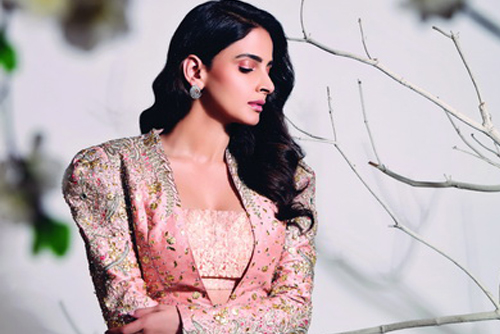
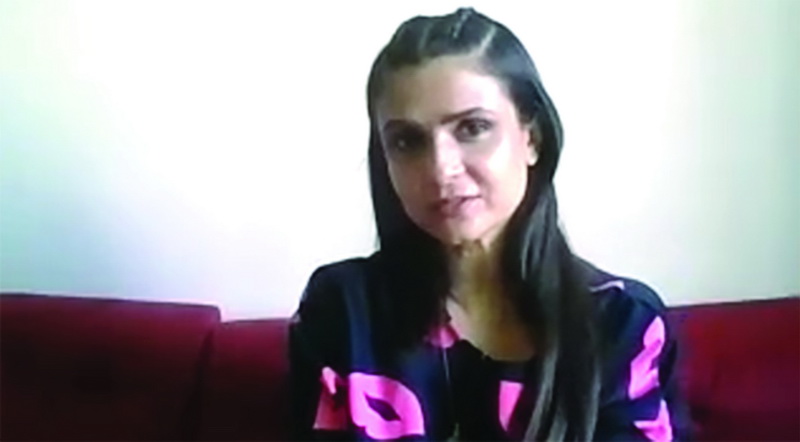
The versatile actress has become a household name as she conquers our television screens with powerful performances one after the other. Mehek Raza Rizvi sits down for a candid chat with Saboor to find out more about her aspirations and life in quarantine

You seem to be indulging in old passions in quarantine, including cooking and painting. Are there any talents of yours people may be unaware of?
I make sure I keep my fans aware of my activities during quarantine, so any talents I may discover are shared with them. This is a nice time to explore one’s abilities and indulge in hobbies there wasn’t time for earlier.

Congratulations on Sajal’s wedding. How has you relationship with your sister evolved after she tied the knot?
Everyone knows Sajal and I’ve always been super close, but preparing for her wedding together has strengthened our bond even further. They don’t exaggerate when they say sisters are irreplaceable. Family is everything.
“WE NEED TO BREAK THE TABOO, BECAUSE DEPRESSION IS SOMETHING ANYONE CAN EXPERIENCE AND THE CONSEQUENCES CAN BE EXTREMELY DAMAGING IF NOT DEALT WITH CAREâ€
What are the pros and cons of having a sister in the same industry as yours?
The pros are evident: you have constant, unconditional support. We comfort each other during tough times, are each other’s number one fans and cheerleaders and always have free, honest advice to offer. On the contrary, I can’t think of a single con. There is no concept of competition amongst family.

You recently posted a note on depression on Instagram. How important is it for public figures to speak about mental health and why is the topic close to your heart?
I think mental health is an important issue everyone needs to take more seriously. There needs to be more conversation centered around it, particularly by individuals of influence to create awareness amongst the masses. We need to break the taboo, because depression is something anyone can experience and the consequences can be extremely detrimental if not dealt with care.
“THIS IS A NICE TIME TO EXPLORE ONE’S ABILITIES AND INDULGE IN OBBIES THERE WASN’T TIME FOR EARLIERâ€
You’ve proved your mettle as an actress by playing a wide number of characters. What kind of roles and genres excite you most?
Characters that have the potential to leave an impact on my audience excite me the most. I try to take up different roles so I can explore and better my craft with each project. My intention is to bring something different to the table every time I perform. I’m not too fussed about playing a protagonist or antagonist, to me what’s important is that anyone watching my performance should leave with some sort of positive message. I believe engaging art forms like drama have the unique ability to shape society like no other.

Have you ever found it hard to detach from a complex/intense character?
I’m someone who gets very involved in and immersed into the roles I portray. In order to do justice to my job, it’s important for me to feel each emotion the character may be experiencing, so yes, sometimes it does get difficult to detach from a particularly intense scene.
“I BELIEVE ENGAGING ART FORMS LIKE DRAMA HAVE THE UNIQUE ABILITY TO SHAPE SOCIETY LIKE NO OTHERâ€
The fame and influence celebrities enjoy, puts immense responsibility on them to use it wisely. Do you ever feel burdened by the constant spotlight?
While the love we receive from fans is extremely heartwarming, it’s also true that being in the spotlight constantly can be taxing at times. At the end of the day, we’re as human as anyone else. From each word that comes out of our mouths, to every occurrence in our personal lives, any decision we make and even the food we eat and clothes we wear—everything is always being judged. As a celebrity it’s important to be careful about how you conduct yourself, because a small mistake can give people a false impression of who you are as a person.

Tell us about your future projects.
There are a lot of interesting projects in the pipeline, but you’ll have to wait and find out the exact details.
SHORT & SWEET
What was the last photo you took?
Of a painting I made
What was the last lie you told?
Told someone I was “on my way†while I was still in my PJs
Last impulsive buy?

Makeup
Your personal style in three words?
Trendy, stylish, minimal
“THEY DON’T EXAGGERATE WHEN THEY SAY SISTERS ARE IRREPLACEABLE. FAMILY IS EVERYTHINGâ€
A habit you have that annoys your family?
Listening to very loud music
Favourite costar?
Kinza Hashmi
Best friends within the industry?
Sadia Ghaffar, Kinza Hashmi and Rubab Ali

Theater, film or TV?Â
TV, always
Alternate career choice?Â
Painting
Favourite dialogue from a project of yours?
So hard to pick just one
Photography: Jaffer Hasan
Styling: The Emergency Room
Hair & Makeup: Adnan Ansari
Wardrobe: Siddhartha Bansal, Farah Sanjana & Ridhi Sanjana at Vesimi
She’s captured our hearts with her poignant portrayals of some very unique characters in her drama serials, but remains a humble individual at heart. This fortnight, Kinza Hashmi chats with Mehek Raza Rizvi about her roles, her life at home and what the future may hold
Do you ever worry about getting labelled or typecast when playing an intense negative character?
Being typecast or labelled never worries me, because I try making each role I play appear different from the last; this applies to playing a protagonist as well. I read the character in depth and design it with my team by working on my looks and delivering dialogues in a way that doesn’t feel similar to previous projects.
“The modern woman of today is independent and empowered, which is why we’re able to tackle any bigotry we may be subjected toâ€
As a woman, have you experienced any inherent prejudices in your line of work?
The modern woman of today is independent and empowered, which is why we’re able to tackle any bigotry we may be subjected to. This is true not just for the entertainment industry, but for women in every sphere of life. Chauvinism and prejudice of any kind is not a roadblock for us, nor can it make us doubt our competence.
You surprised fans by posting a cover of “Sajna†on your Instagram. Is there a chance you may take up singing professionally as well?
Singing is something I really enjoy. Whenever I’m with my friends or just generally in a good place, I sing—it makes my soul happy. I can’t say I’ve thought about taking it up professionally yet, but if an opportunity arises, I’d be open to it.
“I’ve never had to worry about being overshadowed. I think if you’re putting in your hundred percent, such issues are never a concernâ€
Despite being poles apart, most of your characters have one thing in common: they’re all multi-layered, complex women. Is this a conscious decision?
I don’t think all characters I’ve played are complex, but yes, I like portraying different shades of women through the roles I essay. This is why they’re always relatable, regardless of whether I’m an antagonist or protagonist. When choosing scripts, I’m mindful of selecting only the ones that offer relatable roles that are unique in some way.
With the conversation on gender equality and feminism on the rise, how important is it for female actors to choose their roles carefully and avoid playing the damsel in distress?
I believe we have two kinds of women in our society: type one is the brave, educated and independent woman, while type two is dependent on others for her livelihood, is underconfident and submissive. I’ve done many projects where I got to play type one, for example, “Rani Nokrani,†“Tera Yahan Koi Nahi,†and “Seerat.†I feel such characters are aspirational and give women a role model to look up to. I will always look forward to portraying characters that can inspire my female audience.
Having said that, I’ve depicted type two in multiple projects as well. The intention behind that is not to set misleading standards, but to drive attention towards a need for women to be autonomous. I hope to encourage them to liberate themselves, while also making their voices heard. It’s important to make drama serials realistic in order to educate our masses.
“I struggled a lot for my big break, but the long wait was definitely worth itâ€
You’ve starred in many projects with ensemble casts. Is being overshadowed ever a concern?
Allah has been very kind; I’ve never had to worry about being overshadowed. I think if you’re putting in your hundred percent, such issues are never a concern. I have faith in my skills and work really hard, so know it’ll bear fruit.
Tell us about your experience working alongside Saboor Aly in “Gul-o-Gulzar.â€
It’s always great doing a project with a good team and cast—even better when you get to work with a friend. It was a comfortable experience over all.
How did you get your big break in the industry? Is a career in TV something you always wanted to pursue?
I always wanted to be part of the entertainment industry and to appear on TV; it was my childhood dream. I struggled a lot for my big break, but the long wait was definitely worth it.
Can we expect to see you in films in the near future?
You never know. I guess you’ll have to wait and find out.
What is Kinza Hashmi like at home? Tell us about your childhood and family.
Kinza Hashmi is as ordinary as anyone else. I live a normal life and am a simple person. My childhood was uncomplicated and is a chapter filled with cherished memories.
When at home, I like to spend time with my family and close friends. I enjoy peaceful gatherings; I’m the happiest when my father reads books to me and my mother cooks scrumptious meals for us.
SHORT & SWEET
What was the last photo you took?
Food prepared by me
What was the last lie you told?
A friend very kindly delivered a home cooked meal to my place, but I hadn’t tasted it when she called to ask how I liked it. I had to lie and tell her it was delicious. I hope she isn’t reading this.
Last impulsive buy?
I’m always impulsive when it comes to shopping, especially with clothes and shoes.
Your personal style in three words?
Stylish, graceful, elegant.
A habit you have that annoys your family?
I don’t receive calls on time.
Favourite costar?
Azekah Daniel
Best friend within the industry?
Vasia Fatima
Theater, film or TV?
TV
Alternate career choice?
Singing
Favourite dialogue from a project of yours?Â
“Aik tum hi tou ho jisay meri parwah thi. Bohat dil dukhaya mene tumhara, dekho khush mein bhi nai hoon, muhabbat k liye tarap rahi hoon. Mujhy saza do Arham, dil tornay ki saza.â€
Rushna, last episode of “Ishq Tamashaâ€
(You’re the only one who ever cared for me. I hurt you; look, I’m not happy either and am longing for love. Punish me Arham, punish me for breaking your heart)
Photography: Jaffer Hasan
Styling: The Emergency Room
Hair & Makeup: Adnan Ansari
Wardrobe: Siddhartha Bansal, Farah Sanjana & Ridhi Sanjana at Vesimi
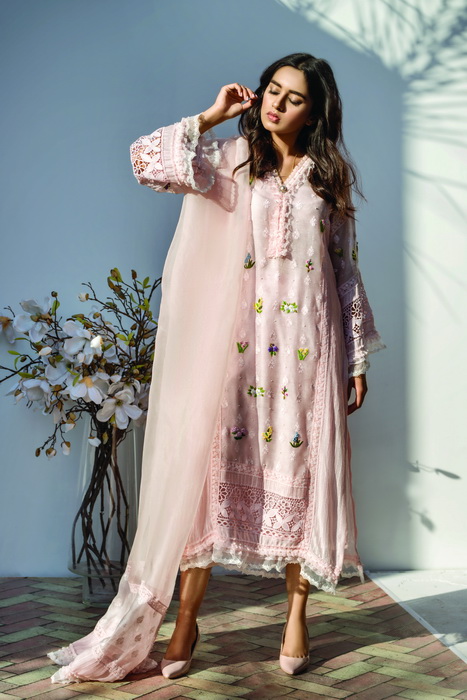
Stuck in a style rut? Let the experts give you a lesson in creating head-turning lawn looks. This fortnight, Saira Rizwan puts together some sumptuous looks from their Saira Rizwan Lawn 20 x Ittehad collection on the gorgeous Sanam Saeed
Wardrobe: Saira Rizwan Lawn 20 X Ittehad
Production: Centaur One
Talent: Sanam Saeed
Photography: Abdullah Haris
Hair & Makeup: Qasim Liaqat, Shoaib Khan
Jewellery: Rema Luxe, Zarq
Shoes: Shoe Planet
To say that the last two weeks have been a rollercoaster ride will be a profound understatement. Coronavirus or COVID19 has drastically changed our lives, leading us to grapple with our changed reality. While many continue to argue that the virus isn’t nearly as fatal as other diseases we’ve battled in the past (such as Ebola), it’s still being compared to the deadly Spanish Flu Outbreak of 1918. The sheer rapidity with which Corona spreads, the fact that symptoms aren’t always visible and underprepared healthcare facilities around the world are what make this novel strain a formidable foe of humanity. Before I go any further, I’d like to thank the healthcare workers who’re tirelessly fighting this pandemic. True heroes certainly don’t wear capes!
Despite working around the clock themselves, they urge the general public to assist them by simply doing one thing: staying at home. As threatening as the virus may be, all it requires are the following basic actions to reduce the spread — or at least get it to a level that’s manageable for healthcare institutions. These are:
- Social distancing: even when at home, remain at least a couple of metres apart from others; if you must go out (while abiding curfew rules), ensure you’re not in close physical proximity to anyone.
- Wash your hands: this can’t be said enough; wash your hands for at least 20 seconds, especially before and after eating or drinking and intermittently throughout the day. Hand sanitisers also help.
- Don’t touch your face: the virus can enter your body through your mouth and nose.
- Protection when out: masks, gloves, sanitisers and social distancing.
- Isolate: if you feel symptoms, immediately quarantine yourself and stay away from family members; contact your doctor and see if a test is required.
All of this seems rather simple; however, people have had issues adjusting. Sometimes, a disease with seemingly basic precautions isn’t taken seriously by people. But I hope that by the time you read this, we’ll have made considerable efforts to #flattenthecurve. I exhort you to go online and look up this concept. In short, social distancing is an immense help in lowering the infection rate to a point that medical professionals can respond effectively.
Those who have adhered to all protocols, especially those who had the foresight to do so on their own before governmental intervention, must now be feeling symptoms of another nuisance: cabin fever. Being cooped up in one place for extended periods of time can make anyone start questioning their sanity. Anxiety, panic, irritability, ennui and a sense of doom — all or a combination of these can start to plague your mind. Since they say, a healthy mind can cope with a lot that’s thrown its way, I’ve compiled a list of things, based on my readings of several articles over the last couple of weeks that will hopefully help make your isolation bearable. These are all the things that I’ve personally been doing since my self-imposed isolation almost three weeks ago.
- Adopt a routine: in the new normal, your routine doesn’t have to be the same. You’re most likely working from home, which saves up a lot of commute time. You also get the opportunity to work in an environment that you can create yourself. However, do stick to a schedule, even if it doesn’t match your usual one. This allows some form of normalcy to remain in your life.
- Be creative: start painting, sing songs, dance around, write — anything and everything that allows you to express yourself.
- Stay fit: make sure staying at home doesn’t stop you from physically moving. While staying in a vegetative state might be appealing, do get up and move around a bit. It could be a full-blown workout, a yoga session, or just a walk outside (social distance is a must and keep the time limited, abiding by local laws). For mental exercises, read a book!
- Feel everything: there’s no right or wrong way to feel about this situation. Most of us have never experienced such distress before (hey, at least now the world can sympathise with the plight of Kashmiris and Palestinians). Get in touch with a therapist if you can or keep a journal. Just don’t feel guilty for feeling how you feel.
- Talk: reach out to your friends over social media and plan video calls. Talk to others, talk to your family. Don’t mentally and emotionally isolate yourself.
- Stay off the internet: don’t stay on the internet for too long. It’s a depressing place — now more than usual. Get your necessary information and then stay off blogs citing the end of the world (unless you’re into that). Otherwise, avoid the negativity. Cute animal videos are fine.
This is what I’m doing, except the last one. I’ve been on Twitter and Instagram a bit too much and hoping to cut back on the negative clickbait. Everything else I’m following on a daily basis and at the time of writing, it’s really helped. Nevertheless, as I stated, there’s no right or wrong way to navigate through this. As long as work obligations are met, you’re free to figure out your own response. Sleep all day, eat whatever you want — just do all it takes to be mentally and emotionally stable during this time. I’m cognisant of the fact that this is more challenging for some than others, especially those with pre-existing mental health issues or who live in abusive households. For those free of these concerns, do check up on your friends. Together — but physically apart — we’ll get through this.
Stay safe and #washyourhands
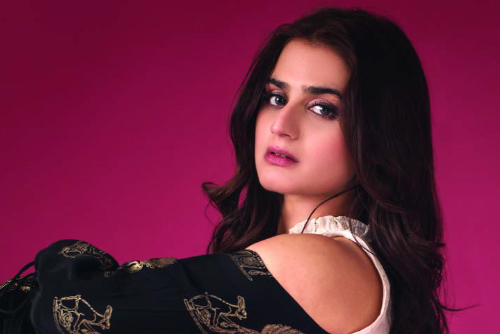
We’ve all been entranced by her melodic voice and have fallen in love with her bubbly personality. However, this fortnight Mehek Raza Rizvi speaks to the dynamic Aima Baig to know more about her passions, her plans for the future and life outside the limelight
How do you feel about the constant comparison made between you and Ariana Grande, particularly after your look at the opening ceremony of PSL 2020?
It doesn’t faze me at all. I love Ariana Grande; she’s immensely talented and has great style, so why would I mind the comparison? I don’t take the memes too seriously (although, I have to admit, some of them are quite funny), if they make people laugh, so be it. The only part that’s sad is people refusing to see me as human. There’s nothing out of the ordinary in being inspired by others, it’s natural.
A little birdie tells us you may have an interest in acting. Can we expect to see you in a movie or drama serial soon?
Tell me more about this birdie first! I’ve been offered some great opportunities from eminent production houses, but want to focus on growing more as a musician for now—this is more “me.†However, acting is something I definitely enjoy. I’ve done a lot of theatre during my undergrad in Film and Television. You never know what the future holds.
You’ve been very involved with Shaukat Khanum Memorial Cancer Hospital and Research Centre (SKMCH&RC). Tell us about your work and why you feel so close to the cause.
Shaukat Khanum’s mission is very close to my heart; I don’t consider it to be work, I do it out of choice and take it very seriously. My own mother was a cancer patient and I’ve seen her endure chemo therapies, hair loss and surgeries for six long years. I’m happy that she’s in a better place now; knowing her suffering has come to an end gives me peace, but at the same time, I’m well aware of what it feels like to lose someone special to cancer.
I can relate to families who go through this process and the feeling cannot be put in words. Shaukat Khanum helped me heal by introducing me to so many survivors, including infants. I feel privileged to be a part of this organistaion and am thankful to all its contributions.
“The only part that’s sad is people refusing to see me as human. There’s nothing out of the ordinary in being inspired by others, it’s naturalâ€
Your Father had a love for music, but was unable to pursue it professionally. Do you think that made your piqued your interest in the field?
My father had his own band in Dubai back in the day. He was definitely passionate about music, but my grandfather, a mechanical engineer himself, wanted his son to prioritise his education. He didn’t encourage his child’s musical aspirations and so, my father submitted.
I’ve witnessed my father’s talent throughout my childhood. He played different instruments and sang beautifully to me. I found him to be very inspirational and think I inherited my love for music from him. At just seven years of age, I knew I had it in me to pursue this professionally.
“I’ve been offered some great opportunities from eminent production houses, but want to focus on growing more as a musician for now—this is more ‘me’ â€
Tell us about your relationship with Shahbaz Shigri. Is marriage on the cards?
Shahbaz and I are best friends. We have shared interests; we love watching movies, hanging out with our friends and jamming together—he’s incredibly talented which makes it more fun. We’re both Pisces and vibe really well. He makes me feel very comfortable and at ease.
As for marriage, it’s something I want to think about in the future, but as of now, it’s not on the cards.
What’s Aima Baig like at home?
You need to spend a few days with me to know that. I’d like to warn you though, I have a tendency to influence people with my idleness—I do absolutely nothing when at home and you may end up doing the same!
My favourite thing to do at home is availing every opportunity I get to catch up on lost sleep. I’m constantly on the go otherwise, so feel this is the only thing lacking in my life. When I’m up though, I love spending quality time with family, jamming with my brother, watching movies, writing and playing games. I’m a gamer, that’s for sure.
“Knowing her suffering has come to an end gives me peace, but at the same time, I’m well aware of what it feels like to lose someone special to cancer†— Aima on her mother’s struggle with cancer
What are the pros and cons of having your family so involved in your work?
That’s a great question. The pros outweigh the cons. Everything’s based on trust. I can rely on family; if I’m ever feeling lazy, they remind me of the importance of hard work and how blessed. They push me to do better and keep me going. The only con is having no barriers; these are people you’ve grown up with, live with and so, they know you inside out.
Tell us about your future projects.
There are so many exciting things in the pipeline. I’m working on new songs—my own and some collaborations with other artists. This whole year is jam-packed, which overwhelms me at times, but I feel grateful.
SHORT & SWEET
What irks you most about social media?
Inconsiderate comments
Biggest pet peeve?
People munching loudly on their food or talking in a high-pitched voice.
Your biggest strengths?
My family and the people I love.
 Favourite ‘90s jam?
I was born in 1995. Music from the ‘90s reminds me of my childhood, but there’s no one particular song I can pick as a favourite.
Your personal style in three words?
Comfortable, tomboyish and casual
Last impulsive buy?
A pair of diamond rings.
Most prized possession?
My cats, especially Max.
What was the last lie you told?
I can’t really say, but there must be one.
One habit you have that annoys your family?
The fact that they barely get to see me.
Do you have a nick name?
So many: Amy, Emma, Amo and sometimes Baig. Not really a fan of these names though.
 A decision you regret?
Some songs I’ve agreed to sing. I never really wanted to, but went ahead with them anyway.
Your favourite quote from a movie?
“I’ll be back†from “The Terminatorâ€
Words: Mehek Raza Rizvi
Photography: Adil Ishaq at Guddu Shani
Hair & makeup: Mansoor Khan at Guddu Shani
Videography: Furqan Bhatti at Guddu Shani
Art Direction & production: Guddu Shani
Coordination: Murrad Rahim at Guddu Shani
Styling: Mehek Raza Rizvi & Areesha Chaudhry
Stuck in a style rut? Let the experts give you a lesson in creating head-turning spring and summer outfits. This fortnight, So Kamal puts together seven looks on Mushk Kaleem to inspire your imagination
Wardrobe : So Kamal
Photography : Alee Hassan
Hair & makeup : Fatima Nasir
Model : Mushk Kaleem
Jewelry : ZELO & Jewelicious
Featuring regal designs from Saira Shakira’s bridal couture, photographer Zahra Sarfraz captures the beautiful Tehreem Gohar in her distinctive style through her lens. Browse through our pages for this unique equestrian inspired shoot
Photography : Zahra Sarfraz at Centaur One
Model : Tehreem Gohar
Wardrobe: Saira Shakira
Makeup : Sameera Shaheen Malik
Hair : Nazia Tehmour
Coordination : Centaur One
Stuck in a style rut? Let the experts give you a lesson in creating head-turning spring outfits. This fortnight, Maha Rehan puts together eight looks on Atikah Gardezi to inspire your imagination


Model: Atikah Gardezi
Photography: Rehan Khan
Wardrobe: Farida Hasan
Art direction & styling: Maha Rehan
Hair & makeup: Azee Jee (Azeem)
The very filmy and endearing heroine, Hira Mani, has stolen everyone’s hearts with her effortless charm and ingenuousness, all while breaking stereotypes, being an exceptional mother of two and a homemaker. Mehek Raza Rizvi chats with her to find out how she makes it look so easy
Hira, I’d like to start off by congratulating you for the success of “Meray Paas Tum Ho.†Despite being introduced much later in the drama serial, you won hearts with your convincing performance. How does receiving so much love feel like?Â
I’ve received a lot of love and it feels great. Over the past four years, I’ve worked incredibly hard to prove my mettle and when your audience appreciates that, there’s no better feeling. However, success comes with responsibility and I take that very seriously. I want to use my fame well and break the stereotype of a “heroine,†according to which actresses have a limited shelf life. I also hope to demonstrate that good conduct and humility are the keys to real triumph.
“I want to prove it’s possible to enjoy the best of both worlds, so other women can find the inspiration and strength to not give up on their dreamsâ€
You started your career after getting married and saw the most success after the births of your children. Not only does this break stereotypes within the industry, but also provides inspiration for working mothers. How do you manage work-life balance?Â
There’s a common misconception in our culture that women can’t have successful careers after they get married, particularly in the media. I’ve seen so many girls delaying their weddings, claiming it would affect their work, but personally, I never understood this theory.
I’m perhaps one of the few actresses to have started my career after becoming a mother and I don’t think that’s ever come in the way of my work or the upbringing of my children. I want to prove it’s possible to enjoy the best of both worlds, so other women can find the inspiration and strength to not give up on their dreams. If you’re passionate, there’s nothing you can’t do.
Of course, it helps to have a supportive family, especially the men. My husband, Mani, my sons, Muzammil and Ibrahim and my father have always encouraged me and I couldn’t have accomplished anything without them. I would urge all men to let the women in their lives aim for the stars and fulfill their dreams.
As far as work-life balance is concerned, I don’t take credit for anything, Allah helps me. I’m blessed with His support and a great family.
What do you look for in an ideal script?Â
No script can come to life if the team working on it isn’t dedicated. No matter how good the writer is, the end product depends profoundly on those involved; from the director, to the cast, the DOP and even the help ironing clothes on set. It’s very important for me to work with people who I’m comfortable with and know are passionate about the project.
For example, when I signed “Yaqeen Ka Safar,†I knew Farhat Ishtiaq had done a great job with the script, but also realised it would be executed well because Shahzad Kashmiri was directing it—just like Danish Nawaz made “Sun Yara†a huge success.
Honestly, when Humayun Saeed called me to discuss “Meray Paas Tum Ho†I didn’t even hear the script. I was out of money, with just twenty thousand rupees in my bank account, so immediately said yes. I just heard “Nadeem Baig†and was game. In our field, payments are delayed all the time, so this project saved me at a crucial point.
Have you ever found it hard to detach yourself from an intense/ complex role you’ve played?
Not at all. I’m not a method actor and don’t let the roles I portray take over me as an individual. When I go on set, I read my lines, discuss them with my director to understand their point of view and get into character. Once the scene is over, I’m immediately back to my normal self.
“I found him to be very real; he was himself, even on screen. He seemed like a very genuine person and that appealed to me because I felt I could relate to him. I saw a lot of similarities between the two of us†— on her husband Mani
We hear you’ve dabbled a bit in fashion design. Can we expect a business venture in the future?Â
Most of my friends have degrees in fashion, which is why I also developed a curiosity towards the field. When I was getting married, my interest grew as I started working on my own clothes.
You never know what the future holds. My son, Muzammil, sketches really well and keeps designing interesting stuff for me. Ibrahim also takes interest in what I should wear at events, so who knows, maybe my little army will push me to start a business with them.
“When Humayun Saeed called me to discuss “Meray Paas Tum Ho†I didn’t even hear the script. I was out of money, with just twenty thousand rupees in my bank account, so immediately said yesâ€
Tell us about your upcoming projects.Â
Right now I’m looking forward to a beautiful drama serial called “Kashf,†directed by Danish Nawaz. It’s very close to my heart and I hope will people love it. I’ll give you an exclusive interview to talk more about it soon!
You’ve mentioned you were a fan before meeting your husband Mani. How were you two introduced for the first time? Could you have imagined you’d end up marrying him?Â
Mani was a friend of a friend. The day I saw him for the first time on TV, he became the reason why I switched from Indian drama serials to Pakistani ones. This was some fourteen/fifteen years ago.
I found him to be very real; he was himself, even on screen. He seemed like a very genuine person and that appealed to me because I felt I could relate to him. I saw a lot of similarities between the two of us.
When you start admiring someone at a young age, it’s very natural to start looking up to them and try to emulate the way they do things. This is why every time someone tells me my performances are natural and real, I credit it to Mani. I was that crazy fan who followed his work and life very closely.
I’m a huge believer in the law of attraction; every time I’ve envisioned or wanted something badly and worked hard for it, I’ve gotten it. I was a complete tomboy and never one of those girls who would follow actors and become die-hard fans; but because of Mani things changed completely. Since then, I always knew he would be an important part of my life. So yes, I did believe we would end up together.
What was your childhood like?
I grew up around elder cousins, so felt grown up as I constantly tried copying them. I would do my hair like them; tie it up in a bun or a long braid. I never dressed like a child and since I was tall as well, I didn’t quite look my age.
When I was in school, I was known as the life of the party. Even at home, family would always surround me and I was always the one solving other people’s issues.
I was very filmy and absolutely obsessed with music. I’d say not much has changed in that department. Anytime I hear a sad song that touches my heart, I automatically get stuck in a zone where I’m blue and upset with Mani for no reason, so I can really enjoy the essence of the song. Music has definitely been a huge part of my life.
“I’m Muzammil and Ibrahim’s ami, Mani’s wife and my father’s daughterâ€
What is Hira Mani like at home?Â
To everyone reading this, I want to tell you, at home, Hira Mani is exactly like your mother. I’m very domesticated, extremely particular about cleanliness and discipline. I don’t like house chores like cooking lunch/dinner, washing dishes and laundry being delayed. Everything should be done by mid-afternoon.
I keep a close eye on my kids’ schedule, even if I’m at a shoot. From their tuitions and football sessions to the clothes they’ll wear, I have everything lined up. I’m always on high alert, taking care of what needs to be served for dinner, who we need to go see, who we need to invite over etc. Once, I have some time to myself (which is rare), I like to sit in my room and listen to music.
In my personal life, I’m as normal as any other woman. My life revolves around my family – I’m Muzammil and Ibrahim’s ami, Mani’s wife and my father’s daughter.
SHORT & SWEET
Who do you consider to be your closest friends within the industry?Â
I think they’re still the same as Mani’s
Pick your favourite project between “Meray Paas Tum Ho,†“Ghalati†and “Aangan.â€Â
Ghalati
“To everyone reading this, I want to tell you, at home, Hira Mani is exactly like your motherâ€
What do you feel are the key elements behind a good drama serial?Â
A strong team and a respectful environment
An actor or actress you would want to share screen space with next?Â
No one specifically. Anyone who is passionate about their work.
What’s the last photo you took?Â
A picture of Muzammil and Mani at a dinner, while they were joking around
Do you have a nickname?
My parents called me “Hero†at home. Little did they know I’d become a heroine instead!
What was the last lie you told?
Despite having no interest in films, since I’m asked constantly asked when I’ll be doing one, I said in 2020
Your biggest achievement in the last decade?
“Do Bolâ€
Words: Mehek Raza Rizvi
Photography: Jaffer Hasan
Hair & Makeup: Adnan Ansari
Wardrobe: Mariyam D Rizwan, House of Masaba — Vesimi
Styling: Emergency Room
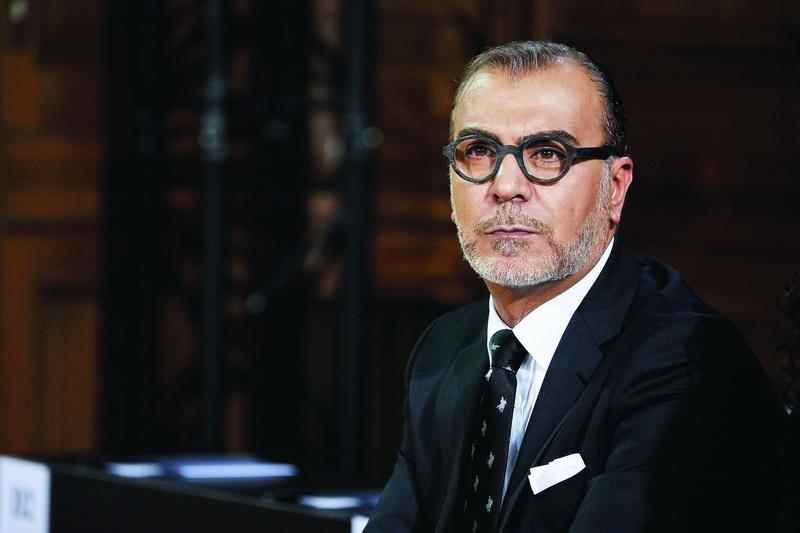
Beirut-based couturier Georges Chakra has created a niche for himself in the fashion business with the likes of Helen Mirren, Jane Fonda and Jennifer Lopez spotted in his designs. Hailing from a country where freedom has suffered, he launched his new line at the Petit Palais in Paris, conveying a political message to safeguard liberty in Lebanon. Find out more about Chakra and his vision in this exclusive interview with Haider Rifaat
You’ve been in the fashion business for over three decades. What’s the key to your success?
Passion—my team and I love creating haute couture. I like surprising people each season, without repeating any of my designs, even if an idea has proven successful already. My work is detailed; I’m not sure if that’s a good quality to factor in so often, but I try to deliver perfection. I’m never satisfied with what I do, which pushes me to do better.
Fashion capitals of the world—New York, Paris and London—drive mainstream consumers to their markets. As a designer from Beirut, do you not find yourself lagging behind?
I don’t think most designers who showcase their lines originate from these major cities only. The world has become a melting pot of cultures and I haven’t found myself lagging behind. Many designers from the Middle East, including myself, contribute creatively to the world with our collections. Lebanon may not have its own fashion week, but our designers have certainly held their own in the international market.
Have you considered moving to these cities to compete with the best in fashion?
In 2001, we opened a showroom in Triangle d’Or, Paris, to entertain our clientele and have a strong base during fashion weeks. My head office is in Beirut and will remain there indefinitely. With a network of people and our teams in Los Angeles, New York and Paris, we’re able to create an extensive system that can handle anything.
Why should consumers choose Georges Chakra?
We create pieces that are timeless and can be passed down with ease. This has happened several times. Our consumers appreciate originality, experimental fabrics and our one-on-one relationship with them.
You recently debuted your exquisite collection at the Petit Palais, campaigning for freedom in Lebanon. Why did you choose such an occasion to relay a political message?
Fashion has always acted as a barometer of attitudes in society, reflecting moods and thoughts, expressed through the length of hemlines and cuts. Following the recent revolutionary movement in Beirut, I wanted to portray to the world Lebanon’s frantic energy, its youth’s desire for freedom and the complex reality we were living.
Walk us through your S/S 2020 collection. What have you done differently this time?
My inspiration for the 2020 collection is Lebanon. It has my heart. Couture is art and art is the core component of its surroundings. The country’s ongoing situation is exactly how I see my brand. We’re constantly evolving and incorporating fresh ideas, so my vision for this year took off from here. I can proudly say that my efforts have proven successful again.
After the show, my team and atelier walked for the first time on the Parisian ramp to symbolise unity. We gave each guest a white organza rose as an embodiment of support for peace in Lebanon. I collaborated with renowned jeweller and good friend Fawaz Gruosi on a necklace. The sales we generate from it will be donated to Beirut‘s Children Cancer Hospital and the scholastic scholarships of St. Vincent de Paul School. All these measures are a part of the positive change we wish to see.
Artistic expression is essential in your line of work. What encourages you to create garments that are a reflection of who you are?
The generic answer would be culture, but I wouldn’t say it’s my only source of encouragement. I think the hardest battle for me is to draw inspiration from my surroundings and to condense ideas that can translate well into a couture collection.
Is fashion a stigmatised profession for men in Lebanon?
It was, but the trend has changed now. Success stories of Lebanese designers have become more common in the past decade. Fashion in my home country has garnered immense recognition around the world. The induction of fashion design programmes at many Lebanese universities has also helped the cause. Despite these efforts, the government should support our industry and the private investors involved.
Have you encountered any mishaps during fashion weeks? If so, how did you bounce back?
Sometimes, yes, but things work out in the end. We’ve had issues backstage that required us to swap the sequence of models. We’ve also had to have a few of them removed before shows. I suppose the most shocking moment for us was when a habilleuse (dresser) had dressed our model unsuitably. The clients responded surprisingly well and we ended up re-creating and selling the garment as it was.
Which other Lebanese designer do you like and find underrated?
I admire the work of our new generation. They have a long way to go, but as clients we should believe in their talent and support them despite limited resources, execution techniques and socio-economic challenges in the market.
The first time I heard of your work was through the Oscar-nominated film, “The Devil Wears Prada.†Tell us of a memorable moment you shared on set with the cast and crew?
The film producers emailed us, asking for our S/S 2005 collection in a movie starring Meryl Streep. However, we never knew that our gowns would make it to the final cut. When we saw our label alongside Valentino and Azzaro in the fashion sequence of the film, we were over the moon! Woody Allen’s “Café Society†and “Gossip Girl†also featured our brand.
Professionally, who do you cite as your source of strength?
My business partner, Jocelyne Abdel Malak, who has been by my side through thick and thin and my daughter Jennifer. She joined our team a few years ago as an Assistant Creative Director and is heading our ready-to-wear line. Above all, my ateliers who make the impossible possible and translate my challenging ideas and designs into beautiful garments.
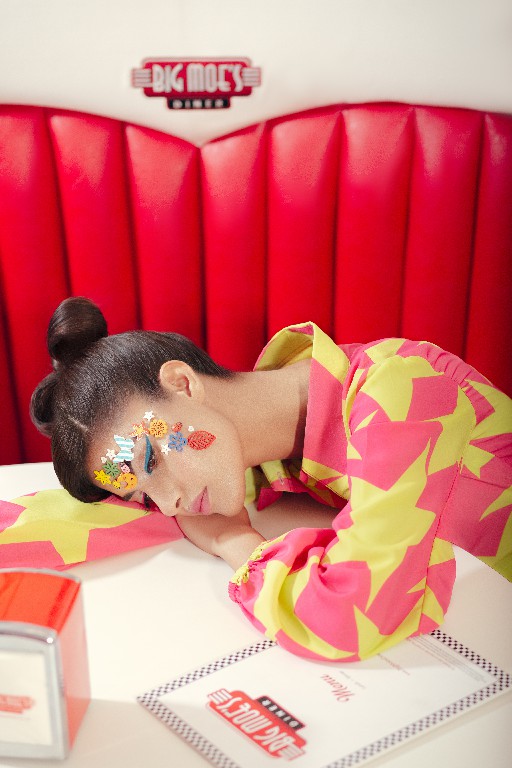
There’s just something about the ‘50s that captivates our imagination, even after all these decades. In this editorial, the talented lens of Mohsin Khawar transports us to a quintessential American diner from the days gone by, when preppy fashion reigned supreme
Photography & concept: Mohsin Khawar
Art direction, props & styling: Aysha Mohsin
Model: Fareeha Sheikh
Hair & makeup: Sonia Nazir
Wardrobe: Nine Lines
Location: Big Moe’s Diner
Award-winning couturier, Sania Maskatiya, has multiple accolades to her name. From making a mark in the Pakistani fashion industry with her sought-after, feminine and contemporary aesthetic, to gaining international acclaim, she’s one of the finest fashion designers we have. In this exclusive interview with Haider Rifaat, she discusses her journey
How would you define your relationship with fashion?
I launched my brand with my brother Umair Tabani, who made Sania Maskatiya a reality. We were lucky to translate our passion into full-time careers with the support of our parents.
My sister, Sarah Tabani, is a stylist and she assists us in all of our showcases and shoots. The success of our label is a direct result of our love and dedication towards it. Our business is an integral part of our lives now.
What keeps you motivated to continue growing your brand?
Turning my ideas into reality and bringing them out for the world to see has kept me afloat. My clients’ feedback motivates me every day to work harder.
“We received an overwhelming response from the international community and seeing the potential for growth, we may consider operating abroadâ€
How has western style inspired Pakistani fashion?
Western style has had a positive impact on our local industry. Our fashion has gone a step ahead with the perfect fusion of western and eastern wear. It’s brought something unique to the table.
How was Sania Studio conceived?
Sania Studio is the sister brand of Sania Maskatiya. The concept emerged when we decided to execute a dedicated western line with our signature prints and embroideries.
What was your experience like showcasing Sania Studio at New York Fashion Week?
I wanted to represent Pakistan in a positive manner and promote our brand’s aesthetics. We received an overwhelming response from the international community and seeing the potential for growth, we may consider operating abroad.
The process of translating my creativity and imagination into a collection shown to a foreign crowd was challenging and surreal. It was a great experience and we’re excited to return to NYFW soon.
“I launched my brand with my brother Umair Tabani, who made Sania Maskatiya a realityâ€
Why didn’t you consider Pakistani models to walk the ramp for your show at NYFW?
All international and local fashion sprees have their own modelling agencies assigned to the designers for auditioning. We had no option in choosing Pakistani models to take charge of the ramp at NYFW.
What are some tips to keep in mind when styling western wear?
Minimalism is on trend these days. Don’t overdo anything, that’s the rule.
What makes an ideal winter ensemble?
It can be anything my clients feel warm and comfortable in. We launch our winter festive collection each year in jewel tones and warm fabrics. Shawls and jackets are also hip this season.
What’s new for Sania Maskatiya?
For now there is a lot happening. We’re in constant search for new luxury prêt, semi-formal and formal designs. We’re gearing up for the upcoming fashion season, especially our showcase at NYFW 2020.
Does your brand offer reasonable price points?
We have something for everyone in store from high-end couture to affordable fashion.
“We’re gearing up for the upcoming fashion season, especially our showcase at NYFW 2020â€
What do you feel sets your brand apart?
Our brand caters to luxury prêt and bridal couture. My work consists of quality fabrics, tailoring and unique design that reflect in all my pieces.
Apart from fashion design, what else are you passionate about?
My love for art has brought me here today, so anything related to it catches my interest. Travelling provides me the right kind of exposure, as I’m able to draw inspiration from new places.
Delphi’s new cruise line uses beautiful handwoven silk crochet to capture the mood and colours of the ocean, and the vibrant hues of the sun-kissed sky
Diamond Jewellery: Aliel Pakistan
Photography & Art Direction: Ayaz Anis
Hair & makeup: Raana Khan
Location courtesy: Private residence of Zahid & Shomaila Maker, Old Clifton.
House circa: 1929
Meet Natasha Noorani and Zahra Paracha, forces behind the Lahore Music Meet (LLM), an annual, two-day extravaganza, featuring live performances, masterclasses and interactive talks with some of the country’s finest musicians. Continuing with LMM’s tradition of nurturing the local music landscape, this talented duo is gearing up for the fifth edition, scheduled to take place at Alhamra Art Center in Lahore. Mehek Raza Rizvi finds out more
What do you hope to achieve with LMM?
LMM exists as a space for the ever-evolving music industry to get together, celebrate their talent, share their stories and connect with Lahore’s growing audience. The idea is to create cohesion in our music ecosystem.
Apart from the live music, the audience at LMM gets an opportunity to witness interactive sessions with musicians. How important is establishing a culture of musical awareness to the essence of the event?
Interactive sessions are crucial to the LLM experience. Most of us have grown up without an opportunity to understand the musical process and while this may be changing, the progress is slow. There are multiple styles and techniques well-suited to potential artists; if they get to see and hear something that sparks an idea or interest, it would be a huge win for us.
Many believe the genres celebrated at LMM are western and therefore not relevant to our culture. How do you respond to that criticism?
Sure, genres can be defined by geography, but if musicians stayed within those limitations, the world would miss out on a lot of great music. People who enjoy different genres at LMM have already made them a part of their daily playlists. Most of these, now termed, ‘world genres’ are easily applicable everywhere they’re heard. It’s what makes them popular, desirable and easy to spread. Having said that, LMM also strives to create a growing interaction with indigenous South Asian genres of which there are innumerable subsets and breakdowns. Like we say, there is room for everyone.
Being musicians yourselves, do you feel LMM provides valuable exposure for rising talent?
We’d like to believe having a platform to perform and sharing the stage with artists you admire should give any up-and-coming musician a great sense of accomplishment. Our hope is that this opportunity translates into confidence and motivation for them to carry on the hard work.
Recently, Pakistan has seen a lot of ukulele/acoustic guitar wielding underground indie rock bands. Rap and EDM have begun to find their footing. What western genre would you like to see Pakistanis take on next?
It’s all growing so naturally and organically, honestly, we wish for more of everything.
The more the better, the farther it reaches and the more people it moves, the better. We’d also like to witness the preservation of our indigenous styles and instrumentation; that’s something we’d love to contribute to.
There seems to be a certain mindset present in the country that looks down upon music and art. How can LMM counter that narrative?
The only effective way to counter such narratives is to create space for another. We’re not here to tell someone that their mentality is flawed, we just want to create an alternative for anyone who’s looking for one. Giving people the freedom of choice is the strongest statement to make.
Now that LMM has established itself as an important cultural phenomenon, what’re people’s expectations of the event? Do you feel the pressure of meeting expectations year after year?
We hope and try to keep growing every year, but with that come growing expenses and sadly, not so much growth in sponsorships. Keeping LMM free for all is an essential feature of what makes the festival the phenomenon you say it is. We really hope we can continue to keep it that way. The curation and musical line up is another aspect we’re very particular about; everything we put out needs to be well researched so our audience can enjoy themselves.
The maestros at Guddu Shani pull off yet another captivating editorial for our readers. Browse through to see art come to life.
Photography and concept: M Ali Abbas ( @maliabbasofficial) at Guddu Shani
Shot For: Guddu Shani (@guddushani)
Talent: Bakhtawar Anjum (@bakhtawar_bk)
Wardrobe: Mahpara Khan (@mahparakhan)
Makeup: M Mansoor Khan at Guddu Shani (@ma.nsoorkhan)
Styling: Usaf Ahmed at GudduShani (@usafahmed)
Post producer: Ali Butt at GudduShani (@crtvthink)
She’s dazzled us with her charm, wowed us with her style and captivated us with her performances—Nausheen Shah is truly a force to be reckoned with. Here, the face of 9Lines’s new Resort Collection 2020, speaks to Mehek Raza Rizvi talks to her about her goals, her views on the industry and more
Nausheen, I’m a huge admirer of your style, as are many others. Do you ever feel that that takes away from your work as an actress though?Â
I don’t think fashion and acting are at odds with each other. It’s actually beneficial for an actor to dress well. In fact, that’s true for every profession; if someone knows how to carry themselves and look presentable, they’ll leave a good impression.
As far as my sense of style taking away from my craft is concerned, I would completely disagree. I’ve never felt any such thing. I’ve received appreciation for both, my acting skills and my flair for fashion.
“I’m perhaps one of the very few actresses who’ve happily played characters way older than my actual age, because that’s what our job isâ€
You’re one of the few Pakistani public figures who’ve been brave enough to speak about mental health. Do you think about using your influence to help those in need?Â
I’ve been talking about mental health because it’s an issue close to my heart. In our country, depression and anxiety aren’t discussed as openly and as frequently as they should be, but I wish to create more awareness. I’ve experienced the helplessness myself; I’ve suffered a lot and would never want anyone else to go through the same.
I have a lot of plans that I’ll be executing with some of my fellow actors. You’ll hear more about this in the future. I’m definitely not going to give up on this cause easily, because I understand what a grave subject it is and how depression affects one’s life.
“I’ve definitely found it hard to detach myself a couple of times. The trick is to take some time off, unwind and spend alone time until you’re ready to bounce back with renewed energyâ€
You’ve mentioned choosing quality over quantity at this point in your career. What kind of scripts appeal to you?Â
Quality is far better than quantity. Less is always more. I’m not inspired by one-dimensional characters. I need acting margin, even if that means opting for a second lead. I don’t want to be remembered as just a pretty face; I look for challenging roles that allow me to get out of my comfort zone. I’m perhaps one of the very few actresses who’ve happily played characters way older than my actual age, because that’s what our job is — to mould ourselves according to the script.
In the future, I’d like to push my limits even more. I want to pick up interesting, complex roles that leave an impact and allow me to grow further as an actor. When I look back at my professional journey so far, I feel I’ve tried doing just that and given my 100% each time.
“I’ve experienced the helplessness myself; I’ve suffered a lot and would never want anyone else to go through the sameâ€
With the conversation on gender equality and feminism on the rise, how important is it for actresses to choose their roles carefully and avoid playing the damsel in distress?
Our audience is very intelligent. If people follow us and look up to us as role models, it’s for a reason and comes with a responsibility. It’s certainly important for actors to be mindful of the roles they pick, but this isn’t gender specific. I think both, female and male actors should choose scripts carefully and try being part of more substantial projects — something real, different and evocative.
It’s important to portray strong female characters and not always show women crying, getting beaten up and feeling helpless, but it’s equally important to not always show men as evil. We have so any real life stories of resilience, so many unsung national heroes in this country — we need to make serials and movies based on them to inspire people.
“My childhood was beautiful; I’ve been blessed. I was a naughty child and have many fond memories that I cherishâ€
As a woman, have you experienced any inherent prejudices in your line of work?
Well, as women I feel we’re faced with multiple issues on a daily basis that we unconsciously overlook and just move on. It’s like we’ve become immune to them. Of course, I’ve experienced those too, but honestly overall I can’t complain of any major prejudice based on my gender.
Very recently though, I was taken aback by an occurrence, unlike any other in my entire career of sixteen years. I signed a legal contract with a well reputed production house and much to my surprise, they detached me from the project without notice, casting someone else instead. I could’ve taken them to court for this, but decided against it and just took it as a lesson. I’m pretty disappointed by the unprofessionalism and still can’t wrap my head around how such a big company can do this.
Apart from this one incident, I’m pretty grateful for the way I’ve been treated. I’ve received a lot of love and support and have no complaints.
Have you ever found it hard to detach yourself from an intense or complex role you’ve played? Does some part of the characters you essay stay with you?
Yes, sometimes it’s hard to get out of certain characters. Many a time, I’ve found it hard to fall asleep after an intense scene. It’s not uncommon for me to get deeply absorbed into a character and become that person. I don’t think it happens to every actor, but I’ve definitely found it hard to detach myself a couple of times. The trick is to take some time off, unwind and spend alone time until you’re ready to bounce back with renewed energy.
Out of all the characters you’ve portrayed, which one do you relate to most and why?
It’s so hard to pick a favourite. I’ve done so much work, sometimes it’s honestly hard to keep track and think of the multiple characters I’ve essayed.
I have, however, learnt from each one of them and carry a part of them with me. One role in particular that’s close to my heart was that of Dua, from a drama serial called “Pani Jaisa Pyar†by Sarmad Khoosat.
What is Nausheen Shah like at home? Tell us about your childhood and family?
I’m like any other girl, very regular. I’m super chill and lazy. I don’t really do much at home and like enjoying time unwinding. My childhood was beautiful; I’ve been blessed. I was a naughty child and have many fond memories that I cherish.
I don’t like talking much about my family because they aren’t part of showbiz, I am. I keep them out of the public eye because they wouldn’t appreciate being spoken about.
Â
 SHORT & SWEET
Wardrobe staples you can’t live without?
A good pair of jeans, a white shirt and red lipstick
Your favourite current fashion trends?Â
Jeans, white button-down shirt and nude coloured heels
Describe your personal style in three words?Â
Personal, personal and personal
Which Pakistani celebrities do you think have good style?Â
Meesha Shafi and Nabila
And the ones in dire need of a stylist?Â
Everyone has their own style, so I can’t recommend things for others.
What irks you most about social media?
Too many people with a lot of time on their hands.
Favorite ‘90s jam?
There are quite a few by Whitney Houston, Toni Braxton and Lauryn Hill. I can’t pick one.
What’s the last photo you took?Â
I don’t usually take selfies, but took one on set.
Do you have a nickname?
Naush — but only close friends and family call me that.
“I don’t regret anything. I follow my heart and if things don’t work out as planned, I consider it a lessonâ€
What was the last lie you told?
Currently in the mix, so can’t say now.
What’s one choice you really regret?
I don’t regret anything. I follow my heart and if things don’t work out as planned, I consider it a lesson.
Your biggest aspirations for this decade?
To keep moving forward, to learn something new every day and share that knowledge with people willing to listen.
Words: Mehek Raza Rizvi
Wardrobe: 9Lines
Photography: Haseeb at 9Solutions
Art direction & styling: 9Solutions
Hair & makeup: Ayan Amir
Stuck in a style rut? Let the experts give you a lesson in styling wedding staples. This fortnight, socialite Saira Tiwana put together three looks to inspire bridesmaids and wedding goers, with hair and makeup by AVA Spa and Salon


Brand: SFK Bridals @sfkbridals
Muse: Saira Tiwana @sairatiwana
Hair & Makeup: AVA Spa and Salon @avaspansalon
Jewellery: Maheen Jewels @maheenjewels
Photography: Seemab Saqib Khan @seemabsaqibkhan
Esteemed diplomat Maleeha Lodhi has twice served as Pakistan’s Ambassador to the United States and once to the U.K. She later went on to become the first woman to represent Pakistan at the United Nations in New York.
Known for her fiercely independent persona and quick wit, she’s effortlessly taken on key challenges in the line of politics for decades. We’re familiar with her analysis on an array of issues, but how well do we know her personally? Find out now in her exclusive talk with Haider Rifaat
How do you describe yourself?
Very driven
Sum up your personal style.
Minimalist with a splash of colour
Favourite cuisine? Â
Desi, Italian, Chinese and Thai
Favourite city to visit?
Apart from home, London remains my all-time favorite, but New York is a close second.
How do you unwind?Â
I read and watch movies. I love mindless soap operas to disconnect completely from serious issues.
Which political figures inspire you?
Quaid-e-Azam and Fatima Jinnah. They’re both equally inspiring for me.
A historic figure you long to have a conversation with?
Rumi
An overused political term?Â
Crisis
Your view on freedom today?Â
Freedom is earned, not granted.
How does the world view Pakistan, in your opinion?Â
A country with enormous promise, but still struggling to realise it.
What one word describes Pakistan’s current political state?
Turmoil
How did it feel to be Pakistan’s first woman to represent the United Nations?Â
It felt awesome
The key to diplomacy is…
Personal engagement, communication and above all, belief in one’s message.
An alternate career you would have chosen outside of politics.Â
I’ve had careers in academia, journalism and diplomacy. The latter was by accident, but I never thought of pursuing anything other than these three fields.
An actor you admire?Â
Too many to list
Who would play you in a biopic?Â
I’ve never really given much thought to this, but I can only feel sorry for the person who plays me.
Any television show you follow religiously?
I enjoy HUM Television and GEO Entertainment drama serials. One of my favorites is “Anaa.â€
A subject you disliked in school?Â
Algebra
A holiday season you like?Â
Spring, as it’s the season of new beginnings.
What does your ideal weekend comprise of?Â
Cheat days, spending quality time with my family and visiting my favourite restaurant.
Favourite colour?Â
Green
A Pakistani fashion designer you like?Â
There are plenty. The top three are Maheen Khan, Faiza Samee and Khadija Shah.
An affordable international label you like?
Eileen Fisher
Key to success?
Sweat and tears
A part of Pakistan you want to visit, but haven’t yet?
Skardu, Gilgit
What ticks you off?
Hypocrisy
A habit you hope to work on?Â
Patience
What’s your best quality?Â
That’s for others to decide, but I suppose I’d say my ability to work hard and stay focused on my goals.
What’re your goals for this year?Â
To continue to serve the country in whatever capacity I can.
Any personal or professional regrets?
Some, but I learnt from them and moved on.
An unfulfilled desire?Â
To have spent more time with my parents, both of whom are no longer in this world.
In retrospect, what would you have done differently as a young adult?Â
Hard to say really, but again, not being able to spend more time with my family, especially my son, is something I wish I could go back and change.
What’s changed when it comes to the Pakistani youth today?
Campuses in my time were full of student engagement on a host of public policy issues, so the emphasis was on advancing collective and not just personal goals. That seems to have changed. A few causes have, however, managed to fire the imagination of students today and the recent activism in our country is a promising development.
A quality we all need to work on as responsible citizens?
Tolerance for views other than our own.
Who has been your source of strength?Â
My son, Faisal.
An advice that keeps you going?Â
Stay calm and carry on.
What are you planning next?
I’m considering options. It’s tough, but let’s see where I end up.
Commencing the new decade by bringing together two of our favourite faces in fashion: one is a legendary icon from the early days of modern Pakistani fashion and the other is our current reigning queen, gracing every big fashion campaign. After receiving laurels in the fashion world, both have drifted towards the entertainment industry as well. Never shying away from speaking their mind, both ladies have become mainstays in their own right
IFFAT OMAR
You’ve been an active part of Pakistani fashion since the 90’s. How have you seen the industry evolve?
I feel things have changed for the better. The industry and everyone involved in it are a lot more professional today. It wasn’t like this back when I started working. Things are more streamlined now and that’s great to see.
Do you think it was harder for models to be taken seriously back in the day?
Yes, for sure. The biggest issue for us was to get permission from our families. We were constantly struggling to prove that being a model doesn’t make one immoral. There’s definitely more acceptance for the profession now.
Have you experienced any inherent prejudices as a working woman? If yes, how did you deal with them?
Of course, life’s not easy for any working woman in Pakistan, but even harder for a model. I had to give up my profession because my in-laws didn’t approve of it and nor did my husband. I had to make a choice between my personal and professional life – something a man wouldn’t need to.
Let’s take a walk down memory lane. What are your fondest memories from your early modelling years?
I’ve made the most unforgettable memories travelling with my friends for work. I enjoyed my trips to America the most, along with one particular trip with Vinnie to Zürich and Dubai.
Did you have a support system within the fraternity? Who were your friends and are you still close?
Yes I did. Ather, Shahzad and Umar Sayeed were my closest friends within the industry and nothing’s changed.
You were one of the few who were able to prove that models can act. What interested you towards TV?
It was a very natural transition. I was offered projects by several people and I accepted the ones that appealed to me. I took a long hiatus after getting married, but managed to convince my husband eventually.
If you could give one piece of advice to your old self at the start of your career, what would it be?
That’s hard to answer because I’m pretty grateful for the way things worked out for me. I wouldn’t change a single thing.
Despite so many new faces emerging every year, you’ve still managed to say relevant. What’s the key to your success?
Am I still relevant? I don’t know, maybe because I’m an actor too and there’s no shelf life as one. Also, I make an active effort to move with the times, stay in touch with current trends and adapt to them.
What’s your opinion of the new lot of models? Do you have any favourites?
Honestly, I think most of them look exactly the same. There’s nothing unique or different to see and very few stand out. The two who do, in my opinion, are Eman Suleman and Amna Babar, so I’d say they’re my favourites.
Your adoration for Eman Suleman is evident. Which qualities of her do you think make her stand out?
She’s a beautiful girl and a great model, there’s no doubt about that. But I think what makes me love her truly is her indomitable spirit. She’s a real feminist and is always one of the first to stand up for issues that need attention. She’s brave and unafraid to speak her mind. I think that’s commendable.
EMAN SULEMAN
In your last interview with GT you spoke about thinking ten times before posting anything that may generate online abuse. That hasn’t stopped you from standing up against social inequities though. Where do you think you inherit the resolve from?
I don’t know. I guess it’s difficult to remain quiet, especially when we’re so aware about what’s happening locally and globally. Empathy is very important, you can’t lose it. You can’t be complicit. Not anymore.
Is it hard remaining authentic, with your life in the spotlight?
In offline spaces, it’s really not hard. However, I do feel I have to filter and manoeuvre my way in online spaces. My online persona isn’t my 100% authentic self, as much as I would like it to be. This is due to obvious reasons; nobody enjoys being bullied or policed and be subjected to censorship and threats. As a result, I have to dial it down. People would get scandalised if I put myself out there completely anyway. It’s better for everybody that I don’t.
What’s your earliest fashion memory?
My earliest fashion memory has to be my first photo shoot back when I lived in Islamabad. It was for a cousin and my sister did my makeup, while my brother did the photography. Iit’s quite a vivid memory; I had long red hair (my family was so disapproving of it) and we shot in front of a wall in our lounge right next to a window. The results came out great, surprisingly, since all of us were amateurs and had no idea what we were doing.
Growing up, did you follow the fashion industry and did you start your career with any preconceived notions?
I didn’t follow the fashion industry religiously, but I was well aware of the models: Iraj Manzoor, Aaminah Haq, Vaneeza Ahmed and Jia Ali. I used to find all of them so beautiful. I was in love with Iraj in particular.
I’ve heard so many stories, some good and some bad, not about the models, but the industry itself being exploitative — which it still is. So that’s probably the only preconceived notion I came with.
Does your interest in acting have anything to do with the shelf life of a career in modelling?
No, not really. I don’t think I’ll be acting full time. I want to find a balance between my work as a model and actor. Honestly though, I can’t predict anything for sure, because I used to tell myself I’ll never act and here I am. I’ve done three projects thus far and might sign up for another.
Your upcoming movie “Zindagi Tamasha,†directed by Sarmad Khoosat, won the Kim Ji-seok Award at the Busan International Film Festival (BIFF) 2019 in South Korea. Tell us about your role and experience working on the film.
I had a fantastic time working on this film; the whole team was absolutely wonderful and so wholesome. Sarmad himself is so nurturing and caring. He knows exactly what he wants and is a brilliant director. I don’t know how much I can tell you about my role, but all I can say is that I play the antagonist, or maybe not. It’s for the audience to decide.
In an industry that constantly promotes perfection, you’re perhaps the first model to talk about normalising things such as acne and body hair. How long is the road to inclusivity and deviating from conventional beauty standards?
We’ve only just started being inclusive. I think we still have a long way to go. It’s pretty evident that our fashion industry thrives on lawn. It’s what we, the audience and buyers, are most attracted to, so the deviation and inclusivity needs to start from those campaigns. The progress is going to be slow, but it’s going to happen.
Why don’t we see you on the ramp too often?
I don’t enjoy ramp shows. That’s all there is to it. I prefer being in the audience.
Everyone’s talking about your wedding. How are you feeling as the big day approaches near?
People ask me if I’m excited or nervous, but I don’t feel either emotion. It’s not going to be anything grand. We really tried convincing our parents to let us have a small nikkah. You can fight one parent, you may be able to fight two but you certainly can’t fight four. So we’re going ahead with all three functions. I just want to get done with it.
The respect you have for Iffat Omar is evident. Which qualities of her do you wish to emulate in your own career?
She’s unbelievably genuine. During my first interaction with her I thought, “Damn! I want to be as sincere as her.†She always seems to be on the right side of every fight, which is very admirable. Also, I feel she’s doing great professionally as well. She’s been smart and I hope I am too.
Words & coordination: Mehek Raza Rizvi
Photography: Ather Shahzad
Hair, Makeup & Styling: Shahzad Raza
Wardrobe: Wasim Khan
Jewellery: Hanif Jewellers
From actor to producer and game show host – Fahad is a household name. Mehek raza rizvi speaks to him about stardom, wearing multiple hats and winning hearts
Despite popular opinion regarding prevalent competition amongst actors, you’re one celebrity who has always extended public support and encouraged contemporaries. How do you manage to remain so secure in such a cut-throat industry?
Our entertainment industry is flourishing, but still very small right now. In order for it to evolve further, we need to be supportive of each other. I’ve been very blessed to have never felt any insecurity and focused solely on my work.
Also, because I’m a producer too, my frequency with actors is different. There’s no need for any competition; I have my own thing going. In fact, everyone does. Everyone is important and has something different to offer.
Unlike many other seniors, I believe we should support newcomers. They’re immensely talented and just require the right platform. As a producer, I think I have the ability to provide them with one.
How do you respond to the criticism on you and Nabeel Qureshi creating a camp?Â
What exactly is a camp? A group of people who work well together teaming up to create something? If that’s what it is, then I don’t mind people saying we’ve created a camp; maybe we have. Nabeel and I started working with each other about six or seven years ago and built an understanding that enabled us to continue doing so.
Having said that, I’ve pretty much worked with every director out there, especially given I do multiple commercials each year. The only difference is that no one makes films as frequently as Nabeel. The exception to this fact may be Nadeem Baig and I’ve done one movie with him too (doing another interesting one soon). I love working with all creative geniuses of our industry, including Nabeel Qureshi, Nadeem Baig, Asim Raza and Ahsan Rahim.
So I guess it’s really just about the quantity of work you produce back to back with any one person. The minute I do that with another director, people will say I’ve created a camp with them too. In that sense then, I’m going to say I’m part of every camp.
Nabeel Qureshi and Fizza Ali Meerza have announced you as the lead in their Eid-ul-Azha 2020 release “Quaid-e-Azam Zindabad.†So far, we’ve heard it’s going to be an action-comedy and you’ll be playing a cop. Tell us more about the movie.
“Quaid-e-Azam Zindabad†is going to be the biggest movie we’ve created together so far. Yes, it’s an action-comedy, but we’ve added our own flavour to it. The concept is set on a very large scale and as always the story will be relevant to our Pakistani audience. The humour is crisp and it’s a fast-paced script. Also, this is the first time Mahira Khan and I are working together.
Earlier this year, you expressed your wish to work with Mahira Khan when she appeared as a guest on your game show. Did this play a role in her being cast opposite you in “Quaid-e-Azam Zindabad?â€
There have been many opportunities for the two of us to work together in the past — from “Actor in Law†and “Superstar†to “7 Din Mohabbat In†— but for some reason or the other, nothing ever materialised. This time we found a project that we were both mutually drawn to and made the conscious decision of teaming up. We’re lucky to have Nabeel directing us — what more could we ask for? I think this movie will bring the best out of both of us.
How important do you think it is for actors to choose their roles responsibly and break the mould of an unrealistic hero? Do you consciously choose relatable characters?
My success lies in the fact that I always portray the common man. People can relate to my characters and their circumstances. My body of work includes films and drama serials that are very realistic.
I believe actors should be mindful of their capacity and evaluate what kind of work they feel strongly towards. I’ve refused many scripts for the same reason, so yes, I do purposely pick such roles. However, I owe some part of this to luck as well. I’ve been fortunate to be offered projects that my audience and I can be proud of.
How do you prepare for a role?Â
I’m a complete director’s actor. I always have an angle in mind for the roles I play, but also understand that the director’s vision needs to be trusted. I want to be told what to do most of the times; I’m a team player. I enjoy when everyone comes together to bring a script to life. I don’t like imposing my ideas and believe in collective preparation. We sit together and decide what the body language and appearance of the character should be like.
Also, since we’re on the topic of looks, I must point out that a lot of effort goes into emulating the physical appearance of a character. This is a very crucial part of the groundwork. If you notice, my physique was completely different in “Mah e Mir,†even more so in “Na Maloom Afraad.â€In fact, this applies to all my other films as well. Since I do very limited acting, I have the gift of time and can make it happen. For “Quaid-e-Azam Zindabad†I had to buff up, so I went all in.
You’re currently one of the biggest stars of the country. Does being an influential public figure (who many look up to) come with any pressure?Â
I don’t take it too seriously to be honest. I’m an actor, I’m here to act and I enjoy that a lot. I’m not here to give a lecture on or tweet about every social issue out there. Yes, it’s definitely a good thing to voice your opinion, but there’s also nothing wrong with choosing not to. I don’t think every battle is worth fighting and not everyone can be politically correct, so it’s wiser to stay quiet.
My priority and passion as an entertainer is to engage my audience through my performances. I’d rather let the stories my projects tell start the conversation
Do you ever fear being a television host may take away from your stature as an actor?Â
Not at all. In fact, in all honesty, being a television host is what allowed me to become a bigger actor. Finances play a very important role in everyone’s life. If I was constantly in the struggle of making ends meet, it would be very hard to focus on and get into character; one’s mind is always wandering from one concern to another.
Hosting hasn’t taken away anything from my career, it’s added more value to it by giving me perks that I enjoy thoroughly – the biggest one being the gift of time. I now have the privilege of signing limited acting projects that are truly close to my heart. I don’t want to wake up every day and act; I don’t want it to be a strenuous job.
Hosting is just twice a week— I go be myself, have fun and come back home to prepare for my roles. There are no strings attached. There could be nothing better and I’d want to continue with it for at least another four to five years.
What is Fahad Mustafa like at home?
Nothing like you’d expect him to be. Nobody really discusses showbiz in my house. I don’t like to nag or talk about what characters I’m playing, what projects I’m producing or anything else that’s work related. I don’t want to get everybody involved in the process.
When I’m at home, I try to disconnect and just be with my loved ones, enjoy quality time with the kids. We’re not a very filmy family, nor are our conversations centered around the entertainment industry. It’s a very “normal†home I’d say. I prefer it to be that way.
Words: Mehek Raza Rizvi
Photography & Styling: Faraz Ahmed Sheikh
Makeup: Ayaz Syed
Hair: Qamar Bashir
Coordination: Faizan Islam
Publicist: Nimra Malik
I am here to be free and to strive for justice
Mainstay of documentaries Sharmeen Obaid-Chinoy is celebrated for exhuming untold stories grounded in different parts of the world. The Academy Award and Emmy winning filmmaker has persistently advocated the legal rights of the voiceless. A graduate of the prestigious Stanford University, she’s had quite an illustrious career, beginning with “Terror’s Children,†her acclaimed debut film. In an exclusive interview, Sharmeen talks to Haider Rifaat about her vision as a storyteller, her new series on
child abuse and the Netflix short, “Sitara: Let Girls Dreamâ€
How did your graduate programme at Stanford University enable you to emerge as an influential filmmaker?
I call myself an accidental filmmaker, because I never studied it. My education has armed me to tackle the subjects I’ve been making films on for nearly twenty years. At Stanford University, I completed my double Masters in International Policy Studies and Communication. Both degrees taught me the value of journalism and importance of geopolitics and the international players involved. I base my work on the integrity of interviewees, citing of sources, research and ethics. My stories are rooted in the principles of journalism and my graduate training has been incredibly helpful in that respect. My work is local, but it’s also international. The stories I choose to tell resonate with the local citizens and concurrently engage the global community.
Describe the ethos of your films and how they’re geared to engage the audience.
I’ve made more than a dozen films outside of Pakistan. The series I’m about to launch is also from five countries. Usually the subjects that people have a hard time confronting draw my attention. I hold up a mirror to society, so people can see a reflection of themselves and those around them. I look at the issues first before evaluating their geographical relevance.
Many believe that you solely portray the dark side of Pakistan and negate the positives we have to offer. Is the criticism justified?
I’m a journalist and a filmmaker, not a publicist. My job is to unearth the truth. I seek out anomalies in a society and relate it to the judicial system. I see what ordinary people experience in their day-to-day lives; I’m not here to win popularity contests. I am here to be free and to strive for justice.
How would you assess the practice of modern-day journalism in Pakistan?
We have a few incredible journalists in Pakistan who fact check and refer to multiple sources. The commodification of news channels not only in Pakistan, but around the world has changed journalism as a profession. It has established young journalists, who are interested in making headlines and not researching news. A majority of them rely on sensationalism and hyper-nationalism to communicate stories. The new cadre of so-called journalists has threatened the job for what it stands for.
Tell us how your animated short “Sitara: Let Girls Dream,†in collaboration with Gucci’s “Chime for Change,†will help young girls around the world.
We’re introducing an international campaign in schools in Cameroon, Pakistan and the United States to ask why parents aren’t investing in their daughters’ dreams. What’s holding them back in this day and age? “Sitara†is a short film about a girl named Pari, who wishes to be a pilot, but society disapproves of her aspirations. It’s a starting point for parents and children to have a conversation. We’ve already screened the film in over a hundred schools around the world and plan to screen it in thousands more.
Your documentary series titled “Aagahi†encourages Pakistani women to be aware of their constitutional rights. How does the series plan to engage with conservative mindsets?
“Aagahi†has already initiated substantial change. We’ve taken the series to mobile cinemas that have travelled the length and breadth of Pakistan, going into small villages and towns across the country in over four hundred locations. We’re screening the series at the grassroots level in schools, colleges and community centers to inform people about socially relevant issues.
At Sharmeen Obaid-Chinoy (SOC) Films, hundreds of young women inundate us with their requests on topics we should be covering. Having Aamina Sheikh collaborate with us has been enormous too. She’s been using her voice to spread the message of “Aagahi.†This is not a campaign of creating films, but of disseminating important messages to those who need to hear them the most. At the Aurat March, many women came up to us and told us watching “Aagahi†informed them of their rights. Despite coming from a privileged class, many families cage their daughters. Thus, the series is for everybody, not just marginalised women.
I was curious to know, why you’ve shifted your gear towards animation?
I’m a storyteller, so I want to test alternative mediums of storytelling, say virtual reality and animation. I’m continuing my journey in documentaries and feel that I should challenge myself persistently to utilise such mediums and tell global stories.
What other themes do you plan to tap into?
I’m working across countries trying to understand their social issues. In Brazil and the United States, income marginalises women. Similarly, Kenyan women lack access to reproductive health services. I’m exploring such themes internationally.
What’s next for you?
A series on child abuse is underway. There’s another international project in the pipeline as well. We also have the launch of “Sitara†coming up.
Your project “Freedom Fighters†made it to the World Economic Forum and the documentary “Armed with Forces†won an Emmy award. What positive changes do you wish to invoke with these films?
It’s necessary to show women as survivors, fighters and role models. Very few films in Pakistan have achieved that kind of impact. Our focus at SOC FILMS has shifted in the same manner. We hope to find women in Pakistan who can share their tales and help others see them as heroes and nation builders.
Speaking of freedom fighters, Kashmir is a hot topic that needs an action-oriented solution. Do you plan to make a documentary on this? What’s the way forward according to you?
The way forward for me is what the governments of India and Pakistan decide. I’m not responsible for proposing policy changes when two countries are at the forefront of a mutual issue. As for a film, I’m unsure how I’ll achieve that, since it’s quite difficult for Pakistanis to travel to Kashmir.
A grave, often overlooked, social evil in Pakistan is same-sex child abuse. Do you hope to shed some light on this?
We’ve just finished creating an animated series that deals with child abuse. We’re now focusing on a documentary that will explore the issue at length in Pakistan. As a team, we’re considering the stories of young boys and girls and eyeing a system that perpetuates abuse for protecting criminals.
How do you address the male narrative in your work?
I address their narrative in all my films. I’ve had male doctors, lawyers and police officers who have facilitated women.
Looking back, how did you succeed in capturing personable moments with the victims while the cameras were rolling?
Filmmaking is about building trust with the people you work with. My team and I spend months, if not years, with the victims. It allows them to open up and disclose things they wouldn’t otherwise. Mutual respect and faith are crucial components in my profession.
Your ability to mould perspectives and encourage openness in our society through storytelling must stem from a good support system at home. Who shaped you?
I’ve always had a supportive family. My parents encouraged me immensely when I began writing investigative pieces for DAWN. It’s important for young women to have their parents invest in their dreams and inspire them. I hope to inculcate that value in women around me and my family as well.
Brand: Rajbari
Muse: Hania Aamir
Hair & Makeup: Qasim Liaqat
Photography: Shayan Sherwani
Stylist: Mehek Saeed
Coordination: Mint PR