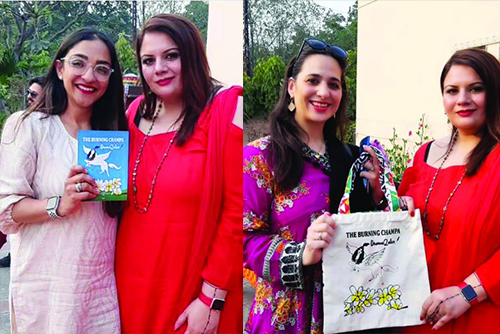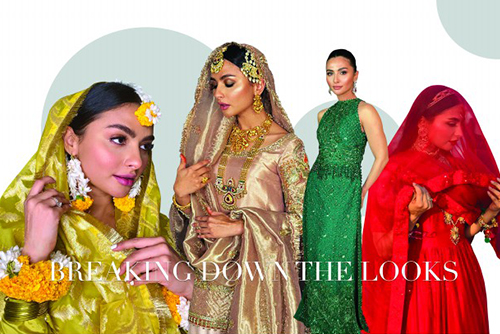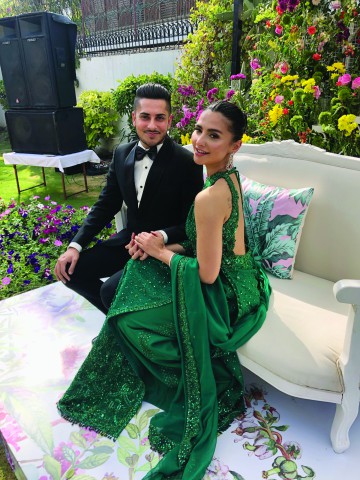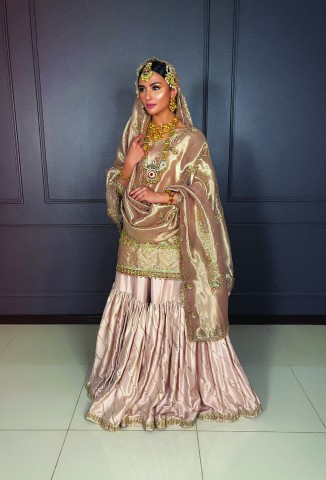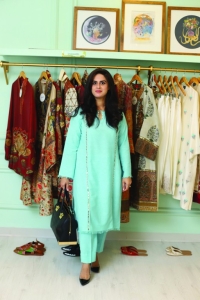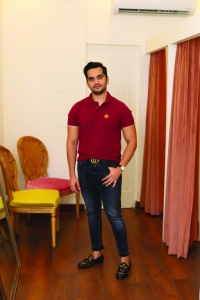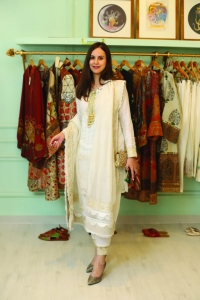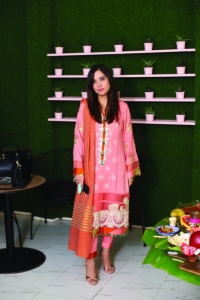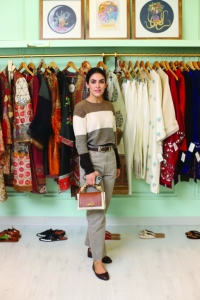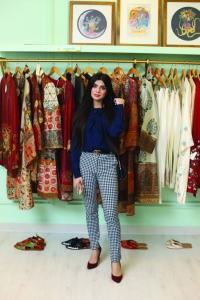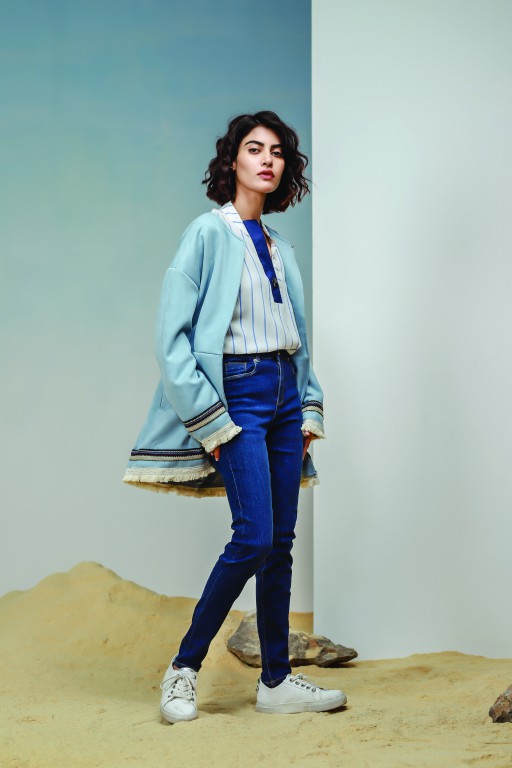
This fortnight we speak to this talented young photographer about her creative journey
Tell us about your introduction to photography.
I don’t remember it in particular, but as far as I can recall, I used to take self portraits in grade 10. Then I started photographing people, since I love exploring new places and meeting new people.
Who are your biggest influences?
There are so many. But I absolutely love Natasha Zubair, because her work ethic is amazing. Apart from her, my sister has been my rock since day one and I’m quite proud of her journey as an artist; it really inspires me.
What is the creative process like when you’re preparing for a project?
A story is very important to me, so I always create an inspirational mood board and share it with my client or model and see if it matches with their vibe.
How do you balance work with your education?
As a medical student it’s kind of hard, but I try my best. Recently, I’ve had to skip some exciting projects, but I guess that’s part of life.
What’s been your favourite photograph or project so far?
A fashion shoot that I did for for Hira Ali. I love it when designers give you creative freedom and trust you with your perspective.
What equipment do you use?
I use a Nikon D750 with a 35mm lens.
How would you describe your photography style?
I love doing portraits and fashion photography. Sometimes I do wedding shoots too, but only if my clients understand my art and perspective. So, my style is mostly comprised of candid, colourful portraits with a play on light and shadow.
What’s a piece of advice you always keep in mind?
Keep going. Never give up. NEVER! And the only person you should compare yourself with is who you were yesterday. You are your biggest competition.
9Lines, staying close to its ethos and pop quirk roots, puts forward the first ever unstitched lawn collection, as “9LINES SS21â€
The collection focuses on driving towards a modern update to the usual lawn, by adding a signature 9Lines quirky narrative. The collection is inspired by infusing art in fashion for an off-the-wall update. Prebooking on 12th March online > www.9lines.store
Wardrobe : 9Lines
Photography : MHM
Hair & Makeup (female models) : Qasim Liaqat
Hair & Makeup (male models) : Turab Haider
Art Direction & Styling : 9solutions
Models : Abeer Asad, Abeer Rizvi, Alicia Khan
Eesha Asad, Manal Saleem, Khushhal Khan
Qamar Khawaja, Suleman Hussain & Zarrar Khan
London-based model Sadaf Khan has walked for Pakistani fashion designers across the globe. Here, she speaks to GT about her career and more
What inspired you to take up modelling as a profession?
I always had a keen interest in fashion and isn’t it amazing when you get paid to look good?
What I love about modelling is that you have a good sense of style, adaptability, a positive attitude, excellent stamina, communication skills and the ability to look good at all times.
Tell us about your first modelling job?
My first job was in London for Virgin Airlines. It was such a big shoot, and I was so nervous, but thankfully I did great in the end and everyone loved me.
What’s your experience been like working with Pakistani fashion designers? Do you have any favourites?
It’s been very good. I love Pakistani fashion and have done many shows around the world, where I’ve walked for all the top Pakistani designers. All of them are lovely, but Umar Sayeed and Rana Noman are my favourites.
What’s the one thing you enjoy most about your job and what’s the one thing you dislike the most?
I love walking the ramp and I’ve missed it a lot during the pandemic. I can’t think about anything I dislike, as I always try to find the best in everything.
What’re some things you wish you knew before you started your career?
The way people judge and criticise you in this career.
How would you describe your personal style?
I’m really into skirts and anything high waisted—that’s my thing.
Do you have a specific beauty and exercise regimen?
I do wear a lot of makeup, so it’s very important to look after the skin. I cleanse a lot using an oil cleanser (I love the Elemis range, as my skin is dry and it really helps), followed by a rose toner and thick moisturiser. I always use sunscreen before going out. Masks are really important for me too, so I apply them twice a week to get that glow. I try to drink a lot of water and never miss out on my vitamins.
Exercise for me is important not only for my physical health, but also for my mental well-being. It releases endorphins that keep you feeling happy and energetic. I’m quite addicted to reformers and I combine it with cardio three days a week.
What’s been the best advice you’ve received?
Be kind and treat people as you would like to be treated. Everyone loves to feel special; everyone loves to be noticed. So, if you care for people and treat them as the special people that they are, then they’ll love you for it. If you help enough people get what they want, then you’ll get what you want.
Photography: Altmash Urooj
Wardrobe: Euphoria
Makeup: Deepika Deshta
Hair: Dani
Location Courtesy: Mahesh Tourani
Fresh, young talent always has a place in our pages. In this issue, we speak to upcoming actor Bilal Dar about his auditions and trying to break into the industry
Tell our readers about your background in acting.
I had my first audition in 2017 in the US about a play on partition, which turned into my first acting gig. It was such a memorable experience and I learned so much about my history. It really solidified my interest to pursue acting professionally. I also did a few short films in the US, after which I decided to take a break from acting.
How would you compare your experience acting in the US with your experience acting in Pakistan?
Acting in the US is pretty straightforward. You have auditions which’re posted online or through casting websites for everyone to see and try out for. I saw acting roles online and went in for the auditions. Acting in Pakistan is somewhat trickier to navigate. You need to be connected to the right circles and networks to even know about the auditions. It definitely requires more networking. Acting in both countries is fun, but comes with its cultural challenges.
Where do you hope to see yourself in the next five years?
I’m moving to Los Angeles this year to pursue acting in the US. I’m excited as this has been my dream ever since I started acting. I hope in the next few years I’ll be a professional actor working with some of my favorite directors and actors there.
Which actors inspire you and why?
Leonardo DiCaprio, Jake Gyllenhaal, Joaquin Phoenix are some of my favourite actors. They’re some of the most versatile and empathetic actors. Acting is all about empathy for the characters and their stories and these actors have delivered some of the strongest performances in my opinion.
Tell us about your upcoming short film and music video.
I’m currently working on a short film titled ‘Rukhs’ set in 1970s post-partition Pakistan. The story revolves around three characters and how they navigate love in the strict, religious society under Zia’s regime. This film has been guaranteed screening at the UK Asian Film Festival’s 23rd year (London, Edinburgh, Birmingham, Leicester), the University of Cambridge, King’s College London and will be sent into multiple festivals across the globe. Khoosat films is collaborating for post-production and the film production is funded from a commission by the UK Asian Film Festival.
Photography: Ahmed Kaleem
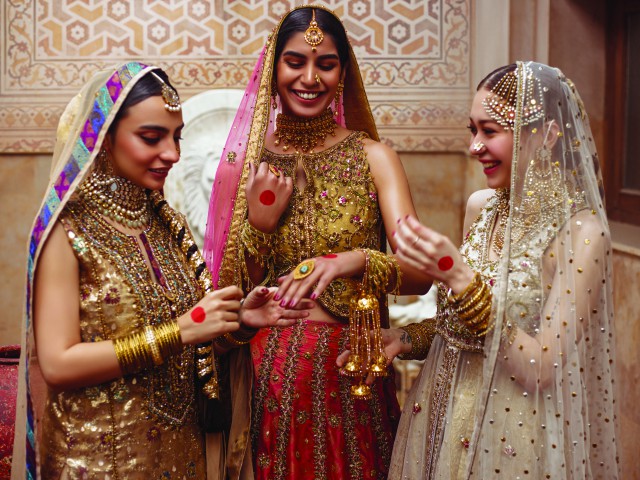
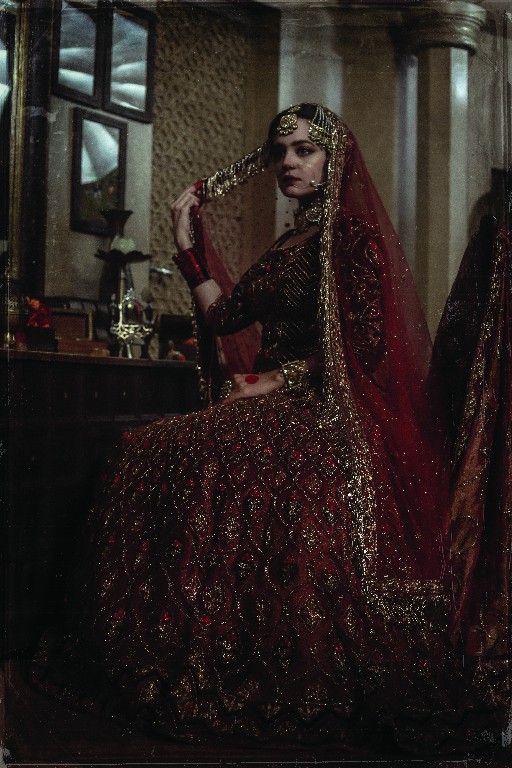
Trends come and go, but a traditional bridal remains timeless. Captured by the lens of Rehan Khan, fan-favourite Sumbul Iqbal dons the regal trousseaus of Diva’ni Pakistan in a magical shoot
Talent: Sumbul Iqbal Khan
Wardrobe: Diva’ni Pakistan
Photography: Rehan Khan
Art Direction : Maha Rehan
Hair and makeup: Qasim Liaqat
Jewelery: Grace Jewellers
There’s no better way to beat the dreary winter days than to doll yourself up in jewels. The Jewel Company and Maha Tahirani show you how
M o d e l : M a h a T a h i r a n i
P h o t o g r a p h y : N a j a m M e h m o o d
Je w e l l e y : T h e J e we l C o m p a n y
H a i r & M a k e u p : S y e d H u s s a i n
C o o r d i n a t i o n : C e n t a u r O n e
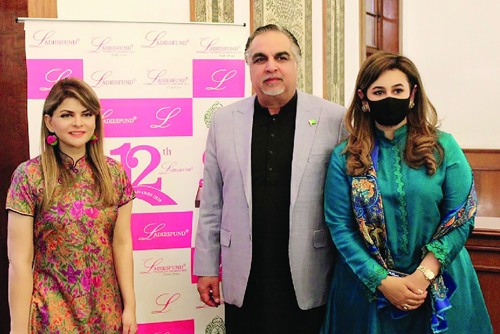
The 12th anniversary of the Dawood Foundation’s LadiesFund Award was held at Sindh Governor House to award 12 female front-line workers, who risked their lives to save others during the ongoing COVID-19 pandemic. We are indebted to all frontline workers.
Ayesha Omar is many things: an actress, a style icon, an activist and an artist. This fortnight she speaks to Mehek Raza Rizvi about fame, fortune and family
It wouldn’t be wrong to say you’re one of Pakistan’s most coveted style stars. Do you feel that’s helped you in your profession? Or on the contrary, have you ever feared that might take away from people taking you seriously as an actress? Â
Thank you so much for your kind words. I was always a tomboy growing up and not really concerned about what I was wearing. My wardrobe was simple and functional; I never followed fashion icons or magazines. In fact, even when I first joined the industry, I wasn’t too fussed about my style statement. It’s only in the last six to seven years that I’ve started to have fun with fashion, by figuring out what my preferences are.
I’m an artist; I’ve studied painting, so I use my outfits as a sense of creative expression. Keeping that in mind, yes, I’d say fashion does give me a medium to translate my artistic sensibilities into a tangible form. It allows me to express what I’m trying to say without actually having to say it. It also helps me bring the characters I portray to life, because I style them myself.
“I’m an artist; I’ve studied painting, so I use my outfits as a sense of creative expressionâ€
—on her style
On the other hand, though, it’s true that sometimes when a lot of stress is put on how an actor is dressing, it can take away from them being taken seriously for their craft. I wouldn’t say this is a fear of mine, but I want to be remembered as a hardworking actor, host and activist, not just a style icon. There’s way too much focus on external appearances, which also becomes a point of comparison between contemporaries. An actor’s sense of style does matter to some extent as it’s part of one’s image, but it should be a secondary concern.
You mentioned in one of your interviews that your accident was a defining moment in your life. How did it change your perspective?Â
Sometimes in life you experience something that alters your perspective on things completely—my accident did that for me. When you witness death so closely and see your whole life flash in front of you, it makes you rethink a lot of things and reassess your priorities. I’ve definitely started valuing life more, particularly the little things in life, like small acts of kindness. I feel I’ve now become a lot more empathetic to the struggles of other people and have realised the importance of being there for people in their time of need. More importantly, I’ve understood how to be there and when to give space to someone coping with pain.
This experience also gave me a lot of clarity regarding who my real friends are. It was a real eye opener in that sense. Above all, I felt a deep sense of gratitude as my connection with my creator and my belief in His divine plan became much stronger.
“I’m very fortunate to have grown up with my friends who’re my sisters and have really compensated for the lack of support from relativesâ€
—on friends like family
The fame and influence celebrities enjoy puts immense responsibility on them to use it wisely. Do you ever feel burdened by the constant spotlight?
Yes, of course I do, as do all other public figures. There’s this constant pressure of behaving the way people want you to. The criticism we receive isn’t limited to just our work, but extends to personal preferences as well: from what we eat, to our relationships, our choice of clothing, etc. One’s life does change once you’re in the public eye; anonymity allows you to live your life the way you want, but you don’t have that privilege as a public figure.
Despite being human, there’s very less room to make mistakes, because people are extremely unforgiving and sometimes it can take a toll on you. Having said that, I also enjoy the responsibility and feel very thankful that I have a voice that enables me to talk about issues that concern me. There are so many people, young people in particular, that look up to us for direction and also various occasions where we get to be representatives of our country. It’s a duty I take seriously and feel immense gratitude for.
One of the reasons we love you the most is for being outspoken and never being afraid to stand up for issues close to your heart. How do you deal with the inevitable backlash though? Especially on social media.Â
You’re very kind. It does take a lot to be that way because many things aren’t received well. In the end, you just have to stay true to yourself regardless of any backlash. As long as your intentions are right and you aren’t hurting anyone, you should stand by what you believe in. Eventually people understand your point of view as well.
It’s true that you do need thick skin to survive the negativity. Social media in particular can be such a dark place, but then there’s also light and love. Where there are haters, there are also people who show support and faith in you.
Have you experienced any prejudice as a woman in your line of work?
When I first joined the industry, I was fresh out of college—very young, trusting and friendly. I dressed a certain way, because I grew up in a progressive household. I studied with boys in college and went to a school where there was freedom of decision-making and confidence building, so I was forward-thinking as well I guess. All of this led to a lot of preconceived notions and prejudice against me.
People thought that because I was new so they could say and do whatever they wanted. I feel I was judged for my pleasant nature and the way I dressed; I was stereotyped. I’ve faced both, sexual and verbal harassment. Nothing has come easy to me and I’ve had to learn things the hard way. I’ve had to build a hard exterior and keep people at a distance to be able to be taken seriously.
Also, because I moved away from Lahore and didn’t have family in Karachi, I didn’t have any backing or anyone to protect me. Knowing this, multiple people have been unfair and unprofessional with me—with full knowledge of me being the sole breadwinner for my family. I’ve had to face delayed payments many times; many of them still owe me money.
People who’re close to me know that things haven’t been so smooth for me and I’ve worked very hard to get where I am. I’m extremely committed and professional and have developed strong a work ethic. Despite that, people have so many assumptions about me and there’ve definitely been times when I had to prove them wrong.
With the conversation on gender equality and feminism on the rise, how important is it for female actors to choose their roles carefully and avoid playing the damsel in distress?
I find conversations about gender equality and feminism heartening. In an environment where so much is being said and done to protect and empower women, it’s extremely important for female actors to choose their projects wisely. The stereotypes created by society are validated by our content, so we must make sure we aren’t responsible for carrying such ideas forward, as this affects the women in our society on a daily basis.
The media plays a very crucial role in influencing people’s minds. Female actors should avoid opting for characters that’re detrimental to the role of women in society and that glorify injustices against them, whether it’s enabling domestic abuse, rape culture or victim shaming. This is the reason why you see me in such limited projects; I don’t agree with plots where you see women surrendering to their circumstances.
“When you witness death so closely and see your whole life flash in front of you, it makes you rethink a lot of things and reassess your priorities. I’ve definitely started valuing life more, particularly the little things in life, like small acts of kindnessâ€
—on her brush with death
Out of all the characters you’ve portrayed, which one do you relate to most and why?
It’s always tough to choose, as there’re lots of them with different shades to their personalities. But if I had to pick, it would be my character in the serial “Kaisa Yeh Junoon.†I played the lead role, who was a very strong and principled girl who grew up to be a determined, solid individual with a lot of integrity and self-respect. She was also studying to be an artist, so I really related to her. We shot this project in London, Mumbai and Karachi, so we travelled to three different cities and I worked really hard on it.
What is Ayesha Omar like at home? Tell us about your childhood and family?
I was born in Karachi, but after my father passed away when I was only a year and a half old, my mother, brother and I moved to Lahore. My mother was a young widow, who’d only been married a few years. She had no emotional or financial support from the rest of our family, so she raised us singlehandedly. I saw her working very hard to provide us with an education; she started teaching at a school, gave tuitions and also drove a school van that she bought with the help of a friend. My mother did everything she could to make ends meet; she’s sacrificed her life for us, but of course there was a lot of financial insecurity and anxiety related to that. It was very hard for me, as a child, to see my mother going through this. But, today I feel that I get my sense of independence and strength from her. I’m very self-sufficient, just like her.
My brother and I went to an expensive school that we may never have been able to afford without our merit scholarships. But this also meant that we had to work very hard on our grades. We were studying with rich kids but couldn’t afford to be spoilt the way they were. My mother also encouraged us to participate in extra-curricular activities, so I was very active in the school choir, theatre group and art workshops. Growing up surrounded with such cultural experiences makes me who I am today.
Despite the difficulties, I feel my childhood was full of love and warmth from my six best friends and their families. Of course, sometimes I did complain to God when I saw all other kids had two parents, but I’m very fortunate to have grown up with my friends who’re my sisters and have really compensated for the lack of support from relatives.
After graduating from college, I started supporting my family and became the sole breadwinner and have been since then. My brother is doing his PHD in Denmark right now, so he still has a few years to go. It makes me really happy to see him doing what he’s doing and also to see my mother enjoying retired life and taking care of herself. The three of us have always been very very close. I hope my mother is proud of me today.
“Female actors should avoid opting for characters that’re detrimental to the role of women in society and that glorify injustices against them, whether it’s enabling domestic abuse, rape culture or victim shamingâ€Â —on choosing roles wisely
At home, I’m very domesticated. When I moved to Karachi, I shared an apartment with flat mates and continued doing so for thirteen years. It’s only been a year and a half since I started renting my own apartment. I never thought I’d be able to live alone, but I’m honestly loving it! I love doing up my space and creating this zen haven for myself that I love coming back to. I enjoy hosting and feeding people as well. I’ve surrounded myself with a lot of plants, since nature calms me and I try to stay clean as much as I can with my eating habits. I’m gearing towards a more holistic lifestyle and staying away from artificial and synthetic products—that applies to people as well. I’m beginning to realise that more and more every day and try to be around wholesome, positive energy only.
SHORT & SWEET
Pakistani actresses whose style you admire?Â
Meesha Shafi, Kiran Malik and Mahira Khan
Favourite co-stars?
Hina Dilpazeer, Sanam Saeed, Saba Hameed, Sawera Nadeem, Azfar Rahman, Adnan Siddiqui, Ali Rahman, Mikaal, Ahsan Khan—there are so many!                           Â
Theater, film or TV?Â
Film, theatre and TV—in that order
Your biggest strength?Â
My resilience, self-sufficiency and ability to balance things
And weakness?
Being unable to say no
Favorite ‘90s jam?
Michael Jackson and The Cranberries all the way!
What was the last lie you told?
I lied to someone about working today when I actually just wanted to be by myself
Last impulsive buy?
A pair of shoes
One habit of yours that annoys your family?
My sleeping pattern
Do you have a nickname?
Some of my friends call me Jacks, while others call me AO
A decision you really regret?
There’re quite a few work decisions I regret, along with some personal decisions
Favourite movie quote?
“May the force be with youâ€
—Star Wars
“After all, tomorrow is another dayâ€
—Gone with the Wind
“You make me want to be a better manâ€
—As Good as it Gets
Photography:Â Najam Mahmood
Wardrobe: Saira Shakira
Coordination: Centaur One
Jewellery: The Jewel Company
Styling: Arbaqan Changezi
Hair & Makeup: Sonia Nazir
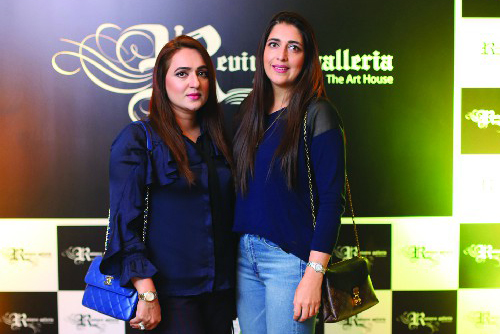
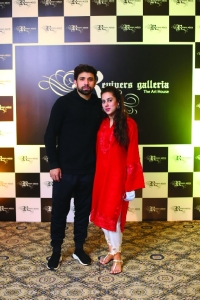
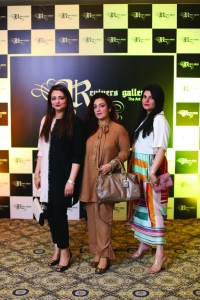
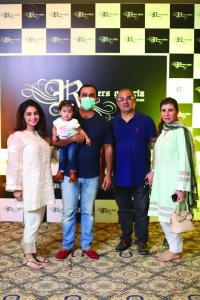
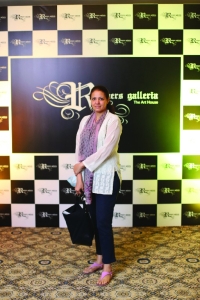
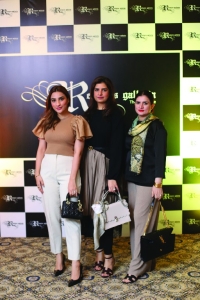
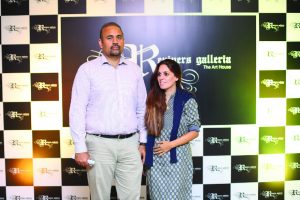
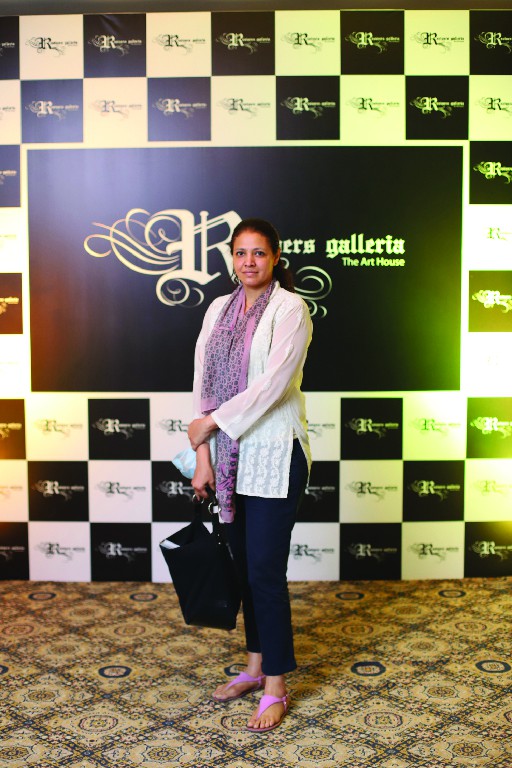
Sarah Anjum launched the biggest art house of Pakistan, Revivers Galleria, on Main Boulevard Gulberg. The event was attended by art enthusiasts and social personalites alike.
A new year means time for a wardrobe update. Who cares if we’re still stuck at home for most of this winter? A good outfit needs to excuse. Captured by one of our favourites, Rehan Khan, this fortnight’s editorial brings you the choiciest selection from Forecasts latest drop
Photography: R e h a n K h a n
Models: F a r e e h a S h e i k h & S a c h a l A f z a l
Wardrobe: F o r e c a s t
Hair & Makeup: A z e e
Styling & Art Direction: M a h a R e h a n
“I see Tara as the actual victim, failed by those around herâ€
Popular actress Armeena Khan, after a brief hiatus, has returned to television screens with her new drama serial “Mohabbatain Chahatain,” essaying the villainous role of Tara, opposite Hira Mani and Junaid Khan. Armeena speaks to Haider Rifaat about her character and what motivated her to return on set
Why did you choose “Mohabbatain Chahatain†to be your return to television? Was the script conducive to this decision?Â
I took some time off for many reasons. I’ve been working consistently for a number of years and an actor only has so many roles and projects within them. I was burning out. This was compounded by the torpid scripts on offer that are now the mainstay of the Pakistani drama industry. Once you’ve played one daughter-in-law victim, you’ve pretty much played them all.
Finally, the work-life balance of an actor is incredibly difficult to maintain and you must understand that I don’t come from a showbiz family, so I struggle with all the peripheral aspects that come with being in the limelight. It’s important for me to take time out.
But just as the need to step away is strong, the desire to be back on-screen is strong as well. I do love being in front of the camera and living the many characters without any inhibitions. I was looking for something new and “Mohabbatain Chahatain†felt like it had enough ‘bite,’ because I’m playing a villain; so I took the chance and plunged. Let’s see what the audience makes of it now.
Give our readers some insight into Tara’s character.Â
I’ve come across many troubled individuals in my life. In fact, I volunteered around such people in my late teens. To understand my character better, I concocted a whole backstory around her. I don’t think people are born evil (the whole nature versus nurture debate). I subscribe to the school of thought that people are conditioned according to their environment and are shaped by their circumstances.
I don’t see Tara as an aggressor, although she’s the cause of the conflict in the story. I see her as the actual victim, failed by those around her. No one was ever there to defend her or take her side. I really sympathised with her on some aspects and felt that anyone with mental health issues would ‘react abnormally’ in a similar situation.
She’s a representation of all those stigmatised, ridiculed and practically abandoned by society and their families. In Pakistan, mental health is not given the care and attention that is required, and the character I play is paying for this negligence. You’ll see what I mean, if my scenes survive the editing table, that there’s a bit of Tara in all of us.
By the looks of the premiere episode, you seem to be quite a troublemaker in the series. How true is our assessment?
This woman is not a conventional troublemaker as appears at first sight. In episode one, the stage is set. She’s clearly the villain, but she’s neglected in her marriage. To make things worse, her husband is undermining her behind her back to his friends. He then divorces her in front of their close friends. That is enough to drive anyone into the worst place mentally. To an intelligent viewer, the cause and effect are clear, but I still maintain it’s because the system fails her and people who’re like her.
Why should our readers watch this drama serial?
We’re going through perhaps a once-in-a-lifetime global health crisis and I know it’s affecting people’s mental health, so if you’re an intelligent viewer and want to explore how mental health affects people and those around them, then this will interest you. Also, if you’re bored of seeing poor victims of circumstance or mono-dimensional cartoon villains, then this is for you. It’s a different story from what’s out there currently and I hope I manage to elicit some compassion from the audience for my character.
 You mentioned how you were consumed by work completely. How did it feel like to be on set 24/7?Â
It’s a pressure cooker and is symptomatic of a wider problem in Pakistan and the way business is conducted in this part of the world. When you’re sleep deprived, over-worked and tired, performances become compromised. Outcomes are left to chance, people fail to take responsibility and there’s a void in which work happens. I could go on, but I’ll save this discussion for another day. Whether your experience will be pleasant or not is highly dependent on the team around you.
You recently wrapped another project in Turkey. Tell us some more.
I recently co-produced a project called “Snapshot.†We collaborated with Turkish actors and crew. I hope to reveal details concerning this when the product is near completion, but Sharaz Ali (my co-producer and director) is very excited, as this is from the same team that previously took us to the Cannes Film Festival.
Do you regret any of your past projects?Â
No—I don’t have any regrets. I was meant to do those projects and leave those not in my destiny. I’m exactly where I am decreed to be. I believe in abundance and we all get what is our due in life.
You’ve been travelling back and forth during a pandemic. How is it like out there?
Initially, when COVID-19 was new, we saw countries looking at each other and imitating best practice protocols so they could project a semblance of control. But now I can see that lockdown fatigue has set in around the world and different countries are reverting to habit.
In the U.K. and Western Europe, they have adopted a very risk-averse approach, because they do not want huge numbers of their aged population to die. In Pakistan, the indiscipline has set in and people are not taking the pandemic seriously, because well, I suppose the loss of life isn’t as serious as it seems.
What I’m sensing, however, is that what’s to come in 2021 and after, especially in terms of the economy and people’s mental health, is that a lot of people are going to lose their jobs and there’ll be a huge debt piling up from relief programs around the globe. All of this would have to be paid back, so there’re some more shocks to come.
What new perspective have you gained in life since COVID-19 began?Â
Everything is temporary and none of us are coming out of this life alive, so why take things so seriously? Let it all go.
SHORT & SWEET
What do you want our readers to know about you?Â
I’m intuitive and will latch on to most things.
Your go-to fall look?Â
If it’s fuzzy and comfortable, that’s my look.
Colour of the season, according to you?Â
All earthy colours.
A personality trait you wish to work on?Â
I’m a perfectionist and unfortunately in my industry, you have to compromise otherwise you’re disappointed.
What do you have that your contemporaries don’t?Â
My sensibilities that derive from a mixture of the West and Pakistan. I can add a layer to my acting, which wouldn’t be possible otherwise.
Where does your heart lie? Pakistan or the U.K.?
My heart’s with my family. It’ll go where they’ll go, be it Timbuktu.
There’s a chill in the air and it’s here to stay. Take inspiration from these vibrant outfits from Chaos and layer up in style for the season
Brand: Chaos Brand
Photographer: Zahra Sarfraz & Azen Malick
Models: Nimra Jacob, Imran Salman, Roshanay Afridi
Makeup: Usman
Stylist: Mehek Saeed
As every year, winter has arrived swiftly overnight. While the days lose their brilliance, it doesn’t mean that your wardrobe should as well. Soffio, captured by Rehan Khan, present a lovely array of winterwear that is sure to brighten up the dark winter days
Photography: Rehan Khan
Model: Aqsa Shah
Wardrobe: Soffio
Art Direction & Styling: Maha Rehan
Hair & Makeup: Azeejee
Accessories: Rang Chamkay
Young entrepreneur and investor, Ali Alam Qamar is all set to revolutionise Pakistan’s construction industry with his new venture Zarea.pk. GT’s editor, Mehek Raza Rizvi, speaks to him to find out more
Tell us about your background in Pakistan’s housing construction industry and where the idea to start Zarea.pk came from. Â
Pakistan’s construction sector is the backbone of the economy and makes up a huge chunk of the GDP. My relationship with the local construction industry is deep-rooted, since we’re one of the top manufacturers of cement in the country. I’ve always been appalled by the challenges one faces when constructing a house or any other building and have been wanting to provide a solution. The biggest problem is with the procurement of construction materials due to information asymmetry in the market. People are subject to price discrimination by vendors, various quality issues and delayed deliveries, along with other issues.
The reason I started this venture is for people to overcome these multiple issues, simplify the process of constructing one’s dream house or project, empower our customers by minimising information asymmetry and set new standards in the industry by providing the most competitive prices, top quality products, fastest delivery and an exceptional customer experience.
What impact do you hope to make on your target industry through Zarea.pk?Â
Zarea.pk strives to digitise the housing construction industry. Zarea.pk intends to redefine the experience of constructing your dream house or project through a hassle-free experience within your budget and in the targeted timeline. We also want to educate our customers on the entire construction process by providing purchasing guides, a cost calculator for materials, informative blog posts and a dedicated customer support team consisting of industry experts available 24/7 to respond to queries.
What are some of the key services you offer?Â
Partnerships with top suppliers: Zarea.pk has partnered with top manufacturers and dealers of construction and finishing materials to provide the best and highly cost-effective solutions for its customers. Zarea.pk provides up to 10% off-market prices and gives 100% quality assurance guarantee.
Dedicated customer support team: Zarea.pk has a dedicated customer support team available via its helpline (0310-22-ZAREA) to address customer queries and complaints.
Express delivery: Zarea.pk guarantees express delivery, so you can construct your dream house or project timely.
Multiple payment options: Zarea.pk has partnered with Bank Alfalah to provide easy and convenient payment solutions for its customers. For the first time, customers can purchase construction materials via a credit/debit card, alfa wallet and online bank transfer.
Full refund: in case of non-satisfaction of its customers, Zarea.pk also provides a full payment refund.
Do you feel most people in Pakistan find online marketplaces reliable?Â
Pakistan currently has 169 million cellular subscribers along with 85 million 3G/4G subscribers and these numbers are growing at a dramatic rate. I feel a lot of online marketplaces have manipulated their customers by not living up to their commitments; this has left a question mark on their reliability. However, Pakistanis are always on the hunt for more competitive, innovative and convenient solutions, which is why I feel it will be a survival of the fittest and we’re in for the long haul.
What’re some of the hurdles you’ve faced while establishing your startup?Â
One of the biggest hurdles I’ve faced is overcoming the conflicting and negative opinions of those who don’t share the vision of a digital Pakistan and are too afraid to take risks. Another hurdle was building the right team of motivated individuals who’re willing to go the extra mile, strive for out-of-the-box solutions and ultimately take Zarea.pk to the next level.
Where do you hope to see Zarea.pk in the coming years?Â
I hope to see Zarea.pk as a trusted partner from the very minute a client thinks of constructing their house. In the coming years, we’ll strive for horizontal and vertical integration, and I wish to see Zarea.pk on the forefront of spreading and manifesting the vision for a digital Pakistan.
A piece of advice you’d like to give to budding entrepreneurs afraid of taking a risk?Â
I strongly believe in the potential of the Pakistani youth; we can really make a difference in the world. To budding entrepreneurs, I’d say, “Believe in yourself; accept failure as a challenge and remember, where there’s a will, there’s a way.â€
Despite working in the music industry since over a decade now, most people had not heard of Aleem Zafar. Shying away from the spotlight, this talented artist preferred staying behind the scenes, assisting some of the biggest names in the entertainment industry in building their brand. These include the likes of Ali Zafar, Asim Azhar, Billy X and Humaima Malick, to name a few. From managing PR to designing artwork and from releasing their songs to handling media and fans- Zafar has done it all for the celebrities he’s worked with.
With ample experience, Aleem finally decided to bid his previous work farewell, overcome his inhibition and embark on a journey as an artist. With accolades under his belt including a nomination in the Shorty Awards for best emerging talent (2015), along with being a brand ambassador for Daniel Wellington, he started off his new career with a captivating tribute to Junaid Jamshed’s hamd “Ilahi teri chokhat par.†His soothing vocals and remarkable presence caught the attention of his audience.
When asked about his tribute, here’s what Aleem had to say:
“It was always my dream to pay tribute to Junaid Jamshed. I had been planning to do so since years and finally got an opportunity in 2019. When it happened, despite all my preparation over the years, I felt it was so quick that I couldn’t really register much or believe my wish was being manifested.â€
Soon later, Aleem decided to take on another challenge and release his second tribute to the legendary Mehdi Hassan with a cover of “Yeh watan tumhara hai.â€
Talking about his rendition, Aleem added:
“Once I had committed to working on this, I did have second thoughts- first Junaid Jamshed, followed by Mehdi Hassan, why was I making such difficult choices! Nothing was going to stop me though, not even my own reservations. I’ve always loved this track & it’s been a part of every Pakistani’s life since a decade. I had to do it, but I made sure not to make any changes to the composition and keep it as original as possible, yet add a modern touch. I’m really glad people liked it.â€
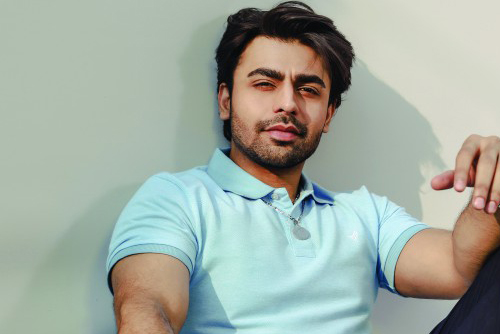
Aleem’s tribute was also shared by television presenter and journalist, Iqrar ul Hassan, on Instagram and twitter, while praising his work.
Aleem Zafar is a name everyone needs to get familiar with. With the abundance of talent and experience he has, it won’t be long before he becomes a household name, featuring in the top 10 charts!
Actor and style star Saim Ali’s visual diary featuring some of the most memorable sights of Istanbul is giving us wanderlust and style envy, all at the same time


Photographer: Ahmet from studio Istanbul photo session
Location: Istanbul
Starring: Saim Ali
During the summer months of 2020, there was never a big need to buy new clothes. We all just stayed home in our comfy tees and pants. However, businesses have now opened again and the season is changing.
There is a genuine need for most of us to have a new men’s wardrobe for the winter. Lucky for us, the Great Winter Sale by GulAhmed and Ideas is now available exclusively online. With up to 70% off on the hottest menswear, you can look great for every possible occasion.
Sweaters
Winter is almost here. Therefore, you will need some outerwear for your winter wardrobe. Ideas Man has rolled out one of the most versatile winter wear in the country. The range has got everything from half-sleeve to patterned knit to solid-colored.
T-Shirts
Well, some of their designs are flat 70% off! It will be a tragedy if you miss out on such a bargain. Plus, they have released a pack of two basic tees in just over a thousand rupees.
GulAhmed Fabric
If you are someone who likes to get his shalwar kameez tailored to his needs, then you will love their latest winter collection which is up to 70% off. Moreover, the boxed edition of Chairman Latha is available at 20% discount.
Shirts
With more than 250+ unique colors, patterns, and designs, you can create a versatile wardrobe for yourself. Made with premium quality materials, shirts from Ideas Man are durable, yet fashionable.
Khakis
Khakis are perfect for work and play. These are perfect for business meetings, conferences and workshops. You can wear them with sweaters, blazers, casual shirts or your favorite polos.
Hurry up! The good stuff sells out fast. The Great Winter Sale is available exclusively online on GulAhmed’s official website.
To honour Breast Cancer Awareness Month, Haider Rifaat interviewed breast cancer survivor and veteran artist Nadia Jamil about her road to recovery
Nadia, how’ve you been coping with cancer?
The National Health Service (NHS) in the U.K. is wonderful. They took most of the burden off me. Having my mum and son around has been very nice and I have a fluffy little dog who I cuddle a lot. Friends and family keep in touch and cheer me on. My social media family keeps me smiling and feeling so loved and then of course there’s my faith. Allah has carried me through this so gently and with so much love.
How has your experience with cancer and its treatment been like during the ongoing pandemic?Â
Pretty normal. Kind volunteers drove me back and forth from treatments. I went and convalesced at my friend’s place in London a few times during treatments. I got really sick at times and was hospitalised, but I survived. I’m left with arthritis and diabetes, which I’m trying to deal with as positively as possible.
How did you muster the courage to motivate yourself during the initial weeks of your diagnosis? Where did you get that courage from?
I was very scared initially. My best friend was with me during the initial weeks; she gave me a lot of strength, as did my kids. Then of course, Allah sends courage to those who ask for it.
What coping strategies did you rely on to pull through this health crisis?
Prayer, meditation, mental health therapy, pet therapy and reaching out to people
What is the most important lesson that cancer has taught you?
That I don’t need anyone else. Allah shields me and I have an army inside me that can save my life.
At what point did you feel most vulnerable?
When my best friend, who was meant to be my treatment partner, left me before chemotherapy.
Who did you turn to for solace?
Allah and the NHS mental health crisis team.
How are you a different person now than who you were before?
I’m more self-sufficient and more patient. I respect pain and heartbreak; they’re my teachers and I’m not scared of being alone now.
Many people don’t normally share their journey with cancer on social media, but you have. Why did you decide to put yourself out there?
I felt alone and scared. I didn’t know how to share all these intense feelings with any one person, because they might run away. So, I shared my feelings in a space where I didn’t feel deserted. The response was overwhelming!
What role has the entertainment fraternity played at this stage of your life?
None
How do you view life and death?
Life’s a beautiful lesson, a wonderful journey. It’s as positive as you see it and as negative as you perceive it. Death is the one single definitive truth at the end. Death is also the beginning of another journey. Best we prepare for that in this lifetime.
What do you want the readers to take away from your experience?
You’re your greatest friend. Take care of yourself, listen to yourself and don’t think you ever need anyone else. The love of people is a bonus. It might come or go—they might come and go. But you’ll always be there for yourself, so self-partner and self-parent yourself.
How do you want people to remember you?
With a smile.