Tag

Slider

Browsing


The actors get candid about the pressure of social media, upcoming work and family life

How did you guys meet and who made the first move? 

Hira: I made the first move. Mani was friends with one of my friends. I told my friend that I wanted to meet him. I was engaged to be married in six months. Everyone has goals before they get married like bungee jumping or a bachelorette party. During our time, and because of my family, these things weren’t possible. So I thought, since I listened to this guy on the FM and I was his fan, I wanted to meet him. I asked my friend to introduce us and she did. Before that, I used to talk to Mani on the phone pretending to be Maryam Khan. I was his fan. I had told my then fiancé that I speak to Mani. He was okay with me talking to Mani. Maybe because he knew that I don’t have any bad intentions. He knew that I was just a fan. However, I didn’t know myself that behind all of this I was in love with Mani. You know how they say, love at first sight? Something like that. Honestly, as kids you don’t know yourself whether it’s love or infatuation. I used to think that I was in love with my fiancé and that I’m just Mani’s fan. But this was not true at all. Not even one bit. My fiancé was chosen by family for me. I guess I had been in love with Mani all along, I just didn’t know it myself. Anyway, when I met Mani, I found him to be very beautiful. He had an amazing body and he was fair, too. I was very impressed. I was like, this, this is who I want! Honestly, I’ve never really liked tall guys. They make me anxious. Mani is as tall as me so I thought he was fun sized! I told Mani that it’s better if you marry me because I don’t want to alternatively marry someone I don’t love. It’s better to feel secure in a marriage with someone you love, rather than marrying someone you don’t love and then subsequently having 600 extra marital affairs. This dramatic attempt turned out to be successful and here we are!

Mani: We started talking on the phone first. I had a show that was on on air called Mani-ism. She came to meet me with one of her friends, just like any fan would. That’s how we first met. We spoke on the phone for a couple of months. Hira definitely made the first move. And she made such a move that I was hooked from the first call. I used to talk to so many people at that time, I was single. I still remember the exact moment that she called me. I was with Reham Sheikh, he is also an actor. I remember it being very cold in Karachi that year. I remember me and him drinking tea outdoors and then having to move to the car because it got super cold. As soon as we came and sat in the car, I got a call from her. I was hooked on to her from that very moment.

You guys have spent so many years together. You have kids and separate careers. Does it ever get challenging to take out time for each other?

Hira: I truly believe in quality time. When you’re busy you think you should give your kids quality time. When I was a stay at home mom, I would have the TV on and the kids would just be playing around me and I’d be watching a movie, the house would be a mess. However, since I’m a working mom now, I know that my time is limited and hence, precious. I know that this one hour that I have to spend with Muzzamil is completely his and should be focused only on him. Similarly, I know that this hour is Ibrahim’s, and this hour is for cooking or organizing etc. It’s a little challenging, of course! But I feel like this makes one work smart. You become more organized in your work and household duties. Working makes you active and alert. Both husband and wife should work, in my opinion.

Mani: It’s not that challenging for me because I’ve seen this growing up my entire life. My Abba worked in this field also. He was actor during PTV times. During my childhood, I saw our mom take out his clothes making sure the continuity doesn’t get messed up. My sister used to do theatre. I started theatre back in 1995 also. So I don’t think it’s that much of a challenge because this is our normal. I’ve seen it in my home growing up. I know how it works. Sometimes we’re both busy. Sometimes Hira is busier than I am because currently I’m only focusing on production. I do that from home. It’s a bit more challenging for Hira right now because she’s acting in plays. She’s doing back-to-back dramas and they’re all hits. So she has to do dramas. This was me a few years ago, working 10-12 hour shifts. Now Hira is doing all that. Hira is going through a hard time now just like I did all those years ago. But I guess you could say that its challenging for both of us. We have fun together. We fight also. We also love each other a lot.

Are your parenting styles different from each other?

Mani: I guess I’m the bad cop and Hira is the good cop. Hira tries to fulfill their every wish. She feels a little guilty because she isn’t able to spend as much time with them due to her work. She has to leave for longer periods of time so she feels guilty about that. Hira wants them to be with her 24/7.  She still sleeps with both of them. Muzamil on one arm and Ibrahim on the other. This is their routine. Right now Hira is on tour. She has shows all over the country. Like Faisalabad etc. So we always try to take the kids with us. Ibrahim says he doesn’t enjoy it so then she had no choice but to leave them but usually also we always try to take the kids with us where ever we go. Sure, it might affect their school a little bit but we think this is the right age for them to come along with us and spend time with us. They’re giving us attention right now because they’re young when they grow up they probably wont even do that. So this is our parenting style. The same parenting style as our elders. People often say that our kids stay up late, we respond by saying, we stay up late too! Our kids are street smart. We’re street smart too. Our parenting is very aligned with our own lifestyle. Hira obviously feels guilty at times, she feels like she isn’t able to give them enough time. But she also knows that this is her time to shine. Hira looks at people like Bushra Ansari who spent their wholes lives doing this. Bushra Apa told me that there was a time, back in the day, when she was working at PTV, she didn’t have any help at home. She would come home from work during thebreak, cook for her family and then go back to work. So that was a time way tougher than ours. Now the pay scale is much higher. Things have changed. There are maids, nannies, cctv cameras. There are a lot of advantages of this new age.

Hira: I feel like you would have to interview my kids for this answer! The funny thing is that we’re both not parents. Parenting is a condition. This can fall upon anyone – be it parents, kids or siblings.

I’ve seen a lot of unmarried people that have to behave like parents, like fathers or grandfathers. Out of all four of us, this condition can fall upon anyone. So some times Muzamil behaves in a way that I feel like I’ve done something wrong. I’ll tell you a story. A little while ago I was scolding my maid. I didn’t speak to her nicely. Muzamil was listening and he intervened. He said, ‘Mama, aap bhool gayi hain ke aap shaadi se pehle kahan rehti thi, 2 rooms ke apartment mien. Aur uss waqt apsay aisay koi baat karta, tou apko kaisa feel hota? Jayien Humayun Saeed se aisay baat karke dekhaien.’ I was shocked. He was right. So many times, I feel like my kids teach me to be wiser and kinder. Sometimes your kids teach you how to be a better parent.

Who’s the first person to say sorry and make up?

Hira: I don’t know why but Mani never gets upset with me. He doesn’t have a problem with anything. Yes, the only thing he doesn’t like is my overspending. That’s it. I’ll get a call randomly and he’ll say. Was there 25000 withdrawn from your card on Wednesday at 9:30PM? And I’ll say I don’t know Mani! He wants me to be a better money manager. To take care of my finances better. So saying sorry doesn’t matter between us. Even if we have an argument, we start talking again. If I’m mad, he’ll crack a joke that’s bound to make me laugh.

Mani: There is no saying sorry when it comes to us. When you’re used to someone, they become an addiction. Hira is that for me. We fight like crazy but we slowly make up to each other also. One of the main advantages that we have is our sons. Our younger son, Ibrahim, he’s very emotionally intelligent. He handles everything very smartly. If I’m getting upset he’ll say to Hira, ‘Mama, wo Mani Baba ko ghussa aaraha hai tou aap zara chup hi rahien’ and vice versa. First we would make up to each other ourselves but now we have the kids. One is going to be 13 next month and the other one is 9. They’re big kids now. I guess Hira is the first heroine who has a 13-year-old son and who still comes on TV as a lead heroine. I guess the other would be Mahira. These are the only two who have teenage sons. Others might have older kids but they don’t show it. I feel like when you’re married to someone you really get used to them. We have a habit of always being with each other.

Hira, you’ve often received criticism for being very blunt. What do you have to say about that?

Actually, we become blunt and outspoken for ourselves first rather than someone else. Like you know they say, always speak the truth. For example, one day, Muzamil was sitting with his friend. I asked them to pose candidly and said that I would record them for my insta story. When I turned my camera on, my flash turned on. Muzamil roasted me so much! So I guess we’re the first ones to roast each other. We bully each other a lot. I recently got an award called Star of the Year. Ibrahim came up to me and showed me a video of Jackie Chan. He goes, ‘Look, Jackie Chan had to break 800 bones to win an award. What did you do?’ So we roast each other so much at home that if someone outside even says anything it doesn’t matter. We’re public figures so this comes with the package. We have to accept it. So I’m very honest with my audience – whether it’s the truth, or a lie or complexes – I always try my best to be organic with my fans. So I feel like, if you’re a public figure you need to accept the fact that the public will love you and will also slap you. All the love that I receive, means so much to me. So why should I look at the other side and focus on the negative? It honestly doesn’t matter to me. When someone criticizes my acting, fortunately a drama will come up where I’ve performed well and people appreciate that. When someone talks about my singing negatively, a song goes viral. I feel like trolls are only human. They have to take out their anger somewhere, right? When we go abroad, we realize how poor Pakistan is as a country. We’re lucky that Allah has given us so much. People that haven’t been as lucky as us have to take out their frustration and exertion somewhere. So I always say, if you’ve had a fight with your mother in law, come swear at me. I don’t mind it at all!

Hira, how and when did you realize you had a passion for acting?

I honestly don’t know what my passion is. I still don’t know if I’m a good actor or if it’s my passion. I take every day as it is and I just try to achieve something every single day. It could be cleaning my house one day or making amazing aloo keema for my family. Some days that achievement will be a good scene on set, or making up to a loved one or solving someone’s problem. So coming back to the question, I honestly don’t know. It probably seems like I don’t know what I’m saying. But I don’t know if I’m a good actor or not. I became an actor by chance.

What, in your opinion are the challenges of being an actor in today’s industry? A female actor especially Hira?

Hira: None really. I can only speak about my own experience. I don’t know what others might have gone through. I think this is a good industry for women. Women are respected here and given a chance. It is a very positive place for me. I feel like for me a red light goes on and I take out all my exertion at work. I sing, I laugh, I cry. Directors and producers have always been kind to me. All the men in the industry give women the space that we need to act and perform. It’s a great industry for women, I believe.

Mani: The industry has changed a lot. There are a lot of rewards. Before, there wasn’t such a big reward. In terms of money also. There is a lot of money in the industry now. Millions. But there’s also social media and trolling. There was no trolling before. People would just say what they wanted to you. Now we have the pressure of social media. People write whatever they want without thinking. They make fake IDs. It’s a whole mission. It’s really tough, as an actor, to survive yourself, keep your fans happy, do good work, make sure your work is liked and then being consistent at that also. The social media game is tough. People will swear at you, spit at you, they’ll break laws. There are all kinds of people on social media. So I guess one has to pretend a lot on social media too. This really annoys us. Because we were famous for how authentic we were. However, in these past 2-5 years we’ve changed our strategy. We don’t really get that involved in things anymore.

Mani, when it comes to acting, have you set any rules for Hira?

No. Hira knows her limits. She knows her audience. She still hasn’t taken on a negative role. She knows that her audience likes her in positive roles. I know that she has certain likes, for example, she likes singing. She likes cooking, she’s a great cook. She’s a full gharelu maa at home and outside she’s an actor. And of course when she is an actor, she has an on-screen husband, a mother in law, she might have an affair with someone in the drama, she might have a baby but that’s all that it is, a drama. It’s just acting. I’m her husband in real life. She lives in my house. She gets mad at me. She loves me. She loves our kids. We have a family together and that’s real life. I know that acting is just work. The limitations are her own. I don’t tell her what to put up on her Instagram. I might say something about her clothes but honestly, who am I to tell her what to wear or what not to? These are her choices. You get to live once in your life. You should live it to the fullest. I support her as much as I can.

Hira, what do you like the most about acting? 

I like crying. Since the beginning, I’ve always liked playing sad characters. Dukh jis dil mein hota hai wo dil bara hota hai. When you’ve seen distress in life, even the smallest of happiness seems big to you. I feel like relax and chill are words that I don’t like at all. You only relax when you’re sleeping—

Are you able to cry easily during scenes?

Hira: No. Just because I like it doesn’t mean it comes easily to me. But of course, when you read a character, you resonate with it. When I go into that situation then through hard work, I’m able to deliver. People think that crying is very easy but there is a big game behind this. You can laugh by watching any comedy show – watch Umer Sharif, or any masala film. But to cry, you need to feel very strong emotions. My life, Alhamdulillah, is beautiful. So finding emotions like sadness is a challenge for me sometimes. However, if I’m able to cry that means that I’ve successfully put myself in my character’s shoes. I like this whole process. I like sad characters. I like the word sad itself.
I’m sure people recognize you when you go to places. Your every move is watched, specially in a time like today where social media and cancel culture are so popular. Does the pressure ever get to you?

Mani: There is a major cancel culture now. I think it’s very wrong. It’s also very popular in the West but they are also realizing how toxic this is. Of course we realize that we have given up on our privacy to some extent. If we go out to a birthday or to a restaurant, people come meet us. But I guess that is why we became famous, right? So that people recognize us, love us, meet us. But this cancel culture is a bit too extra. Obviously these things disturbed us before also but they’re even worse now. Everything happens through social media now which is annoying. This will only increase in the future. I see this happening with the younger lot in the industry and I see them reacting. One should never react. It should be handled very properly, in my opinion.

Hira: I had put on a little weight recently. I was in Houston on vacation and I was eating a lot. Of course my metabolism at 33 is a lot slower also. I was with my nieces and they took some photos of me. I didn’t like the photos. So my nieces told me to download this app to edit them. I said okay. I downloaded it and started editing my photos. When I edited them all the things in the background went crooked! I didn’t even realize it and I uploaded it. I just thought oh wow, my waist looks so thin and I uploaded it without thinking. But people really didn’t like it. However, you shouldn’t let these things bother you. These things happen. Everyone edits their photos. I’ve made my persona so accessible that when young girls look at me, they’re able to see themselves in me and relate to me. Soon, Muzamil’s friends told him and then of course Mani found out. Muzamil said that if this was Hollywood, I would have been cancelled by now. From that day, Mani has made me reduce 4kgs. Kehta hai, ‘bhaag saali, tu pictures edit karti hai.’ Mani makes sure I workout every day and Muzamil keeps an eye on all pictures. I feel like if you make a mistake on social media, you should accept it.

Hira, do you see yourself doing anything other than acting?

I think direction. Even now, I share a lot of my ideas with my directors. Right now I’m working with Ahmed Kamran on a play, he listens to all my advice. That gave me a real boost. After you’ve worked as an actor, direction comes easy to you. So I will direct very soon.

Can you tell us a little about upcoming projects?

Hira: I’m sure everyone has seen Kashf that was directed by Danish Nawaz. It was a beautiful project. There’s another play just like that called ‘Ibn-e-Hawa’. In which we show war between man and woman. The script for that is just amazing. I’m doing another play with Hum TV. I’m also doing one with Sana Shahnawaz called Kismat. I try to opt for stronger characters now. Characters that people watch and want to be like. When I choose a play, I try to make sure that its connected to my real life in some way. That’s why I’ve never been able to do a negative role. I did a play called ‘Mein Hari Piya’. I was actually offered Sumbal’s role first. After shooting for two days, I thought this is too much. It made me so anxious. I just couldn’t do it. So I asked them to give me another character.

Mani: I did a few films a little while ago including ‘I Love You Babylicious’ which also stars Shahroz Sabzwari and Syra Yousaf. I’ve played the villain in that. I’ve produced that film also. I’ve also done another film called Lafangay with Sami Khan. That’s a horror-comedy. I’ve also done Ishrat Made in China. The poster for that just released. My fourth film is Money Back Guarantee in which I have an amazing role. I’m also working on stuff for social media. I’ve also written a couple of things that are going to be coming very soon. But for now, these 4 films will be releasing very soon. I hope they are a success.
What advice would you like to give to your fans watching you who want to be like you but might be struggling right now?

Mani: Well, I would say that one shouldn’t live someone else’s dream. You should dream your own dream and follow that, you will reach your destination. When I started off, my Abba and sister were a little famous. I used to think to myself, everyone recognizes them, no one recognizes me. That’s why I started acting. But I became a hit because of my idea. Because I brought something different to the table. I started trolling shows for the first time. My content was different. So my advice is that you should always be unique. If everyone does the same thing, says the same dialogues, then no one will succeed. I haven’t worked as much but people still recognize me and like my work. The reason for that is, my content was unique. It was different. Hira’s face is very distinct. Her name and face are both very registered which is why people love her. People are able to connect with her. So I would say create your own dream and follow that. Don’t follow someone else. If you have a unique style, no matter what your work is, you will be a hit!

Hira: There is no need to feel complexed about anything. All these things will be left here, in this world. Whatever I am today is because of a man; my Abu. He always made me feel seen. I always had his support. Some people don’t have that. I pray that God is kind to everyone. During Covid times I spoke to Samina Peerzada on her show and I told her that I’m not scared anymore. I’m not scared of going on the roof alone at 4am to say my namaz. A girl heard this and she was so inspired. She messaged me and she said she’s not scared anymore either. When you hear that you have such a huge impact on someone that makes you want to be better for your audience. It’s a huge responsibility. It gives me the opportunity to be better every day. When you go to stores, when you go out in public, it gives you the opportunity to follow rules, to be an ordinary person every day. My dad used to say something. He said, ‘Salaam mein apnay aglay banday ko apna pura ikhlaq dekhana hai, samnay wala apkay liye ehem hai. Salam aisa hona chayiye ke samnay walay ko ap yaad rahien.’ I’ve experienced things because of which Hira Mani is who she is today. Experience is made better with education. Education is very important and there are so many ways that you can learn and grow. That’s all I would like to tell them.

Photography: Mohsin Khawar
Styling and concept: Aarinda Noor
Wardrobe: Maria Osama
Jewellery: Kundan Co.



Zain Hashmi’s Collection encapsulates couture pieces that reflect each bride’s personality. There is a sea of dreamy tones and extensive handwork techniques spotted in his work that is sure to satisfy every bride’s vision. Their men’s formal line features an exclusive signature colour palette and rich textures.

Label/Designer: Zain Hashmi
Models: Kiran Ghazi & Munsif Ali Khan
Photography: Stopstyle
PR & Coordination: Shamail Butt
Hair & Make up: Saima Rashid Bargfrede

We asked our favourite celebrities their New Year Resolutions along with the best & worst part of the past year. Here’s what they had to say…

Zarrar Khan

To encourage people. Encouraging people to be better versions of themselves and take on more responsibility. The best part of the past year has to be finally going back some sort of normalcy. The small act of going to restaurants and sharing a meal with friends means so much. The worst has to be dealing with passing of a couple of friends and coming to terms with loss.

Mahnur Haider

My resolution is to cut ties with anyone and everyone with bad and negative vibes. I am not letting anyone disturb my chakras this year or the years to follow! The past year has been very fruitful for me in terms of work and growth. The worst parts were definitely Covid, Dengue, smog anything and everything that has put us in masks.

Juggun Kazim

My New Year’s resolution is to remember that life is short and that I need to cherish every moment I’m given on this earth and to spend my time, my one wild and precious life, with the people I love and who mean the most to me. The best part of the year was my returning to work after taking time off from work for the birth of my daughter, Noorbano. I’m doing a morning show with A+ now and a game show in the evenings. But the highlight of work for me this year was the launch of my organic skincare and haircare brand, Nur. The worst part of the year was losing my father-in-law. I called him Daddy because my father died when I was young and Daddy was, in so many ways, the father that I never had. Daddy was wise and wonderful and always, always loving. I miss him so much.

Fahad Hussayn

My new year resolve is to work on myself more and to learn better. The best part of this past year was the relaunch of my brand and the worst part has been all the losses that me and the people close to me have seen.

Maheen Kardar

I don’t really believe in New Year resolutions but mine would be to be more mindful, enjoy my kids, and get back into a sustainable work out routine. The best part of the year was all the new friends, opportunities and travels that came my way, the worst was definitely my father being very unwell.

Rehmat Ajmal

My New Year’s resolution is to allow myself to make mistakes, forgive myself and to take it easy. To learn that I don’t always have to be on top of everything. The best part of 2021 was to doing lot of self work and falling more in love with myself, worst I wouldn’t call it worst, I’d call it a unique challenge – to make a new home in a strange city, to make unfamiliar, familiar.

Dino Ali

My New Year Resolution in my work is to release music and to make more positive and fun content for others to enjoy. In my personal life to be a better brother, son, friend, human being and hopefully do even more charitable work, InshAllah.

HSY

My new year resolution is to live a life of purpose. To try and give back as much as possible and to live a life that is truly healthy; physically and emotionally. I want to focus on wellness.

We spoke to 22-year-old entrepreneur BISMA AKBAR about her latest venture, her inspiration and future plans

You’ve just launched your line of perfumes. Tell us a little about that.
Each fragrance in our line is distinct and unique. We tried to make sure that we offer fragrances for different moods and occasions. Sweet Heaven is a delicate scent, perfect for intimate dinners while Shining Mystery has earthy tones that are ideal for office and school wear.

Who is your inspiration?
I definitely take inspiration from the great design houses of the world, Cavalli, Gucci and so forth; But beyond that, I found a huge lack of authentic and local perfume brands. So I ventured to create my own.

How did this idea come into being?
I collaborated with the creative team behind Junaid Jamshed who I knew through professional interaction. They were generous enough to work with me and shared my vision.

You have so many things on your plate — designing and now this new business venture. How do you find time for everything?
I try to move away from the 24-hour grind mentality. The fact is that efficient management of time is the most important thing while ensuring health in your lifestyle. That means eating well and sleeping well. Managing clothing, denim, and now fragrances alongside my work with Master keeps my plate full but with a dedicated team and a calm mindset most things are possible.

What made you choose Waliya and Faizan for the shoot?
We wanted an approachable look to the brand. Celebrities, especially in Pakistan, become associated with all sorts of different brand images and we wanted to be more thoughtful with what we were going for. Instead of the product being spoken for by the model, it speaks for itself and is elevated by the fantastic work that Faizan and Waliya did.

Will there be other upcoming beauty products under Bisma Akbar beauty?
We hope to make this into a full beauty line. But you’ll have to stay tuned for that.

You’ve said you want to pursue politics in the future. Is that still the plan? How did an interest in politics come about?
Well, I’ve been dreaming of becoming the Prime Minister since I was a child. It has a lot to do with the unfortunate circumstances that we find our beloved country. Poverty is such a visible and distressing issue and that’s my main motivation. I’ve already decided on hopefully beginning my political career as soon as I turn 25.

Who’s your inspiration?
Definitely Benazir Bhutto. Her strength of character in the face of adversity was so inspiring and her death was a tragedy that continues to live with me. Her legacy is so important and I always think if we can even be a shadow of what she was we will be the best of Pakistan.

Do you have any regrets?
Regrets are unproductive. I’m constantly looking and moving forward but yes we all have regrets in our personal life. As far as professional life is concerned I am extraordinarily content and thankful to almighty Allah.

What would you say to young people that look up to you and might be struggling right now?
Belief is everything. Everything we do follows from our willingness to do it and our believing in it. If we don’t believe we can do something we certainly can’t. But if we strive with our person to do it then there is no way we can not achieve almost anything!

Ayesha Omar always has her wardrobe in check. She pairs this black top with a checkered skirt. Comfortable yet trendy.

Amna Hassan Tahir pulls off this bright sweater and coat. We especially love her Chanel belt. Her black heels tie the look together.

Amna Baber stands out in this smart casual look by pairing this cheetah print hot pink top with a light denim.

Sona Rafiq rocks a monochrome look pairing a white oversized shirt with leather pants.

Fatima Hassan sure gets comfortable with this green oversized sweater and simple black tights. Her block heel make the look even more trendy.

Kiran Malik never fails to make a bold style statement. She pairs these contrasting colours together making them stand out. Also, we’re completely obsessed with those neon shoes!


The TV sensation gets candid about acting, anxiety and his journey in Lollywood

Let’s start with your childhood. What was life like growing up?
We were 2 siblings, me and my sister. We grew up in Islamabad. Growing up we were raised by my mother and my grandfather. It was good. It was interesting. I was a big cricket fan. I spent most of my time playing cricket out on the street and I used to love comic books. I used to read lots of comics. Specifically, DC comics. So yeah, it was great.

You were also in boarding school for a while. What was that like?
Yes, I was sent to boarding school in ‘94. I was there till ‘97. I was 9 years old. Of course it is tough. There’s a change of routine. You have to wake up at 5 in the morning. So yeah, it was tough; but I guess every boarder who goes to boarding school has to go through that.

You even wanted to pursue cricket as a proper profession at one point and that didn’t work out. How come?
It didn’t. Actually my grandfather wanted me to compete my studies. He thought that cricket was such a big commitment and that it would interfere with my studies so he wanted me to focus on my studies first.

I read somewhere that your family was not okay with you becoming an actor. How did that feel?
It didn’t feel great. This is back in 2004 when I made the decision I wanted to do this. There were huge fights at our house. Till 2015, it was a constant struggle. Because you know, in our culture, media and actors are looked down upon. Whenever you get the question: ‘Beta what do you do?’ You go like I’m a director and an actor and people go like, ‘No, what do you actually do? What’s your actual job?’ So people don’t even consider it an actual profession or job. There was a lot of back and forth. I was really rebellious. I would sneak out for shoots and stuff. I was locked out of the house so many times by my dad because he’s like if you’re coming back from a shoot you’re not entering the house. But eventually, I feel, most of my family members and family friends who thought oh ye tou zindagi kharab kar raha hai saw me succeed and somehow they were automatically okay with it. It’s such hypocrisy. You think how are you okay with this now? It was a long 10 year journey where I felt like I had no support. The only support I actually felt — and I even spoke about this before — is Poppy (Shayan) She was the owner of Kuch Khaas in Islamabad. At the time, in 2011 I was very ambitious and I was struggling. She gave us home. She made all of us – me, Obi, Shahana believe that we belong somewhere. That we were capable, we were talented, we were creative. She gave us the platform and that’s the only support we got.

You were also a filmmaker at one point.

I still am. That is what I want to be known as. Acting is something that I’m doing. I enjoy acting but I want to primarily direct and make films and stories.

How is filmmaking different from acting? What do you prefer?
I mean I definitely prefer filmmaking. I love telling stories. I’ve always wanted to be a filmmaker; but it’s just the kind of stories I want to tell, they’re not commercial. My creative side doesn’t agree with taking on projects that are super commercial and specially if it’s a narrative that I don’t agree with. That’s one of the reasons I still haven’t done an all out commercial film. I’ve done shorts, I’ve done other stuff but commercially I haven’t. Hopefully, one day inshaAllah.

Your first project as an actor was Janaan. How did that happen?
Actually, no. Fun fact, my first feature was Gol Chakkar. It was a film that was shot in 2010/2011 and that was a total indie project. I had long hair and a beard and kajal in my eyes. I played this character called Shera.

How did you go from there to Janaan? How was that experience?
I mean, there was a 5 year break in the middle where I was just directing music videos and then this movie Janaan came about.

What was your experience like working at a proper Pakistani movie set?
It was interesting. It was intimidating at first. I wasn’t really involved in Janaan because I had a very small role. I was there for 4-5 days maximum. It was intimidating at first and it was also interesting.

In 2019 you starred in your first TV serial Aana, how was that experience different from movies?
It’s so interesting because I had done Parchi and Janaan. Janaan was a great experience. Parchi was very hectic. There were long hours of shooting. I was also DP for that, so for me it was really, really tough. We were running no sleep. We were shooting 36 hours straight. After that, I was doing this drama and I was let go because the production thought I was over weight. We had shot for one whole week, and after that they told me we’re letting you go because you’re over weight. I thought maybe I had made a big mistake choosing this career when this happened. Suddenly, I got a call from HUM saying they wanted to cast me in a production. By that time, I was in depression so I was just eating all the time. At the point that I was let go from the first production, I honestly don’t think I was overweight but I started eating and gained like 30 kilos. So when I got this call from HUM, to play this guy called Altamash I was like have you seen me recently? But we had time. The shoot was supposed to start after 2 months but somehow got delayed by a couple of months and by that time I had lost weight. You know, one thing about HUM is that it’s always felt like home. Even my first drama, I felt so comfortable working with them. They’re all so nice and they’ve always felt like family. They’re very understanding.

Your TV serial Hum Kahan Ke Sachay Thay with Mahira Khan is a big hit but people hate your character. Do you get a lot of hate because of that?
I get a lot of messages saying we hate you Aswad. You need to be hanged. It’s very freaky. They think they directly talk to Aswad. They say things like Aswad you’re horrible to Mehreen. It’s interesting that people get so involved that they cannot differentiate between what’s real and what’s not.

What is Mahira like as a co-star?
It was great working with Mahira. Even Kubra. When you come on set with these guys it doesn’t feel like you’re shooting with big stars because they’re so down to earth. They’re so grounded. By the end of it, it was just like a little family. When we had breaks we were just talking, laughing and joking around.

Out of all of your projects, which one was your favourite?
My favourite project is something we shot recently: Umro Ayyar. It’s just been a passion project. I’ve been an Umro Ayyar fan since I was a kid. Growing up reading comics like DC and then Umro Ayyar was just like like that. I remember when I was in boarding school there was a bookshop there and Ama used to buy me these books: Umro Ayyar stories and Tarzan and Manu ki kahaniyaan and she would read them to me. I never thought that I would even be in a project that’s Umro Ayyar. Being a superhero fan, being in that environment on set was just such a huge pleasure. It was an amazing feeling. So that’s probably one of my favourite projects.
Tell us more about Umro Ayyar…
It’s just amazing. When I was offered this movie it was during quarantine. Asfar, the director, mentioned this project to me back in 2019 because they were working on this project secretly. So it took them a good year to do the pre-production. He had mentioned that he was doing something and that he might get in touch but I had forgotten all about it. September 2020, I get a call from him asking if I can meet him. We sat down at the office and he told me that there’s a project; a movie called Umro Ayyar and I said I’m in. I didn’t even ask what role, I just said I’m in. It was an amazing experience working with all these people. Faran Tahir is such a great human being and such a great actor. He was in Iron man. I saw that movie and I couldn’t believe that I was going to be acting with him. I had some action sequences with Faran Bhai that I just couldn’t do because I was so intimidated. But Faran Bhai was so kind. He was like, no this is your job. You need to do this. Sanam is a great actor too and I’ve mentioned this so many times in the past. The two actors that I would love to work with are Sanam and Sajal. Sanam I got to work with. Ali Kazmi is a great actor and even Manzar Sahab. It’s just amazing to work with all these people.

You recently got married. How’s the married life going?
Its amazing. We were friends before we got married. And I think that friendship really matters. There’s never a dull moment these days. We’re always joking around. We’re cooking, we’re eating, we’re watching movies. So, its amazing. It’s a great time that I’ve spent in the last month.

Does your wife ever get tired of all your travelling and working? Does she ever come with you?
No no. She tou actually says go, work! She can’t travel because she has work. I have really bad flight anxiety. I try to drive to Karachi every time I have to do a project. This time around I can’t because there was a really short notice. I have to take a flight. So I said to her, “Listen, I can’t do this alone. Can you come with me?” So I’m dragging her with me because I can’t do it alone.

Where do you see yourself in 5 years?
Again, I don’t know. I mean, I wish and I hope that I keep doing what I love doing and that I keep doing projects that people love. But again, I don’t know what’s going to happen in 5 years. In 2018, we never thought we would be in a pandemic in 2020. So, you never know what’s going to happen. But I’d really like it if in the next five years I get to make my feature and I get to do some interesting projects.

What advice do you have for young people who wants to be actors/filmmakers but might be struggling right now?
There are so many kids that are filmmakers and they come up to me and tell me they don’t have opportunities and they’ve struggled for a couple of years and say they want to quit. I keep telling them all of them, I say listen, do not quit. It took me 11 years to kind of, somehow, be in the mainstream media. It was a long journey. You need to put in the hard work. Don’t lose hope. Don’t be disheartened. Work hard and don’t sell out and InshaAllah you’ll get there.

Photography: Naba Khalid
Wardrobe: Rici Melion
Hair and Styling: Nabila Islamabad
Coordination: Mahnoor Zahid

Here are our favourite looks from the PISA Awards red carpet!

Sana Javed
We are obsessed with Sana’s minimal look. She chose to wear a traditional saree by Umar Sayeed Couture. She opted for barely there makeup and accessories. Her straight hair and bronze makeup tied the look together.

Iqra Aziz
Iqra Aziz chose a turquoise and pink sari for the occasion. Paired with traditional jewelry, smokey eyes and a tight bun her look was one of our favourites from the red carpet!

Sonya Hussayn
It seemed like sarees were a hot favourite this time around. Sonya Hussayn donned a rust silk saree. The bold colour made her stand out from the others on the red carpet. She kept her hair straight and accessorized with a funky ear cuff.

Hania Aamir
This was Hania’s first red carpet appearance in a saree this year and she absolutely slayed it. Everything about her look from the silky ivory fabric to the red lip and middle part was just perfect.

Humaima Malick
Styled by Ehtasham Ansari in Sanafsha, Humaima Malick turned heads at the red carpet in this stunning tulle gown. She paired the look with wavy hair, bronze eyes and a nude lip.

Did you always want to become an actor?
Yes! As far as I can remember. I grew up watching Bollywood and Lollywood movies.

What do you like most about acting?
Everything. I love my craft. Playing different characters is so much fun for me. I love being so different on camera. Acting comes very naturally to me.

Who is your inspiration?
No one in particular. So many artists from all over the world. Cinema and art has always inspired me. My soul connects with everything that is artsy.

Do you think people are influenced by you?
I think people connect with me on a lot of grounds. Especially my wardrobe and my style. My globetrotter image has influenced many people. So has my Instagram image; people find me interesting to follow.

You recently won an award for your acting. Tell us more about that.
Yes. Pakistan Achievement Awards were held in London and they awarded me for my outstanding performances in drama serials Jhooti, Pakeeza Phupho and Barfi Ladu.
It was a proud moment for me because that was the first time I ever held a trophy. Also, I feel like there are many more to come. The next one should come from home (Pakistan). I feel really blessed because I was able to make my mother proud.

Tell us about your upcoming projects.
Baddua is on air right now in which I play a romantic lover that’s looking to get married to the love of his life: Falak. Some other things are also in the pipeline for which we’ll start shooting in December.

What according to you, is the best part of your work?
I can’t pick one thing! So many things such as performances as an anchor person from hosting to acting make it to the top of my list. I was proud to be the only Pakistani artist to be a part of Malaysian television and theatre.

What do you do on days off from acting?
I am a people’s person but also a homebody. I can spend a full day just in my pjs at home with my family!

How difficult is it to establish yourself in the film industry?
Very! It is definitely a cut throat industry and you don’t get your chance that easily no matter how good you are. You have to play your cards right to prove your worth.

What’s your advice for people who want to become actors and might be struggling?
I would say only consider showbiz as your career if you have patience. Because it takes a lot from you and in return you get name, fame and money.


the sensational kiran Malik is hsy’s lady in red for the brand’s latest collection, ‘red’. WIth a mix of traditional wear and western designs, the collection is an ode to craftsmanship and beauty

Photography: Alee Hassan
Hair & Makeup: Fatima Nasir
Styling: Zahra Sarfraz
Art Direction: Saad Amjed
Jewellery: Neemar


Natasha Noorani is a recent addition to the Pakistani music industry, but she’s already worn many hats. From organising the Lahore Music Meet, to being a general manager for Coke Studio Season 10 and completing a master’s in ethnomusicology, her passion for music has culminated in her forthcoming debut album—the first of many for sure. Here she sits down with Mehek Raza Rizvi to talk about her musical journey, the industry and more

A musician, ethnomusicologist, general manager for Coke Studio Season 10, marketing executive for CityFM89 and the co-director and co-founder of Lahore Music Meet (LMM) – you really have done it all. When do you remember being drawn to music for the first time?

I’ve been drawn to music since I was a child, as everyone in my family had a great relationship with music: my elder brother was the reason we had a guitar at home, my sister had a huge collection of ‘90s RnB music and my mother had a great collection of music. In fact, she was the one who got me started on singing. Every car ride to and from school was used to taking turns playing mixtapes that my older siblings had made. Personally, I used to spend all my time curating music through Winamp playlists and mixtapes I recorded from the radio, and watching music TV channels including PTV, MTV & eventually Indus music. I knew early on that I would want to pursue music in some capacity. It’s also why I’m so interested in various aspects of the field.

How do you feel the internet has impacted the music industry, particularly the need for corporate backing?

The internet is a great game changer for anyone looking to gain traction for their art. Using the power of the internet wisely means it’s less likely that artists will need to rely on corporate backing; Maanu, Hasan Raheem, Talal Qureshi, Young Stunners and others have showcased this in the last few years.
However, I feel that the internet era music and fame only works for a specific kind of artist in Pakistan. Beyond musical merit, it’s harder for more reclusive and camera shy artists to really build a bigger audience because their “instalife” might not be as thriving as that of other creatives around them. It will be great to see more artists finding audiences without succumbing to changing their persona.

When working on your music, are you concerned about it appealing to the masses?

I’d love for my music and my work to reach as many people as possible. However, I think I’ve found a comfortable space in my writing and creativity to ensure that I’m making music that fulfils me, while making music that fills the current gaps in the industry.

Who are some of your musical influences?

My influences keep evolving. Presently, I’m listening to a lot of Naheed Akhtar, Musarrat Nazir, Lianne La Havas, Prabh Deep, Rawshni, Jamiroquai & Towers.
Growing up, I listened to rock and heavy metal, along with local Pakistani pop-rock. I also had bands like Tool, A Perfect Circle, Opeth, Porcupine Tree, mixed in with Missy Elliot, Beyonce, Imran Khan, Jay Sean & Rishi Rich on my playlists.
Tell me about the creative process behind your new album, “Ronaq”.
This album is a culmination of all my research and practice in music over the last two years. My approach to songwriting has evolved and I’ve found some excellent co-writers and co-producers who are helping me carve out the sound I want. The album is meant to be a showcase of my ethnomusicological research, as well as my understanding of what the music landscape of Pakistan is currently lacking. The album is also a means for my music to make a point against all the typecasting female musicians have to go through. I refuse to be boxed into a singular sound and that’s been the driving force of the album.
RONAQ itself refers to a state of mind. It’s how I’d describe myself in my most fearless moments. That’s the theme that brings in all these different genres together into an album.

Do you have a favourite from your own music?

Yes! But unfortunately a lot of that work is unreleased. The songs I’m working on with Talal Qureshi & Umer Ahmed are currently on loop from RONAQ.

What are the top five songs on your playlist right now?

• Lover by Diljit Dosanjh
• Artist by ZICO
• Maya by Prabh Deep
• Mein Chup Raha by Vital Signs
• Addicted by Niniola

What do you think goes into building a loyal fan base?

It requires an incredible amount of interaction. Most of my fanbase is under ten years old and these kids are so wholesome and quite ruthless—it’s amazing! It’s lovely to exchange voicenotes and Instagram DMs with these children and their parents. It’s also great because I can still be playing shows when I’m fifty!

What’s a piece of advice you’d like to give the next generation in music?

Don’t allow the insecurities of the people around you to become your own. Constructive feedback is great, but stay away from jaded folks who don’t want to see you excel.

What is Natasha Noorani like at home?  Tell us about your childhood and family.

At home, I’m super relaxed. I’ll mostly be in my nightsuit all day if I can manage to get away from meetings. I have a sister and two brothers who are much older than me, which means I get to be the baby (read: brat) of the house. I grew up surrounded by art and music and ronaq. It was also really valuable for me to grow up in a house of adults, because it made me so much more confident of what I could be in the future. Every step my siblings took in their lives made the world seem so much bigger for me. My parents and siblings are also the reason I never worry about staying grounded, because they serve both as my biggest fans and the biggest trolls I will ever have to encounter!

Photography: Farhan Lashari
Styling: Haiya Bokhari
MUA: Fizzah Iqbal
Wardrobe: Lulusar & 9Lines
Concept: Plum Media Tank

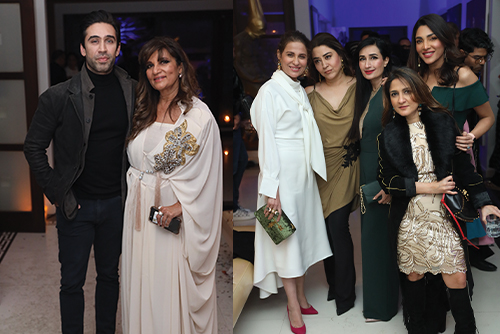
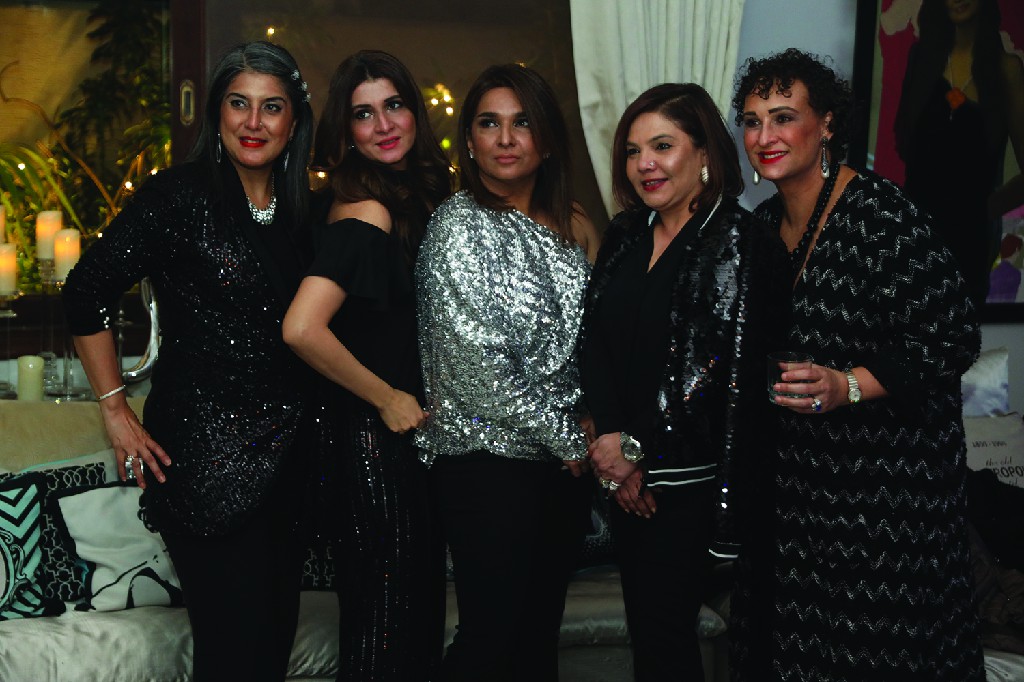
Zehra Valliani celebrated her birthday with an extravagant evening where guests enjoyed live music and a sumptuous spread.


Ahmed Ali Butt may be showbiz royalty, but he’s charted a career of his own that’s made him a household name in his own right. From music to comedy to drama, he’s done it all. This fortnight he speaks to Mehek Raza Rizvi about all this and more

How much did growing up around icons, such as your legendary grandmother, influence your decision to be in showbiz?
Creativity is as important to my family as water and air. As such, I grew up with show business all around and with studio life being a part of my upbringing. I’ve been blessed to be a part of a family that boasts legends like the Melody Queen Noor Jehan, to Shaukat Hussain Rizvi, one of the biggest producers and studio owners of the time. Even my own parents were creatives—my mother began singing later in life and my father was an actor. Growing up I realized it was something special, it’s not something that happens in every household; I knew it was sacred. Eventually I learnt the craft, leaning on music and performing arts, and I knew it was a privilege to be part of such a history.

Have you ever felt that being typecast into comedy has its drawbacks?
I think being typecast for anything is bad. Comedy, drama, romance—being repetitive in anything is bad for your creative process and identity. It’ll lose its charm. So yes, after the success of JPNA 1 and 2, I got approached repeatedly for the same ideas. I’m all for comedy, because it comes really naturally to me, but there has to be serious inspiration behind everything. There has to be flavour and room for creativity.

What was it like playing a serious role (in “Jhooti”) after so long?
“Jhooti” was beautiful. When I got offered the role I jumped at the opportunity. You don’t get to play a character made for you every day, especially in drama. I’ve always been a fan of Iqra Aziz, as she has amazing range. My character arc may have been short, but it was so out-of-the-box for me to play. For the first few episodes I had to manage my tempo a bit, because I was more accustomed to comedy. It was a thoroughly wonderful experience!

Being a public figure comes with immense responsibility towards your audience. How conscious are you of that fact while selecting scripts? 
My grandmother used to say, “Once you’re on stage, you belong to the public.” I think it’s a tremendous responsibility and I believe what we artists perform, in our craft and in our work, it projects a certain image of the country and of the people on a surface level. I do take pride in the fact that my projects need to have a patriotic side and you know we live in a visual world—things said even five years ago can instantly catch up to you. I believe in family values and family-oriented themes. So yes, I do select scripts very consciously.
“Phatte Dinde Chakk Punjabi” marked your international debut on the big screen. Tell us about your experience.
It was something completely out of the blue. Hammad Chaudry and I had been wanting to work on a project for a while, and the right script came in the form of “Phatte Dinde Chakk Punjabi”. I was given the chance to work with Gipi Garewal and Neeru Bajwa. The whole U.K. Punjabi scene is really thriving; our Sikh brothers appreciate and love our content. It’s very humbling and I was amazed at their show of love and support. We had such an amazing time and it was fun to work with them as they work quickly and efficiently. The film, I believe, is funny as hell and hopefully, Pakistan will be a good market for the U.K.-Punjabi cinema content. I hope our government allows it in our cinemas.

What inspired your incredible weight-loss journey?
I used to struggle with my weight even in school, so the inspiration was always there. My main inspiration came from my son and my wife. I wanted to be a more hands-on dad. This wouldn’t have been possible without Fatima. She was the ultimate support system for this whole journey. She executed my regimen and was the key that kept me in check. The journey is still going on; you need to contain the structure around you otherwise you lose sight of the goal you set out to achieve. I think I still have ten more kilos to lose, so fingers crossed I will see this through.

How do you stay motivated?
First of all, my faith and my religion. Allah has blessed me with so much positivity, despite so many ups and downs. There’re always the unexpected things that can happen, but prayer always keeps me grounded. Secondly, the love and support of my family. As life goes on you realise you don’t need a big circle, you don’t need everyone’s validation. You determine your own validation for success. Thankfully, you stop feeling the need to run after people and material gains. I surround myself with my own small circle of positivity and that’s the key. Stay away from the toxicity that you don’t need in life. Learn to say no. Learn to draw your own lines and define your own limits. And of course, learning from mistakes. I always keep the student mentality in mind—always learning, always grasping. My son Azaan teaches me such amazing things; I’m amazed at his purity and we at our age we forget the simplicity of life and its beauty. Fatima’s spiritual journey has also always inspired me to do better.

Looking back at your career, would you do anything differently? 
You can always find things that you could’ve done better. But if you dwell too much on that, it’s unhealthy. Early on I used to feel bad about missing projects. But you learn with time that ‘what will happen has already happened’. Christopher Nolan said that. What is in your fate will find you no matter what, and what isn’t, won’t. Simple. Failure is the best teacher regardless. Learn from your mistakes but keep moving forward and not look back too much.

Fans from your EP days still look forward to a comeback. Can we expect one?
Unfortunately, I don’t think so; we’re all comfortable in what we’re doing right now. Musically I like to venture out anyway, as there’re so many great people to work with. I’m working on a solo project too and am very excited to bring out new things really soon.

What is Ahmad Ali Butt like at home?
I think Fatima can answer this better, because she gets to see the real me. I’m a homebody who’s totally in love with spending time with his family. Pre-pandemic we used to have movie nights and so I hope cinemas open soon. When I’m at home, I love cooking; in fact, I cook a lot. I’m rather the regular Joe when I’m at home and I’m overwhelmed with the blessings I’ve received in this life.

Concept & photos: Jay Samuel Studio
Wardrobe: IFFI
Hair & Makeup: N.Gents
Styling: Fatima Khan
Coordination: MINT PR


What do you feel is unique about your perspective on skincare, and how has it evolved since you started your career? 

I believe that only medical grade skincare can help to maintain a good healthy skin; this perspective evolved slowly, after having worked with many such brands over the years. I’ve noticed phenomenal results using the correct medical grade products for your skin.

What inspired you to pursue this career?

Seeing many people with a lot of skincare issues and not enough knowledge of how to address them inspired me to start this as a career. It really makes me happy to see someone achieve some confidence by just eliminating few skin issues they have.

Is there really an easy way to achieve glowing skin?

I won’t say it’s easy, because you have to be very patient and consistent. Consistency is the key to achieving glowing skin.

How soon should one start considering treatments like botox or derma fillers? 

I suggest to start with other bio-stimulating treatments to help build collagen and then if you feel there’s still something lacking, then we can go down that route.

What beauty and skin care products can’t you live without?

I can’t live without sunscreen, moisturiser and a good hydrating serum. In beauty products I love using the Nars lip balm and mascara.

What’s your own daily skincare regimen like? 

I’m very consistent with my skincare routine. I use the Age Kit from pHformula along with SPF and Hydraserum. I also incorporate different masks.

What’s the best skincare advice you’ve ever received?

Always use medical grade products and remove your makeup before sleeping.

What’s your idea of beauty? Is there a definition you live by?

For me beauty is feeling confident in your own skin and not trying to achieve something which is artificial.

I believe living a healthy, positive lifestyle will automatically create beauty around you.

Razia Sultana’s ‘Mehnaz’ is a resplendent pret collection that pays homage to feminine beauty by drawing poetic inspiration from the beauty of the moon. With ensembles consisting of pure fabrics, hand work, appliques and adda work, this classic collection showcases the passion of the artisans behind it. Here a team of creatives presents ‘Mehnaz’ in all its radiance

Wardrobe: Razia Sultana
Models: Abeer Asad Khan, Atikah Gardezi, Aqsa Shah
Coordination: Centaur One
Photography: Tuba Afzal
Styling: Arbaqan Changezi
MUA: Usman Style Artist
Jewels: Mahvish Naeem, Kundan Co


Ft. Zahra Malik

The beautiful Zahra Malik styles three wedding guest looks that are festive, yet easy to carry. Featuring jewellery by Zahid Jewellers, this is the inspiration you need for the upcoming wedding season.

Attending a garden event? Then opt for this Saira Shakira ensemble and pair it with the gold-hued, understated makeup as seen on Zahra.

Zahra pairs a powder blue outfit by Zubia Zainab with exquisite diamond and emerald jewels by Zahid Jewellers—a perfect look for a day time Walima.

This navy blue number by Razia Sultana, worn with a traditional, heavy gold set by Zahid Jewellers is bound to make heads turn.

Jewellery: Zahid Jewellers
Muse: Zahra Malik
Coordination: Centaur One
Wardrobe: Saira Shakira, Zubia Zainab & Razia Sultana

Having completed a decade in the entertainment industry, Sonya Hussyn has portrayed some of the most memorable (and diverse) characters on screen. The leading lady, Popular for her poignant performances and style sense alike, sits down with Mehek Raza Rizvi to reflect on her career, the evolution of the industry and more

With the conversation on gender equality and feminism on the rise, how important is it for female actors to choose their roles carefully and avoid playing the damsel-in-distress?

With the ongoing movements and the current climate, I believe now more than ever, it’s become imperative for female actors to be more conscious about the scripts they choose. From the beginning of my career, I’ve attempted at walking the untrodden path, breaking the whole notion of what’s deemed commercially successful or what a conventional leading lady is expected to look and act like on screen.

To me, it’s solely about the character and what my portrayal in a project can do to further a narrative—if it’s in line with the message I want to put forth, I’m always up for it. At times a damsel-in-distress can also be written very sensitively and the characters around her can possibly contribute to her empowerment and growth. Every character deserves representation, what matters is how the story is portrayed.

How hard is it to detach yourself from the intense and complex characters you play? Does some part of them stay with you?

It does become very difficult to separate. As actors our job is to completely immerse ourselves in our characters’ worlds. Nazo, for example, was this mentally-challenged girl I played years ago who stayed with me for a very long time, especially her mannerisms and the way she spoke. There was a lot of research that went into it and eventually, once we’d wrapped filming, I struggled with going back to what my reality was.

Most recently, I’ve done “Saraab”, where my character Hoorain is schizophrenic. In the process of shooting, I was able to understand more about this condition, how it can be controlled and how one can deal with such patients. In all honesty, every character I’ve played has contributed to the person I’m becoming, consciously or subconsciously. All one can really do is wear these facets as a badge and try to do justice to what’s next—I simply live from one character to another.

The fame and influence celebrities enjoy puts immense responsibility on them to use it wisely. Do you ever feel burdened by the constant spotlight?

Yes, I do. However, I don’t let that come in the way of speaking my mind. If I strongly believe in something, I share that opinion without a second thought, because that’s my truth, even if it leads to backlash or controversy. The spotlight can be very daunting, but I keep reminding myself how it doesn’t define who I am.

In recent times you’ve had a war of words with a couple of other female celebs. How does difference of opinions that becomes so public affect you and how do you deal with it?

The pandemic has given some of us a little too much time to criticise others and take things out of context. I genuinely have a lot of respect for women in the industry; I know that there’re prejudices against women at large and to be successful, it takes great courage, resilience, hard work and talent. I also know that I’ve evolved over the past few years and now I fully believe that putting one woman down to defend another doesn’t do much for what we’re all fighting for.

Have you experienced any inherent prejudices in your line of work?

I’ve been fortunate to not have had any first-hand experience of it myself. I’ve worked with good people and have had the freedom in choosing my characters. But that doesn’t mean it doesn’t exist—it’s a male-dominated industry after all, both in front of and behind the camera. Scripts are penned and then shot according to the male gaze. Sadly, a lot of naive women are exploited, but I do see things changing. I completed a decade in the industry this year, and I’ve seen how the position of women has evolved—characters and environments are better. Slowly but steadily, we’ll get to equality.

Many follow you ardently for your great sense of style. Do you, however, ever feel that takes away from your work as an actress?

Not at all! I feel honoured when I’m told that people appreciate my sense of style, Every outfit my stylists or designers help me put together tells a story and is representative of how I feel in that moment. I recently wore a neon-green power-suit by Mahgul at the Hum Style Awards and I felt it was a very contemporary, funky take on who I am today. My work as an actor has always been somewhat separate, because there’re often characters that demand simplistic outfits, lesser makeup, dark circles, dirty hair, or a dishevelled look. Thankfully, my audience accepts that. Fashion I think is storytelling as well, and if anything, it’s added to my work.

Tell us about your new project “Mor Moharaan”.

“Mor Moharaan” is a very interesting project. I’m working with phenomenal actors such as Samiya Mumtaz, Firdous Jamal, Mustafa Changazi and my favourite co-star, Zahid Ahmed. This is my third project with Zahid and there’s always such great camaraderie between us. I think we really understand and respect one another as artists and that’s really all one needs to perform well. My character Rohi is from Cholistan; she’s an environmentalist who’s dedicated her life to her community and the issues they deal with. The series also dabbles with subjects of politics, global warming and climate change. These are such pertinent topics and I’m very proud of the fact that I’m part of something that sheds light upon them. It’s coming soon on TV One.

Out of all the characters you’ve portrayed, which one is the closest to your heart and why?

This is a difficult question. As I said, I think almost every character I’ve played has been very special to me: whether it’s Nazo from “Nazo”, Pakeeza from “Aisi Hai Tanhai” (a victim of cyber-bullying), Safeena from “Meri Guriya” (a drama serial on child sexual abuse), Gauhar from “Ishq Zah-e-Naseeb” (dealing with her husband’s dissociative identity disorder syndrome), Hoorain of “Saraab” and everyone else in between. I’ve had the honour of playing such diverse, beautiful, flawed women. It’s impossible for me to select one!

What inspired you to start your own YouTube channel?

As an actor I believe viewers see you for the character that you play, and as grateful as I’ve been for the journey, I felt like I needed a medium to connect with my audience on a more personal level. I wanted to tell my story and introduce people to what really goes on behind the scenes, speak my mind and elaborate on subjects that I’m passionate about. I was ready to put together more slice-of-life, real content, but I understand that one has to be more consistent, which I haven’t been. Hopefully, I’ll be putting out some more videos soon.

What is Sonya Hussyn like at home? Tell us about your family and childhood.

My childhood was full of many ups and as many downs, but I think such is the beauty of life; trying experiences shape you. I personally feel that I’m more loving, stronger and determined than I ever was before, and a lot of it has to do it with my family and how we’ve all evolved together.

At home, I’m just my most real, unabashed self. It’s where I recharge—I can comfortably hibernate in my room for days. My family and I work as a strong unit: watching movies, having food and deep conversations, all of it together. It’s beautiful being with them and I wouldn’t want it any other way. Every chapter of my life has taught me immensely.

Concept, Coordination & Production: Centaur One
Makeup & Hair: Qasim Liaqat
Photography: Najam Mahmood
Art Direction: Saad Amjad
Outfits: Munib Nawaz (printed suit), Mahgul (neon suit)
Jewellery: The Jewel Company


For fashion model Ayesha Rajput focusing on her goals is the most important thing right now. This fortnight she sits down with Mehek Raza Rizvi to talk about her career, along with serving looks for an editorial by Asad bin Javed.

What inspired you to take up modelling professionally?

I didn’t chose modelling, modelling chose me. I always wanted to become an actress-and God willing, I will be-but for now, I’m enjoying my current profession.

What do you feel are your strengths and weaknesses as a model?

Being able to stay true to myself and my steadfastness are my strengths as a model. I’m not sure about the weaknesses.

Do you have a fitness and beauty regimen?

To be honest, I don’t go to the gym. I eat a lot, but don’t gain weight thanks to a fast metabolism. As for my skin, I’m very particular about drinking at least six to eight glasses of water every day, along with moisturising my skin before bed.

How would you describe your personal style?

Bold and beautiful, yet classy


What do you think about the competition in your industry, and the relationship models have with each other?

My biggest and only competition is with myself, and my relationship with other models is really good. I’m friends with all my colleagues; everyone has always been very kind to me.

What do you consider the toughest aspect of your job and how do you overcome it?

Most people think that modelling is an easy job, but that couldn’t be further from the truth. There are many difficult aspects to modelling, but the toughest according to me is when you aren’t in a great space mentally but have to pretend you’re good in front of the camera. However, being sincere to your job helps you deal with such situations gracefully. That’s what works for me.

Where do you hope to see yourself in the next five years?

I see myself improving my craft as much as possible. I believe Allah has big plans for me.


Photography: Asad Bin Javed
Styling: Mahnoor M Ashraf
Hair & makeup: Ayan Amir

ft. Maryam Mahmood

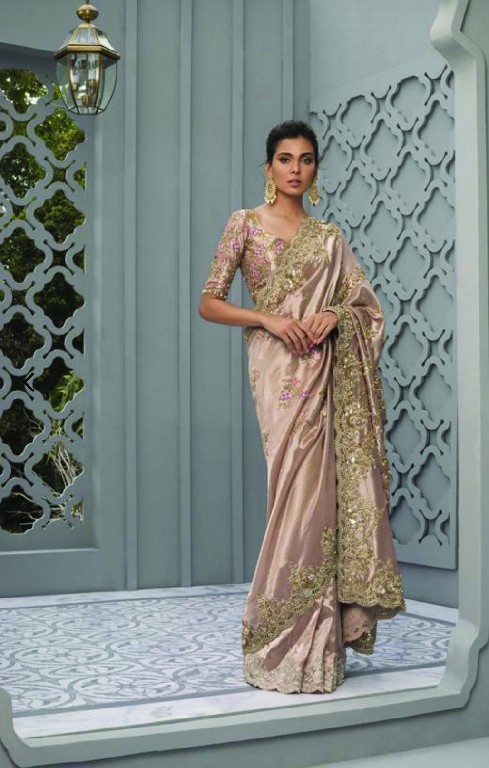
Maryam Mahmood’s playful take on sarees will inspire you to create more space for them in your wardrobe. Making a solid case for the versatility of this timeless outfit, Maryam’s poise and effortlessness add to our list of reasons to love sarees more than any other ethnic wear.

Pin It